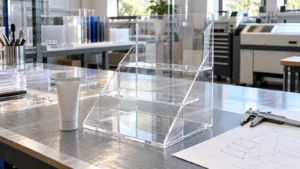
Custom acrylic displays for retail stores work best when they are treated as part of the merchandising system, not as a transparent object added at the end. The display has to present the product clearly, fit the available fixture, let staff replenish it, carry the brand message, and arrive ready for the store team. For a custom project, the most useful starting point is the product, its retail position, and the way the unit will be handled—not a preferred display shape alone.
When a buyer sends us a retail brief, I first look for the job the display must do: make a hero product visible, organise a product range, protect an item, support a promotion, or help a shopper compare choices. That answer guides the format, acrylic construction, finish, graphics, and pack-out plan.
Start With the Store Job, Not the Acrylic Shape

Acrylic is useful in retail because it can add structure, separation, and branding without visually overpowering the merchandise. But “we need an acrylic display” is not yet enough for a reliable quotation or drawing. A countertop launch unit, a shelf riser, a wall display, and a display case all have different access, stability, and packing questions.
For broad store-fixture projects, our custom acrylic store displays page is a useful reference point for the kinds of retail formats we can make. The next step is to turn the retail purpose into a buildable brief.
I usually ask which product must be noticed first, where the display sits, and what a shopper or store associate must do with it. A compact unit at checkout may need a small footprint and quick replenishment. A beauty display may need tiered product visibility and a surface that stays presentable after frequent handling. A premium boxed item may need spacing, a clearer information panel, or controlled access.
The trade-off is simple: a more dramatic shape can improve attention, but it can also consume counter space, hide labels, or make restocking awkward. The right design puts the product and store workflow ahead of decoration.
Choose a Retail Format That Matches the Product Journey

The display type should come from how the product is sold, not from a catalogue name. Use the product dimensions, number of SKUs, selling location, and shopper interaction to narrow the format before the drawing begins.
| Retail requirement | Suitable custom acrylic direction | What to confirm before quoting |
|---|---|---|
| Small impulse-buy items | Countertop tray, stepped stand, or compact holder | Counter footprint, product quantity, front-lip height, and restocking side |
| Multiple product variants | Tiered shelf, divider tray, or organised row display | SKU dimensions, label visibility, usable openings, and required capacity |
| Premium or protected merchandise | Display box, cabinet, or cover | Access method, cleaning, hardware, security requirements, and visible joints |
| Campaign or point-of-purchase launch | Branded POP stand or modular display | Artwork areas, rollout quantity, setup method, and shipment configuration |
| Shelf-edge information | Sign holder or product information panel | Insert size, viewing angle, replacement method, and store-fixture compatibility |
For a general stand or countertop solution, custom acrylic display stands can help buyers compare common directions. I would not choose a tiered or tall format until the real product is sitting in the proposed openings. Outside dimensions can look correct while the usable access is too tight for fingers, packaging, or replenishment.
A retailer may also have an existing shelf lip, counter depth, planogram, or adjacent sign system. These constraints matter as much as the display’s own dimensions. A design review should mark the customer-facing side and the staff-facing side, because they often require different features.
Design for Sightlines, Access, and Replenishment

Retail displays have two users: the shopper who needs to understand and reach the merchandise, and the staff member who needs to refill and clean the fixture. A polished clear display can still fail its store job if a front edge hides the label, a divider catches a carton, or a logo panel blocks the view of the product behind it.
Before we approve a production drawing, our team reviews the actual product or a dimensionally accurate substitute in the display. We look at the product’s approach angle, grip area, removal path, and position after it is returned. On a multi-level unit, the lower row must remain readable and the upper row must not look empty after normal replenishment.
For staff access, decide early whether products load from the front, rear, top, or side. A removable tray can simplify replenishment and cleaning, but it introduces a fit and orientation detail that must be clear in the design. A fixed divider can feel more secure, but may be harder to clean around. Neither is universally better; the store routine decides.
I also prefer to see a stocked photo or mock-up before the final sample is released. A display should be judged with the real pack sizes, colour mix, and label placement—not as an empty clear structure under studio lighting.
Match Material, Structure, and Finish to Real Handling

There is no universal acrylic thickness or construction for a retail display. The relevant questions are the product load, unsupported span, display height, bends, bonding areas, attachment points, and how often the fixture will be moved. A small riser carrying light cosmetics is a different engineering conversation from a wide shelf or a tall multi-tier unit.
For a clear display, visual quality is part of the specification. The buyer should identify which surfaces are customer-facing, which edges will be visible, and where a joint can be seen. Our review considers whether laser cutting, CNC machining, drilling, polishing, heat bending, bonding, or hardware assembly is appropriate for the selected form.
The practical trade-off is between appearance, structural logic, and production repeatability. A seamless-looking bonded corner may suit a premium cover, while a mechanically assembled solution may be more sensible where access, shipping configuration, or replacement parts matter. Holes and fasteners also need room around them; placing them too near an edge or bend can create avoidable stress points.
Material choice deserves the same discipline. Clear acrylic can keep attention on the product; frosted or coloured acrylic can create hierarchy or reduce visual clutter. Printed panels can bring branding forward, but their contrast should be checked against the real merchandise and store lighting.
Build Branding Into the Display Without Hiding the Merchandise

Acrylic can carry a logo, colour layer, printed graphic, engraved detail, or interchangeable insert. The best approach depends on what needs to stay visible when the display is fully stocked. The retail fixture should frame the product message rather than compete with it.
During artwork review, we need the final or near-final artwork, print positions, colour expectations, and the viewed side of transparent panels. For reverse-side printing, layered artwork, or white backing, the effect should be assessed through a proof or sample. A graphic that looks strong on a screen can read differently once it sits behind a clear panel or alongside colourful packaging.
My first design question is usually: what must a shopper understand from one normal viewing position? If the answer is the product name, a large printed header may be enough. If the answer is a range comparison, the display may need a more deliberate information hierarchy. A crowded panel often weakens both branding and product clarity.
Use a Prototype to Approve the Questions a Drawing Cannot Answer

A dimensioned drawing is essential, but it cannot fully answer how polished edges look under retail lighting, how products feel when lifted from a compartment, or whether the display is easy to assemble and replenish. A representative sample gives the buyer and manufacturer a controlled point to resolve those questions before repeat production.
For a retail-display prototype, I would lock these points before moving ahead:
• Product fit, capacity, and staff access using the actual product where possible.
• Customer-facing orientation, logo position, and readable graphic hierarchy.
• Material colour, clear/frosted appearance, visible edges, and acceptable joint appearance.
• Assembly sequence, hardware, protective film removal, and any separate inserts.
• The packing method for a finished unit or retail kit.
This is also the time to agree on what the approved reference represents. If the project needs a repeat rollout, photos of a fully stocked sample and a complete packed set are useful references alongside the signed drawing. The risk is not merely an imperfect sample; it is allowing an unresolved choice to become a production assumption.
Plan Packing and Store Rollout Alongside the Display
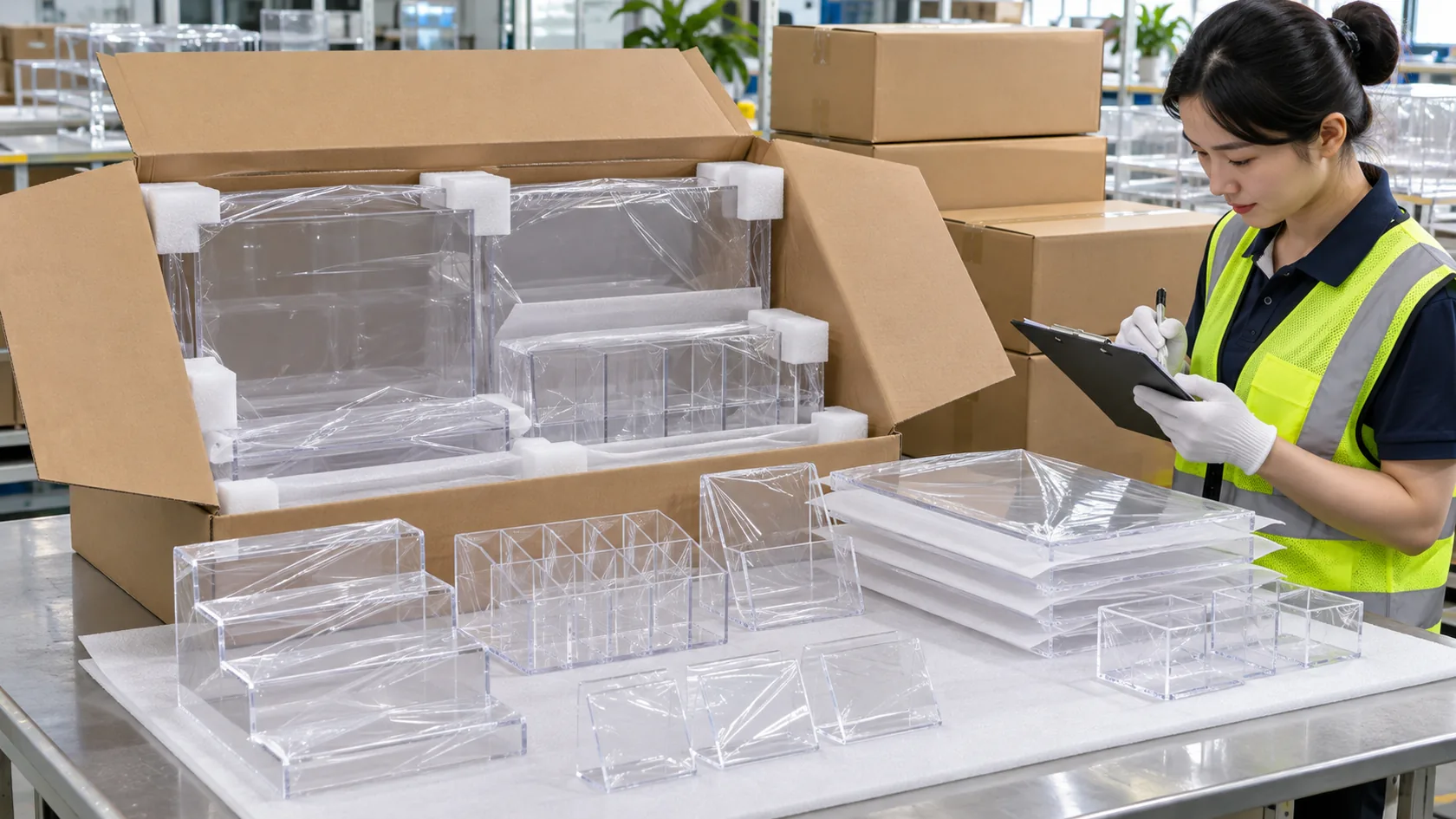
The retail counter is the final stage of the display’s journey. Before it gets there, clear parts may pass through inspection, packing, export handling, warehouse receiving, and store setup. A display that looks excellent when assembled in the factory can arrive with scratched faces, stressed corners, missing small parts, or confusing assembly if the pack-out is considered too late.
The choice between assembled, partly assembled, and flat-packed delivery is a commercial and operational decision. Assembled units can reduce store setup; flat-packed units can reduce shipping volume and may help with certain shapes. Either route needs a defined protection method for exposed edges, printed surfaces, hardware, and separate components.
Our team would review the pack-out with the display structure, not after it. Clear acrylic surfaces may need protective film, interleaving, individual bags, foam, corner protection, or separated panels depending on the design. For a multi-store kit, include the parts, hardware, orientation guidance, and visual setup instructions needed by the receiving team.
Send a Retail Display Brief That Produces a Useful Quote
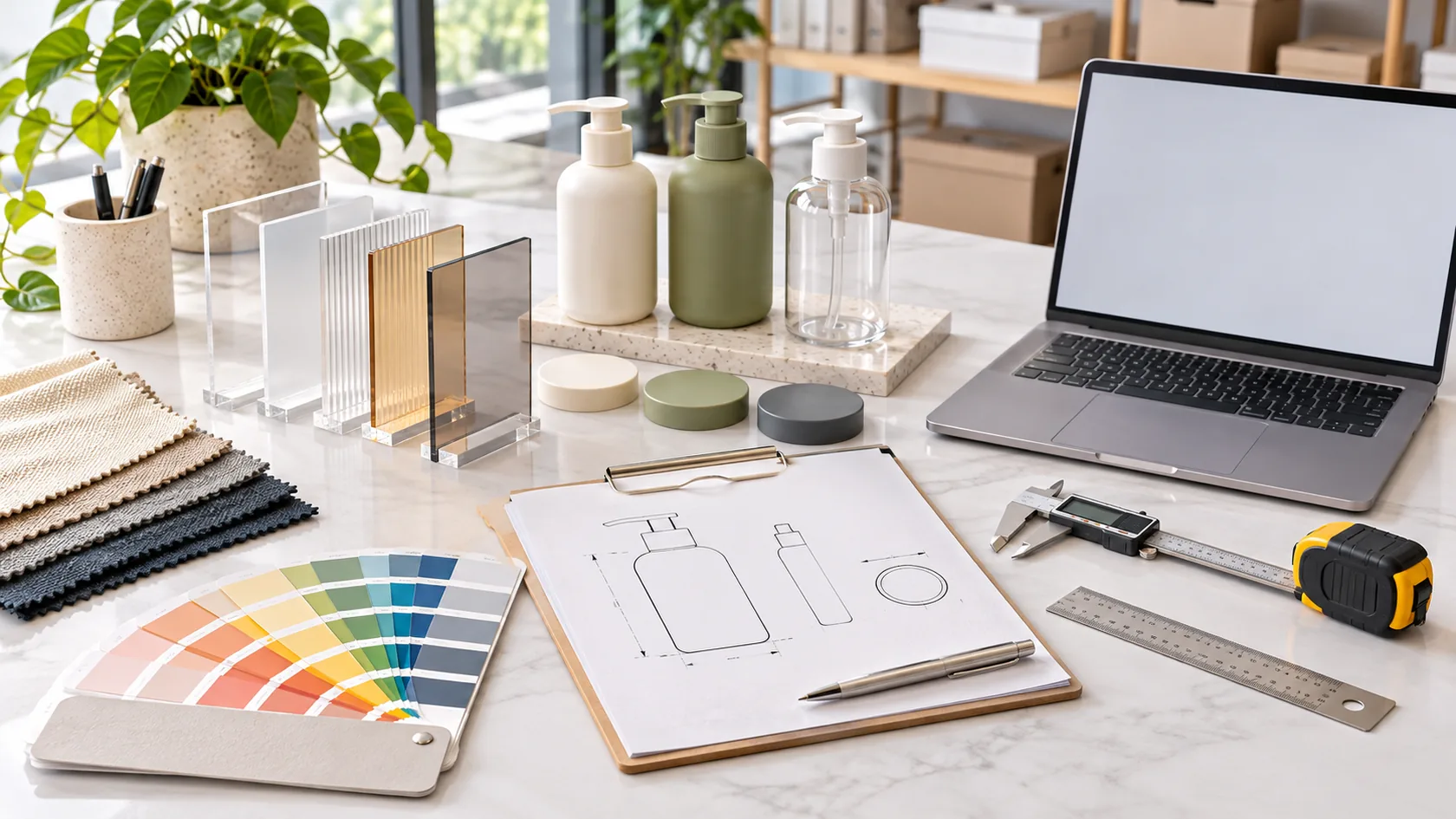
You do not need a finished engineering drawing to begin a conversation. A product photo, rough sketch, existing sample, or retail reference image can be enough for an initial discussion. The more of the following you can share, the more precisely we can review the direction:
| Include in the RFQ | Why it matters |
|---|---|
| Product dimensions, weight, packaging, and SKU count | Defines fit, capacity, access, and structural questions |
| Display location and available footprint | Prevents conflicts with shelves, counters, signage, and store traffic |
| Reference image, sketch, or drawing | Makes the intended form and customer-facing side clear |
| Acrylic appearance and finish direction | Guides clear, frosted, coloured, polished, printed, or layered choices |
| Branding artwork and required viewing distance | Helps position graphics without blocking merchandise |
| Quantity, prototype needs, and required delivery date | Lets us review sampling, production, and shipment planning |
| Packaging and rollout requirements | Determines assembled versus flat-pack direction and store-kit needs |
If details are still being decided, tell us what is fixed and what is open. I would normally settle the product interface and store footprint before debating fine cosmetic details, because those two decisions influence nearly every later choice.
Request a Retail Display Review

Send Feilong your product image or drawing, dimensions, target quantity, store location, branding requirements, and any packaging or delivery constraints. We can review the display direction, clarify the information needed for a quote, and help move the project toward a practical sample and production plan.