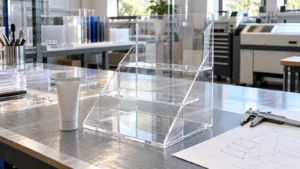
There is no single fixed custom acrylic display MOQ that is honest for every project. The practical minimum depends on the display structure, acrylic grade and colour, sheet yield, print setup, hardware, assembly, packaging, and the number of SKU or artwork variants. A simple display built from standard material may suit a smaller trial run than a branded fixture with custom-coloured sheet, several components, special hardware, and printed retail cartons.
The more useful question is not simply “What is your MOQ?” It is “Which material, component, or process is setting the MOQ for this design?” Once that constraint is visible, a buyer can decide whether to change the design, separate a pilot from a rollout, combine compatible variants, or keep the present specification and accept the associated order scale.
MOQ is a project decision, not a catalogue number

For made-to-spec displays, MOQ is where a repeatable production route begins to make commercial sense. The display body may be easy to cut in a small quantity, while a custom colour, printed panel, bought-in component, bent part, or individual retail pack needs a larger upstream commitment. One order can therefore contain several different minimums; the least flexible element often governs the practical production quantity.
This is why a supplier should quote against the finished requirement, not a product name alone. A clear cosmetics tray, a jewellery presentation set, and a branded point-of-purchase fixture can all be acrylic displays, yet their material, setup, and assembly logic are very different. Buyers comparing custom acrylic display stands should ask whether the quoted quantity is per design, per size, per colour, per artwork version, or across a compatible family.
I would separate an early feasibility quantity from the quantity needed for a normal repeat build. That keeps a prototype discussion from becoming a misleading promise that every custom specification can run at the same level.
What usually creates the MOQ for an acrylic display
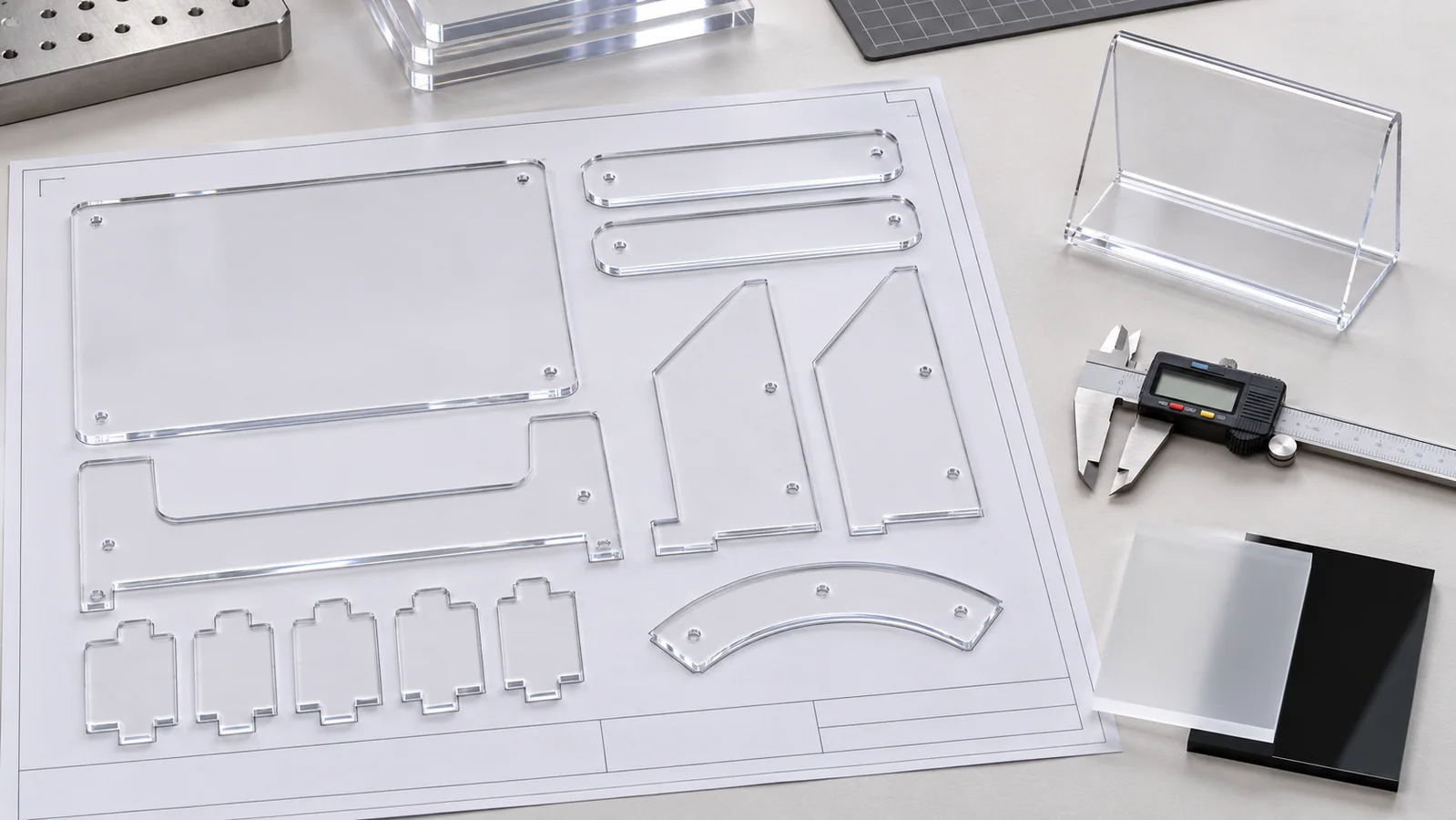
The starting point is material yield. A display may use only a modest amount of acrylic, but its component sizes and nesting pattern decide how effectively a purchased sheet becomes finished parts. A small change in panel size, shared component, or layout can sometimes make a pilot batch more practical; it should be reviewed on the drawing rather than guessed from an overall dimension.
Material choice can add a separate threshold. Standard clear sheet and a routine finish may be easier to source for a smaller test run than a project-specific colour, specialty finish, unusual thickness, or material combination. Where a close-view finish matters, the buyer should keep the visible faces and edge expectation in the brief rather than assume a smaller MOQ permits a lower visual standard.
Setup also matters. CNC programming, print preparation, bending fixtures, bonding sequence, hardware preparation, inspection planning, and pack-out development all have work that happens before repetition. I would first identify which of these steps are unique to the display, because that is more useful than trying to negotiate a minimum without changing the underlying job.
SKU, artwork, and packaging can fragment one order
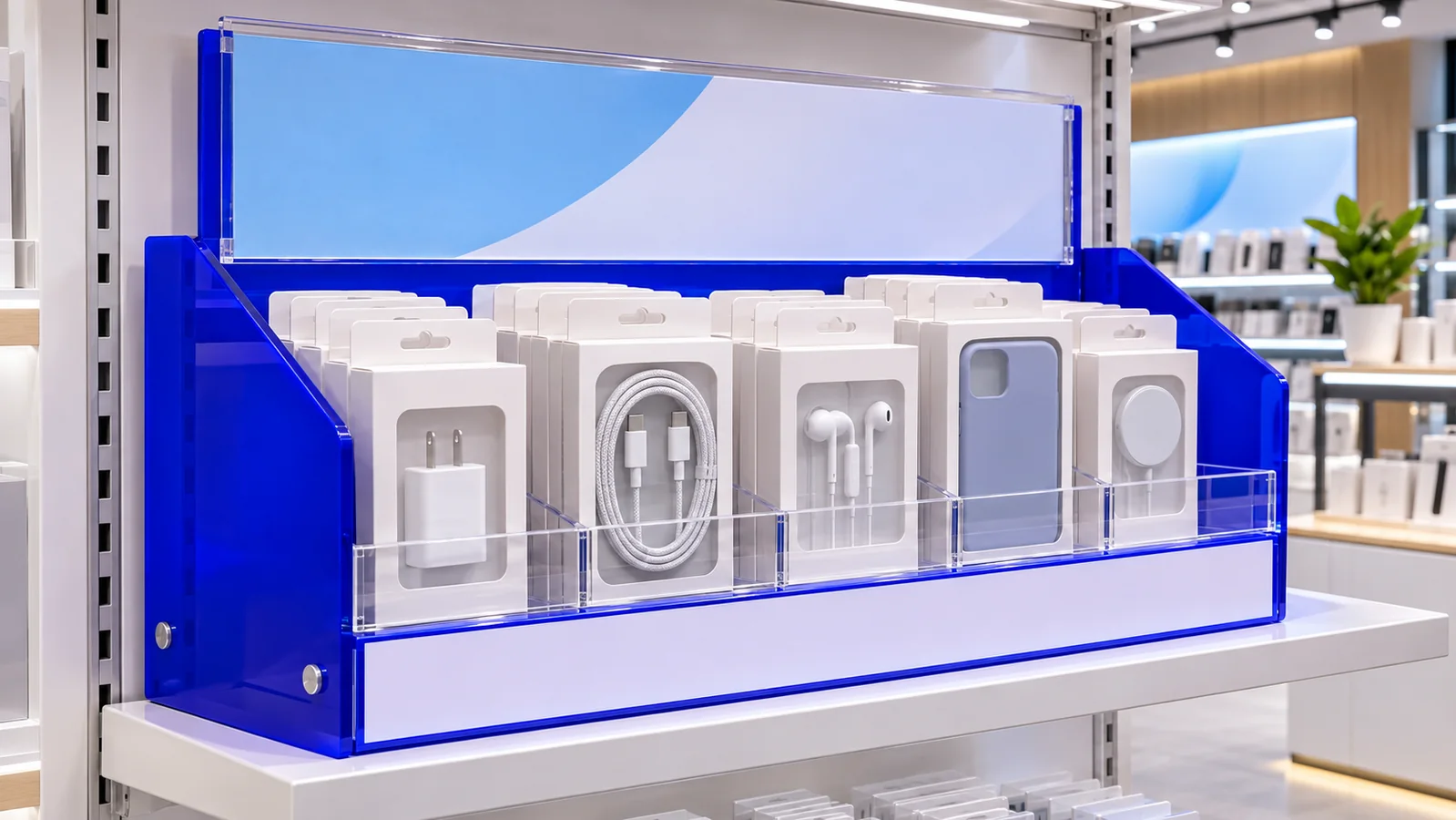
A total order quantity can look healthy while each working variant is still a small run. Different display widths, colours, language versions, printed graphics, accessory sets, or country-specific packaging can split a programme into separate material and setup decisions. A supplier needs the quantity by SKU, not only the combined total, to judge the actual production route.
For branded retail work, I recommend locking the artwork version, print location, and buyer-facing finish before using the volume to compare quotes. A shared clear acrylic body with interchangeable printed inserts may be a better pilot route than several fully unique printed builds—but only if the display still does its retail job cleanly. That is a design choice, not a generic cost-cutting rule.
Packaging has the same effect. A common protective pack may work across related displays, while a custom printed carton, shaped insert, or individually presented set can introduce its own minimum. Review this alongside the display, especially if the goods will be sold, installed, or fulfilled as separate units.
Use prototype, pilot, and production quantities for different decisions
| Order stage | Main decision | What should be held constant |
|---|---|---|
| Prototype | Does the structure fit the product, look right, and work as intended? | Core dimensions, material direction, critical finish, hardware function |
| Pilot | Can the display, retail handling, and proposed packing work as a controlled small programme? | Approved revision, artwork route, pack-out concept, SKU definition |
| Production | Can the agreed display be repeated at the planned quantity and delivery condition? | Approved sample, drawing, inspection points, packaging, and commercial scope |
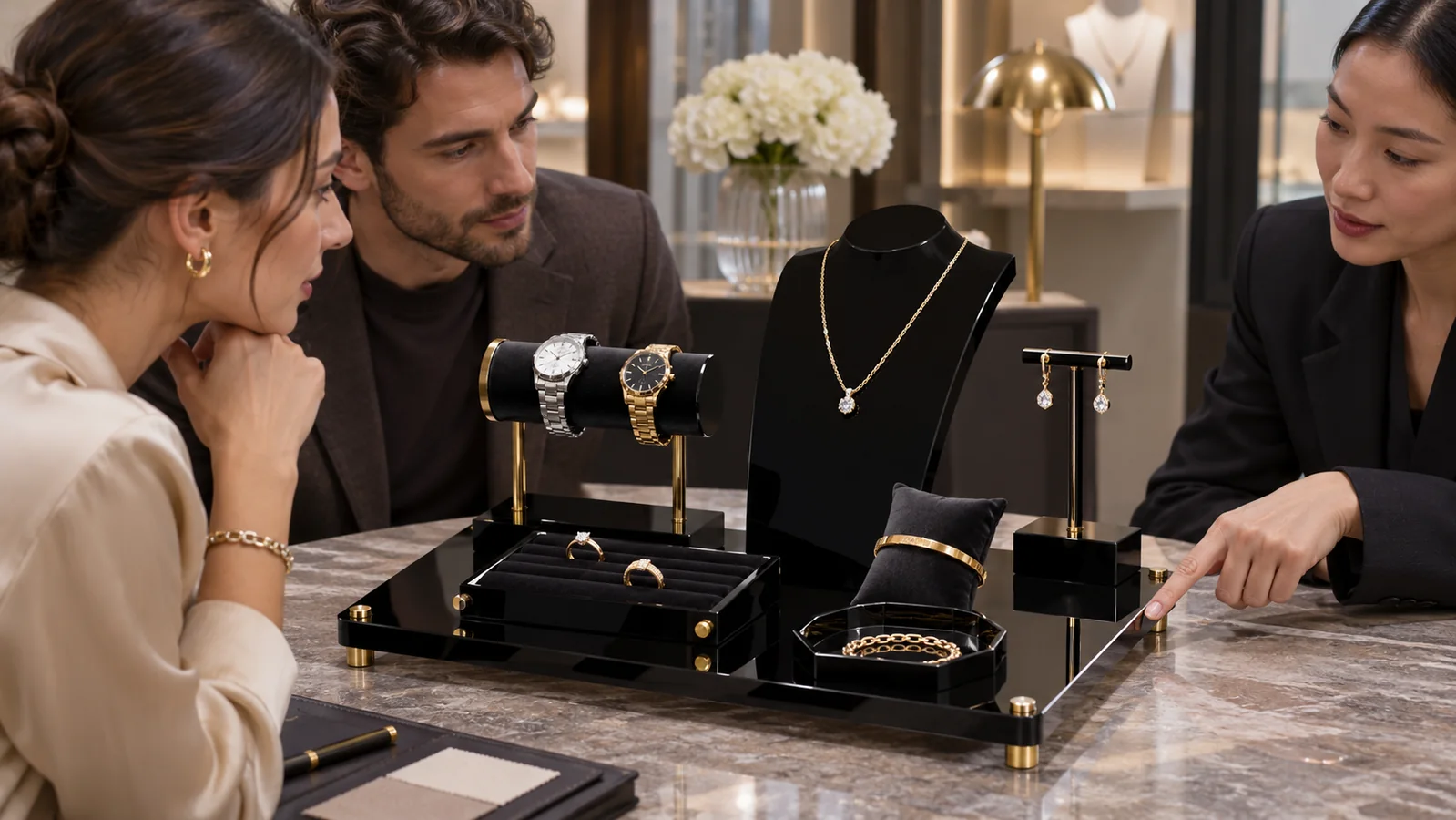
A prototype is not simply a small production order. It is a chance to settle product fit, access, stability, edge appearance, print position, hardware operation, and pack-out before those details are repeated. A pilot can then test the programme that stores, distributors, or internal teams will actually handle.
I would not reduce the quantity by silently changing the material, construction, or packaging after sample approval. If an alternative is proposed, it should be shown clearly as an alternative scope so the buyer can decide whether it still protects the intended customer experience.
How to make a smaller-run request easier to quote
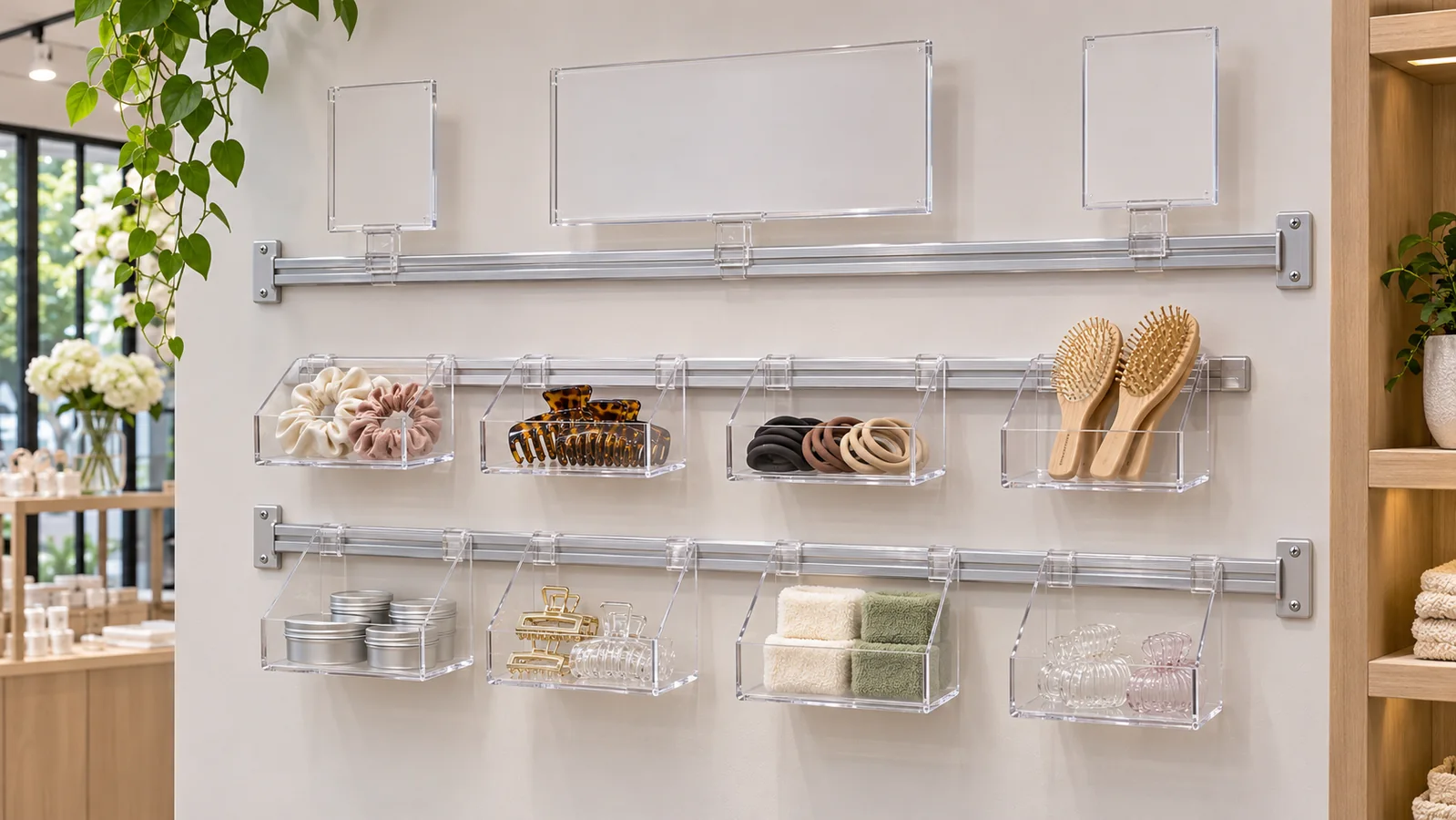
Smaller quantities are easier to assess when the buyer defines the priorities. Send a drawing, sketch, or reference image; the product to be displayed; dimensions; quantity by variant; expected material/finish; graphics; hardware; packing; and delivery destination. If the final artwork or colour is still open, say so early. The team can then identify whether it is a blocker or an item that can remain flexible for the pilot.
The best improvement is often to simplify only the element causing the threshold. For example, compatible sizes may share a panel layout, related designs may use common hardware, or a pilot may use a controlled graphic approach while final branded packaging is evaluated separately. I would protect product fit and customer-facing quality first; saving a setup step is not useful if the display then fails its visual or merchandising role.
For a project that needs this kind of review, our custom acrylic fabrication service can assess the drawing, variants, and production assumptions together rather than assigning an unexplained number to the word “MOQ.”
Put these MOQ questions in the RFQ
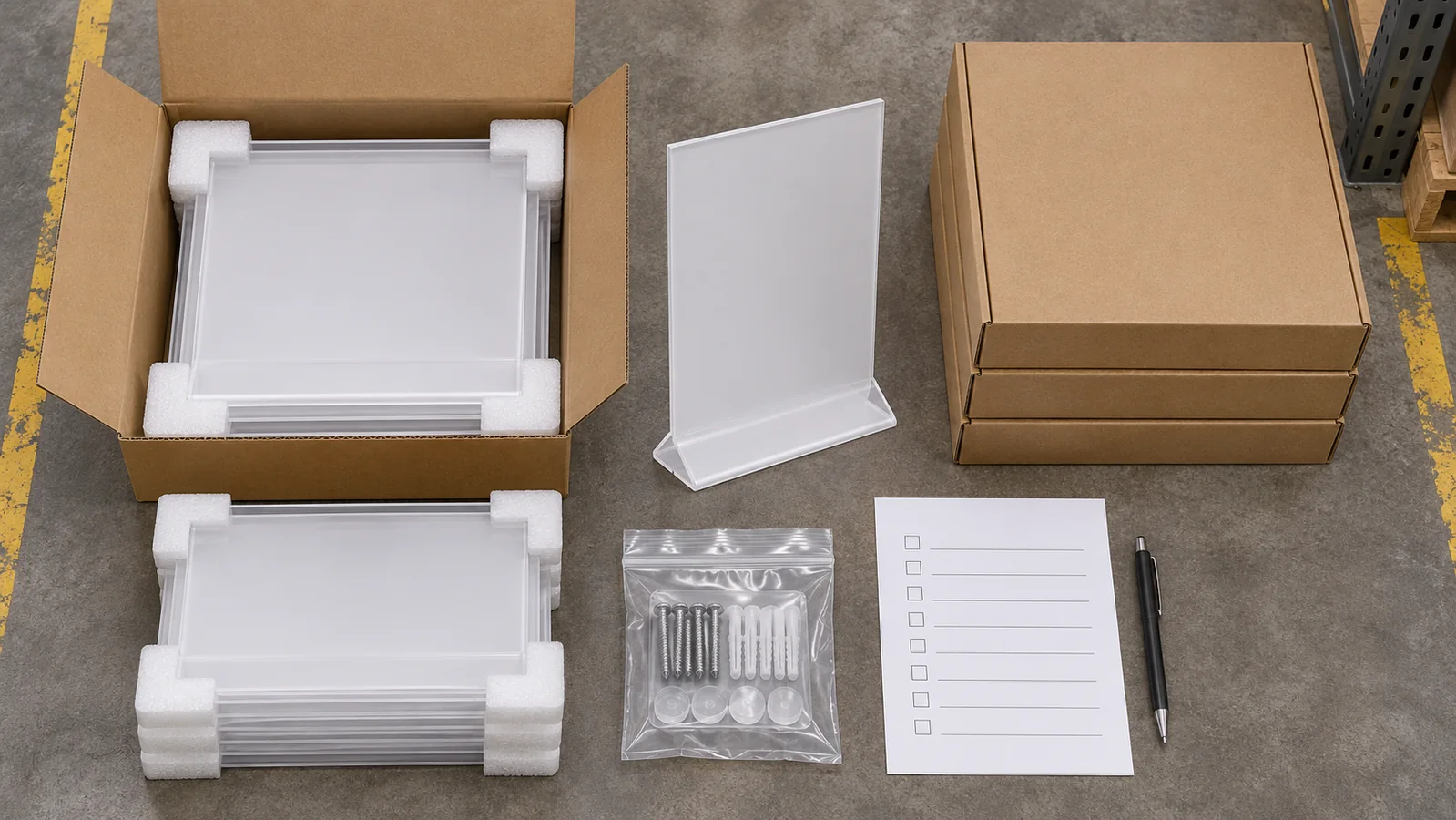
Ask the supplier to identify the MOQ by design and variant, the element setting the threshold, what changes with a smaller trial, and which costs or processes are shared across the order. Ask separately about material availability, printing/artwork setup, hardware, sample scope, assembly, individual protection, retail packaging, and the intended shipment condition.
The answer should make the trade-off visible. A higher quantity may be appropriate when the design and retail plan are already stable. A smaller pilot may be the right choice when product fit, artwork, installation, or customer response still needs validation. Neither is automatically better; the right route is the one that exposes the risk before it becomes a large inventory commitment.
Send your display drawing or reference image with quantity by SKU, product dimensions, material/finish direction, branding, hardware, packaging needs, and destination. We will review which part of the project is controlling the MOQ and what options remain before sampling or production.