Skip to content
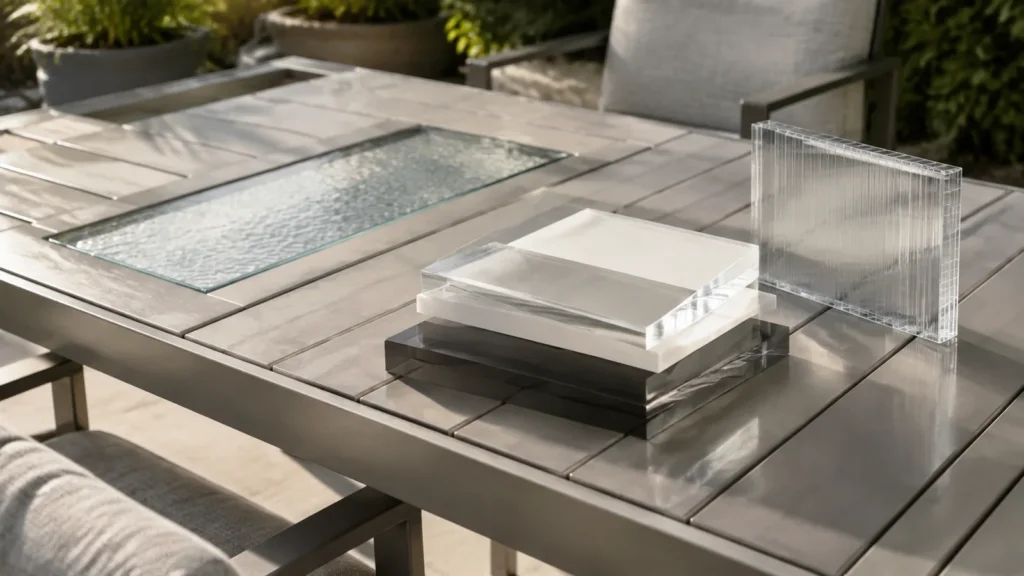
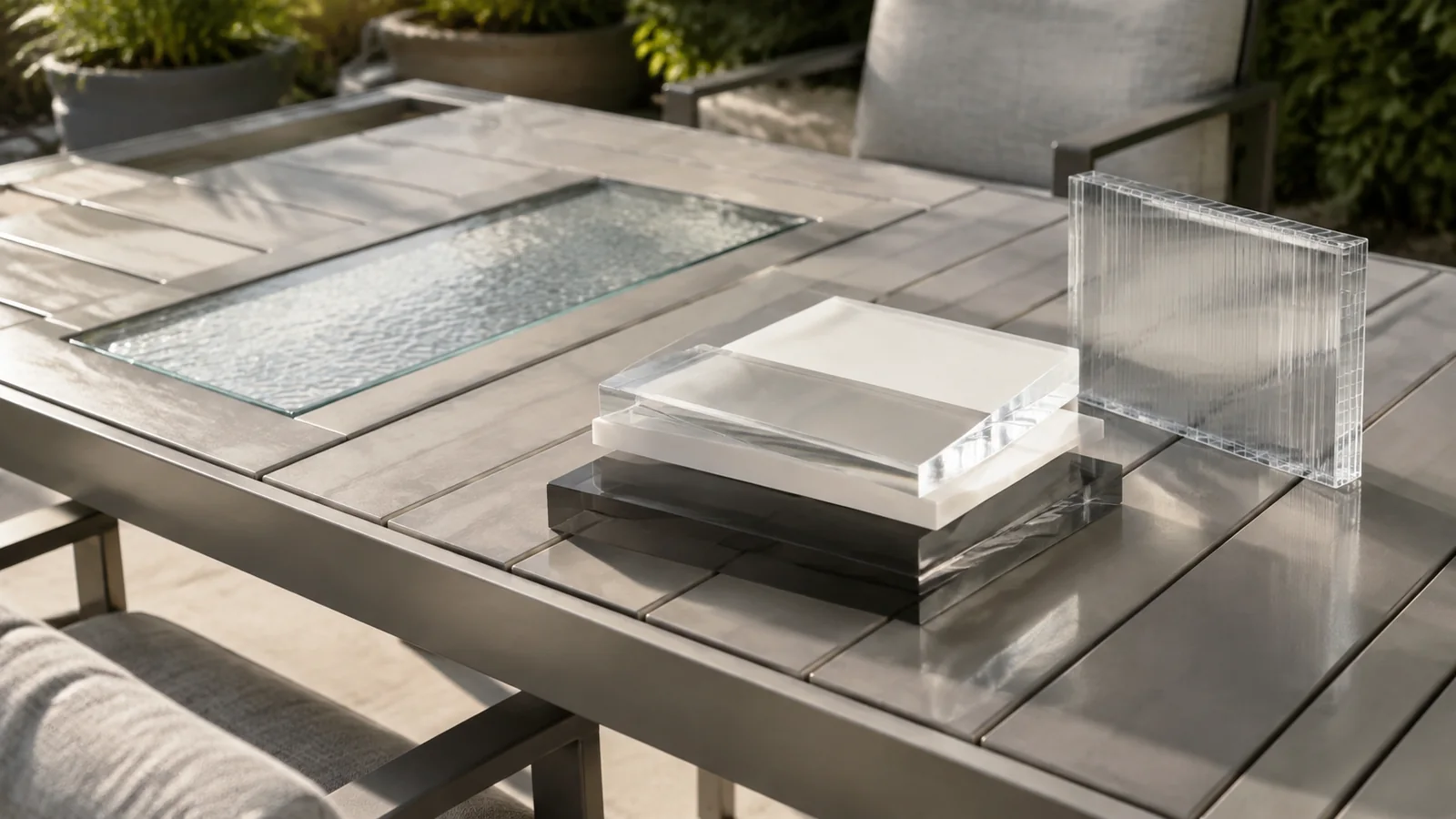
Polycarbonate earns its reputation when a transparent part may be struck, flexed, or abused. But I see buyers make a different mistake when they specify it for outdoor furniture: they treat impact resistance as a shortcut to a premium clear finish. It is not.
For a clear furniture detail, the definition of failure may be a surface that looks worn after cleaning, a panel that no longer looks optically crisp in direct sun, or a part whose coating requirement appeared only after the quote. If visual quality is the first requirement, I begin with that acceptance standard and then ask whether the real impact risk actually justifies PC.
Feilong Acrylic fabricates custom PMMA components, so this article is not an attempt to sell PC. It is a practical way to recognize when standard polycarbonate is the wrong starting point—and when a properly specified PC grade is still the safer direction.
The Premium-Clear Test Is Not an Impact Test
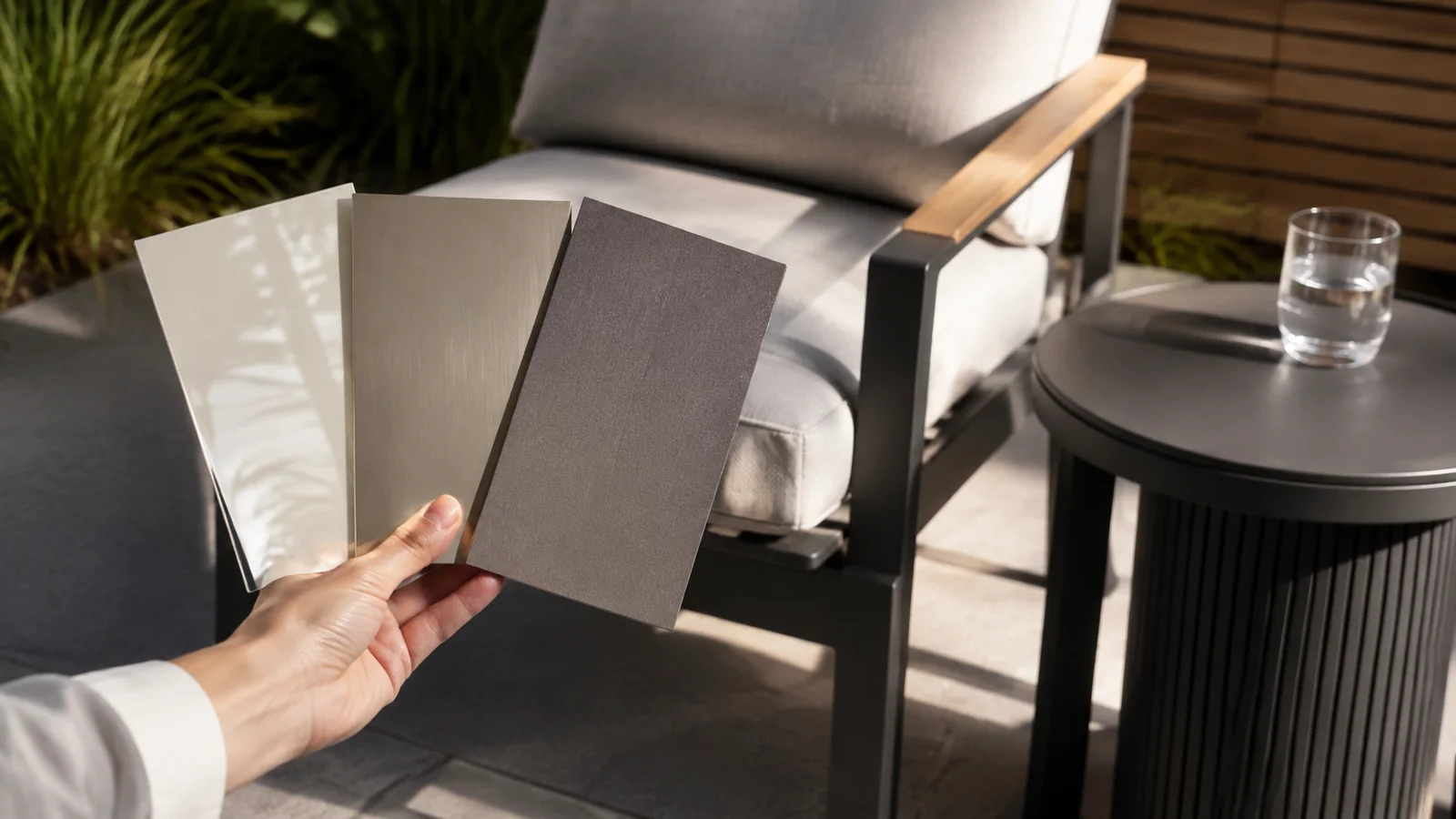
| Buyer priority | Standard PC starting point | Better next question |
|---|---|---|
| Hard knocks, low-level impact, or misuse | Often appropriate | What impact scenario must the part survive? |
| Polished, close-view appearance | Often incomplete | What scratches, haze, and edge appearance are acceptable? |
| Full sun and long visual life | Incomplete without grade details | Is the sheet UV-protected on the exposed face or both faces? |
| Frequent wiping or public use | Often incomplete | Is abrasion and cleaner resistance specified or tested? |
I would never accept “clear polycarbonate” as a complete premium-furniture specification. It describes a resin family, not the final user experience. The part can be tough and still disappoint because its surface shows wipe marks, fine scratches, or changing appearance sooner than the furniture brand expects.
That distinction matters most on arm details, table inserts, cabinet doors, wind screens, and display-like panels that users see from close range. If the part is visible every time a guest sits down, cosmetic durability is a functional requirement.
Where Standard Polycarbonate Loses the Visual Argument
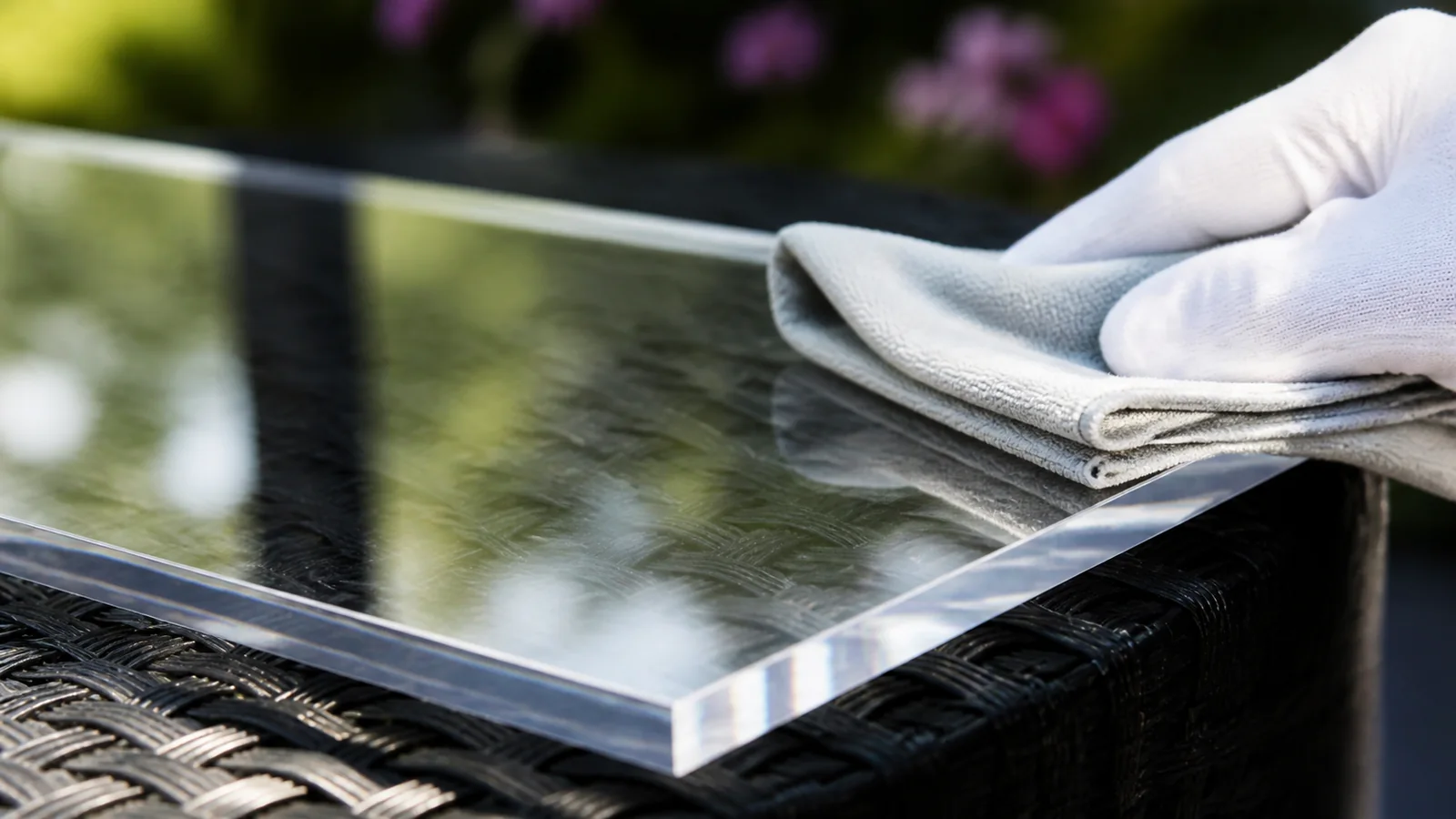
Uncoated PC is often chosen because it is perceived as the “stronger clear plastic.” In a premium outdoor furniture component, that phrase can hide the wrong trade-off. Surface mar resistance, perceived clarity, gloss retention, and the way edges present beside metal or wood can matter more than the ability to endure a rare hard blow.
In my material review, I separate the panel’s structural job from its showroom job. A compact, properly supported clear accent may not need PC’s impact margin; it may benefit more from a clear acrylic sheet with a well-controlled edge finish and sensible protective packing. PMMA is not impact-equivalent to PC, but its naturally water-clear appearance and low haze are why Trinseo identifies PMMA for exterior optical and weathering uses.
The practical judgment is simple: do not buy impact performance that the design will not use if the trade-off is a surface standard the project will notice daily.
Outdoor Exposure Makes Grade Selection Non-Negotiable
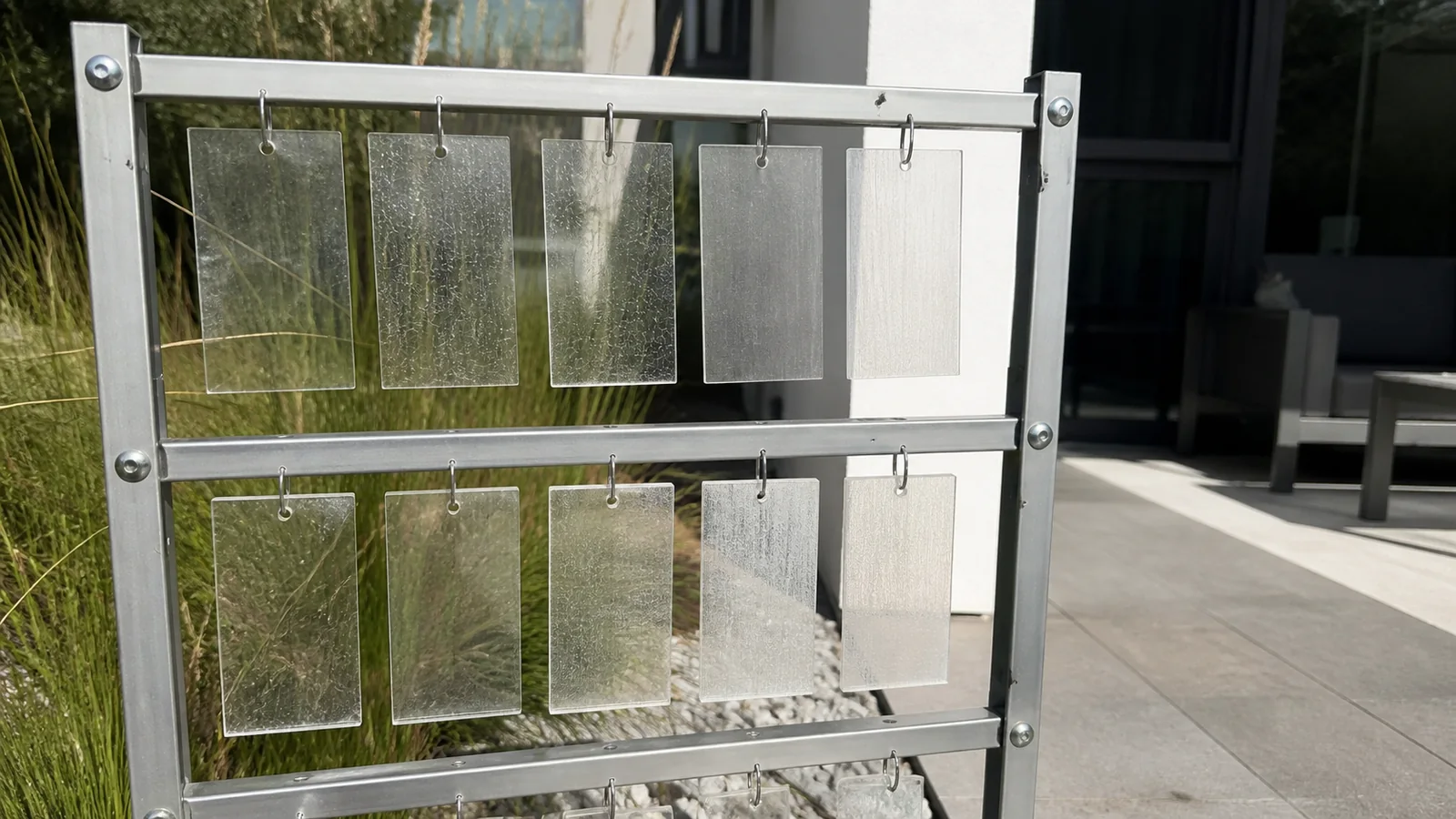
“Outdoor” does not tell us enough. A covered restaurant terrace, a seaside resort, and an uncovered rooftop place very different demands on a transparent panel. Sun intensity, heat buildup, wet-dry cycles, airborne dust, and local cleaning routines change the decision.
For PC, the outdoor grade and the protected face must be named on the drawing or material approval. SABIC’s outdoor-weathering guidance for UV-protected LEXAN sheet explains that surface protection is a deliberate part of maintaining optical quality under UV exposure. That is useful evidence for the question, not a blanket warranty for another sheet, geometry, or climate.
For acrylic, I would also confirm the actual sheet grade and exposure rather than promise a universal life. The better material is determined by the approved grade, exposed surface, design details, and visual acceptance criteria—not by PC or PMMA alone.
Coatings Change the Cost and Manufacturing Conversation
Once a buyer needs UV stability, abrasion resistance, and a premium surface, PC may require a coated or capped grade. That can be exactly right for a high-impact transparent guard or a public-facing panel. It also changes sourcing, lead time, fabrication precautions, edge handling, and the cost comparison against acrylic.
I flag coatings early because a hard-coated surface is not a casual post-purchase upgrade. The coating side, forming limits, drilling method, protective film, and cleaning recommendation should be confirmed before a prototype is approved. SABIC’s MARGARD portfolio illustrates why: abrasion and UV performance are offered through defined coated grades, not assumed from base PC.
If the premium requirement makes coated PC necessary, price and validate it as that complete system. If the impact requirement is modest, a custom acrylic approach may be the clearer and simpler manufacturing route.
Design Details Can Defeat Either Material
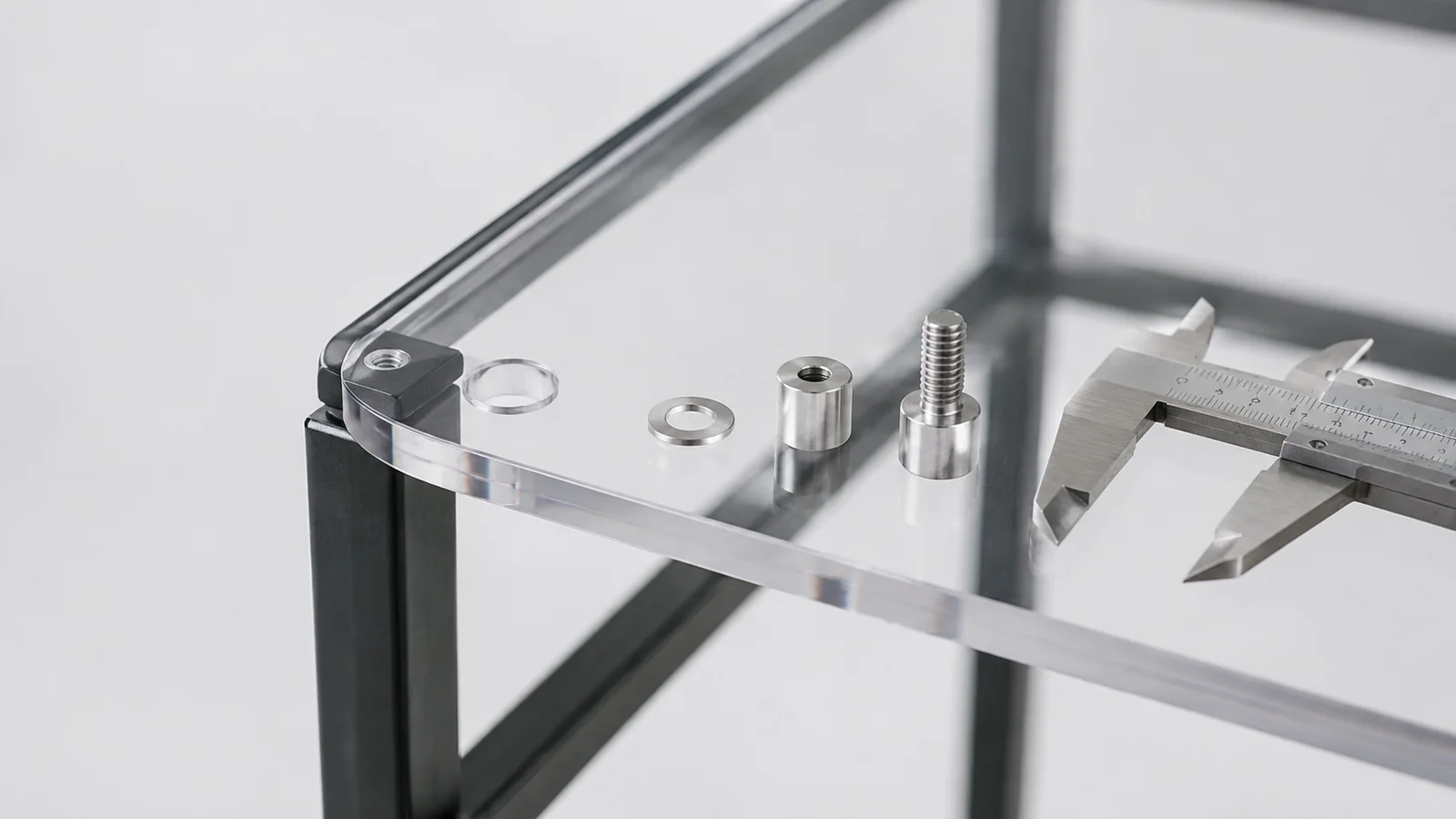
Material selection cannot correct a poor load path or a stressed fastening detail. A clear panel needs sufficient support, rounded internal corners, sensible hole-edge distance, washers or compliant interfaces where appropriate, and an allowance for installation movement. I want those decisions visible in the drawing—not resolved by an installer with a drill.
For acrylic, I look closely at local stress around holes, sharp corners, panel span, and fastener tightening. For PC, I still review those points, plus the direction and integrity of any surface protection. Toughness does not make a thin, poorly supported panel feel premium, and it does not prevent a visibly damaged surface from becoming a replacement issue.
When an outdoor furniture feature has a large span, a structural or safety role, or unknown abuse conditions, the design engineer should establish the load and impact criteria before the material is finalized.
Cleaning, Handling, and Packaging Reveal the Real Requirement
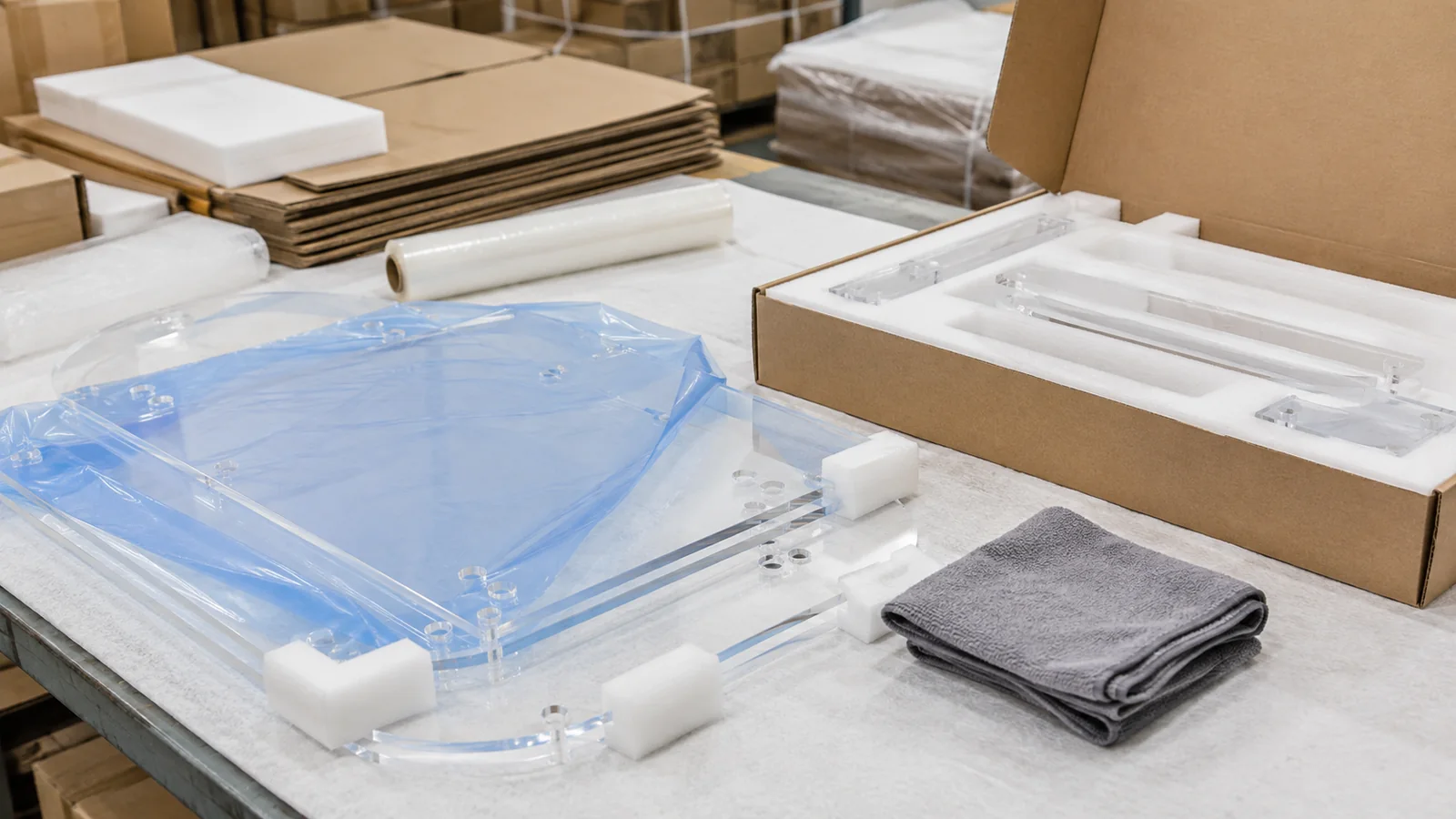
A clear component’s journey matters. It is handled at fabrication, assembled with hardware, packed, delivered, installed, and wiped by the end user. If the specification only considers the finished panel on a bench, it misses most opportunities for visible damage.
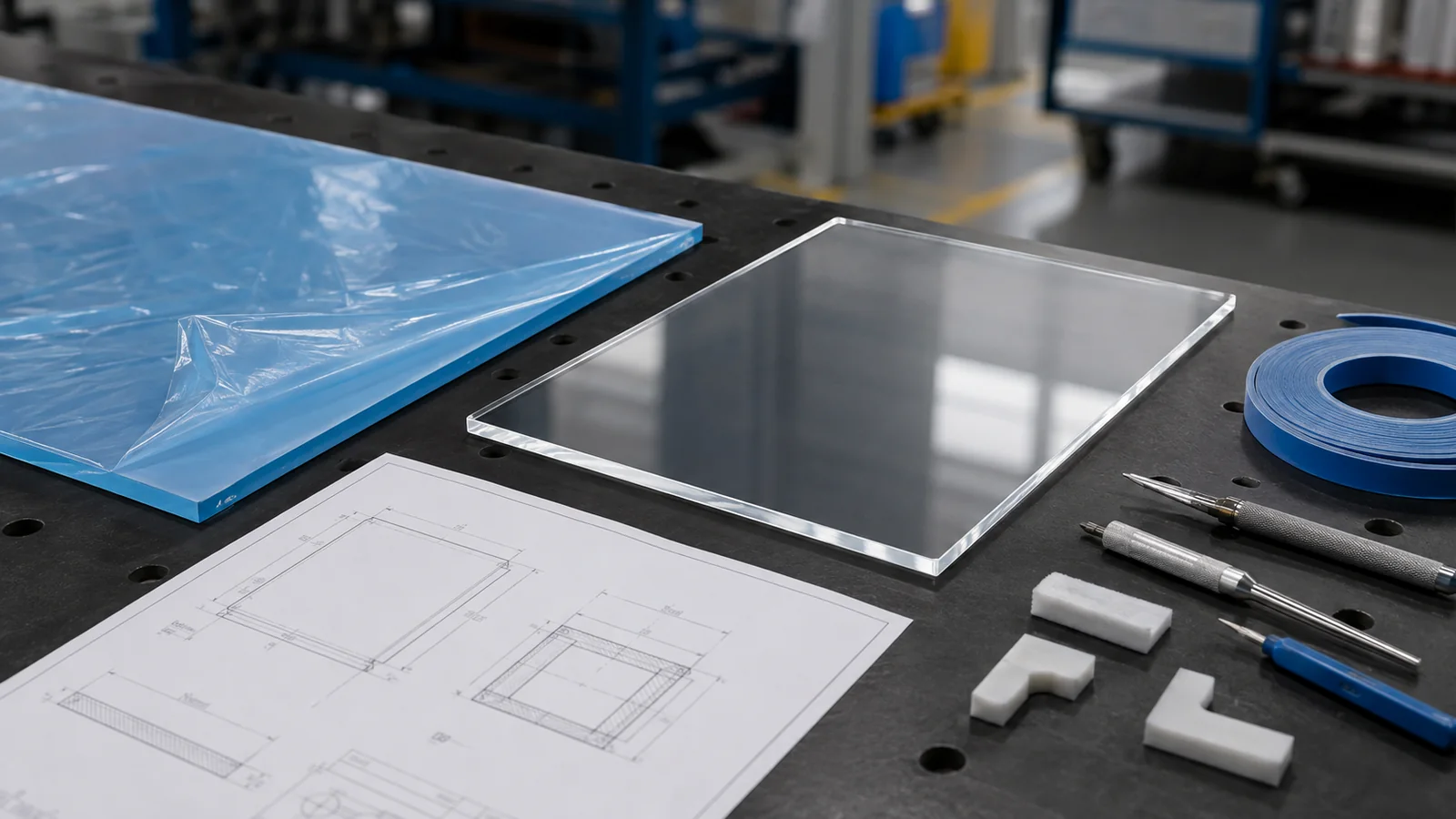
I ask what cloth, cleaner, and cleaning frequency the furniture operator expects. I also ask whether parts will be stacked, flat-packed, or shipped assembled. These answers affect the choice of protective film, separators, foam corners, and carton layout. They also tell us whether a scratch-resistance requirement belongs in the material specification.
This is where a premium acrylic part can make sense: a controlled clear finish, polished or CNC-finished edges, and packaging designed around the cosmetic standard. It is equally where a coated PC system can be justified—provided the project prices and protects that coating from the start.
A Better Material Approval Sequence
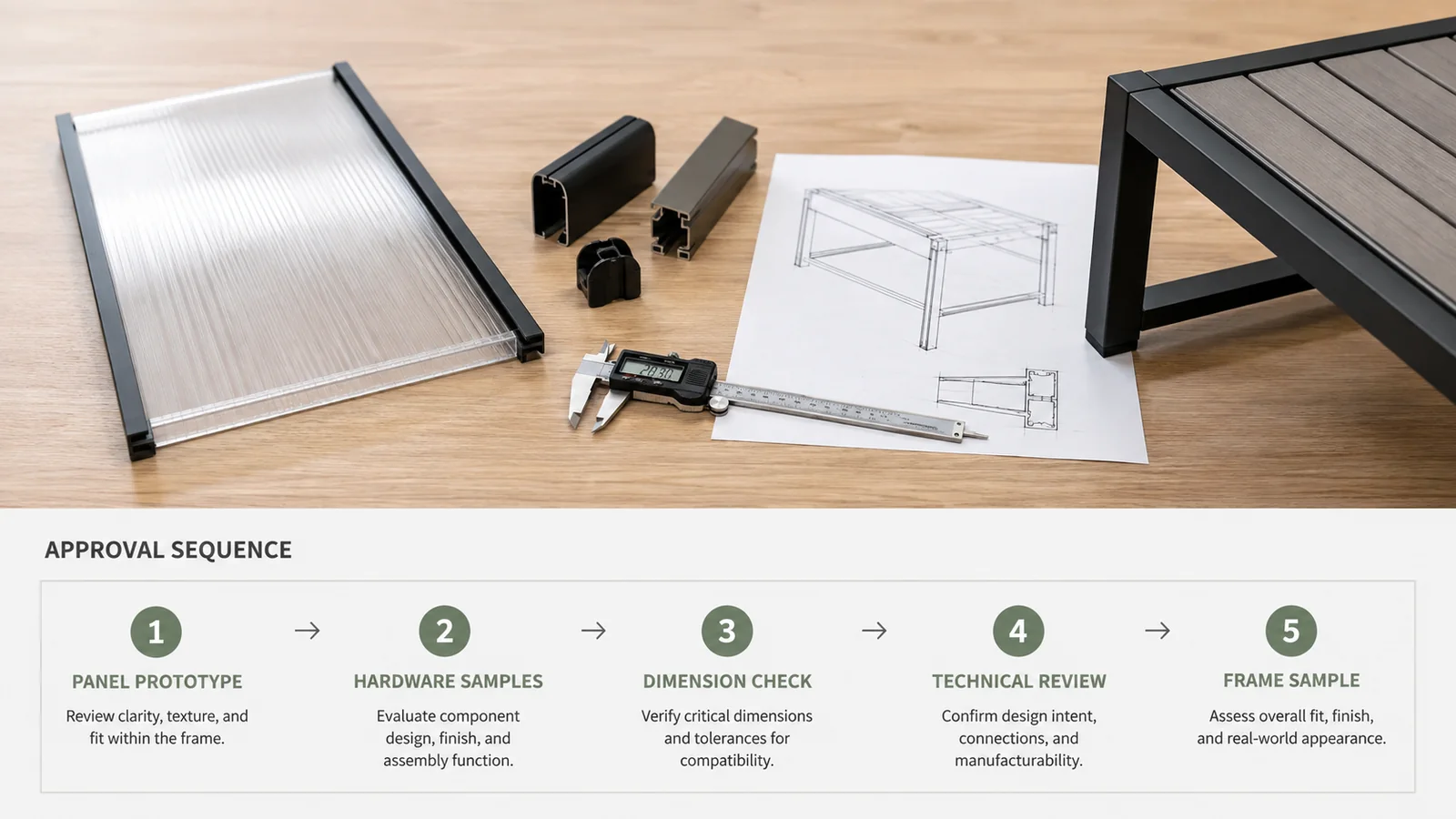
Before I recommend a final clear material, I want a short approval sequence:
- Define the part’s visual role, exposure location, likely impacts, support points, and expected cleaning.
- Choose candidate grades—not just PC or PMMA—and record coatings, UV treatment, thickness, and exposed faces.
- Review a representative sample with the real edge treatment, holes, hardware, and nearby frame materials.
- Agree the visual acceptance standard after handling and cleaning, then review protective packaging before a production order.
That process avoids a common surprise: a material that passes an isolated property comparison but fails the furniture brand’s visual expectation. It also keeps Feilong’s role precise. We can review and fabricate the custom acrylic solution; projects requiring impact-focused PC should carry their material-grade and coating requirements into the supplier selection.
When Acrylic Is the Better Premium Direction
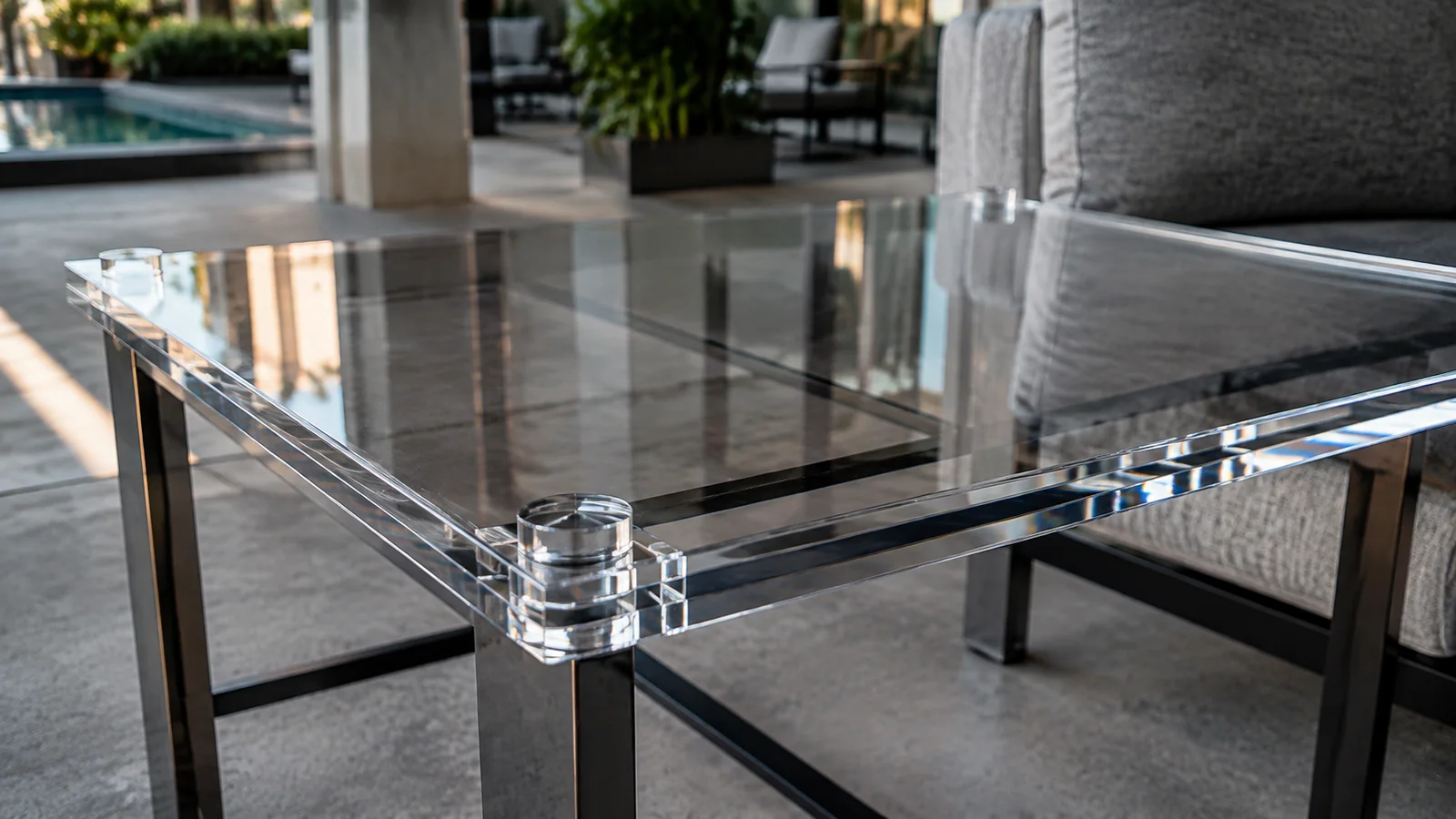
I would start with acrylic when a clear outdoor furniture feature is primarily decorative, display-like, close-view, and properly supported—and where the design does not have a high-impact safety obligation. Acrylic gives us a strong platform for CNC machining, laser cutting, drilling, polishing, bonding, heat bending, printing, and hardware assembly, depending on the specific component.
That recommendation remains conditional. We need the panel dimensions, thickness concept, support layout, hole pattern, edge standard, exposure, cleaning plan, quantity, and packing method before we can assess manufacturability. For a clear tabletop or large span, the frame and load path can matter more than the material name.
When a buyer asks us to quote a custom clear furniture component, the most helpful first package is a drawing or reference image plus those use conditions. It lets us assess whether acrylic can deliver the intended appearance without quietly inheriting an impact duty it should not carry.
Conclusion
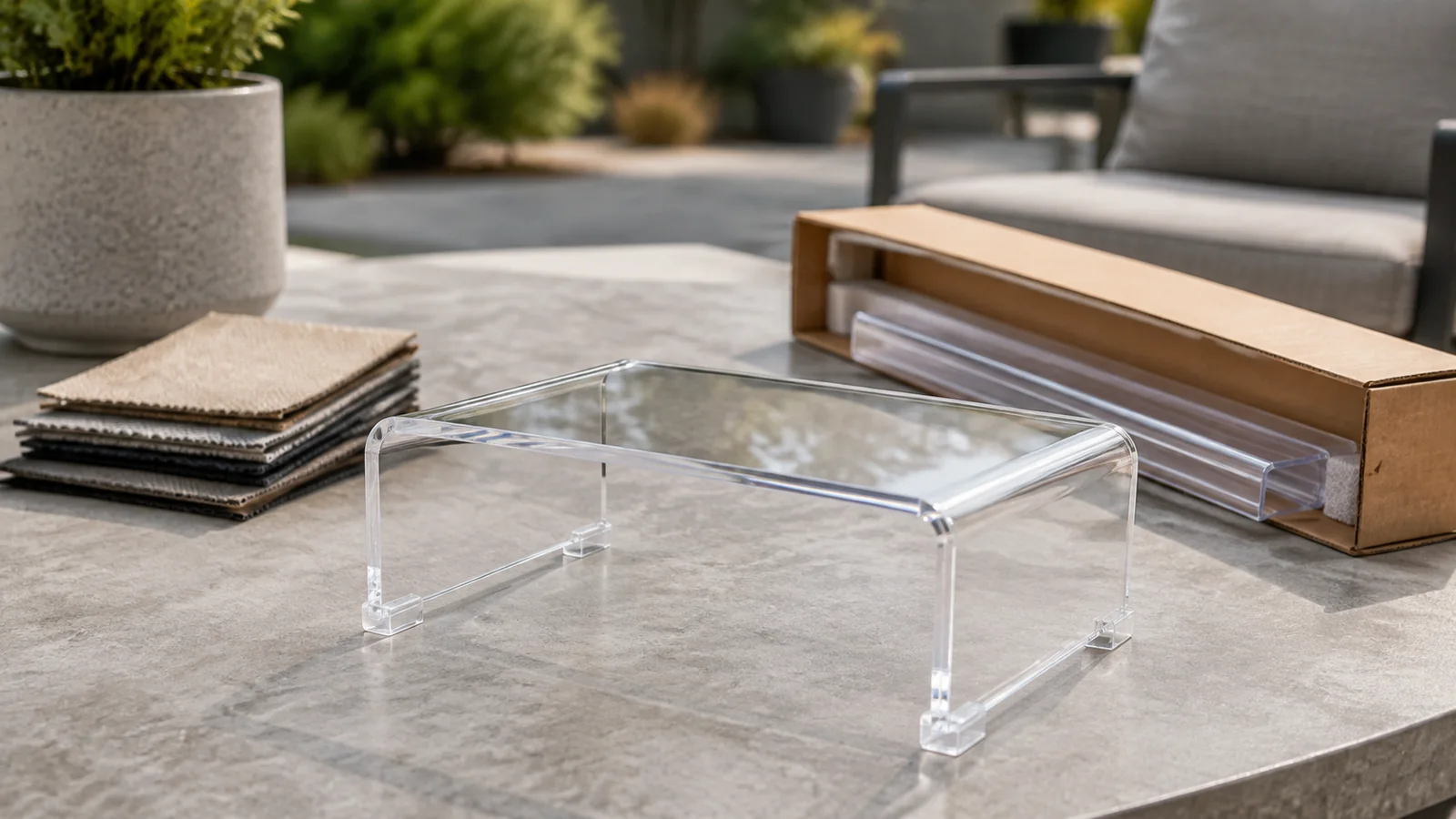
Polycarbonate fails as a premium clear material for outdoor furniture when its impact advantage is treated as a substitute for surface appearance, UV-grade selection, coating specification, careful handling, and thoughtful design. In that situation, “tough” can still look wrong.
For a polished, close-view clear component with manageable impact risk, I would evaluate custom acrylic first. For genuine impact exposure, PC may be the correct path—but specify the outdoor grade, protective surface, coating, fabrication limits, and validation plan as one system. Send Feilong your drawing or reference image with the support layout, exposure, visual standard, and packaging expectation, and we can review whether a custom acrylic component is the right direction before quotation.