Skip to content
A lot of materials look smart in the middle.
Not too cheap. Not too fragile. Not too premium. Not too risky. That is exactly why buyers get pulled toward them so easily. PETG often enters the conversation like that. It sits there between acrylic and polycarbonate and gives off a calm, reasonable feeling. It sounds balanced. It sounds practical. It sounds safe.
Then real use begins.
I have seen this happen with protective panel projects more than once. A buyer wants something clearer than polycarbonate in appearance, less brittle than acrylic in theory, and less expensive than going all the way to the toughest option. PETG starts to look like the adult choice in the room. A sensible compromise. A material that avoids extremes.
But protective panels do not live on spreadsheets. They live in factories, stores, workstations, packing lines, public spaces, and shipping cartons. They get wiped. They get bumped. They get leaned on. They get judged by users who do not care what the material datasheet promised.
That is where the polite little idea of “compromise” can start to fall apart.
PETG is not always a bad material. I want to say that clearly. I am not against it. I just think many buyers treat it like a universal middle answer, and that is where trouble begins. In the wrong protective panel job, PETG does not fail in a dramatic way. It fails in a quiet way. It scratches too fast. It dulls too early. It flexes a bit too much. It looks tired before the project should look tired.
I do not judge protective panel materials by where they sit in the middle. I judge them by what kind of disappointment they create six months later, because that is usually where the real cost starts.
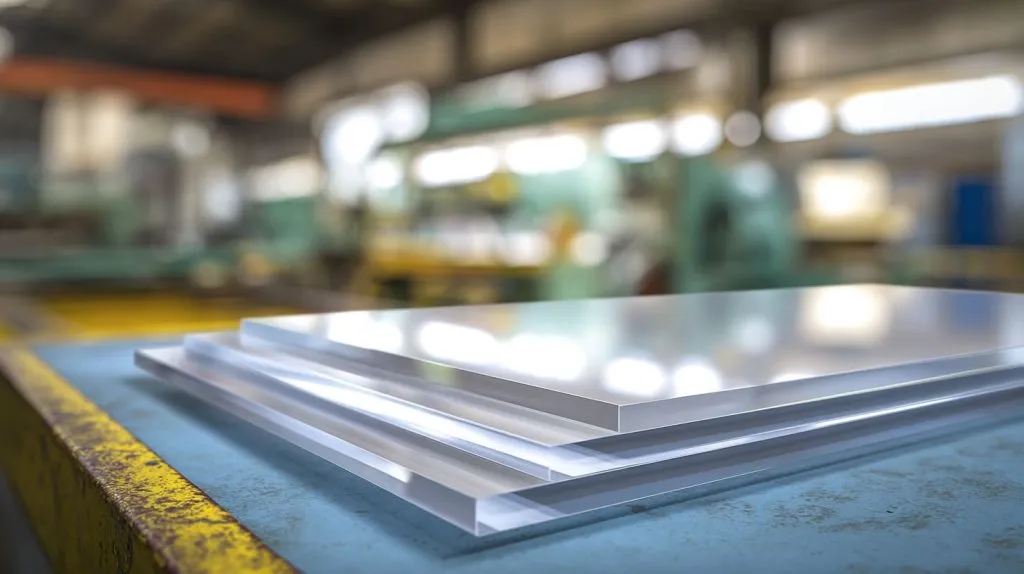
When I compare PETG, acrylic, and polycarbonate, I do not see three neat boxes. I see three different kinds of risk.
- Acrylic often gives me the best clarity and surface hardness
- Polycarbonate usually gives me the best impact protection
- PETG often sits in the middle, but that middle is not always stable
That sounds simple. Real projects are not.
I have talked with buyers who chose PETG because they wanted to avoid the brittleness of acrylic. I have also seen buyers regret it because the panel scratched so quickly that the product started to look cheap. That kind of regret is hard to show in a quote sheet. It only shows up later, when the panel is already in use and everyone is too busy to enjoy being wrong.
Before I explain where PETG becomes risky, it helps to understand why so many smart people say yes to it in the first place.
What Makes PETG Seem Like a Good Compromise at First?

PETG has a very strong first impression.
It does not enter the room with drama. It enters with logic. That is part of its charm. Buyers hear that it is easier to form than acrylic, tougher than acrylic in some ways, and less expensive than polycarbonate. That combination feels very attractive, especially when the project has both budget pressure and design pressure.
I understand why people choose it. I really do. I have had moments where PETG looked like the cleanest answer on paper too.
The trouble is that “good on paper” can be a dangerous phrase in protective panel work.
A quote once looked wonderfully balanced to me until I imagined the panel being cleaned by a tired employee with the wrong cloth every day for a year, and that mental picture changed the whole material decision.
Balance Between Cost and Performance
This is the first reason PETG wins attention. It often looks like the material that keeps both finance and engineering calm.
It is usually cheaper than polycarbonate. That matters. A lot of projects do not have room for premium material across every panel, especially in larger assemblies or multi-piece protective covers.
At the same time, PETG often sounds better than acrylic because many buyers have heard the same basic line: acrylic is clearer and harder, but more brittle; PETG is softer but tougher. That sounds like a fair trade.
And in a narrow sense, it can be.
Still, I think buyers need to slow down here. The phrase “better impact resistance than acrylic” can push people into lazy thinking. They start assuming PETG is therefore safer for protective use in a broad way. That is not always true.
Here is how the early pitch often sounds versus what I actually think through:
| Early Buying Logic | What I Ask Myself |
|---|---|
| PETG is tougher than acrylic | Tough in what kind of use? One-time hit or daily abuse? |
| PETG costs less than polycarbonate | Lower now, but how often will it be replaced? |
| PETG is a middle option | Middle in price does not mean middle in long-term value |
A material can win the quote and still lose the job.
Ease of Fabrication
PETG also earns trust because it is friendly in production.
It forms well. It cuts well. It can be bent and shaped without as much drama as some other plastics. That makes it attractive for projects with curves, formed guards, display covers, and shaped barriers.
I have seen PETG get chosen simply because the part geometry was awkward and the team wanted less processing trouble. That is not irrational. Manufacturing ease matters. Lead time matters too. If one material creates fewer cracks, fewer broken edges, or fewer forming headaches during production, that can absolutely influence the decision.
But I do not like it when fabrication convenience becomes the main reason for a protective panel choice. A panel is not there to make production feel easy. It is there to survive real use after production ends.
That difference matters.
Why fabrication comfort can fool buyers
- The material may be easy to shape
- The sample may look excellent
- The first batch may run smoothly
- The panel may still underperform in the field
That last point is where many “easy” decisions become expensive.
Visual Clarity and Availability
PETG also benefits from looking good at the start.
It is clear enough for many uses. It is widely available. Many suppliers can source it without much trouble. That lowers buying friction. Buyers like materials that are easy to find and easy to compare.
I get that. Nobody enjoys sourcing pain.
But clarity at delivery is not the same as clarity after use. A protective panel is not judged only on day one. It is judged after wiping, handling, scuffing, shipping, storage, heat exposure, and human habits. That is why I get cautious when someone says PETG “looks good enough.” Good enough for what? And for how long?
That question changes everything.
| Reason PETG Looks Attractive | Why It Feels Safe | What Can Be Missed |
|---|---|---|
| Moderate price | Seems financially responsible | Replacement risk later |
| Good formability | Easy to make complex parts | Performance may be weaker in use |
| Nice initial clarity | Sample looks presentable | Surface ages faster |
| Wide supply availability | Easy sourcing | Easy sourcing does not equal right fit |
The appeal of PETG is real. I do not deny it. But now we need to walk into the less comfortable part of the conversation, because protective panels do not care how nice the sample looked in the meeting room.
Where Does PETG Actually Fail in Protective Panel Applications?

This is the part that buyers often meet too late.
PETG rarely announces its weakness in a loud, theatrical way. It usually starts with small disappointments. A few marks. A little haze. A shape that does not feel as solid as it should. A panel that looked crisp in the sample stage but starts to feel worn faster than expected.
That quiet decline is exactly why I take this material seriously. Loud failure gets attention. Quiet failure gets ignored until it spreads.
The point where I start doubting PETG is usually not when I ask whether it can survive a single event, but when I ask how ugly or unstable it becomes after hundreds of ordinary ones.
Surface Durability Issues
This is one of the biggest weak spots.
PETG scratches too easily for many protective panel jobs. That alone does not make it useless. It does make it dangerous when appearance matters, visibility matters, or frequent cleaning is part of daily life.
Acrylic often beats PETG here. Acrylic has a harder surface. It tends to hold a cleaner, glossier appearance longer in many indoor applications. PETG, by contrast, can start looking tired much earlier.
That matters more than some people think.
A protective panel is often still part of the visual experience. In retail, a scratched panel makes the whole display feel cheaper. In equipment use, haze can reduce visibility. In branded products, the user may not say “this PETG degraded.” They just say the product looks low quality.
And they blame the product, not the resin choice.
Common surface problems I watch for
- Fine scratches from repeated wiping
- Swirl marks from rough cloths
- Surface haze after cleaning
- A dull look that appears before the panel is actually old
| Surface Issue | PETG | Acrylic | Why It Matters |
|---|---|---|---|
| Scratch resistance | Low | High | Affects appearance and visibility |
| Haze over time | More likely | Less likely indoors | Reduces perceived quality |
| Gloss retention | Lower | Higher | Important in retail and display use |
Lower Impact Resistance Than Expected
Now let us deal with a common misunderstanding.
PETG is often described as tougher than acrylic, and that statement leads many people to relax too much. They hear “tougher” and mentally drift toward “protective.” But tougher than acrylic does not mean close to polycarbonate. Not even near, in many real cases.
That gap matters.
PETG may handle some knocks better than acrylic. Fine. But in safety-focused or repeated-stress situations, it can still disappoint badly. It is not the material I trust when there is a real chance of repeated impact, strong user abuse, or safety liability.
I do not like protective panel decisions that rely on a comparison against the weaker option if the real job actually needs the stronger one.
That is the trap.
A practical way I think about it
If the material decision starts with “at least it is better than acrylic,” I pause and ask whether the job actually needs something closer to polycarbonate.
That question saves trouble.
Temperature Sensitivity
Heat is another place where PETG can quietly lose the argument.
It can soften or deform at temperatures that are not extreme in the real world. A hot warehouse, a sunny shipment, a warm machine area, or a poorly ventilated setup can all become part of the story.
This does not mean PETG melts into nonsense the minute the weather changes. I am not saying that. I am saying it has less heat margin than many buyers assume, and protective panels often spend time in environments that are less gentle than the design office imagined.
I have seen buyers focus so hard on the use environment that they forget the shipping environment. That is a mistake. A panel does not only need to survive use. It needs to survive transport, storage, and handling before use too.
| Risk Area | What Buyers Often Assume | What Can Happen |
|---|---|---|
| Indoor use | Stable, low-risk | Hidden heat from equipment or lighting |
| Shipping | Temporary, not important | Warping in hot containers or trucks |
| Outdoor edge cases | Short exposure is fine | Softening, distortion, shorter service life |
There is a point where PETG stops being a practical compromise and starts becoming a material that asks for too many excuses. That point becomes even more obvious in rougher environments, and that is where I want to go next.
Why PETG Performs Poorly in High-Traffic or Industrial Environments?

High-traffic environments are very honest.
They do not care what the sample board looked like. They do not care what the sales sheet suggested. They do not care that the panel was a “balanced option.” They simply expose weak choices faster.
That is why I get much more cautious with PETG in industrial or busy commercial settings. Daily contact changes the conversation. Repeated cleaning changes it again. Stress, vibration, accidental hits, and rough handling finish the job.
I lose confidence in PETG the moment a panel has to survive both human impatience and daily maintenance, because that is where neat material theory starts to break down.
Frequent Contact and Cleaning Damage
This is one of the most common failure patterns.
Panels in busy spaces get touched, wiped, leaned on, bumped, and cleaned more than expected. Nobody writes “aggressive wiping by hurried staff” into the original material brief, but it happens all the time.
PETG does not love that reality.
Its softer surface means scratches build up faster. Its chemical resistance is not always good enough for the cleaners people actually use in the field. And that matters because end users almost never follow ideal care instructions with perfect discipline.
I have learned to respect bad cleaning habits as a design factor, because real users are often rougher than the engineer who approved the material.
Cleaning risks that buyers should think about
- Repeated dry wiping with dusty cloths
- Stronger-than-recommended cleaners
- Fast wiping by staff under time pressure
- Abrasive paper products or rough pads
- Surface rubbing in the same area every day
| Daily Condition | PETG Response | Why It Becomes a Problem |
|---|---|---|
| Frequent wiping | Scratches accumulate fast | Visibility and appearance suffer |
| Harsh cleaners | Surface can haze or weaken | Maintenance becomes risky |
| Constant contact | Soft surface shows wear early | Product looks old too soon |
Structural Weakness Under Load
A protective panel is not always just a visual barrier. Sometimes it becomes a quiet structural part too.
People lean on it. Operators push against it. Parts vibrate near it. Fasteners pull on it. A panel that looks acceptable in a static sample can behave very differently over time under flex and stress.
PETG is not my first choice when a panel needs to stay rigid and confident under repeated load. It can flex more than I want. That flex may not count as instant failure, but it can still feel wrong, look wrong, and age badly.
There is a kind of “soft confidence” that weak materials give off in use. Users feel it before engineers admit it.
That feeling matters.
Situations where flex becomes a warning sign
- Machine guards with fastened corners
- Larger flat panels with unsupported spans
- User-facing barriers where people may lean or push
- Covers near vibration or repeated motion
Long-Term Appearance Degradation
This point gets dismissed too often because it sounds cosmetic. I think that is a mistake.
Appearance is part of performance when the panel is visible to the user.
A cloudy, scratched, dull protective panel sends a message. It says the product is old, the environment is poorly maintained, or the brand cut corners. Even when none of that is fully true, the visual signal is still there.
I have seen beautifully designed products look strangely cheap because the clear panel aged badly. That can undo a lot of expensive work around them.
What long-term degradation usually looks like
| Time in Use | What the Team Hopes For | What Can Actually Happen With PETG |
|---|---|---|
| Early stage | Clean, clear, presentable | Looks fine |
| Mid stage | Light wear only | Noticeable scratches and haze |
| Later stage | Still acceptable | Dull, tired, lower perceived quality |
The hard part is that these issues do not always appear during sampling. They appear later, when changing course is harder and more expensive. That is why the next question matters so much: when does PETG stop saving money and start quietly burning it?
When PETG Becomes a Cost Trap Instead of a Cost Saver?

A lower material price can make people feel clever very early in a project.
I understand that feeling. A quote comes in under budget. The numbers look neat. The team feels relieved. Everyone acts as if the material problem has been solved.
Then the panel starts aging too fast. Or returns come in. Or the customer notices surface wear earlier than expected. Or replacement cycles get shorter. At that point, the cheap choice stops feeling cheap.
I stop trusting a “cost-saving” material the moment the project begins paying for it in maintenance, complaints, or rework, because that is not saving. That is just delayed spending.
Hidden Replacement Costs
The first trap is simple. PETG may need replacement sooner in the wrong application.
That replacement may not look dramatic on a spreadsheet at first. But once you add labor, downtime, shipping, customer communication, spare stock, and quality reviews, the real cost starts growing.
A panel that needs to be replaced twice as often is not a budget material anymore.
This is especially true in B2B environments. Buyers like Jacky are not only paying for resin. They are paying for stability. They are paying for fewer surprises. They are paying for the ability to place repeat orders without reopening old arguments.
That stability has value.
| Cost Area | Low Initial PETG Cost | Later Cost Risk |
|---|---|---|
| Material purchase | Lower than polycarbonate | Looks attractive early |
| Replacement frequency | Often underestimated | Can rise in rough use |
| Labor and service | Ignored in material choice | Becomes painful later |
| Downtime or rework | Often invisible at quoting stage | Can exceed material savings |
Customer Perception Risks
This part is softer, but not less real.
A scratched or cloudy panel changes how people feel about the whole product. That affects premium displays, branded fixtures, cosmetic organizers, retail protection pieces, and any product where appearance carries value.
The user does not usually separate the panel from the brand story. They see one object. One experience. One impression.
So when the panel ages badly, the brand ages badly with it.
That is why I do not treat visual wear as a minor issue in customer-facing projects. It can directly affect reorder confidence, showroom appeal, and perceived value.
Places where perception matters more than buyers admit
- Beauty retail displays
- Premium product covers
- Countertop guards in visible spaces
- Branded point-of-sale structures
- Household items with decorative value
Logistics and Rework Issues
Then there is the less glamorous side of the story.
Shipping heat. Storage heat. Stack pressure. Real-world handling. These things do not sound exciting, but they can quietly create defects. A material that behaves politely in the workshop may behave very differently after long transit in a hot climate.
This is where buyers sometimes get hit twice: once by the wrong material choice, and again by the cost of fixing what went wrong after the goods already moved.
The detail I worry about most is not whether the sample looked perfect in the factory, but whether the finished panel still looks flat and confident after travel, unpacking, and installation.
That is a different question. And it often gives a different answer.
| Stage | What Seems Fine | What Can Go Wrong |
|---|---|---|
| Sampling | Good clarity and shape | Creates false confidence |
| Production | Smooth fabrication | Still no proof of field durability |
| Shipping | Treated like a routine step | Heat and pressure create distortion |
| Installation | Expected to be simple | Rework and rejection show up |
A material is never really cheap if it keeps asking for second chances. That is why the next comparison matters. PETG only makes sense when we see it clearly against its alternatives, not when we discuss it in isolation.
How Does PETG Compare Directly with Acrylic and Polycarbonate?
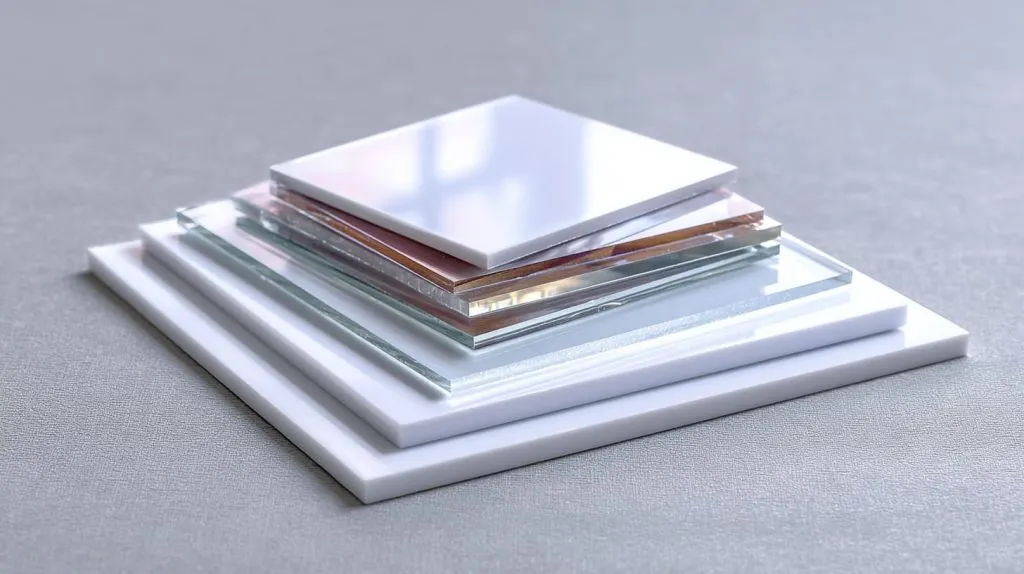
I think material choices get cleaner when I force them into direct comparison.
Not because comparison solves everything. It does not. But it stops vague thinking. It stops buyers from saying things like “PETG seems okay” without asking okay compared to what?
That question matters.
I do not choose PETG because it sounds balanced. I choose or reject it by asking which weakness I am more willing to live with: acrylic’s brittleness, PETG’s softer surface and lower heat margin, or polycarbonate’s higher cost and different surface feel.
PETG vs Acrylic
This comparison fools a lot of people because both materials can look attractive in clear-panel use.
Acrylic usually wins for optical sharpness and scratch resistance. It tends to look cleaner and stay prettier longer in many indoor environments. If visual quality matters a lot, acrylic is often hard to ignore.
PETG, on the other hand, often feels safer because it is less brittle in many handling situations. That makes people relax. But then they forget the softer surface. They forget the faster wear. They forget the way daily cleaning can slowly erase the panel’s nice first impression.
So the real question is not “which one is better?” The real question is “which flaw hurts this project less?”
My practical split between the two
| If I care more about... | I lean toward... |
|---|---|
| Long-term visual clarity | Acrylic |
| Better formability | PETG |
| Harder surface | Acrylic |
| Slightly more forgiving handling | PETG |
PETG vs Polycarbonate
This comparison is even more important in protective panel work.
Polycarbonate costs more. That is the main reason PETG gets pulled into the conversation. Buyers want a lower-cost option and hope it still feels protective enough.
Sometimes that hope is too optimistic.
Polycarbonate usually gives much stronger impact resistance and better heat tolerance. If the panel faces rough use, safety concerns, repeated abuse, or tougher environmental conditions, PETG can look weak very quickly by comparison.
This is why I get nervous when teams use PETG to imitate a polycarbonate job without polycarbonate performance. That is usually where compromise turns into self-deception.
Questions I ask before I replace polycarbonate with PETG
- Is this a real protective job or just a light cover?
- Could abuse be stronger than the buyer expects?
- Will heat, cleaning, or user contact be common?
- Is the panel safety-related, even indirectly?
- Would failure hurt trust more than the extra material cost?
If too many answers worry me, I move away from PETG.
Quick Comparison Table
| Property | PETG | Acrylic | Polycarbonate |
|---|---|---|---|
| Scratch Resistance | Low | High | Medium |
| Impact Strength | Medium | Low | Very High |
| Heat Resistance | Low | Medium | High |
| Initial Cost | Medium | Low-Medium | High |
| Forming Ease | Good | Moderate | Good |
| Long-Term Visual Retention | Fair | Good | Fair to Good |
| Best Fit | Light-duty shaped parts | Clear, premium indoor panels | Heavy-duty protective use |
No material is perfect. I want to say that plainly. Every material asks you to accept something. The job is to accept the right weakness, not the most convenient sales story.
And once I frame it that way, some use cases become much easier to judge. In some scenarios, PETG is simply the wrong answer.
In What Scenarios Is PETG Clearly the Wrong Choice?

There are projects where I can debate PETG.
Then there are projects where I stop debating.
That line matters because many buying mistakes come from treating all clear protective panels as if they live the same life. They do not. A panel in a calm indoor corner is one thing. A panel in heat, sunlight, traffic, or risk-heavy use is something else entirely.
I become much less tolerant of PETG when the panel has to absorb punishment from environment, people, or reputation at the same time, because that combination is where compromises get exposed fast.
Outdoor Protective Panels
Outdoor use is one of the easiest places for PETG to lose the argument.
Sun, heat, weather swings, and long exposure create a tougher life for any plastic. PETG may manage limited situations, but as a general outdoor protective panel choice, I do not find it comforting.
Heat deformation risk matters. So does long-term appearance. So does weather-related aging. Even if the panel is not in brutal outdoor service all day, partial exposure can still create problems over time.
Buyers sometimes tell themselves the panel is “not really outdoors,” but a canopy edge, loading area, entry zone, or bright window-facing location can still punish the material.
That gray-zone thinking causes a lot of material regret.
Security or Safety Barriers
This one is even simpler.
If the panel has any safety role, even a modest one, I get very careful. PETG is not where I want to place confidence if impact risk is meaningful or if user protection depends on the panel staying strong under abuse.
I think this is where false economy gets especially dangerous. Saving some material cost and then carrying safety doubt into the field is not smart buying.
For light barriers, covers, or shields with low exposure, maybe there is room to talk. For anything closer to true protection, the conversation often moves quickly toward polycarbonate.
High-End Retail Displays
This section matters a lot for brands that care about presentation.
PETG may look fine at first. That is the trap. It can deliver a decent visual result early on, especially in samples. But high-end retail does not only need day-one clarity. It needs lasting confidence. It needs surfaces that still look clean after attention, wiping, product movement, and human contact.
I have watched premium-looking displays lose their premium feeling because the panel surface aged badly. That is frustrating because the design might be excellent. The brand work might be excellent. The structure might be excellent. Yet the panel quietly drags the whole thing down.
In visible retail use, I care about:
- Surface staying clean-looking
- Panel keeping a premium feel
- Scratch marks not stealing attention
- The product behind the panel still looking sharp
Industrial Machine Guards
This is another area where I do not like gambling.
Machine areas often bring vibration, dirt, repeated handling, cleaning, stress, and sometimes heat. That mix is too demanding for lazy middle-ground thinking.
PETG may survive some light-duty guard jobs. Fine. But when the environment turns rough, long-term confidence matters more than saving a little on material.
Here is the blunt version: if the panel failure would create safety concern, maintenance burden, or operator distrust, I usually do not want PETG carrying that responsibility.
| Scenario | PETG Fit | Why I Get Cautious |
|---|---|---|
| Outdoor protective panel | Weak | Heat and weather exposure |
| Safety barrier | Weak | Impact confidence too limited |
| Premium retail display | Weak | Surface wear hurts visual value |
| Machine guard | Weak to risky | Stress, cleaning, rough use |
Still, I do not want to make this article sound extreme. PETG is not useless. It just needs a much narrower lane than many buyers give it. So let us talk about the cases where I can still accept it.
When Is PETG Still Acceptable (and Why)?
I do not believe in condemning a material just because it disappoints in the wrong job.
That would be lazy too.
PETG has a place. I have seen it work well when the expectations are realistic and the environment is controlled. The problem is not that PETG exists. The problem is that it gets promoted into jobs that ask too much from it.
I can live with PETG when the application is modest, the exposure is limited, and the team is honest about what the panel really needs to do.
Short-Term or Disposable Applications
This is one of the clearest safe zones.
If the panel is temporary, low-risk, or part of a short service cycle, PETG can be perfectly reasonable. Prototypes, temporary shields, event-use panels, limited-duration covers, and disposable or semi-disposable protective pieces can all make sense.
In those cases, long-term scratching or visual aging may not matter much. The part only needs to stay decent long enough to do its short job.
That is a very different decision from a permanent protective panel.
Low-Traffic Environments
PETG can also work in calm spaces.
If the panel will not be touched often, wiped aggressively, exposed to heat, or leaned on, the softer surface may not become a serious problem. In a low-contact environment, some of PETG’s weaknesses stay quiet enough that the material still delivers fair value.
The key word there is quiet.
Many buyers say “low traffic” too casually. I prefer to define it more strictly.
What I consider a real low-traffic condition
- Minimal daily contact
- Light cleaning only
- Little or no abrasion risk
- Stable indoor temperature
- No meaningful structural load
If the application fits that list, PETG becomes easier to defend.
Complex Forming Requirements
This is where PETG can genuinely earn its place.
If the panel geometry is tricky and the project needs deeper forming or more production-friendly shaping, PETG can be useful. A material that forms cleanly can reduce waste, improve consistency, and simplify production.
I respect that. Production reality matters.
But even here, I still separate form success from field success. A beautiful formed part that scratches badly in use is still only half a win.
So I accept PETG in shaped applications only when the use conditions are mild enough to support it.
| Situation | PETG Can Work? | Why |
|---|---|---|
| Temporary project | Yes | Long-term wear matters less |
| Low-contact indoor panel | Yes | Surface weakness may stay manageable |
| Deep formed geometry | Yes | Manufacturing advantage is meaningful |
| Heavy-duty protective use | Usually no | The risks pile up too fast |
That leads to the final buying question, and it is the one that matters most for experienced sourcing people: how should a buyer actually decide, without falling in love with the idea of compromise itself?
How Should Buyers Decide Between PETG and Alternatives?

I think the best buying decisions come from stripping away the romance of the middle option.
PETG sounds sensible. That is exactly why it can mislead smart people. The right material is not the one that feels politically balanced between two other choices. The right material is the one that matches the real abuse, the real maintenance pattern, the real visual standard, and the real cost of failure.
My first filter is never the sheet price. I start by imagining the worst ordinary day the panel will face, because ordinary abuse is what usually kills a “reasonable” material choice.
Evaluate Real Use Conditions First
This sounds obvious. It often is not done well.
A buyer may know the panel is for “indoor protective use,” but that phrase is too vague. Indoor where? Near heat? Near chemicals? Near constant wiping? Near careless users? Near moving equipment? In a premium showroom? In a dusty workshop?
Those details decide everything.
The questions I think buyers should ask first
- How often will the panel be touched?
- How often will it be cleaned?
- What kind of cloths or cleaners will real users use?
- Could the panel face impact, flex, or leaning force?
- Will heat build up near it?
- Does the panel need to look premium for a long time?
Without those answers, material comparison stays shallow.
Think Beyond Initial Price
This is where experienced buyers separate themselves from rushed ones.
Anyone can compare resin prices. The harder skill is comparing total ownership pain.
A material choice should include:
- Replacement frequency
- User complaints
- Maintenance risk
- Shipping distortion risk
- Rework cost
- Brand impact
- Confidence in repeat orders
I have seen buyers save a little at purchase and lose much more in stress later. That pattern is common enough that I no longer find cheap quotes comforting by themselves.
| Buying Lens | Weak Approach | Better Approach |
|---|---|---|
| Price | Compare only sheet cost | Compare total service life cost |
| Durability | Trust sample appearance | Ask how it will look after use |
| Protection | Accept “good enough” language | Match material to actual abuse |
| Risk | Focus on best-case use | Plan for careless real-world use |
Match Material to Risk Level
This is where the decision usually becomes clear.
If the project is low-risk, low-contact, short-life, or forming-heavy, PETG may be fine.
If the project is appearance-driven and scratch-sensitive, acrylic often makes more sense.
If the project is safety-related, impact-heavy, heat-exposed, or abuse-prone, polycarbonate often deserves the extra cost.
That does not mean one material is “best” in every case. It means each one has a lane.
And honest buying depends on staying inside the right lane.
A simple risk-based material guide
| Project Risk Level | Main Concern | Better Direction |
|---|---|---|
| Low | Cost and easy forming | PETG can work |
| Medium | Appearance and clarity retention | Acrylic often fits better |
| High | Impact, safety, heat, abuse | Polycarbonate is often safer |
A buyer who respects use conditions usually makes better material choices than a buyer who only respects price categories. That may sound obvious, but in real sourcing work, people forget it every day.
And that brings me to where I stand on PETG after seeing enough projects go right and wrong.
Conclusion

I do not dislike PETG. I dislike the way people trust it too quickly.
That is really my position.
I have seen PETG work well in the right lane. I have also seen it quietly disappoint buyers who wanted it to act like a blend of acrylic beauty and polycarbonate toughness. It is not that magical middle child. It is a real material with real limits, and I think buyers do better when they face those limits early instead of explaining them away later.
My view comes from watching what happens after the sample stage. That is why I feel strongly about it. The sample is easy. The quote is easy. The meeting is easy. Real use is where the truth shows up. That is where scratches show up. That is where haze shows up. That is where heat, cleaning, handling, and user behavior stop being side notes and start becoming the whole story.
The conclusion I keep coming back to is simple: a compromise is only smart when the compromise fits the job. If it creates hidden weakness in the name of balance, then it is not balance. It is just delayed regret.
That is why I often choose more decisively.
If I want surface beauty and long-term clarity indoors, I lean toward acrylic.
If I need stronger impact confidence and tougher protection, I lean toward polycarbonate.
If the job is mild, temporary, or forming-heavy, then yes, PETG can earn its place.
I believe that is the more honest way to buy.
If you are reviewing a protective panel project now, I would suggest one thing before you approve the material: stop asking which sheet looks like the best compromise, and start asking which one will create the fewest excuses six months from now.
That question has helped me more than any neat material chart ever has.
And if you are still unsure which direction fits your panel design, I would rather help compare the real use case carefully than push a comfortable middle answer too fast. That is usually where better projects begin.