Skip to content

There’s something fascinating about how two materials can look identical yet perform so differently. Take a clear acrylic display and a polycarbonate one—both catch the light beautifully, both feel smooth to the touch, and both make a product look premium. But once you start cutting, bending, or polishing them, you realize they behave in completely different ways.
This difference matters more than most people think. In my years working with custom acrylic manufacturing, I’ve seen how choosing the wrong clear plastic can cause cracks, warping, or unexpected yellowing that ruins an otherwise perfect product. Whether you’re designing a cosmetic organizer or a retail display, understanding what separates acrylic from other plastics is what keeps your idea shining—literally and figuratively.
In this article, I’ll unpack the key differences between acrylic and other transparent plastics. You’ll learn how they’re made, how they perform, and which one fits your next project best.
1. Understanding “Plastic” and “Clear Plastics”

What is meant by “plastic” (thermoplastics vs. thermosets)
When I first entered the manufacturing world, “plastic” was a catch-all term to me. But not all plastics behave the same.
Plastics can be divided into two big families: thermoplastics and thermosets.
- Thermoplastics soften when heated and can be reshaped (like acrylic or polycarbonate).
- Thermosets harden once and stay that way (like epoxy or bakelite).
For anyone designing display products, thermoplastics are the go-to—flexible, formable, and ideal for laser cutting or CNC machining.
What is a “clear plastic” – typical use‑cases and why clarity matters
Clear plastics simulate the appearance of glass but weigh far less. They’re used for display stands, protective covers, cosmetic organizers, and even furniture panels.
Optical clarity is crucial when you’re showing off a product. A high-clarity surface enhances perception of quality and light transmission. It’s not just transparency—it’s presentation.
| Material | Approx. Light Transmission | Notes |
|---|---|---|
| Acrylic (PMMA) | 92% | Highest clarity, glass-like look |
| Polycarbonate | 88–90% | Slight tint, better impact strength |
| PETG | 89% | Good clarity, cheaper option |
| PVC | 85% | Can yellow over time |
| Polystyrene | 90% | Brittle, budget choice |
Overview of the main clear plastic families
The clear plastic family includes:
- PMMA (Acrylic) – beautiful clarity, easy to machine
- Polycarbonate (PC) – extremely strong, impact-resistant
- PETG – lightweight and affordable for short-term use
- PVC – durable but less clear
- Polystyrene (PS) – brittle, often for disposable displays
These are like siblings—related, but with totally different personalities.
Once you understand what “plastic” really means, it’s time to zoom in on the star of the show—acrylic.
2. What is Acrylic (PMMA)
Definition and chemistry of acrylic (poly(methyl methacrylate))
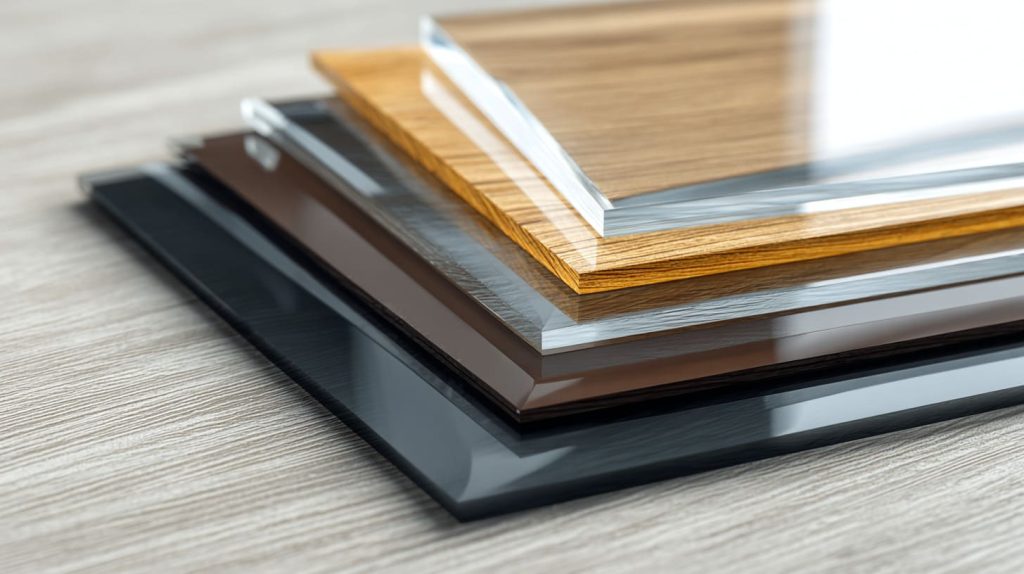
Acrylic, or PMMA, is a transparent thermoplastic made from methyl methacrylate. It’s often called “plexiglass” or “Perspex,” depending on where you are. I like to describe it as “the glass that doesn’t shatter.”
How acrylic is manufactured (cast, extruded, injection)
Acrylic can be made in three main ways:
- Cast Acrylic – poured and cured between glass sheets. Best clarity, less stress.
- Extruded Acrylic – rolled into sheets. More affordable, but softer and easier to scratch.
- Injection-Molded Acrylic – used for small parts or shapes with curves.
| Type | Clarity | Machinability | Best Use | |
|---|---|---|---|---|
| Cast | ★★★★★ | Excellent | Displays, awards, signage | |
| Extruded | ★★★★☆ | Easy to laser cut | Boxes, organizers | |
| Injection | ★★★☆☆ | Moderate | Mass production parts |
Key material properties of acrylic
Acrylic is lightweight, UV-resistant, and transmits more light than glass. It’s stiff, polishable, and doesn’t yellow easily. The downside? It’s brittle compared to polycarbonate.
When I work with clients designing store displays, we often pick cast acrylic for its elegance and consistency. It feels premium—almost like crystal—but at a fraction of the weight.
Typical grades and variations of acrylic sheet
Acrylic comes in many forms:
- Clear for display boxes
- Frosted for diffused lighting
- Mirror-finish for décor
- Textured for privacy or style
- Abrasion-resistant for outdoor or high-touch use
Pros and cons of acrylic in manufacturing
Pros:
- Exceptional clarity and polishability
- Easy to cut, bond, and laser engrave
- Excellent UV resistance
Cons:
- Brittle under impact
- Scratches more easily than PC
- Not ideal for high-heat applications
But acrylic isn’t alone in this transparent universe. Let’s meet its competitors.
3. Other Common Clear Plastics: Types, Properties & Use‑Cases

Polycarbonate (PC) — definition, properties, comparison to acrylic
If acrylic is elegant glass, polycarbonate is bulletproof armor. Literally—many riot shields and machine guards are made of PC.
- Pros: incredibly impact-resistant, high temperature tolerance.
- Cons: scratches easily, tends to yellow outdoors unless UV-treated.
PC suits industrial and protective products, not necessarily where aesthetics are top priority.
PETG — definition, properties, when used
PETG feels like a middle ground between acrylic and polycarbonate. It’s tough, affordable, and can be vacuum-formed. But it’s softer and scratches more easily.
For temporary displays or point-of-sale units, PETG is often the practical choice.
Polystyrene (PS) — definition, properties, use‑cases
Clear polystyrene is cheap and glossy. It’s perfect for short-term packaging or indoor display covers, but cracks easily. I once tested a polystyrene box prototype—it shattered from a small drop. Lesson learned.
PVC and other less‑common clear plastics
Clear PVC is strong and chemical-resistant, though it’s heavier and less transparent. It’s sometimes used in protective covers or outdoor applications.
Each material has its niche. But to make a real-world decision, let’s compare them side-by-side.
4. Acrylic vs. Other Clear Plastics: A Detailed Comparison
Optical clarity and light transmission
Acrylic reigns supreme with up to 92% light transmission, even higher than glass. Polycarbonate is close but can look slightly grayish. PETG and PVC lag a bit behind.
Impact resistance, strength, and toughness
Here’s the trade-off: acrylic is clearer, polycarbonate is tougher. PC can take a hammer hit; acrylic can’t. That’s why machine guards are PC, not acrylic.
Scratch resistance and surface durability
Acrylic scratches more easily but can be polished back to perfection. Polycarbonate needs coatings to resist scratches.
Weathering, UV resistance, and yellowing
Acrylic wins again outdoors. It’s UV stable and stays clear for years. Polycarbonate needs UV protection, and PVC tends to yellow over time.
Fabrication, machinability, and forming
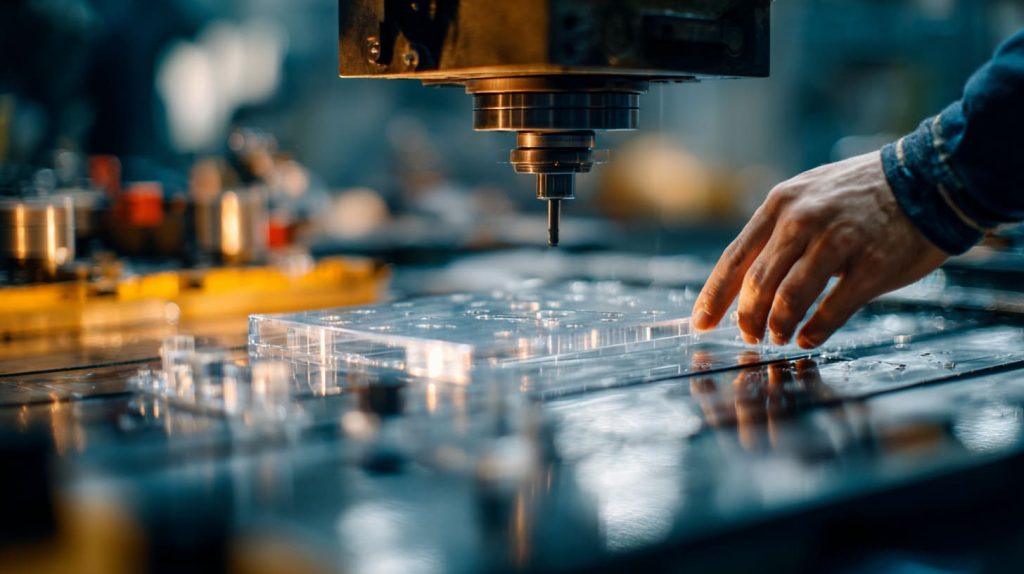
Acrylic cuts like butter on a laser or CNC. Polycarbonate can melt if you go too fast. PETG bends beautifully but can warp under heat.
| Feature | Acrylic | Polycarbonate | PETG | PVC | PS |
|---|---|---|---|---|---|
| Clarity | ★★★★★ | ★★★★☆ | ★★★★☆ | ★★★☆☆ | ★★★★☆ |
| Strength | ★★★☆☆ | ★★★★★ | ★★★★☆ | ★★★★☆ | ★★☆☆☆ |
| Scratch Resistance | ★★★★☆ | ★★☆☆☆ | ★★☆☆☆ | ★★★☆☆ | ★★☆☆☆ |
| UV Resistance | ★★★★★ | ★★★☆☆ | ★★★☆☆ | ★★☆☆☆ | ★★☆☆☆ |
Cost and suitability for custom manufacturing
Acrylic remains the sweet spot for B2B buyers like Jacky—premium appearance, affordable, and fast to fabricate. Polycarbonate is pricier and slower to cut, PETG is good for budget-sensitive projects.
Now that we’ve broken down the data, how do you actually pick the right one for your project?
5. How to Choose the Right Clear Plastic for Your Custom Acrylic Display / Item

Define your project requirements
Before choosing material, I always ask clients five things:
- What will it hold?
- Will it be indoor or outdoor?
- What temperature or humidity will it face?
- How much impact or weight will it take?
- What’s the visual expectation—crystal-clear or just “transparent enough”?
Matching material to application
| Application | Best Material | Reason |
|---|---|---|
| Cosmetic Organizer | Cast Acrylic | High clarity, luxury finish |
| Display Rack | Extruded Acrylic or PETG | Affordable and clean look |
| Outdoor Signage | Cast Acrylic | UV resistance |
| Machine Cover | Polycarbonate | Impact resistance |
| Short-Term Display | PETG or PS | Cost-effective |
Specifying acrylic correctly
When specifying acrylic, remember: cast = higher clarity, extruded = lower cost.
Pick the right thickness (3 mm to 10 mm for displays, up to 20 mm for furniture parts). Always ask for the transparency grade and surface finish in your quote.
Working with a manufacturer
A good factory should help you optimize design for cost and efficiency. Ask questions like:
- Do you use ISO9001-certified materials?
- Can you provide GSG-certified eco-acrylic?
- How long is your lead time?
- What finishing options are available (flame-polish, laser edge, engraved logo)?
Common pitfalls when importing from China
I’ve seen many buyers get surprised by material mislabelling or cutting tolerance issues. Always confirm specs in writing and request a sample before mass production.
Speaking of real-world results, let’s explore a few examples that show how material choice makes or breaks a project.
6. Case Studies / Example Applications in Custom Acrylic Manufacturing
Cosmetic organizer using clear cast acrylic
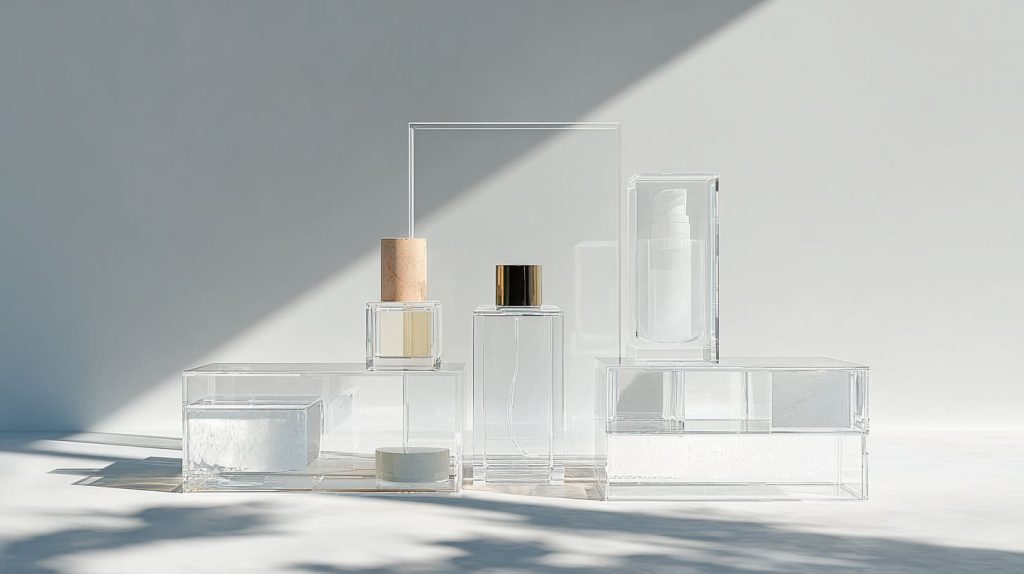
We once built a line of cosmetic organizers for a Japanese beauty brand. They wanted “glass clarity without the weight.” Cast acrylic delivered the perfect shine, and after 10,000 units, not one cracked shipment.
Store display cabinet in polycarbonate
Another client needed display cabinets in high-traffic malls. We used polycarbonate panels instead of acrylic—it survived bumps from shopping carts. But we had to add anti-scratch coating afterward.
Mini-batch custom order with PETG/PS
A start-up boutique requested 200 short-term display boxes for a pop-up store. We switched to PETG, saving 20% in cost while maintaining a similar visual feel. They reordered twice after the event.
Lessons learned
At Feilong Acrylic, we learned that no single material fits every project. Acrylic is often the most balanced choice, but understanding when not to use it is just as important.
After all that, let’s wrap this up with a few takeaways you can actually use.
Conclusion

Choosing between acrylic and other clear plastics isn’t about which is “better.” It’s about what’s right for your project. Acrylic offers unmatched clarity and polish, polycarbonate wins on toughness, and PETG helps you balance cost and flexibility.
For professionals like Jacky who deal with custom acrylic manufacturing, I’d suggest this quick checklist:
- ✅ Define your environment (indoor/outdoor)
- ✅ Confirm clarity and strength requirements
- ✅ Verify certification and sample quality
- ✅ Align lead time with project deadlines
At Feilong Acrylic, we’ve spent over 13 years helping clients turn ideas into durable, elegant, and functional acrylic products. When you understand your materials, you don’t just make displays—you craft experiences that last.