Skip to content
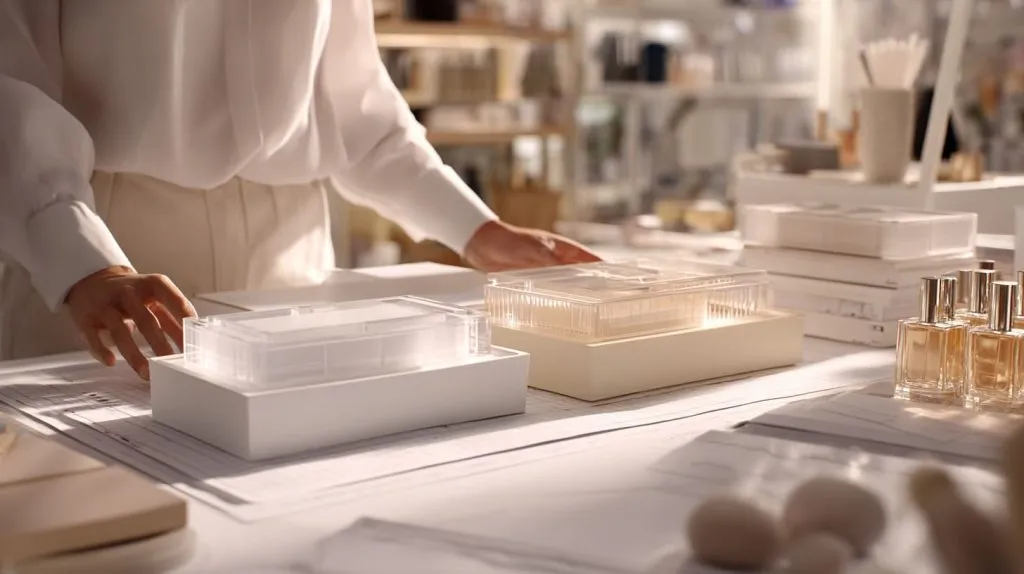
A retail fixture can look sensible on paper and still be wrong in the store.
I have seen that happen more than once. A buyer focuses on durability. Another one focuses on cleaning. Someone else focuses on price. All of that sounds reasonable. In fact, it usually is reasonable at the start. Retail fixtures get touched, bumped, wiped, moved, and sometimes abused. So it makes sense that material talks often begin with function.
That is why HDPE enters the conversation so fast.
It is tough. It is practical. It does not ask for much. If I only think about impact, moisture, and daily wear, HDPE looks like the grown-up answer. Then acrylic shows up from the other side of the room. Acrylic looks clearer, sharper, lighter, and more premium. It speaks the language of display. It helps products look better before a customer even picks one up.
That is where the tension starts.
I do not think the real problem is choosing function. I think the real problem is choosing function too aggressively, as if a retail fixture is just a silent tool. It is not. It also shapes how people see the product, how they move near it, and how they judge the brand in a few quick seconds.
The part that often gets missed is simple: a fixture can survive for years and still quietly hurt sales every day.
I care about that because I work in custom acrylic. I also care about it because I have seen buyers make smart, careful decisions that still created the wrong result once the fixture entered a real store. The material worked. The display did not.
The first thing I pay attention to is not whether a material can survive abuse, but whether it can survive abuse without making the merchandise look cheap.
That question changes everything.
And once I ask it, HDPE and acrylic stop looking like two similar plastics. They start looking like two very different answers to two very different retail jobs.
A lot of bad material choices begin with good intentions. That is why I want to slow down and look at both materials properly before anyone calls one of them the “safe” option.
What Are HDPE and Acrylic in Retail Fixtures?
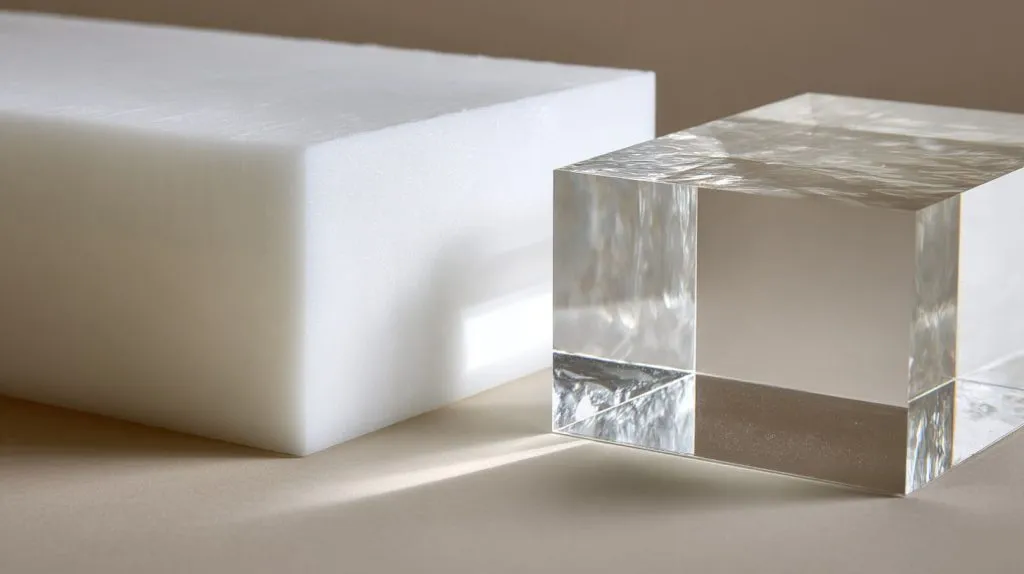
Material names can sound dry. I know that. Still, the meaning behind them matters because these two plastics create very different feelings in a retail space.
What is HDPE?
HDPE means high-density polyethylene. It is a strong plastic. It is not fancy. It is usually opaque. It feels solid, practical, and a bit industrial.
I often think of HDPE as the material that wants to work quietly in the background. It handles moisture well. It resists many chemicals. It deals with impact better than a lot of rigid plastics. It is also forgiving in harsh daily use.
That is why people use it in places like:
- utility areas
- food prep surfaces
- storage parts
- back-room fixtures
- work surfaces
- protective liners
HDPE is good at taking abuse and not complaining.
What is Acrylic?
Acrylic, or PMMA, plays a very different role. It is the material people reach for when they want visibility, shape, polish, and brand expression.
Clear acrylic has that glass-like look people notice right away. It lets light pass through. It helps edges catch attention. It can look clean, premium, and modern even when the form is simple.
I use acrylic in many retail display projects because it gives me more ways to shape how a product is seen. I can make it:
- clear
- frosted
- colored
- printed
- engraved
- bent
- polished
- laser-cut into custom forms
That range matters. A fixture is not only a holder. It is also part of the product story.
Where Each Material Is Commonly Used
The easiest way to understand the difference is to look at where each material feels natural.
| Area of Use | HDPE | Acrylic |
|---|---|---|
| Back-of-house shelving | Very common | Less common |
| Cutting or prep surfaces | Very common | Rare |
| Cosmetic displays | Rare | Very common |
| Sign holders | Limited | Very common |
| Premium showcase fixtures | Rare | Very common |
| Utility racks | Common | Limited |
| Customer-facing risers | Sometimes, but visually weaker | Very common |
I think this is where many buyers already know the answer in their gut, even before they say it aloud. They do not feel the same in use.
HDPE says, “I can take a hit.”
Acrylic says, “Look at what I am holding.”
The Deeper Difference Buyers Miss
This is not only about physical properties. It is also about job identity.
HDPE is usually selected to solve practical problems. Acrylic is usually selected to create visual value.
That may sound obvious, but buyers still blur the line when cost pressure shows up. They start treating all plastics like they are interchangeable. That is where mistakes begin.
I tend to get cautious when someone describes a front-facing retail fixture with the same logic they would use for a warehouse part, because that usually means the display job is already being judged by the wrong standard.
Once that confusion enters the project, the next material conversation often becomes cheaper, flatter, and less useful.
So before talking about where function-first thinking goes too far, I need to explain why HDPE looks so attractive at the start. Because honestly, in some meetings, it really does look like the smart answer.
Why HDPE Looks Like the “Safe Choice” at First
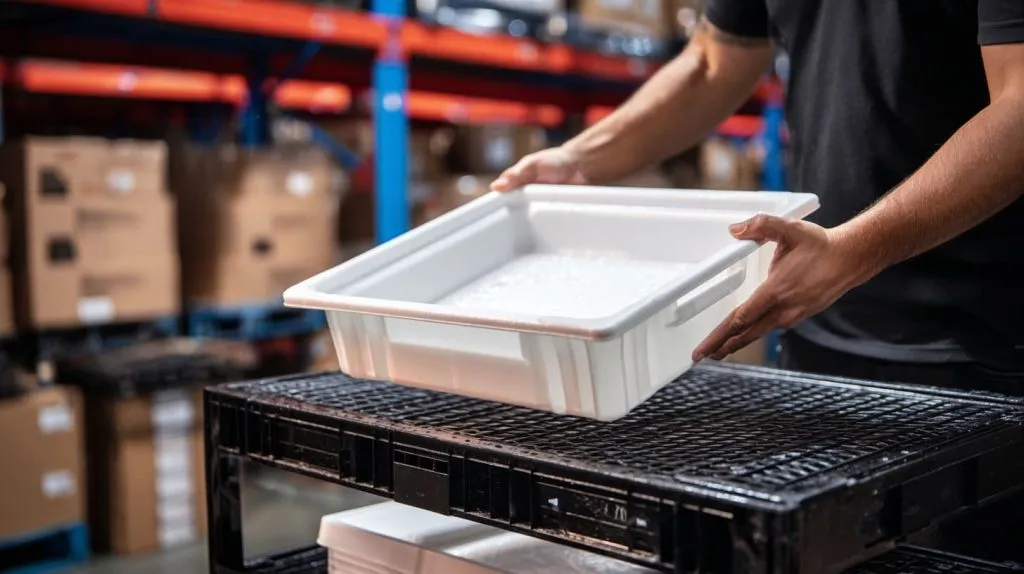
I understand why buyers like HDPE. I really do. If I strip away branding, lighting, and customer emotion for a moment, HDPE makes a very convincing case.
Durability and Impact Resistance
HDPE has one big advantage that buyers trust right away: it feels hard to break.
It handles bumps well. It deals with rough handling better than acrylic. It does not ask for the same level of care during transport or daily use. In busy environments, that matters.
I have met buyers who had a bad experience with cracked display parts in the past. After that, they became more defensive. They wanted toughness first. They wanted something that felt safe in the hand. HDPE gives that feeling very fast.
Here is why that matters in purchasing:
| Concern | Why HDPE Feels Reassuring |
|---|---|
| Dropping parts during installation | Less fear of visible cracking |
| Busy store staff handling fixtures | More forgiving under rough use |
| Heavy cleaning frequency | Surface feels durable |
| Replacement concerns | Lower emotional risk when damaged |
That emotional side matters more than many people admit. The buyer is not just buying material. The buyer is buying peace of mind.
Cost and Availability
Then price enters the room.
HDPE often looks cheaper at the start. For basic shapes and less appearance-driven parts, it can be easier to justify. Some buyers see that lower cost and feel they have found the practical winner.
I have seen this happen in quote reviews. Someone compares two material options. One looks more display-friendly. The other looks more budget-friendly. The team says, “The cheaper one should be enough.” That word enough is where a lot of future regret hides.
HDPE also feels easier to replace. That adds to its “safe choice” image.
Maintenance and Hygiene
HDPE also wins points because it is easy to clean and handles moisture well. In spaces where people worry about stains, wet cleaning, or repeated use, that becomes a strong selling point.
For some environments, that is the correct priority.
For example:
- food-related retail areas
- high-touch utility zones
- service counters
- child-heavy environments
- back-end storage systems
In those cases, buyers are not being foolish. They are reacting to real operational needs.
Why the Logic Feels So Comfortable
The truth is, HDPE fits a very clean business story:
- it is tough
- it is practical
- it is lower risk
- it is easier to defend in a budget meeting
That is why it often wins early discussions.
The trouble is, early discussions are usually not where the fixture succeeds or fails. The real test comes later, under store lighting, next to real products, in front of actual customers.
I get suspicious when a material choice feels too easy to explain in a spreadsheet, because retail fixtures do not live inside spreadsheets. They live under eyes, hands, and judgment.
That is the moment where the “safe choice” can start becoming the expensive choice. And the shift is often quiet enough that nobody notices it until the display already feels dull.
Where Function-First Thinking Starts to Break Down
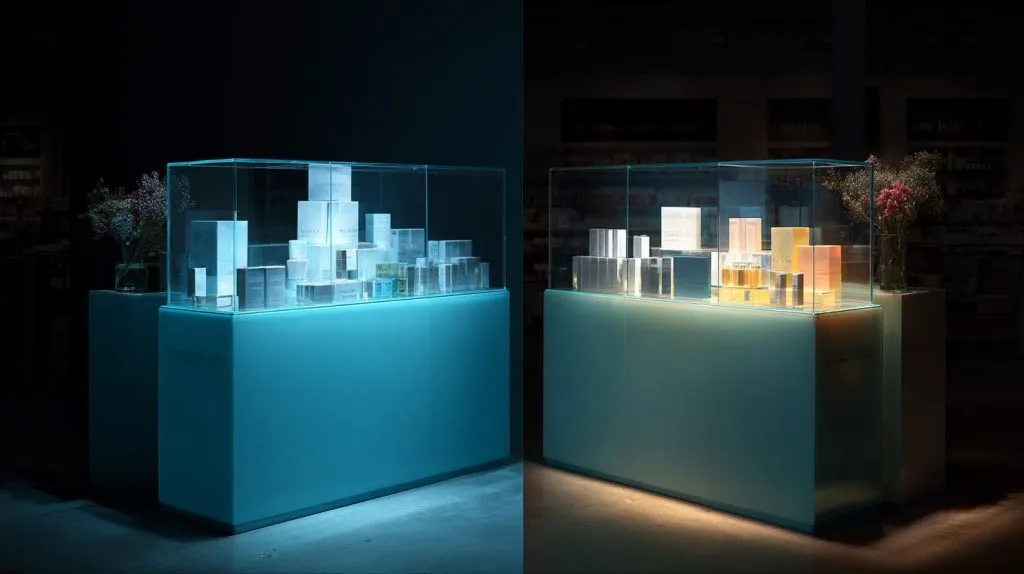
This is the part people do not always like to hear.
A fixture can be durable, clean, low-cost, and still be a weak retail fixture.
That sounds harsh, but I think it is true. Retail is not a warehouse. A display does not only need to survive. It needs to help products look wanted.
Visual Impact Is Reduced
HDPE is usually opaque. That changes the whole visual effect of a fixture.
It blocks light. It adds mass. It makes the display feel more solid and more closed. That can be fine in a work zone. It is often not fine in a premium customer-facing area.
Acrylic behaves differently. It lets light move through the display. It gives the product more breathing room. It can make even a small setup feel lighter and sharper.
Here is a simple comparison:
| Visual Effect | HDPE | Acrylic |
|---|---|---|
| Light transmission | None | High |
| Edge clarity | Low | High |
| Visual weight | Heavy | Light |
| Premium feel | Limited | Strong |
| Product visibility | Lower | Higher |
The result is not just aesthetic. It changes what people notice first.
Brand Perception Suffers
This part matters more than many teams admit.
Fixtures are not neutral. Customers read them, even if they never talk about them. A heavy, opaque, utility-looking fixture can make the products above it feel more basic. A clear and polished fixture can make the same products feel more considered.
I once compared two fixture directions for a product display that was not even very expensive. One version looked practical but flat. The other used clear acrylic with better spacing and edge finish. The products were the same. The mood was not. One setup felt like storage. The other felt like merchandising.
That difference is hard to measure on a material sheet. It is easy to feel in real life.
Customer Interaction Is Affected
This is where the discussion gets even more interesting.
A customer does not only see a fixture. A customer responds to it.
If the display looks closed, bulky, or too industrial, the product may feel less inviting. That can reduce browsing. It can reduce picking up. It can reduce those little moments that help conversion.
Acrylic often helps products appear easier to approach. It creates visual separation without creating a heavy barrier. That matters in cosmetics, accessories, gift items, collectibles, and beauty displays.
A customer does not say, “This fixture lacks transparency and visual lift.”
The customer just moves on.
That is the danger.
What “Too Far” Really Means
Function-first thinking goes too far when the fixture starts behaving like a workbench while sitting in a place that needs to behave like a salesperson.
That is the line I keep coming back to.
Not every fixture needs to be beautiful. I am not saying that. I am saying front-facing fixtures cannot be judged by survival alone.
I usually worry when a buyer tells me, “It only needs to hold the product,” because that sentence often ignores the most expensive part of retail: the space around the product and the impression it creates.
That brings me to acrylic, because customer-facing displays are exactly where acrylic starts showing why it keeps winning so many retail jobs.
Why Acrylic Performs Better in Customer-Facing Displays
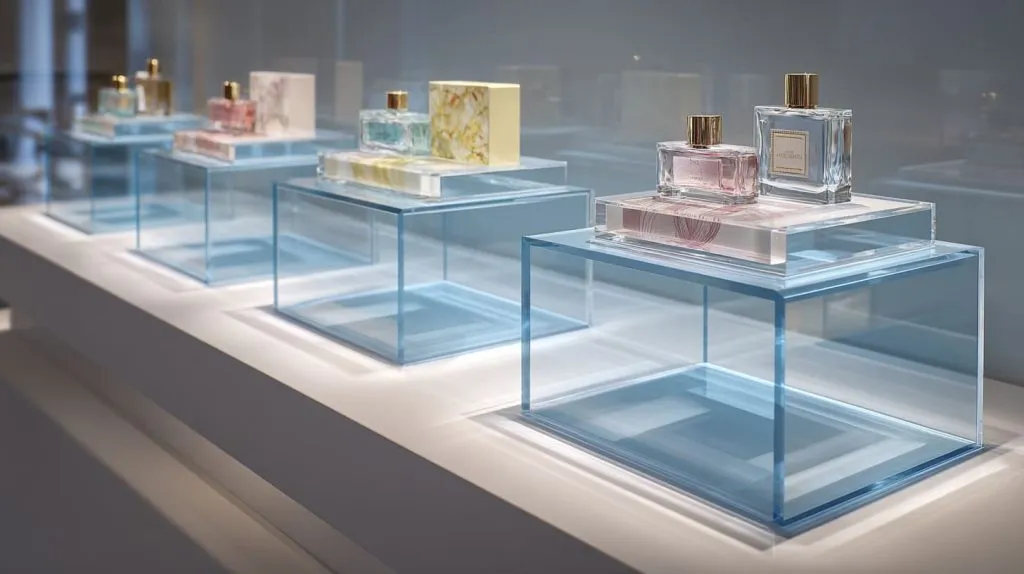
Acrylic earns its place in retail for a reason. It is not just prettier. That would be too shallow an explanation. It performs better in customer-facing displays because it supports how products are seen, framed, and judged.
Transparency Enhances Product Visibility
Clear acrylic gets out of the way without disappearing.
That sounds simple, but it is a big advantage. A fixture should support the product, not compete with it. Acrylic lets the merchandise stay visually dominant. That makes the display feel cleaner and more focused.
This is especially useful for:
- cosmetics
- skincare
- jewelry
- packaged gifts
- electronics accessories
- collectible items
- premium small goods
When light passes through the structure, the whole setup feels more open. The product gets more attention. The shelf feels less crowded.
I have seen small products look much more expensive once they were lifted, separated, and framed with acrylic instead of a thicker, more closed material.
Strong Aesthetic Flexibility
This is where acrylic becomes very powerful for custom projects.
I can do more with acrylic than just make a clear box. I can shape it in ways that help the product story. I can polish edges to create brightness. I can print brand graphics. I can engrave logos. I can bend it into clean forms. I can use frosted sections to soften the look. I can mix transparency with color.
That flexibility matters for B2B buyers because store displays are rarely only technical objects. They are brand tools.
| Acrylic Feature | Retail Benefit |
|---|---|
| Clear sheet | Minimal visual barrier |
| Frosted finish | Softer premium look |
| Colored acrylic | Strong brand match |
| UV printing | Message and graphics support |
| Laser cutting | Custom silhouettes and accuracy |
| Edge polishing | Brighter, cleaner presentation |
HDPE does not play this role well. It is useful. It is not expressive.
Perceived Value Boost
Acrylic helps products look more premium. I think most experienced buyers already know this, even if they do not always say it directly.
A clean acrylic display can make moderate-priced merchandise feel more intentional. It helps create order. It helps create space. It adds polish without shouting.
That is very useful in retail, because perceived value is not only built by the product itself. It is also built by the setting around it.
This becomes even more important in stores where:
- space is limited
- competition for attention is high
- products are small
- lighting matters a lot
- the brand wants a clean modern image
When I review a customer-facing display, I do not ask only whether acrylic looks nicer. I ask whether the fixture helps the product earn a second glance, because that second glance often pays for the material difference.
Acrylic as a Quiet Sales Tool
This is why I do not see acrylic as decoration. I see it as a selling surface.
It can guide attention. It can isolate hero products. It can make a display feel cleaner than the actual floor condition around it. It can make brand details easier to absorb.
That is a big job for one material.
Of course, this does not mean acrylic is perfect. It is not. In fact, some acrylic failures happen because people expect it to do everything well, and that is just as risky as expecting HDPE to solve every fixture problem.
So the next question matters: where does acrylic fail when people use it carelessly?
Where Acrylic Can Fail If Misused
I work with acrylic a lot, so I do not help anyone by pretending it has no weak points.
It does have them.
Acrylic can look excellent and still disappoint if the design is careless, the thickness is wrong, or the use environment is misunderstood. That is why I prefer honest material decisions over blind material loyalty.
Surface Scratching
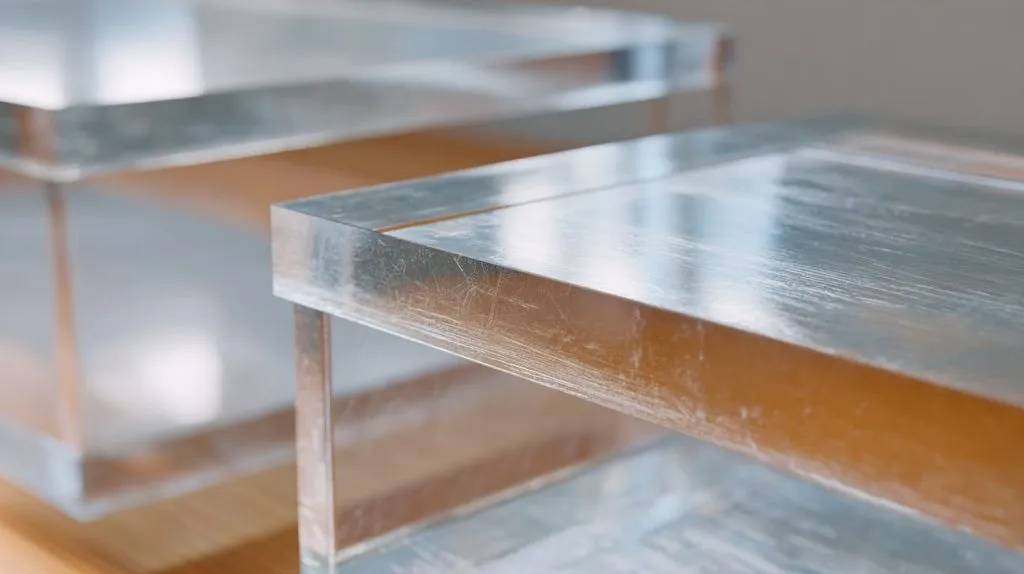
Acrylic scratches more easily than HDPE in many daily-use situations. That is a real issue, especially if the fixture is touched often or cleaned badly.
A lot of damage does not come from customers. It comes from maintenance habits.
I have seen nice acrylic displays lose their clean look because staff used rough cloths, dirty wipes, or aggressive cleaning routines. The material did not fail structurally. The appearance faded.
That is enough to make the display feel tired.
Here are common scratch risks:
- dry wiping dust across the surface
- rough paper towels
- abrasive cleaners
- poor packing during shipping
- parts rubbing together in storage
Load and Structural Limits
Acrylic is not the material I want people to “guess” with. It needs correct thickness, support, and span design.
A thin acrylic shelf may look fine in a drawing. Then it holds product weight for months and begins to flex. Or a stressed corner cracks because the load path was not handled well. Or the display gets moved often and the unsupported area takes more strain than expected.
This is why design detail matters so much.
| Design Factor | Risk if Ignored |
|---|---|
| Sheet thickness | Bending or cracking |
| Span length | Sagging over time |
| Load concentration | Stress points |
| Edge quality | Crack starting risk |
| Join design | Weak assembly behavior |
This is not acrylic being bad. This is acrylic being honest. It rewards proper design and exposes lazy design.
Cost Considerations
Acrylic usually costs more than HDPE, especially when polish, forming, print, and finish requirements increase.
That cost is real. I never like to hide it behind pretty words.
Custom acrylic can also become expensive when the design includes:
- many different parts
- many polished edges
- complex bending
- tight visual quality standards
- layered branding details
So yes, acrylic asks for more care. It often asks for more money too.
That is why I do not recommend it blindly. I recommend it when the display value justifies the design value.
I become careful when a buyer chooses acrylic only because it “looks premium” but does not define the actual weight, touch frequency, cleaning method, or store behavior, because then the design is being led by taste instead of use.
Acrylic is strong in the right role. It is frustrating in the wrong one. That is exactly why a direct comparison helps.
Direct Comparison: HDPE vs Acrylic in Retail Fixtures
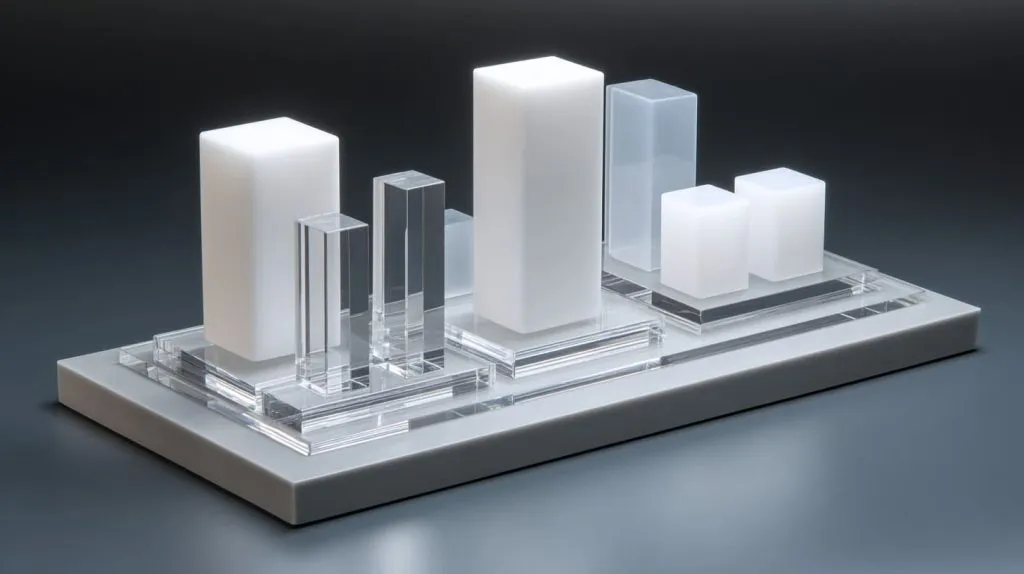
Sometimes a side-by-side view saves a lot of unnecessary arguing. These two materials are not enemies. They are just built for different priorities.
Key Performance Comparison
| Factor | HDPE | Acrylic |
|---|---|---|
| Appearance | Opaque, practical, industrial | Clear, polished, premium |
| Impact resistance | Very high | Moderate |
| Scratch visibility | Lower in many rough-use settings | Higher |
| Transparency | None | High |
| Branding value | Limited | Strong |
| Cleaning tolerance | Very forgiving | Needs more care |
| Design expression | Basic | Flexible |
| Cost | Lower | Higher |
| Customer appeal | Lower in front-facing retail | Higher in front-facing retail |
| Best use zone | Utility and back-end | Customer-facing display |
Where HDPE Wins
HDPE wins when the job is mostly about:
- abuse resistance
- moisture resistance
- utility use
- less visible structural parts
- easy replacement
- low-cost practical operation
I think HDPE is a solid answer for hidden or low-visibility parts where durability matters more than display value.
Where Acrylic Wins
Acrylic wins when the job is mostly about:
- product visibility
- premium presentation
- brand image
- custom shaping
- lightness in visual effect
- customer-facing merchandising
That is why it dominates in clear risers, cosmetic displays, countertop holders, sign blocks, and premium presentation systems.
Why “Better” Is the Wrong Word
This is where I try to slow buyers down.
People like asking, “Which one is better?”
I think that question causes half the confusion.
The better question is, “Which one is better for this exact fixture role?”
Acrylic is not better than HDPE in every way. HDPE is not smarter than acrylic just because it is tougher. Those are lazy conclusions.
The more useful view is this:
| Fixture Role | Better Fit |
|---|---|
| Hidden support base | HDPE |
| Utility tray | HDPE |
| Premium skincare riser | Acrylic |
| Brand logo display block | Acrylic |
| Back-room organizer | HDPE |
| Front counter sign holder | Acrylic |
If the fixture sits in front of the customer, acrylic often brings more value. If it works behind the scenes, HDPE often makes more sense.
I do not judge these two materials by strength first. I judge them by whether the material behavior matches the retail moment it will live in.
That is why the smartest answer is often not “choose one.” It is “assign each material to the right job.”
And once I say that, the next topic becomes obvious: how do I balance function and visual impact without forcing the whole project in one direction?
How to Balance Function and Visual Impact
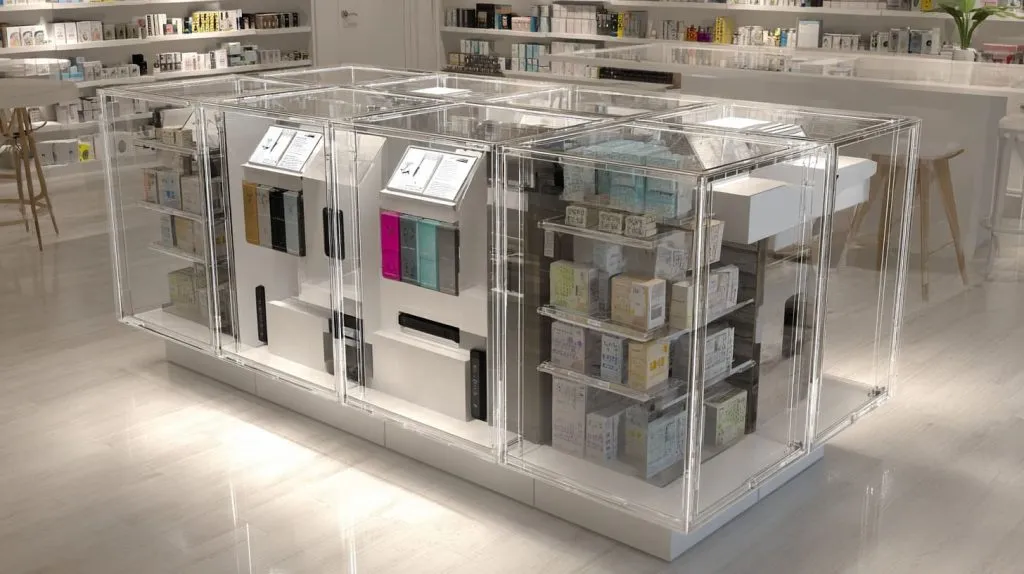
The best retail fixtures are usually not extreme. They do not chase beauty and ignore daily use. They also do not chase utility so hard that the display loses energy.
I try to balance both.
Define Fixture Role First
I always start with one basic question: Is this fixture helping operations, or is it helping sales?
That one question clears up a lot.
If the fixture is customer-facing, appearance matters more. If the fixture is hidden, durability may matter more. If it does both, then I need a more layered answer.
Useful questions to ask early:
- Will customers see it up close?
- Will lighting hit it directly?
- Does it help frame hero products?
- Will store staff touch it every day?
- Is it load-bearing or mostly presentational?
- Does brand image matter in this zone?
Segment the Store Environment
Not every part of a store needs the same material logic. This sounds obvious, but many teams still treat the whole store like one material problem.
That is a mistake.
I prefer breaking the environment into zones:
| Store Zone | Main Need | Better Material Direction |
|---|---|---|
| Front counter | Presentation | Acrylic |
| Window area | Light and visibility | Acrylic |
| Mid-floor showcase | Product attention | Acrylic |
| Hidden base support | Strength and toughness | HDPE |
| Back storage | Utility | HDPE |
| Service prep area | Cleaning and durability | HDPE |
Once the store is divided this way, material choices stop fighting each other.
Combine Materials Strategically
This is often the best answer of all.
I do not always need acrylic to do everything. I do not always need HDPE to disappear completely. I can combine them.
For example:
- HDPE for hidden structure
- acrylic for the visible face
- HDPE for internal trays
- acrylic for top display layers
- HDPE where cleaning is rough
- acrylic where product perception matters most
That kind of split often gives buyers a more practical cost structure without flattening the retail effect.
Why Balance Is a Design Skill
A lot of people think balance means compromise. I do not see it that way. I see it as assigning jobs properly.
That is why the strongest designs often feel calm. They are not trying to make one material solve problems it was never meant to solve.
When I look at a mixed-material display, I pay close attention to what the customer will actually notice first, because that usually tells me where spending more is smart and where spending less is harmless.
That sounds simple. It is not always easy. Buyers still make avoidable mistakes, especially when budgets get tight and everyone starts chasing the lowest visible number.
Common Mistakes Buyers Make

I do not say this to blame buyers. Most mistakes happen because the wrong metric gets too much power.
Over-Focusing on Unit Cost
This is the classic one.
A buyer compares material cost and sees HDPE as the safer deal. The quote looks better. The project feels under control. Then the fixture enters a premium retail setting and quietly lowers the perceived value of the merchandise.
That is not a cheap result. It is just a delayed cost.
I think a low unit price can be a trap when the fixture sits close to the product and changes how the whole display feels, because the savings are easy to count while the lost appeal is much harder to measure.
Treating All Fixtures the Same
Another common mistake is applying one material rule to every fixture in the store.
That rarely works well.
A back-room organizer and a front-facing cosmetic riser do not need the same logic. A storage shelf and a brand display block do not need the same visual language.
Still, buyers sometimes say, “Let us standardize the material.” I understand why. It feels simpler. It also often makes the retail environment flatter than it should be.
Ignoring Lighting and Transparency Effects
This one gets missed a lot.
Acrylic changes under light. That is part of its strength. Edges brighten. Surfaces feel lighter. The display looks more open.
HDPE does not create the same effect. It absorbs more visually. It can make the setup feel more blocked.
If a buyer reviews only samples in a meeting room, the difference may not feel dramatic. Put both materials under real store lighting and the gap becomes much clearer.
Skipping Prototype Testing in Real Environments
A drawing does not tell the full truth. A material sample does not tell the full truth either.
I like seeing prototypes under actual lighting, near real products, at real shelf height. That is when problems become obvious.
A fixture can seem fine:
- on a CAD screen
- on a quote sheet
- in a hand-held sample
Then it enters the store and suddenly feels bulky, dull, reflective in the wrong way, or less premium than expected.
That is why prototype testing matters.
| Buyer Mistake | What Usually Happens Later |
|---|---|
| Choosing by material price alone | Display feels cheap |
| Using one material everywhere | Store loses visual hierarchy |
| Ignoring lighting | Product impact becomes weak |
| Skipping real-world prototype review | Surprises appear too late |
The sad part is that these mistakes often come from trying to be efficient.
That is also why I like ending material discussions with practical advice. Because once the trade-offs are clear, the next step should be useful, not abstract.
Practical Recommendations for B2B Buyers

By this point, the material choice should feel less emotional and more grounded. Not simple, but grounded.
For Product Designers Like Jacky
If I were advising a buyer like Jacky, I would not start with the plastic name. I would start with the retail role.
I would ask him to review:
- where the fixture sits
- what the customer sees first
- how often staff touches it
- what the weight load looks like
- what kind of cleaning happens
- what brand level the display needs to support
Then I would ask for real samples under real light. That step saves many bad decisions.
A few practical checks help a lot:
| Question | Why It Matters |
|---|---|
| Is the display customer-facing? | Determines visual priority |
| Does the product need light around it? | Supports acrylic use |
| Will staff handle it roughly? | Raises durability concerns |
| Is the fixture hidden? | Makes HDPE more reasonable |
| Is premium feel important? | Pushes toward acrylic |
For Retail Brand Owners
Brand owners need to think beyond “will it hold?”
A fixture affects brand tone. It shapes whether the display feels low-cost, smart, premium, playful, clean, or tired.
So I would suggest this:
- spend more on visible zones
- save money in hidden zones
- let the material support the brand promise
- review the display next to actual packaging and merchandise
That is where the real answer appears.
For Custom Manufacturers
Manufacturers should not only take orders. They should help buyers think better.
I believe a good supplier should say:
- where HDPE is more practical
- where acrylic is worth the cost
- where hybrid design makes more sense
- where the buyer may be underestimating appearance risk
This is one reason I like custom project work. A custom job gives me room to guide the customer, not just cut parts.
My Practical Material Rule
If the fixture helps customers notice, compare, or desire the product, I lean toward acrylic unless there is a strong reason not to.
If the fixture mainly protects, supports, or survives behind the scenes, I lean toward HDPE unless visibility becomes important.
That is not a slogan. It is just the pattern I trust after looking at how these materials behave in the real world.
And once I put it that way, the conclusion becomes pretty clear.
Conclusion
I do not write off HDPE. I do not worship acrylic either. I just think they belong to different parts of the retail conversation.
HDPE is useful. It is strong. It is practical. It makes sense when durability, cleaning, and rough handling lead the decision. I respect that. There are many jobs where it is exactly the right answer.
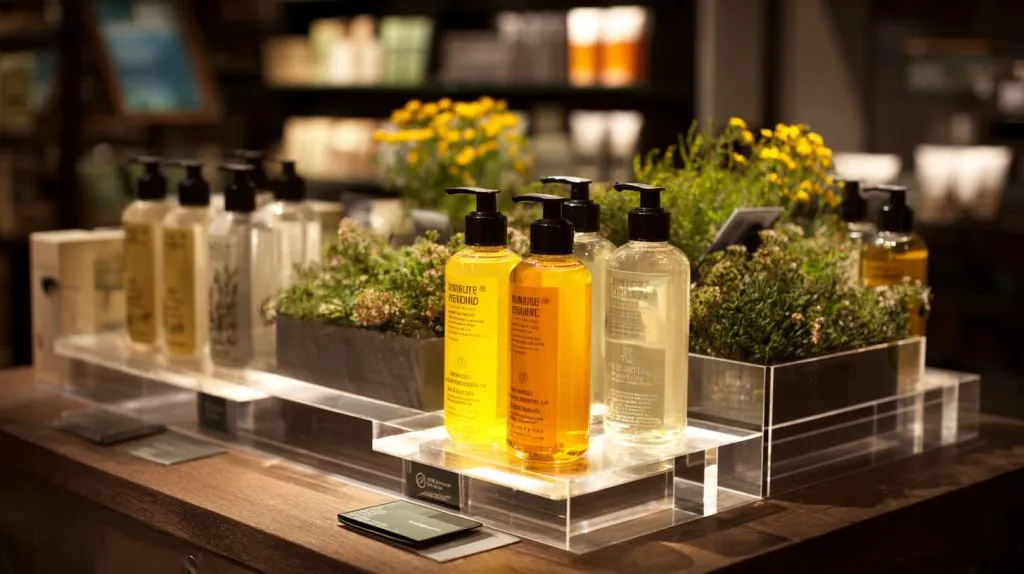
Acrylic does something else. It helps products look better. It helps space feel lighter. It helps a brand speak more clearly without adding noise. In retail, that job matters more than some teams admit.
That is why I keep coming back to the same belief: function-first thinking is smart, but it becomes dangerous when it forgets that retail fixtures also shape desire.
I say this because I have seen tough materials create weak displays. I have also seen carefully designed acrylic fixtures lift the whole feeling of a product line without changing the product itself. That kind of difference stays with me. It changes how I judge a project.
My own view comes from looking at trade-offs, not from chasing one perfect material. I care about what the customer sees, what the staff touches, what the brand wants to say, and what the fixture has to survive. Once I look at all four together, the answer usually becomes much clearer.
So no, I do not think the best material is the toughest one.
I think the best material is the one that does its real job honestly.
If you are working on a retail fixture project and you are stuck between HDPE and acrylic, I would start by reviewing the display zone, the product visibility needs, and the brand level you want the fixture to support. That is usually where the smartest decision begins. And if the project needs a custom acrylic direction that balances presentation, structure, and cost, that is exactly the kind of conversation I like having.