Skip to content

Start with the decision your display must make
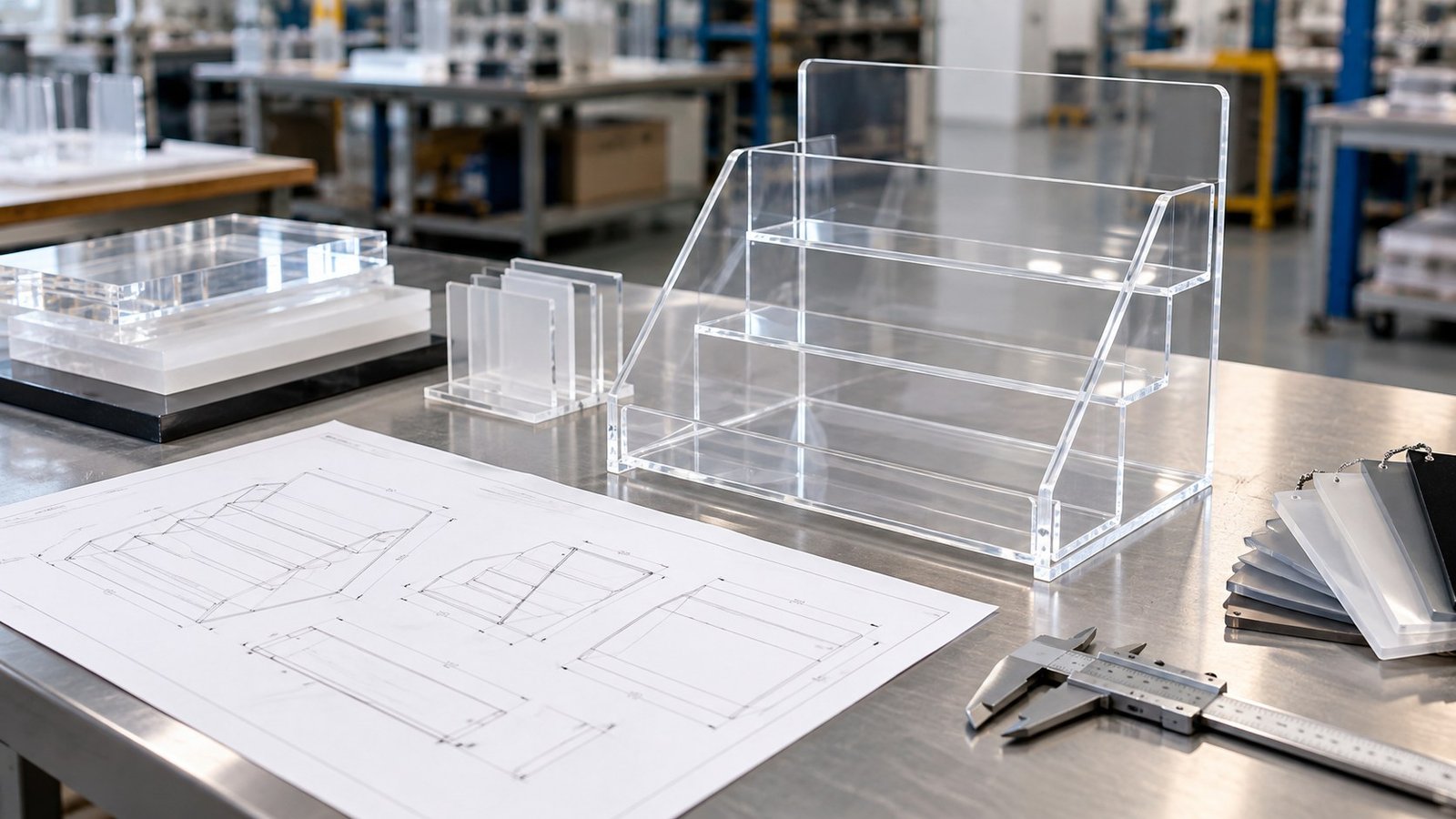
When a buyer sends me a custom acrylic display RFQ, I do not expect every detail to be finished. An early sketch, a reference photo, or a rough render can be a good starting point. What I need to understand first is the job the display must do: which product it holds, where it will be used, how people will interact with it, and what the finished unit should look like.
For a simple countertop holder, overall size, product dimensions, quantity, and appearance may be enough for our team to review the idea. A multi-part display with shelves, doors, graphics, lighting, or hardware needs more information before I can treat a price as meaningful. A photo shows the general direction, but it does not tell us how the joints work, how the product fits, or how the display should be packed.
If you are still choosing a display format, you can look through our custom acrylic displays and send me the closest reference. I can then separate the fixed requirements from the areas where our engineering team can suggest a workable option.
Give us one controlled reference
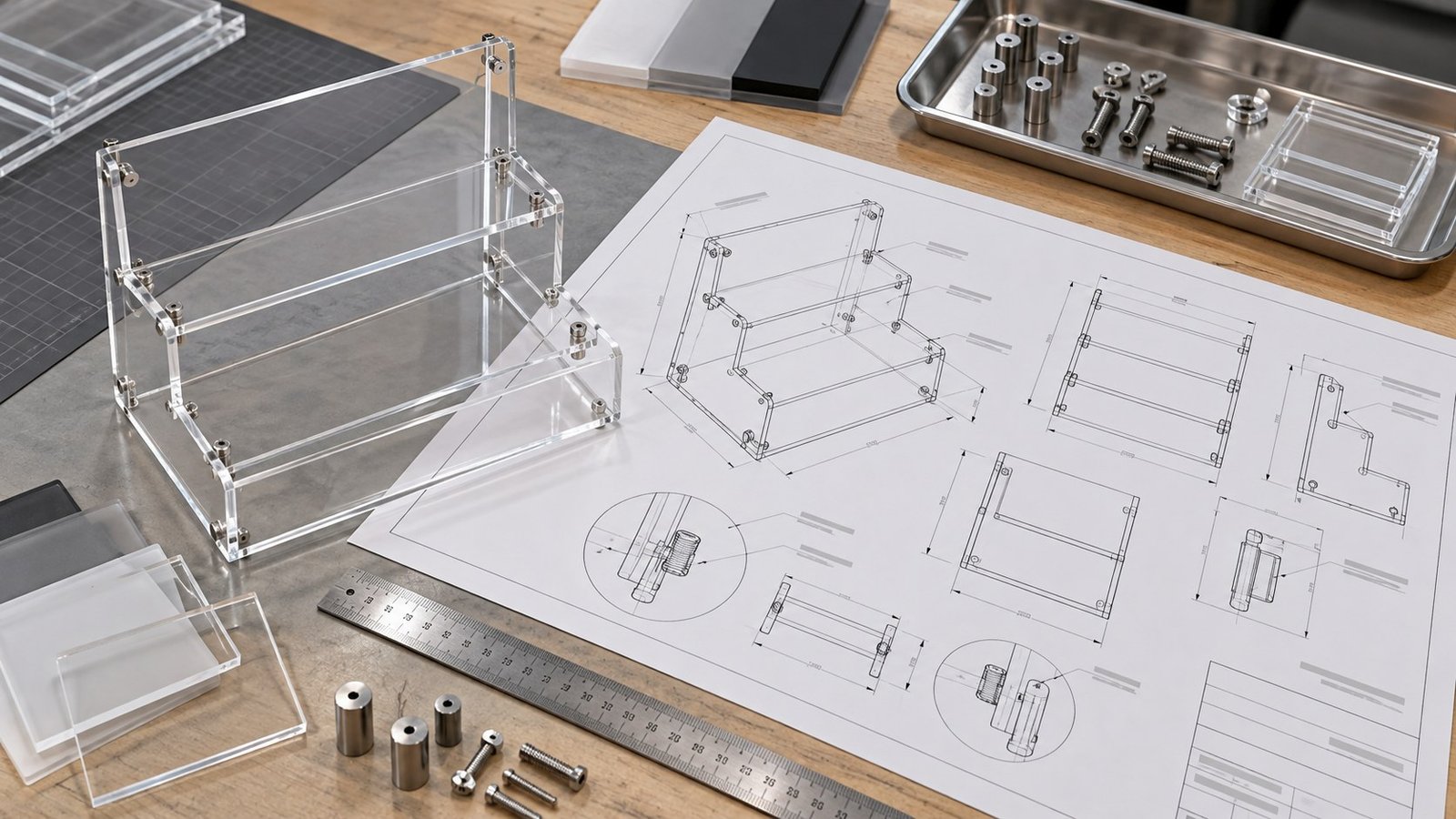
The easiest way for me to compare a display project is to work from one dated drawing, render, or dimensioned sketch. Please add the project name, display or SKU name, and revision date. If the design changes, a new revision keeps the quotation, sample, and production team aligned.
I look for the overall length, width, and height first. Then I check the shelf, pocket, opening, and product-fit dimensions that control the function. Holes, cut-outs, bends, bonded joints, removable parts, and hardware are also important when they change the construction. I usually mark the fit-critical dimensions separately from decorative dimensions. A product pocket that must accept a specific bottle is a different risk from a non-critical trim edge.
For several sizes or artwork versions, a small SKU matrix helps us understand the real scope. Two displays can look almost identical in a photo but require different setups when the size, hardware, or printed panel changes.
Tell us about the product and its real use

The product being displayed is often more useful to me than the outside dimensions of the fixture. Please include the product size, weight, quantity per display, and the way a customer or store employee handles it. I also want to know whether the product is lifted out, refilled, tested, secured, or cleaned in place.
These details affect shelf spacing, support, access, and the center of gravity. They can also change the acrylic thickness or joint arrangement that we review. I do not choose a thickness from the display name alone. Our team looks at the load path, supported span, fixing points, and the appearance you want in the final application.
If the product itself is not ready, an approximate envelope and weight range still help. We can leave the open points visible in the quotation and close them during drawing review or sampling.
Explain the material and appearance you care about
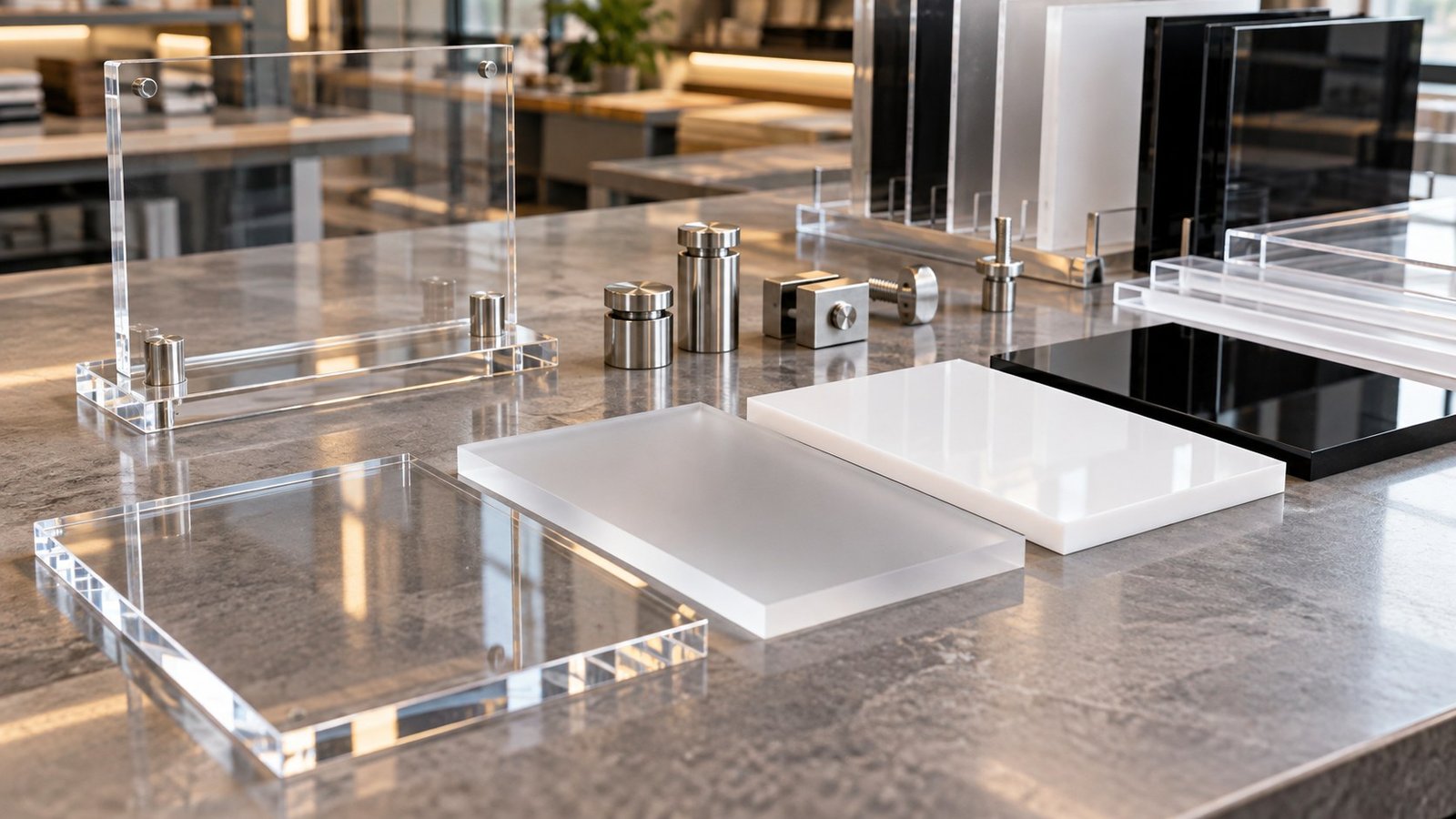
Tell me which material decisions are fixed and which ones you want us to review. You may already know that you need clear, frosted, colored, mirrored, or opaque PMMA. You may also have a fixed thickness. If not, send the display size, product load, support layout, and visual target so we can discuss a sensible starting construction.
I pay particular attention to customer-facing edges, polished faces, bonded seams, drilled holes, bends, and surfaces under strong retail lighting. Acrylic grade, thickness, machining, polishing, bonding, and protective film can all affect the finished appearance. A note such as “premium clear finish” is useful, but I will still want to know which faces are most visible and what joint appearance your team will accept.
Our custom acrylic fabrication service can support that review when the drawing is still developing. A buyer does not need to make a final process decision before asking us for a quotation.
Keep branding, hardware, and assembly in the same brief
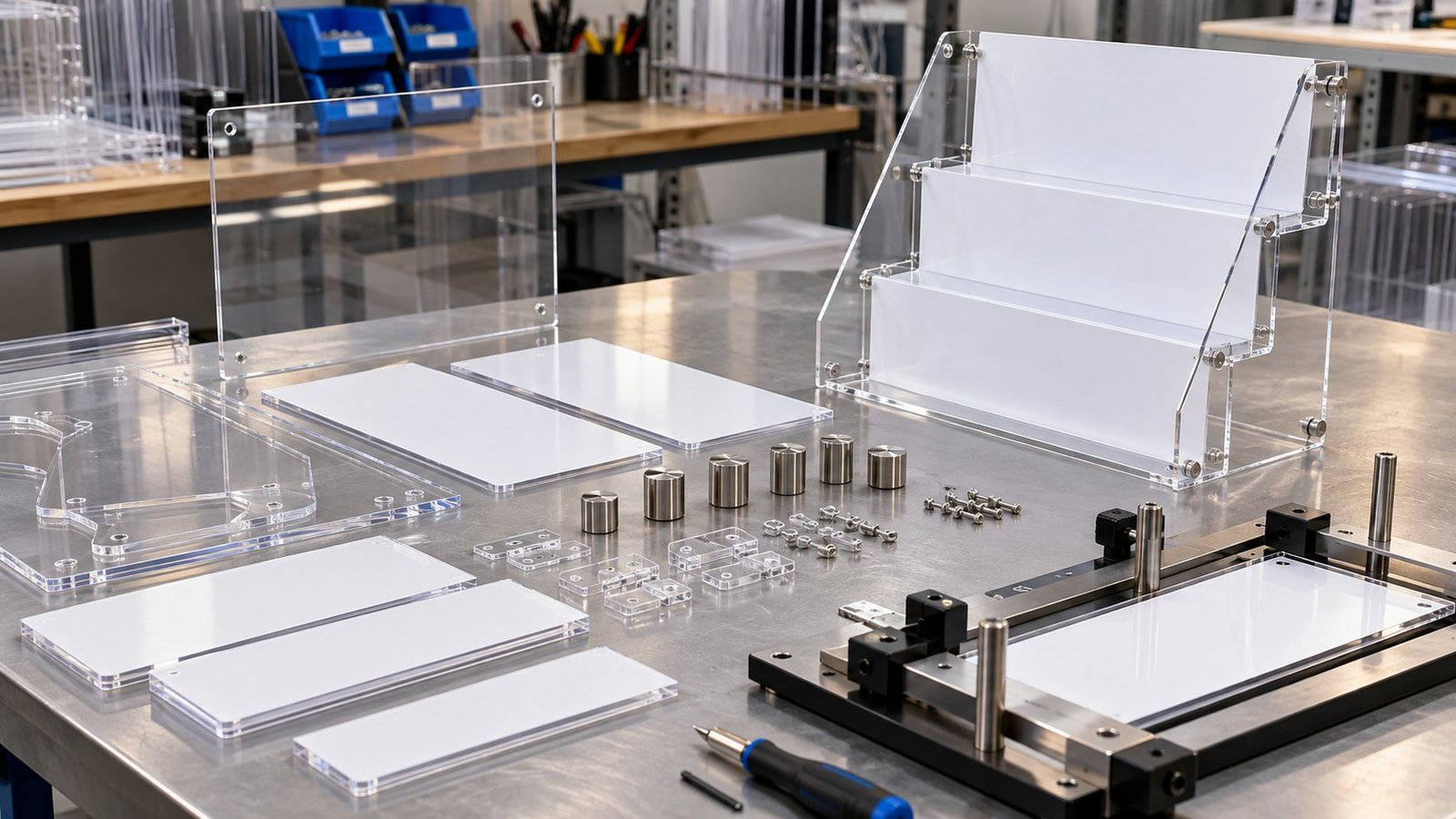
A display becomes a finished product through more than cutting acrylic. I need to see the printing or engraving, artwork versions, color references, magnetic closures, hinges, screws, standoffs, inserts, lighting parts, labels, and assembly responsibility that belong in the project.
If there is a logo or graphic, show its location and tell us whether your team needs artwork approval before sampling or before bulk production. If a panel is removable, or if a graphic needs to be replaced in stores, that also affects the construction.
Please tell us whether you want a fully assembled display, a partly assembled unit, or a flat-pack kit. Loose hardware, tools, instructions, and destination-side installation should be part of that same decision. I normally price the preferred delivery state first. A flat-pack alternative can reduce volume, but it only makes sense if the installation method and presentation standard work for your team.
Tell us how many finished units you need
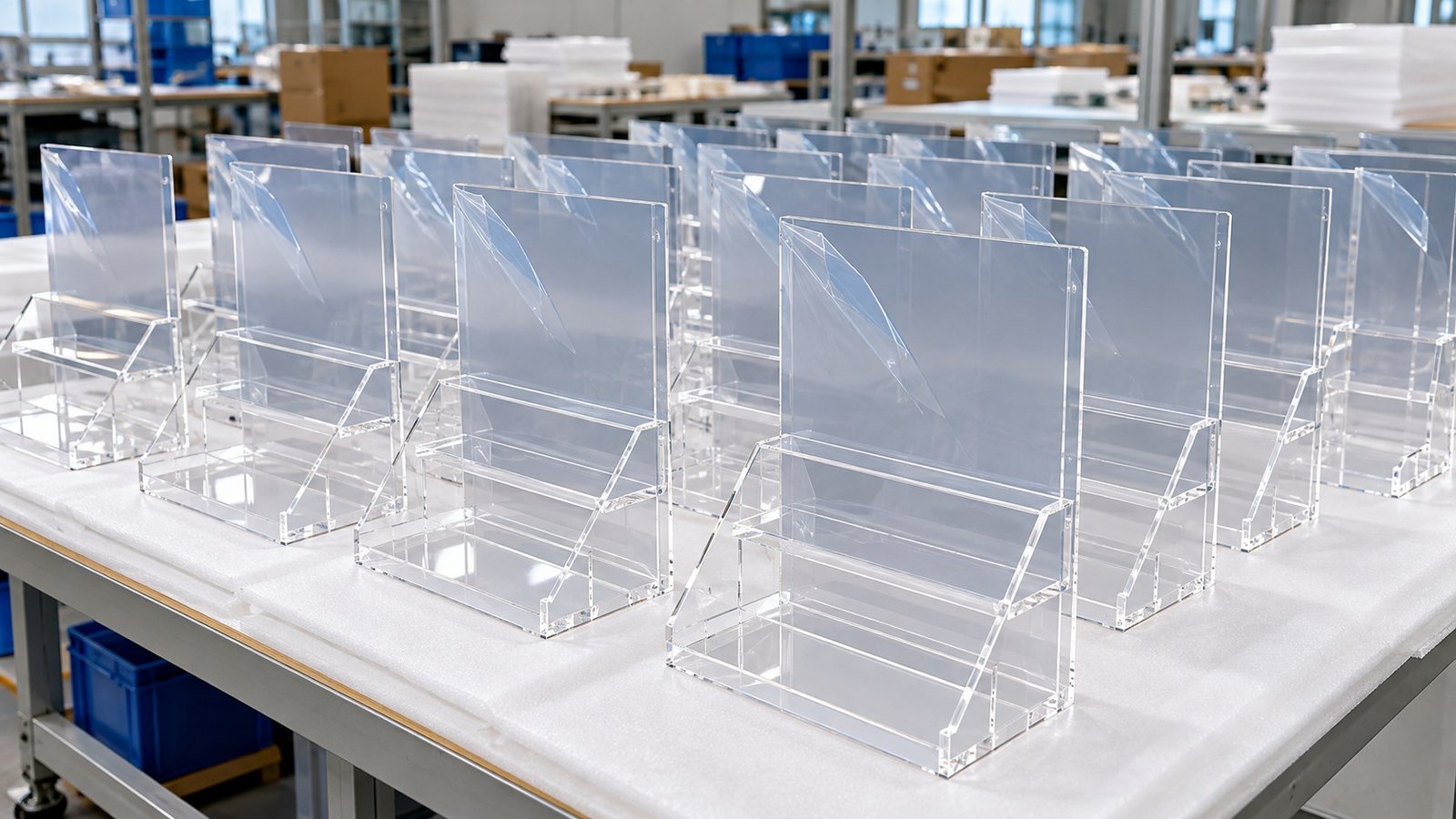
When a buyer writes “500 pieces,” I still need to ask what one piece means. Is it one complete display, one shelf, one printed panel, or one store kit? Please describe the finished unit and the number of parts, graphics, and accessories inside it.
If the project has a prototype, pilot, and rollout, I prefer to see those as separate quantities against the same drawing revision. Realistic quantity tiers help us explain how material purchasing, cutting setup, artwork preparation, assembly, and packing change with volume. A prototype price should not be mistaken for a bulk unit price, and a bulk quote should not silently exclude the sample work needed to approve the design.
Discuss packing, destination, and timing before the quote
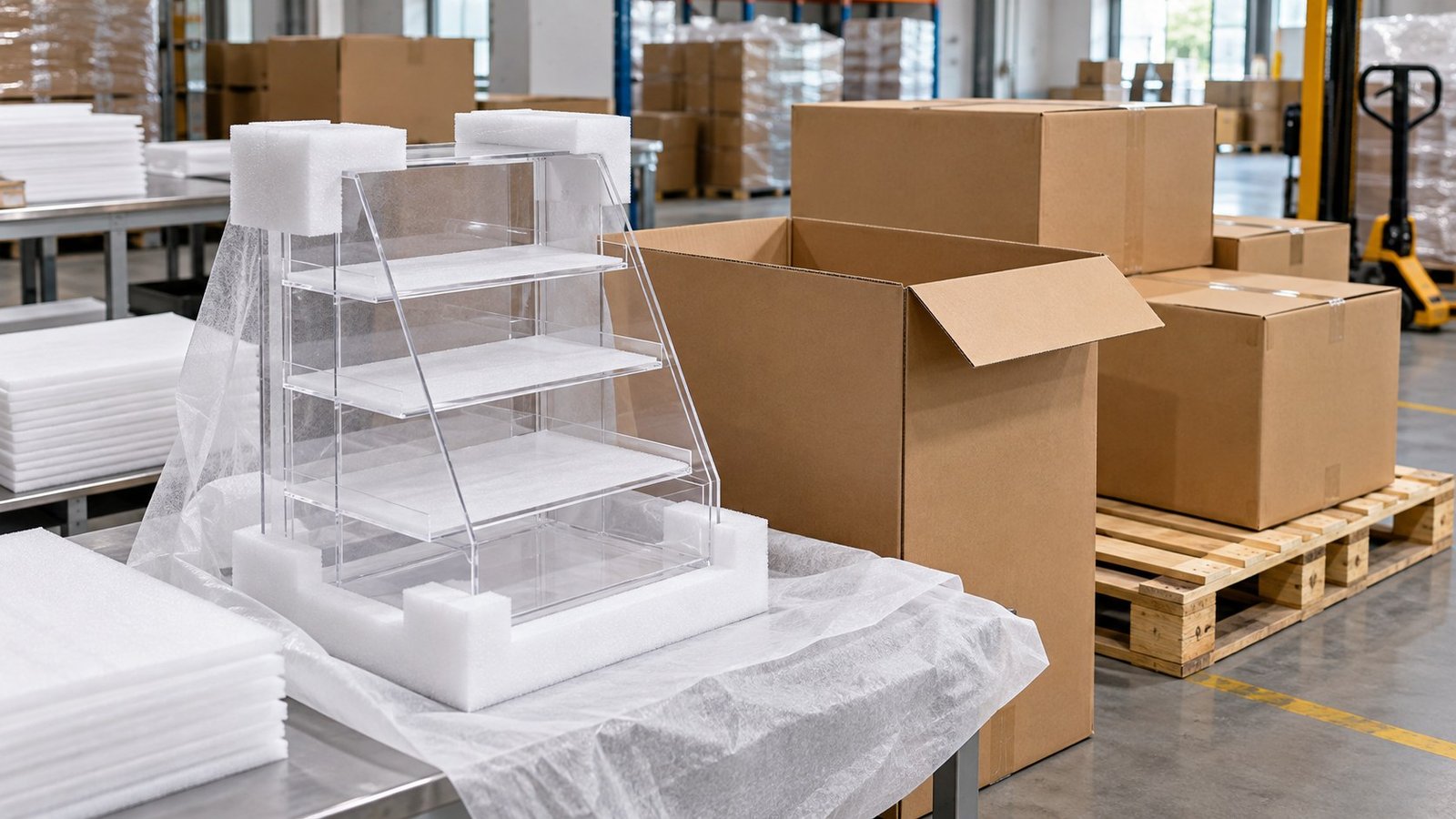
Clear acrylic can arrive with a good factory finish and still be damaged by rubbing, loose hardware, or weak carton protection. That is why I ask about packing while the display is being quoted. Tell us whether the units ship assembled, flat-pack, or as kits; which faces must not touch; and whether you need sleeves, foam, interleaving, dividers, labels, or store-ready cartons.
The delivery country and destination also matter. Please include the date the display must be usable, not only the date you want a price. Our response should separate drawing review, artwork approval, sample approval, production, and freight assumptions. If the requested date is tight, I would rather identify the open decision that controls it than promise a date before the design is stable.
Ask us to show assumptions and approval gates
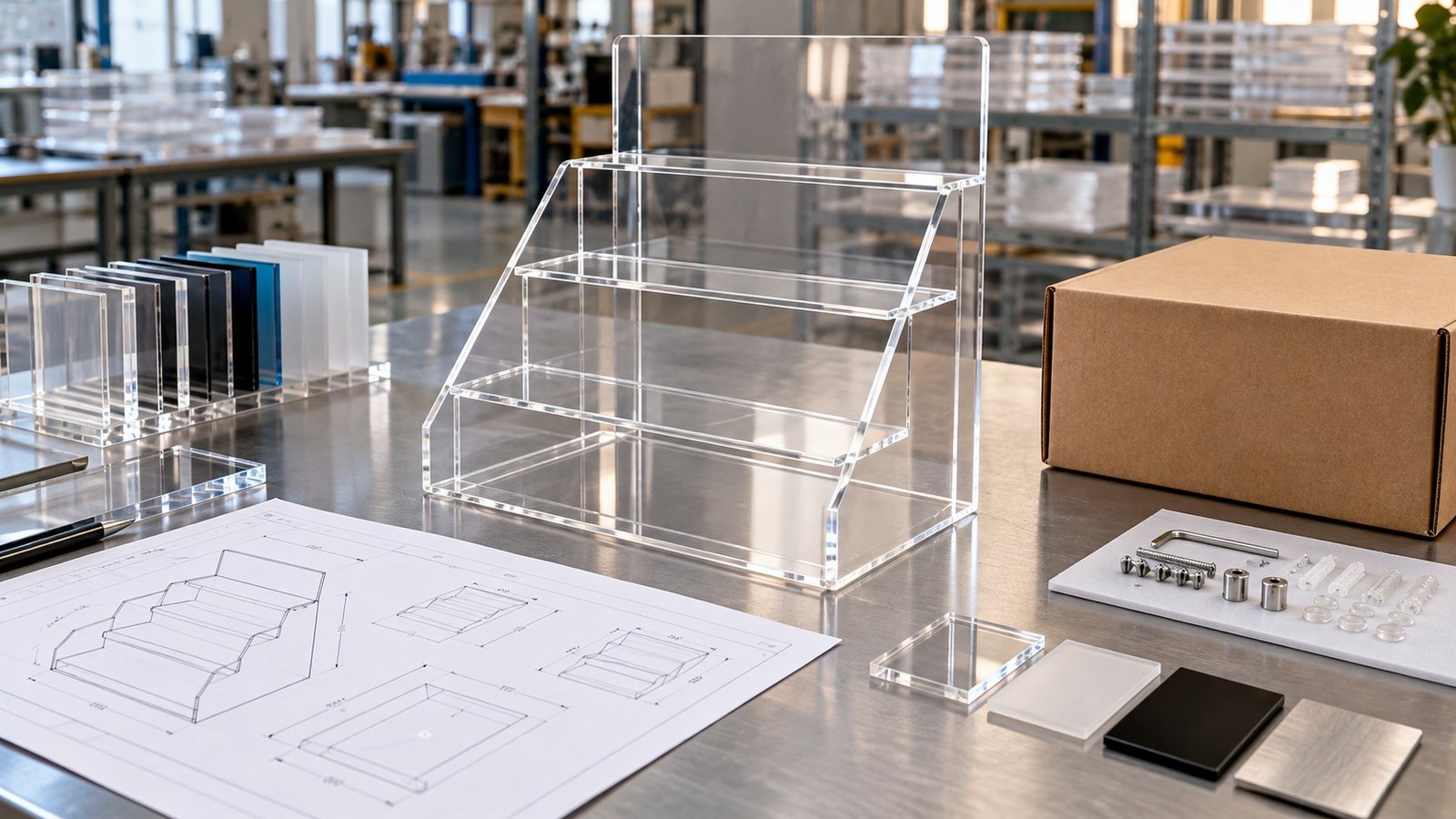
When I prepare a quotation, I want the assumptions to be easy for the buyer to find. A useful RFQ asks us to identify the drawing revision, material and thickness, quantity basis, fabrication and finishing included, artwork and hardware scope, packing method, exclusions, and any item that still needs confirmation.
For a new or appearance-sensitive display, I also recommend agreeing on what the sample must prove. That may include product fit, access, stability in the intended use, edge and joint appearance, graphic position, hardware operation, and pack-out. After the sample review, I would record the approved changes before the bulk release. This turns sampling into a decision gate instead of leaving an important expectation to an informal message.
My practical RFQ checklist for a custom acrylic display
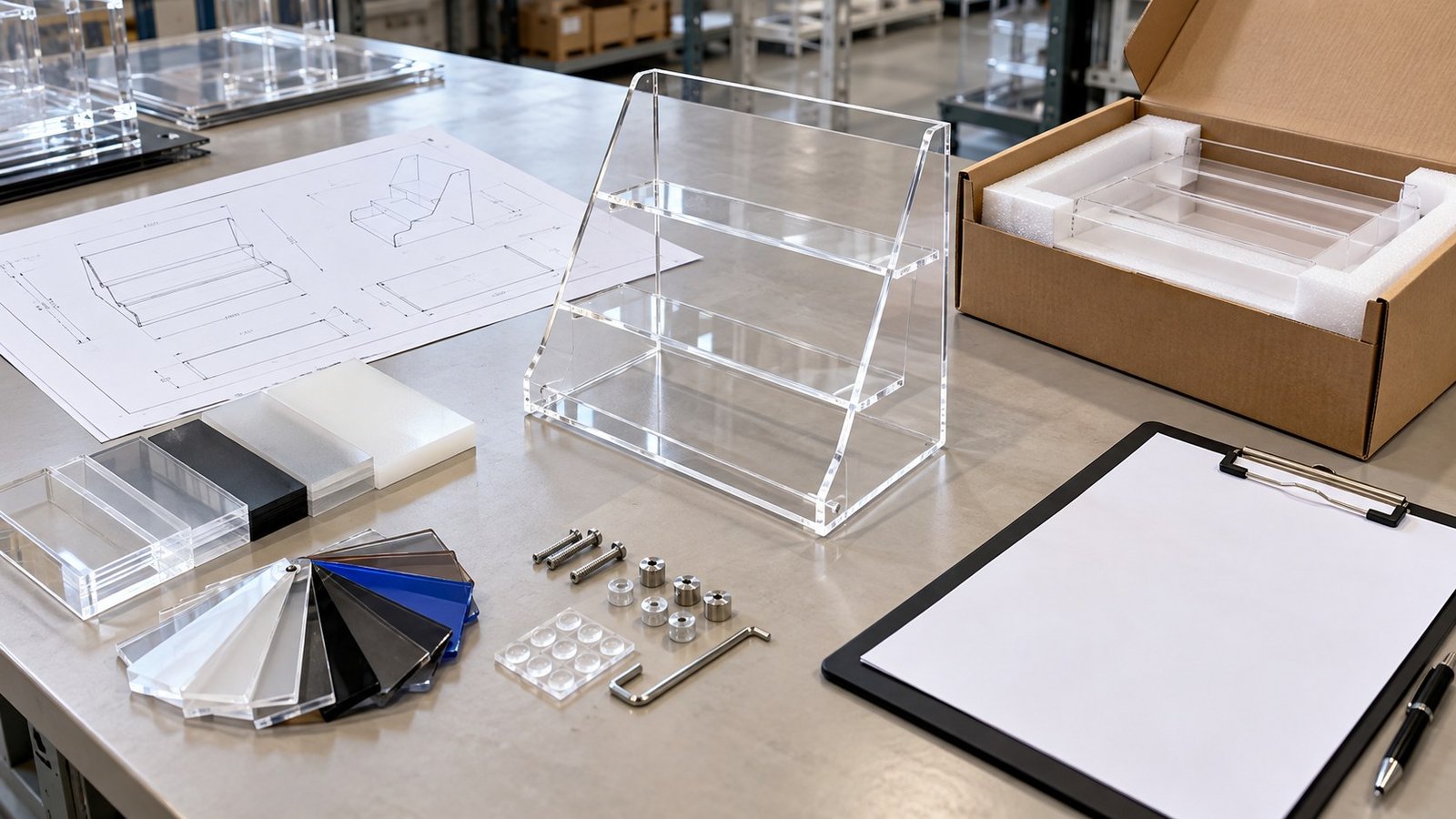
| RFQ section | What I need to review | Why it helps our quotation |
|---|---|---|
| Project reference | Project name, part or SKU, dated drawing or image revision | Keeps the quote tied to one design |
| Display function | Product dimensions, weight, quantity, and customer interaction | Helps us review fit, access, and support |
| Build | Overall and critical dimensions, parts, holes, bends, joints, and hardware | Gives us a basis for the manufacturing route |
| Material and finish | PMMA appearance, thickness if fixed, visible faces, edge and joint standard | Aligns the cosmetic expectation with the process |
| Branding | Artwork files, print locations, colors, engraving, and approval point | Prevents graphics from becoming an unstated assumption |
| Quantity | Prototype, pilot, and production quantities as finished units | Makes the pricing basis clear |
| Delivery scope | Assembly state, packing, labels, carton plan, destination, and date | Connects the factory quote to receiving needs |
| Approval and response | Sample criteria, alternatives, assumptions, exclusions, and quote validity | Creates a useful record before production release |
You do not need to have every box completed before contacting us. Send what you already know and mark the open points. I can review the drawing or reference, ask the questions that affect feasibility, and explain which decisions should be closed before sampling or production.
For a quotation review, send me the display drawing or reference image, product-fit details, quantity tiers, desired material and finish, branding, hardware, packing, destination, and required date. Our team can review the scope through the custom acrylic fabrication service and help turn an early idea into a controlled RFQ.