Skip to content

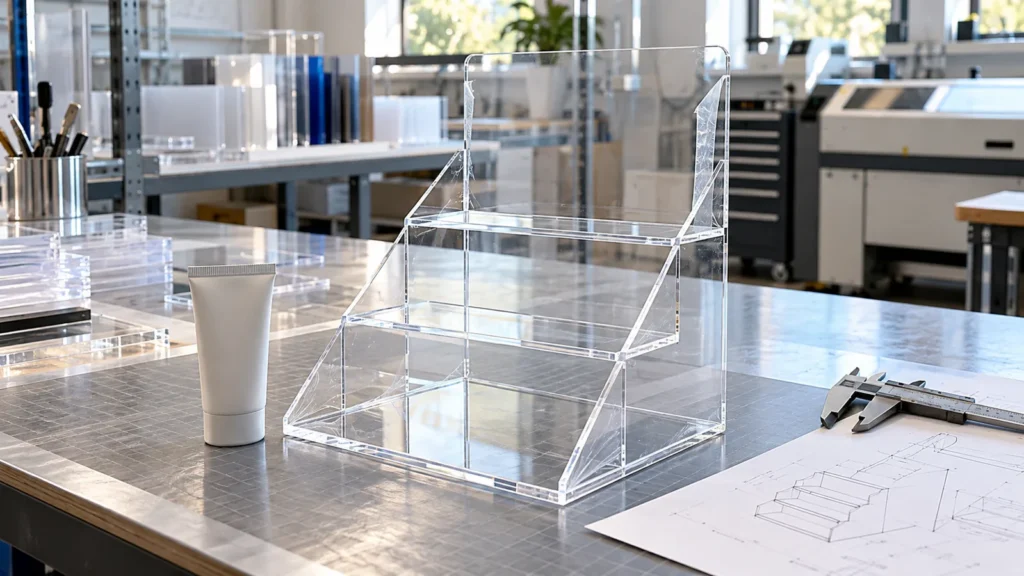
Custom acrylic POP displays move from prototype to production most reliably when the prototype is used to answer specific production questions—not simply to make a miniature version of the finished display. Before a bulk run, a buyer should know which revision controls the build, what the sample has proved, what still needs approval, and how the production unit will be checked and packed. For promotional retail projects, our custom acrylic POP displays page is a useful starting point for the structures and formats we can review.
A prototype can validate product fit while leaving print appearance, assembly time, or shipping protection unproven. Treating every sample as blanket approval is how a retail display programme quietly carries open risk into a production order. I prefer to give each stage a clear job, then turn the accepted result into one controlled production brief.
Begin with the retail job the prototype must prove
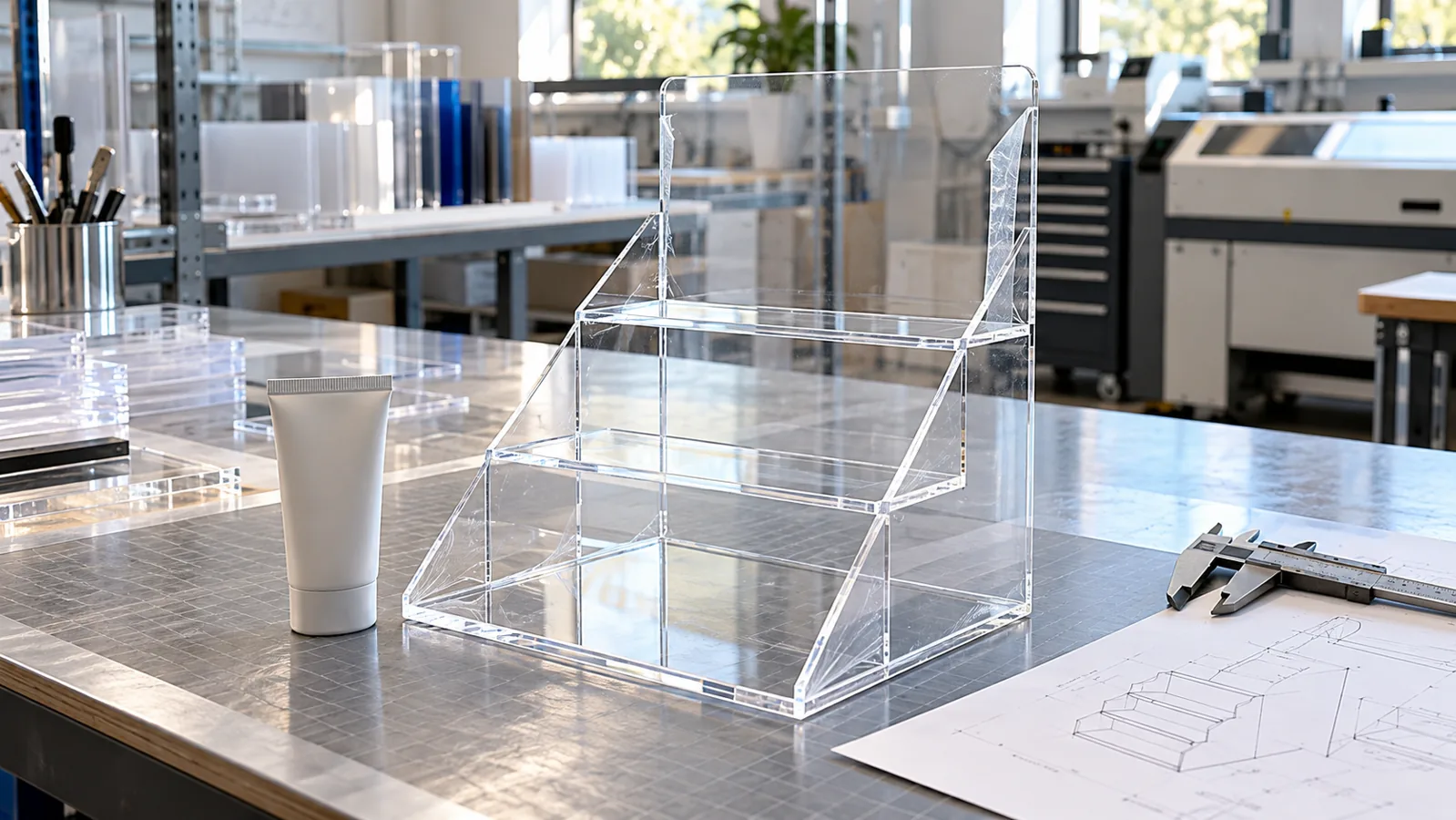
The first question is not whether the display looks impressive on a screen. It is what must work at the point of purchase: product fit, shopper access, shelf space, replenishment, stability, branding visibility, or a combination of these. A countertop unit that holds a compact product may need a different prototype from a multi-level display that will be assembled and serviced in store.
At the first review, we separate the features that must be physically proven from those that can still be developed. Product-facing pockets, slots, clearances, fixing points, and the visible viewing direction are often worth proving early. A colour variation or a carton mark may be deferred if it does not affect the structure. That keeps the prototype focused and makes the next decision easier.
| Prototype question | What to supply | What the result should decide |
|---|---|---|
| Product fit | Product sample or accurate dimensions | Clearances, locating features, shelf pitch, access |
| Retail use | Placement, shopper interaction, replenishment method | Display orientation, stability, service access |
| Appearance | Visible faces, finish reference, graphic intent | Edge, joint, transparency, and print priorities |
| Delivery state | Assembled, part-assembled, or flat-packed | Assembly detail, hardware, protection, and carton concept |
Turn a concept sample into a controlled display revision
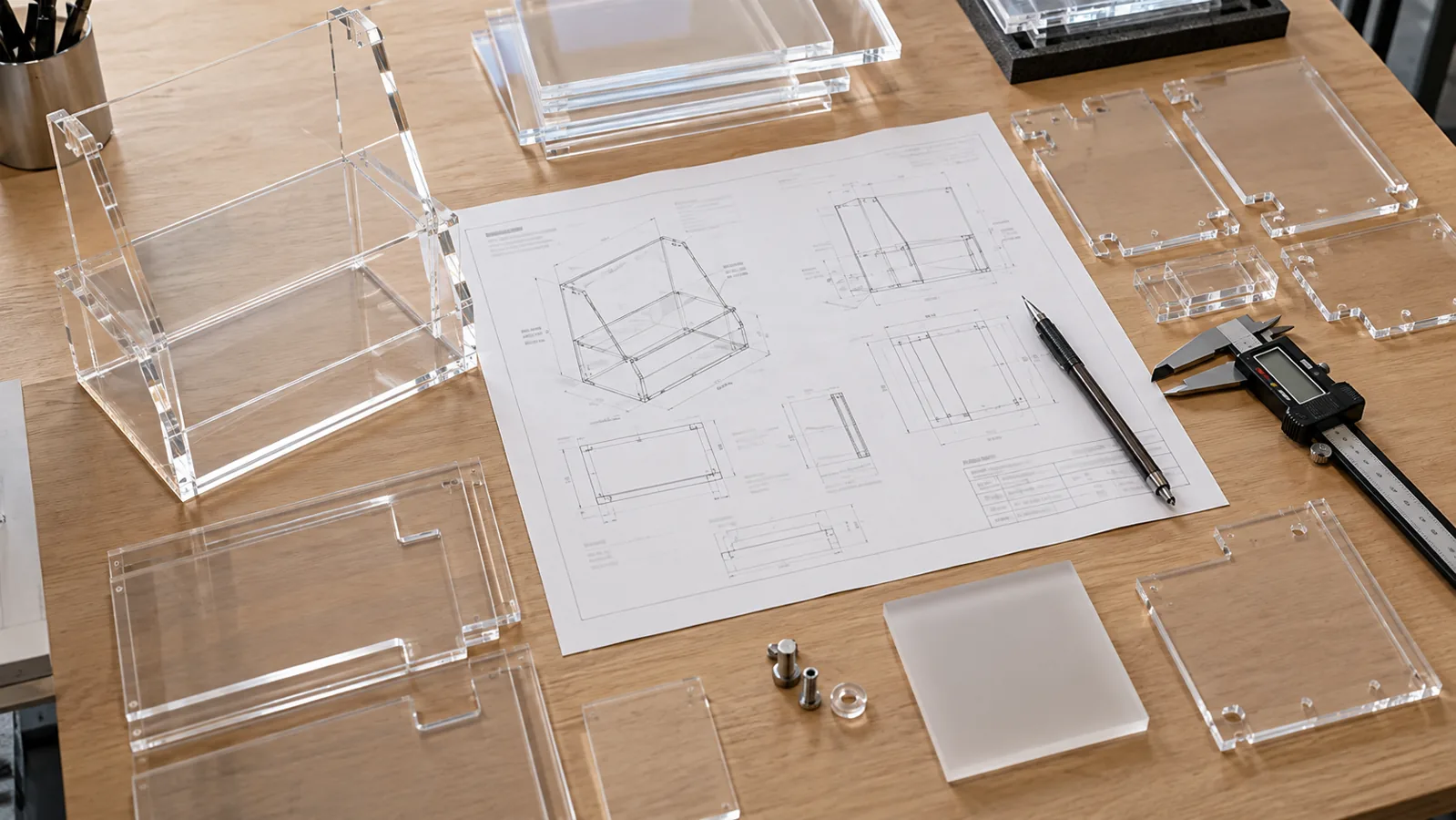
A reference image can begin a useful conversation, but a production sample needs a revision that the buyer and factory can identify. The controlled drawing should connect the overall size, acrylic appearance and thickness where fixed, cut-outs, bends, joints, hardware, graphic faces, and assembly order. It should also make clear which dimensions control product fit and which surfaces are customer-facing.
This is where I would stop a familiar mistake: accepting a sample after an adjustment, then releasing the older drawing because the change feels obvious. A changed divider, hole position, bend, or graphic viewing side can affect programs, assembly sequence, inspection, and packing. The accepted sample should either match the release revision or result in a clearly issued new one.
For a project that still needs design development, our custom acrylic fabrication service can review the open construction choices before the sample scope is fixed.
Choose a sample that exposes the highest-risk detail
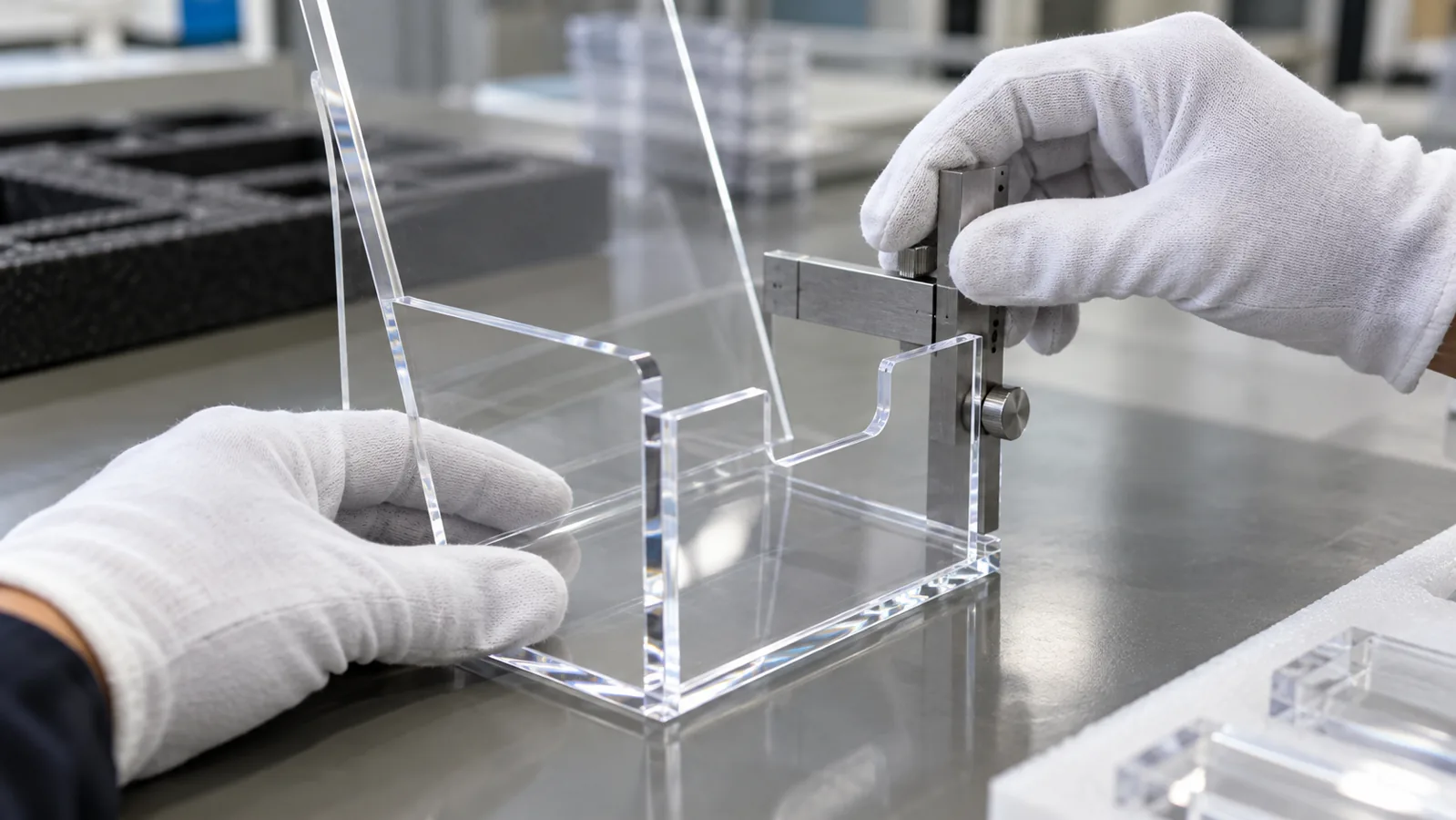
The best sample is not always a fully finished display. If the uncertainty is product fit, a representative pocket or shelf may answer it first. If the uncertainty is a premium clear appearance, the sample should include the actual edge treatment, joint, and customer-facing surface. If artwork must read through a transparent panel, it should be evaluated in the finished viewing direction rather than only as a flat proof.
For acrylic parts with machined or heat-affected features, the fabrication route deserves the same attention as the shape. ACRYLITE notes that heat and poor edge quality can introduce stress associated with later crazing; that is why sharp internal details, holes, edge treatment, and the intended cleaning or bonding conditions should be reviewed as a working combination, not as independent notes. Its fabrication guidance is useful technical context.
I would write down exactly what the prototype proves: fit, access, appearance, graphic placement, hardware operation, or packout. Anything it does not prove remains open rather than becoming an assumed production commitment.
Use a pilot to check repeatability, not just one good unit
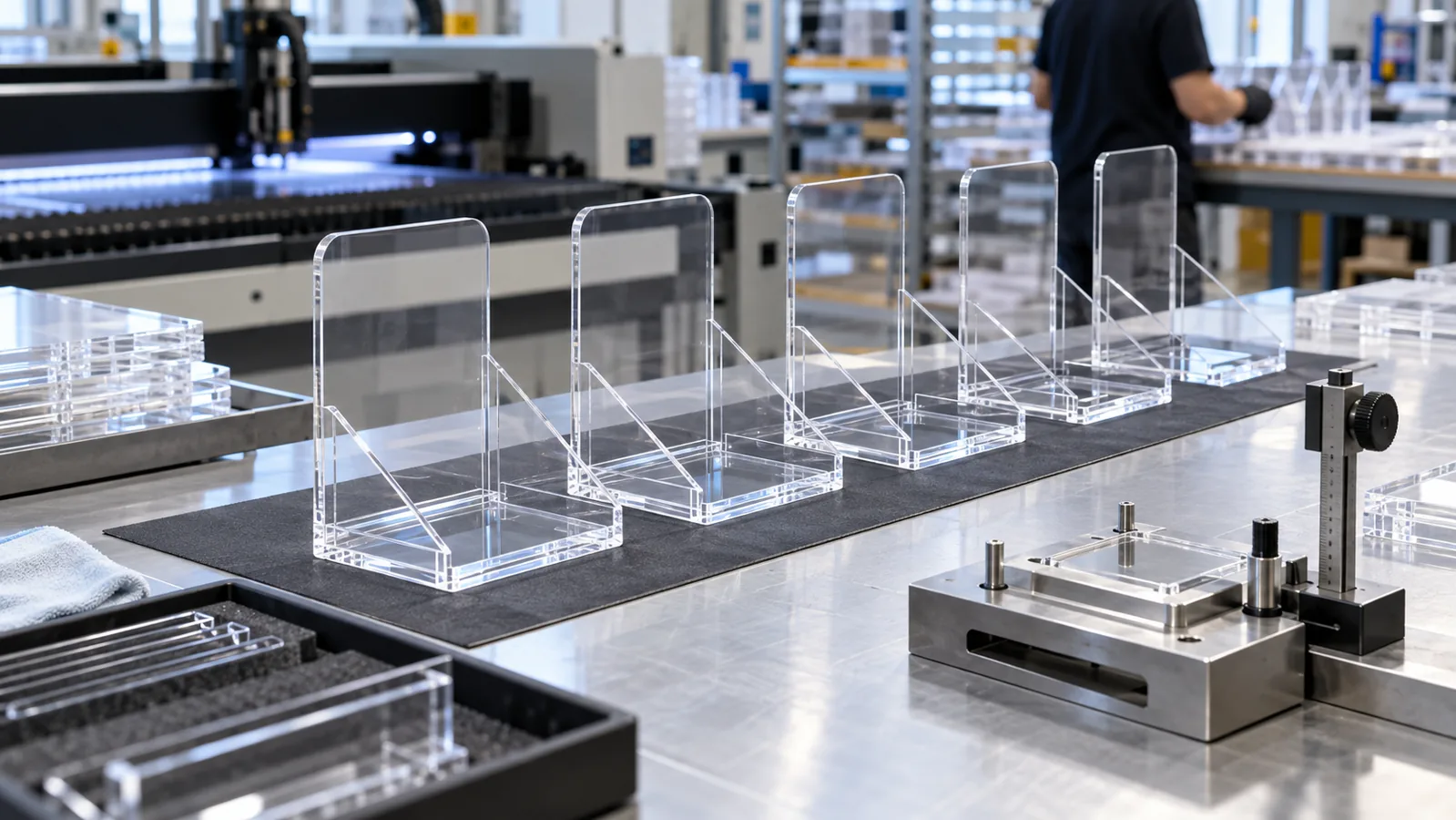
When a design moves beyond a single sample, the buyer and factory need to see whether the approved intent can be repeated. The question changes from “Does this display work?” to “What must stay controlled for every display to work and look the same?” Depending on the design, that may mean checking cut references, bend position, bonded-joint appearance, print orientation, hardware location, assembly sequence, or component identification.
Our team would convert the approved display into a practical part-and-assembly plan before treating a pilot as a bulk release. A polished clear edge may deserve more attention than an unseen return; a tight product pocket may matter more than a generous outer profile. Identifying those priorities lets inspection focus on the details that matter to the retail use rather than treating every dimension or surface as equally critical.
Freeze artwork, hardware, and packout with the production design
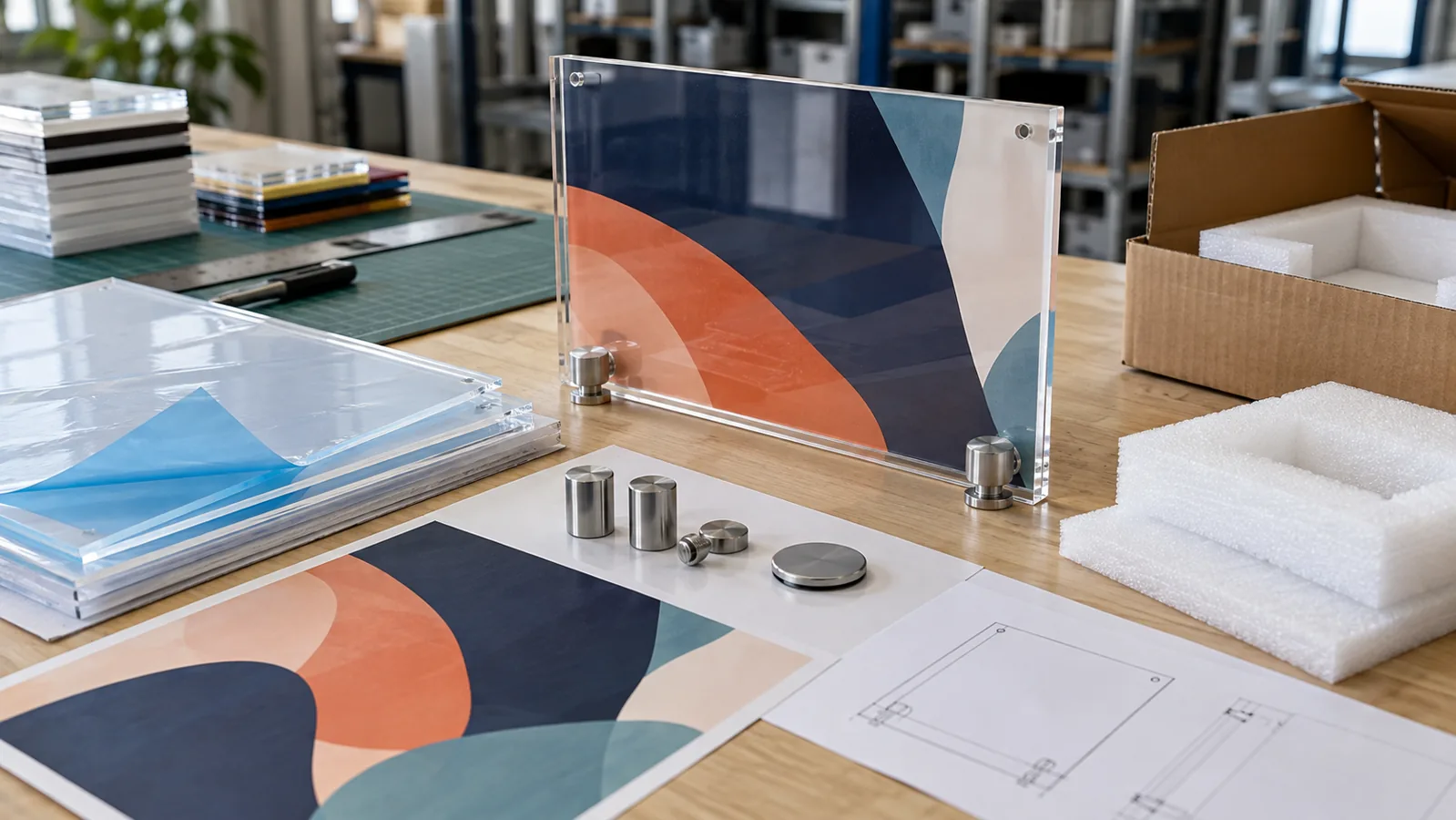
Production variation often starts outside the acrylic panel. A reverse-printed face, a supplied magnet, a standoff, a hinge, a loose accessory, or a revised carton can all change how the display is built and protected. The production brief should state the accepted artwork version and viewing side, hardware specification and quantity, assembly state, protective film or interleaving needs, and the carton or label requirements that are part of the order.
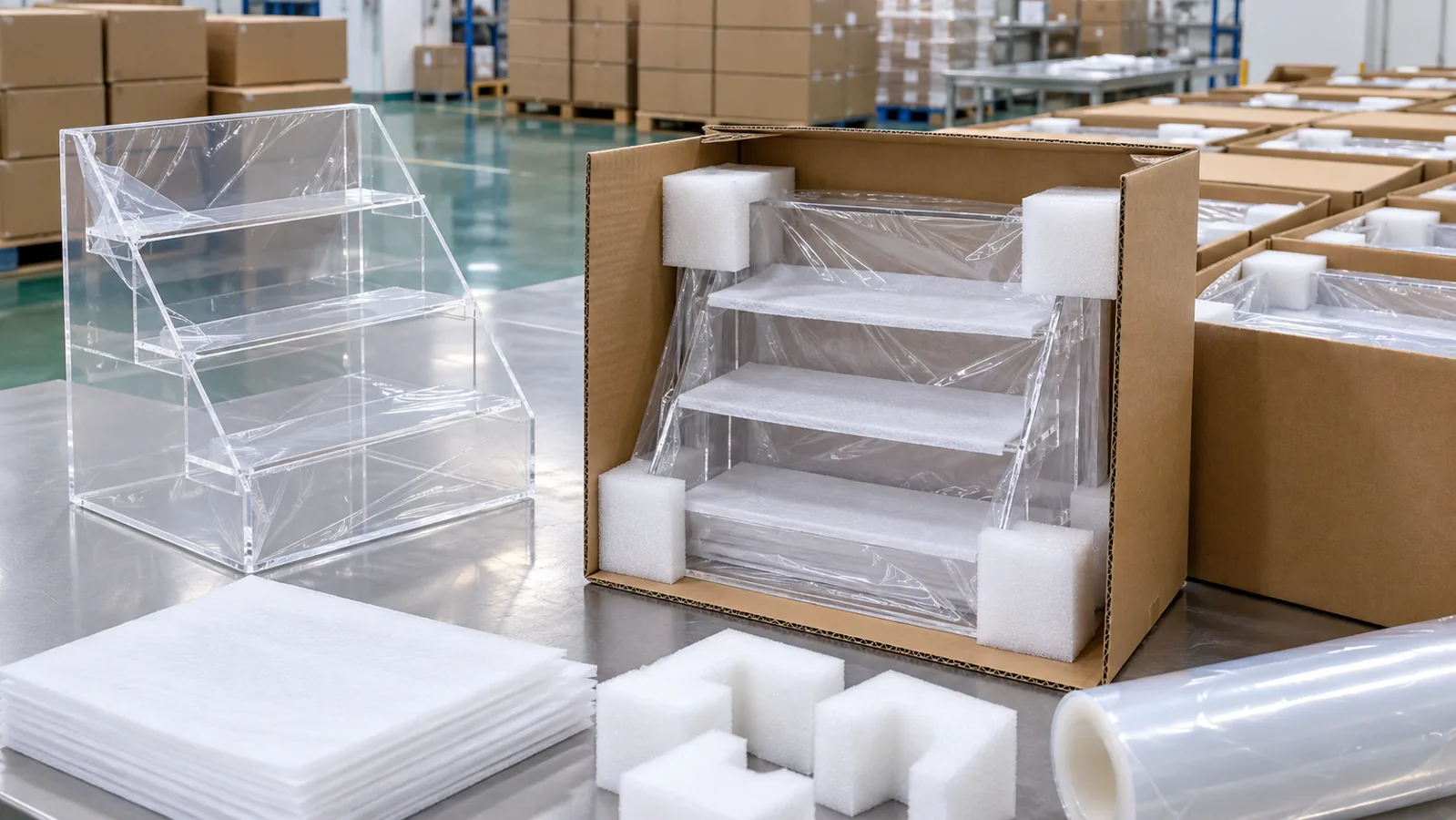
For clear POP displays, packing is a manufacturing decision, not an afterthought. A finished display can pass visual inspection and still be damaged by panel movement, loose hardware, or unprotected contact during transport. I normally ask whether the customer needs a presentation-ready assembled unit or a flat-packed display that trades assembly work for different shipping geometry. That choice should be made before the display is released, not after the finished parts are waiting at the packing table.
Release bulk production against evidence, not memory
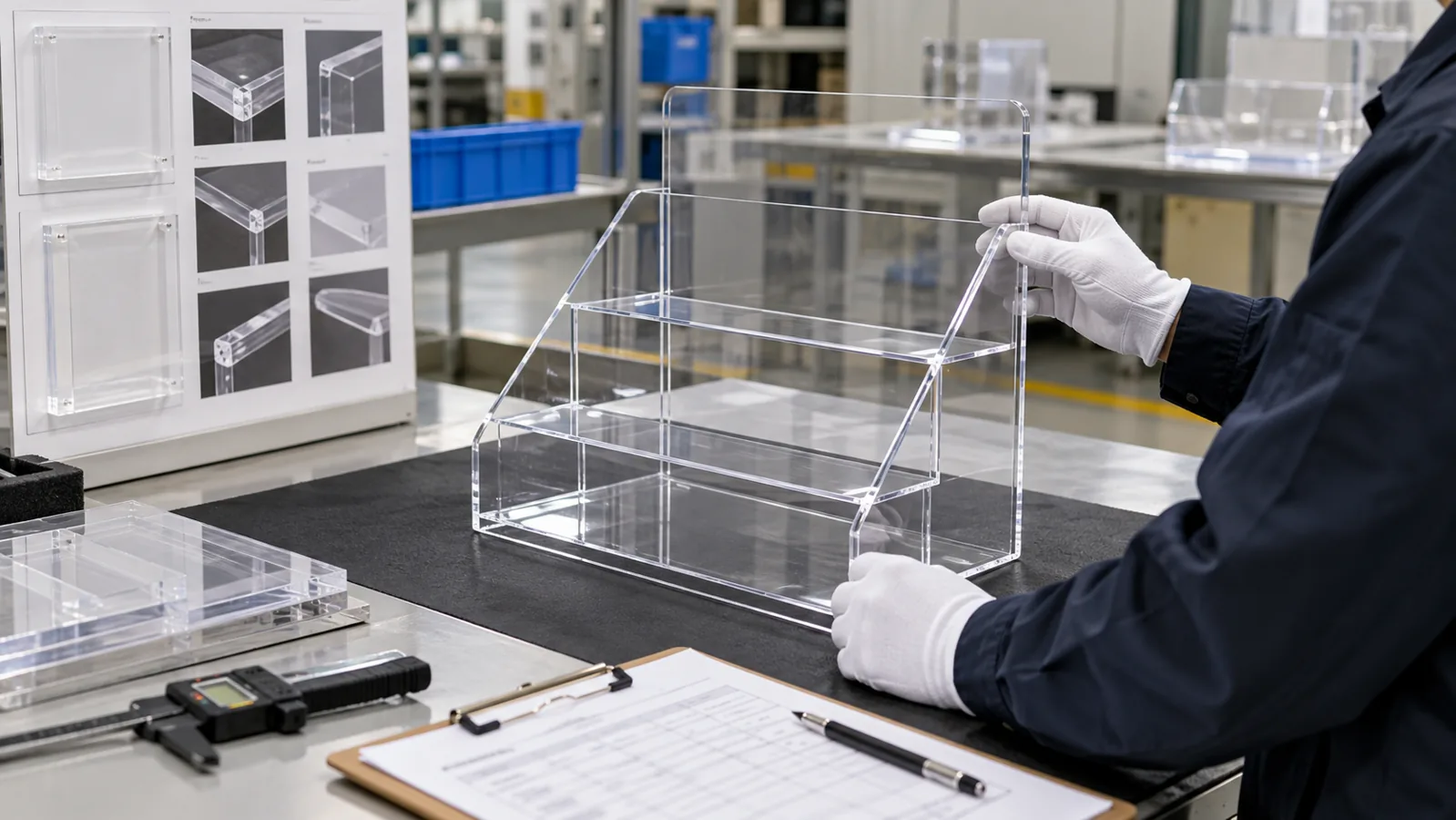
A good production release is short but specific. It links one drawing revision, the material and appearance choice, accepted sample observations, artwork, bill of materials, assembly method, inspection points, and packout instruction. It also states any approved deviation from the sample. That is much stronger than asking a factory to make the “same display as last time.”
| Release item | Why it belongs in the production record | Buyer check before approval |
|---|---|---|
| Drawing revision | Connects parts, dimensions, joins, and orientation | Confirm it matches the accepted display |
| Sample decision | Separates proven points from open questions | Record pass, change, or limitation in writing |
| Artwork and hardware | Prevents an unapproved version or component entering assembly | Confirm version, viewing side, finish, and quantity |
| Inspection focus | Directs attention to fit, visible surfaces, joints, and function | Agree what is critical versus cosmetic |
| Packing instruction | Protects the accepted unit through shipment | Confirm shipping state and protection of clear faces |
The production record does not need to turn a buyer into a factory engineer. It simply needs to make the accepted decision visible to everyone who will cut, finish, assemble, inspect, and pack the display.
Send a POP display brief for prototype-to-production review
The safest path from prototype to production is to close one meaningful risk at a time, then carry the accepted result forward in the correct revision. That protects the retail intent while giving the production team a repeatable instruction set.
Send Feilong your drawing, sketch, or reference image; product dimensions or sample; target quantities; retail use; material and finish expectations; artwork; hardware; desired shipping state; and required delivery date. We can identify the prototype questions that matter and turn the accepted design into a production-ready POP display brief.