Skip to content

Start with a packaging brief, not a generic request
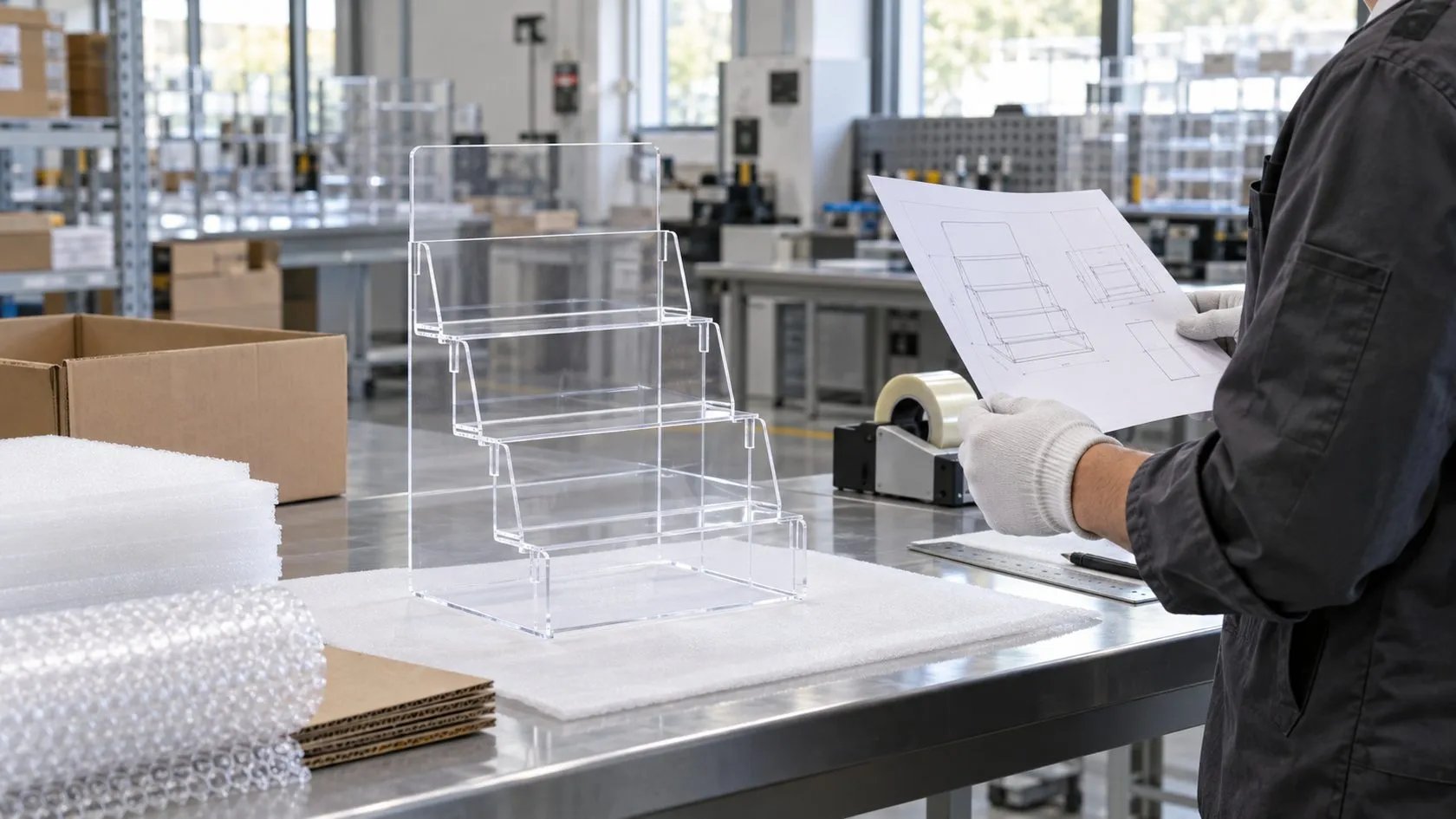
Custom acrylic display packaging should be specified as part of the product, not added after the display has been quoted. Clear acrylic makes scuffs, edge chips, loose hardware, and print abrasion immediately visible. The most useful brief tells us what is being shipped, whether it arrives assembled or as a kit, how it will be handled after delivery, and what transit route it must survive.
For a custom retail rollout, I would lock the pack-out concept while the display drawing is still open. That lets the structure, assembly method, carton size, and protection work together instead of forcing a finished display into a convenient box. Our custom acrylic displays can be reviewed with the intended packing and delivery state before sampling.
Define the display and its vulnerable features

Start with the actual unit: overall dimensions, acrylic thickness and finish, bonded or bent areas, printed faces, shelves, projecting parts, hardware, and the product it holds. A thin clear panel may be visually important but easy to protect when flat; a large assembled unit can need protection at corners, drilled areas, joints, and unsupported shelves.
I would mark the customer-facing surfaces and any points that must not carry packing pressure. A carton can be strong while its internal support still loads a polished edge, a print face, or a bonded joint in the wrong place. The packing design should support the display where its structure permits, rather than simply filling empty space around it.
Choose assembled, flat-pack, or a controlled kit
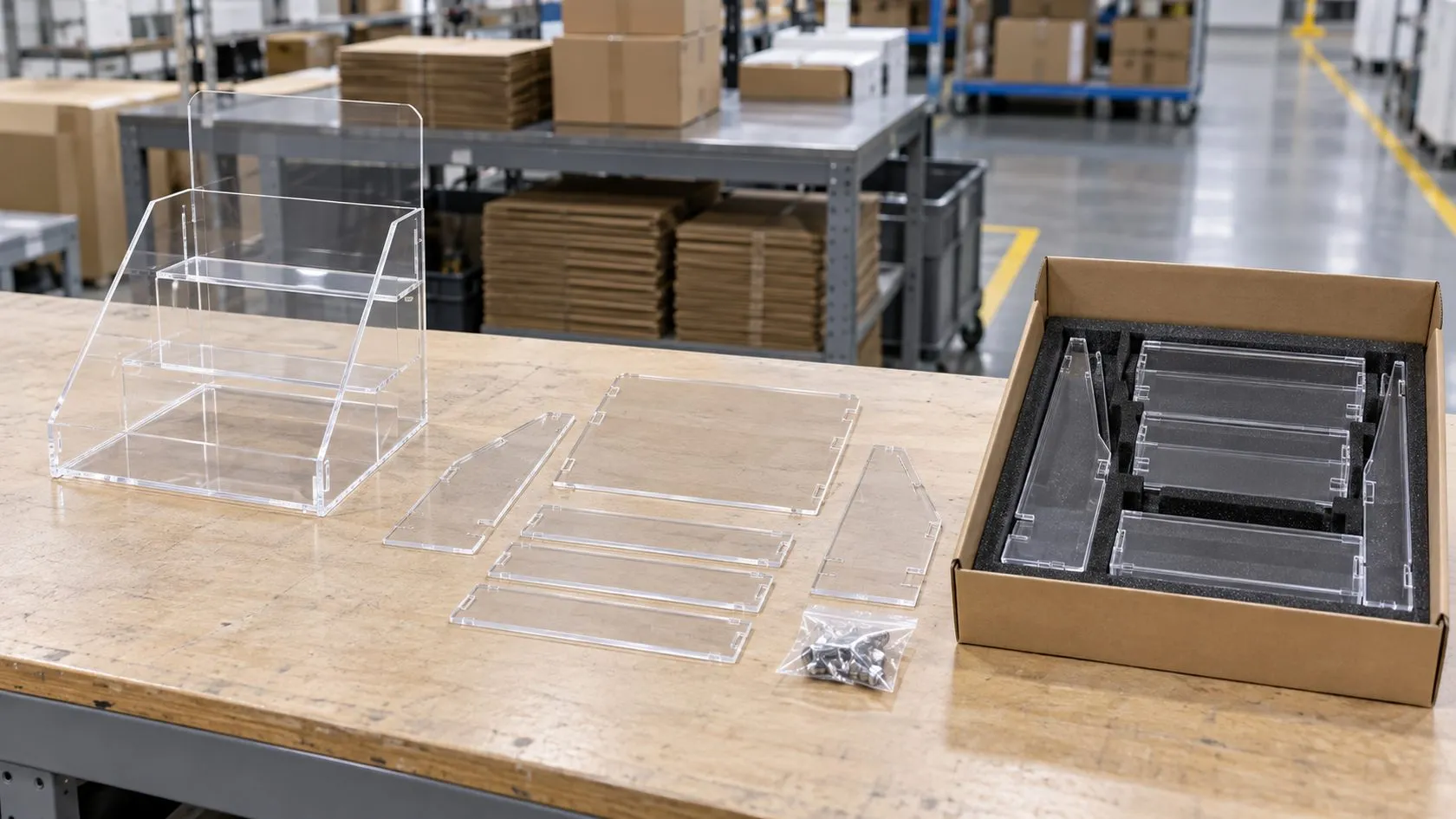
The delivery state is a commercial and operational choice. An assembled display can reduce store setup and keeps factory assembly under one controlled process, but it may take more freight volume and needs protection for its finished geometry. A flat-pack display can reduce volume, but it transfers assembly, missing-part control, and installation risk to the destination. A kit can be useful when repeatable components, hardware bags, and clear assembly instructions make that handoff manageable.
| Delivery state | What the buyer should confirm | Main packaging risk |
|---|---|---|
| Assembled | Store-ready condition, orientation, handling points, and carton count | Internal movement or pressure on projecting features |
| Flat-pack | Assembly sequence, fasteners, tools, instructions, and part identification | Missing parts, surface-to-surface rubbing, or assembly error |
| Controlled kit | Which subassemblies stay factory-built and how each kit is identified | Mixed components or unclear store-level allocation |
For a premium counter unit, I normally prefer to compare landed freight and setup risk before assuming flat-pack is cheaper. For a large multi-store programme, the better answer often depends on carton volume, local assembly capability, and how reliably the display can be rebuilt.
Specify surface and edge protection by part
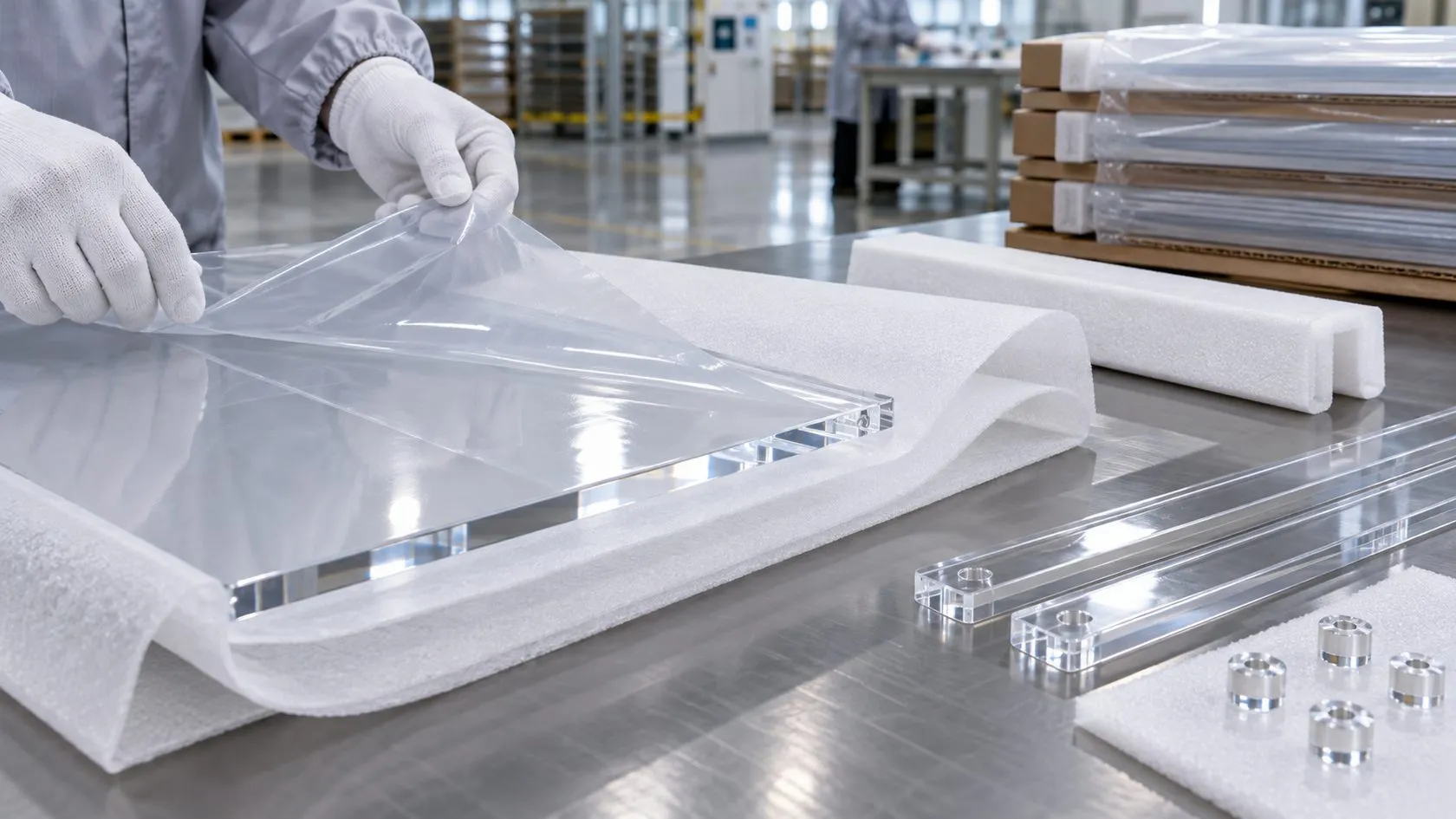
Do not specify only “protective packaging.” Identify what touches each display surface. Protective film can remain on suitable acrylic faces during fabrication and packing, but it is not a substitute for separation. Finished acrylic faces should not rub against each other in transit; use the agreed interleaving, sleeves, foam, or other barriers that match the part geometry.
Edges and corners need their own attention because they can receive impact before a broad face does. The packing plan should distinguish flat panels, finished assemblies, loose shelves, printed parts, and hardware. If a component cannot tolerate direct contact, say so on the drawing or packaging specification rather than relying on a general handling note.
Control movement inside the carton
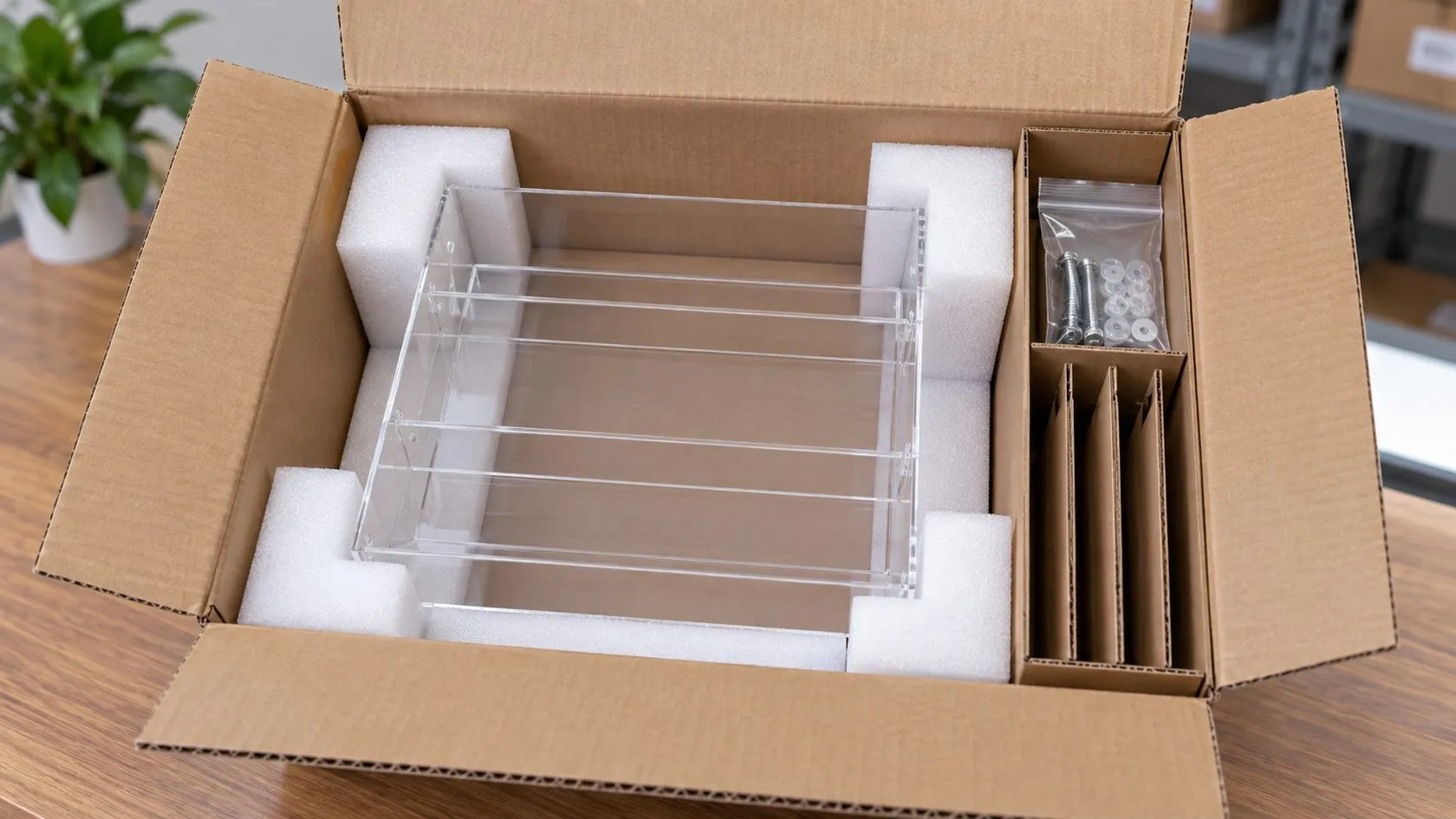
The goal is controlled support, not the greatest possible amount of cushioning. Define whether the display needs fitted foam, corner protection, dividers, trays, sleeves, or restrained hardware bags, and where those items sit. A heavy accessory moving inside a carton can damage a clear panel even if the outer carton remains intact.
I would request a pack-out review when an acrylic display contains loose fittings, removable shelves, magnets, hinges, or product-specific inserts. The packaging must keep components separated and make their quantity obvious on receipt. Where stores need kits by location or display type, carton labels and internal part identification should follow that allocation.
Specify cartons, handling, and shipment configuration

The buyer should specify the shipping route, handling expectation, destination, and whether cartons will be consolidated, palletized, stored, or sent individually to stores. These conditions influence carton design, stacking assumptions, label placement, moisture protection where relevant, and whether the packed display needs an orientation mark.
Ask for the packed unit dimensions and weight before selecting a freight plan. This is particularly important when an assembled display has a large air volume, or when a small design adjustment could enable a more efficient shipping state. Feilong can review the fabrication and packing path through our customized acrylic service before the bulk drawing is released.
Approve packaging with the display sample

A product sample confirms fit, appearance, and function; a pack-out sample confirms how those qualities are protected through handoff. For a first order, a new geometry, or a display with visible printing and complex assembly, I would include the agreed packing elements in the approval scope.
The approval record should identify the drawing revision, photos of the pack-out, component count, carton label, internal layout, and acceptance points for visible surfaces. If a packing change follows sample approval, it should be reviewed as a change to the delivery specification, not treated as an informal factory substitution.
Packaging details to include in your RFQ
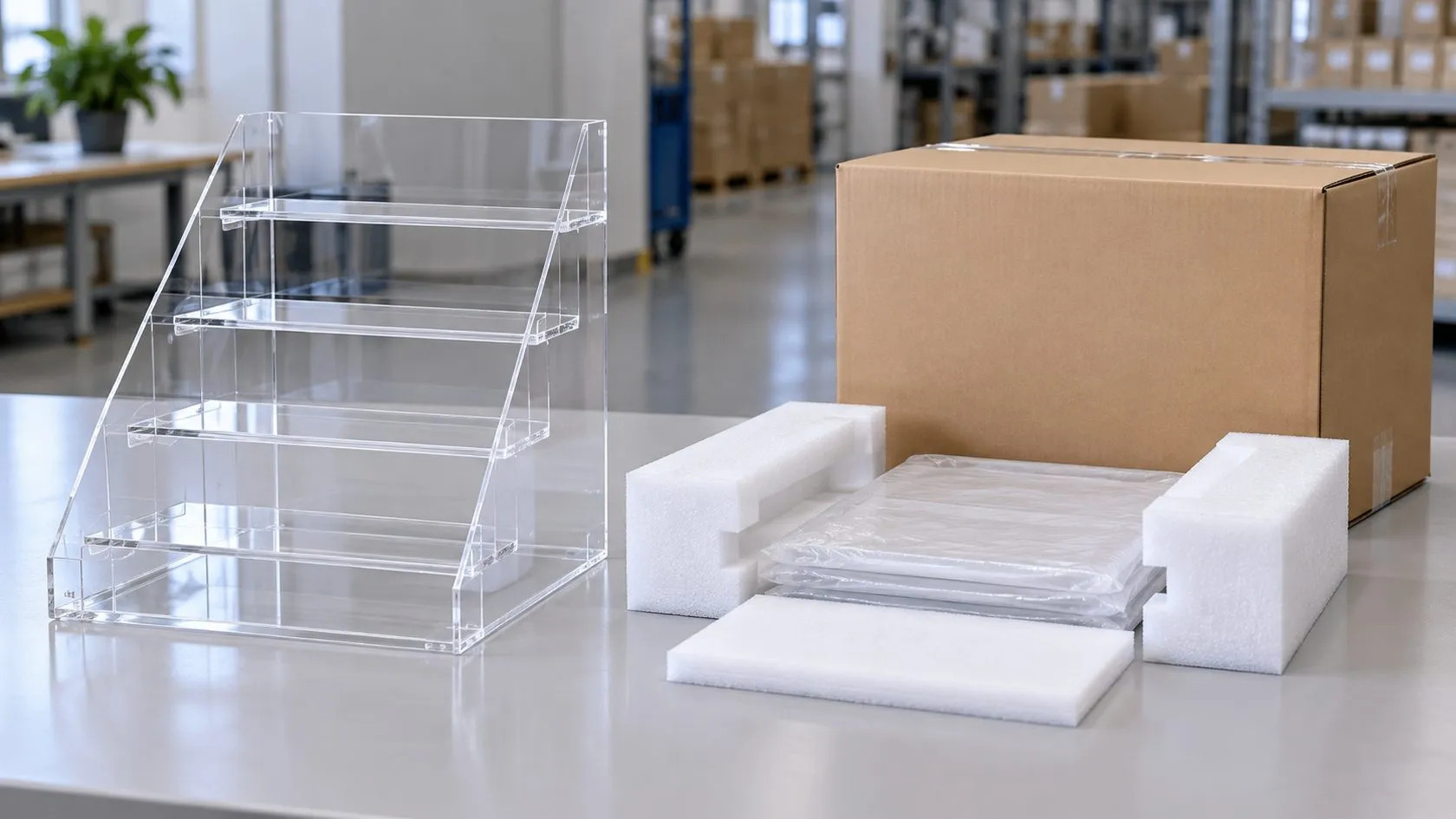
Send these items with the drawing or reference image so the packaging can be quoted and reviewed as a controlled part of the project:
• Finished display dimensions, acrylic material, thickness, visible finish, and product load or fit requirements.
• Whether delivery is assembled, flat-pack, or a defined kit; include required assembly instructions and tools.
• Sensitive faces, polished edges, printed areas, bonded joints, hardware, and removable components.
• Required individual protection, interleaving, foam, dividers, hardware-bag control, and carton marks.
• Quantity per carton, store allocation, barcode or label requirements, palletization, destination, and freight route.
• Sample and pack-out approval criteria, including cosmetic checks on arrival.
The most useful RFQ does not dictate a material by name without showing the display geometry. It states the outcome required—no surface contact, controlled hardware, store-ready units, or space-efficient kits—so we can evaluate a practical packing arrangement against the actual product.
Turn packaging into a release-controlled specification
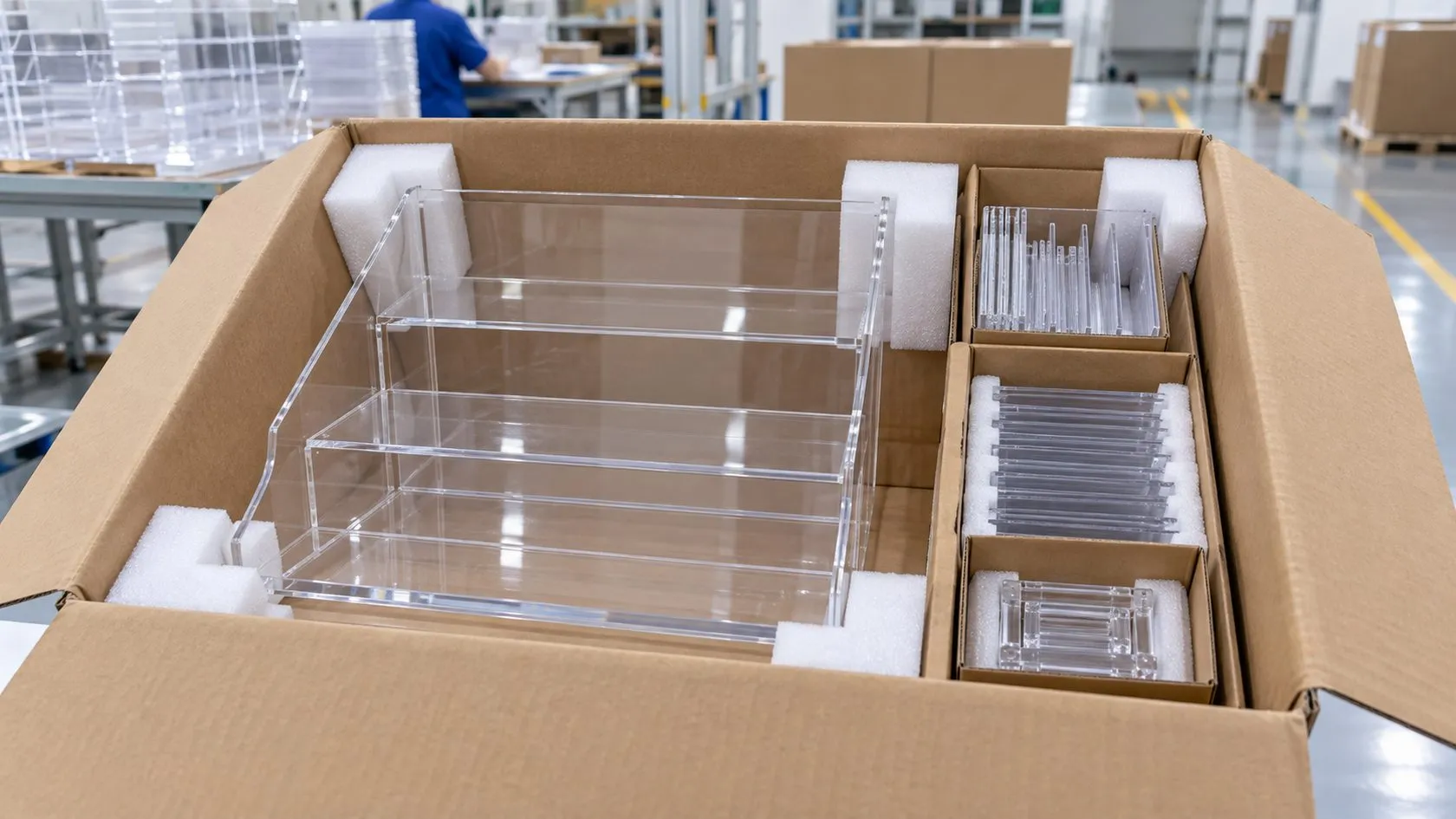
Good custom acrylic display packaging is specific enough to protect the appearance and function the buyer approved, while still being workable for production and freight. It covers delivery state, vulnerable areas, part separation, controlled movement, carton configuration, labels, and sample approval—not just an instruction to “pack safely.”
Send Feilong your display drawing or reference image, quantity, destination, preferred delivery state, visible-finish requirements, hardware or loose-part details, and any store-level packing rules. We can review the display and pack-out together before sampling and quotation.