 Skip to content

Questions about materials rarely come in a neat form. Most of the time, they show up in short emails or quick calls—usually when a project is already moving. “Should we use [Lucite](https://cpresence.com/lucite-vs-acrylic-the-differences-and-uses/) or acrylic?” On the surface, it sounds like a naming issue. Underneath, it’s a decision about cost, clarity, durability, and risk.
I hear this question a lot when discussing custom displays and acrylic boxes with buyers and designers. The parts look similar. The drawings look clean. But once the product is in use—under lights, under weight, or under time—the differences start to matter.
That’s why I want to slow this topic down. Not to complicate it, but to make it clearer. Lucite and acrylic are closely related, yet they don’t always behave the same. Understanding where they overlap, and where they don’t, helps avoid mistakes that only show up after production.
Let’s start by clearing up what these materials really are, before we talk about how they perform.
What Are Lucite and Acrylic?

Definition of Acrylic
What acrylic really is
I remember the first time I heard “acrylic” in a factory meeting. I pictured paint. Big mistake. Acrylic in manufacturing is a rigid plastic we use to make displays, frames, racks, and so much more.
At its core, it is:
- A type of plastic.
- Known for clarity and strength.
- Often used where glass looks nice but is too heavy or too fragile.
Definition of Lucite
A brand with its own story
Lucite is a brand name, kind of like “Kleenex.” It refers to a specific type of acrylic sheet made under stricter controls. Many times, Lucite has slightly better properties than generic acrylic.
It’s still acrylic. But with some “premium” tweaks.
Relationship Between Lucite and Acrylic
Here’s a simple picture in my head:
All Lucite is acrylic. But not all acrylic is Lucite.
Imagine apples and Red Delicious apples. All are apples, but some have their own label and expected quality.
Trademark vs Generic Material
| Term | What it Means |
|---|---|
| Lucite | Trademarked acrylic. Often higher spec. |
| Acrylic | Generic name for polymethyl methacrylate (PMMA). |
| Cast/Extruded Acrylic | Ways to make acrylic sheets. |
Factories might say “Lucite-style” or “premium acrylic.” If you want the real Lucite brand, ask for certification from the manufacturer.
Now that you can see where these terms fit, let’s dive into what makes them what they are—starting with the chemistry.
Chemical Composition and Material Basics

PMMA: What It Is and Why It Matters
Polymethyl methacrylate (PMMA) is the long name you’ll bump into everywhere. It’s the backbone of both Lucite and acrylic.
I like to think of PMMA like flour in baking. Without it, you simply don’t have bread. It’s the base ingredient.
Material Structure and Polymer Characteristics
Imagine chains of beads. Each bead is a molecule. In Lucite and acrylic, these chains are linked in a way that makes the material:
- Clear
- Rigid
- Stable (not easily warped)
The exact arrangement changes how the sheet performs.
Variations Across Manufacturers
Different factories tweak PMMA in small ways:
- Additives for UV resistance
- Plasticizers for flexibility
- Pigments for color
These changes lead to real-world differences we’ll talk about soon.
If composition is the bread, then how we make it is the oven. That changes everything. Let’s get into that next.
Production Processes

Cast Acrylic
Cast acrylic is like artisan bread. It’s poured into a mold and allowed to cool slowly.
That slow process gives it:
- Better clarity
- Higher strength
- Less internal stress
I once ordered both cast and extruded samples from a supplier. In the sunlight, the cast sheet looked like glass. The extruded one was good—but the difference was clear.
Extruded Acrylic
Extruded acrylic is like factory bread. It is pushed through a machine continuously.
Pros:
- Cheaper
- Faster to make
Cons:
- Slightly less strong
- Small optical differences
Lucite Manufacturing Process
Lucite sheets are usually cast. The process is tightly controlled. That means less variation between batches.
Think of it like a chef following the same recipe every time.
How Production Affects Properties
| Process | Clarity | Strength | Cost |
|---|---|---|---|
| Cast Acrylic | High | High | Higher |
| Extruded Acrylic | Medium | Medium | Lower |
| Lucite (Cast) | Highest | Highest | Premium |
These differences matter when you design for display, signage, or furniture. But clarity and strength are just part of the story.
Let’s talk about how these sheets look and feel in real life.
Optical Properties and Aesthetics

Clarity and Light Transmittance
One thing I test every time is how much light passes through. Good acrylic feels like glass. Lucite often feels even clearer.
I held a Lucite sample up to a window once. The outdoor garden looked alive through it—like a painting without a frame.
Surface Gloss and Finish
Gloss changes how premium something feels.
- Lucite: Usually higher gloss
- Standard acrylic: Good, but varies by maker
That’s one reason high‑end displays use Lucite for front panels.
Color Stability Over Time
Sunlight can make plastics yellow. Some acrylic yellows faster than others.
Additives help. But premium acrylics like Lucite tend to resist this fading longer.
Now that we see, let’s feel. What happens when the material meets force?
Mechanical Properties Comparison

Strength and Durability
Strength means how much load the sheet can take.
Lucite and cast acrylic often out‑perform extruded versions. I once dropped a cast sheet on concrete—no cracks. That same thickness in extruded chip? A small crack.
Impact Resistance
Acrylic is already more impact resistant than glass. But between types:
- Lucite (cast): best
- Standard acrylic: depends on process
Scratch Resistance
Acrylic scratches easier than glass. But some makers add surface hardeners.
Table time:
| Property | Lucite | Cast Acrylic | Extruded Acrylic |
|---|---|---|---|
| Impact Resistance | High | High | Medium |
| Scratch Resistance | Medium | Medium | Medium |
| Overall Durability | High | High | Medium |
UV Resistance and Weathering
Outdoor signage needs UV resistance. Lucite often leads here. But quality acrylic with additives can also stand strong.
Speaking of stands and displays…
Performance in Real‑World Applications

Display and Retail Signage
Stores want clean visuals and sturdy parts. That’s where I often recommend cast acrylic or Lucite panels.
They avoid warping under lights and look sharp.
Furniture and Design Items
Acrylic furniture can be beautiful and modern. I saw a custom acrylic chair once that refracted light like a prism. Lucite made it feel worth every dollar.
Industrial and Architectural Uses
Tougher applications—like machine guards and windows—call for strong, clear materials. Lucite and cast acrylic both handle this well.
Jewelry and Small Decorative Items
For tiny parts, clarity matters most. Jewelry boxes and decorative pieces often use cast acrylic for that crisp look.
All these uses bring us to cost. Let’s break that down.
Cost and Market Position
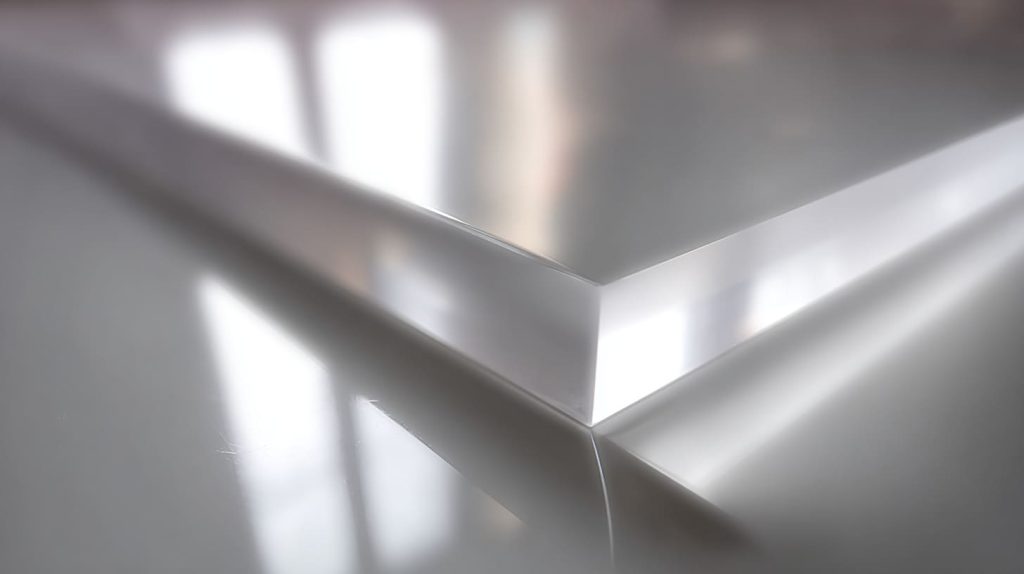
Typical Price Differences
Lucite usually costs more than generic acrylic. That’s the trade‑off for consistency and clarity.
Brand Positioning of Lucite
Lucite is a brand people trust. Designers like it because they know what they’ll get.
Value for Money by Application
Sometimes the premium is worth it. Other times, standard acrylic works fine.
If you’re choosing, think of the purpose first, then the price.
Next, let’s talk about how easy each material is to work with.
Fabrication and Processing Considerations

Cutting and Machining
Both cut cleanly. But cast acrylic and Lucite often leave smoother edges.
Bending and Forming
Heat bending works well. But beware:
- Too hot = stress
- Too cold = cracks
Joining and Adhesives
Glue choices matter. Some adhesives fog the surface. I recommend testing before final assembly.
Polishing and Surface Treatment
Polishing restores clarity. Wet sanding works great. Power polishing is faster if you have the tools.
By now, you might feel like an expert. But let’s simplify the strengths and weaknesses.
Pros and Cons Summary

Advantages of Lucite
- Higher clarity
- Consistent quality
- Better weathering
Advantages of Standard Acrylic
- Lower cost
- Widely available
- Works well in many cases
Limitations to Consider
| Issue | Lucite | Standard Acrylic |
|---|---|---|
| Cost | Higher | Lower |
| Availability | Needs branded supplier | Easy to source |
| Performance | Consistent | Varies |
We’re nearly at the end. Let’s help you choose.
How to Choose Between Lucite and Acrylic

Based on Project Requirements
Ask:
- Do I need top clarity?
- Is this for display or structural use?
Based on Budget and Delivery Needs
If the budget is tight, standard acrylic often delivers great results.
Based on Long‑Term Performance
For outdoor or long‑lasting projects, I lean toward Lucite or high‑quality cast acrylic.
Conclusion

Understanding Lucite vs acrylic isn’t just about labels. It’s about performance, clarity, and what your design truly needs. The more you work with these materials, the smarter your choices will become. I’ve learned that through visits to factories, endless sample tests, and late nights comparing sheets under workshop lights.
You don’t need the fanciest material in every case. You need the right material. That’s what I hope you take away from this guide.


!%5BLucite)
lucite-vs-acrylic-the-differences-and-uses/)