Skip to content
A buyer can save money on paper and still lose money in the factory. I have seen that happen more than once.
The conversation usually starts in a very normal way. Someone asks for a lower material cost. A supplier says recycled PP can help. The number looks good. Everyone feels a little relieved. Then the real work starts. The molding runs are not as stable as expected. The color shifts more than planned. A few parts fail. A few more need rework. The “cheap” option starts feeling expensive in a very quiet, annoying way.
That is why I think PP material choice gets underestimated in real projects. People often treat it like a basic purchasing line. Virgin PP on one side. Recycled PP on the other. One costs more. One costs less. Case closed.
But it is rarely that simple.
PP is not only a price per kilogram. It is also a processing behavior, a quality risk, a visual result, and sometimes a customer complaint waiting in the background. I do not say that to make the topic sound dramatic. I say it because material decisions have a habit of showing their real personality later, not at the quotation stage.
The short answer is simple. Recycled PP often looks cheaper at the start, but total cost is not always lower.
One thing I pay close attention to is whether the savings show up only in the purchasing sheet or also survive through molding, inspection, shipment, and customer use. That small difference decides whether a project feels smart or painful.
I have worked around plastic product decisions long enough to know that buyers do not usually get into trouble because they asked for savings. They get into trouble because the savings were measured too narrowly. That is the part many articles skip. I do not want to skip it here.
And once I started looking at PP this way, the next question became unavoidable: what are we really comparing when we say virgin PP and recycled PP?
What Is Virgin PP and Recycled PP?
When people talk about PP, the words can sound simple. Virgin PP. Recycled PP. Two labels. Two options. Yet under those labels, the real story is much messier.
I have noticed that many sourcing problems begin when everyone uses the same material name but imagines a different material reality.
Definition of Virgin PP
Virgin PP is polypropylene made from new petrochemical feedstock. It has not gone through a previous product life. It has not been collected, sorted, reground, and processed again. It starts clean from the supplier side, at least in theory.
That matters because virgin PP is usually more consistent in molecular structure and performance. It tends to behave in a more predictable way during processing. It also gives buyers more confidence when the application has strict requirements.
Here is a simple way I think about it:
| Point | Virgin PP |
|---|---|
| Source | New raw material |
| Consistency | Usually high |
| Appearance | More stable |
| Processing behavior | Easier to predict |
| Risk level | Usually lower |
Virgin PP does not mean perfect. I do not want to pretend it solves every problem. A poor supplier can still create trouble. A weak process can still ruin good resin. But virgin PP usually gives the factory a steadier starting point.
Definition of Recycled PP (rPP)
Recycled PP is polypropylene that comes back into use after an earlier stage of life. That material may come from factory scrap or from used consumer products. That difference matters a lot.
There are two common types:
Post-industrial recycled PP
This comes from production waste, offcuts, rejects, runners, or unused material from manufacturing. It is usually cleaner and easier to control.
Post-consumer recycled PP
This comes from used products collected from the market. It can include packaging, containers, caps, and other items that have already gone through real-world use.
That second type often brings more uncertainty. It may contain contamination. It may vary in color. It may have a different degradation history. It may not behave the same from batch to batch.
I do not treat all recycled PP the same, because that shortcut causes expensive mistakes later.
Key Perception in the Market
The market tends to simplify both options.
- Virgin PP often gets seen as stable, premium, and predictable
- Recycled PP often gets seen as cheap, greener, and less certain
There is truth in that, but only part of the truth.
Sometimes recycled PP is handled so well that it performs better than buyers expect. Sometimes virgin PP is chosen for a project that did not need it, and the buyer spends extra money for no real gain. I think that is where critical thinking matters.
Here is the comparison most people carry in their heads:
| Market View | Virgin PP | Recycled PP |
|---|---|---|
| Price | Higher | Lower |
| Consistency | Better | Less stable |
| Sustainability image | Weaker | Stronger |
| Visual quality | Better | Often mixed |
| Buyer confidence | Higher | Depends on source |
My own way of judging it is more practical: I stop caring about the label alone once I see how the material behaves in the actual factory process. A nice material name does not help much if the molded part keeps drifting out of spec.
Once that basic difference is clear, the next thing most buyers want to know is obvious. If recycled PP brings more risk, why does it still look so attractive at the start?
Where the Initial Cost Advantage Comes From
The first quote is where recycled PP often wins the room.
I understand why. A lower raw material price has a strong emotional pull. It makes the buyer feel proactive. It makes the project look leaner. It gives everyone something easy to point at in a meeting. Numbers on the first sheet always look clean. Factory reality is less polite.
Lower Raw Material Pricing
Recycled PP is often cheaper than virgin PP. In many cases, that is the whole reason it enters the conversation.
Depending on market conditions, recycled PP may cost around 10% to 40% less. The gap changes with oil prices, local supply, waste sorting efficiency, and demand from different industries.
Here is the simple appeal:
| Cost Factor | Virgin PP | Recycled PP |
|---|---|---|
| Upfront resin price | Higher | Lower |
| Budget optics | Harder to defend | Easier to defend |
| Initial quote competitiveness | Lower | Higher |
That price advantage is real. I do not think buyers are wrong to care about it. I only think it becomes dangerous when that is the only cost anyone looks at.
A lower resin number can make people move too fast. I have seen buyers save a small amount on raw material and then quietly lose more in scrap, delay, and sorting headaches.
Reduced Environmental Compliance Costs
In some markets, recycled content can also help with compliance goals or customer expectations. Some brands want more recycled material in their products. Some regions reward that direction with incentives or better positioning in procurement. Some buyers simply want a stronger sustainability story.
That means recycled PP can offer value beyond simple raw material savings.
Where that value may show up
- Easier support for internal ESG targets
- Better alignment with customer sustainability requests
- Stronger marketing story for some end markets
- Possible regional policy advantages
That said, I think buyers need to stay honest here. A nice sustainability line does not cancel out unstable production. Good intentions do not repair bad molded parts.
What I often watch for here is whether the recycled-content goal is driving the project, or whether it is being used to justify weak material control that nobody would normally accept.
Supplier Positioning and Sales Strategy
Suppliers know exactly how attractive “cost-saving alternative” sounds. So that phrase appears again and again.
Recycled PP often gets sold with language like:
- lower cost
- better environmental profile
- suitable replacement
- balanced value option
Some of those claims are fair. Some are too broad.
The problem is that many buyers compare resin price per kilogram, not total lifecycle cost. That creates a blind spot. The purchasing side sees savings. The quality side sees risk. The production team sees adjustments. The customer service team sees returns months later.
Here is where the sales story often gets simplified too much:
| Sales Angle | What It Sounds Like | What Needs Checking |
|---|---|---|
| Lower cost | Easy savings | Savings after scrap? |
| Eco-friendly | Better image | Stable enough for use? |
| Similar performance | Good substitute | In what exact application? |
| Available now | Faster start | Consistent next batch? |
I do not get excited by a recycled PP offer until I know what kind of recycled stream it came from, how stable the batches are, and what the supplier does when the material drifts. Cheap material with weak answers in those areas is usually not cheap for long.
And this is exactly where the conversation starts getting uncomfortable, because the hidden costs do not show up in the quote. They show up in inconsistency.
Why Material Inconsistency Creates Hidden Costs

This is the part I wish more buyers talked about earlier.
Material inconsistency does not always explode in a dramatic way. Sometimes it leaks money slowly. A little more scrap here. A little more rework there. A few rejected parts. A few late-night messages between the supplier and factory team. Nothing feels huge on its own. Together, it eats the savings.
Variation in Mechanical Properties
Recycled PP can vary in strength, flexibility, and impact resistance. That variation depends on source quality, sorting quality, contamination level, and how many thermal cycles the material has already gone through.
The problem is not only that recycled PP may be weaker. The bigger problem is that it may not be equally weak or equally strong every time.
That makes planning harder.
| Property | Virgin PP | Recycled PP |
|---|---|---|
| Tensile consistency | More stable | Can vary |
| Impact resistance | Easier to predict | Batch dependent |
| Flexibility | More controlled | May drift |
| Failure pattern | More expected | More mixed |
A part can pass in one run and become troublesome in the next run. For a buyer, that uncertainty matters more than the average data sheet number.
I tend to distrust any material savings that depend on “usually okay” mechanical performance, because “usually” is not a comforting word once the product starts failing in customer hands.
Color and Transparency Instability
This part matters even more if appearance is important.
Virgin PP is not famous for crystal-clear beauty the way acrylic is, but visual consistency still matters a lot in many molded parts. Recycled PP often struggles more with clean color control, gloss consistency, and surface appearance. Slight shifts can make a part look cheaper, dirtier, or simply off.
That leads to more pigmentation, more trial work, or more acceptance arguments between teams.
Common visual issues
- Uneven shade from batch to batch
- Duller surface finish
- More specks or visual noise
- More effort needed to hit target color
I have seen buyers ignore these issues because the part was “not a premium item.” Then the final product still looked worse than expected, and the customer noticed anyway. Buyers sometimes think the market only cares about performance. Real customers judge with their eyes first.
Contamination Risks
Contamination is where recycled PP can become truly expensive.
Mixed polymers, fillers, dirt, degraded particles, and unknown additives can all cause trouble. Some contamination is visible. Some is hidden until the molding process reveals it.
Here is how contamination usually punishes a project:
| Contamination Issue | Possible Result |
|---|---|
| Mixed plastic types | Weak bonding or unstable melt behavior |
| Dirt or particles | Surface defects |
| Unknown filler content | Mechanical inconsistency |
| Degraded material | Brittle parts or poor finish |
This is where I slow down and ask more annoying questions, because contamination is one of those risks that buyers often discover only after the factory has already burned time and money trying to “tune the process” around a material problem.
The hard truth is simple. When the material itself is unstable, the process team ends up doing rescue work. And rescue work is expensive.
That leads straight into the next issue, because inconsistent material does not just affect quality. It affects processing cost too.
Processing Challenges That Increase Manufacturing Cost
A resin can look cheap at purchase and still behave like an expensive troublemaker in production.
I have seen this happen in factories where the machine team did everything they could, but the material kept refusing to stay steady. That is the kind of problem outsiders rarely see. They only see the final price. They do not see the hours spent trying to make unstable resin behave like stable resin.
Unstable Melt Flow Index (MFI)
Melt Flow Index sounds technical, but the practical issue is simple. If the material does not flow in a consistent way, the molding process gets harder to control.
Recycled PP often shows more variation here. That can affect fill behavior, pressure balance, part dimensions, and surface quality. The machine settings that worked yesterday may need new adjustment today.
| Processing Point | Stable MFI | Unstable MFI |
|---|---|---|
| Machine setup | Easier | More trial work |
| Part consistency | Better | Less predictable |
| Downtime risk | Lower | Higher |
| Operator stress | Lower | Higher |
That sounds small until you multiply it across real production hours.
I usually become cautious the moment I hear that a factory must “watch the machine more closely” for one resin option, because extra human attention is not free, and it usually means the process has already lost its natural margin.
Higher Scrap Rates
Scrap is where early savings often disappear in a very blunt way.
Recycled PP may create more warping, shrinkage variation, short shots, surface defects, or dimensional instability. Not every recycled grade does this badly, of course. But the risk is higher, especially when the source stream is mixed or poorly controlled.
- More rejected parts
- More grinding and reprocessing
- More operator inspection time
- More waste handling
- More delivery risk due to yield loss
Here is the cost story in a clearer form:
| Cost Area | Virgin PP | Recycled PP with Instability |
|---|---|---|
| Scrap rate | Lower | Often higher |
| Rework need | Lower | Higher |
| Production rhythm | Smoother | More disrupted |
| Unit cost after waste | More stable | Can climb fast |
A buyer may save on resin and still pay more per usable part. That is the trap.
Tooling and Process Adjustments
This part gets overlooked all the time. Process instability does not only create scrap. It also eats engineering and setup time.
More trial runs. More tuning. More sampling. More waiting. More back-and-forth between people who all hoped the material would be a simple substitution.
I once watched a project lose its cost advantage not because the recycled PP failed completely, but because everyone had to keep baby-sitting the process until the total labor and time cost quietly cancelled the material savings. That kind of loss does not look dramatic in a meeting. It just makes the factory less efficient.
Extra work that often appears
- Longer mold setup time
- More sampling cycles
- More parameter adjustments
- More QC attention
- More internal debate over acceptable tolerance
The part I take seriously here is not just whether the resin can run, but whether it can run calmly. A material that works only with constant correction is usually a weak bargain.
And once production becomes harder, the next problem is easy to predict: the final product may not perform as well in the field either.
Impact on Product Performance and Returns
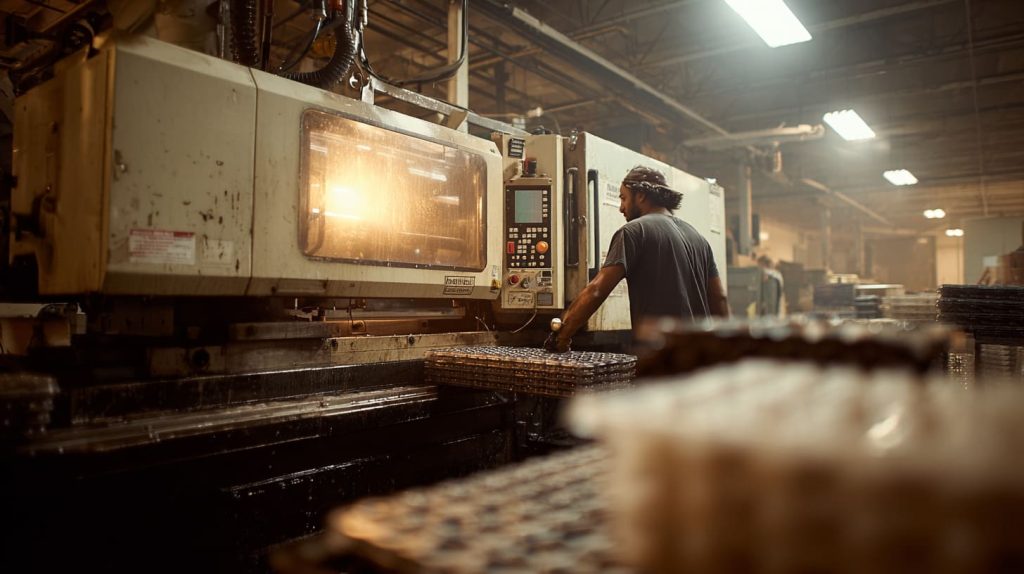
Factory cost is only half the story. The other half starts after the product leaves the factory.
That is where weak material choices become personal. A customer touches the part. Uses it. Drops it. Stores it in heat. Cleans it. Judges it. Complains about it. Returns it. At that stage, nobody cares that the resin was cheaper by a certain percentage.
Reduced Durability
Recycled PP can show lower resistance to fatigue, heat, or chemicals, especially if the source material is degraded or mixed. This matters a lot for demanding applications, but it can also matter in ordinary products that go through repeated use.
A part may still pass first inspection and still wear out earlier than expected.
| Durability Area | Possible Risk with Weak rPP Control |
|---|---|
| Repeated flexing | Earlier cracking |
| Heat exposure | Shape change or weakness |
| Chemical contact | Faster degradation |
| Long-term use | Shorter service life |
I never feel comfortable calling a material “cost-effective” if its weakness only shows up months later, because delayed failure is one of the most expensive forms of failure a buyer can deal with.
Customer Perception and Brand Risk
Some buyers focus so hard on functional performance that they forget how much appearance affects trust.
Surface defects, color inconsistency, dull finish, and visible contamination can all make a part feel low-grade. Even when the product still works, the customer may feel disappointed. And once trust drops, price savings on the factory side stop mattering.
What customers may notice first
- Uneven color
- Rougher feel
- Inconsistent finish
- Small black specks or marks
- Parts that do not look like previous batches
That is especially risky for branded goods or repeat-order business. Buyers do not just sell parts. They sell confidence.
Increased After-Sales Cost
After-sales cost is where the hidden bill often arrives.
Returns, replacements, warranty claims, complaint handling, and extra logistics all add weight. These costs are easy to underestimate because they are spread across different teams.
Here is a simple breakdown:
| After-Sales Issue | Cost Impact |
|---|---|
| Product returns | Freight + handling + replacement |
| Complaints | Labor + communication time |
| Warranty claims | Direct financial loss |
| Brand damage | Harder future sales |
| Distributor frustration | Relationship cost |
One of the first things I ask myself is whether a small resin saving is worth even a modest rise in replacement rate, because once field problems begin, the savings usually stop looking clever.
That said, I do not want to make recycled PP sound useless. It is not. There are situations where it makes good sense. The key is knowing where.
When Recycled PP Actually Makes Sense
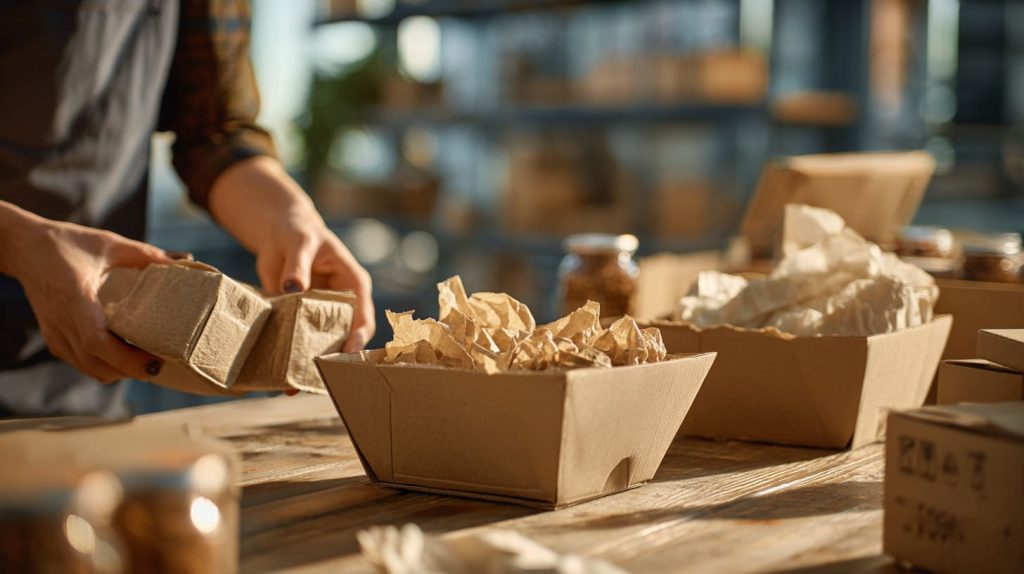
I am not against recycled PP. I am against lazy decision-making.
There are many cases where recycled PP is a practical choice. The mistake is not choosing it. The mistake is choosing it in the wrong place, for the wrong reason, with the wrong expectations.
Non-Critical Applications
Recycled PP often works well in parts that are not highly visible, not under high stress, and not expected to deliver premium appearance.
That includes things like:
- internal parts
- packaging elements
- dividers
- trays
- non-structural components
- utility items where visual perfection is not important
| Application Type | Recycled PP Fit |
|---|---|
| Hidden internal parts | Good |
| Simple packaging | Good |
| Decorative visible parts | Riskier |
| Load-bearing parts | Needs caution |
| Tight-tolerance products | Needs more testing |
I become much more open to recycled PP when the part can tolerate visual variation and modest performance drift without creating user complaints or assembly trouble.
Blended Material Strategy
Sometimes the smartest path is not virgin PP alone or recycled PP alone. It is a blend.
Mixing virgin PP with recycled PP can help balance cost, consistency, and sustainability goals. That gives buyers more flexibility. It also reduces the risk of going too far in either direction.
Common practical logic behind blending
- Keep enough virgin content for stability
- Add recycled content for cost and sustainability targets
- Use the blend as a middle path during testing
Here is the rough trade-off:
| Material Strategy | Cost | Consistency | Risk |
|---|---|---|---|
| 100% Virgin PP | Higher | Best | Lower |
| Blended PP | Medium | Better than full rPP | Medium |
| 100% Recycled PP | Lower upfront | More variable | Higher |
I often trust a balanced blend more than an aggressive recycled-content target, because projects usually fail from extremes faster than they fail from moderation.
Stable Supply Chain Sources
A good recycled PP source changes everything.
Certified suppliers, traceable waste streams, tighter sorting systems, and strong QC can make recycled PP far more usable. The better the supplier discipline, the lower the surprise level.
What matters in supply
- Clear source type
- Batch consistency records
- Material traceability
- Contamination control
- Reliable test data
A recycled PP project starts to look much healthier once I know the supplier can explain where the resin comes from and how they keep one batch from drifting away from the next.
So yes, recycled PP can make sense. But experienced buyers do not stop at “can it work?” They ask a harder question: “what does it really cost when everything is counted?”
How Experienced Buyers Evaluate True Cost
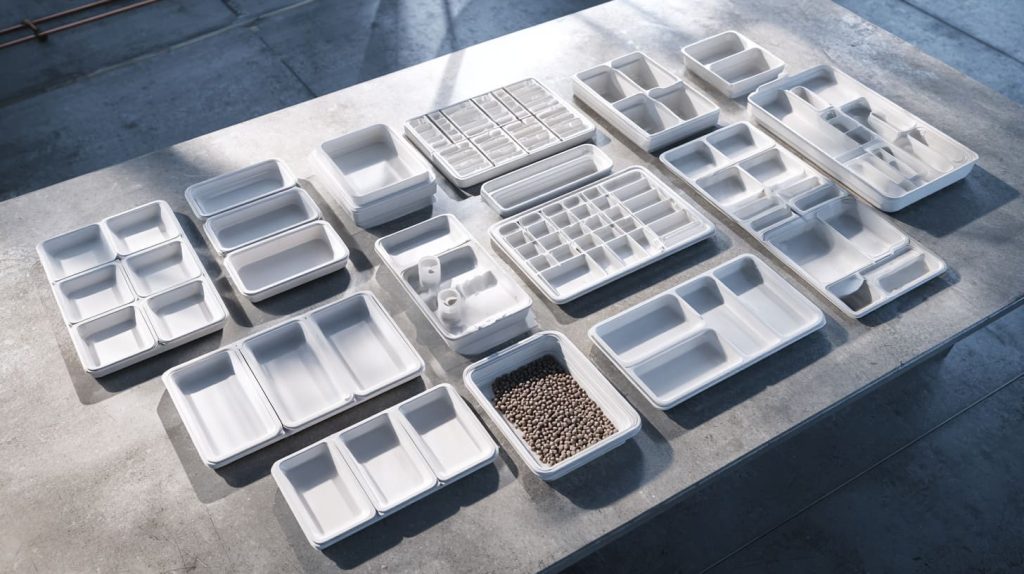
The longer I work around manufacturing, the less I trust single-number savings.
Good buyers do not only ask, “What is the resin price?” They ask, “What will the usable part cost me after molding, inspection, delays, claims, and all the annoying surprises nobody puts in the first email?”
Total Cost of Ownership (TCO) Approach
This is where the full picture matters.
True cost includes much more than material price:
- raw material
- machine time
- scrap
- rework
- labor
- quality control
- delayed shipments
- customer complaints
- replacements
| Cost Element | Why It Matters |
|---|---|
| Resin price | Starting point only |
| Processing cost | Changes with material behavior |
| Scrap cost | Can erase savings fast |
| Inspection cost | Grows with inconsistency |
| After-sales cost | Often ignored too early |
That is why focusing only on per-kilo pricing is misleading. It treats material like an isolated number, when in reality it affects the whole chain.
My own habit is to compare cost per accepted, shipped, and usable part, because that number tells the truth far better than raw resin price ever does.
Testing and Qualification Strategy
Testing saves arguments later.
Before mass production, a buyer should validate the material through real trials. Not only basic data sheet review. Real samples. Real molding conditions. Real visual checks. Real performance checks.
What I want to see before approval
- sample molding run
- visual consistency check
- dimensional stability check
- mechanical testing where needed
- comparison across more than one batch if possible
Here is a useful test mindset:
| Test Type | What It Helps Reveal |
|---|---|
| Visual check | Color, finish, contamination |
| Dimensional check | Shrinkage and stability |
| Mechanical check | Strength and impact behavior |
| Process trial | Setup difficulty and flow behavior |
| Batch comparison | Consistency risk |
I do not like approving recycled material based on one lucky sample, because one good run can make a weak material look more trustworthy than it really is.
Supplier Capability Matters More Than Material Label
A strong supplier can reduce recycled PP risk. A weak supplier can make even a decent resin choice painful.
That is why supplier capability matters so much. Process control, machine discipline, inspection standards, and problem-solving ability all shape the final outcome.
What strong suppliers usually do better
- control incoming material better
- document batch results
- adjust process faster
- detect problems earlier
- communicate risk more honestly
| Supplier Factor | Why It Matters |
|---|---|
| QC system | Catches drift before shipment |
| Process experience | Reduces molding trouble |
| Communication | Prevents surprise failures |
| Documentation | Helps trace issues |
| Honesty about limits | Builds trust |
The question I care about most is not “Is this recycled PP?” but “Who is managing it, and how disciplined are they when it starts acting differently?”
Once buyers start thinking that way, the decision becomes less emotional and more practical. And from there, it becomes easier to build a clear decision framework.
Practical Decision Framework for B2B Buyers
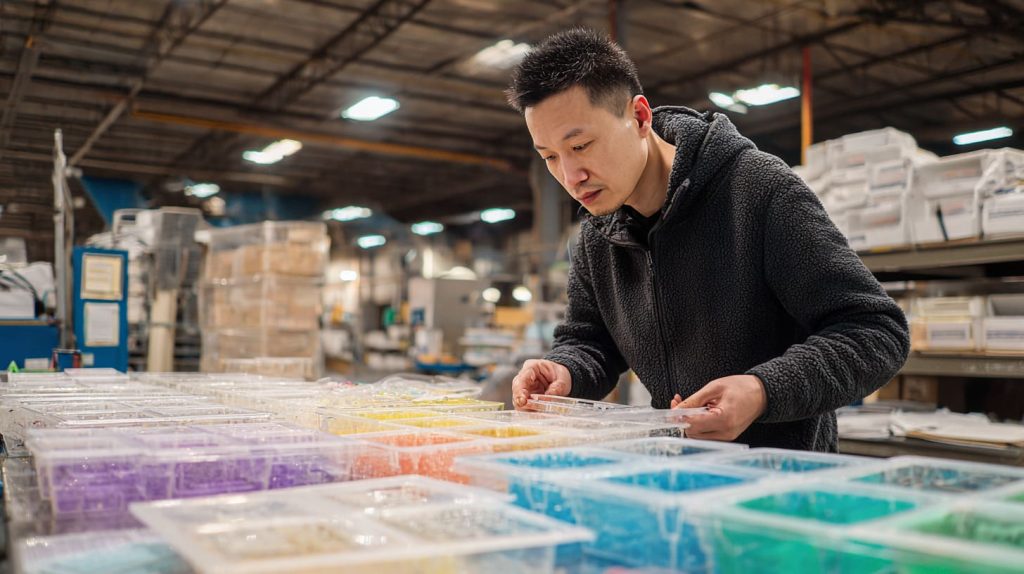
At some point, every buyer needs to stop discussing theory and make a call.
That is the uncomfortable part. Not because the topic is impossible, but because the best answer depends on application, risk tolerance, appearance needs, and supplier control. There is no magical shortcut. But there is a practical way to think.
Quick Comparison Table
| Factor | Virgin PP | Recycled PP |
|---|---|---|
| Cost (Material) | Higher | Lower |
| Consistency | High | Variable |
| Processing Ease | Stable | Challenging |
| Appearance | Clean, uniform | Often inconsistent |
| Risk Level | Low | Medium to high |
That table is simple, but it helps ground the conversation. Buyers often need that before they can stop chasing the cheapest line item and start looking at the real trade-offs.
Key Questions to Ask Suppliers
I think good questions save more money than aggressive negotiation sometimes.
Here are the questions I would ask early:
- What is the source of the recycled PP?
- Is it post-industrial or post-consumer?
- How stable is batch consistency?
- What contamination control is in place?
- What QC process do you follow before molding?
- Can you provide sample data from multiple batches?
- What applications would you not recommend this material for?
That last question matters more than people think. A careful supplier usually answers it clearly. A weak one tries to keep everything sounding possible.
Decision Rule of Thumb
I like rules of thumb, as long as they stay humble.
Here is mine:
| Situation | Better Choice |
|---|---|
| Visible, performance-critical parts | Virgin PP |
| Hidden, low-risk parts | Recycled PP can work |
| Cost-sensitive but quality-aware projects | Consider blend |
| Unstable supplier or unclear source | Be cautious |
| Tight tolerance + strong appearance need | Virgin PP is safer |
There is one practical detail I never ignore: if the part is visible, customer-facing, or costly to replace after shipment, I lean toward stability first and savings second.
That does not mean recycled PP should be avoided. It means it should be chosen with open eyes.
And once I step back from all the batch data, molding trials, and supplier claims, the conclusion becomes fairly clear.
Conclusion
Recycled PP is not automatically the cheaper choice in real projects. It only looks that way when people stop the calculation too early.
I think that is where most confusion begins. Buyers see the lower raw material price and assume the story is simple. But the real story runs through consistency, machine behavior, scrap, appearance, durability, and returns. That is where cost savings often disappear.
Virgin PP usually gives a more stable path. Recycled PP can still make good sense, especially in non-critical applications or in well-controlled blended strategies. The key is not to treat recycled PP like a universal shortcut. It is a case-by-case material decision.
If I had to put it in one plain sentence, I would say this: the smartest buyers do not chase the cheapest resin, they chase the lowest total risk for the job in front of them.
If you are comparing material options for a real product and want a more practical way to judge cost, quality, and production trade-offs, I would start with samples, batch checks, and honest supplier questions before I start celebrating any savings. And if you want help turning a material idea into a custom product that actually works in production, Feilong Acrylic is always happy to talk through the details with you.