Skip to content

I spend a lot of time reading emails that look simple on the surface. Short questions. Clean drawings. Clear deadlines. But very often, the problem is not the design or the price. It is language.
Words like plastic, acrylic, resin, or PMMA get used as if everyone means the same thing. They do not. Buyers think one thing. Designers think another. Factories read something else entirely. I have seen projects slow down, samples fail, or costs rise, just because one term was used loosely.
This glossary exists for one reason. I want designers and purchasing managers to speak the same language as the factory. When terms are clear, decisions move faster. Risks drop. And the product feels more controlled from day one.
That gap in language usually starts at the most basic level, with a single word most people think they already understand: plastic.
General Plastics Terminology

What is Plastic?
When people say plastic, they often mean “cheap” or “simple.” That idea causes more harm than most design mistakes.
In manufacturing, plastic is a broad family of materials made from polymers. Each one behaves differently under heat, load, and time. Treating plastic as one material is like treating steel as one grade.
There are two main groups that matter in real projects:
| Type | What it means | Why it matters |
|---|---|---|
| Thermoplastics | Can be heated and reshaped | Easier to machine and recycle |
| Thermosetting plastics | Set once and cannot be reshaped | Stable, but harder to rework |
Acrylic belongs to thermoplastics. That single fact already explains many design limits and advantages.
Common Plastic Categories
Not all plastics serve the same job. I usually group them this way when talking to buyers:
| Category | Typical examples | Real-world use |
|---|---|---|
| Commodity plastics | PVC, PP, PS | Cost-driven parts |
| Engineering plastics | ABS, PC, Nylon | Structural parts |
| High-performance plastics | PEEK, PTFE | Heat or chemical stress |
Acrylic sits between commodity and engineering plastics. It looks premium, but it still needs respect in design.
Resin vs Polymer
These two words confuse even experienced buyers.
- Polymer describes the material structure.
- Resin is how that material is supplied to production.
When a factory talks about resin, they talk about sourcing, batch control, and consistency. When designers talk about polymer, they talk about strength and behavior. Mixing these terms leads to unclear specs.
Once plastics are sorted, acrylic always comes up next.
Acrylic (PMMA) Specific Terminology
What Is Acrylic (PMMA)?
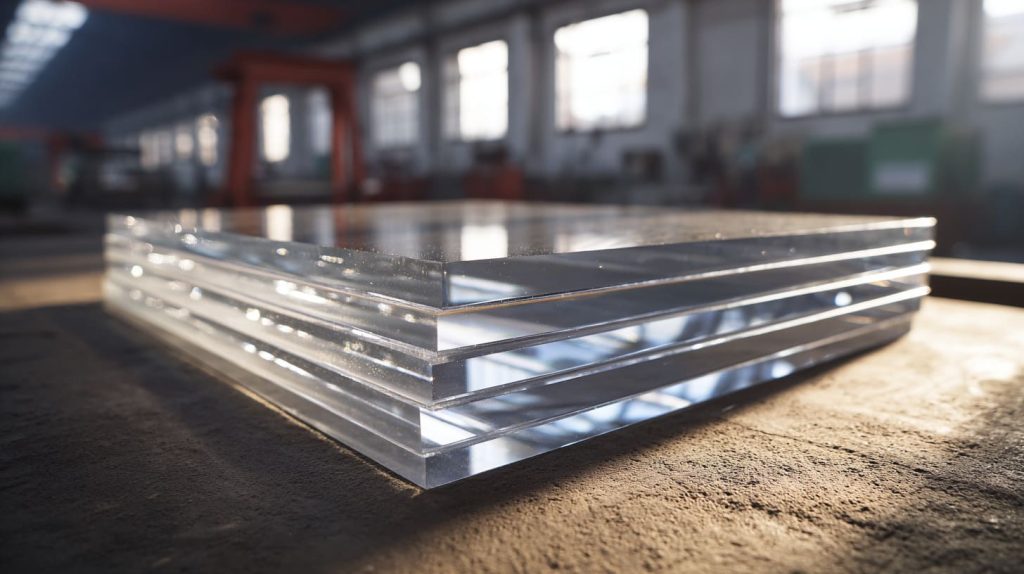
Acrylic is the common name. PMMA is the chemical name. Both describe the same material.
The confusion usually starts here:
| Term | What people think | What it actually means |
|---|---|---|
| Acrylic | Any clear plastic | A specific material |
| PMMA | A special grade | The formal name |
Then there is the bigger split.
| Type | How it’s made | Trade-off |
|---|---|---|
| Cast acrylic | Mold-cast sheets | Better clarity, higher cost |
| Extruded acrylic | Continuous extrusion | Cheaper, tighter thickness |
I always ask buyers which one they mean. Many have never been told there is a difference.
Optical and Visual Terms
Acrylic is chosen for how it looks. But words around appearance are often vague.
- Light transmission describes how much light passes through.
- Transparency is about seeing through it.
- Clarity is about distortion.
- Gloss describes surface reflection.
Two sheets can both be “clear” and still look very different in a display.
| Term | What it affects |
|---|---|
| High clarity | Visual sharpness |
| High gloss | Premium feel |
| Diffused surface | Soft light |
Mechanical Properties of Acrylic
This is where mistakes cost money.
Acrylic is:
- Rigid
- Stiff
- Not impact friendly
| Property | Reality check |
|---|---|
| Impact resistance | Lower than polycarbonate |
| Brittleness | Cracks instead of bending |
| Flexural strength | Good under proper support |
I have seen acrylic blamed for failure when the real issue was design.
Understanding material behavior naturally leads into how it is processed.
Manufacturing & Processing Terms

Fabrication Methods
Different processes leave different marks.
| Method | Strength | Risk |
|---|---|---|
| Laser cutting | Clean edges | Heat stress |
| CNC machining | Precision | Higher cost |
| Diamond polishing | Optical edges | Labor |
| Heat bending | Smooth curves | Stress zones |
Choosing the wrong method can turn a good design into a fragile product.
Tolerances and Thickness
Buyers often write “±0.2 mm” without context. That number means nothing unless the process supports it.
| Factor | Why it matters |
|---|---|
| Thickness tolerance | Sheet stability |
| Flatness | Display alignment |
| Edge quality | Visual trust |
Thicker does not always mean stronger. Sometimes it just means heavier and harder to control.
Bonding and Assembly
Acrylic does not forgive poor bonding.
| Method | Best use |
|---|---|
| Solvent bonding | Clear joints |
| UV bonding | Structural clarity |
| Mechanical fasteners | Serviceable parts |
Every bond introduces stress. Ignoring that stress shows up months later.
That stress becomes visible once surfaces are finished.
Surface Treatment & Finishing Terms

Polishing Methods
Not all polishing creates the same result.
| Method | Look | Risk |
|---|---|---|
| Flame polishing | High gloss | Micro cracks |
| Mechanical polishing | Controlled finish | Time |
| Hand polishing | Detail work | Inconsistency |
I rarely recommend flame polishing for structural edges.
Coatings and Treatments
Treatments sound small. They are not.
| Treatment | Purpose |
|---|---|
| Anti-scratch | Surface life |
| Anti-static | Dust control |
| UV resistance | Color stability |
Skipping these saves cost short-term and loses value long-term.
Visual Defect Terms
Factories see defects differently than buyers.
| Defect | What it signals |
|---|---|
| Bubbles | Material issue |
| Flow lines | Processing speed |
| Stress marks | Internal tension |
| Micro-cracks | Long-term failure |
Once defects appear, quality standards matter.
Quality & Material Standards

Material Certification Terms
Certifications are not marketing tools. They are communication tools.
| Standard | Why it exists |
|---|---|
| ISO | Process control |
| RoHS | Material safety |
| REACH | Chemical compliance |
Food-contact terms need special care. Acrylic is not automatically food-safe.
Raw Material Grades
Material grade shapes cost and trust.
| Grade | Reality |
|---|---|
| Virgin acrylic | Best clarity |
| Recycled acrylic | Cost-saving |
| Mixed-grade | Risky |
Knowing the grade avoids surprises during inspection.
Design choices come next.
Design & Engineering Terms

Design for Manufacturability (DFM)
DFM is not theory. It is respect for reality.
Common mistakes:
- Sharp internal corners
- Thin unsupported spans
- Ignored assembly sequence
Every one of these raises scrap risk.
Structural Design Terms
Acrylic supports load differently than metal.
| Concept | Why it matters |
|---|---|
| Load-bearing | Needs support |
| Decorative parts | Visual priority |
| Ribbing | Strength without bulk |
| Stress concentration | Crack origin |
Design controls stress. Material only reacts.
Once designed, the product still needs to survive shipping.
Packaging & Logistics Terminology

Protective Packaging Terms
Packaging is part of product design.
| Method | Protection |
|---|---|
| PE film | Scratch control |
| Foam spacing | Impact control |
| Anti-scratch packing | Surface trust |
Cheap packaging destroys expensive products.
Shipping and Export Terms
These terms shape planning.
| Term | Real meaning |
|---|---|
| MOQ | Cost balance |
| Lead time | Capacity truth |
| Production batch | Risk grouping |
| Sampling | Learning stage |
| Mass production | Commitment |
Clear terms keep projects calm.
Confusion still shows up in buyer questions.
Common Buyer Questions & Misused Terms

Frequently Confused Terms
These come up weekly.
| Comparison | Real difference |
|---|---|
| Acrylic vs polycarbonate | Clarity vs impact |
| Plexiglass vs acrylic | Brand vs material |
| Plastic vs glass | Weight vs fragility |
Each wrong comparison leads to wrong expectations.
Practical Interpretation for Buyers
Factories read RFQs literally.
Clear drawings help more than long emails.
| Better input | Result |
|---|---|
| Defined material | Fewer revisions |
| Clear tolerances | Stable pricing |
| Simple language | Faster samples |
Shared language is quiet power.
Conclusion

Clear terminology reduces risk. It shortens discussion. It protects design intent. More than that, it builds trust between buyers, designers, and factories.
I wrote this glossary to remove friction, not to impress. If you are designing or sourcing custom acrylic products and want fewer surprises, start with language. And if something still feels unclear, talk to us at Feilong Acrylic. A short conversation early often saves weeks later.