Skip to content

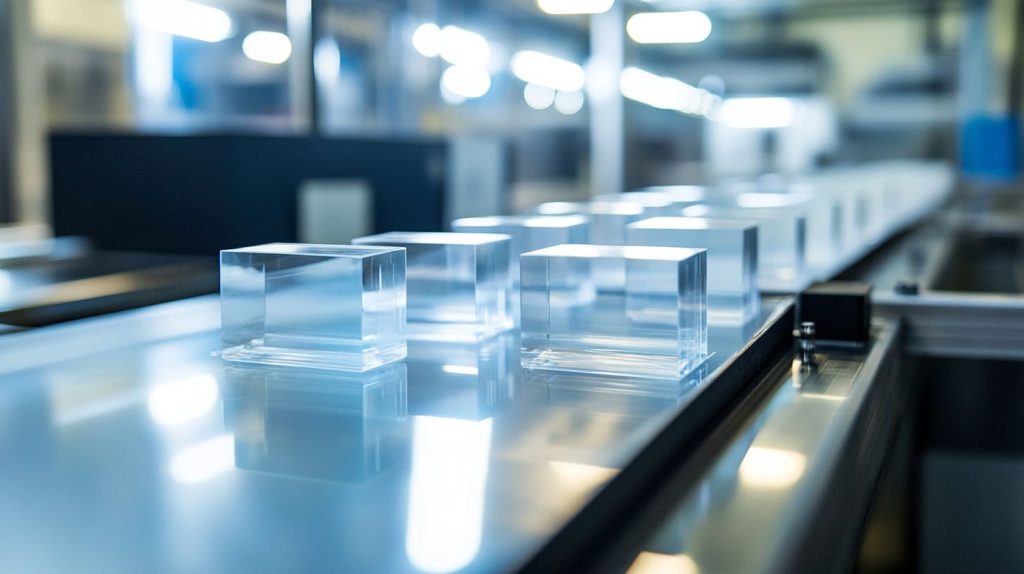
When you walk into any factory showroom that deals in custom acrylic work, and you’ll notice it right away. The light catches on the edge of a display box, and for a split second, it doesn’t even look like plastic—it looks like glass frozen in time. That shine, that clarity, that clean structure—it grabs people.
But then comes the question I’ve heard dozens of times from buyers, engineers, even designers who know their way around materials: “Why does this cost so much?”
It’s a fair question. On the surface, an acrylic box seems simple. No moving parts. Just panels, glue, polish, done—right?
Not exactly.
Once you start breaking down what actually goes into a high-quality acrylic box—the raw materials, the shaping, the human labor, the quality controls—it stops being “just a box.” It becomes a small production in itself, with layers you don’t see unless you’re on this side of the process.
Let’s walk through what drives the price—and where that cost actually goes.
Raw Material Economics

Rising Costs of PMMA Resin
PMMA—the backbone of every transparent box—behaves like any commodity: it dances with oil prices, tariffs, and supply disruptions. In May 2025, North American PMMA hovered around US $3.33 /kg, while Asian markets dipped closer to US $2.35 /kg.:contentReference[oaicite:0]{index=0} When feedstock prices jump even 10 %, my material invoice inflates by thousands overnight. That ripple ends up on your quote.
Thickness & Grade: How They Shift Pricing
A 2 mm sheet costs less than half of a 10 mm slab because thicker stock uses more resin and demands slower cooling to avoid bubbles. Higher “optical-grade” sheets push costs further by guaranteeing <1 % haze.
| Acrylic Sheet | Typical Thickness | Cost per 1220 × 2440 mm Sheet | Use Case |
|---|---|---|---|
| Economy Grade | 2 mm | ~US $25 | Dust covers |
| Display Grade | 5 mm | ~US $48 | Retail risers |
| Optical Grade | 10 mm | ~US $120 | Luxury showcases |
Global Oil Prices and Acrylic Sheet Supply
PMMA is oil-derived. When crude spiked above US $90/barrel last year, resin producers tightened output. The result? Sheet supply shrank, lead times stretched, and I had to secure stock months ahead or risk paying spot-market premiums. We’ll circle back to why early planning saves cash later.
Acrylic’s price starts with molecules, not machines. But raw material is only the opening act—let’s step onto the shop floor.
Manufacturing Complexity

CNC Cutting, Laser Engraving & Diamond-Polishing
Every clean edge you see took at least three passes: CNC for shape, laser for logo, diamond wheel for that glass-like shine. Each station bills by the minute. A small cosmetics box might clock 12–15 machine minutes, while a trophy block can burn 45+ minutes—precision costs!:contentReference[oaicite:1]{index=1}
| Process | Average Runtime per Piece | Cost Driver |
|---|---|---|
| CNC Rough-Cut | 5 min | Tool wear, bit changes |
| CO₂ Laser Marking | 3 min | Power usage, focus setup |
| Diamond Polish | 4 min | Slow feed to avoid ripples |
Hand Assembly vs. Automated Bonding
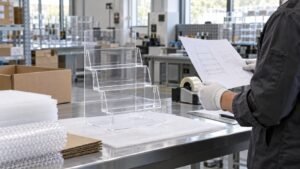
Robots can place panels, but spotless edges still need human eyes. Our team checks bubble lines under bright lamps; one bubble means a remake. Hand labor raises direct cost but slashes reject rates.
Surface Finishes: UV-Coating, Anti-Scratch Layers, Anti-Yellowing Additives
Clear acrylic can yellow under UV. Adding stabilizers raises resin cost by up to 12 %. Optional hard coats add one more spray booth, one more cure cycle, and yes—another cost line.
Machines hum; hands hover; polish glitters. Yet design twists the knife (or saves the wallet) next.
Design, Customization & Value-Added Features

Bespoke Dimensions, Shapes & Colors
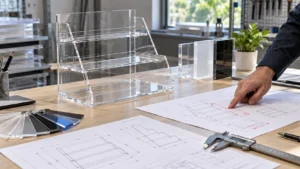
Round corners? Nested trays? Neon pink? Each deviation from a rectangle forces fresh jigs or special molds. Complex curvature can multiply CNC passes two-fold.
Logos, Printing, and Engraving Options
Silk-screening is quick, but multilayer UV print demands pre-coating and alignment. Engraving looks classy yet adds machine minutes. Custom branding can add US $0.30–1.20 per box at scale.:contentReference[oaicite:2]{index=2}
Integrating Hardware: Hinges, Magnetic Lids, Locks & LED Lighting
Hinges mean drilling tolerance-critical holes; magnets need recess pockets and epoxy. LED lids add wiring channels. Hardware rarely costs more than US $3, but installation labor doubles that.
Design turns a sheet into a showcase—but skilled people make sure it stays together.
Labor & Craftsmanship

Skilled Technician Hours per Unit
At Feilong Acrylic, one senior assembler can finish 60 mid-size boxes in an eight-hour shift—about eight minutes per unit. A rookie takes twelve. Labor costs climb when we chase flawless glue lines.
Quality Control, ISO9001 Workflows & Rejection Rates
We target <50 PPM (parts per million) customer-detected defects—tight by any standard.:contentReference[oaicite:3]{index=3} Extra inspections reduce returns but add inspection wages and scrap.
| QC Step | % of Total Labor | Why It Matters |
|---|---|---|
| Visual Inspection | 25 % | Detect bubbles, scratches |
| Dimensional Check | 10 % | Ensure fit for inserts |
| Optical Clarity Test | 5 % | Guarantee <1 % haze |
A single fingerprint can ruin an order—so labor isn’t just “hands,” it’s vigilance. Yet volume plays its own game.
Minimum Order Quantities & Economies of Scale

Tooling, Jig, and Setup Costs
Cutting a new jig might cost US $150. Spread over 50 pieces, that’s US $3 each; over 1,000 pieces, cents. MOQ exists to keep per-piece prices sane.
Batch Size Impact on Unit Pricing
CNC shops quote in time blocks; larger runs allow continuous machining. I’ve watched unit costs drop 25 % when a client bumps from 200 to 800 pieces.
Scale softens the blow, but shipping can sharpen it again.
Shipping, Handling & Packaging

Bulkiness, Non-Stackability & Cube Weight
Acrylic boxes are light but bulky. Ten 12-inch boxes take more volume than ten laptops. Ocean freight charges by cubic meter; air freight punishes dimensional weight.
Protective Films, Foam, and Double-Boxing
To survive trans-Pacific bumps, we wrap each box with PE film, nest it in foam, then double-box. Packing can add 10 % to landed cost but prevents costly returns.
| Cost Component | % of Landed Cost (Typical) |
|---|---|
| Freight | 40 % |
| Duties/Tax | 15 % |
| Packaging | 10 % |
| Handling & Docs | 5 % |
International Freight, Duties & Fuel Surcharges
Fuel indexes change monthly. In Q1 2025, bunker surcharges increased ocean freight by 9 %, squeezing margins.:contentReference[oaicite:4]{index=4}
Boxes crossed oceans; now let’s check what keeps them crystal-clear on arrival.
Quality Assurance & Certifications
GSG Eco-Friendly Acrylic Compliance
Using GSG-certified eco-clear sheets adds traceability paperwork and premium resin cost. Yet many EU buyers insist.:contentReference[oaicite:5]{index=5}
Optical Clarity, Transmittance Tests & Stress-Crack Resistance
We test samples under polarized light and run 24-hour crack tests. Failures mean scrapping entire sub-lots.
Traceability & Documentation for B2B Buyers
Full lot reports, MSDS sheets, and RoHS docs don’t arrive free; admin time sneaks into your invoice.
Certifications prove value, but the market decides if buyers will pay the premium.
Market Dynamics & Competitive Landscape

Niche Demand vs. Mass-Market Alternatives
Acrylic display boxes sit in a niche: clearer than PETG, safer than glass. Limited competitors keep prices firm.
Brand Positioning—Premium Displays vs. Commodity Plastics
Retailers selling luxury cosmetics want that “floating” effect. They pay for it. Commodity storages head to PP bins.
Impact of E-Commerce Trends on Small-Batch Pricing
Online boutiques order 50-piece runs; factories must break bulk, driving up per-piece cost compared to 5,000-piece orders.
When budgets stretch, some clients ask, “What if we use another material?” Let’s weigh the options.
Alternatives & Cost Comparison

Glass, Polycarbonate, PETG: Pros, Cons & Price Points
| Material | Relative Cost | Pros | Cons |
|---|---|---|---|
| Acrylic (PMMA) | ★★★ | High clarity, easy shaping | Surface scratches |
| PETG | ★★ | Impact-tough, food-safe | Slight haze, yellows faster :contentReference[oaicite:6]{index=6} |
| Polycarbonate | ★★★★ | Nearly unbreakable | Pricey, prone to stress cracking |
| Soda-Lime Glass | ★★ | Scratch-resistant | Heavy, shatters |
Lifecycle Cost: Durability, Maintenance & Replacement Frequency
Glass chips, polycarbonate scratches less but cracks under chemicals; PETG yellows. Over five years, clear acrylic often wins by balancing replacement frequency and visual appeal.
Savings matter, but so does tomorrow’s planet.
Sustainability Considerations

Recyclability of Acrylic Offcuts
We collect offcuts for certified recyclers; scrap can re-enter the supply chain as signage or lighting diffusers.
Low-VOC Fabrication Practices
Using water-based adhesives cuts VOC emissions by 60 % versus solvent glues, improving worker safety.
Carbon Footprint of Long-Distance Shipping
Acrylic’s light weight helps, yet ocean freight still emits CO₂. Some EU clients now offset shipping by buying in larger, consolidated batches to reduce trips.
We’ve covered the dollars and the footprints—time to tie it together.
Conclusion

Acrylic boxes look simple—just clear walls and crisp edges—but every sparkle hides a micro-economy of resin prices, machine minutes, skilled hands, and shipping miles. When a quote feels steep, it isn’t greed; it’s the sum of real-world inputs. Knowing those levers lets us—buyer and maker—fine-tune specs, batch sizes, and finishes until the budget lines up with the vision. Transparent boxes, transparent costs.