Skip to content
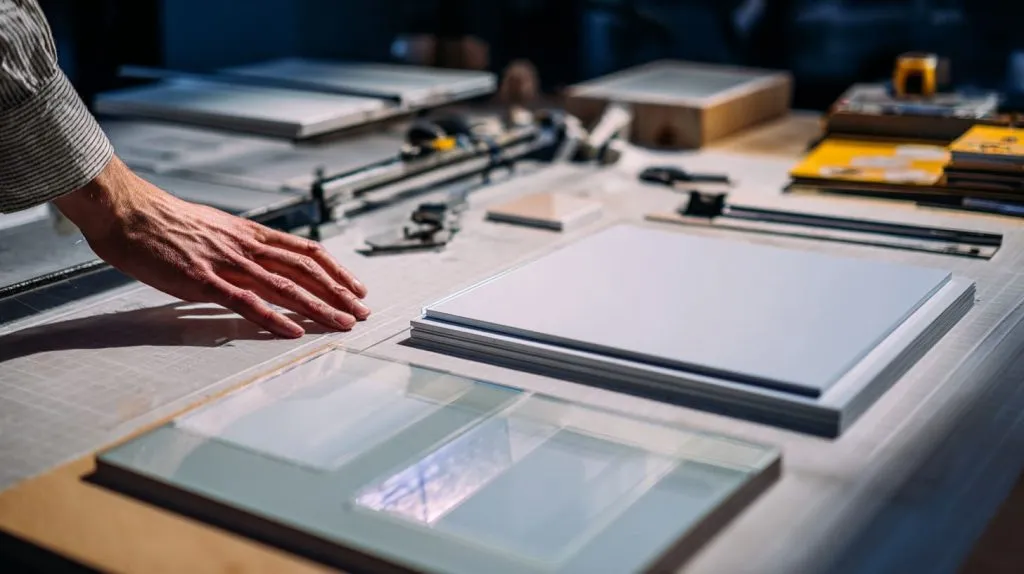
A buyer once asked me a question mid-sample review, somewhere between checking the laser-cut edge and running his thumb across the surface: “So, which one’s harder—MDF or acrylic?” Not tougher, not stronger—harder. That one word led us down a rabbit hole. And if you’ve ever had to spec materials for retail displays or cosmetic organizers, you’ve probably landed in the same place. It’s not always obvious.
Hardness sounds simple—until it isn’t. One material chips under pressure, the other resists scratches but might crack. Numbers float around, but without context, they don’t mean much. That’s why I decided to write this post—not to throw around technical jargon, but to actually make sense of the real differences between MDF and acrylic, especially when it comes to hardness.
Let’s start by breaking down how hardness is even measured—because the answer changes depending on the scale you use.
Hang tight—before we dive into numbers, let’s clear up how hardness is measured.
Comparing Hardness Testing Methods

Overview of Rockwell, Janka, Mohs & Brinell tests
When I run tests in Dongguan, I reach for four classic scales:
- Rockwell presses a ball or cone into the surface and tracks depth.
- Janka measures the force needed to sink a steel ball halfway into wood.
- Mohs is a scratch test, ranking minerals from talc (1) to diamond (10).
- Brinell uses a hard ball under load, recording the indentation area.
Each test shines on different materials. I learned the hard way that a Janka hammer on acrylic mostly cracks sheets rather than teaching me anything useful.
Which scales suit MDF vs. acrylic
- MDF: Janka rules. Brinell also works for uniform panels.
- Acrylic: Rockwell M or R scales dominate; Mohs offers a quick scratch look-up.
Interpreting hardness numbers across different scales
A Rockwell M 94 piece of acrylic feels far stiffer than an MDF panel with a Janka 1200 lbf rating, even though “94” looks smaller than “1200.” Always match units before you compare or you’ll misread the chart by miles.
Now that we trust the rulers, let’s peek inside the materials themselves.
Material Composition Snapshot
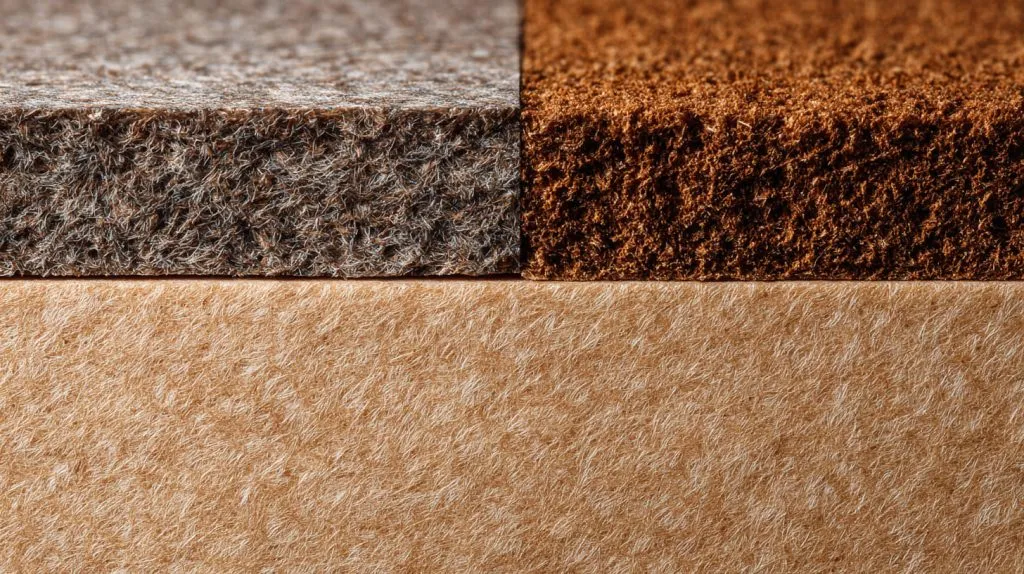
What is MDF? — fibers, resins & density profile
Medium Density Fiberboard blends fine wood fibers with urea-formaldehyde resin, pressed at about 600–800 kg/m³. Density varies by brand; higher density lifts Janka numbers but costs you in weight and tooling wear.
What is acrylic (PMMA)? — polymer structure & additives
Acrylic, or PMMA, polymerizes methyl methacrylate into long chains. Cast sheets often include UV stabilizers or color pigments, nudging Rockwell values up or down by a few points.
How composition influences measured hardness
- Fiber orientation in MDF spreads load unevenly, so edges chip sooner.
- Polymer continuity in acrylic gives it consistent hardness on every axis.
Molecular talk is fun, but numbers speak louder. Let’s stack data side by side.
Measured Hardness Values Side-by-Side
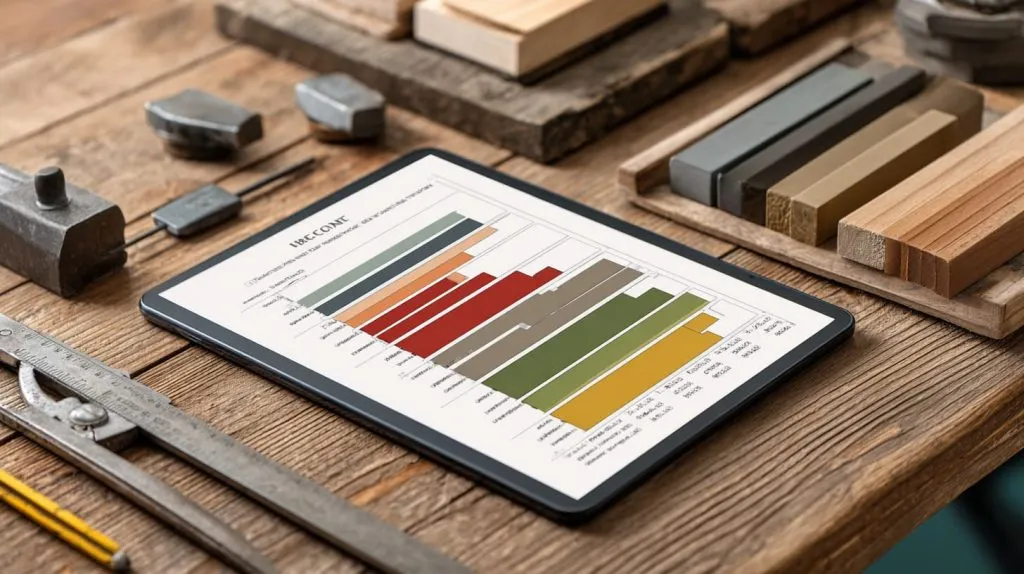
| Material | Test Scale | Typical Range | Source |
|---|---|---|---|
| MDF (standard) | Janka | 1000–1500 lbf | :contentReference[oaicite:0]{index=0} |
| MDF (HDF grade) | Brinell | 15–25 HB | :contentReference[oaicite:1]{index=1} |
| Acrylic (cast) | Rockwell M | 93–105 | :contentReference[oaicite:2]{index=2} |
| Acrylic (impact-modified) | Rockwell M | 65–80 | :contentReference[oaicite:3]{index=3} |
| Acrylic (cast) | Brinell | 20–24 HB | :contentReference[oaicite:4]{index=4} |
| Acrylic | Mohs | ~3 | industry common |
Key takeaway: Acrylic outpaces MDF on Rockwell and Brinell, yet MDF can edge acrylic on a Janka chart because that test favors dense wood fibers.
Numbers are great, but how do they translate to daily wear and tear? Let’s test that idea in real life.
How Hardness Affects Real-World Performance
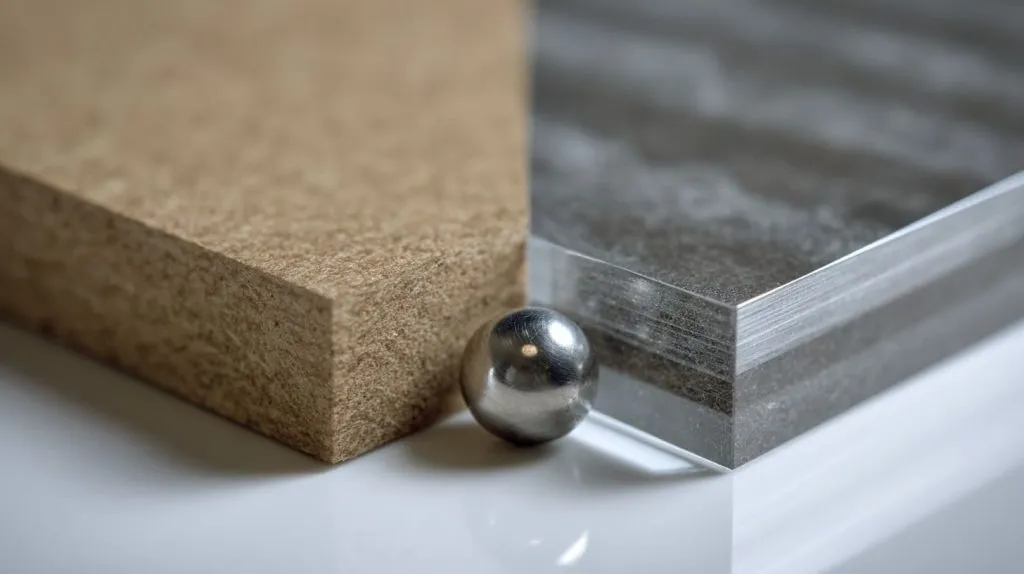
Scratch & dent resistance in everyday use
I once dropped a box cutter on an MDF sample—clean dent, no split. Did the same on acrylic; it bounced, left a faint scratch. Hardness saved the acrylic surface, but brittleness showed up later when we over-tightened screws.
Machining behavior and edge-finish quality
- MDF: Cuts like butter on a carbide blade, but dusty.
- Acrylic: Needs sharp bits and coolant; a dull tool melts edges.
Load-bearing or structural considerations
Hardness doesn’t equal strength. MDF shelves sag under load; acrylic resists dents but can snap if flexed cold.
Environmental resistance: moisture, UV & temperature
MDF swells in humidity, losing edge hardness. Acrylic shrugs off water and UV, though it softens near 80 °C.
Seen enough dings and scratches? Let’s pick the right sheet for the right job.
Choosing MDF or Acrylic for Specific Applications
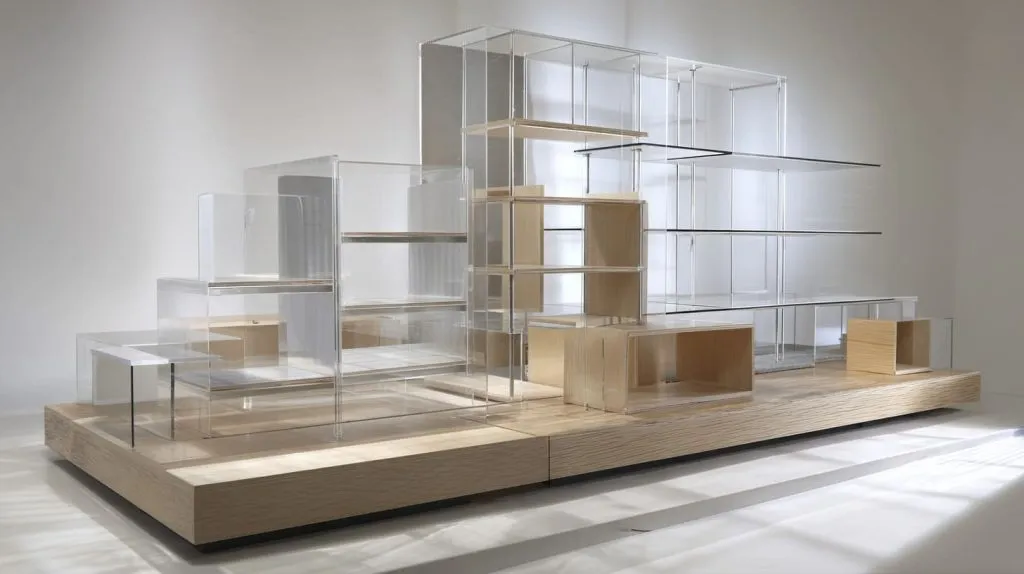
Retail displays, cosmetic organizers & point-of-sale fixtures
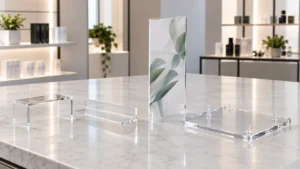
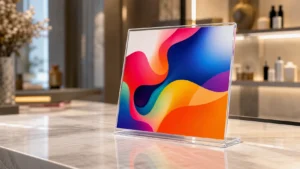
Acrylic’s glossy face sells luxury; MDF works hidden as backer panels.
Furniture, cabinetry & interior panels
Paint-grade MDF wins on budget and flatness; acrylic panels add pop for accent doors.
Signage, branding elements & illuminated features
Edge-lit acrylic carries light like fiber optics; MDF holds LEDs from behind but can scorch if overheated.
Rapid prototyping, custom projects & OEM parts
When I rush prototypes, I mill MDF for shape tests, then switch to acrylic for transparency and final hardness.
Still, both materials have blind spots. Let’s patch those next.
Working Strategies to Mitigate Hardness Limitations
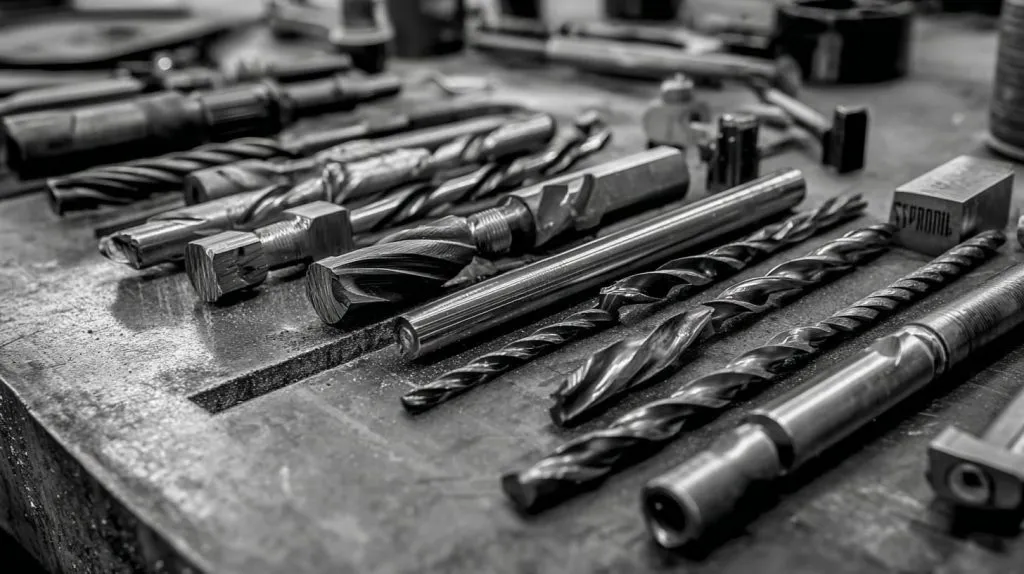
Tooling recommendations: cutters, bits and blades
- Up-cut spiral bits for MDF dust removal.
- Single-flute O-bits for acrylic chip evacuation.
Surface coatings, laminates & hard-coating options
Clear urethane bumps MDF scratch resistance; anti-scratch coatings boost acrylic Mohs to ~4 without clouding.
Assembly, fastening & bonding best practices
Pre-drill MDF to dodge blow-outs. For acrylic, chamfer holes and use solvent cements instead of screws where you can.
Quality-control checkpoints for B2B custom orders
I inspect hardness-critical parts at three stages: raw sheet certification, post-machining edge check, and random drop-test after packing. It saves grief when containers land in Vancouver.
Money matters too. Let’s put costs, green creds, and lead times on the table.
Cost, Sustainability & Supply Considerations
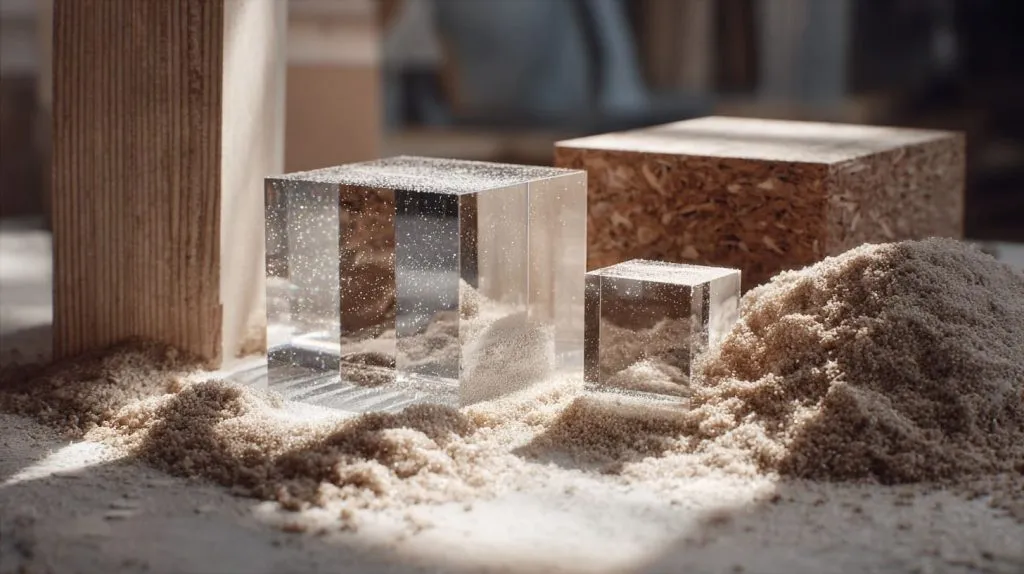
Material pricing trends and total cost-of-ownership
MDF sheets run 30–50 % cheaper per square meter than cast acrylic. Add finishing and rejects, and the gap narrows for tight-tolerance jobs.
Waste, yield efficiency & fabrication throughput
Acrylic off-cuts often become small display blocks, boosting yield. MDF dust is harder to upcycle on site.
Environmental certifications, emissions & recycling routes
- MDF may carry CARB-2 or E0 labels, yet still off-gasses over time.
- Cast acrylic can be depolymerized back to MMA monomer, closing a circular loop.
Lead times, global supply chain and sourcing strategies
My acrylic lead time is 15–25 days door-to-port; MDF averages 10 days but swings with timber tariffs and shipping capacity.
So where does that leave us? Let’s wrap in plain English.
Conclusion
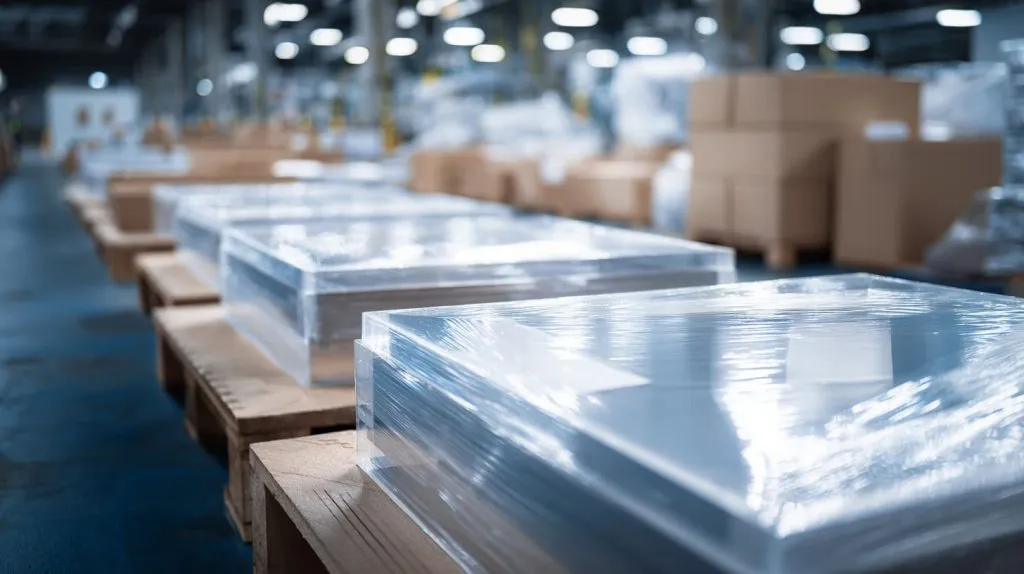
Hardness isn’t a single scoreboard—it's a family of tests that reveal different strengths. MDF stands firm against localized impact on a Janka jig, while acrylic wins on scratch resistance and shiny aesthetics under the Rockwell probe. In practice, I pick MDF when weight, paint, and cost rule; I reach for acrylic when clarity, surface quality, and chemical stability matter. Knowing which scale to trust turns guessing games into data-driven design—and keeps people like Jacky confident that the next display arriving from Feilong Acrylic will feel as solid as it looks.