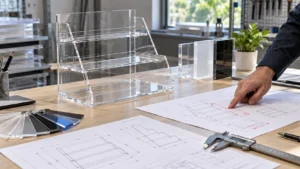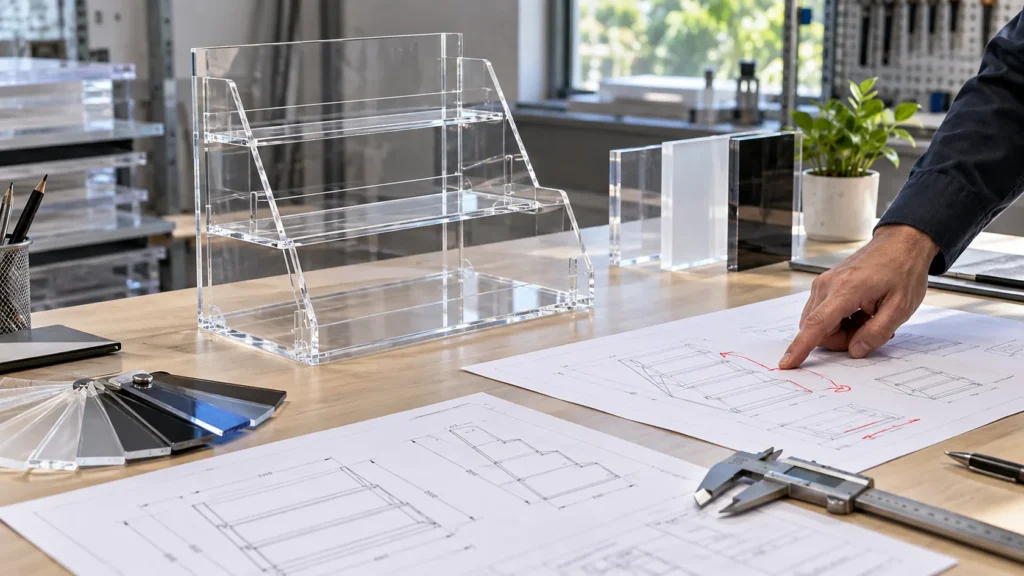
Custom acrylic display production time is often extended by approval gaps, not by acrylic cutting alone. The delays that cost the most are late changes to the production drawing, artwork, sample acceptance points, purchased hardware, and packaging—because each can force a released decision back into review or rework. We treat the bulk-production date as a controlled release, not as the date a purchase order first arrives.
For a new retail-display programme, I recommend assigning one owner and a due date to every approval gate before the sample is made. That turns a vague request to “move faster” into a decision calendar the buyer and factory can actually manage. For display structures that still need a manufacturability review, start with our custom acrylic display stands.
The approval delays that cost the most

The most expensive delay is not necessarily the longest email thread. It is the one that arrives after work has been released. A drawing revision before cutting is usually a controlled engineering task; the same change after a sample, artwork proof, or material allocation can affect material preparation, machining programs, print setup, assembly instructions, inspection points, and packing.
| Approval gate | What must be closed | Why a late change has a larger cost |
|---|---|---|
| Construction drawing | Dimensions, joints, hole locations, bends, critical fit | Can restart cut files, sample work, and fit checks |
| Artwork proof | Version, placement, colors, print faces | Can stop printing and invalidate a visual sample |
| Physical sample | Fit, edge finish, graphics, operation, cosmetic acceptance | May require a drawing revision rather than a simple approval note |
| Hardware and assembly | Part specification, quantity, installation sequence | Can create a purchased-part dependency or assembly rework |
| Packaging | Protective film, foam, carton layout, shipping state | Can add packout trials and damage-risk review late in the schedule |
In our experience, a change should be classified before anyone calls it minor: does it alter what is cut, printed, bonded, assembled, inspected, or packed? If it does, I would place it back through the relevant approval gate instead of accepting an informal instruction that leaves two versions in circulation.
Lock the drawing before a sample proves the wrong thing
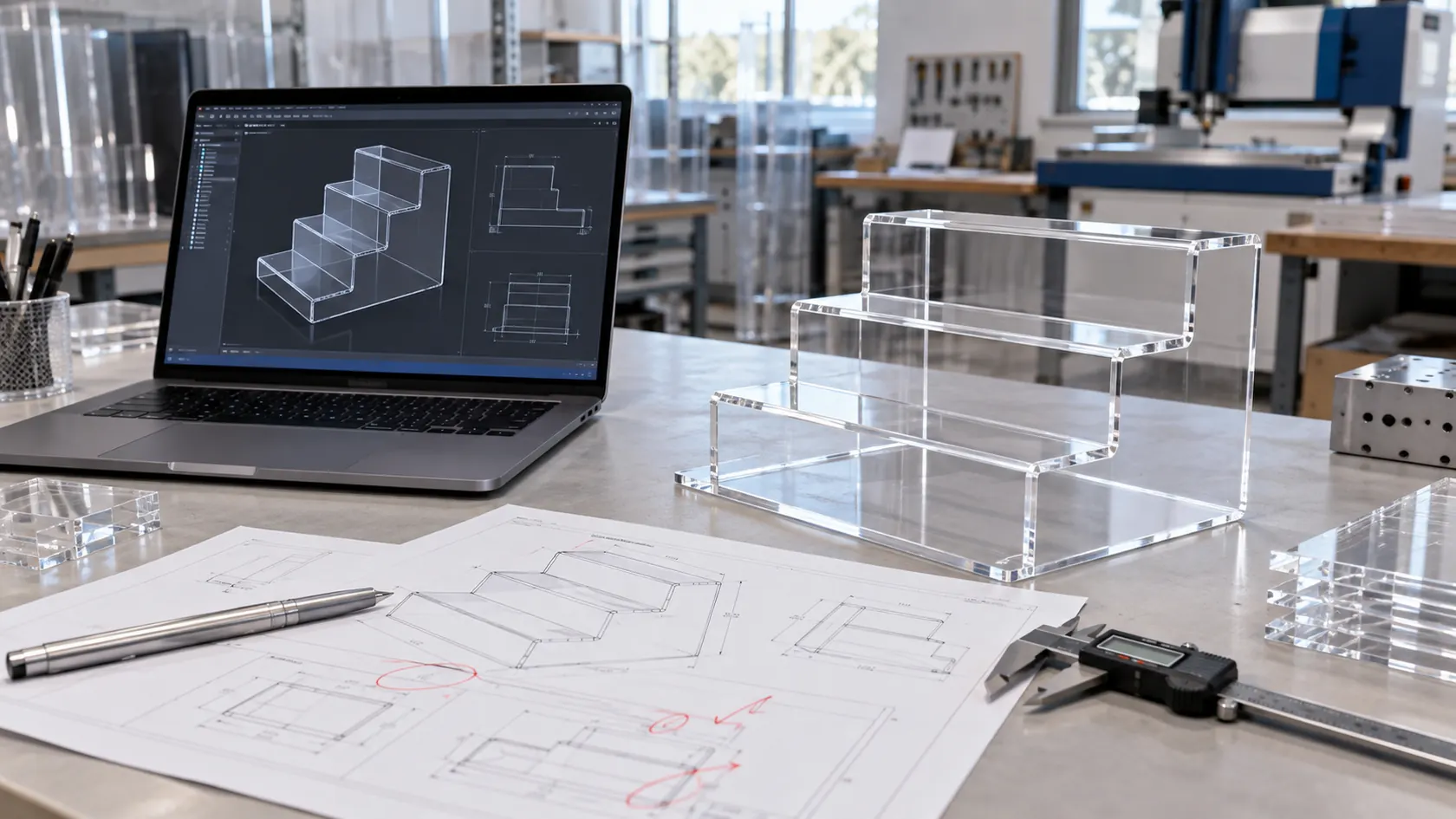
Drawing approval is the first high-leverage gate because it controls the physical build. The buyer should confirm overall dimensions, product interface, shelf or slot positions, thickness, visible edges, hole patterns, bend geometry, hardware interfaces, and any surface that will receive a graphic. A reference image is useful, but it rarely resolves every production-critical dimension.
For clear acrylic displays, I would specifically mark the faces that shoppers see at close range and the dimensions that determine product fit. A small adjustment to a shelf pitch, a slot, or a bonded divider can be a sensible improvement—provided it is made before the sample is treated as the production reference. The trade-off is simple: a short technical review early protects the project from a much longer loop later.
Make artwork approval a production decision, not a marketing handoff
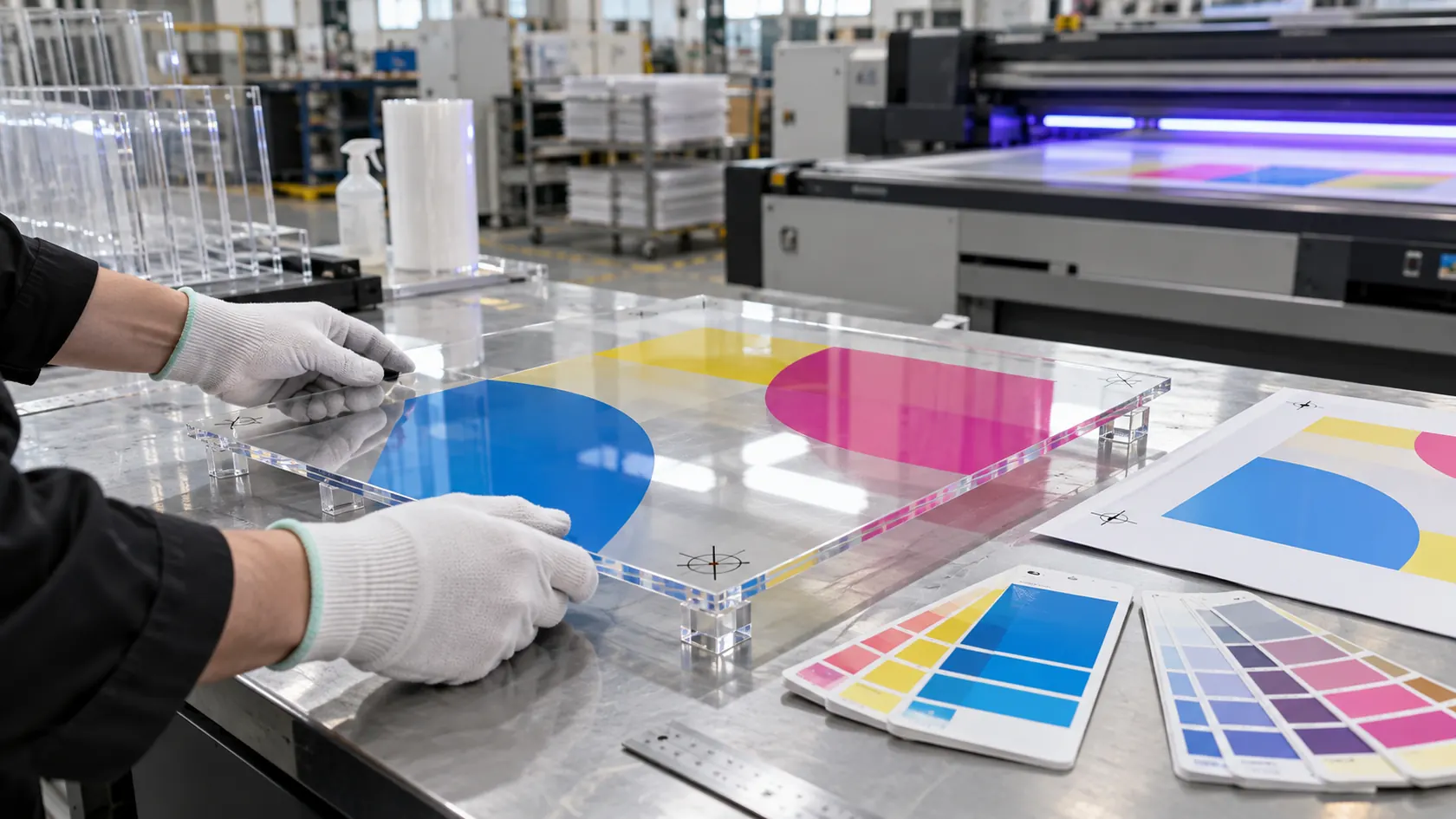
Artwork approval is often delayed because brand, retail, and product teams each see a different risk. Before print work is released, we need the final file version, print location, orientation, color reference where relevant, transparent or white-underprint expectation when applicable, and a clear confirmation of which surfaces are cosmetic.
I would ask for one named approver to return a single consolidated mark-up. Parallel feedback is useful during review, but separate “final” files create the familiar situation where a logo, legal line, or color adjustment appears after the panel sequence has already been planned. A proof should answer one question: is this the exact artwork and placement that production may repeat?
Define what the sample must approve before it is built
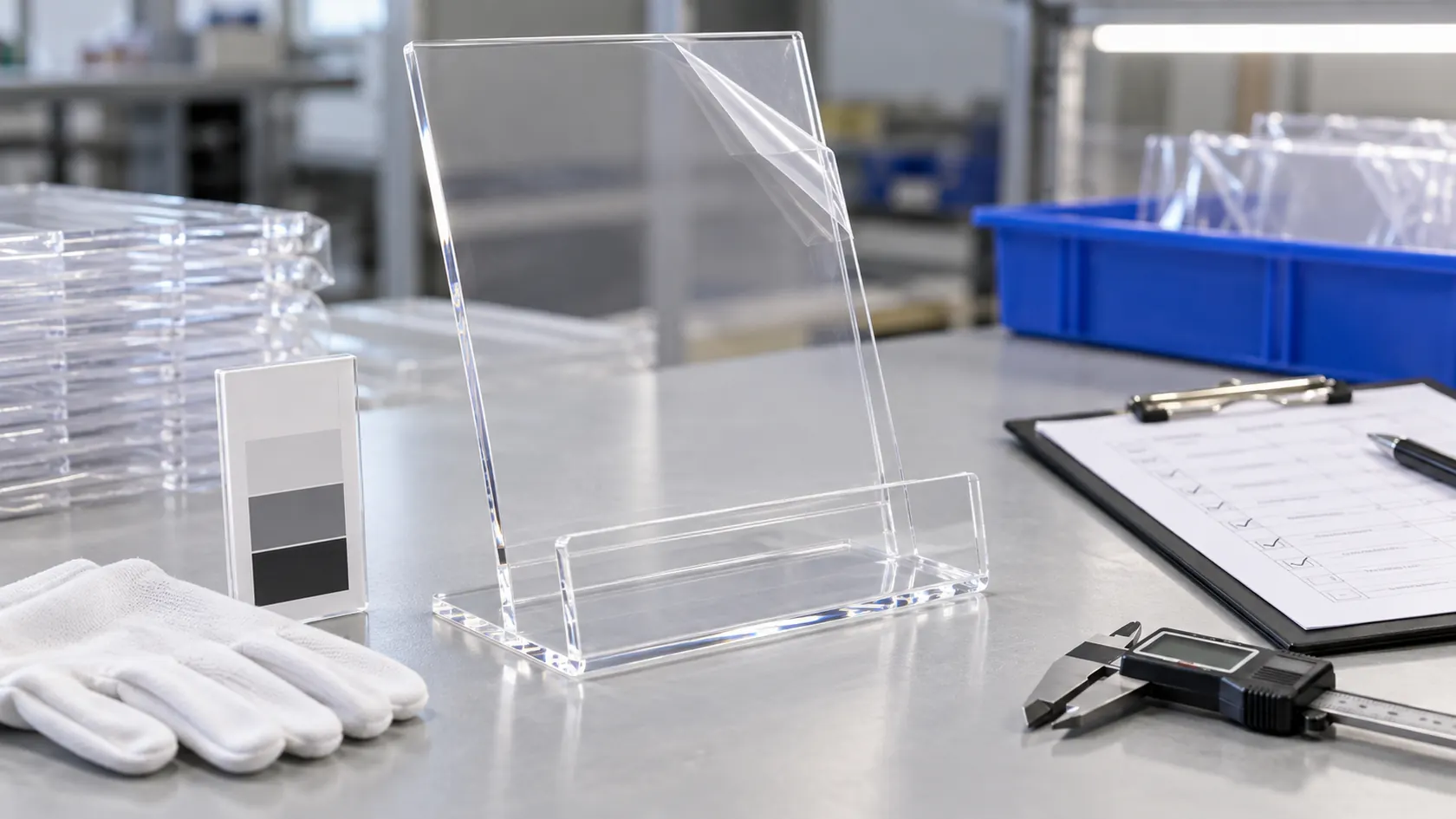
A sample is not automatically a release to bulk production. It must test the risk that is actually holding up the project: product fit, access, stability, edge appearance, bonded joints, print position, hardware operation, or the full customer-facing presentation. When the acceptance points are not named before sampling, reviewers often discover late that they were evaluating different things.
For a multi-part countertop display, I normally recommend a short acceptance list attached to the sample revision. If the buyer approves only photographs or dimensions, state that limitation. If the programme needs a production-intent physical sample, do not assume a simplified mockup closes finish, assembly, and packing risks. The right sample scope may take more preparation, but it avoids approving evidence that cannot support the bulk decision.
Confirm hardware and assembly while they can still be scheduled
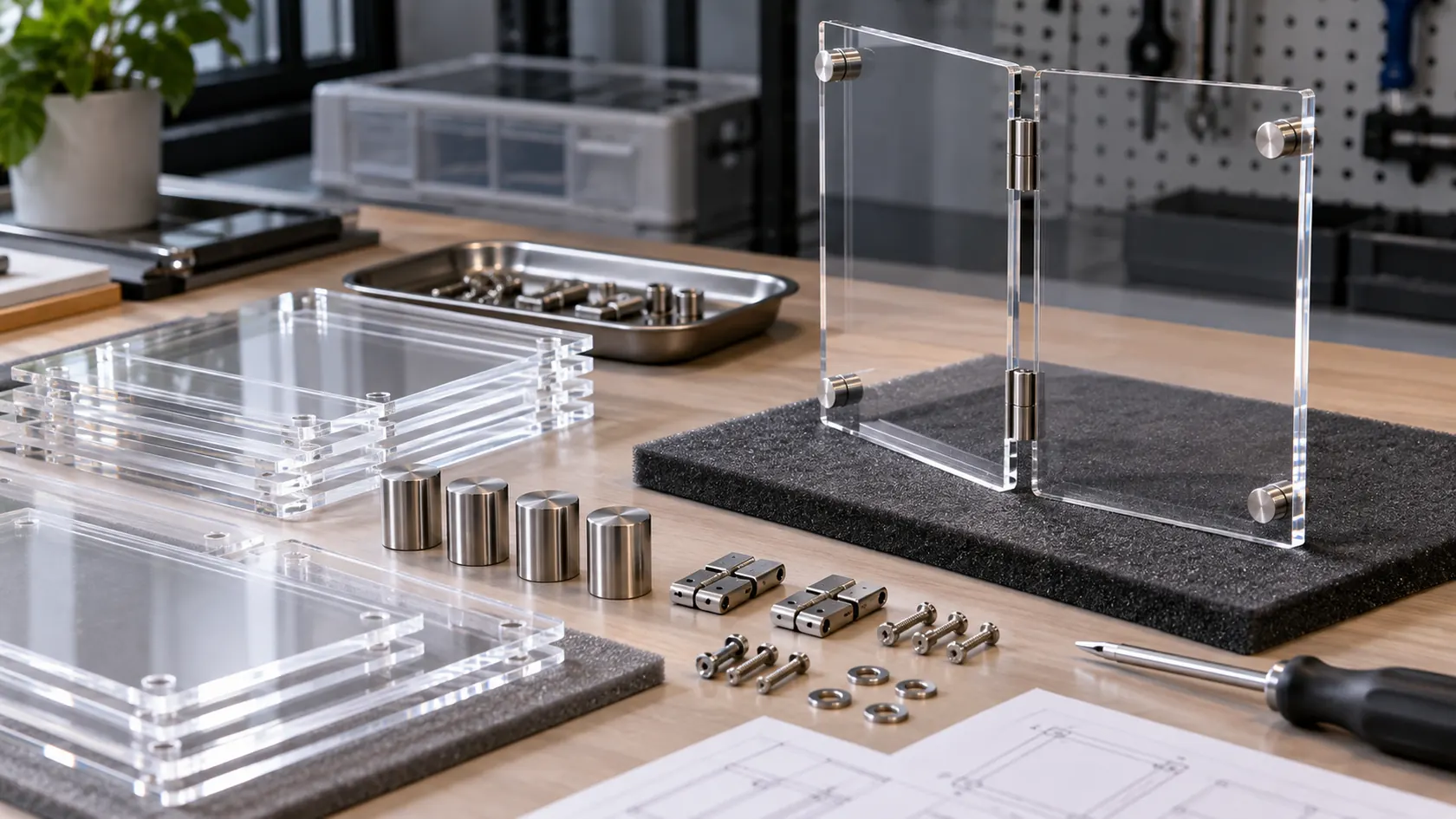
Hinges, magnets, standoffs, screws, inserts, and supplied accessories can turn an apparently simple acrylic display into an assembly programme. The approval must cover the part itself, its finish, the fixing method, the quantity per display, and whether the display ships assembled, partially assembled, or flat-packed.
I would identify externally sourced or buyer-nominated components at quotation and review the assembly sequence before bulk release. Changing a standoff height, magnet position, or accessory pack after panels are fabricated can affect hole locations, clearances, bonding order, and inspection. A design that looks cleaner on screen may also be slower to assemble or harder to protect in transit; those are decisions to make before the factory commits the sequence.
Approve packaging before finished clear parts wait for a solution
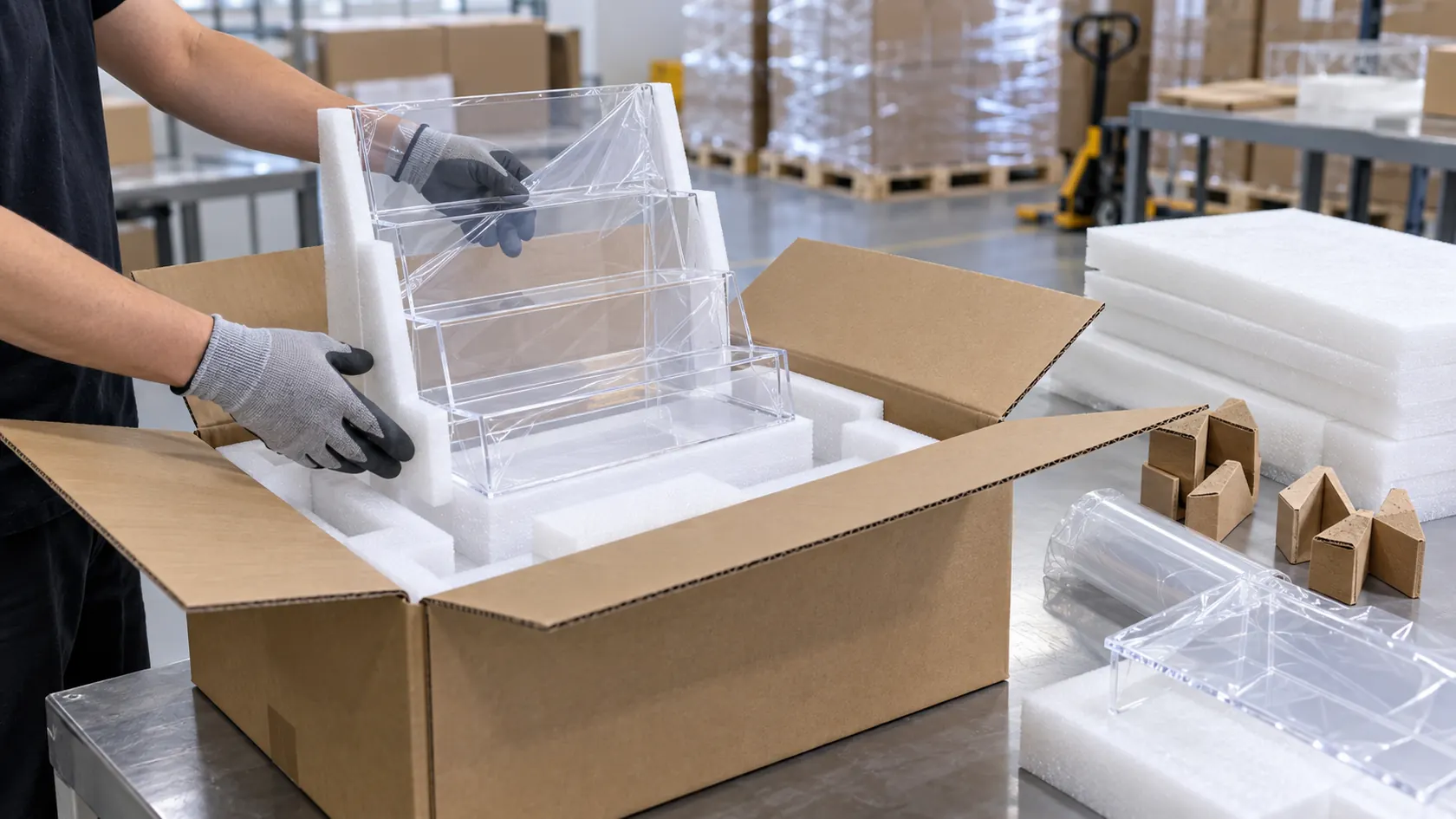
Packaging is an approval gate because clear polished surfaces are vulnerable to scratches, abrasion, and movement damage after fabrication. The buyer should confirm protective-film requirements, foam or divider strategy, hardware-bag placement, carton count, labeling needs, and whether the display needs to be ready to place or assembled by the recipient.
We usually review the packing concept alongside the sample for projects with visible panels, loose hardware, or multi-level assemblies. A late carton-size change can affect how parts nest, how much foam is needed, and the planned shipping state. The cheapest packing is not always the lowest-risk choice once the display has to arrive presentation-ready.
Use a release calendar with owners, revisions, and decision dates
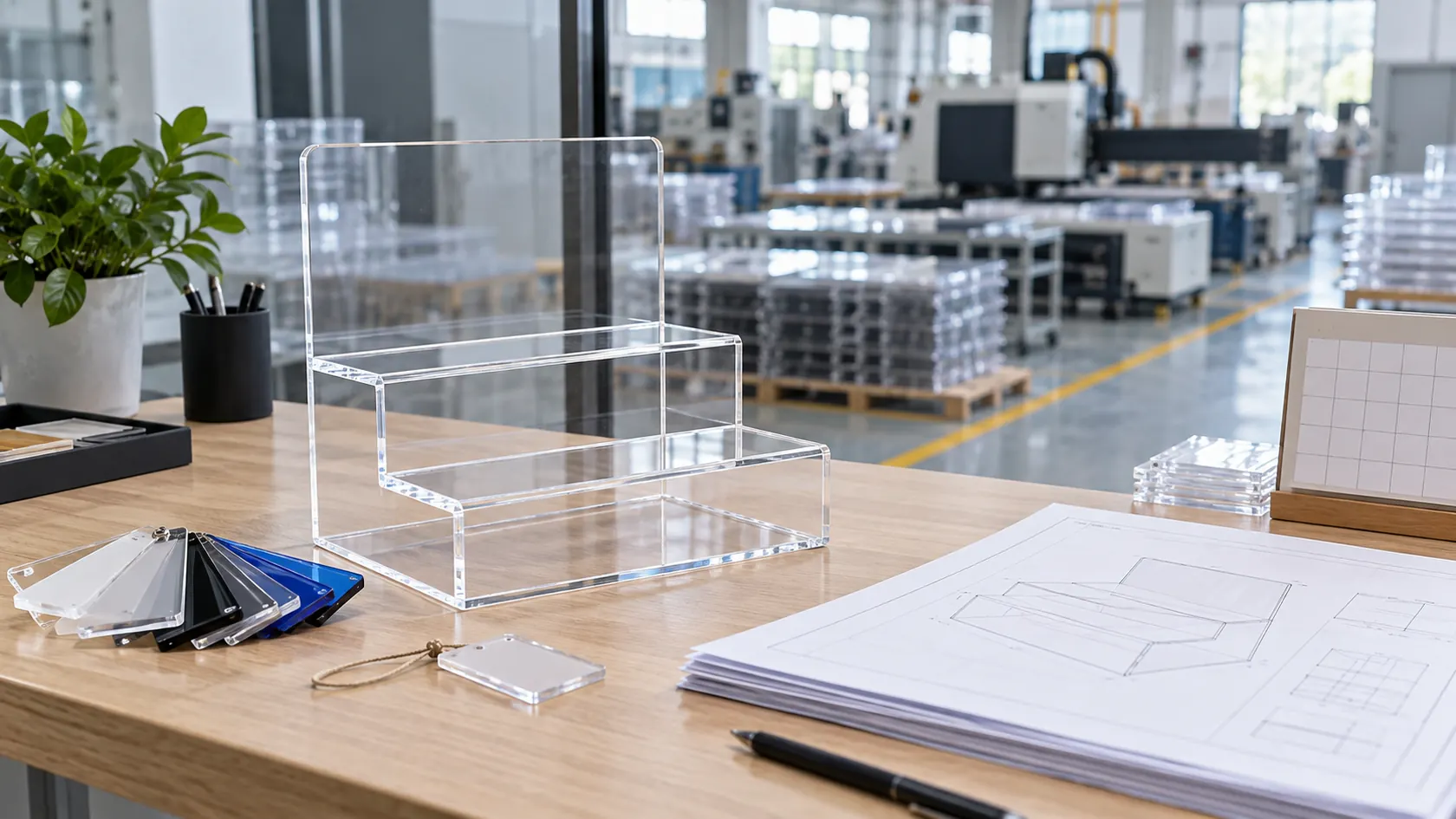
The practical remedy is a short release calendar, not an optimistic all-in lead-time figure. Give each gate an owner, a revision identifier, a review due date, and a clear consequence if it slips. Keep factory-ready timing separate from shipment booking, transit, customs, and final receiving.
| Gate | Buyer action | Factory action after approval | Control that prevents a repeat delay |
|---|---|---|---|
| Drawing | Approve one dated revision | Prepare the build path and sample scope | Revision ID on the approval email and drawing |
| Artwork | Release one final print file | Confirm placement and print preparation | One consolidated mark-up and named approver |
| Sample | Approve against listed acceptance points | Freeze the production reference or issue a revision | Written pass/change decision, not verbal feedback |
| Hardware | Confirm part, finish, and shipping state | Schedule procurement and assembly sequence | Bill of materials matched to drawing revision |
| Packaging | Approve protection and carton approach | Set packout and inspection requirements | Packing notes linked to the sample or order revision |
For repeat orders, I would still confirm that the current drawing, artwork, quantity, hardware, and packing match the retained approved version. A prior programme can reduce development work, but it should not make an unreviewed change invisible. If your team needs help putting these gates into one manufacturable release, our custom acrylic fabrication service can review the drawing, display requirements, and delivery target before sampling.
Send a decision-ready display brief
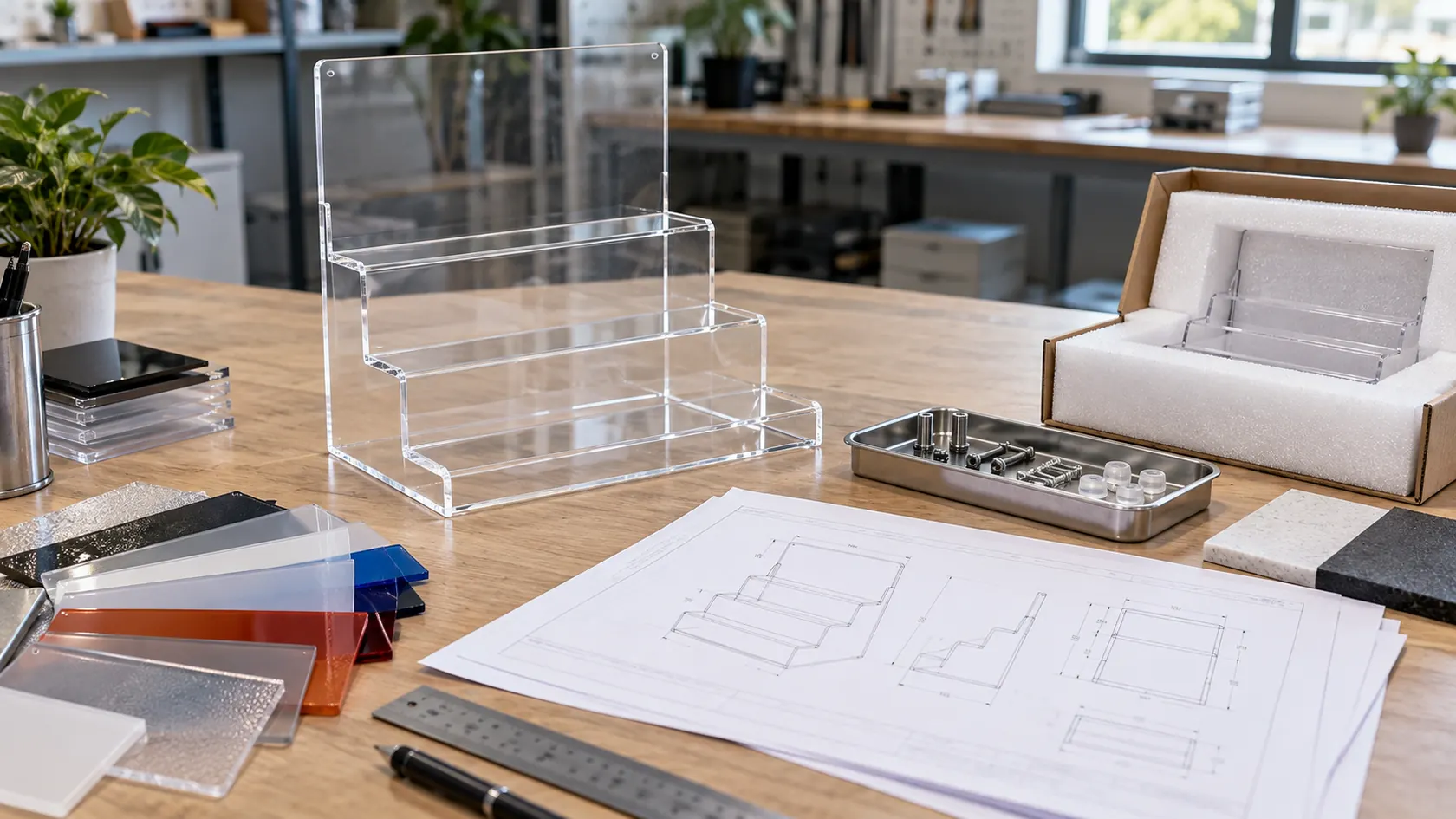
The fastest reliable route is rarely skipping an approval. It is closing the right approval once, early enough that production can be scheduled against one controlled version. A factory can advise where a design, print, assembly, or packout choice affects the build, but the buyer team needs a clear release path for its own brand and product decisions.
Send us your drawing or reference image, dimensions, target quantity, required in-market date, acrylic material and finish expectations, artwork, hardware, and packing requirements. We can identify the approval gates that must be closed before a custom acrylic display is released to production.