Skip to content
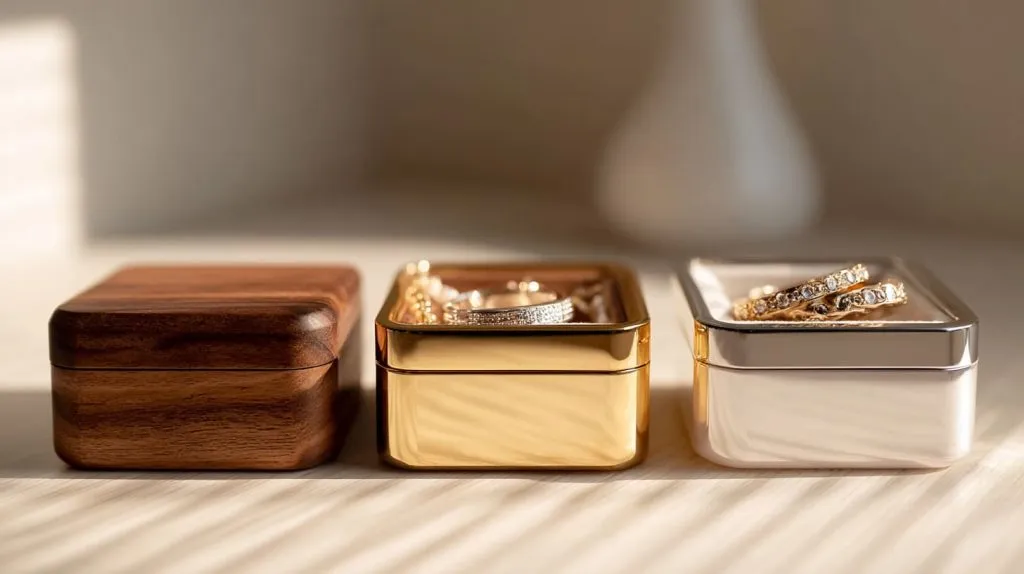
Picking out a jewelry box might seem simple—until you’re actually doing it. One of my clients was preparing a product line for a boutique launch. Her designs were elegant, thoughtful, and full of personality. But when it came to packaging, she paused. “Do I go with wood? Or something lighter? Or should I show off the jewelry with acrylic?” That question sparked a much deeper conversation.
Because what holds your jewelry doesn’t just protect it—it frames it. It tells a story. Sometimes that story is warmth and tradition. Sometimes it’s sleek and modern. Sometimes it’s pure clarity.
Wood, metal, and acrylic are the most common options out there. But they are very different. As someone who works in custom acrylic solutions at Feilong Acrylic and has seen designers like you wrestle with this choice, I want to break it down clearly. By the end of this post, you’ll know which box fits your needs and why.
🔎 1. Material Characteristics & Core Differences
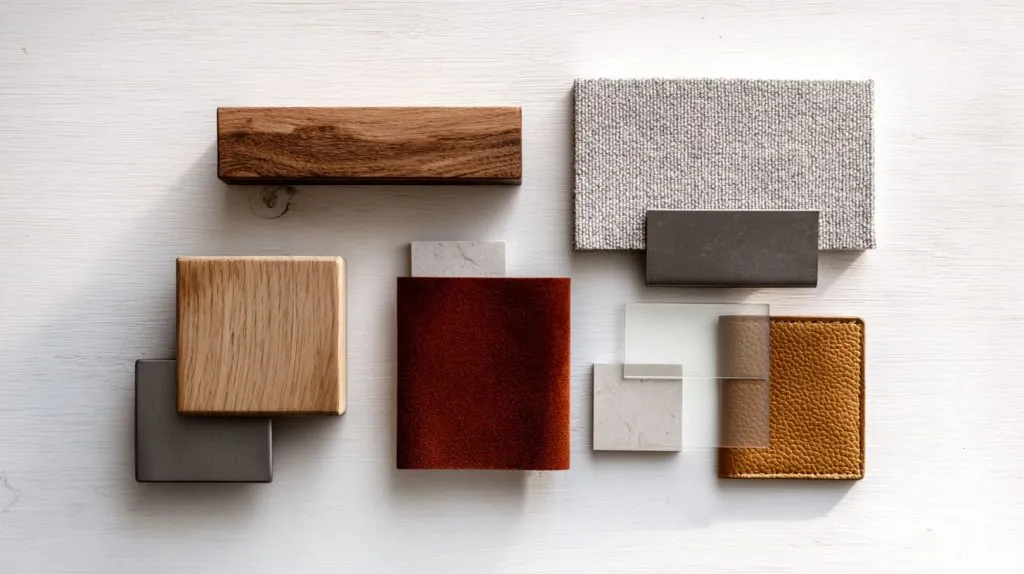
Let’s start with the basics. What are jewelry boxes made of? And how does the material affect your jewelry?
1.1 What Materials Are Used in Jewelry Boxes?
Here are the common choices we see in the market:
- Wood – classic and warm
- Metal – sleek and strong
- Acrylic – clear and modern
- Leather/Vinyl – soft and decorative
- Velvet‑lined Interiors – protects delicate pieces
Each material brings a different look and feel. When you design or choose a box, the material sets the tone first.
1.2 How Material Influences Function & Performance
Here’s a table to help visualize the differences:
| Feature | Wood | Metal | Acrylic |
|---|---|---|---|
| Weight | Heavy | Medium | Light |
| Durability | High | Very High | Medium |
| Visual Display | Low | Low | High |
| Maintenance | Requires care | Easy | Easy |
| Moisture Handling | Good | Risk of rust | Neutral |
- Protection: Wood and metal generally protect better from drops or impacts.
- Weight: Acrylic feels lighter. Good if you think about shipping or moving boxes.
- Display: Acrylic makes seeing your jewelry easy without opening the box.
Choosing wrong can mean scratches, tarnished chains, or dull presentation. That’s why this part matters.
Now, let’s zoom into each material, starting with wood.
🌳 2. Wooden Jewelry Boxes
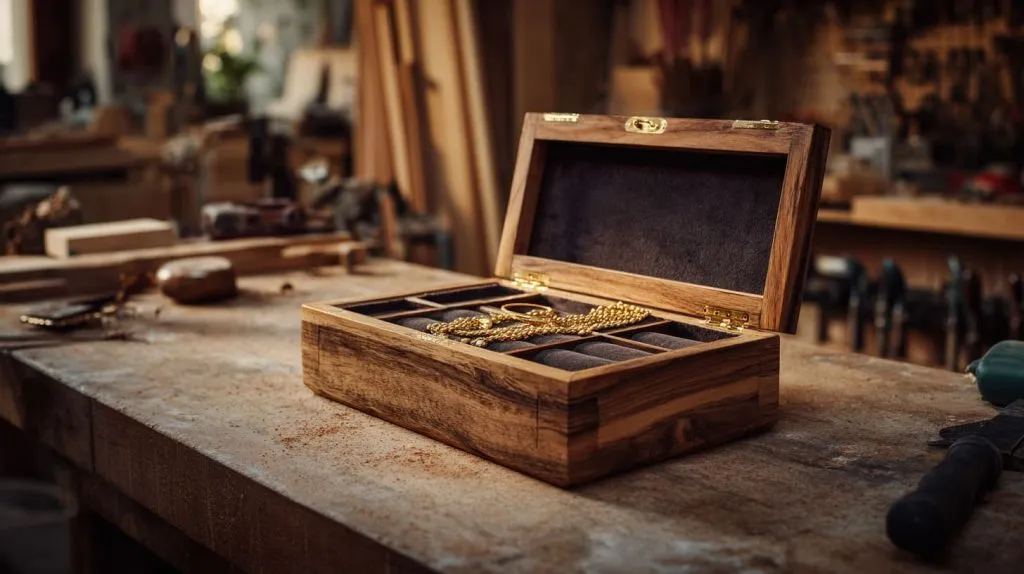
I’ll never forget walking into an old woodworking shop in Canada years ago. The smell of cedar wood hit me. It was rich and comforting. That memory stuck with me when I think about wooden jewelry boxes.
2.1 Strengths of Wooden Jewelry Boxes
Wood feels timeless. It ages like fine wine.
- It looks warm and classic.
- It adds perceived value.
- It can protect jewelry well from temperature changes.
Here’s a simple view:
Why people choose wood:
- Traditional beauty
- Robust protection
- Lasts long with care
2.2 Drawbacks & Considerations
Not everything about wood is perfect.
- It is heavier. That matters if you ship or travel with it.
- Wood may need polishing over time.
- Some woods are expensive.
2.3 Typical Use Cases for Wooden Boxes
Wood boxes shine when:
- You want a gift box that feels personal.
- You store heirlooms or wedding jewelry.
- You want elegance that feels classic.
After exploring wood, you might wonder if metal feels more modern. Let’s see about that.
🔩 3. Metal Jewelry Boxes
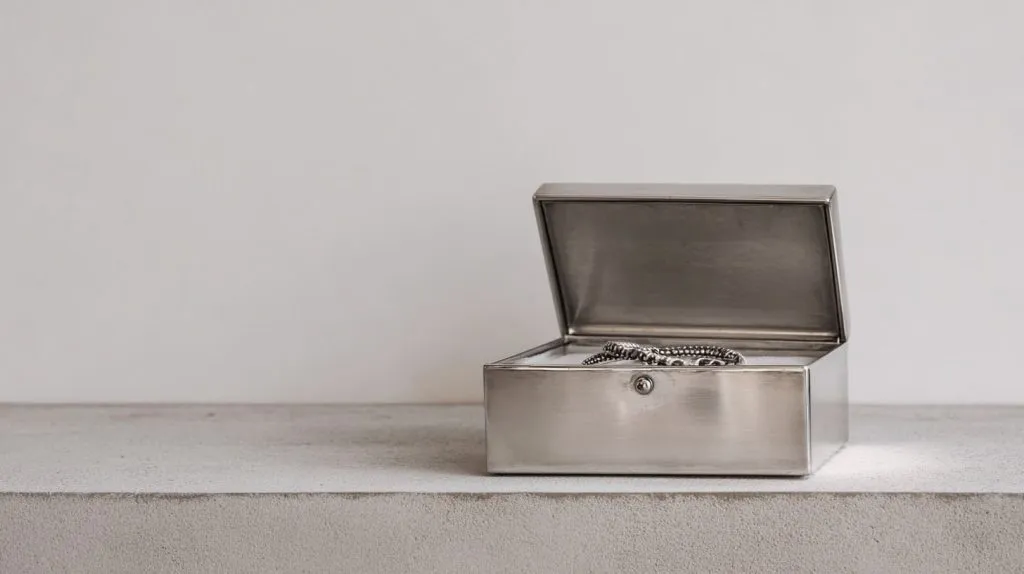
Walking through a design studio in Guangzhou, I once saw a sleek metal jewelry box that looked like a modern sculpture. It was cool to touch, and it held jewelry like armor.
3.1 Benefits of Metal Jewelry Boxes
Metal has a strong personality:
- Very resistant to bends and drops
- Looks sharp, modern, minimalist
- Usually lighter than wood
Visual snapshot:
- Think of metal as strong and cool
- Great for geometric, clean designs
3.2 Limitations of Metal Boxes
But metal isn’t perfect:
- If it gets scratched, you see it easily
- Some metals can tarnish without coating
- It can feel cold or less personal
Metal boxes can feel “corporate” to some people. For others, that’s exactly what they want.
3.3 Best Fit Scenarios
Metal works well when:
- You design for modern retail
- You want lightweight and strong
- You prefer minimalist style
But what if you want display and clarity? That’s where acrylic plays its role.
🔍 4. Acrylic Jewelry Boxes
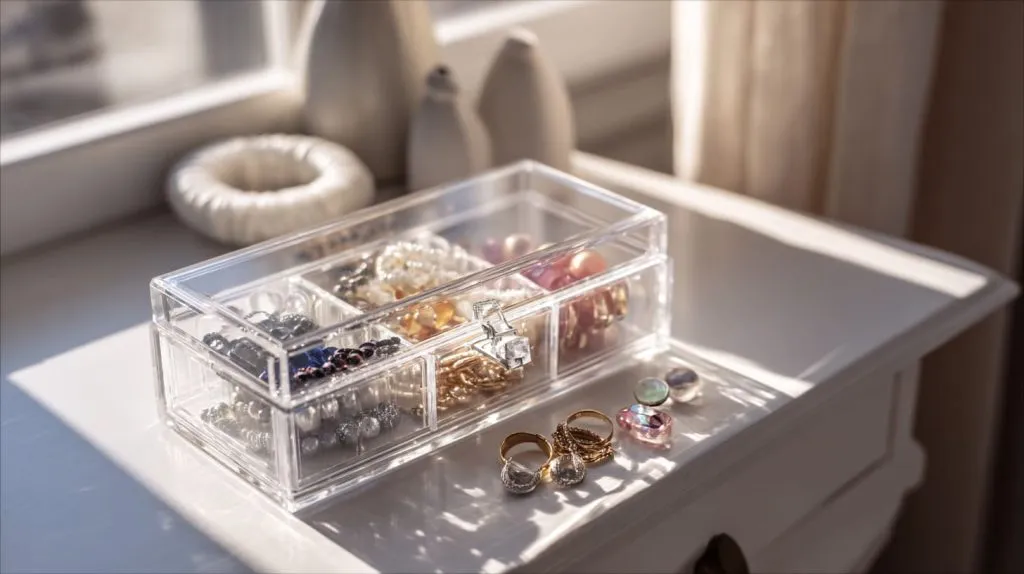
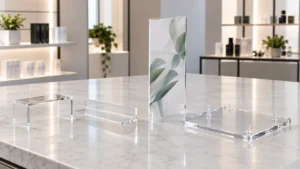
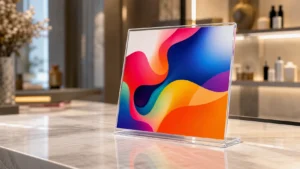
Let me tell you a small story. A buyer once told me, “I want everyone to see my jewelry, not just feel it.” That’s when acrylic boxes made sense. You see everything at a glance. No guessing. No opening.
4.1 What Makes Acrylic Unique
Acrylic is like glass, but tougher. It gives you clarity with strength.
- You can see jewelry from every angle.
- It stays light.
- It’s easy to clean.
Here’s a quick table to see how acrylic compares visually:
| Feature | Looks Like | Feels Like | Best For |
|---|---|---|---|
| Wood | Natural | Warm | Classic gifts |
| Metal | Sleek | Cool | Modern minimal |
| Acrylic | Clear | Light | Display & retail |
4.2 Advantages of Acrylic Jewelry Boxes
Acrylic adds practical benefits:
- Makes products easy to showcase
- Works well for retail or exhibits
- Allows custom shapes and compartments
- Doesn’t shatter like glass
4.3 Limitations & Considerations
But keep in mind:
- Acrylic can scratch more than wood or metal
- It shows fingerprints and dust
- It can feel less “premium” to some people
4.4 Typical Use Cases
Acrylic is great when you want:
- Store displays
- Clear, modern home styles
- Fashion over classic heirlooms
Now that we’ve seen all three materials, let’s compare them directly.
⚖️ 5. Comparison Summary
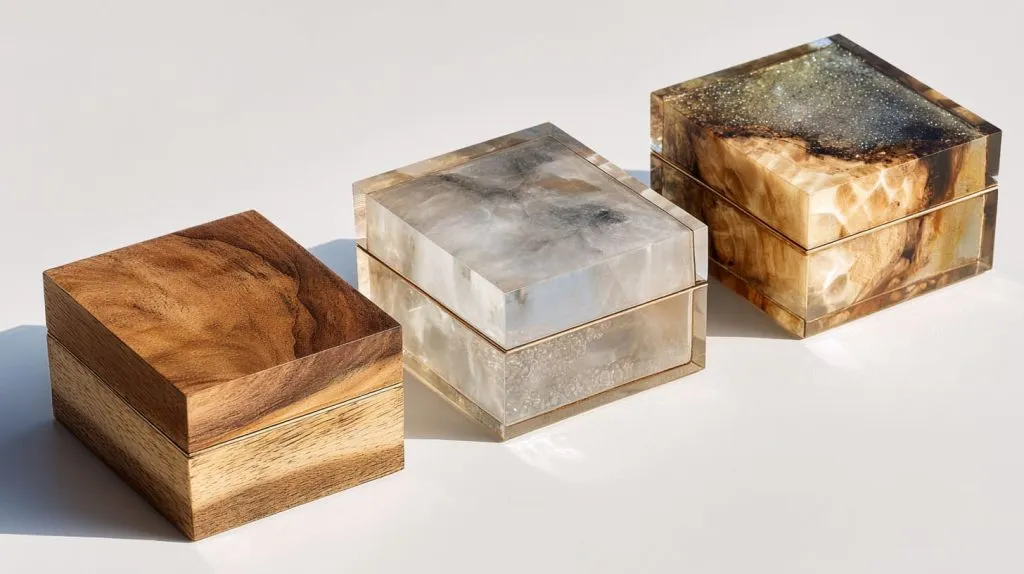
I like to think of this as a quick snapshot before you make a choice.
5.1 Protection & Durability
| Material | Protection | Durability |
|---|---|---|
| Wood | High | High |
| Metal | Very High | Very High |
| Acrylic | Medium | Medium |
- Metal wins in ruggedness.
- Wood protects well and ages nicely.
- Acrylic protects enough and lets you see inside.
5.2 Aesthetic & Brand Impression
| Material | Style |
|---|---|
| Wood | Warm, classic |
| Metal | Sleek, modern |
| Acrylic | Clear, contemporary |
Each creates a different emotional response. Think about your audience.
5.3 Cost & Value Over Time
| Material | Initial Cost | Long‑Term Value |
|---|---|---|
| Wood | Higher | Classic value |
| Metal | Mid | Functional |
| Acrylic | Lower | Practical & visible |
Cost matters, but so does how the box makes a person feel when they first see it.
Let’s take this deeper and talk about needs next.
6. How to Choose Based on Your Needs
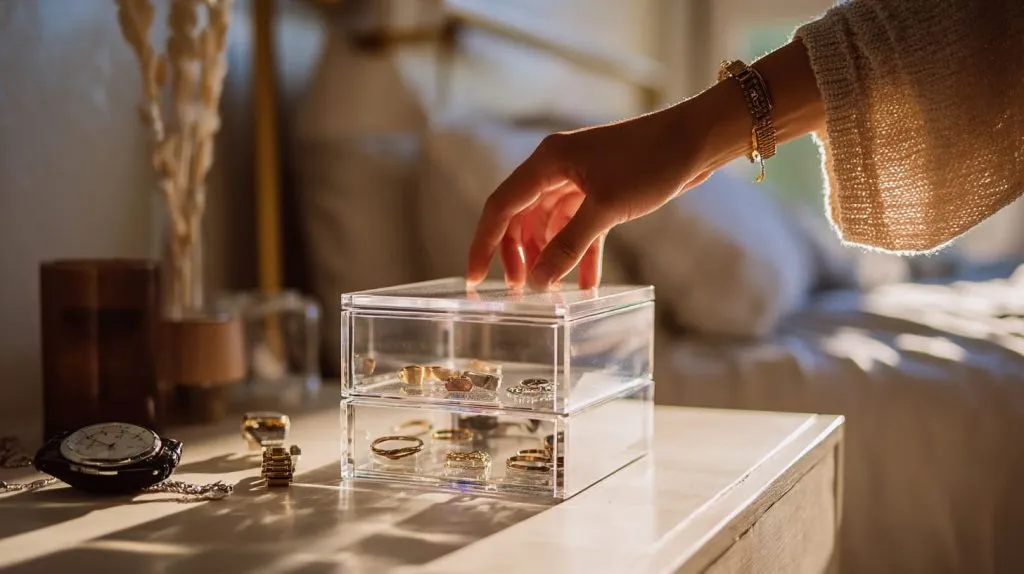
Here’s where we make the choice personal.
6.1 For Daily Use & Personal Storage
- Wood feels cozy at home.
- Acrylic lets you see your jewelry quickly.
- Metal works if you move around a lot.
I’ve had customers choose acrylic just because they got tired of opening boxes every time they picked a ring.
6.2 For Retail & Display
If you sell jewelry, acrylic wins for visibility. It draws eyes. Metal also works if you want a modern boutique look.
6.3 For Travel or Portability
Metal and acrylic are lighter. Wood can feel bulky if you travel.
6.4 Based on Jewelry Type
- Fine, heirloom pieces? Wood feels right.
- Fashion or costume jewelry? Acrylic or metal fits well.
At the end of the day, your choice tells a story about your style.
📌 Conclusion
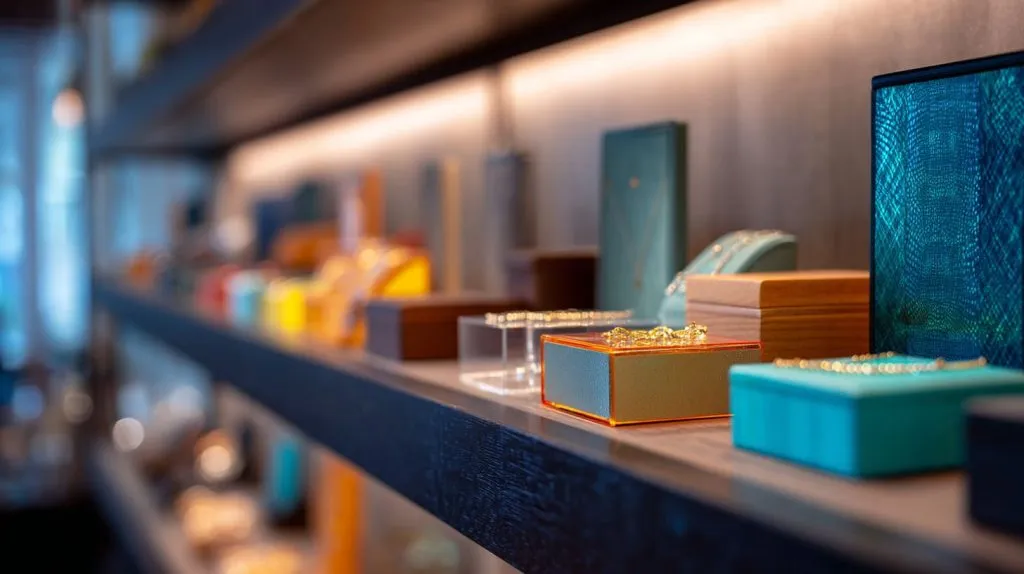
Choosing between wood, metal, and acrylic isn’t just a design choice. It’s a decision about how you want to feel when you interact with your jewelry. It’s about how others see your collection.
- Go with wood if you want classic warmth and depth.
- Pick metal if you want strength and modern flair.
- Choose acrylic if you want clarity and a view that draws focus.
And if you ever need custom acrylic solutions—whether it’s a unique jewelry box or a display that tells your story—Feilong Acrylic is here to help. We deliver high‑quality, custom solutions with fast lead times—whether for a single personalized order or a bulk requirement.
Thanks for reading. Let me know what materials you lean toward—and why.