Skip to content

Every sourcing conversation eventually circles back to one key question: “What material are we actually working with?”
That question hit me again the other day as I was reviewing a prototype for a new countertop display. The sheet looked perfect—clear, glossy, just the right thickness. But when I tapped the corner and felt the give, a red flag went up. Was this acrylic or polycarbonate? They look alike, but anyone who’s dealt with post-production headaches knows they are not interchangeable.
Identifying the right material isn’t just about checking a box. It shapes everything—cutting behavior, impact resistance, how it holds up under heat, and whether your parts crack under pressure… literally.
If you've ever stood at a workbench or packaging station holding a clear sheet and wondering which type it is, you're in the right place. Let me walk you through exactly how I spot the difference—no lab needed, just real-world tricks that save you from costly mistakes.
Visual Differences Between Acrylic and Polycarbonate

The first thing I do is simply look. Not glance. Really look.
Surface clarity and light transmission
Acrylic usually looks sharper. Cleaner. Almost glass-like.
Polycarbonate feels slightly softer to the eye.
When I place them side by side under strong light, acrylic lets more light pass through. The edges glow brighter. Polycarbonate diffuses light a bit more.
| Property | Acrylic | Polycarbonate |
|---|---|---|
| Light transmission | Very high | Slightly lower |
| Visual sharpness | Crisp | Mild haze |
If a display needs to look “luxury,” acrylic often gives that edge.
Glossiness and edge quality after cutting
After laser cutting, acrylic edges look polished even before flame treatment.
Polycarbonate edges look duller. Sometimes a little rough.
This matters more than people think, especially for exposed edges in retail displays.
Thickness distortion in larger sheets
On thicker sheets, acrylic stays flat and proud.
Polycarbonate can show slight internal waves when viewed from the side.
It’s subtle. But once you see it, you can’t unsee it.
At this point, many buyers feel confident. But looks can lie. That’s when I move from eyes to hands.
Strength and Impact Resistance Tests
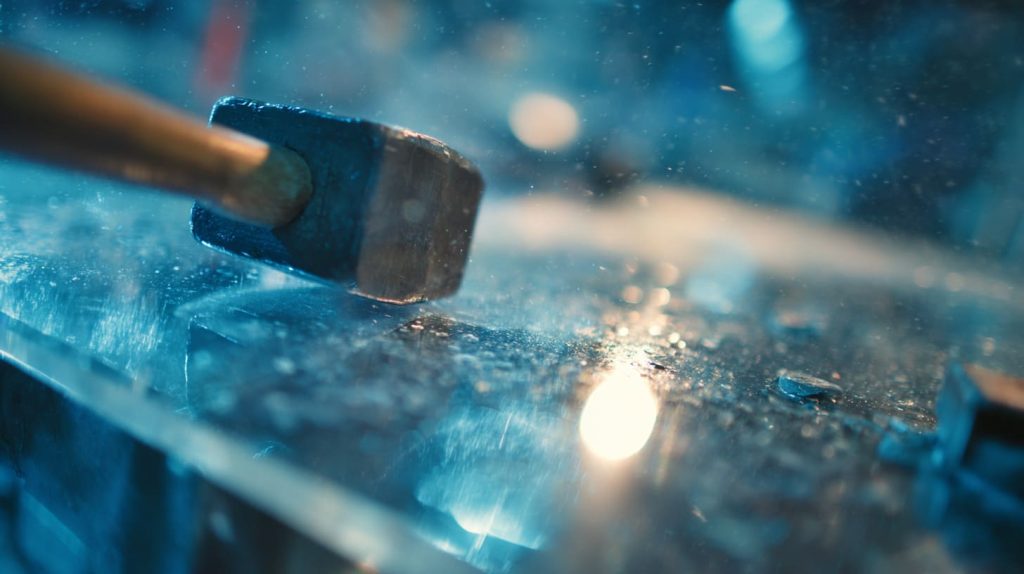
This is where the difference becomes honest.
Drop test or hammer tap test
I don’t smash samples. I tap.
Acrylic gives a sharp, glass-like sound.
Polycarbonate sounds duller and absorbs the hit.
Acrylic may chip. Polycarbonate usually won’t.
Flexibility under pressure or bend test
I apply slow pressure with both hands.
Acrylic resists, then snaps.
Polycarbonate bends. It complains, but it bends.
| Test | Acrylic | Polycarbonate |
|---|---|---|
| Bend by hand | Cracks | Flexes |
| Impact tolerance | Low | Very high |
This is why safety shields use polycarbonate, not acrylic.
Scratch resistance comparison
Here’s the twist.
Acrylic scratches less.
Polycarbonate scratches easier.
Many people expect the stronger material to scratch less. That’s not the case here.
Once strength is clear, weight gives the next clue.
Weight and Rigidity Comparison
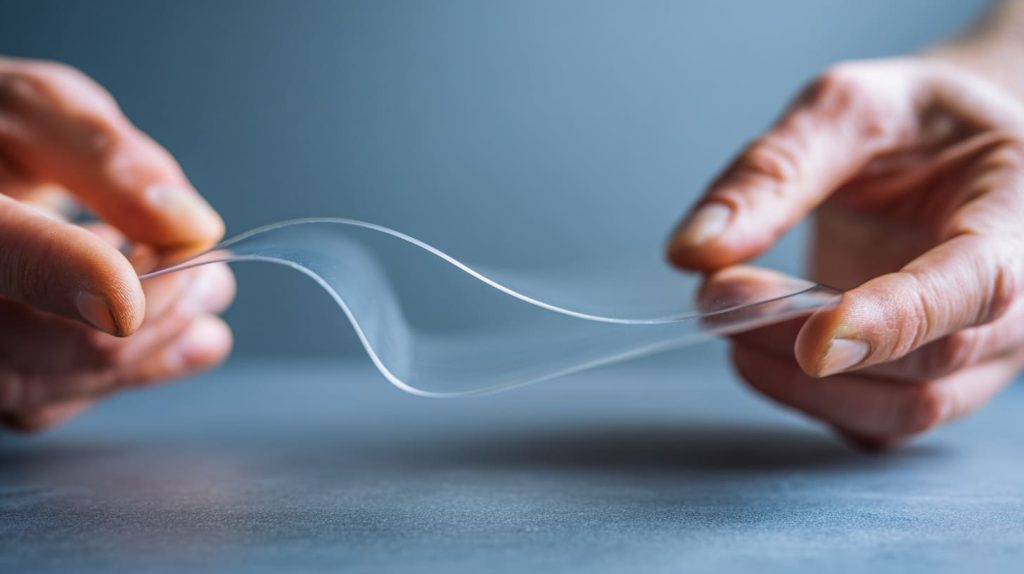
I often close my eyes and lift the sheet.
Density and handling feel
Acrylic feels heavier in the hand.
Polycarbonate feels lighter for the same size.
It’s not dramatic, but noticeable when you’ve handled enough samples.
Structural stiffness under manual pressure
Acrylic feels stiff and proud.
Polycarbonate feels tough but forgiving.
| Feel test | Acrylic | Polycarbonate |
|---|---|---|
| Hand feel | Rigid | Tough but flexible |
| Weight sense | Heavier | Lighter |
Then comes heat. Heat never lies.
Flame and Heat Response
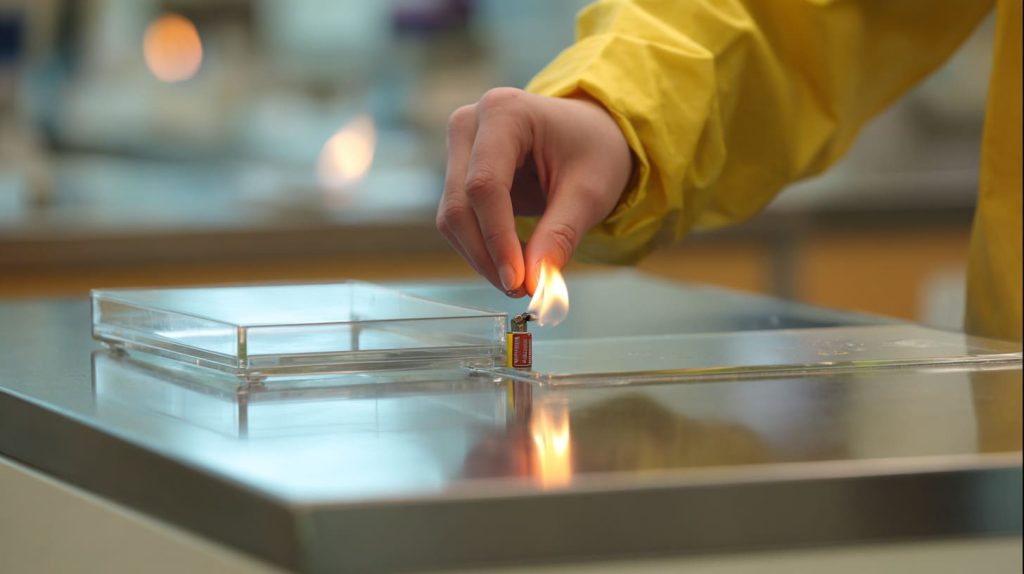
I don’t love flame tests, but they reveal truth fast.
Controlled flame test (melting behavior and smoke)
Acrylic ignites easily and burns with a clean flame.
Polycarbonate resists ignition and self-extinguishes.
The smell is different too. Acrylic smells sharp. Polycarbonate smells heavier.
Heat resistance threshold (softening point)
Polycarbonate handles higher heat before deforming.
Acrylic softens sooner and loses shape.
This is critical for lighting, electronics, or outdoor use.
Chemicals tell another story.
Chemical Resistance and Solvent Testing
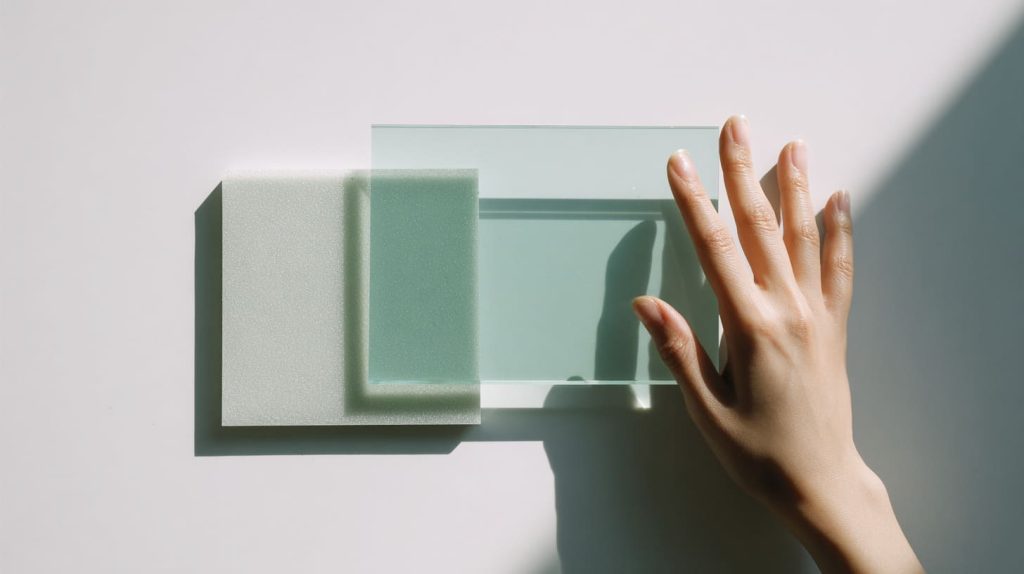
This is where mistakes happen.
Reaction to acetone or alcohol wipes
I lightly wipe a hidden corner.
Acrylic reacts fast. It turns cloudy or crazes.
Polycarbonate holds longer.
| Solvent test | Acrylic | Polycarbonate |
|---|---|---|
| Acetone | Immediate damage | Mild or slow effect |
| Alcohol | Surface stress | More tolerant |
Compatibility with adhesives and cleaning agents
Acrylic likes specific glues.
Polycarbonate needs more care.
Wrong glue ruins both, but acrylic fails faster.
Sometimes, the answer is printed right in front of you.
Marking, Branding, or Sheet Label Clues
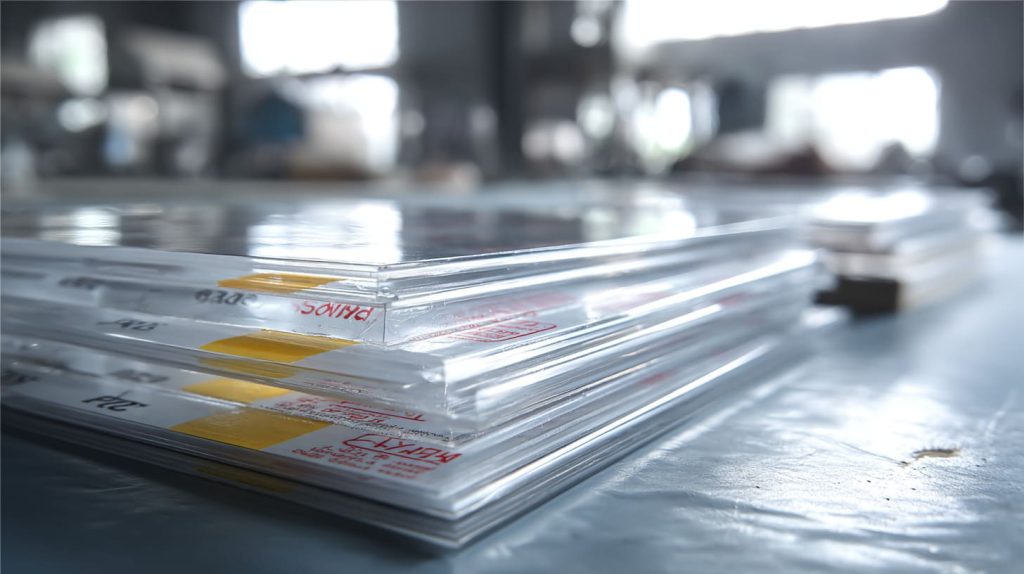
I always check the film.
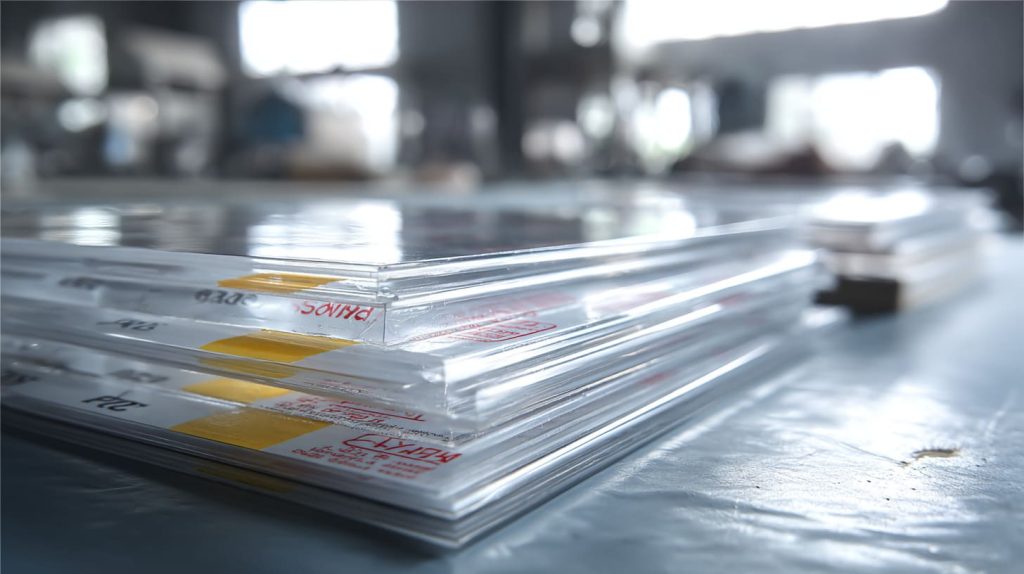
Manufacturer labeling and protective film markings
Protective films often tell the truth.
Look for words like:
- “PMMA” → Acrylic
- “PC” → Polycarbonate
Common trade names and how to decode them
| Trade name | Material |
|---|---|
| Plexiglas | Acrylic |
| Lexan | Polycarbonate |
I still verify. Labels can be wrong.
Machining exposes what labels hide.
Cutting and Machining Behavior
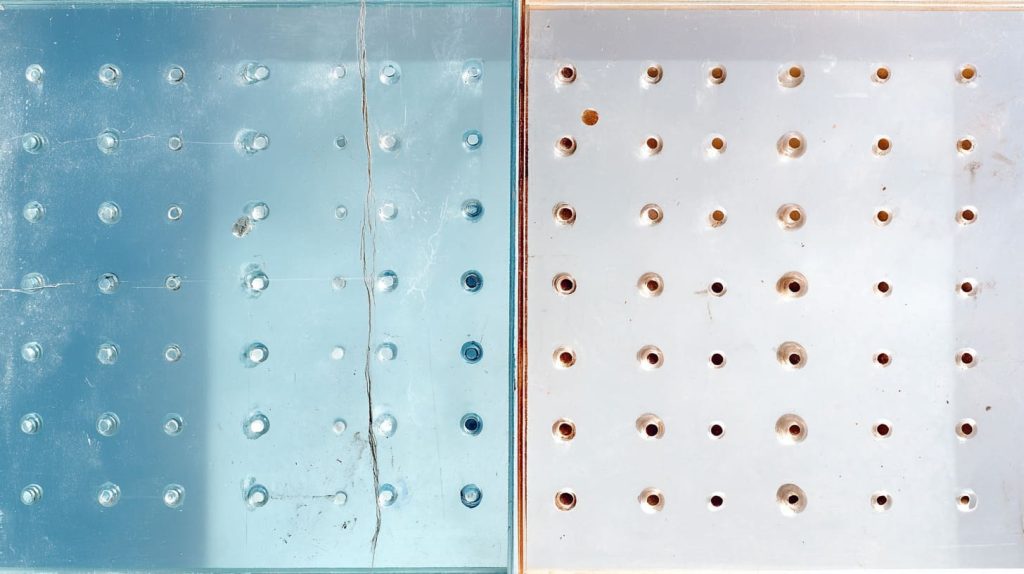
I’ve seen this mistake cost entire batches.
Edge chipping during sawing
Acrylic chips easily if the blade is wrong.
Polycarbonate cuts smoother.
Drilling behavior and cracking risk
Acrylic cracks if the drill is dull or rushed.
Polycarbonate forgives mistakes.
| Machining step | Acrylic | Polycarbonate |
|---|---|---|
| Sawing | Chips | Smooth |
| Drilling | Crack risk | Low risk |
Use cases often reveal intent.
Common Application Clues (Real-World Context)
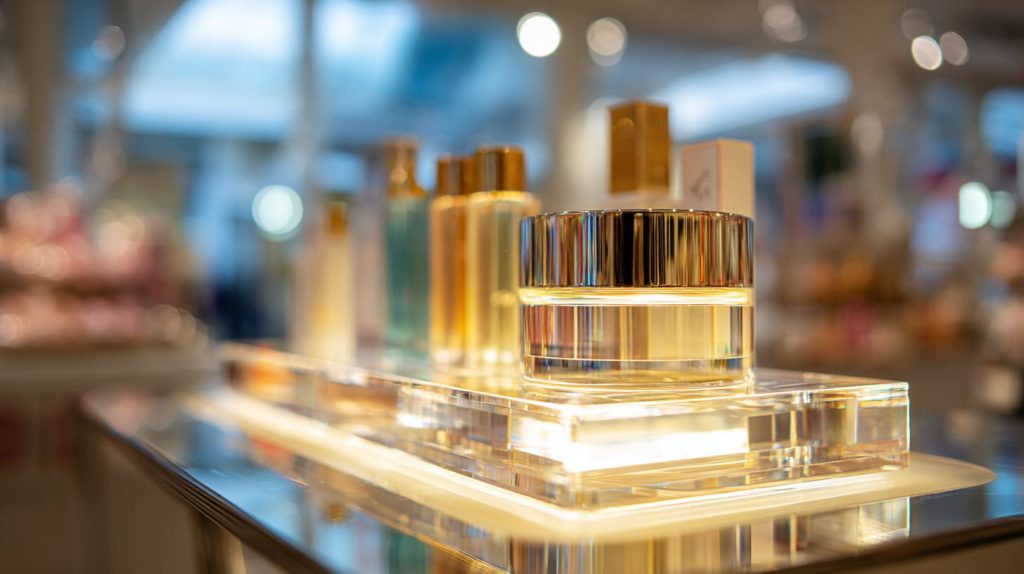
I ask one question: Where will this live?
Use cases where polycarbonate is typically chosen
- Safety shields
- Machine guards
- Outdoor covers
- Impact zones
If safety is mentioned, I suspect polycarbonate.
Typical applications for acrylic
- Cosmetic displays
- Retail signage
- Photo frames
- Decorative panels
Acrylic wins when looks matter more than abuse.
Light stress shows a final clue.
Optical Properties Under Stress
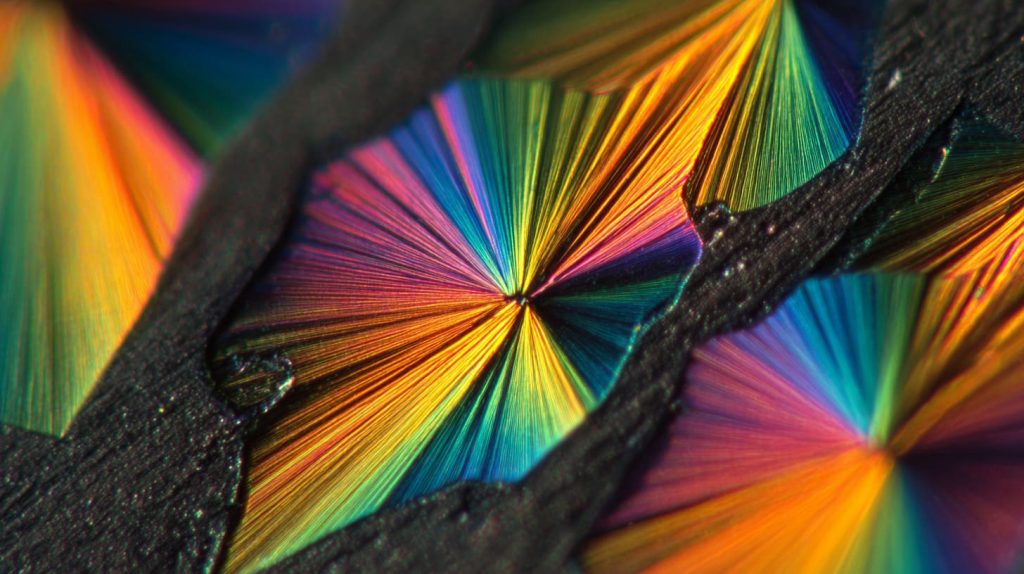
This test feels almost poetic.
Stress marks under polarized light
Under polarized light:
- Acrylic shows clear stress lines
- Polycarbonate shows fewer patterns
Light dispersion and tint under sunlight
Acrylic stays neutral.
Polycarbonate can show slight color shift.
Finally, price often whispers the truth.
Cost Differences and Supply Chain Insight
Price is never proof, but it hints.
Average pricing comparison in global markets
| Material | Relative cost |
|---|---|
| Acrylic | Lower |
| Polycarbonate | Higher |
If a quote feels “too cheap” for safety use, I pause.
Clues from supplier or product catalog data
Polycarbonate is rarely stocked casually.
Acrylic is everywhere.
That alone tells a story.
Conclusion
I’ve learned this the slow way. By cracked parts. By wrong assumptions. By awkward calls with buyers.
Acrylic and polycarbonate may look alike, but they behave like different personalities. One values beauty. The other values survival.
Once you know how to spot the signs, you stop guessing.
And when you stop guessing, your designs last longer, your sourcing gets safer, and your decisions feel solid.
That confidence is worth more than any sheet.