Skip to content
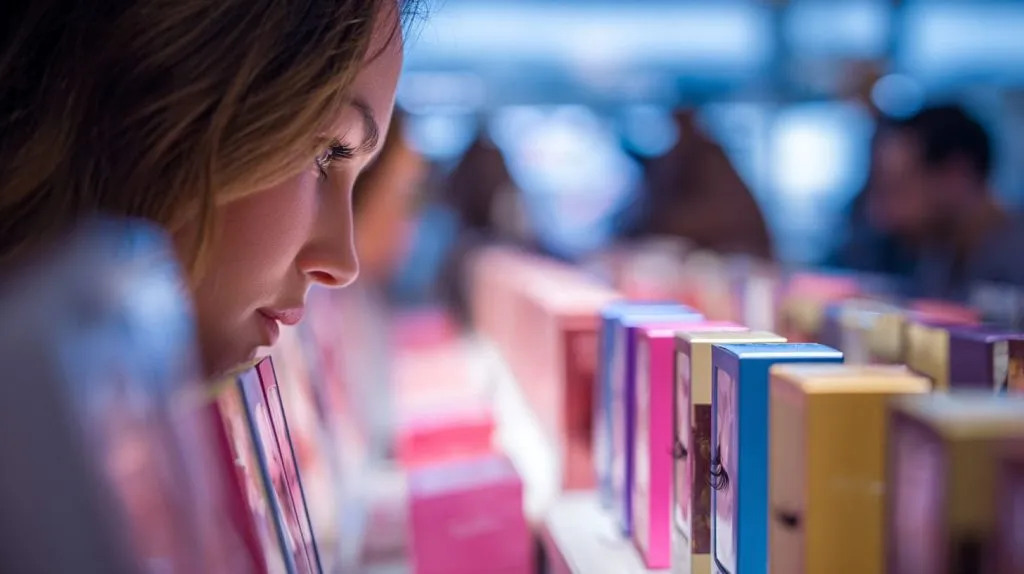
The first thing anyone notices in the beauty aisle isn’t the lashes—it’s the box. I’ve watched this happen countless times in stores and tradeshows. People lean closer, tilt the box under the light, run their fingers across the surface, and make a decision in seconds. That’s when it hit me: packaging isn’t just packaging—it’s persuasion in 3D form.
What this post will cover
In this post, I’ll break down five key tips for designing and producing custom eyelash boxes that don’t just look good—but sell better, store smarter, and scale with your brand.
Why custom eyelash boxes matter for your brand and manufacturing process
Custom lash boxes are more than packaging. They're your first impression, your brand story, and your product’s bodyguard—all in one. And if you’ve worked in product development or purchasing, like my Canadian friend Jacky has for over a decade, you know that a poorly made box can ruin a great product.
My story – working with B2B clients on packaging and display solutions
Over the years, I’ve worked with hundreds of B2B clients in cosmetics and beauty. From startup influencers to big-name retailers, the question is always the same: “Can you help us make packaging that’s both affordable and unforgettable?” Yes. Yes, I can. And here's how.
Tip 1: Define Your Brand & Target Market
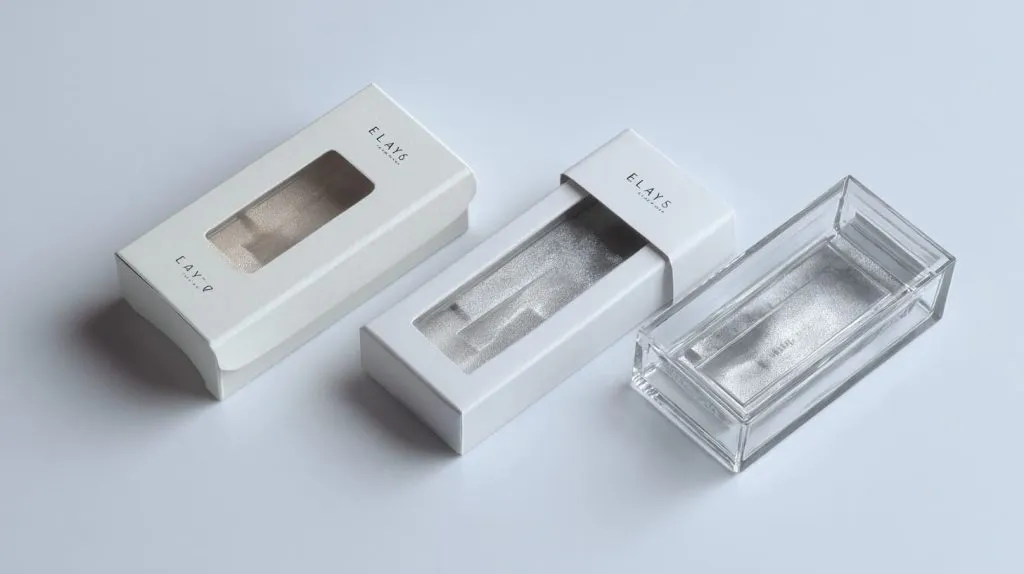
When someone picks up your eyelash box, they’re not just holding lashes—they’re holding a piece of your brand.
If you're selling $5 drugstore lashes, your box has one job: survive the shelf. If you're selling $30 mink lashes, it better whisper luxury before they even touch it. Think like your buyer—are they looking for a cheap thrill or a full glam experience?
Table: Matching Box Design with Buyer Persona
| Buyer Persona | Packaging Traits |
|---|---|
| Budget Shopper | Minimal print, thin card, compact size |
| Mid-Range Beauty Fan | Bold colors, window box, magnetic lid |
| Luxury Lash Lover | Acrylic tray, foil print, textured box |
Positioning: shelf retail, e-commerce, gift box or influencer kit
Different channels, different priorities. Retail packaging needs to pop at eye-level. E-commerce boxes must survive the mail. Gifting kits need to feel like an experience. Influencer kits? Instagram-ready and drama-filled.
Aligning packaging style with brand story
If your brand is edgy and bold, don’t play it safe with white-on-white packaging. If you're a clean beauty label, skip the gloss. Every detail matters: the font, the tuck style, even the tray color.
Practical stress-test: how your manufacturing partner (you) can translate brand into box
Here’s where my factory comes in. You send the mood board, we send the prototype. We can test magnetic closures, acrylic windows, even holographic print. No guessing—just building it right.
Let’s shift gears and talk materials—because great branding means nothing if the box falls apart.
Tip 2: Choose the Right Materials & Structure
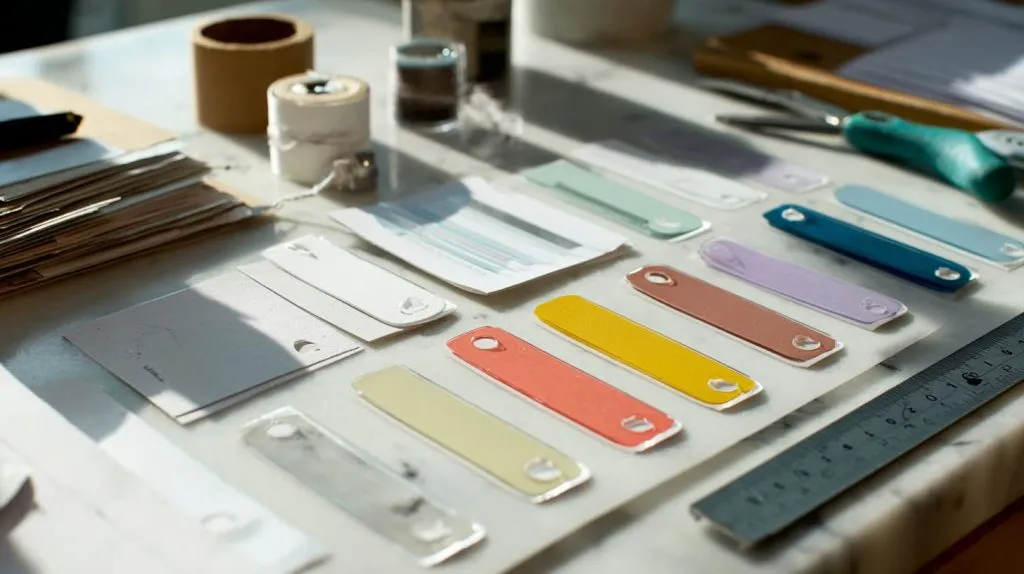
Your lashes are soft, but your box should be tough.
Materials overview: paperboard, cardstock, acrylic/clear, plastic windows, hybrid
There’s no one-size-fits-all. Paperboard is light and cheap. Acrylic is premium and clear. A hybrid with a plastic window balances visibility and budget.
Table: Common Eyelash Box Materials
| Material | Feel | Cost | Visual Appeal |
|---|---|---|---|
| Paperboard | Soft matte | Low | Simple print |
| Cardstock | Firm, stiff | Mid | Better detail |
| Acrylic | Glossy, clear | High | Premium look |
| Hybrid | Mixed feel | Mid | Practical |
Structure & box style: drawer, flip-top, sleeve, slide-out, magnetic closure
Each style changes how customers interact with the product. A drawer box feels smooth. A flip-top box feels secure. A sleeve screams simplicity. And magnetic closure? That’s elegance in a snap.
Internal protection & fit: tray design, lash curvature, inserts
Lashes aren't flat. The tray needs to cradle them. Inserts should prevent shaking. We’ve had to retool molds just because a client switched from natural curl to dramatic flare—those millimeters matter.
Everyone wants eco-friendly, but let’s be honest—budget often wins. We help clients make small swaps that matter: soy ink, recycled card, or thinner acrylic walls that reduce weight without killing the vibe.
Now that we’ve built the structure, let’s dress it up.
Tip 3: Design for Visuals and Finished Touch
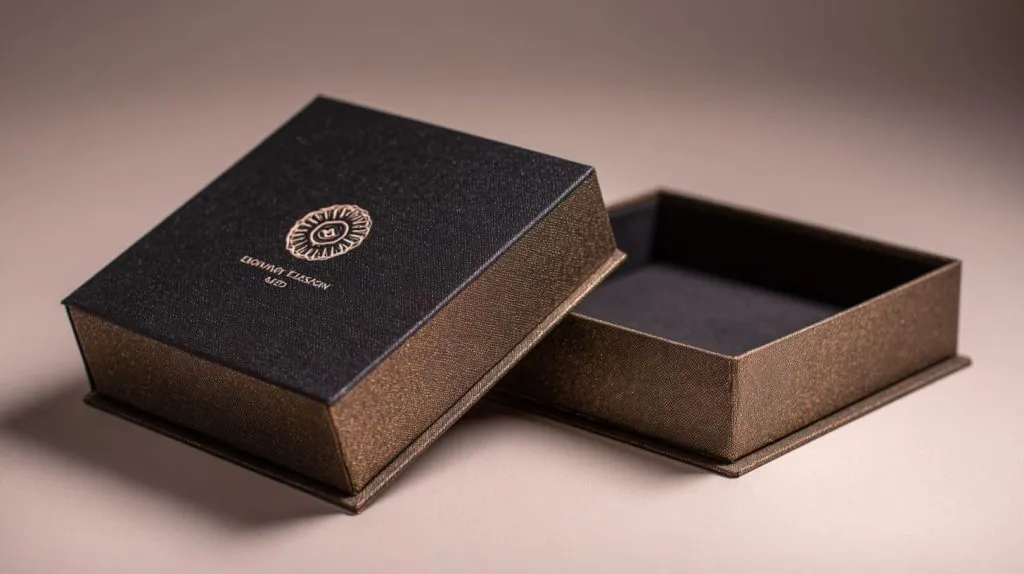
Your packaging is a silent salesperson—it better know how to flirt.
Printing & finishing techniques: digital vs offset, foil stamping, embossing, spot-UV, windows
Offset printing gives crisp detail for large runs. Digital is better for small-batch or sample orders. Foil? Instant glam. Spot UV? Glossy drama. Embossing? A tactile wink. And windows? They tease the lash without unboxing.
Visual layout: logo placement, color palette, typography, imagery
Too much going on? You lose elegance. Too plain? You lose attention. There’s a sweet spot in composition—our design team often uses rule-of-thirds when placing logos and accents.
Differentiation and unboxing experience: how to make the box memorable
Think about sound—the click of a magnet. Think about smell—lightly scented inserts. Think about interaction—sliding, pulling, popping. These are moments your customer remembers. I once designed a butterfly-wing box that opened like a reveal—customers still ask for it.
Manufacturing considerations: die-line, margin, material tolerance, tooling with supplier
Designs look great on screen but break down on the line. That's why we push for final dieline sign-offs with margin checks. If your hot foil is 1mm off, your whole run’s flawed.
And once you’ve got the design locked in—it’s showtime.
Tip 4: Manufacture, QA & Supplier Collaboration

I’ve seen great projects fail because no one asked for a second sample.
Sampling, prototyping and approval steps
Always start with a white mock-up. Then move to color. Then test your final finish. This isn’t overkill—it’s the smart way to avoid thousands of wrong boxes in customs.
Communication with factory: dieline files, dieline marks, material specs, finishing specs
We love when buyers send layered vector files. We hate screenshots. Be specific: Pantone codes, foil area masks, glue tab locations. The more we know, the better it goes.
Quality control for B2B: how you as a buyer (Jacky) should check tolerances, print registration, shrink, creasing, fit & function
You know the drill—measure twice, print once. We encourage our buyers to get factory photos before shipment. Some check every magnet by hand. Some do humidity tests. Either way, don’t leave QC to chance.
Lead-time, MOQ, cost trade-offs and logistics (shipping, stacking, storage)
Let’s talk time. A custom mold tray adds 5 days. Gold foil needs 2 more. Acrylic edges? We flame polish them—another step. Know your lead-time, and build in a buffer. Trust me, shipping delays during holidays are real.
Once you're confident in production, it's time to scale.
Tip 5: Optimize for Display & Scale (Wholesale/Bulk)
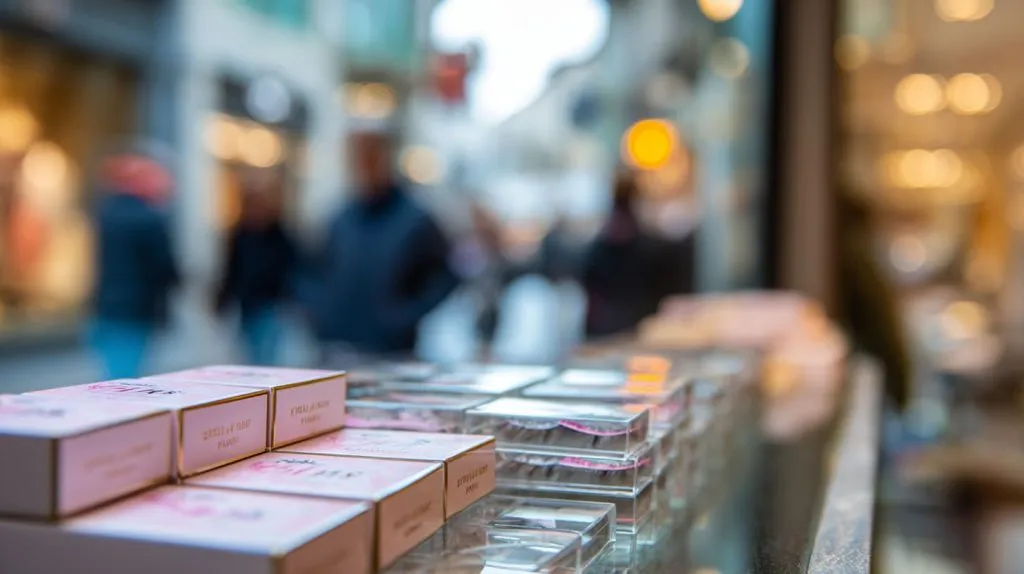
One of our clients doubled their lash sales just by changing how the boxes stacked.
If your box gets hidden on the shelf, you’re losing sales. Add a hang tag. Add a window that faces the shopper. Think of the shelf as a battlefield—your box is your armor.
E-commerce and shipping: durability, orientation, mailer friendly, efficient nesting
Boxes should survive a drop test. Fit inside mailers without shifting. Stack 10 deep without crushing. I've seen lashes arrive bent just because the inner tray rotated during shipping.
Table: E-commerce Packaging Checklist
| Feature | Importance |
|---|---|
| Mailer fit | ✅ Must-have |
| Insert stability | ✅ Must-have |
| Clear branding | ✅ Must-have |
| Extra cushioning | Optional |
Bulk production: cost per unit, tiered pricing, order planning, inventory management
Your unit cost drops as you order more—but only if your warehouse can handle it. Plan for reorders. Keep an eye on raw material costs. Ask your supplier (like us) for rolling order contracts.
Evolve with your brand: how to iterate packaging as you scale (limited editions, seasonal runs, add-ons)
Seasons change. So should your packaging. Try holographic film for holidays. Pastels for spring. We've helped clients launch PR boxes with QR codes, mirrors, even small LED lights inside. Keep it fresh.
Conclusion
So, here’s what we covered:
- Know your market.
- Pick smart materials.
- Design with feeling.
- Collaborate like a pro.
- Scale with intention.
Packaging isn’t just protection—it’s a promise. And in the beauty world, that promise has to shine. Whether you're building for budget lashes or launching a luxury line, the right box tells your story before anyone opens it.
If you’re ready to turn your vision into a box that sells, protects, and stuns—I’d love to help. At Feilong Acrylic, we turn ideas into custom packaging that makes an impression. No catalog. No one-size-fits-all. Just precision, personality, and fast lead times.
Let’s build something beautiful together.