Skip to content

Jewelry is personal. So the way we display it should be too.
You can find the best customized jewelry displays from specialized B2B manufacturers who offer acrylic, wood, or velvet stands with personalized options like logo printing, engraving, and custom sizing.
When I started sourcing displays for a new jewelry line, I realized quickly—generic just doesn’t cut it. Let me show you where the custom magic really happens.
How much does it cost to have custom jewelry made?
It depends—but the price isn’t just about the product.
Custom jewelry displays can range from $5 to $50+ per unit depending on design complexity, materials, and order quantity.

Factors that shape the price
| Feature | Impact on Price |
|---|---|
| Material (acrylic, wood, velvet) | High-end materials cost more |
| Size & Shape | Unusual sizes add tooling cost |
| Customization (logo, color) | More processes = higher price |
| Order Quantity | Higher MOQ = lower per-unit cost |
| Packaging & Shipping | Fragile/large displays raise costs |
I once had a client ask for a clear acrylic bust with a gold-printed logo, shaped like a lotus flower. The mold cost alone was more than $300, but they sold out their first run. Sometimes, paying more means earning more.
How do you effectively display jewelry?
Think of it as storytelling—not shelving.
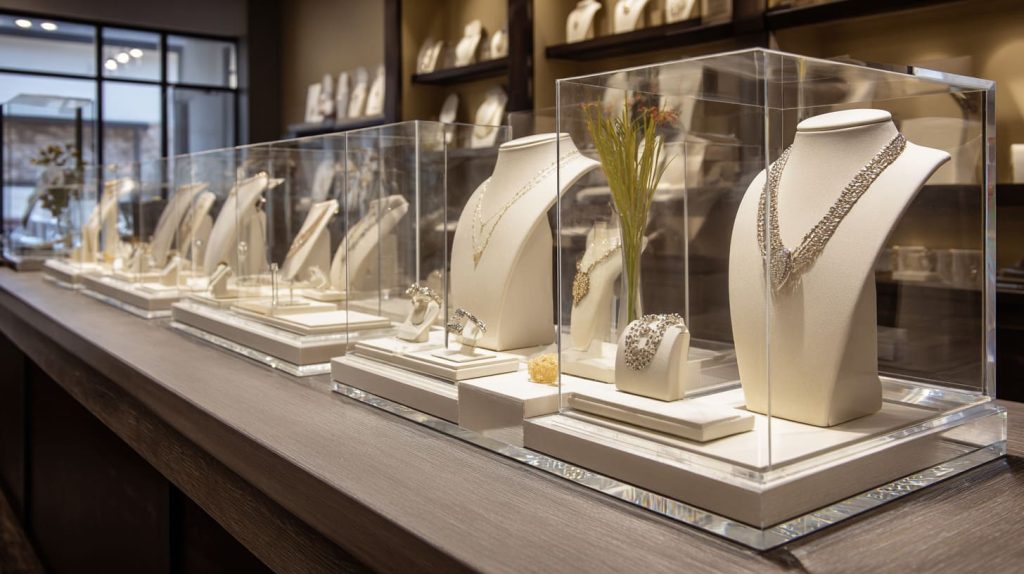
Effective jewelry display highlights the product's elegance, accessibility, and brand identity without overwhelming the viewer.
What works (and what doesn't)
- Clutter kills luxury. Leave breathing room around pieces.
- Use levels. Tiers and risers make eye movement natural.
- Consistent material finishes keep the look polished.
- Lighting is king. Acrylic reflects light well. Velvet absorbs.
I remember walking into a pop-up shop where the rings were buried in a black velvet sea. I couldn’t tell silver from white gold. A clean, lit acrylic shelf would’ve made each gem pop. Presentation shapes perception.
What are popular jewelry personalization options?
Customization goes way beyond just logos.
Top personalization options include engraved logos, custom shapes, brand color-matching, interchangeable inserts, and modular stacking designs.
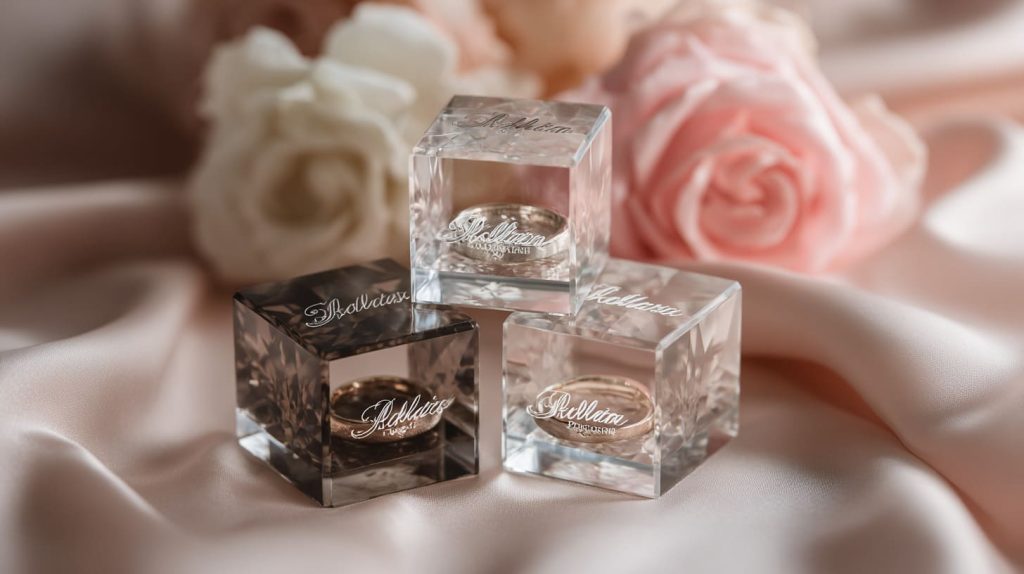
A few favorites my clients ask for:
- Laser-engraved logos on base
- UV-printed gold foil brand text
- Swappable inserts for different ring sizes
- Cut-out trays that form initials or brand shapes
- Pantone-matched acrylic tinting
One client once asked for ring stands that looked like tiny lotus petals in frosted acrylic. Their Instagram followers loved it.
What materials are best for custom jewelry display stands?
Material choice isn't just a style—it's strategy.
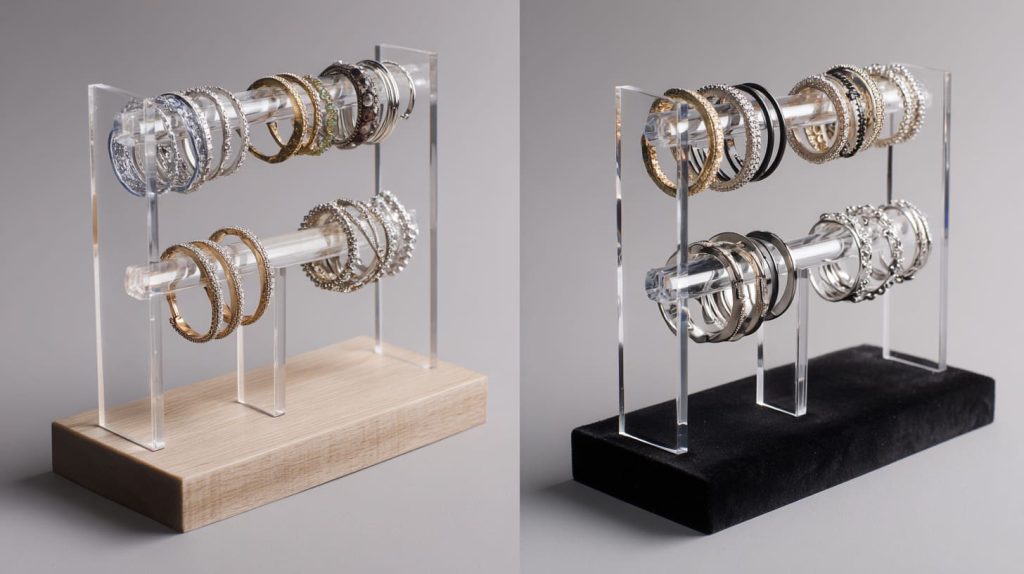
Acrylic is the most versatile, followed by velvet for softness and wood for natural feel. Each fits a different brand tone.
Let’s break it down
| Material | Looks Like | Best For | Watch Out |
|---|---|---|---|
| Acrylic | Clean, modern, high-gloss | Luxury, minimalist brands | Can scratch—ask for coated types |
| Velvet | Soft, elegant | Vintage or romantic aesthetics | Hard to clean, not moisture-proof |
| Wood | Warm, earthy | Boho, artisan pieces | May warp, color can vary |
When I design for upscale brands, I lean acrylic. For handmade or earthy brands, smooth wood always wins hearts.
How do I design a personalized acrylic display for high-end jewelry?
It starts with understanding your brand voice.
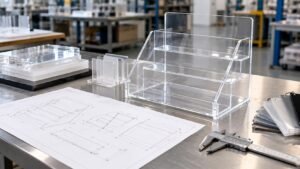
Design begins with sketches or CAD files showing shape, material, dimensions, and surface finishes that reflect the jewelry’s style.
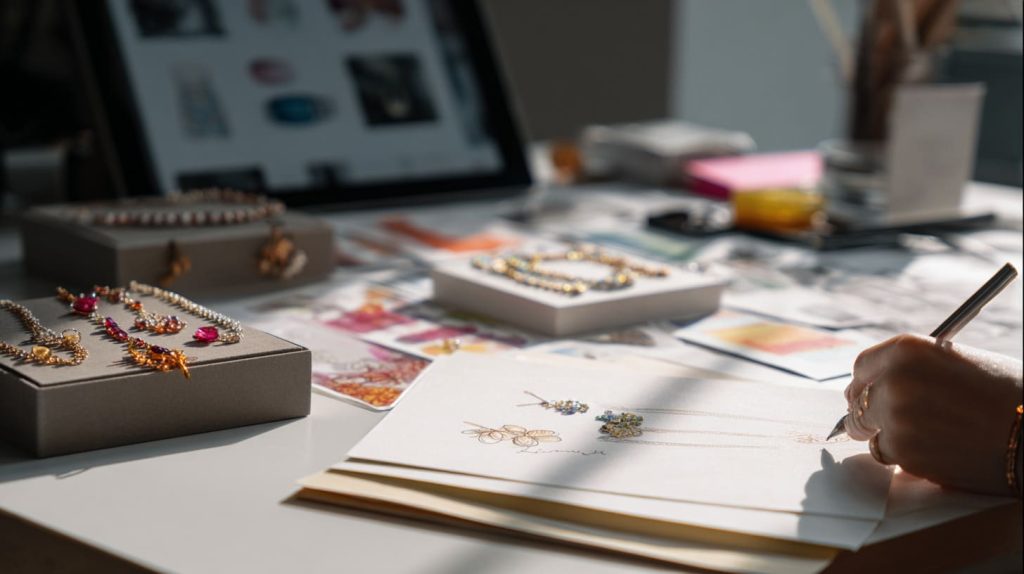
Tips from my experience:
- Start simple. Think block, riser, or tray.
- Match the acrylic’s transparency or tint to your product style.
- Add engraving or printing last—once the form feels right.
- Use 3D mockups before final mold approval.
One time, we created a curved necklace stand shaped like a ribbon. Took three prototypes. But when the customer saw it glowing under boutique lights—they said, “This feels like us.”
What is the difference between retail and wholesale jewelry display needs?
The goals are totally different.
Retail displays focus on aesthetics and shopper interaction, while wholesale displays prioritize bulk packing, branding, and modular setups for resale.
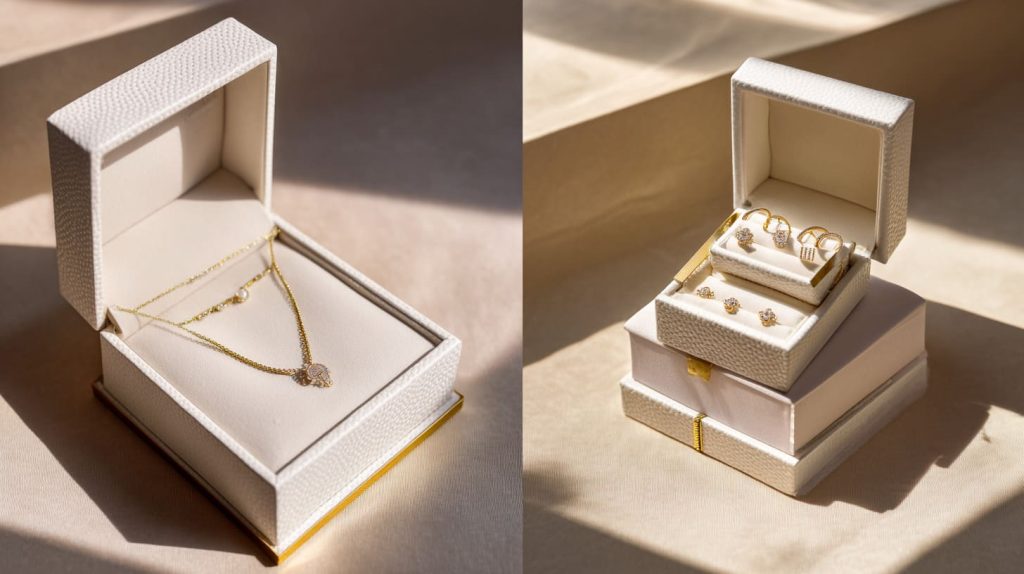
Retail vs Wholesale At A Glance
| Feature | Retail Display | Wholesale Display |
|---|---|---|
| Look & Feel | Eye-catching, premium | Stackable, durable |
| Packaging | Minimal or aesthetic | Protective, bulk cartons |
| Branding | Strong brand presentation | May have blank or simple logo |
| Quantity | Few units per store | Bulk quantities per box |
When we serve retail chains, we focus on color, shelf-fit, and lighting. For wholesalers—it’s protection, MOQ, and how easily they can unpack it on their end.
Can I order custom jewelry displays in bulk for my brand?
Yes, and it’s often the smartest move.
You can order custom displays in bulk, usually starting at 100–200 pieces per model, which lowers cost and improves brand consistency.
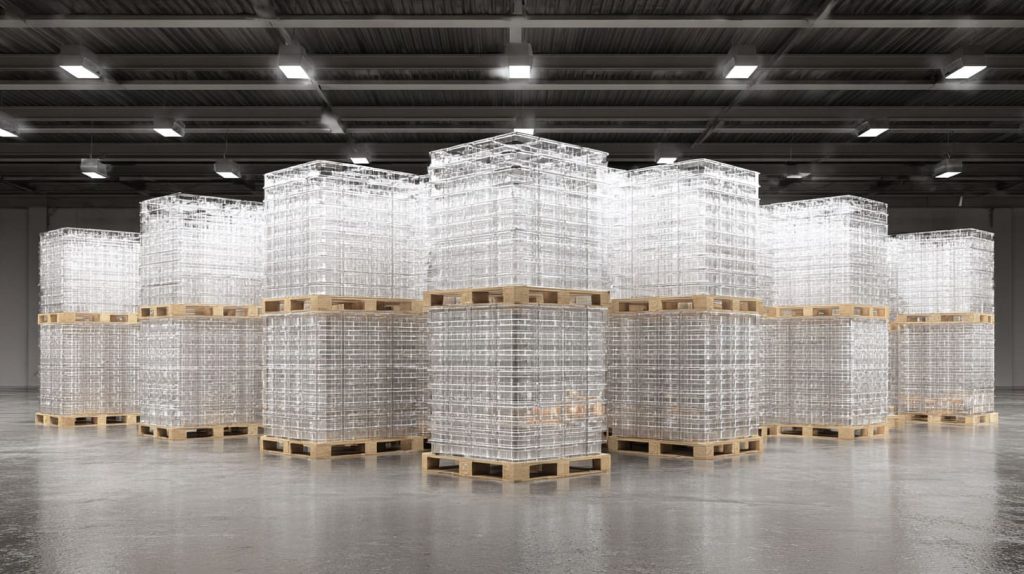
Here’s what you’ll need:
- Finalized dimensions and material
- Logo placement or printing files
- Estimated monthly order volume
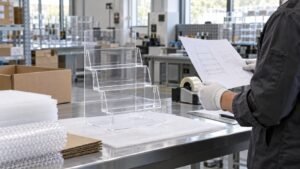
- Shipping preferences (flat-pack, assembled, etc.)
Most of our international clients start small—just 100 pieces. Once they see results on shelves, they reorder 500+ units with packaging updates.
Why choose acrylic over velvet or wood for jewelry showcases?
Acrylic isn’t just a trend—it’s a tool.
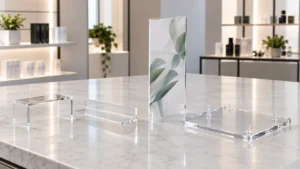
Acrylic stands are durable, lightweight, easy to clean, and highly customizable, making them ideal for modern display aesthetics.
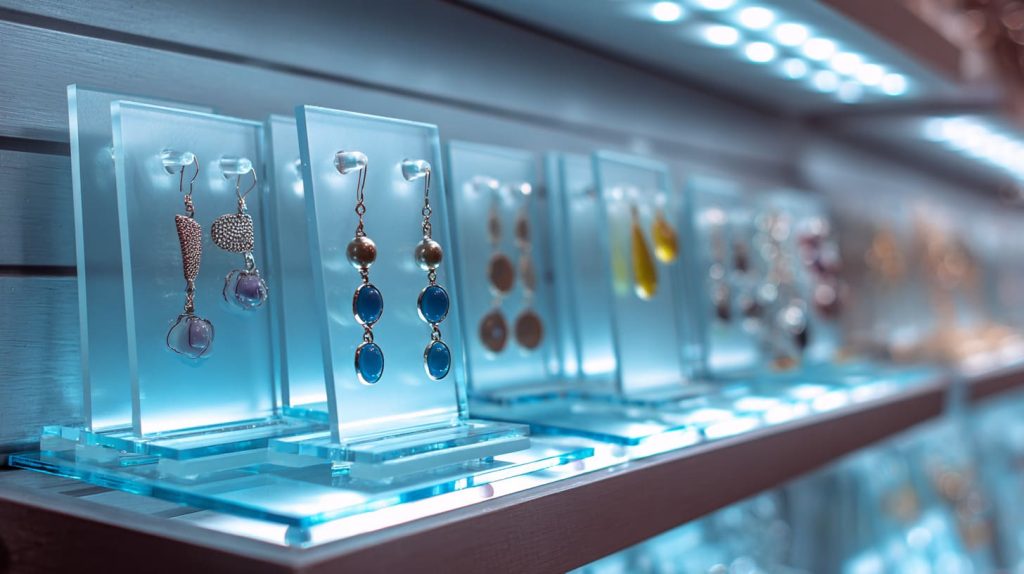
Here’s why I love acrylic:
- Doesn’t age or fade like velvet
- Can be shaped into endless forms
- Works with engraving, UV print, stickers
- Reflects light beautifully on stones
In one project, we swapped all velvet earring holders for frosted acrylic. Sales didn’t just go up—returns went down, because people saw the details more clearly.
What should I consider when sourcing jewelry displays from China?
You’re not just buying products—you’re building relationships.
Focus on factory capability, communication clarity, sample quality, lead times, and whether they support custom requests.
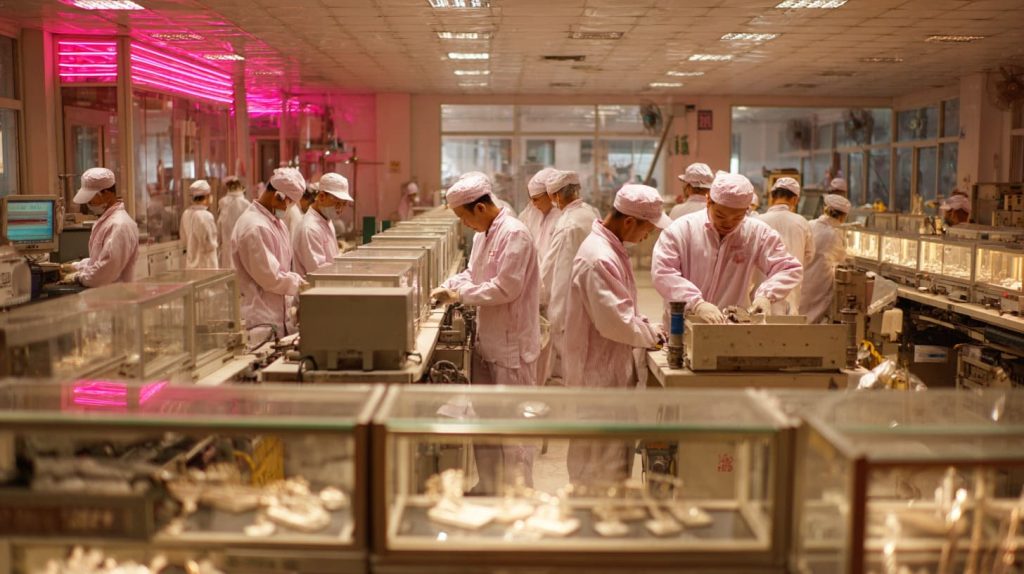
Ask yourself:
- Do they understand acrylic cutting, bonding, polishing well?
- Are their sample and mold fees transparent?
- Can they support your packaging and logo needs?
- Are they ISO-certified? Eco-friendly material options?
I've had clients switch to us after their previous supplier ghosted them for a month. Communication isn’t a luxury. It’s a requirement.
How do custom logo printing and engraving work on jewelry displays?
Two methods—two different results.
Logo customization is done through UV printing for color, and laser engraving for subtle, premium branding.
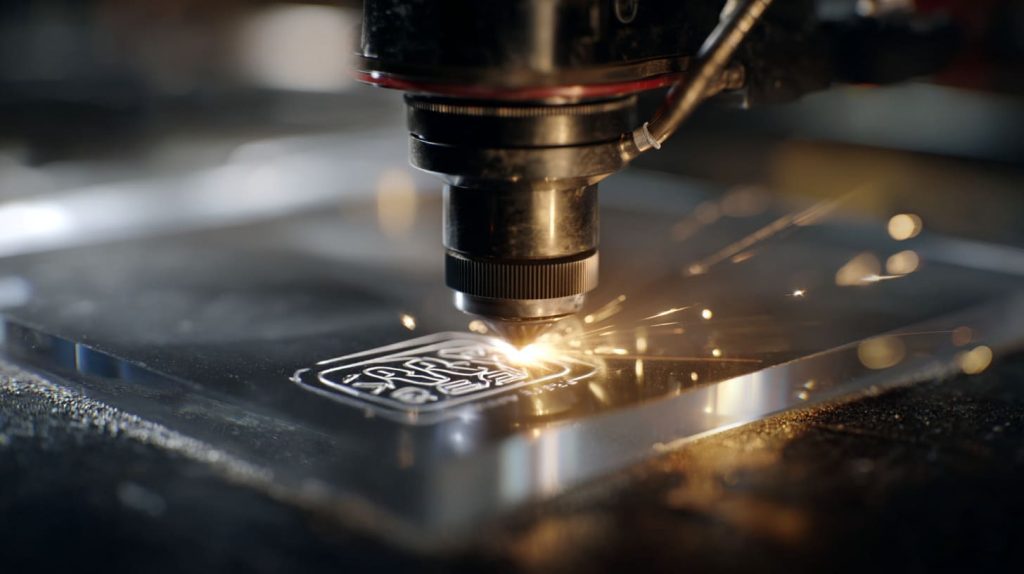
Here’s how we guide clients:
| Method | Look | Ideal For |
|---|---|---|
| UV Printing | Colorful, sharp | Modern brands, bold logos |
| Laser Engraving | Subtle, classy | Luxury feel, no color needed |
You send us a high-res logo file (AI, CDR, or PDF). We mock it up digitally, test a few sizes, and let you choose the final position. Some clients want it bold at front, others hidden like a signature.
What are the lead times and MOQs for custom jewelry display manufacturing?
Timing depends on prep. MOQ depends on size.
Most custom acrylic jewelry displays require 15–25 days lead time, with MOQs starting from 100 pcs for regular items and 50 pcs for large-sized displays.
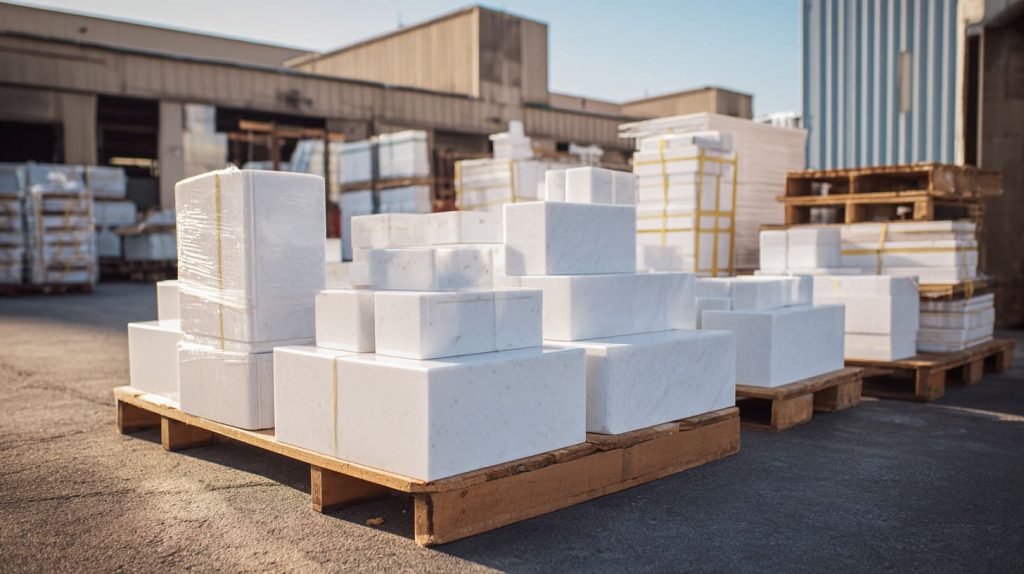
Lead time breakdown:
- Design & Mockup: 3–5 days
- Sample Production: 5–7 days
- Mass Production: 10–15 days
- Shipping: 5–15 days (depends on location)
For one urgent order, we even did an express batch in 10 days total. It’s possible—if the design files are clean and decisions are fast.
Conclusion
Custom jewelry displays are more than packaging—they’re part of the product experience. Find the right partner, and your displays will speak for your brand before a word is said.