Skip to content

When a client called needing 5,000 display stands by the end of the month, we didn’t start with drawings or packaging. We started with one question: PVC or acrylic? The material would define everything—look, durability, price, even how fast we could ship.
It’s not a simple either-or choice. On paper, both plastics look similar. But in real production, I’ve seen how one small decision—like choosing clarity over flame rating—can make or break a project. If you’re in the business of buying parts, especially in bulk, this kind of trade-off is part of the job.
This guide isn’t theory. It’s built from years of hands-on work at Feilong Acrylic, making things that hold up in stores, labs, and warehouses. I’ll walk you through the core material differences, give you real examples, and end with a quick decision matrix you can screenshot and keep near your RFQs.
(Ready? Let’s crack open the raw stuff.)
Material Fundamentals
What is PVC?
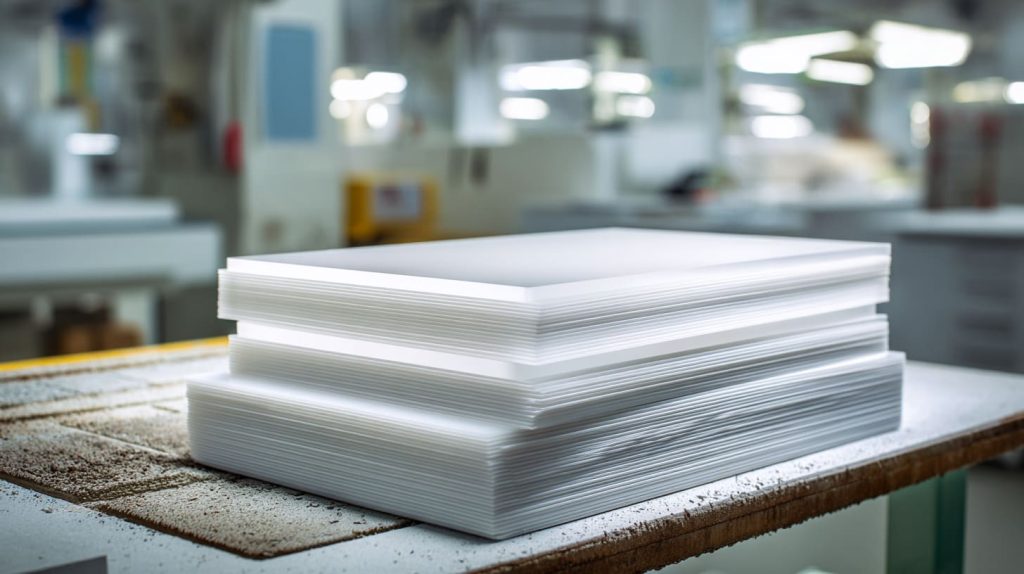
PVC—or polyvinyl chloride—begins life as a vinyl chloride monomer. Add plasticisers for flexibility, stabilisers for heat, and you get a family of sheets from rigid sign board to soft curtain strip. On my line, we use the rigid type when cost pressure is high and clarity demands are low.
What is Acrylic (PMMA)?
Acrylic, or polymethyl methacrylate, can be cast or extruded. Cast sheets come out crystal-clear with fewer internal stresses; extruded sheets run cheaper but scratch more easily. The cell-cast panels we polish at Feilong almost mimic glass—minus the weight and shatter risk.
Key differences at a glance
| Property | PVC | Acrylic |
|---|---|---|
| Density | 1.38 g/cm³ | 1.19 g/cm³ |
| Refractive Index | 1.54 | 1.49 |
| Chlorine Content | Yes (≈57 %) | None |
| Service Temp | -10 °C → 60 °C | -30 °C → 90 °C |
Seeing those numbers side-by-side usually sparks the first “aha.”
(Materials sorted? Good. Let’s see how your product might look under showroom lights.)
Optical & Aesthetic Properties

Light transmission & clarity
I hold two samples against a sunny window during every client visit. Acrylic lets through about 92 % of visible light; PVC hovers below 87 % with a faint blue-gray tint. Buyers selling cosmetic displays often gasp when they notice PVC yellowing after a month of UV exposure.
Surface finish & colour options
PVC welcomes matte embossing and quick roll-coating. Acrylic stays glossy for decades and showcases vivid back-painting. When Jacky wants his perfume stands to scream premium, we flame-polish acrylic edges until they glint like glass.
Scratch & mar resistance
PVC fares better against tiny scuffs, yet once it clouds, you’re stuck. Acrylic scratches sooner, but we buff it back to “showroom new” with compounds in minutes—an overlooked perk for retail refresh cycles.
Optics ruled? Before you fall for shiny surfaces, let’s stress-test them.
Mechanical & Thermal Performance
Impact strength & rigidity
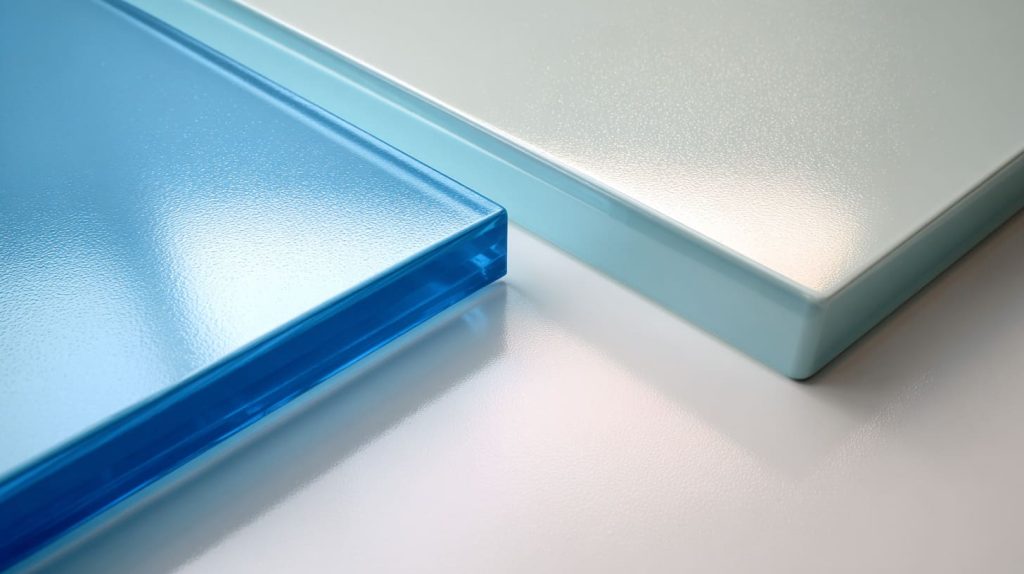
PVC bends before it breaks. Acrylic stands rigid but can craze if hit by a warehouse cart. I often add chamfered corners or rubber bumpers to acrylic fixtures that sit near heavy foot traffic.
Temperature tolerance & heat-formability
PVC softens near 60 °C—imagine a summer truck in Arizona. Acrylic resists heat until ≈150 °C and thermoforms into sexy curves, yet will warp if a halogen lamp hugs the panel.
Weight & dimensional stability
Both materials are half the weight of glass. Acrylic’s lower thermal expansion keeps CNC jigs aligned within 0.3 mm over a meter—handy for showcase lids that must meet locking hardware perfectly.
Numbers checked? Now bring in the elements—sun, chemicals, and the occasional spark.
Chemical, UV & Flame Behaviour
Weathering and yellowing
Acrylic panels I installed on a storefront six years ago still look brand-new. PVC signs two doors down faded to beige within a single summer, even with a UV top-coat.
Chemical resistance profile
PVC laughs at acids and alkalis—great for lab splash guards. Acrylic shrugs off hydrocarbons but hates alcohol cleaners; wipe it with isopropyl, and spider-web cracks may form next week.
Fire & smoke ratings
PVC can self-extinguish and score UL V-0. Acrylic burns clean, dripping molten beads and staying alight. Fire marshals often nudge customers to PVC for machine guards, though some accept flame-retardant acrylic blends.
Your product just survived a chemical storm—let’s talk about how we actually make it.
Fabrication & Machining
Cutting, drilling, routing
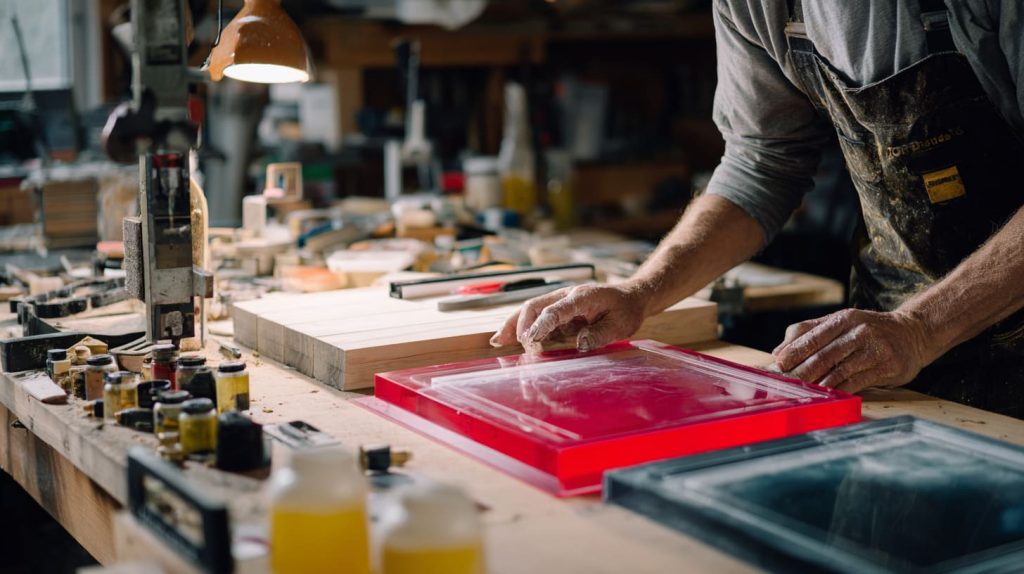
I swap to O-flute bits for acrylic or chips fly everywhere. PVC mills like butter but melts into gummy residue if the feed slows. My rule: speed up or clean up.
Bonding & solvent welding
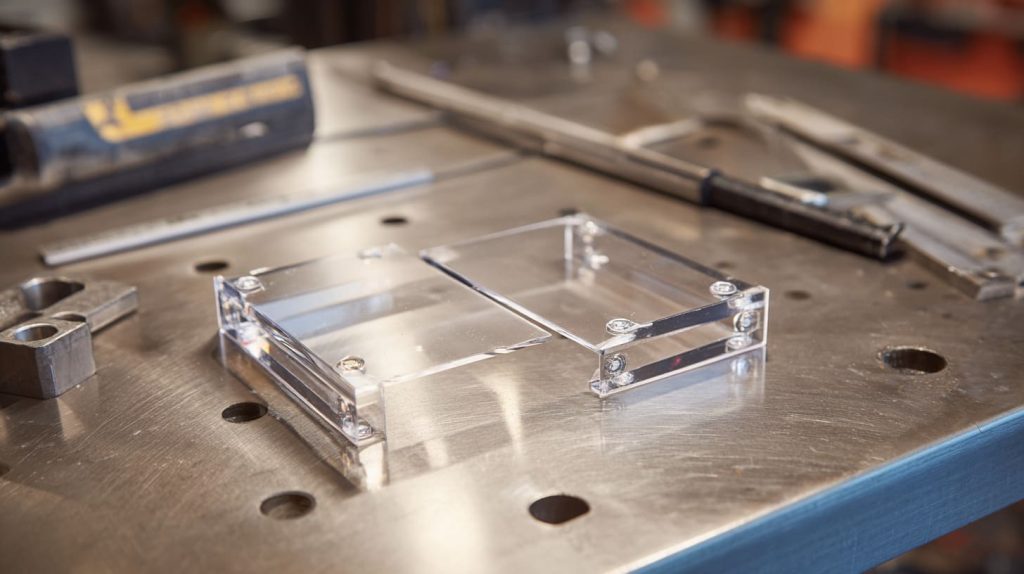
Acrylic bonds with methylene chloride—watch out, it sets fast. PVC glues with THF or standard plumbing cement. When Jacky needs invisible seams on a luxury organizer, I pick acrylic and a capillary applicator for that “glass-like” weld.
Printing, painting & coating
Corona-treat PVC once; UV inks stick all day. Acrylic welcomes silk-screen, laser-engraving, even mirror-backing. Customers love seeing their logo floating inside a clear block.
Machining sorted? The accountant just walked in—he’s asking about cost.
Cost & Supply-Chain Considerations
Raw sheet pricing trends
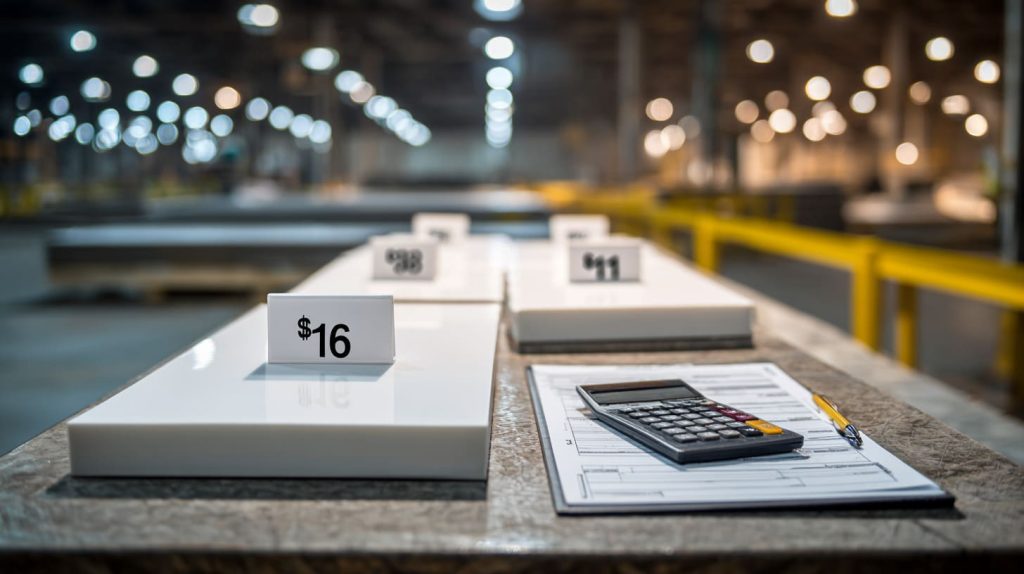
| Material | Sheet Size (mm) | Avg. USD/m² |
|---|---|---|
| PVC (rigid, 3 mm) | 1220×2440 | $9–11 |
| Acrylic (extruded, 3 mm) | 1220×2440 | $12–14 |
| Acrylic (cast, 3 mm) | 1220×2440 | $14–16 |
MOQ & lead-time realities in China
PVC sheets sit in most Guangdong warehouses. I can load a truck in 48 hours. Cast acrylic may need a custom pour—add 5–7 days but gain optical purity.
Freight & handling
Acrylic travels in wooden crates with foam pads—those edges chip fast. PVC suits standard pallets with only stretch wrap, trimming freight by ≈8 % on long hauls.
Wallet checked? Let’s peek at the planet and the paperwork.
Sustainability & Safety
Life-cycle footprint & emissions
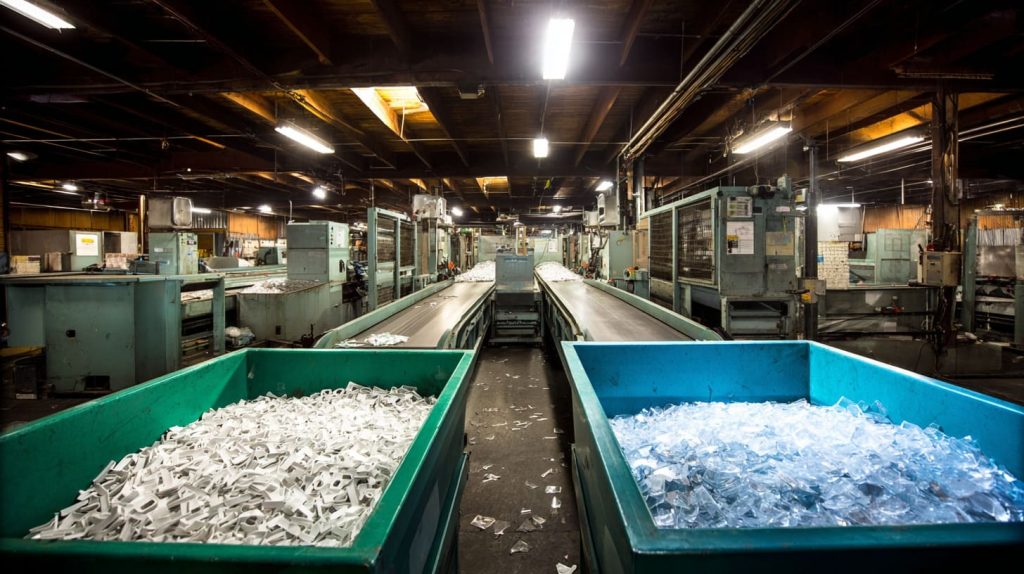
PVC’s chlorine can form dioxins during incineration. Acrylic skips halogens but rarely enters curb-side recycling. We collect off-cuts and send them to a local PMMA depolymerisation plant—small steps, but they matter.
Regulatory hot-spots
Flexible PVC faces RoHS phthalate limits. LEED points may drop if interiors rely heavily on PVC. Acrylic usually sails through, though some labs request BPA-free declarations just to be safe.
End-of-life options
Rigid PVC grinds into regrind for pipes. Acrylic can be chemically cracked back to MMA monomer; we’ve joined a closed-loop tee-bar program to feed scraps into new sheet stock.
Green boxes ticked? Now picture real products on the shelf.
Application Suitability
Signage & illuminated displays
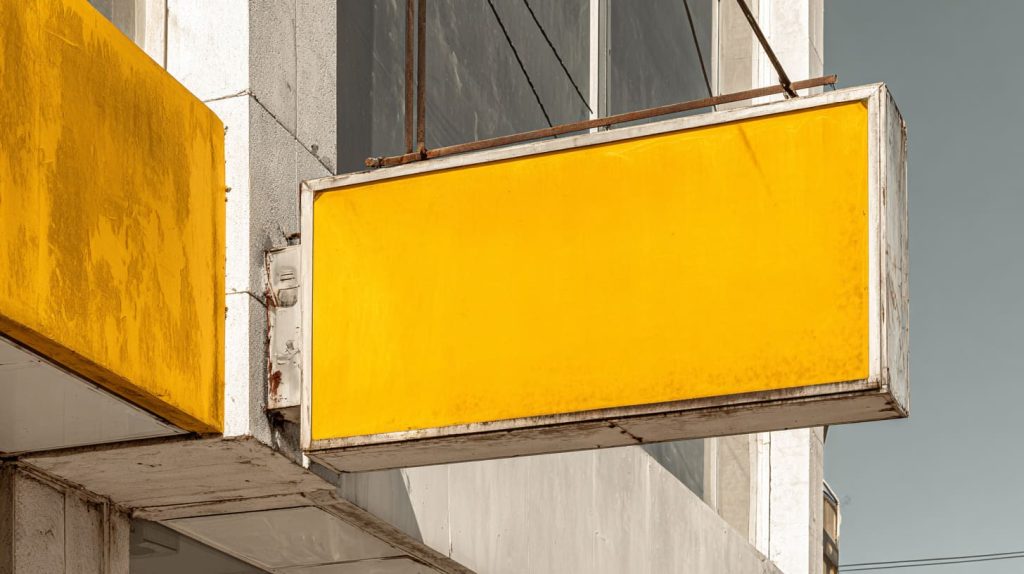
Edge-lit acrylic dazzles when LEDs kiss its polished sides. PVC backs those signs cheaply, hiding drivers and wiring without changing colour temperature.
Retail fixtures & cosmetic organisers
One of our Feilong projects: a lipstick stand with mirror-finished acrylic edges. The buyer tested PVC first but rejected the grey tint—it dulled the product hues. Acrylic clinched the order.
Industrial machine guards & enclosures
Factory safety teams lean towards PVC for its self-extinguishing behaviour. Yet the maintenance crew loves acrylic windows: clearer sightlines, easier cleaning, fewer scratches after wipe-downs.
Still debating? Let’s lay it all on a single page.
Decision Framework for Buyers

Performance-vs-cost matrix
| Axis | High Optics / High Budget | High Optics / Low Budget | Low Optics / High Budget | Low Optics / Low Budget |
|---|---|---|---|---|
| Recommendation | Cast Acrylic | Extruded Acrylic | Fire-retardant Acrylic | PVC |
Risk checklist (quality, lead-time, certifications)
| Question | Why it matters |
|---|---|
| ISO 9001 certificate? | Ensures process repeatability. |
| Fire rating needed? | Dictates material choice. |
| UV exposure hours per day? | Predicts yellowing risk. |
| Shipping route heat profile? | Flags softening issues in PVC. |
| MOQ flexibility? | Impacts cash flow and storage. |
When to choose Feilong Acrylic custom PMMA
- Short runs: Tool-free laser cutting keeps setup costs low.
- High-clarity branding: Flame-polished edges elevate luxury look.
- Controlled lead-time: Five production lines finish most orders in 15–25 days.
- Certified QC: ISO 9001 workflow, GSG-approved eco-acrylic.
Matrix printed? Checklist ticked? Time to close the loop.
Conclusion

Quick recap: Pick acrylic when clarity and brand prestige trump all else; pick PVC when chemistry resistance or flame rating tops the list—and the budget needs a breather.
Next steps:
- Download our side-by-side spec sheet (PDF).
- Request a Feilong sample kit—see the difference in your own light box.
- Ping me for a pilot quote; we’ll lock specs, timelines, and shipping in one friendly call.
I’ll keep the kettle warm while you decide.