Skip to content
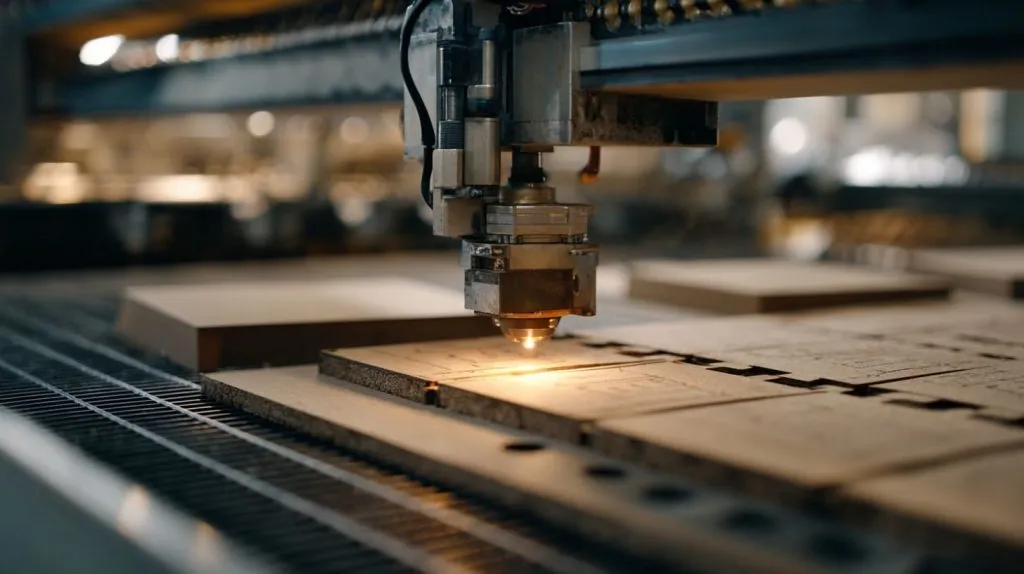
The glow of the laser head lit up the edge of the acrylic sheet as I adjusted the focus. Across the room, a batch of plywood inserts sat cooling on the rack. Nearby, a few scorched test cards leaned against the vent, curling slightly from the heat. This mix—plastic, wood, fiber—wasn’t random. It was the result of trial, failure, and some very specific client needs that pushed us to explore beyond the usual.
Why material choice matters for laser cutting
When I build a display prototype for a client, I need repeatable cuts, crisp engravings, and predictable costs. Some materials melt or flare. Others warp overnight. Picking wisely cuts rework and keeps the quote honest.
Evaluating a material’s laser-friendliness (absorption, thickness, safety)
I ask three quick questions:
- Does the material absorb or reflect the wavelength?
- Can the beam reach through its full thickness in one or two passes?
- Will fumes or residues harm people, optics, or the environment?
A small spreadsheet on my wall tracks power, speed, and any safety flags.
Essential ventilation & filtration considerations
Smoke holds acids, fine dust, even chlorine if you slip PVC under the lid. I run an inline fan, HEPA filter, and an activated-carbon stage. The rule in our shop is simple: If your eyes water, stop, check the duct, try again.
The woody aroma from that maple cut pulls us toward the next family of materials…
Wood & plant-based sheets
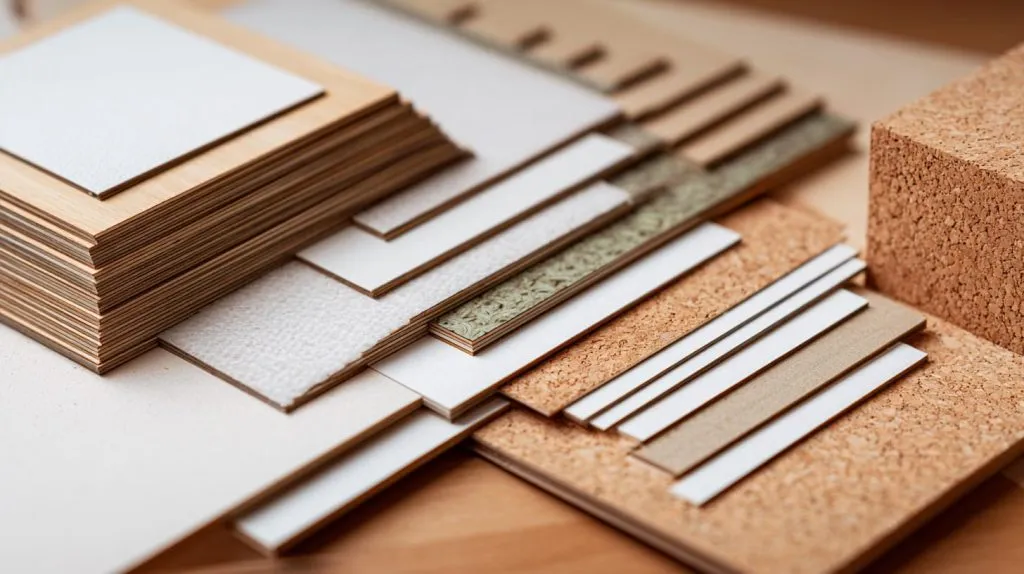
Plywood, MDF, and solid hardwood veneers
Plywood offers strength, yet glue layers vary. I keep a cut-test strip on every new batch because some brands hide voids. MDF cuts like butter but leaves sticky soot that dulls optics fast. Thin veneers—walnut, cherry, birch—take fine engraving for cosmetic box lids.
Bamboo ply and compressed bamboo panels
Bamboo grows fast and scores eco points. The fibers scorch darker than pine, giving high contrast in one pass. Watch for splinters at the edge because silica pockets dull the beam path sooner than expected.
Cork sheets, cork fabric, and agglomerated cork
Cork smells like burnt toast when cut, yet its rebound makes ideal gaskets and acoustic panels. I lower power 20 % to avoid flaming. A light spray of water dampens edges without staining.
For packaging mock-ups, nothing beats a 300 gsm card stock. Clean edges, fold lines, no post-process. Chipboard costs less but chars faster. I pre-mask with painter’s tape to peel off soot.
| Material | Typical Thickness (mm) | Power (W) | Speed (mm/s) | Edge Quality | Note |
|---|---|---|---|---|---|
| Birch Ply | 3 | 60 | 20 | ★★★☆☆ | Test for hidden glue |
| MDF | 2 | 50 | 18 | ★★☆☆☆ | Heavy soot cleanup |
| Bamboo | 5 | 70 | 15 | ★★★★☆ | Hard fibers, bright contrast |
| Cork | 4 | 40 | 25 | ★★★☆☆ | Flame-prone, mist lightly |
| Card Stock | 0.3 | 25 | 80 | ★★★★★ | No char with masking |
The sweet scent of toasted cork fades, and plastics begin to steal the spotlight…
Plastics & polymers
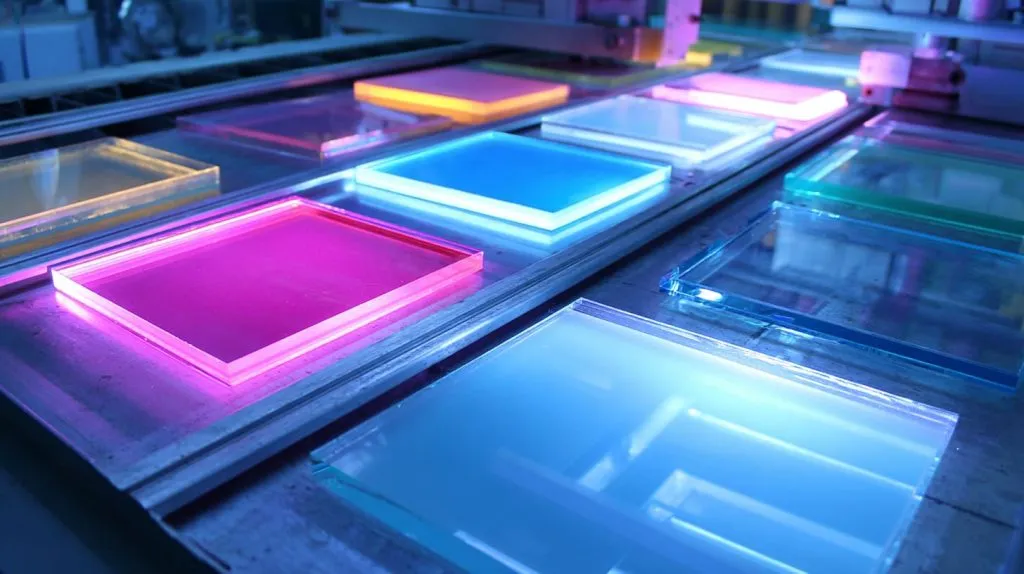
Cast acrylic (clear, frosted, mirrored, fluorescent)
Acrylic is my daily bread at Feilong Acrylic. It vaporizes cleanly, leaving a glossy edge that needs no sanding. Mirrored sheets demand lower power to save the reflective coating. Neon colors glow under LED strips—great for store signage.
Delrin / POM for precise mechanical parts
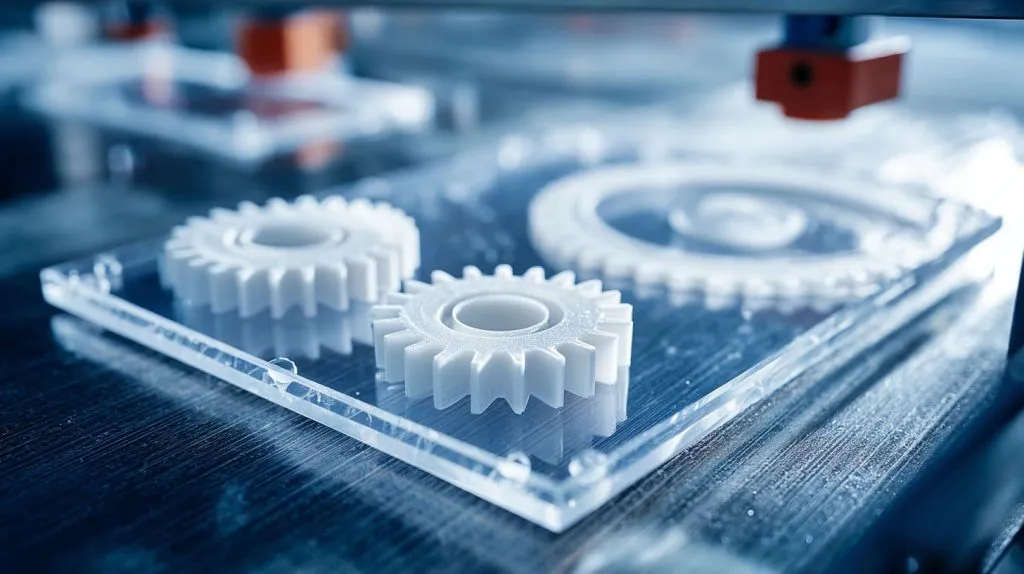
When I need low-friction gears or hinges, I grab Delrin. It cuts crisp but releases pungent fumes. Good extraction is non-negotiable.
PETG, Mylar, and other polyester films
PETG fogs at the edge but bends without cracking. Mylar’s metallic finish reflects light in display inserts. Avoid any sheet with PVC coating; chlorine gas is not a joke.
Corian and solid-surface countertop scraps
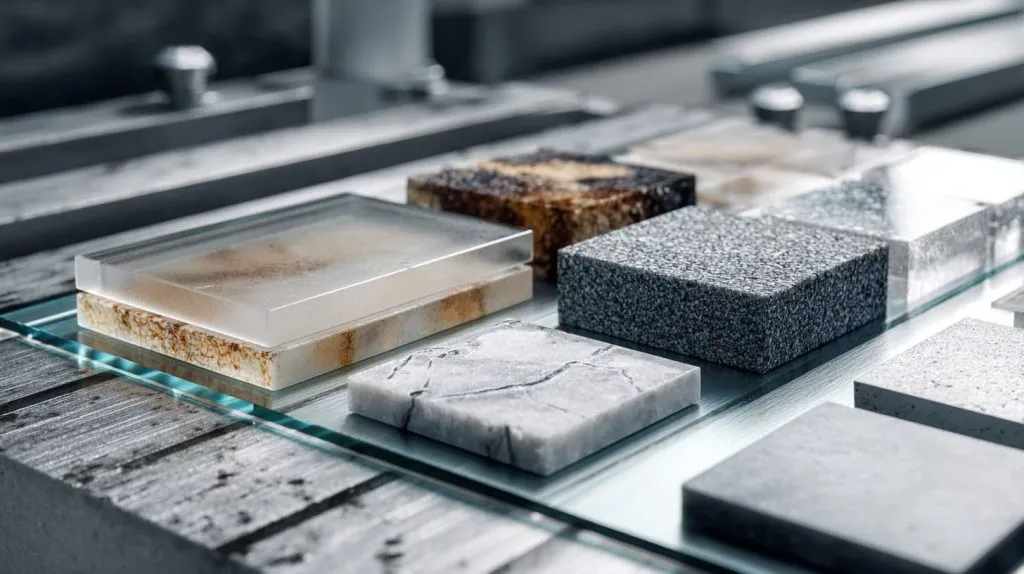
Corian behaves like a dense plastic-stone mix. Slow passes engrave tactile braille dots for way-finding signs. Cutting needs high-power CO₂ or fiber.
Recycled or bio-based plastics (PLA, rPET, Eco-PMMA)
I test recycled PMMA often. It behaves 95 % like virgin acrylic but may bubble if moisture trapped inside. Always bake scraps at 50 ℃ for an hour before cutting.
| Plastic Type | Cut Edge Finish | Fume Hazard | Best Use |
|---|---|---|---|
| Cast Acrylic | Polished | Low | Displays, light guides |
| Delrin | Matte | Medium | Mechanical parts |
| PETG | Slightly foggy | Low | Protective covers |
| Corian | Powdery | Low | Tactile signage |
| Eco-PMMA | Polished | Low | Sustainable branding |
Acrylic shards sweep away, but fabric rolls pile up near the laser…
Textiles & leathers
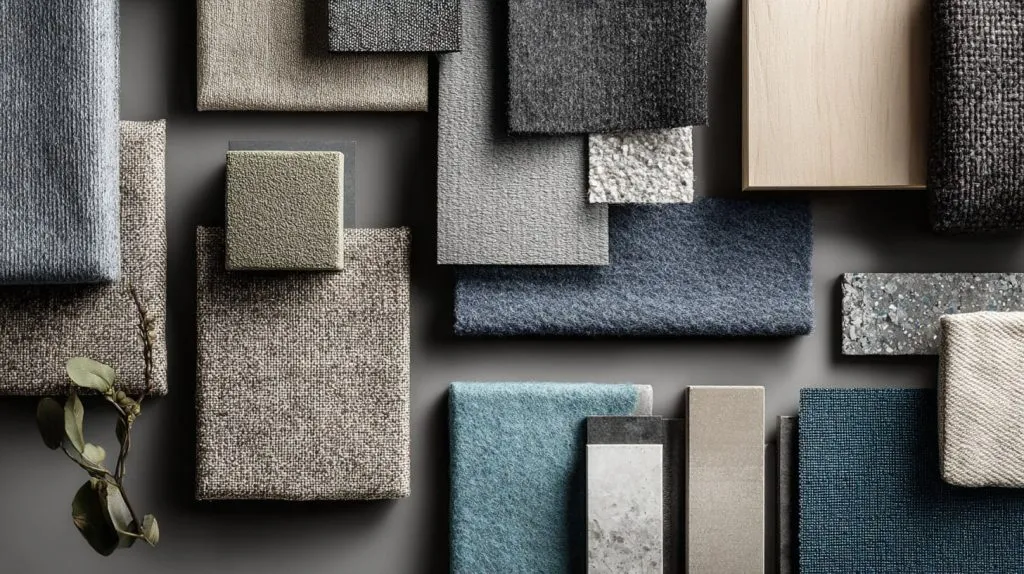
Natural fabrics: cotton, denim, felt, silk
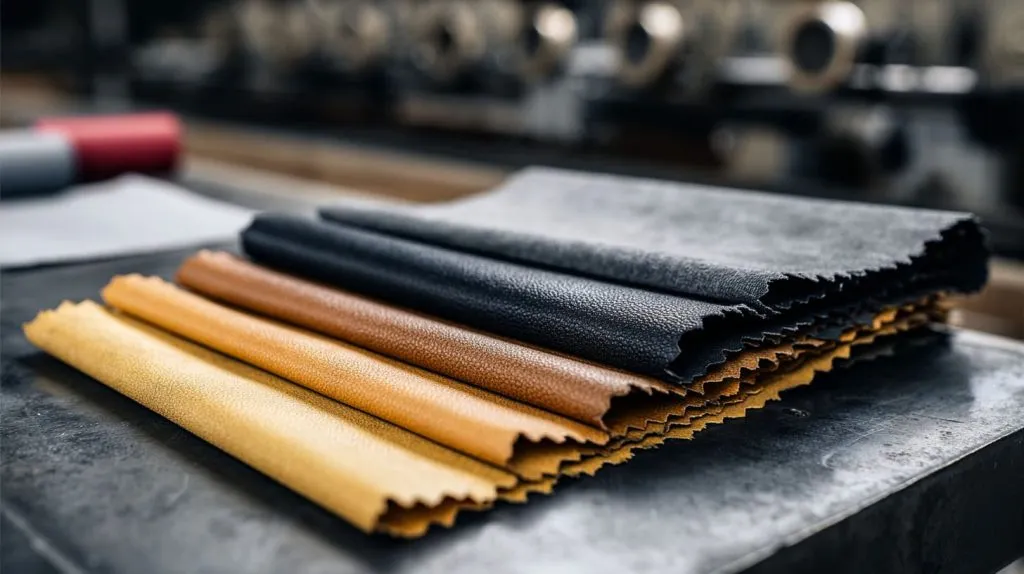
Cotton and denim scorch brown edges that add rustic flair. Felt melts less because it’s thicker and wool-rich. Silk requires low power and makes crisp cutouts for fashion trims.
Synthetic fabrics: polyester, rip-stop nylon, Kevlar®
Polyester edges seal from heat, preventing fray. Rip-stop nylon does the same. Kevlar cuts only with high-power and leaves lemon-yellow dust—mask up.
Genuine vs. vegan leather (chromium-free only)
I never cut chrome-tanned hide; it forms toxic chrome VI. Vegetable-tanned leather or PU-based vegan leather works fine. A damp paper towel prevents flame lick.
Laser-safe laminated or coated textiles
Reflective road-safety tapes engrave icons without sewing patches. Heat-transfer films cut intricate logos that we press onto acrylic trophies later.
| Fabric | Power (%) | Speed (mm/s) | Edge Behavior |
|---|---|---|---|
| Cotton 0.5 mm | 15 | 80 | Brown singe |
| Polyester 0.3 mm | 20 | 90 | Fused edge |
| Felt 2 mm | 40 | 35 | No fray |
| Veg-tan Leather 3 mm | 65 | 20 | Dark char |
The smell of leather still hangs in the air when thin metals slide onto the honeycomb bed…
Thin metals & coated metals
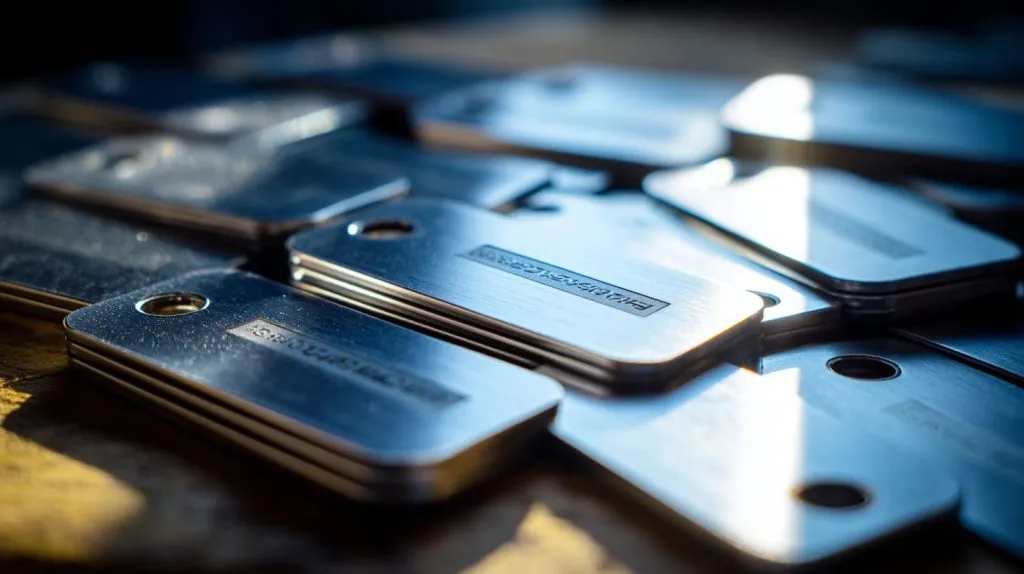
With a CO₂ machine I only remove the dye, leaving bright letters. For full-cut tags, I outsource to a fiber laser partner and keep tolerance within ±0.05 mm.
Stainless & mild steel (fiber / high-power CO₂ setups)
Steel demands nitrogen assist to stop oxidation. I use it for machine labels, not structural parts—power cost spikes quickly.
Brass, copper, and other reflective alloys (marking vs cutting)
Copper mirrors the beam back. I darken it with a marking spray that bonds under the laser, leaving a fine black graphic.
Metal-clad engraving laminates (TroLase, Gravoply)
These plastics with metallic cap layers engrave through color to reveal a contrasting core—perfect for control panels.
A rainbow glare from brass leads the eye to something even harder—glass and stone…
Glass, stone & ceramic surfaces
Soda-lime & borosilicate glass etching techniques
I coat the surface with dish soap, then raster. Tiny fractures frost the glass without cracks spreading. Slow speed, high dpi.
Slate, granite, and marble tile engraving
Slate turns light gray where lasered, giving strong contrast. Granite needs color-fill paint afterward. Marble chips if focus drifts, so I zero every tile.
Glazed ceramics, porcelain mugs, and enamelware
A black marking spray fuses to glaze at 200 °C under the beam. Permanent, dishwasher-safe.
Cold stone reminds me to cushion fragile parts, so soft foams take the stage next…
Foams, rubbers & composites
EVA & PE foam for inserts and cosplay templates
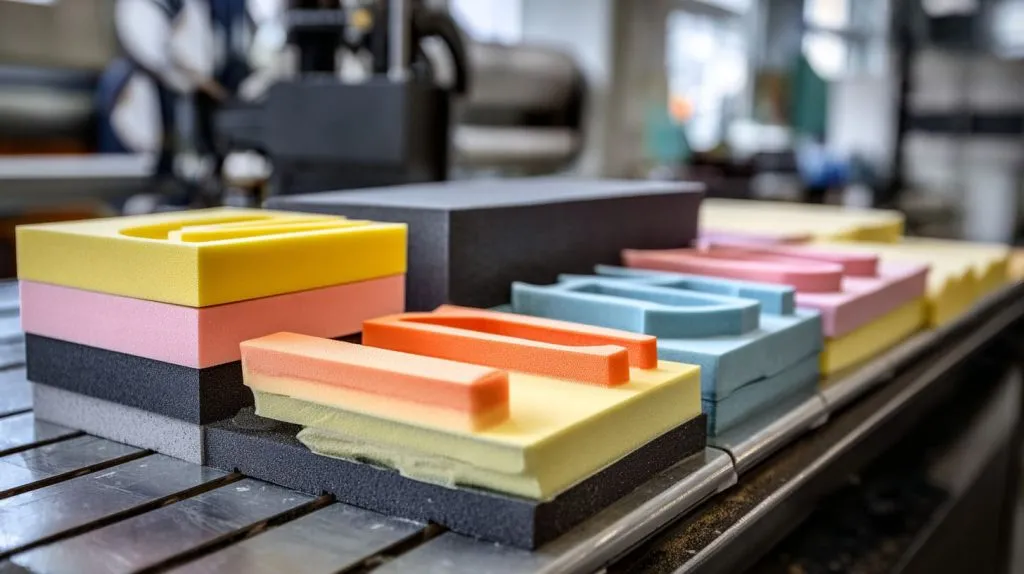
EVA cuts like cake. I stack two sheets with clips for faster batching. Edges seal and stay flexible.
Silicone rubber, neoprene, and gasket sheets
Silicone leaves a dusty white edge that wipes clean. Neoprene smells like tires; ventilation is life.
Polyurethane foam and filtration media
PU gets gooey if power is too high. I use multiple low-power passes.
Carbon-fiber sheets (ultrafast laser strategies)
Carbon fiber reflects IR but absorbs ultrafast pulses. If you lack that gear, outsource or water-jet.
A rainbow of foam scraps sparks an edible idea… yes, food can be lasered too!
Food & organic items
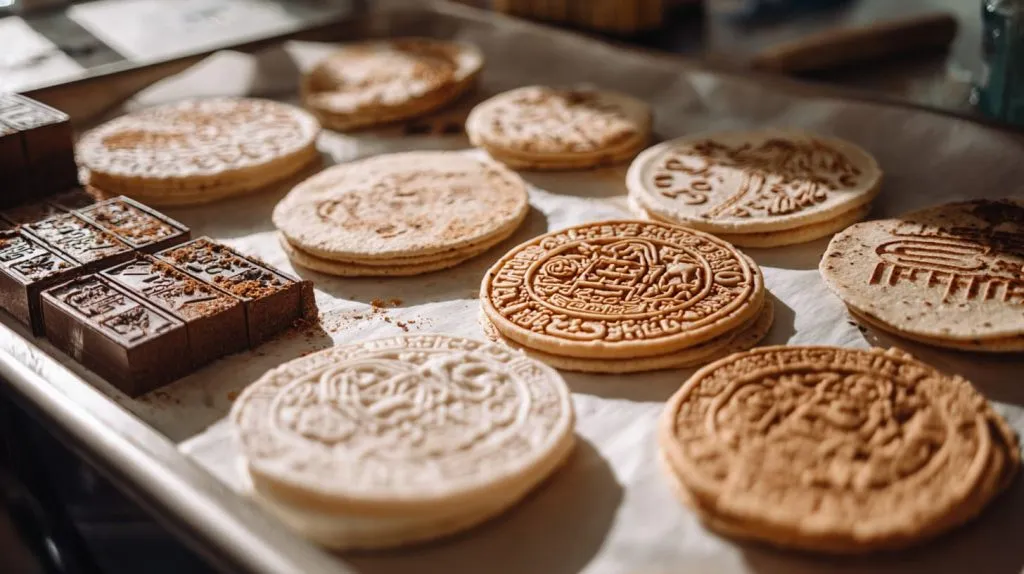
Cookies, tortillas, and chocolate for edible branding
A cookie logo at a trade show makes people smile. I chill chocolate first, cut fast, then back to the fridge—no bloom.
Seaweed sheets and fruit leather artwork
Nori stencils for sushi plating draw crowds in culinary demos. Fruit leather holds shape for custom garnish.
Thin wood veneer edible inlays & garnish ideas
Wood veneer? Yes, FDA-approved maple wafer paper adds crunch topping on pastry.
If snacks can handle photons, what about shells, magnets, or smart fabrics? Let’s push the boundary…
Exotic / experimental materials
Mother-of-pearl, shell, and nacre sheets
Inlays for luxury boxes. Slow raster prevents cracking; dust masks mandatory.
Conductive textile hybrids & smart fabrics
Silver-coated nylon fabrics cut into antenna shapes for wearables. Keep a fire extinguisher ready; metal sparks fly.
Magnetic sheets and ferrous paper composites
Flexible magnets shape into fridge promos without die-cut tooling. Watch polarity when stacking.
Nanocellulose and bioplastic films
Lab friends sent me a sheet that looked like tracing paper but held fifty times the strength. It cut cleanly at 10 % power. Future supply chain? We’ll see.
After exploring the edge of possibility, it helps to step back and ask, “Where will all these parts end up?”
Application brainstorm
Rapid prototyping, fixtures, and jigs
I slot acrylic braces for our CNC routers. Same-day tweaks mean no idle machines.
Branding, signage, and point-of-sale displays
Edge-lit logos pull shoppers from across a store aisle. Swapping colors is one file change.
Art, jewelry, fashion, and wearable tech
Local artists send vector files at midnight; we ship earring blanks next afternoon. Creativity loves speed.
Functional mechanical parts & gears
Delrin gears inside a demo kiosk ran three months with zero lube.
Protective packaging and custom inserts
EVA trays cushion cosmetics in transit. Die costs? Zero.
A list is handy, but picking one material for the next run needs a checklist…
Material selection checklist
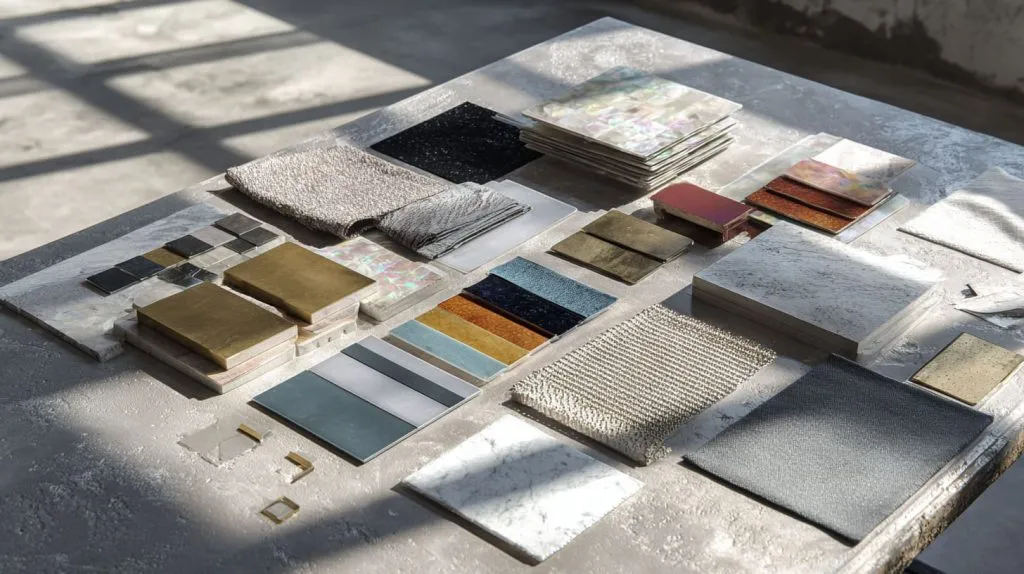
| Step | Question | My quick tip |
|---|---|---|
| 1 | Can my laser cut or only engrave? | Check wavelength vs. absorption table. |
| 2 | What thickness at one pass? | Run a power-speed grid on off-cut. |
| 3 | Are fumes safe? | Search MSDS; avoid chlorine, chrome, lead. |
| 4 | Does the edge need polish? | Cast acrylic yes, MDF no. |
| 5 | Is sustainability a goal? | Look for FSC wood or rPET sheets. |
Matching power, speed, and focus to thickness
I log settings in a shared spreadsheet. Each new sheet gets a two-inch test cut. If the kerf widens, I tweak focus down 0.5 mm.
Ventilation, filtration, and flame-retardant add-ons
I treat smoke like an uninvited guest—escort it out fast. An after-filter of activated carbon keeps neighbors happy.
Cost, availability, and sustainability trade-offs
Bamboo often beats oak on price and lead time. Recycled PMMA reduces carbon score but may vary in clarity. I weigh specs against client values.
Checklist ticked, notes saved—time to wrap things up.
conclusion
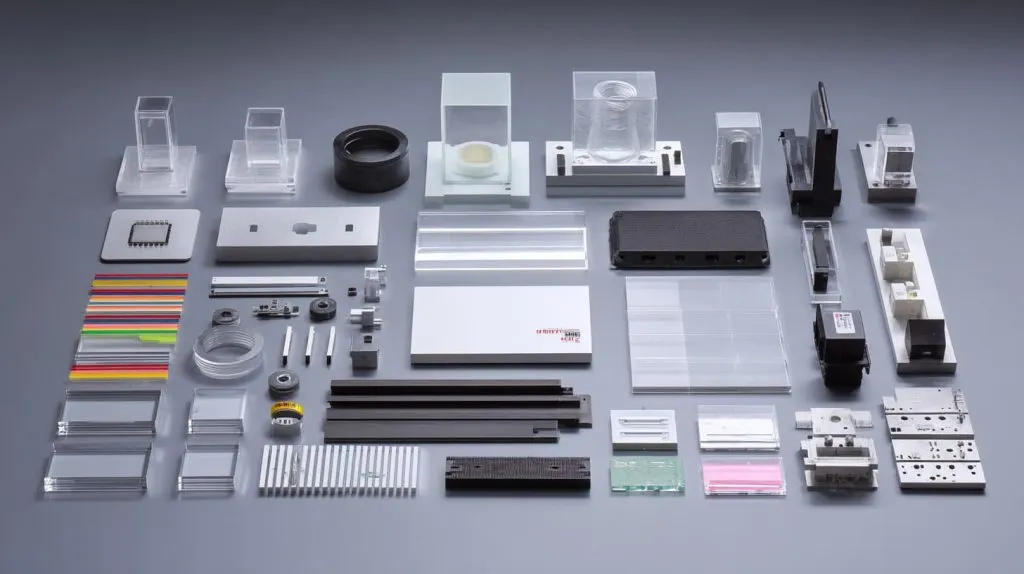
Key takeaways on diversifying laser-cut materials
- The “right” material depends on function, finish, and safety.
- Small cut tests save big production headaches.
- Good ventilation is not optional; it is life support.
First-run testing tips & documentation habits
I snap a photo of every test grid and store it in a cloud folder sorted by material. That habit turns a one-off miracle into a repeatable process three months later.
How Feilong Acrylic can support your next custom project
At Feilong Acrylic, we cut, polish, and assemble custom parts every day—from neon acrylic signs to cork-lined display trays. If you need quick prototypes or a full production run, I’m one email away. Let’s turn that sketch on your screen into something you can hold.
—Vincent, writing from a workshop that still smells faintly of toasted bamboo and fresh acrylic edges.