Skip to content

Acrylic’s beauty comes with a catch—it bonds differently than other plastics, and using the wrong solvent can ruin everything.
The best solvent for acrylic plastic is a specialty acrylic cement like Weld-On 3 or 4, which softens and fuses the surface for a clean, nearly invisible bond.
I’ve tried shortcuts before—acetone, alcohol, even nail polish remover. But I’ve also seen panels crack, cloud, or yellow over time. Choosing the right solvent isn't just chemistry—it's peace of mind.
What solvent is safe on acrylic?
Solvents and acrylic can be tricky together—some clean, some destroy.
Acrylic-safe solvents include specialty acrylic cements and mild alcohols, depending on the task.

Application Matters
| Task | Safe Solvent | Notes |
|---|---|---|
| Bonding | Weld-On 3, Weld-On 4 | Fast-drying, capillary action |
| Surface cleaning | 70% Isopropyl Alcohol | Avoid scrubbing or prolonged soak |
| Polishing prep | Heptane (light use only) | Use sparingly and in ventilated area |
| Degreasing | Hexane or mild detergent | Test first to avoid surface stress |
Always test on a sample piece. Some grades or additives in acrylic react unexpectedly, even to “safe” options.
Will acetone damage acrylic plastic?
Acetone is strong—and too aggressive for acrylic.
Yes, acetone can severely damage acrylic by causing it to craze, soften, or crack.

I once tried using acetone to clean off a label—bad idea. The surface clouded, and tiny cracks spidered out like frost. Even brief exposure leaves a mark.
Can isopropyl alcohol damage acrylic?
Not always—but it depends on strength and timing.
High-concentration isopropyl alcohol can cause micro-cracks and dulling, especially if left too long or used repeatedly.
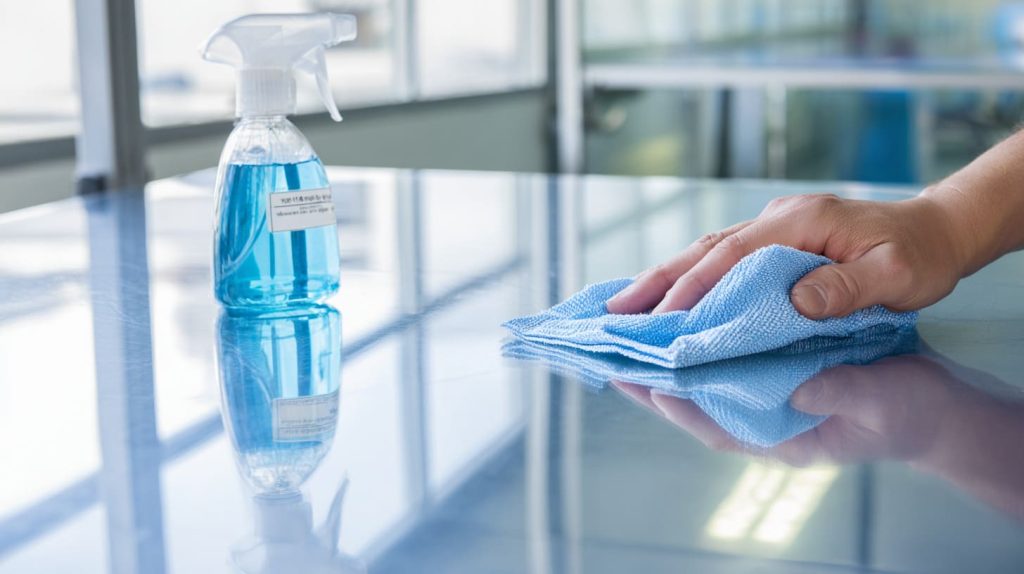
Lower concentrations (around 70%) are typically safe for quick cleaning. Still, I’ve seen sheets develop faint whitening after prolonged use. I now spray lightly and wipe immediately.
What are the chemical types of solvents that dissolve or bond acrylic (PMMA), and how do their properties compare?
You can’t just grab any solvent off the shelf. Each has strengths—and risks.
The main solvent types are chlorinated hydrocarbons, esters, ketones, and alcohols; each interacts with PMMA differently.
Solvent Type Comparison
| Solvent Type | Common Examples | Effect on PMMA | Risk Level |
|---|---|---|---|
| Chlorinated | Methylene chloride | Strong bond | High toxicity |
| Ester | Ethyl acetate | Surface softening | Flammable |
| Ketone | Acetone, MEK | Cracking, hazing | High |
| Alcohol | IPA, ethanol | Mild effect | Low to moderate |
I avoid chlorinated ones in my shop—they bond well but smell awful and require a respirator. For general bonding, I stick with acrylic cement blends.
How do different solvents affect the optical clarity and mechanical strength of acrylic after bonding?
Not all bonds are created equal. Some look clean but weaken over time.
Solvents like Weld-On 4 create optically clear, strong bonds, while aggressive ones like MEK can cause whitening, bubbles, or brittleness.
In display work, clarity matters. A bad solvent shows up in the light like a scratch on glass. If I can see bubbles or a milky edge, I know I’ll be redoing it.
Which solvents are safest or most suitable when working in a commercial acrylic factory environment?
Health isn’t optional in a busy shop. Solvents can be invisible hazards.
Water-thin acrylic cements with low-VOC formulas and adequate ventilation setups are safest in production environments.

Shop Considerations
- Ventilation: Always use extraction fans.
- PPE: Nitrile gloves, goggles, and vapor masks if needed.
- Storage: Solvent cans must stay sealed when not in use.
- Labeling: Clear hazard markings reduce mix-ups.
In my own shop, I once had a worker get dizzy from fumes. After that, we installed carbon filters and switched to low-VOC blends.
How do solvent evaporation rate and open/working time influence the quality of the bond in acrylic fabrication?
Time is everything. Too fast or too slow—and your joint fails.
Faster evaporation means quicker setting, but less room for adjustment; slower solvents give better control but can trap bubbles.

Bonding Behavior
| Solvent | Evaporation Rate | Working Time | Best For |
|---|---|---|---|
| Weld-On 3 | Very fast | Seconds | Quick fixture jobs |
| Weld-On 4 | Moderate | 1–2 minutes | Most general bonding |
| Weld-On 16 (thick) | Slow | 2–4 minutes | Gaps and vertical work |
When I’m doing large panels, I use Weld-On 4. I have just enough time to align, clamp, and press without feeling rushed.
What are eco-friendly or low-VOC solvent alternatives for acrylic bonding or cleaning?
Green options are growing, but they come with tradeoffs.
Low-VOC acrylic cements and water-based cleaners offer safer handling, though bonding strength and cure time may vary.

I’ve experimented with some new citrus-based cleaners—they smell great but leave residue. For bonding, we found a European low-VOC blend that’s slow but clean.
How does solvent choice affect stress crazing, yellowing, or long-term durability of acrylic parts?
The wrong solvent doesn’t just fail—it ages the acrylic too fast.
Harsh solvents can cause internal stress, leading to crazing, clouding, or yellowing over months or years.
Long-Term Effects
- Crazing: Tiny fractures, often near bends or heat zones
- Yellowing: From UV-reactive residues or trapped gases
- Softening: Improper cure or reactivation during cleaning
In one retail install, we saw signs yellow after just six months under LEDs. Turned out the cleaner was reacting with the bonding solvent. We had to redo the whole batch.
How to test or evaluate a solvent sample for compatibility with a specific acrylic grade or containing additives?
Not all acrylic is created equal—testing is key.
Apply a small amount to a scrap of the same material and observe changes in clarity, hardness, or surface texture.

I always test near laser-cut edges—they tend to craze first. A good bond should feel smooth, clear, and firm after 24 hours.
Which solvents are banned or regulated in different markets (e.g. Canada, EU, USA), and how can manufacturers stay compliant?
What’s allowed in one country may be illegal in another.
Methylene chloride and toluene are banned or restricted in many regions due to toxicity; manufacturers must check local VOC and safety rules.

Market Compliance
| Region | Common Bans | Advice |
|---|---|---|
| Canada | Methylene chloride | Use low-VOC alternatives |
| EU | REACH-regulated solvents | Register all hazardous blends |
| USA | California VOC limits (SCAQMD) | Look for “CARB-compliant” labels |
We keep updated SDS (Safety Data Sheets) on every product. It’s saved us from fines more than once—especially when exporting to Germany.
Conclusion
The right solvent makes or breaks your acrylic work. Think beyond bonding—think clarity, safety, and longevity.