Skip to content
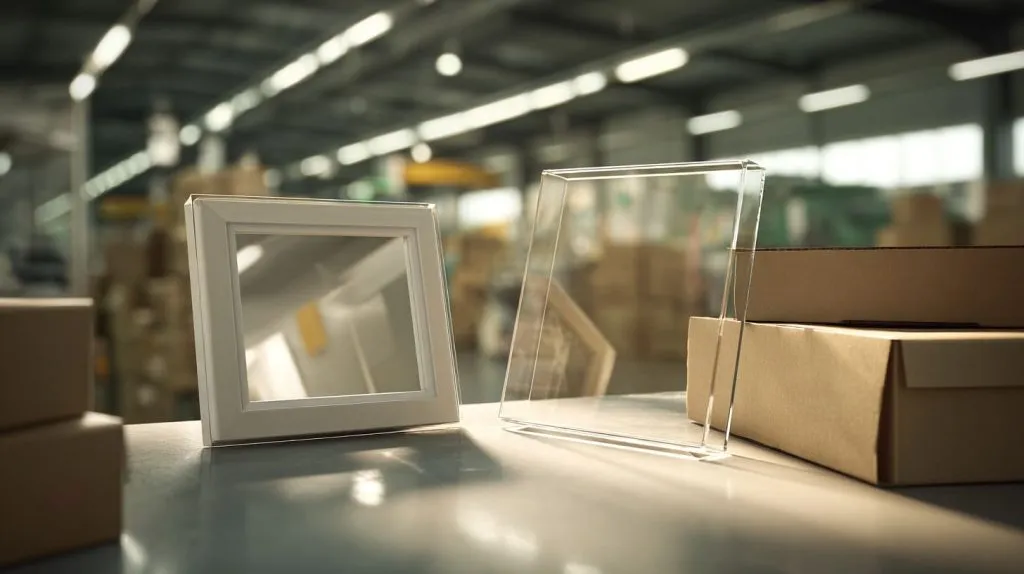
A frame buyer usually sees the front first.
The clear panel.
The clean edge.
The photo behind it.
The shine under the showroom light.
That first impression matters. I understand that very well.
But after working with custom acrylic products for many years, I have learned a less beautiful truth: a frame does not only need to look good on the table. It also needs to survive the journey to the customer.
That journey is not gentle.
A carton may be stacked under heavier boxes.
A courier may drop it on one corner.
A container may shake for weeks.
A warehouse worker may move it fast because he has 300 more cartons waiting behind him.
This is where many buyers ignore the real risk.
They compare acrylic and glass by appearance first. They ask:
“Which one looks clearer?”
“Which one feels more premium?”
“Which one is cheaper?”
Those are fair questions.
But I usually ask one more question before I feel comfortable:
How will this frame travel before the final customer touches it?
That question changes the whole decision.
Acrylic and glass frames can both look clean. They can both protect photos, prints, certificates, posters, and artwork. But they behave very differently during shipping. Glass is hard and scratch-resistant, but it can break suddenly. Acrylic is lighter and more impact-resistant, but it needs better surface protection.
For a B2B buyer, this difference is not small. It can decide return rates, replacement costs, customer complaints, packaging design, and even brand reputation.
A broken frame is not just a broken frame.
It is a refund.
It is a delayed order.
It is a bad review.
It is a buyer asking the factory, “Why did this happen?”
So this article is not only about acrylic vs glass frames. It is about the shipping damage risk that many buyers only notice after the cartons arrive.
And by then, the cost is already real.
What Are Acrylic and Glass Frames?
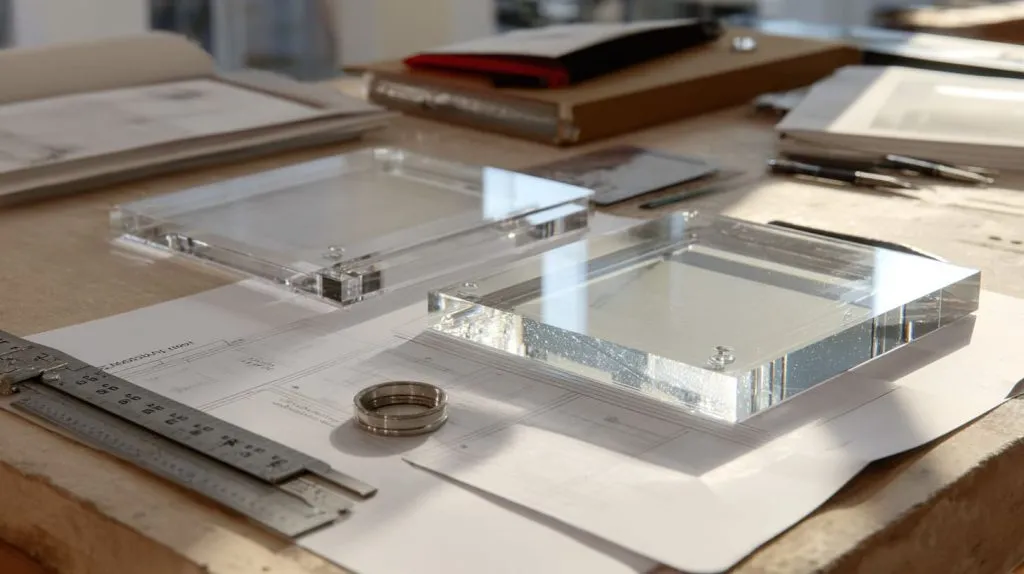
Before we talk about shipping damage, we need to be clear about one basic thing: when people say “acrylic frame” or “glass frame,” they may not always mean the same structure.
Some buyers mean the clear front sheet only.
Some buyers mean the whole frame body.
Some buyers mean a photo block, a magnetic acrylic frame, or a wall-mounted display frame.
This small language gap can create big trouble in custom orders.
I have seen buyers send a request like “glass frame style, but safer for shipping.” At first, that sounds simple. But when we open the drawing, we may find that the buyer actually wants an acrylic front panel, an acrylic back panel, and metal screws. In another case, the buyer may only want to replace the glass glazing with acrylic while keeping a wood or metal frame.
The words look simple. The product is not always simple.
The detail I check early is not only the material name, but also where that material sits in the frame, because one wrong assumption can change the packing method, the weight, and the damage risk.
Material Definitions
Acrylic is a clear plastic material. Many buyers also know it as PMMA, plexiglass, or acrylic sheet. It is widely used in photo frames, display frames, sign holders, cosmetic displays, menu holders, and retail display products.
Acrylic can be cut, polished, laser processed, CNC machined, drilled, printed, bonded, and bent. This makes it very useful for custom frame projects.
Glass is an inorganic material used in many traditional picture frames. It can be standard glass, tempered glass, conservation glass, or museum-grade glass. It feels hard, flat, and familiar. Many consumers still connect glass with a traditional “premium” frame feeling.
Both materials can protect what is inside the frame. But they do not protect it in the same way.
| Material | Common Name | Main Feeling | Common Use in Frames | Main Concern |
|---|---|---|---|---|
| Acrylic | PMMA, plexiglass | Lightweight, clear, safer | Photo frames, acrylic blocks, magnetic frames, retail displays | Scratches if poorly protected |
| Glass | Standard glass, conservation glass | Hard, classic, heavy | Traditional picture frames, gallery frames, home frames | Breakage during shipping |
| Tempered glass | Safety glass | Stronger than normal glass | Some premium or safety-focused frames | Still heavier than acrylic |
| Museum glass | High-end coated glass | Premium clarity and protection | Art preservation and gallery use | Higher cost and fragile shipping |
Acrylic is not “cheap glass.”
Glass is not “always better.”
That sounds simple, but many purchasing mistakes start when people use those two ideas too quickly.
Core Differences
The biggest difference between acrylic and glass is not only how they look. It is how they behave when real force hits them.
Acrylic is much lighter than glass. In many frame applications, acrylic can be around half the weight of glass. That matters when a buyer ships 500, 2,000, or 10,000 frames.
One piece may not feel like much.
A full shipment tells a different story.
Glass is harder on the surface. It resists scratches better. But glass is also brittle. When it breaks, it can form sharp pieces. Those pieces can damage the print, scratch the frame, cut the packaging, and create safety risks during unpacking.
Acrylic is softer on the surface. It needs protective film, careful handling, and proper packing. But it is much more impact-resistant. It can bend slightly under stress. It does not usually shatter like glass.
| Factor | Acrylic Frame / Acrylic Glazing | Glass Frame / Glass Glazing | Buyer’s Real Question |
|---|---|---|---|
| Weight | Much lighter | Much heavier | How much does freight cost increase? |
| Breakage | Very low shatter risk | Higher breakage risk | Will it survive courier handling? |
| Scratch resistance | Lower than glass | Higher than acrylic | Can the surface be protected well? |
| Safety | Safer when dropped | Sharp pieces if broken | What happens if the customer opens a damaged box? |
| Custom processing | Easier to cut and shape | Harder and more limited | Do we need custom size or special structure? |
| Premium feel | Clean and modern | Traditional and solid | What does the final market expect? |
Appearance Is Only One Part of the Decision
I do not like judging frame material from a photo only.
Photos hide too much.
A product photo does not show shipping pressure.
It does not show warehouse handling.
It does not show what happens when the carton lands on one corner.
It does not show the customer’s face when broken glass falls out of the frame.
For a small frame sold in a local store, glass may work well. The shipping distance may be short. The box may be handled carefully. The customer may expect glass.
For a large frame shipped overseas, acrylic often becomes the more practical choice. The product may pass through factories, trucks, ports, containers, warehouses, and courier networks. Each step adds risk.
This is why I do not ask only, “Which material looks better?”
I ask:
- What is the frame size?
- How many pieces go into one carton?
- Is it retail packing or bulk packing?
- Will it ship by sea, air, or courier?
- Will the customer resell it online?
- Will the end user open the box alone at home?
- Is scratch risk easier to control than breakage risk?
A buyer may save a little money on material. But he may lose much more money later through returns and replacements.
That is the part that never appears on the first quotation sheet.
The material name looks small on the drawing, but it can decide the mood of the whole project after shipment.
Shipping Damage Risks: Why Material Choice Matters

Shipping is a quiet test.
It does not care how beautiful the frame looked in the sample room. It does not care how clean the product photo looked. It only cares about physics.
Drop.
Pressure.
Vibration.
Compression.
Corner impact.
Every frame must pass this test before it reaches the final customer.
This is where acrylic and glass stop behaving like two similar clear materials. They become two very different risk profiles.
One buyer once told me, “The glass sample looks more solid.” I understood his point. Glass feels solid in the hand. But I also asked him, “Solid on the table, or solid after international shipping?” That question made the room quiet for a moment.
For shipping decisions, I trust the damage path more than the showroom feeling, because a material that feels premium in the office can become expensive if it fails inside a carton.
Fragility and Breakage
Glass has one weakness that buyers cannot ignore: it can break suddenly.
A glass front panel may look perfect during inspection. The edges may look clean. The frame may pass the sample test. But during shipping, one corner impact can create a crack. Another pressure point can turn that crack into broken pieces.
And once glass breaks, the damage spreads.
It may damage the photo.
It may scratch the frame surface.
It may cut through inner packaging.
It may make the whole product unsellable.
This is the painful part. A broken glass panel rarely stays as “only a broken panel.” It often creates secondary damage.
Acrylic behaves differently. It can still be damaged, of course. It is not magic. A sharp object can scratch it. Strong pressure can bend or mark it. Poor packing can create surface rub marks.
But acrylic does not usually shatter into dangerous pieces. It absorbs impact better. It gives the product more tolerance during shipping.
| Shipping Event | Glass Reaction | Acrylic Reaction | Real Result |
|---|---|---|---|
| Carton dropped on corner | May crack or shatter | Usually survives if packed well | Acrylic reduces total loss risk |
| Heavy cartons stacked above | May break under pressure | May flex or mark if poorly supported | Packing structure still matters |
| Vibration during transport | Can create edge cracks | Usually safer | Acrylic is more forgiving |
| Rough courier handling | High breakage risk | Lower breakage risk | Acrylic works better for e-commerce |
| Product hits inner carton wall | Can break or chip | May scratch if film is poor | Acrylic needs surface protection |
Glass damage is dramatic.
Acrylic damage is usually more controllable.
That is the difference I care about in bulk shipments.
Weight and Transportation
Weight is not only a freight cost issue. It is also a damage issue.
A heavier frame hits harder when dropped. A heavier carton puts more pressure on the products inside. A heavier shipment is also harder for workers to move safely.
This matters even more when the frame size increases.
A small glass photo frame may be fine. But when buyers start talking about larger wall frames, poster frames, certificate frames, retail displays, or custom acrylic photo panels, weight becomes a serious point.
Acrylic helps because it is lighter. The lighter weight can reduce stress during shipping and handling. It can also make the product easier for the end customer to install, carry, and use.
| Factor | Why It Matters in Shipping | Acrylic Advantage | Glass Challenge |
|---|---|---|---|
| Carton weight | Heavier cartons are dropped harder | Lower total weight | Higher total weight |
| Labor handling | Workers move lighter boxes more safely | Easier handling | More tiring to handle |
| Freight cost | Weight affects air and courier cost | Lower shipping cost | Higher shipping cost |
| Large size | Big frames are harder to protect | Easier to manage | More fragile and heavy |
| Customer unpacking | End users may not handle carefully | Safer and lighter | Breakage can injure users |
I often tell buyers that shipping damage is not only about material strength. It is also about how much force the product creates against itself when it moves.
A heavy glass frame falling inside a carton is like a heavy plate sliding across a table. It has energy. It has force. It can hurt itself.
A lighter acrylic frame gives the package more forgiveness.
Safety and Liability
Broken glass creates a safety problem.
This part sounds obvious, but many buyers still underestimate it. They think about product loss first. They do not always think about the person opening the box.
A warehouse worker may open a damaged carton fast.
A retail staff member may pull out the frame without gloves.
A final customer may unpack it on a kitchen table.
A child may stand nearby.
If glass breaks, sharp pieces can create real risk.
For a brand owner or importer, this is not only a product quality issue. It can become a customer service issue. It can become a complaint. It can become a bad review with photos. And those photos can hurt trust quickly.
Acrylic reduces this risk because it does not break in the same sharp, dangerous way. It can still crack under extreme force, but it is much safer in normal shipping accidents.
| Risk Type | Glass Frame | Acrylic Frame |
|---|---|---|
| Product damage | High if broken | Lower in most shipping cases |
| Artwork damage | Broken glass can scratch or cut | Lower chance of sharp damage |
| User injury | Possible from sharp shards | Much lower risk |
| Customer complaint | Often emotional and serious | Usually easier to solve |
| Brand damage | Bad reviews can be visible | Lower risk of dramatic failure |
A broken glass frame feels like a small disaster.
A scratched acrylic panel feels like a quality issue.
Both are problems. But they are not the same level of problem.
One can be controlled with film, cleaning rules, and packing details.
The other can turn into broken pieces inside a customer’s home.
That difference is why many B2B buyers move toward acrylic for shipped frames, especially when the frame is large or sold online.
Still, material choice alone is not enough. Acrylic reduces one kind of risk, but it introduces other details that buyers must manage carefully.
And that is where the next layer begins.
Less-Discussed Factors Influencing Damage During Shipping
Many buyers understand the simple comparison.
Glass breaks.
Acrylic scratches.
That is true, but it is too simple.
In real custom production, the trouble often hides in the smaller details. A frame may arrive unbroken but still not sellable. A surface may be clean when it leaves the factory but dusty when it reaches the buyer. A buyer may choose the right material but use the wrong packing method.
I have seen this happen more than once.
The part I slow down on is not the obvious breakage risk, but the small “arrival quality” details, because a product can survive shipping and still fail the customer’s first touch.
Scratches vs Breakage
Acrylic has a softer surface than glass. This is its main weakness in frame applications.
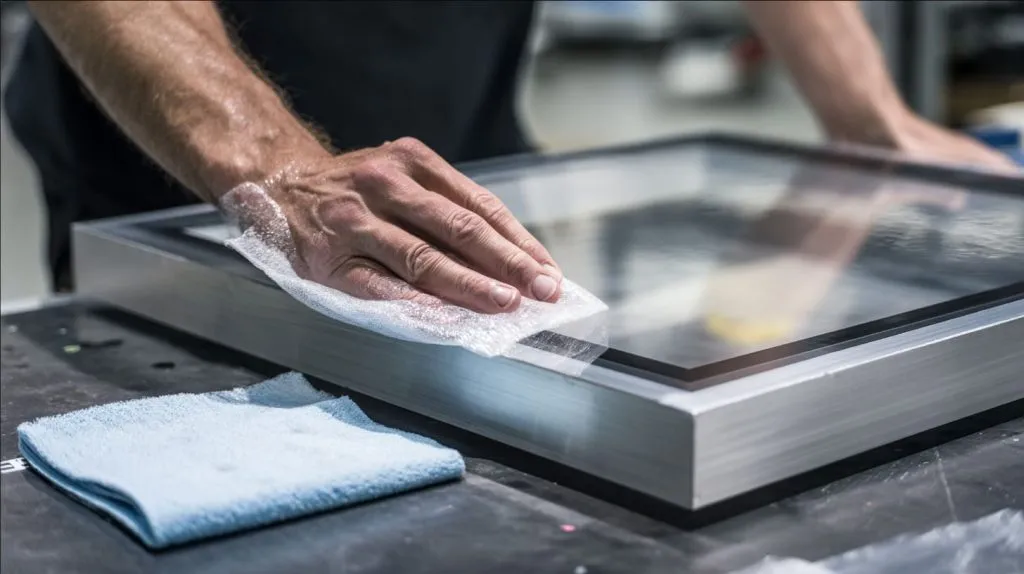
If acrylic sheets rub against cardboard, screws, dust, or each other, small scratches may appear. Under strong light, these scratches can look worse than they are. For picture frames, customers care about the front surface. Even a small mark can make the product feel cheap.
Glass is harder. It resists normal scratches better. That is one reason many buyers still like it.
But the trade-off is clear.
Glass resists scratches better, but it can break.
Acrylic scratches more easily, but it usually survives impact better.
So the question is not, “Which material has no problem?”
The better question is:
Which problem can we control more reliably in this project?
For many shipped frame projects, scratch control is easier than breakage control. We can use protective film. We can separate each piece. We can improve inner packing. We can set handling rules. We can choose better film quality. We can avoid rough paper touching the surface.
But we cannot politely ask a courier to never drop a box.
| Issue | Acrylic | Glass | How I Think About It |
|---|---|---|---|
| Surface scratch | Higher risk | Lower risk | Can be reduced with film and packing |
| Breakage | Lower risk | Higher risk | Harder to control after shipment leaves factory |
| Customer safety | Safer | Riskier if broken | Important for online sales |
| Visual complaint | Possible if scratched | Possible if broken or cracked | Both need prevention |
| Replacement cost | Usually lower damage severity | Often full product loss | Glass failure is more serious |
How Acrylic Surface Protection Should Be Planned
Acrylic frames should not be packed like glass frames.
That mistake causes many complaints.
Acrylic needs surface protection from the beginning of production to final packing. The protective film should stay on as long as possible. Workers should avoid dragging parts across the table. Finished products should not be stacked without separation.
For custom acrylic frames, I usually pay attention to these points:
- Protective film should stay on both sides during processing when possible.
- Soft separators should be used between finished pieces.
- Screws, magnets, and metal parts should not touch the acrylic surface during shipping.
- Dust should be removed before final packing.
- Outer packaging should stop the product from moving inside the carton.
- Cleaning instructions should be clear if the buyer sells to end users.
Acrylic is friendly, but it is not careless.
It needs respect.
UV and Environmental Risks
UV protection is another area where buyers can become confused.
Some buyers think glass always protects better. Some buyers think acrylic always yellows quickly. Both ideas are too rough.
In picture frame projects, UV protection depends on the exact material grade and coating. Standard acrylic, UV-filtering acrylic, standard glass, and conservation glass all perform differently.
For shipping damage, UV is not usually the main risk. The frame is inside a carton during transport. But for long-term use, it matters a lot, especially for photos, certificates, art prints, and retail displays placed near windows or strong light.
| Material Option | Main Benefit | Main Concern | Suitable Use |
|---|---|---|---|
| Standard acrylic | Clear, light, impact-resistant | Needs scratch protection | General frames and displays |
| UV acrylic | Better long-term protection | Higher cost | Photos, prints, certificates |
| Standard glass | Scratch-resistant, classic feel | Breakage risk | Small local-sale frames |
| Conservation glass | Better UV protection | Higher cost and still fragile | Art and preservation frames |
| Museum glass | High clarity and low reflection | Expensive and fragile | Premium gallery use |
For B2B buyers, the real decision often depends on sales channel.
If the frame is sold as a low-cost home product, standard acrylic may be enough.
If the frame protects a signed photo or certificate, UV acrylic may be worth discussing.
If the product is for a local gallery, high-end glass may still make sense.
If the product is shipped globally, acrylic becomes much more attractive.
Static and Dust Attraction
Acrylic can attract dust because of static. This is a small issue, but customers notice it quickly.
A frame may be perfectly made. Then someone removes the protective film too early. Dust jumps onto the surface. The customer sees small particles and thinks the product is dirty.
This problem is not the same as shipping breakage, but it affects the arrival experience.
Glass has less static trouble. It is easier to wipe in many cases. But again, glass has the breakage risk.
So buyers must decide which detail matters more in their situation.
| Detail | Acrylic | Glass | Practical Control |
|---|---|---|---|
| Dust attraction | Higher due to static | Lower | Keep film on, clean before packing |
| Cleaning | Needs soft cloth | Easier with normal glass cleaner | Give clear cleaning guidance |
| Surface marks | Can show under light | Less easy to scratch | Use film and separators |
| Breakage | Lower | Higher | Use stronger packaging or choose acrylic |
Acrylic dust and static can be managed.
Broken glass cannot be cleaned back into one piece.
That is why I do not treat these two risks as equal.
A surface issue can often be prevented by process control. A broken glass panel is usually a full loss.
Still, buyers cannot choose acrylic and then relax. The next step is packing. And packing is where many good material decisions either succeed or fail.
Practical Shipping Considerations for Buyers
A good material choice can reduce risk. But it cannot save bad packing.
This is something I repeat often in custom frame projects. The buyer may choose acrylic because it is safer. That is a good start. But if the acrylic frame moves freely inside the carton, rubs against screws, or arrives with film peeled at the corners, the project can still receive complaints.
Packaging is not decoration. It is part of the product.
The way I judge packing is simple: I imagine the carton being dropped by someone who does not know what is inside, because real shipping rarely treats every box like a museum object.
Packing Techniques by Material
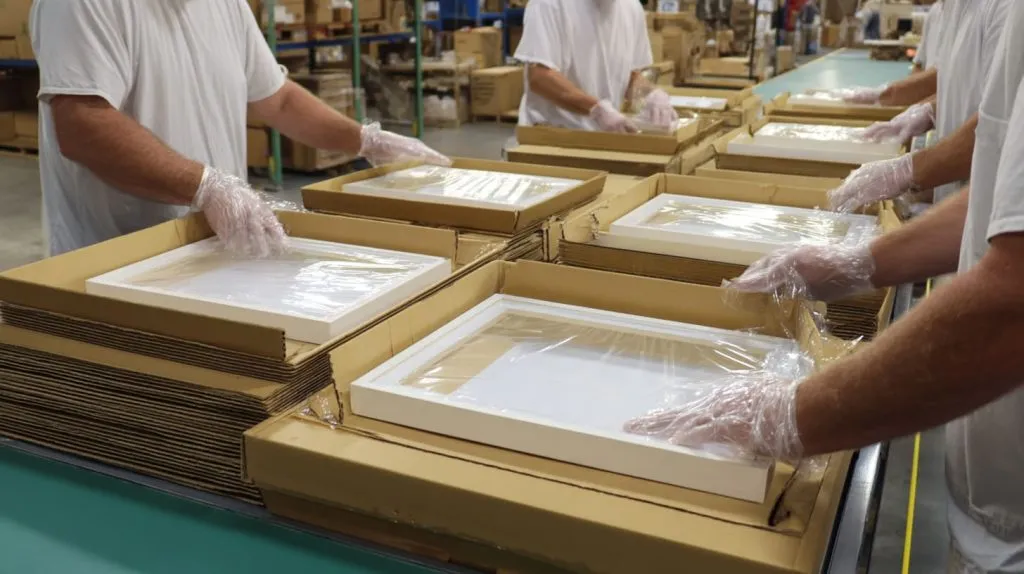
Glass frames need strong packing because the main risk is breakage. The packing must reduce shock, protect corners, and stop the glass from bending or taking direct pressure.
Acrylic frames need different packing because the main risk is surface damage and rubbing. The packing must protect the face, reduce movement, and prevent contact with hard parts.
| Packing Area | Glass Frame Needs | Acrylic Frame Needs |
|---|---|---|
| Front surface | Cushion against impact | Protective film and soft cover |
| Corners | Strong foam corners | Foam or paper corner protection |
| Inner movement | Very tight control | Tight control to avoid rubbing |
| Carton strength | Strong double-wall carton | Strong carton, especially for bulk |
| Separation | Prevent glass pressure | Prevent acrylic surface contact |
| Warning labels | Fragile labels useful but not enough | Handle with care labels useful but not enough |
A fragile label is not a packing method.
I smile a little when buyers ask, “Can we just add fragile stickers?” Stickers help communication, but they do not stop gravity. They do not soften a drop. They do not protect a corner impact.
The real protection comes from structure.
Simple Packing Rules I Trust More Than Labels
For acrylic frame shipping, I usually like to see several layers of thinking:
Surface protection
The acrylic surface should have film or a soft protective layer.Corner protection
Corners should not take direct impact.No inner movement
The product should not shake inside the inner box.Carton strength
The outer carton should match the product size and weight.Bulk separation
Multiple frames should not press or rub against each other.Clear unpacking logic
The customer should be able to open the package without scratching the product.
For glass frames, I would add stronger corner foam, more shock absorption, and better inner bracing. But even then, the breakage risk does not disappear.
| Common Packing Mistake | Result | Better Method |
|---|---|---|
| Acrylic film removed before shipping | Dust and scratches | Keep film on until final customer removes it |
| Frames stacked face-to-face | Surface rubbing | Use separators or individual sleeves |
| Loose product inside carton | Corner damage | Use fitted inner packaging |
| Thin carton for heavy glass frames | Compression damage | Use stronger double-wall cartons |
| Metal accessories packed loose | Scratches or dents | Pack accessories in separate small bags |
| Oversized carton with empty space | Product movement | Use proper inserts or fillers |
Return & Damage Cost Implications
Shipping damage has a chain reaction.
The buyer may first see only one damaged frame. But behind that one frame, there are many hidden costs.
A replacement needs new production or stock.
A refund reduces profit.
Customer service takes time.
Bad reviews reduce trust.
The buyer may ask the factory for compensation.
The next order becomes harder to discuss.
This is why I do not treat damage rate as a small number on paper.
A 2% damage rate may sound acceptable until the product is expensive, large, or sold through online channels where every complaint becomes visible.
| Damage Type | Direct Cost | Hidden Cost |
|---|---|---|
| Broken glass | Replacement, refund, freight | Bad review, safety complaint, damaged artwork |
| Scratched acrylic | Replacement or discount | Quality complaint, buyer distrust |
| Crushed corner | Rework or return | Poor brand impression |
| Dust inside frame | Cleaning or complaint | Customer thinks product is low-end |
| Loose parts | Repair or replacement | Assembly confidence drops |
Acrylic helps reduce the most serious damage type: breakage. But acrylic still needs good process control to reduce cosmetic complaints.
This is an important point. I do not tell buyers acrylic has zero risk. That would be dishonest.
I tell them acrylic moves the risk from sudden breakage to manageable surface control. For many shipped frame projects, that is a better risk to manage.
Size and Use Case Recommendations
Size changes everything.
A small desktop frame is one thing. A large wall frame is another.
As the frame gets larger, glass becomes heavier and more fragile. The front panel has more area. The carton gets bigger. The chance of bending, pressure, and corner impact increases.
That is why acrylic is often the safer choice for large frames.
| Frame Type | Better Material in Many Shipping Cases | Reason |
|---|---|---|
| Small desktop photo frame | Glass or acrylic | Breakage risk is lower, market preference matters |
| Large wall frame | Acrylic | Lighter and safer |
| Poster frame | Acrylic | Better for shipping and handling |
| Retail display frame | Acrylic | Safer for frequent movement |
| Children’s room frame | Acrylic | Safer if dropped |
| Premium local gallery frame | Glass may work | Appearance and scratch resistance may matter more |
| E-commerce frame | Acrylic | Lower breakage and safer delivery |
For frames larger than 16×20 inches, I usually become more careful with glass. It is not that glass cannot be used. It can. But the packing cost and risk must be taken seriously.
If the buyer wants glass for a premium market, then I would discuss:
- Stronger carton design
- More inner foam
- Higher freight cost
- Possible breakage allowance
- Replacement plan
- Drop test expectations
- Insurance or claim process
If the buyer wants acrylic, then I would discuss:
- Acrylic thickness
- Surface film quality
- Scratch control
- Anti-static cleaning
- Edge finish
- Packing separation
- Final user instructions
Acrylic does not remove all work. It changes the work into a more controllable type.
And for many buyers, that is exactly what they need.
But even with all this information, many buyers still miss the shipping risk at the decision stage. Why? Because the human eye is easily fooled by a beautiful sample.
How Buyers Often Overlook Shipping Damage Risks
A perfect sample can make people too confident.
The frame looks clean.
The photo looks bright.
The surface reflects light nicely.
The buyer turns it in his hand and says, “This is good.”
I like that moment. Every factory likes that moment.
But a sample is not a shipment.
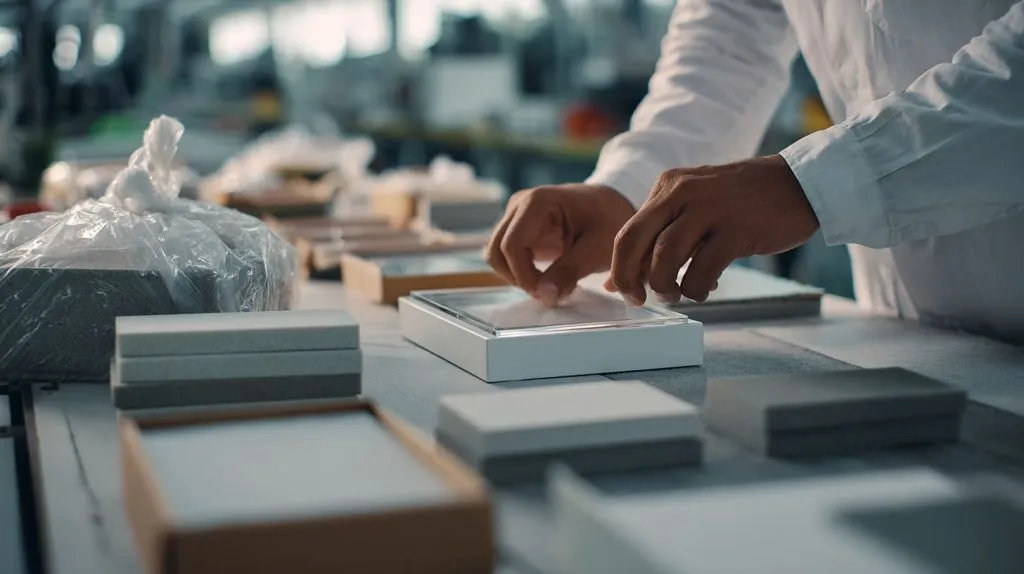
A sample may travel in special packing. It may be checked by several people. It may be protected like a small treasure. Bulk goods do not always receive that same treatment after they leave the factory.
The mistake I try to catch is the gap between sample approval and mass delivery, because buyers often approve what they can see and forget to test what the shipment will suffer.
Focus on Aesthetics, Not Logistics
Many buyers start with appearance because appearance is easy to judge.
They compare clarity.
They compare reflection.
They compare edge finish.
They compare the “premium feel.”
These details matter. A bad-looking frame will not sell well.
But logistics is less visible. It hides behind the product until the shipment arrives.
This is why shipping damage risk is often ignored.
A buyer may choose glass because it feels more traditional. The sample looks nice. The price looks okay. But after shipment, the buyer may find broken corners, cracked panels, damaged artwork, and unhappy customers.
The problem was not only the material. The problem was that logistics was not part of the material decision.
| Buyer Focus | What They See | What They May Miss |
|---|---|---|
| Clarity | The front looks clean | Shipping breakage risk |
| Premium feel | Glass feels solid | Heavy carton pressure |
| Unit price | Glass may look cheaper | Higher packing and replacement cost |
| Scratch resistance | Glass resists marks | Broken glass causes total loss |
| Sample quality | One piece looks perfect | Bulk shipment has different stress |
A frame project should not be judged only under showroom light. It should also be judged under shipping stress.
I sometimes ask buyers to imagine the product arriving at the worst customer.
Not the careful customer.
Not the patient customer.
Not the customer who reads instructions.
The worst customer opens the box fast, sees one problem, takes a photo, and sends a complaint.
That is the customer the packing and material choice must survive.
Underestimating Handling Stress
Many people think shipping damage happens because someone made a big mistake.
Sometimes that is true.
But many times, damage comes from normal handling repeated many times.
A carton is moved from factory to truck.
Truck to warehouse.
Warehouse to container.
Container to port.
Port to another truck.
Truck to distribution center.
Distribution center to courier.
Courier to customer.
Every step adds small stress.
Glass has less tolerance for these small stresses. A tiny edge chip can become a crack. A corner impact can travel through the panel. A heavy carton stack can create pressure points.
Acrylic has more tolerance. It can absorb some stress. But it still needs protection against rubbing, dust, and pressure marks.
The “One Sample Trap”
I call this the one sample trap.
One sample passes.
Everyone feels safe.
The buyer places the order.
The shipment arrives.
The damage appears.
This happens because one sample does not test enough conditions.
A real B2B buyer should think beyond the sample.
| Test Question | Why It Matters |
|---|---|
| Can the frame survive a corner drop? | Many cartons hit corners first |
| Can the front panel avoid rubbing? | Acrylic needs surface protection |
| Can the carton handle stacking? | Sea freight and warehouses stack goods |
| Can workers pack it consistently? | Mass production needs repeatable steps |
| Can the end user unpack it safely? | Customer experience starts at opening |
| Can the seller handle returns? | Damage affects profit and reputation |
The sample tells us the product can be made.
The shipment tells us the product can be sold.
That difference is important.
Why Experienced Buyers Still Make This Mistake
Even experienced buyers can overlook shipping risk. This is not because they are careless. It is because they often work under pressure.
They need to meet target price.
They need to satisfy design teams.
They need to compare supplier quotes.
They need to move fast before a launch date.
In that situation, material choice may become too simple:
Glass looks premium.
Acrylic looks safer.
Which one is cheaper?
But real purchasing is not only about the lowest unit price. It is about the lowest stable cost after delivery.
That means buyers should include:
- Product damage rate
- Packing cost
- Freight cost
- Return cost
- Replacement speed
- Customer complaint risk
- Brand positioning
- Long-term user experience
For custom acrylic frame projects, I prefer to discuss these points early. It may slow the first conversation by a few minutes, but it can save a lot of pain later.
Because once broken frames reach customers, nobody cares that the first sample looked beautiful.
They care about the box in front of them.
Conclusion
Acrylic and glass frames are not enemies.
They are two different choices for two different risk profiles.
Glass has a classic feel. It has strong scratch resistance. It can be a good choice for small frames, local sales, premium gallery use, or projects where the buyer can control handling closely.
Acrylic is lighter, safer, and more impact-resistant. It is often a better choice when frames need to travel long distances, move through e-commerce channels, or arrive safely in large quantities.
My own view comes from seeing how small material decisions become large after shipping.
A buyer may hold one glass frame and think, “This feels better.”
I understand that feeling.
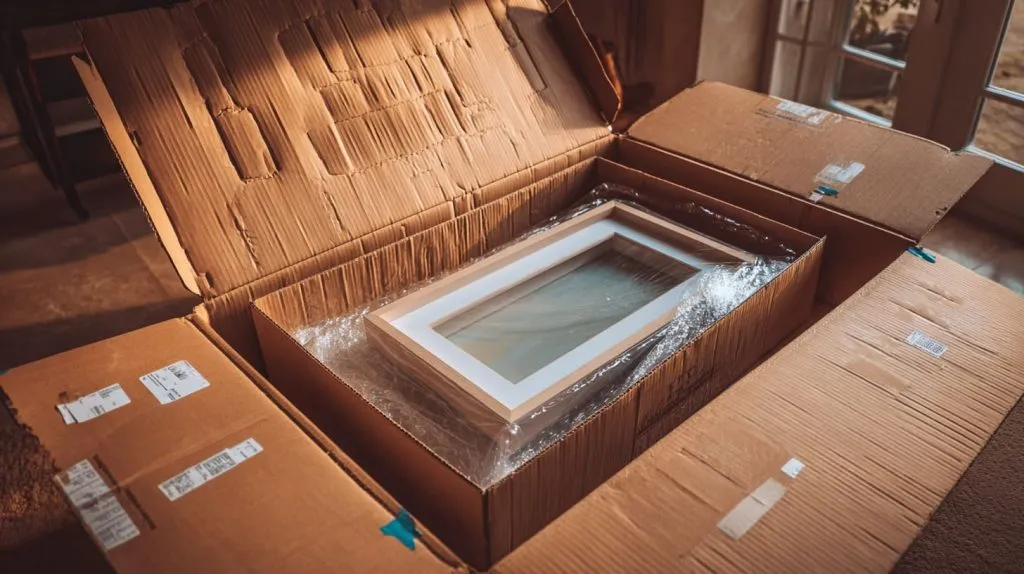
But I also think about the carton, the truck, the warehouse, the courier, and the final customer opening the package at home.
That is why I often lean toward acrylic for shipped frame projects, especially large frames or custom B2B orders. I do not choose it because it is perfect. I choose it because the main risk is easier to manage.
Scratches can be reduced with film, separators, clean handling, and good packing.
Dust can be controlled with process rules.
Static can be handled with proper cleaning.
Thickness can be adjusted.
Surface finish can be discussed.
But broken glass inside a customer’s box is harder to forgive.
That is the real point.
Acrylic does not win every project. Glass does not lose every project. But if the product must survive long-distance shipping, rough handling, online returns, and customer unpacking, acrylic deserves serious attention.
For buyers like Jacky, I would not suggest choosing material only by appearance. I would suggest asking a more practical question:
What problem will cost more after the shipment arrives: possible acrylic surface protection, or possible glass breakage?
That question usually makes the decision clearer.
At Feilong Acrylic, this is how I prefer to work on custom frame projects. I want to understand the frame size, packing method, shipping route, surface requirement, and final sales channel before confirming the best acrylic solution. A beautiful product matters. But a beautiful product that arrives safely matters more.
If you are planning a custom acrylic frame, acrylic photo block, display frame, or picture frame project, you can share your size, thickness, quantity, packing idea, and target market with us.
We can help you review the material choice before the shipping damage becomes a real cost.