Skip to content
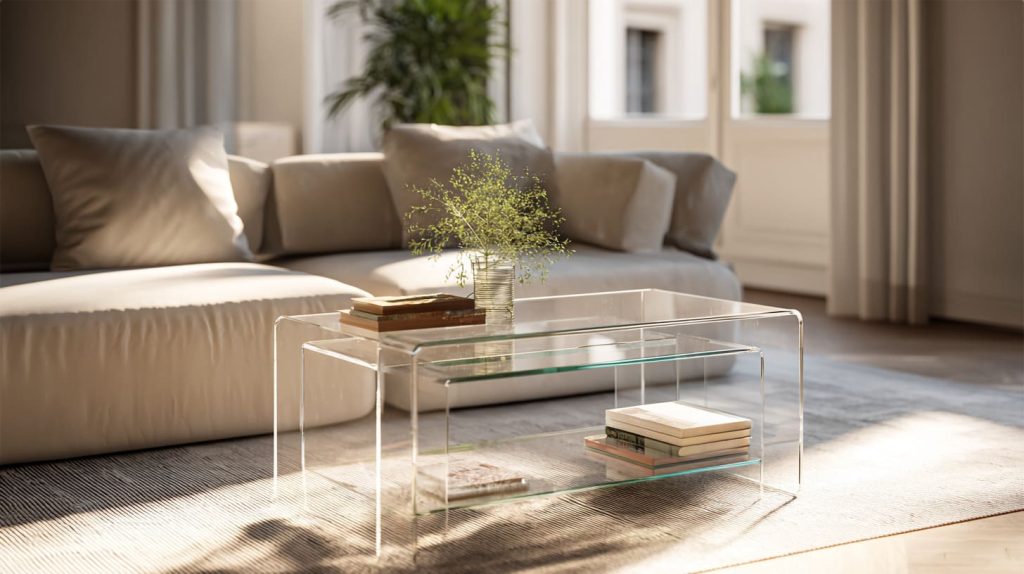
Acrylic furniture can look like the easy winner when I first see a project drawing.
It is lighter. It feels safer. It gives me more freedom in shape. It often looks modern, clean, and a little more playful than glass. So I understand why many buyers, designers, and even end users lean toward it so quickly. I have seen that reaction many times. Someone taps an acrylic panel with a finger, lifts it with one hand, and says, “This feels much easier to work with.”
That part is true.
The trouble starts when “easy to move” quietly gets translated into “good for structure.” Those two ideas are not the same. Not even close.
I have seen furniture pieces that looked perfect in sample photos. The edges were polished. The transparency was beautiful. The proportions felt elegant. Then a few months later, the shelf line started to dip. The tabletop lost its crisp flat look. The whole piece still stood there, but it no longer looked confident. It looked tired.
That kind of failure is not dramatic. It does not explode into a big complaint on day one. It creeps in. Slowly. Quietly. And that is exactly why people underestimate it.
Acrylic and glass each have real strengths. I work with acrylic every day, so I do not say that from a distance. I say it from the uncomfortable middle ground where a material can be both very useful and very easy to misuse. I like acrylic. I also respect its limits. That balance matters.
The real question is not whether acrylic is better than glass.
The real question is simpler, and harder: what is this furniture piece actually being asked to do?
That is the point of this article. I want to walk through where acrylic truly shines, where it starts to fail, and how I judge the difference before a nice-looking design turns into a structural regret.
That is also where the material story begins, because people often compare acrylic and glass as if they are cousins with similar behavior. They are not.
What Are Acrylic and Glass in Furniture Applications?
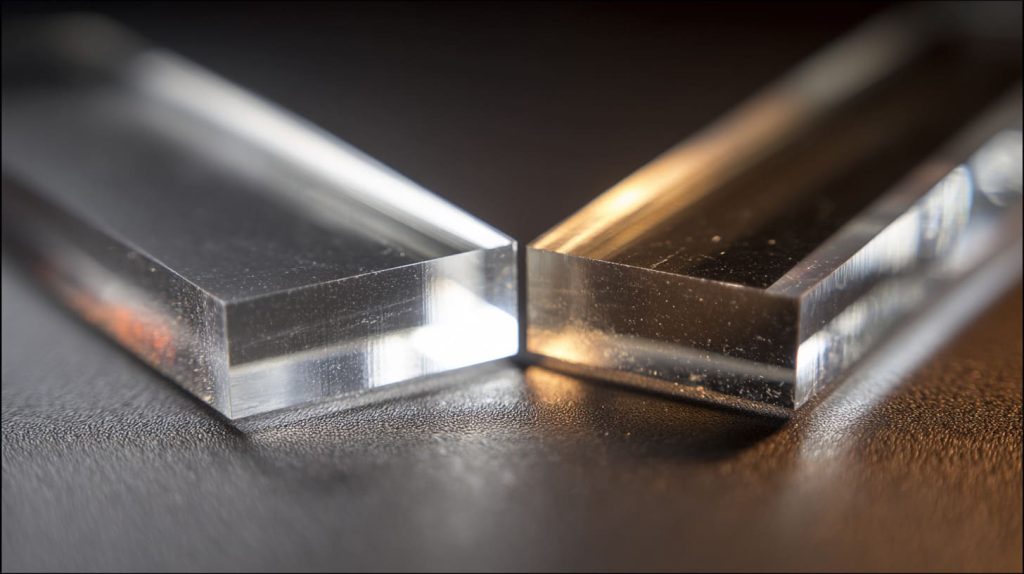
When I talk with buyers about furniture materials, I notice something very common. Many people compare acrylic and glass mainly by appearance. They focus on transparency, shine, edge quality, and style. I understand that instinct. Furniture is visual. It lives in a room. It has to look right. But once the piece starts carrying weight, material behavior matters more than first impressions.
I do not group acrylic and glass together just because both can look clear. I treat them as two very different personalities wearing similar clothes.
Material basics and composition
Acrylic, or PMMA, is a plastic. It is lighter than glass. It is easier to shape. It has a bit more give in it. That flexibility can help in some products, but it can also become a weakness in furniture.
Glass is a mineral-based material. It is rigid. It is hard. It holds a flat line better. But it is also brittle. When it fails, it can fail fast.
Here is a simple side-by-side view:
| Property | Acrylic | Glass |
|---|---|---|
| Material type | Thermoplastic | Silica-based rigid material |
| Weight | Light | Heavy |
| Rigidity | Lower | Higher |
| Impact behavior | More resistant to casual impact | More likely to crack or shatter |
| Long-term deformation | More likely | Much less likely |
| Easy to shape | Yes | No, much harder |
I always remind myself that “plastic” does not automatically mean weak, and “glass” does not automatically mean strong in every direction. The real issue is how each material handles force, time, and support.
Typical furniture use cases
Acrylic appears in a lot of furniture and display work because it is visually light and easy to form. I often see it used for:
- coffee tables
- side tables
- decorative shelving
- display risers
- acrylic stools
- magazine holders
- transparent storage units
- furniture accents and trim parts
Glass appears more often where flatness and rigidity matter more. Common examples include:
- tabletops
- cabinet doors
- fixed shelves
- display cabinets
- side panels
- structural inserts in premium furniture
This split is not random. It tells me what the market already learned from experience. Acrylic gets chosen when form freedom matters. Glass gets chosen when stiffness matters.
Key perception gap
This is where things often go wrong in real buying decisions: acrylic feels safer, and glass feels stronger.
Both feelings contain some truth.
Acrylic is safer in the sense that it usually does not shatter like glass under normal impact. That makes people relax around it. Parents like that. Store owners like that. Installers like that too.
Glass feels stronger because it stays flat and firm. It looks more serious under load. In many furniture settings, that feeling is also correct.
Still, feelings are not enough. I have seen buyers trust acrylic because it survived a hit test by hand. I have also seen buyers reject glass because they feared breakage, even when the actual structure clearly needed rigidity more than impact forgiveness.
One small test in the hand can create a very misleading impression.
| What people notice first | What actually matters later |
|---|---|
| Acrylic is lighter | Does it sag over time? |
| Acrylic does not shatter easily | Does it hold shape under load? |
| Glass feels heavy and risky | Does it stay flat and stable? |
| Acrylic is easy to fabricate | Will it survive real use conditions? |
My own rule is simple here: when a material looks attractive on day one but its structure is uncertain on day one hundred, I slow the project down and ask harder questions.
And once those harder questions start, it becomes clear why acrylic wins so much early attention in the first place.
Why Acrylic Is Often Considered the “Better” Furniture Material

I understand why acrylic gets so much love in furniture projects. Honestly, if I only judged by convenience, acrylic would win many first-round decisions.
It is lighter in the hand. It is easier to move. It gives me more freedom in shape. It also feels less emotionally risky because people do not picture it exploding into sharp pieces the way they picture glass. That emotional comfort is powerful. It affects design choices more than many people admit.
Still, I never let first comfort become final judgment.
Lightweight advantage
Acrylic is easier to transport, easier to lift, and easier to install. That matters a lot in real projects.
When I deal with large custom items, I always think about the whole path, not just the final room. A piece has to survive packing, loading, shipping, unloading, staircases, door openings, and sometimes poor handling by people who are in a hurry. A lighter material has an obvious advantage in that chain.
For large furniture, this can reduce:
- shipping cost
- handling difficulty
- labor pressure during installation
- damage risk from awkward movement
- packaging complexity
Here is how I think about it:
| Practical issue | Acrylic advantage |
|---|---|
| Freight cost | Lower due to lower weight |
| Installation | Easier for fewer workers |
| On-site movement | More manageable |
| Custom oversized parts | Less stressful to handle |
| Temporary display furniture | Better portability |
A Canadian buyer once showed me a concept for clear display furniture that would be used for seasonal store campaigns. The pieces had to move often. In that case, acrylic made real sense. The lower weight was not just a comfort feature. It was part of the business model.
Impact resistance
This is another reason acrylic earns trust quickly. It usually handles knocks and casual impact better than glass.
That does not mean it is indestructible. It scratches more easily. It can crack under the wrong stress. But compared to standard glass, it usually feels more forgiving in active environments.
This makes acrylic attractive for:
- homes with children
- retail spaces with frequent movement
- event displays
- portable furniture
- temporary installations
- public-facing fixtures where accidental contact is likely
I have noticed that many buyers use the word “safer” when they actually mean “less scary.” That difference matters. Acrylic often reduces fear because people imagine fewer dramatic failures. I understand that. But I still ask one extra question: safe from what? Safe from dropping? Safe from bumping? Safe from long-term sag? Those are not the same risks.
Design flexibility
This is where acrylic becomes very hard to replace.
Acrylic is easier to cut, machine, bend, polish, bond, and shape into unusual forms. That opens doors that glass simply does not open as easily. I can create soft curves, waterfall edges, custom angles, integrated forms, and visual effects with much less struggle.
For design-driven furniture, that freedom is a serious advantage.
| Design feature | Acrylic | Glass |
|---|---|---|
| Curved forms | Easy | Difficult |
| Thick transparent blocks | Practical | Heavy and expensive |
| Custom bonding | Easier | Limited |
| Organic or sculptural shapes | More flexible | Much harder |
| Fast custom prototyping | Better | Slower |
This is why acrylic often wins the early emotional argument. It gives designers more room to play. It helps a concept feel alive faster. It can make an ordinary piece feel special.
But there is a catch. Actually, there are several.
A material that is easier to shape can tempt people into shapes that are harder to support. A material that feels forgiving can tempt people into ignoring long-term load behavior. A material that looks light can tempt people into spans that are simply too ambitious.
That is why I get cautious the moment a beautiful acrylic furniture drawing starts depending on flatness and stiffness as if acrylic were glass. That is usually the moment where the story changes.
And that change becomes obvious when I look at how acrylic fails in the real world.
Where Acrylic Furniture Fails Structurally
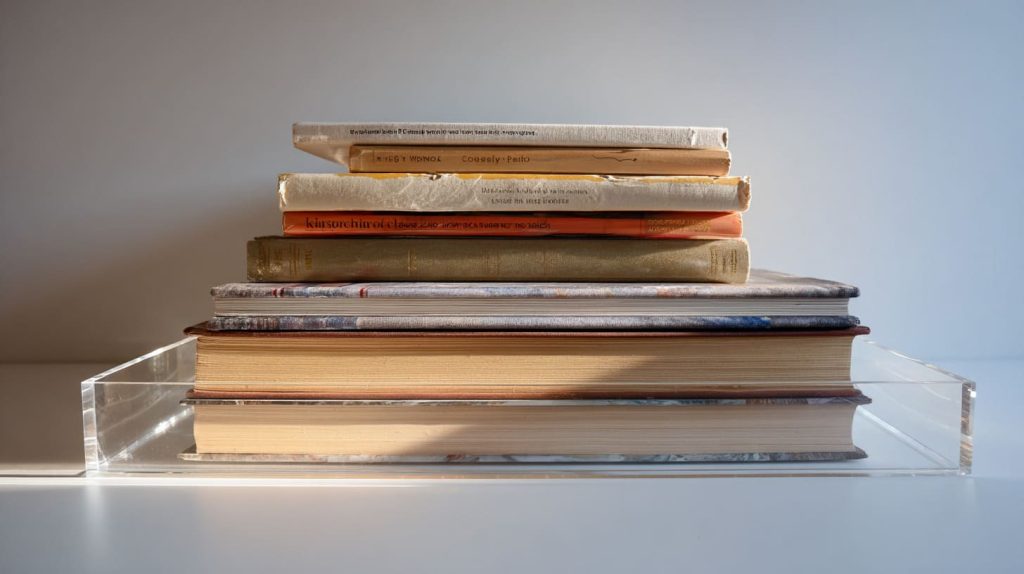
This is the part many people skip because it is less fun.
Acrylic is beautiful when it works. It is also frustrating when it is asked to act tougher than it really is. The reason I take this seriously is simple: acrylic furniture often does not fail in a dramatic way. It fails politely. It bends a little. It sags a little. It keeps going just enough to avoid an early complaint, and that makes the damage easier to ignore until the look of the whole piece starts to fall apart.
I have learned to pay attention to quiet failure. Quiet failure is expensive.
Bending and long-term deformation
Acrylic is less stiff than glass. That one fact explains a lot.
When an acrylic shelf or tabletop carries weight over time, it can begin to bend. At first the bend may be small. Then it becomes visible from the side. Then the line that once looked sharp and premium starts to look soft and weak.
I have seen this happen with:
- display shelves holding cosmetics
- coffee tables carrying books and decor
- acrylic side panels under uneven load
- long clear spans with very little support
- bonded furniture joints where the design looked elegant but not realistic
Here is the basic issue:
| Structural behavior | Acrylic | Glass |
|---|---|---|
| Resistance to bending | Lower | Higher |
| Flatness over time | Less stable | More stable |
| Long-span performance | Risky without thicker design | Better |
| Visual deformation under load | More likely | Less likely |
Acrylic does not need a huge mistake to start bending. Sometimes the design is only a little too thin. Sometimes the support spacing is only a little too wide. Sometimes the customer adds more weight than the design team expected. That is all it takes.
A shelf does not need to collapse to fail. If it sags enough to look cheap, it has already failed the job.
Load distribution problems
Acrylic does not like careless load patterns.
Many furniture users do not place weight in the neat, evenly spread way a designer imagines. Real people put a heavy speaker on one side. They stack books in one corner. They drop a tray in the middle. They lean. They drag. They improvise.
That is normal.
The problem is that acrylic can respond badly to point loads and uneven loads. A concentrated weight can create visible deflection much faster than people expect. A design that survives a balanced lab-style load may still look bad in ordinary daily use.
I always try to judge furniture not by ideal use, but by lazy use. That sounds funny, but it is true. Furniture has to survive the user people hope for and the user people actually get.
Common load mistakes in furniture use
- One heavy object placed at center span
- Repeated loading in the same spot
- Decorative pieces turning into storage pieces
- Users adding hidden weight inside drawers or cabinets
- Temporary furniture becoming permanent furniture
Why this matters so much
Acrylic often keeps the piece standing while still losing the visual discipline that made the design attractive in the first place. That is why load distribution matters more than many buyers expect.
Thickness sensitivity
Acrylic furniture can become unreliable very fast when thickness is too aggressive.
This is one of the biggest buying mistakes I see. A buyer tries to protect budget by shaving down thickness. On paper, the savings look reasonable. In real use, the structural penalty can be much bigger than expected.
A small change in thickness can have a huge effect on rigidity.
| Acrylic thickness choice | Common result |
|---|---|
| Too thin | Bending, vibration, weak visual feel |
| Slightly increased | Better confidence, better line stability |
| Thick enough for load | More reliable but more costly |
| Overbuilt | Stronger, but may look bulky or overpriced |
Acrylic punishes under-design. It does not always punish it immediately, but it does punish it.
I once reviewed a clear shelving concept that looked elegant at sample stage. The team wanted the shelf to appear light and minimal, so the panel thickness was kept too lean. The sample looked fine because it was new and lightly loaded. Later, once real merchandise sat on it for a while, the shelf lost its straight line. The design did not break, but it stopped looking premium. That was enough to make the project feel wrong.
Creep behavior over time
This is the part I wish more buyers respected.
Acrylic can creep. That means it can slowly deform under continuous load over time. The material may not show obvious damage at first. It may look stable during early inspection. Then weeks or months later, the shape shifts.
Glass usually does not play this slow game in the same way. Acrylic does.
| Time-based behavior | Acrylic | Glass |
|---|---|---|
| Immediate strength impression | Can look acceptable | Can look rigid |
| Long-term under constant load | May deform gradually | More stable |
| Risk of quiet shape change | High | Low |
| Good for permanent structural flatness | Limited | Better |
That delayed effect creates a dangerous illusion. People think the sample proved the design, when really the sample only proved the first week.
This is why I do not trust “it looked fine in the showroom” as a structural argument. A showroom rarely tells me what the piece will look like after real life starts leaning on it.
And once I reach that point, I start seeing why glass keeps its place in furniture despite all the fear people have around it.
Why Glass Performs Better in Structural Stability

Glass makes people nervous for obvious reasons. It is heavier. It can break. It demands more care in transport and handling. So I fully understand why some buyers try to avoid it early.
But when the job depends on holding a flat line under load, glass often earns its reputation the hard way. It performs better not because it is perfect, but because it stays more disciplined.
That discipline matters in furniture.
High stiffness and rigidity
Glass is much stiffer than acrylic. Under the same conditions, it resists bending better and stays flatter.
That is the main reason glass works so well in tabletops, shelves, and flat structural surfaces. It holds shape. It does not easily drift into that tired, sagging look that ruins a clean furniture design.
Here is the simplest way I think about it:
| Structural need | Better fit |
|---|---|
| Long flat surface | Glass |
| Clear shelf with stable line | Glass |
| Heavy decorative load | Glass |
| Minimal visible deflection | Glass |
When I evaluate transparent furniture, I pay close attention to how important the straight line really is. If the whole visual value depends on crisp geometry, I usually become much less tolerant of acrylic.
Load-bearing reliability
Glass handles ordinary furniture loads more predictably in many flat-surface cases.
That does not mean it can be used carelessly. It still needs correct thickness, safe treatment, and good support. But compared to acrylic, it usually deforms less under the same weight.
This becomes very important in:
- bookshelves
- side tables
- TV stands
- display cabinets
- horizontal surfaces with repeated loading
- premium residential furniture where shape quality matters over time
A furniture piece can be technically “intact” and still be commercially disappointing. That is why I value predictable load-bearing behavior so much. A stable surface protects both function and appearance.
Predictable performance
One thing I respect about glass is that it is easier to judge in long-term flat applications. It behaves in a more stable way under steady conditions. It does not slowly relax into a new shape the way acrylic can.
That makes it more predictable for designers and buyers who want long-term consistency.
| Long-term concern | Acrylic | Glass |
|---|---|---|
| Slow shape drift | More likely | Less likely |
| Ongoing flatness | Harder to maintain | Easier to maintain |
| Confidence in permanent visual line | Lower | Higher |
| Structural predictability | Less stable | More stable |
I do not choose glass because it sounds more serious. I choose it when I need fewer surprises later. That is a very different reason, and it usually leads to better decisions.
Still, I never talk about glass as if it has no downside. That would be lazy. Glass solves some problems, but it creates others, and some of those problems are sharp in every sense of the word.
When Glass Fails Instead

Glass earns respect in structural stability, but it also demands respect in safety and handling. I never let the strength conversation hide that part.
A buyer can become so focused on stiffness that they forget the material is still glass. It can fail suddenly. It can be dangerous when specified poorly. It can create headaches in logistics, installation, and end use. So even when glass is structurally right, it still needs careful thinking.
Brittleness and sudden failure
Glass does not usually give a polite warning.
That is one of the biggest differences between glass and acrylic. Acrylic often bends before it fully fails. Glass may stay firm right up until the moment it cracks or shatters. That suddenness changes the risk profile of the whole product.
This is why tempered glass matters so much in furniture and why raw structural confidence is not enough.
| Failure style | Acrylic | Glass |
|---|---|---|
| Early visible warning | Often yes | Often no |
| Break behavior | May crack or bend | May shatter suddenly |
| Emotional impact on user | Lower panic | Higher panic |
| Safety planning need | Moderate | High |
If the furniture will be near children, in public use, or in a place with frequent movement, I become much stricter about glass specification and edge safety.
Impact sensitivity
Glass can be strong in one way and weak in another. That catches people off guard.
A flat glass panel may handle load very well, but the edge can still be vulnerable to a sharp hit. One careless contact during transport or installation can ruin a good piece.
I have seen strong-looking glass parts get damaged because people assumed “rigid” meant “tough in every direction.” It does not.
Common real-world impact risks for glass furniture
- Corner collision during movement
- Edge contact with metal frame
- Hard object dropped onto exposed corner
- Bad packing during shipping
- Rough installation habits on site
So yes, glass can outperform acrylic in structural flatness. But if the project has rough handling built into its life cycle, that advantage may not be enough by itself.
Weight limitations
Glass brings a physical burden that acrylic does not.
Heavier panels are harder to move, harder to pack, and harder to install. They can increase freight cost, labor cost, and damage risk during handling. In large custom furniture, this matters a lot.
| Logistics issue | Glass impact |
|---|---|
| Freight weight | Higher |
| Manual handling | Harder |
| Installation labor | More demanding |
| Packaging protection | More critical |
| Oversized custom pieces | More stressful |
I have rejected glass in some projects not because it was structurally wrong, but because the full project chain made it the wrong business choice. A material can win on performance and still lose on practicality.
That is why direct material arguments are not enough. I need to compare them in a more structured way. Once I do that, the trade-off becomes much clearer.
Acrylic vs Glass: Structural Comparison Table

When a buyer asks me which material is “better,” I usually push back on the question a little. Better for what? Better for shape freedom? Better for flatness? Better for shipping? Better for impact? Better for long-term structure?
Acrylic and glass are not fighting for one crown. They are solving different problems.
So instead of giving a quick opinion, I like to compare them in a way that matches real furniture decisions.
Key performance differences
Here is a practical comparison table I would actually use in conversation:
| Factor | Acrylic | Glass | My reading of it |
|---|---|---|---|
| Weight | Light | Heavy | Acrylic helps logistics and portability |
| Stiffness | Lower | Higher | Glass holds flat surfaces better |
| Impact resistance | Better in casual hits | Lower in edge or sharp impact | Acrylic feels less risky in active spaces |
| Creep over time | More likely | Minimal | Glass is more stable in long use |
| Load-bearing behavior | More sensitive to span and thickness | More reliable for flat support | Glass wins where shape retention matters |
| Design flexibility | High | Lower | Acrylic gives more freedom in custom form |
| Break style | Gradual deformation more common | Sudden failure more common | Different risk types, not just better or worse |
| Visual stability over time | Can drop | Stronger | Glass often keeps the premium look longer |
Practical interpretation for furniture buyers
A lighter material can be a structural disadvantage when the design needs stiffness more than mobility. That sentence sounds obvious once it is said out loud. But in real projects, people still miss it all the time.
I tend to separate decisions into two groups:
When acrylic usually makes more sense
- The furniture is decorative more than structural
- The load is light
- The shape is custom or curved
- Portability matters
- Impact fear is high
- The piece is temporary or semi-temporary
When glass usually makes more sense
- The piece needs a flat surface
- The load is heavier or constant
- The span is longer
- Long-term visual discipline matters
- The structure must stay crisp over time
- Premium rigidity matters more than shape freedom
I have found that many bad decisions come from comparing materials at the wrong level. People compare weight to weight, or beauty to beauty, when they should be comparing structural behavior to structural need.
That sounds technical, but it is really just practical thinking.
And nothing exposes that practical thinking faster than thickness. Thickness changes everything.
How Thickness Changes the Decision

Thickness is where many furniture ideas become either sensible or risky.
I have seen buyers spend a lot of time discussing material type, finish, and edge quality, then treat thickness like a small detail near the end. I do not do that. Thickness is not decoration. Thickness is behavior.
Acrylic and glass can both look elegant in a drawing. But once thickness enters the conversation, the cost, strength, visual feel, and long-term performance all start moving in different directions.
Acrylic thickness requirements
Acrylic usually needs more thickness than glass to achieve similar confidence in many flat structural uses.
That brings two immediate effects. First, the cost can rise quickly. Second, the product can lose the slim visual feeling that made the original concept attractive.
This is where I often see disappointment. A buyer wants acrylic for its lightness and clean look, but once the panel becomes thick enough to behave properly, the piece is no longer as light-looking, no longer as cheap, and not always as elegant.
| Acrylic thickness choice | Structural result | Design result |
|---|---|---|
| Thin | Weak, more deflection | Looks minimal at first |
| Medium | Better but still load-sensitive | Balanced if supports are good |
| Thick | Stronger, more stable | Can look bulky and raise cost |
I do not judge acrylic thickness by what the drawing can get away with. I judge it by what the furniture must survive after the customer stops using it carefully.
Glass thickness efficiency
Glass often achieves the needed rigidity with less visible bulk.
That is one reason it can feel more efficient in structural furniture. A thinner-looking glass panel can still hold a cleaner line than a thicker acrylic one. That matters for modern furniture where visual discipline is part of the product value.
Still, thinner glass is not a free pass. Safety and support still matter. But structurally, glass often gives more stiffness per visual thickness in these applications.
| Material | Thickness efficiency for flatness | My view |
|---|---|---|
| Acrylic | Lower | Needs help through thickness or support |
| Glass | Higher | Better for clean flat surfaces |
Cost vs performance trade-off
This is where the easy story about acrylic often breaks.
People assume acrylic saves money because it is lighter and easier to process. Sometimes that is true. But when structural demands rise, acrylic may need so much extra thickness or reinforcement that the value story changes.
Then the buyer faces an awkward result:
- Thin acrylic is affordable, but weak
- Thick acrylic is stronger, but more expensive
- Thick acrylic may also lose the slim design effect
- Added support may solve structure, but reduce the visual purity
That is why I never discuss thickness only as a material issue. I discuss it as a design, cost, and expectation issue.
A furniture piece does not live in one category. It lives in all three.
And the best way to make that real is to leave theory for a moment and look at actual use cases.
Real Application Scenarios: Acrylic vs Glass
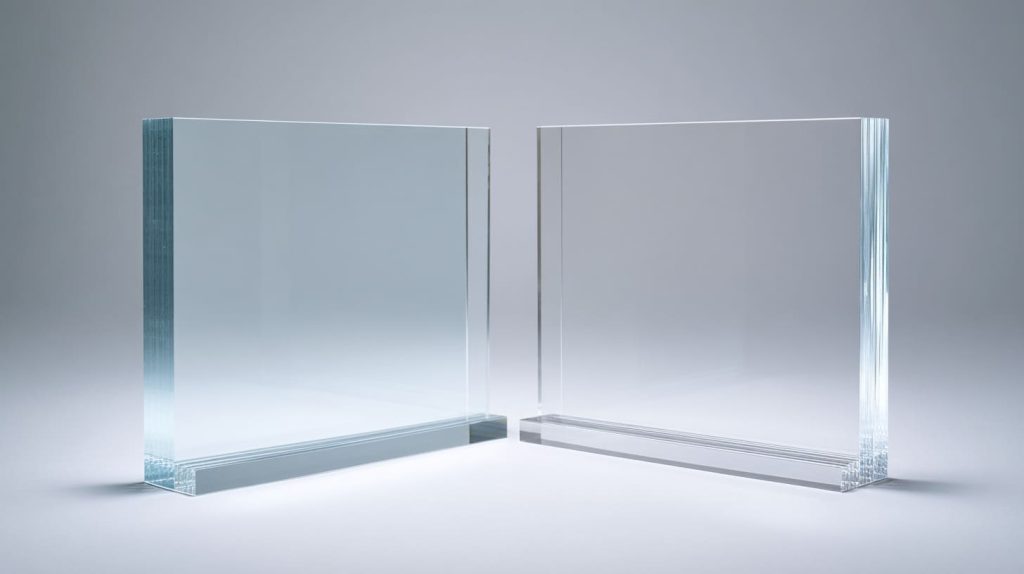
I like theory, but furniture decisions get clearer when I imagine the actual object in an actual room with actual human behavior.
That is the test that matters.
A material choice can sound perfect in abstract language and still fail once it meets books, lamps, handbags, store products, kids, cleaners, and the daily carelessness of ordinary life. So when I compare acrylic and glass, I like to place them inside real use cases.
Shelving systems
Shelving is where acrylic gets into trouble very quickly if the load is underestimated.
For light decorative items, acrylic can work well. It can look airy and elegant. It can help a room feel open. It can also create a nice floating effect that glass sometimes makes feel heavier.
But once the shelf starts carrying books, electronics, product stock, or dense objects, glass usually becomes more reliable.
| Shelving use | Acrylic | Glass |
|---|---|---|
| Light decor | Good | Good |
| Cosmetics or small display items | Good | Good |
| Books | Risky | Better |
| Electronics | Risky without strong design | Better |
| Long shelf span | Weak unless thick and supported | Better |
I become very cautious when someone says, “It is just a shelf,” because shelves are rarely “just” anything. People overload shelves. That is almost a law of human behavior.
Coffee and side tables
Acrylic coffee tables look fantastic in the right setting. I say that honestly. They can feel modern, light, and visually clean. In smaller rooms, that visual lightness is valuable.
Still, the center surface of a coffee table often ends up carrying more weight than people predict. Books, trays, plants, candles, decorative stone pieces, even people leaning with their body weight. That is where acrylic’s lower stiffness can start to show.
Glass often gives better long-term confidence for these flat surfaces.
My practical view on table selection
- Acrylic works well when the goal is visual lightness and moderate use
- Glass works better when the table must stay flat and serious over time
- Acrylic needs extra care when spans are wide or supports are minimal
- Glass needs extra care in safety and handling
Retail displays
Retail is a more mixed case, and that is why it is interesting.
Acrylic often wins in retail because it is easier to customize, lighter to move, and safer in active spaces. For portable display furniture, seasonal setups, cosmetic organizers, or branded counters, acrylic can be a very smart choice.
Glass, though, still has an edge in premium permanent fixtures where rigidity and long-term surface quality matter more.
| Retail need | Better choice |
|---|---|
| Portable display | Acrylic |
| Complex branded shape | Acrylic |
| Luxury permanent showcase | Glass |
| High-traffic movable setup | Acrylic |
| Flat premium shelf line | Glass |
When I study real applications, I rarely ask which material is best in general. I ask which failure would hurt the project more. That question usually gives me the answer faster.
And once I start thinking that way, I also start seeing the same design mistakes show up again and again.
Common Design Mistakes Buyers Make

I do not say “mistakes” to sound harsh. I say it because some patterns show up so often that they stop feeling accidental.
Most of these problems do not come from carelessness. They come from assumptions. A buyer assumes the real load will stay light. A designer assumes the support is enough. A team assumes the sample already proved the concept. Then the product enters the real world, and the assumptions start cracking.
Choosing acrylic for long-span structures
This is one of the biggest traps.
Acrylic looks elegant over a long clear span. That visual effect is part of its charm. But long unsupported distances are exactly where acrylic starts getting punished.
The longer the span, the more I worry about:
- visible bending
- vibration
- long-term sag
- weak visual confidence
- customer complaints that are more emotional than technical
A design can be beautiful and structurally naive at the same time. That combination is more common than many people think.
Underestimating load weight
This problem is everywhere.
Designers often imagine intended use. Users create actual use. Those two are rarely identical.
A shelf meant for small decor becomes a shelf for books. A side table meant for a cup and magazine starts holding a lamp, stacked catalogs, and a heavy stone tray. A display stand meant for samples ends up carrying back-up stock too.
| Design assumption | Real-world behavior |
|---|---|
| Light decorative load | Heavier practical load |
| Evenly distributed items | Random clustering |
| Short-term use | Permanent use |
| Careful handling | Casual handling |
I never trust the “best case” use scenario when I am checking furniture structure. People do not live in best-case mode.
Using insufficient thickness
This mistake often comes from aesthetic pressure or cost pressure.
A thinner part looks cleaner in a rendering. It also looks cheaper in a quotation. So the thickness gets pushed down until the design feels elegant and affordable. But that elegance can be temporary.
Thin acrylic is one of the easiest ways to create delayed regret in furniture.
I have seen teams celebrate a clean prototype because it photographed well, only to discover later that the real product behaved like a compromise in disguise.
Ignoring support structure
Support is not a background issue. It is the issue.
Acrylic furniture often gets designed for visual purity, which means fewer visible supports, slimmer forms, and longer transparent spans. I understand the appeal. But if the support structure is too weak, the material gets asked to do a job it should never have been asked to do alone.
Common support mistakes
- Too much distance between support points
- Weak connection design
- Decorative bonding treated like structural bonding
- No reinforcement under critical surfaces
- Overconfidence in thick material without checking load path
Whenever a design looks impressively minimal, I stop admiring it for a moment and check what is secretly doing the work. If the answer is “not much,” then I know the concept may not survive real use.
That leads naturally to the most useful part of the whole discussion: how I choose the right material in the first place.
How to Choose the Right Material for Furniture
By the time I get to this stage, I no longer ask which material is nicer. I ask which material matches the job with the fewest painful surprises.
That question sounds less glamorous, but it usually leads to better furniture.
Material choice is not a beauty contest. It is a judgment call built from load, support, user behavior, visual target, lifespan, and risk tolerance. I have to look at all of them together.
Key decision factors
These are the main things I check before I feel comfortable recommending acrylic or glass:
| Decision factor | Why it matters |
|---|---|
| Load weight | Heavy loads punish weak stiffness |
| Load distribution | Point loads can ruin a good-looking design |
| Span length | Long distances increase deflection risk |
| Support points | Better support can rescue a risky concept |
| Product lifespan | Short-term use and long-term use need different thinking |
| Visual priority | Slim look and stable look are not always the same |
| User behavior | Real users are rarely gentle |
| Maintenance and movement | Handling risk can favor acrylic |
I do not start with the material. I start with the punishment the furniture will face. That usually makes the answer much clearer.
When to choose acrylic
I choose acrylic when the project benefits from its real strengths, not when people are simply avoiding glass out of habit.
Acrylic makes sense when:
- the load is light
- the piece is decorative
- the form is custom or curved
- portability matters
- impact fear matters
- the structure is supported properly
- long-term flatness is not the core value
Acrylic can be brilliant in this zone. I say that with no hesitation. Used correctly, it feels fresh, practical, and visually elegant.
When to choose glass
I move toward glass when the piece needs structural confidence more than fabrication freedom.
Glass makes more sense when:
- the surface must stay flat
- the load is moderate to high
- the span is longer
- the product is permanent
- rigidity matters more than lightness
- the premium feel depends on clean stable lines
Glass asks for more care, but it often gives more discipline back.
A simple decision guide
| Project need | Better material |
|---|---|
| Decorative clear furniture | Acrylic |
| Curved transparent form | Acrylic |
| Portable custom retail piece | Acrylic |
| Long flat shelf | Glass |
| Rigid premium tabletop | Glass |
| Heavy-use permanent fixture | Glass |
| Safer-feeling active environment | Acrylic |
| Best shape retention over time | Glass |
The best decisions usually come from honesty. If the design really needs stiffness, I should admit that. If the project really needs low weight and shape freedom, I should admit that too. Problems start when a team wants one material to behave like the other without paying the cost in thickness, support, or design adjustment.
That is why my final view on this topic is not emotional. It is shaped by what I have seen hold up, and what I have seen slowly disappoint.
Conclusion

I do not believe “lighter” should ever be treated as a shortcut for “better” in furniture design.
I say that because I have watched too many transparent furniture ideas get judged by the hand before they were judged by the load. Acrylic wins that first moment very easily. It feels easier. It feels friendlier. It feels less dangerous. I understand why people love it. I work with acrylic every day, and I still admire what it can do.
But I also know where it starts lying to people.
It lies when a beautiful thin panel makes a structure feel stronger than it is. It lies when a clean new sample hides what constant weight will do later. It lies when design freedom distracts the team from support, span, and long-term shape control.
That is why I think the real job is not choosing the more attractive material story. The real job is choosing the more honest material for the actual use.
I believe acrylic should be chosen when its strengths are truly the point: light weight, safer impact behavior, design flexibility, custom form, portability, and decorative clarity. I believe glass should be chosen when rigidity, flatness, and structural stability matter more than convenience. I came to that view because the failures taught it to me more clearly than the successes did.
Acrylic usually fails quietly. Glass usually fails sharply. So I do not ask which one is perfect. I ask which type of failure the project can tolerate, and which one it cannot.
That question has saved me from a lot of bad decisions.
If you are developing a clear furniture product and you are not sure whether acrylic or glass makes more sense, I would strongly suggest slowing down before sample approval. Check the load. Check the span. Check the support path. Check the lifespan. Then judge the material.
And if you want, you can bring that drawing to me.
At Feilong Acrylic, I work with buyers, designers, and product teams who need custom acrylic solutions to look good and make practical sense. If you are comparing acrylic furniture concepts and want a more realistic view before production, visit flacrylic.com and start the conversation. A good transparent design should not only look light. It should feel right after real life begins.