Skip to content

Acrylic thickness gets treated like a pricing line far too often.
I have seen this happen in quiet, ordinary meetings. Someone puts two or three thickness options on the table. Then the room starts moving toward the cheapest one almost by instinct. On paper, that choice feels smart. The sheet cost looks lower. The quote looks cleaner. The buyer feels like he is protecting margin.
But acrylic does not care about how neat the spreadsheet looks.
It only cares about what the part needs to do after production. It cares about span, load, handling, shipping, visual quality, and how the finished piece behaves in real life. That is where many projects get uncomfortable. A thickness that looks economical at the quotation stage can become expensive after assembly, transport, store use, or customer handling.
I have watched this in custom display work, acrylic box projects, and furniture parts. The same pattern shows up again and again. A thinner sheet saves money first. Then the hidden costs arrive later. A panel bends. A box corner cracks. A shelf sags. A display looks cheap under store lighting. At that point, nobody talks much about the original material savings.
The part that matters most to me is simple: cheap acrylic thickness is often not cheap at all.
I do not judge thickness by price per sheet. I judge it by whether the finished product still looks stable, clean, and trustworthy after people touch it, move it, ship it, and live with it for a while.
That is why this topic matters so much in B2B custom work. A buyer like Jacky is not just buying acrylic. He is buying outcome, reliability, and fewer problems later.
And once we look at thickness that way, the whole conversation changes.
What Does Acrylic Thickness Really Mean in a Project?
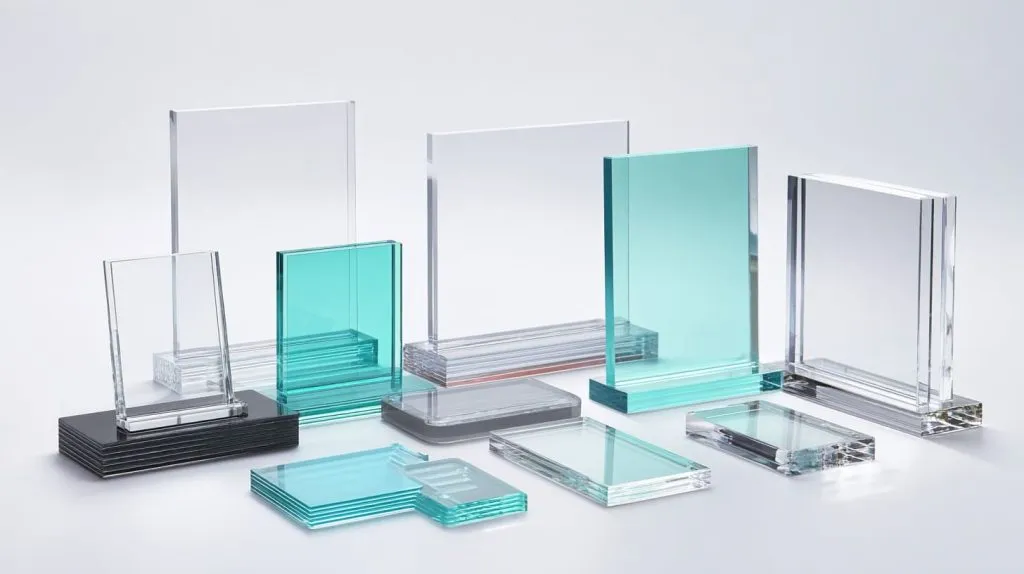
A lot of people hear “thickness” and think of only one thing: more material or less material.
I think that is too narrow.
Thickness is not only a number on a drawing. It is part of how a product behaves. It affects strength. It affects confidence. It affects how safe the product feels in the hand. It also affects how the buyer gets judged later by his own customer.
Thickness vs Function
The first thing thickness changes is structure.
Acrylic is a useful material. It is clear, neat, easy to fabricate, and visually attractive. But it is still a material with limits. If the sheet is too thin for the job, it may flex too much. It may crack under stress. It may feel unstable even before it breaks.
That matters a lot in real products.
For example, a small sign holder on a counter may work well in 2 mm or 3 mm acrylic. But a long shelf divider, a brochure stand, or a freestanding display unit often needs more support. If the sheet is too thin, the part may bow slightly. That small bow is enough to make the product feel weak.
Here is a simple way I think about it:
| Function Need | Thin Acrylic Risk | Thicker Acrylic Benefit |
|---|---|---|
| Load-bearing | Sagging or bending | Better rigidity |
| Repeated handling | Cracks near edges | More stable use |
| Assembly stress | Stress marks or breakage | Better tolerance |
| Shipping survival | Higher damage rate | Better durability |
Acrylic thickness also affects impact resistance in a practical way. I am not saying thick acrylic becomes unbreakable. It does not. But a thicker part usually has more room to absorb minor mistakes during packing, assembly, and daily use.
One small hit during warehouse handling can tell you a lot about whether your design was realistic.
When I look at a drawing, I never ask only, “Can this be made?” I ask, “Can this part survive normal human behavior?”
Thickness vs Application Scenarios
This is where people often oversimplify the topic.
Not every acrylic project needs thick material. That would be wasteful too. A light cosmetic riser, a countertop sign, and a furniture support panel do not live the same life. They should not be judged the same way.
Acrylic thickness must match the job.
Common application differences
- Retail display items often need a balance between clarity, light weight, and enough strength for daily handling
- Furniture parts usually need more rigidity because span and load matter more
- Protective covers may need thickness based on impact risk, fit, and shape stability
- Acrylic boxes may need extra thickness when the box is large, stacked, or moved often
Indoor and outdoor use also matter. Heat, UV exposure, cleaning habits, and environmental changes can make weak designs show their flaws faster. A thin part that looks acceptable indoors may start looking tired much sooner in a rougher setting.
Then there is the issue of touch frequency. A display that stays in one place has a different risk profile from a display that gets cleaned, lifted, opened, and moved every day.
I tend to become cautious the moment I hear that a product will be handled often, stacked, or shipped internationally, because those three words usually mean the thickness question deserves much more attention.
Acrylic thickness is not a decoration choice. It is a behavior choice.
That leads to the next uncomfortable question: if thickness matters this much, why do so many buyers still choose the thinner option?
Why Do Buyers Choose Thinner Acrylic?

I understand why buyers do it.
Most of the time, it does not come from carelessness. It comes from pressure.
A buyer sits between cost targets, supplier quotes, customer expectations, and deadline stress. When several suppliers send prices, thinner acrylic often helps one quote look more attractive right away. That is very hard to ignore.
Price Pressure in B2B Purchasing
In many B2B projects, the quotation stage shapes the whole mood of the decision.
The buyer compares line by line:
- material cost
- fabrication cost
- packaging cost
- shipping cost
A thinner acrylic option often lowers the first number. That first number gets attention fast.
I have seen cases where the difference between 3 mm and 5 mm acrylic made one supplier look much more competitive, at least at first glance. The buyer feels he is doing his job well by controlling cost. That instinct is understandable.
Here is the problem. The quote shows the cost to make the part. It does not always show the cost to live with the part.
| Stage | What Buyer Sees Easily | What Buyer May Miss |
|---|---|---|
| Quotation | Lower sheet cost | Weak long-term performance |
| Procurement | Better margin on paper | More replacements later |
| Approval | Easier internal sign-off | Risk of customer complaints |
| Shipping | Slight weight savings | Higher breakage loss |
That gap between visible savings and invisible risk causes many bad thickness choices.
Misunderstanding of Material Performance
Another reason is simple misunderstanding.
A lot of people assume acrylic is acrylic. They think if the transparency looks the same, the real-world performance will be close enough. That is not always true.
A 2 mm sheet and a 5 mm sheet may both look clear when they are flat on the table. But once they become a finished product, the difference becomes very obvious.
This shows up in three ways:
1. Stiffness gets underestimated
People often think the part only needs to “hold shape.” But in use, the part may also need to resist leaning, shaking, slight pressure, or repeated movement.
2. Stress points get ignored
Screw holes, bonded corners, cutouts, and narrow strips all create local stress. Thin material has less forgiveness in those areas.
3. Time is forgotten
Acrylic can look fine on day one and look much worse after weeks or months of use. This is where early confidence becomes late frustration.
I get nervous when someone says, “It should be okay,” without discussing size, usage, and support points. Those four words have caused a lot of ugly surprises.
Supplier Influence and Simplified Quotes
Suppliers also play a role.
Some suppliers suggest thinner acrylic because it helps them win the order. I say that plainly because it happens. Not every supplier is thinking deeply about the end use. Some are only thinking about how to make the quote more acceptable.
And some buyers unintentionally encourage this. They ask for the best price first, but they do not ask enough engineering questions. That creates a quoting environment where the lower number gets rewarded.
A better early discussion would include questions like:
- Where will the product be used?
- How often will it be handled?
- Will it carry weight?
- Will it ship assembled or flat?
- Does the customer want a premium feel or only basic function?
Without that discussion, thickness becomes a guess. And guessed thickness often becomes a future problem.
The trouble is, thin acrylic does not always fail right away. Sometimes it waits. That delayed failure makes the original decision look reasonable for just long enough to fool people.
What Problems Can Cheap (Thin) Acrylic Cause?

This is the section where theory becomes expensive.
Thin acrylic can cause problems in a very practical, very annoying way. Not dramatic at first. Just persistent. A bend here. A crack there. A disappointing feel in the customer’s hand. One by one, those things add up.
Structural Issues in Real Use
The most direct problem is poor structural behavior.
Acrylic that is too thin for the job may:
- bend under light load
- sag over time
- twist during assembly
- crack at joints or corners
- wobble in freestanding designs
That last one matters more than people think. A display that wobbles but does not break still creates distrust. It makes the product look less professional. It tells the customer, even without words, that the design was pushed too far.
Common failure points
| Product Area | Typical Thin-Acrylic Problem |
|---|---|
| Long shelves | Mid-span sagging |
| Bonded corners | Stress cracking |
| Screw points | Radial cracking |
| Tall display stands | Leaning or wobbling |
| Lids and covers | Shape distortion |
I once saw a clear acrylic display that looked beautiful in photos. The edges were polished. The bending was clean. The branding was elegant. But when someone touched the top section, the whole piece flexed more than expected. Nothing broke at that moment. Still, the product lost authority in one second.
That is the kind of thing buyers remember too late.
From where I stand, a part that “technically survives” but feels weak has already started to fail.
Transportation and Handling Damage
Shipping is where thin acrylic often gets exposed.
A factory may pack the parts carefully. The cartons may look fine when they leave. Then the real world begins. Loading, stacking, vibration, impact, unloading, warehouse transfer, and customer unpacking all test the design in ways a nice sample never does.
Thin acrylic increases the odds of:
- edge chipping
- corner cracks
- panel breakage
- deformation under pressure
- higher reject rates after arrival
And when that risk goes up, packaging cost usually goes up too. More foam. More separators. More protection. More labor.
So the buyer saves on sheet thickness, then pays back part of that saving in packaging. Sometimes he pays back even more in replacements.
Thin acrylic and shipping pressure
| Factor | Thin Acrylic Effect |
|---|---|
| Carton compression | More likely to deform or crack |
| Repeated vibration | Higher edge stress |
| Long-distance export | Greater damage exposure |
| Multi-stop logistics | More handling risk |
That is why I never feel relaxed about thin acrylic just because the sample looks good in the factory.
Poor Visual and Brand Perception
This part is easy to miss if people focus only on breakage.
Thin acrylic can look cheap even when it stays intact.
It may feel lighter in a bad way. It may reflect light in a less premium way. It may look too delicate for the product it holds. In display work, visual confidence matters. A luxury cosmetic brand, for example, does not want the display to look flimsy. A premium organizer should not feel like a temporary prop.
The customer often cannot explain this with technical words. They just say things like:
- “It feels weak.”
- “It looks less premium.”
- “Can we make it stronger?”
- “This does not feel like the sample image.”
That gap between appearance expectation and physical impression creates dissatisfaction fast.
If the acrylic product is meant to support brand image, I pay close attention to how the thickness changes the emotional feel, because customers are often reacting to that before they ever think about material specs.
Weak structure hurts function. Weak visual presence hurts trust. And both of those start feeding hidden cost.
How Thin Acrylic Increases Hidden Costs
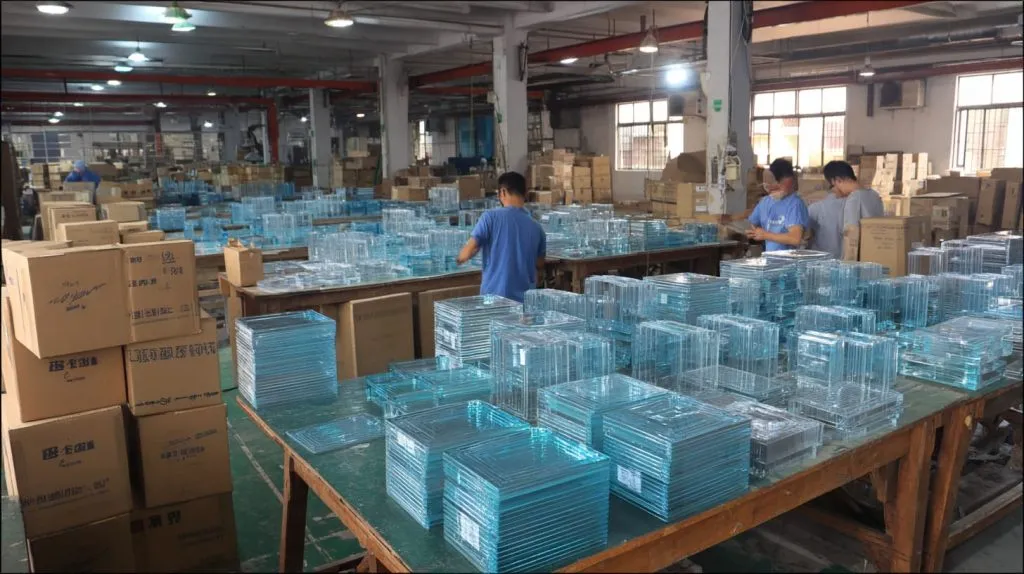
This is where the cheap option starts showing its real price.
I think many thickness mistakes happen because people compare material cost instead of project cost. That sounds small, but it changes everything.
Rework and Replacement Costs
When thin acrylic causes failures, the extra cost does not arrive in one clean line. It arrives in pieces.
You may need to:
- remake damaged parts
- sort defective units
- reassemble products
- delay shipment
- send replacements later
That is already expensive. Then there is the labor behind it. Someone has to inspect. Someone has to explain. Someone has to manage the customer’s reaction.
| Hidden Cost Area | How It Grows |
|---|---|
| Reproduction | New material and fabrication |
| Labor | Extra inspection and repacking |
| Delay | Missed delivery window |
| Communication | More back-and-forth with customer |
| Scrap | Unusable damaged parts |
I have learned to be suspicious of any small material saving that can create repeated manual work later, because labor and trouble multiply much faster than acrylic cost.
Customer Complaints and Returns
Customer complaints are not just an emotional problem. They are a business cost.
When the end user receives cracked, bent, or disappointing acrylic parts, the buyer has to respond. Sometimes that means refund. Sometimes replacement. Sometimes future distrust.
That future distrust is hard to measure, but it is real.
A buyer may think, “We only had a few damaged pieces.” But the customer may think, “This supplier’s judgment is not reliable.” That difference matters a lot in B2B relationships.
Typical complaint chain
- Customer receives product
- Product feels weaker than expected
- Customer questions quality
- Buyer explains or negotiates
- Brand confidence drops a little
That “little” drop can be the expensive part.
I pay attention to complaint risk long before production, because once the customer starts doubting the product quality, even small issues begin to feel bigger.
Logistics and Packaging Costs
Thin acrylic often forces the logistics system to work harder.
To reduce damage risk, you may need:
- thicker protective foam
- stronger outer cartons
- more internal partitions
- reduced stacking density
- more careful packing labor
This means the initial material saving can be eaten away by protective measures.
And there is a painful irony here. Sometimes buyers choose thin acrylic to save money, then spend extra money protecting that thin acrylic from the exact weakness they introduced at the start.
That is not efficient. It is just delayed spending.
The more global the shipment, the more serious this becomes. International export is not a gentle process. A design that barely survives local handling may become a headache in cross-border logistics.
That naturally leads to the bigger question: when does thicker acrylic actually become the smarter financial choice?
When Is Thicker Acrylic Actually More Cost-Effective?

I do not believe thicker is always better.
That would be lazy thinking too.
But I do believe thicker acrylic becomes more cost-effective the moment it reduces enough risk to protect the whole project. That is the key. Not “more material is nicer.” Not “premium means heavy.” Just simple cost logic across the full life of the product.
Long-Term Cost vs Initial Cost
A project does not end when the factory finishes production.
It continues through:
- shipping
- installation
- retail use
- cleaning
- handling
- customer feedback
- repeat orders
A slightly thicker acrylic part often performs better across that full chain. If it reduces breakage, wobble, cracking, and complaint rates, then the extra sheet cost may be the cheaper decision overall.
| Option | Upfront Cost | Long-Term Risk | Total Value |
|---|---|---|---|
| Thinner acrylic | Lower | Higher | Often weaker |
| Thicker acrylic | Higher | Lower | Often stronger |
That does not mean every product needs the thickest option available. It means the correct thickness can save money by preventing predictable failure.
When a product will be used for months or years, I care much more about the total pain it creates than the first number on the quote sheet.
Stability in Mass Production
Mass production exposes weak thickness choices fast.
A design that seems acceptable in one handmade sample may become unstable across hundreds or thousands of units. Fabrication tolerances, assembly stress, and packaging variation all start to matter more.
Thicker acrylic often helps by giving more production forgiveness.
Benefits in production
- More stable parts after cutting and bending
- Less deformation during bonding
- Better consistency in assembled appearance
- Lower reject rate from accidental stress damage
This does not solve bad design by itself. But it can make a reasonable design much more robust in real factory conditions.
The first sample can flatter a weak design. Volume production usually tells the truth.
Better Fit for Premium Positioning
Some products are not only functional. They are part of a brand story.
Acrylic used in premium retail, cosmetics, gifts, displays, and organizers often needs to signal quality through feel, stability, and visual confidence. Thickness contributes to that signal.
A better thickness can make a product feel:
- more solid
- more trustworthy
- more valuable
- more worth the asking price
That perceived value matters. A display that feels strong supports the brand placed on it. A weak display quietly works against that brand.
If the product is meant to sit under bright store lighting or represent a premium image, I usually lean away from the thinnest workable option, because “barely enough” rarely looks impressive in the real world.
So now the hard part becomes practical: how do I choose the right thickness instead of just talking about thick versus thin?
How to Choose the Right Acrylic Thickness?

This is where experience matters more than theory.
I do not choose thickness by habit alone. I look at the job the product must do. Then I look at the risks around it.
Key Decision Factors
Several factors should guide thickness choice.
1. Product size and span
A long flat surface behaves very differently from a small compact part. As size increases, bending risk usually increases too.
2. Load requirements
Will the acrylic hold products? Support weight? Stay empty but upright? A decorative panel and a shelf should not be judged the same way.
3. Usage frequency
Will people touch it once a week or fifty times a day? Repeated handling changes the right answer.
4. Installation method
Freestanding, wall-mounted, slotted, stacked, or screw-fixed structures each create different stress patterns.
| Decision Factor | Why It Matters |
|---|---|
| Size | Bigger parts need more rigidity |
| Load | More weight means more stress |
| Handling frequency | More contact means more fatigue risk |
| Fixing method | Holes, joints, and slots create weak points |
| Shipping method | Export demands more durability |
My first filter is never “What is the cheapest thickness we can get away with?” It is “Where will this part fail first if we push the thickness too low?”
Typical Thickness Guidelines by Application
These are not absolute rules. They are starting points.
| Application Type | Common Thickness Range |
|---|---|
| Small sign holders or simple inserts | 2–3 mm |
| Standard retail displays | 3–5 mm |
| Boxes, risers, organizers | 3–5 mm, depending on size |
| Structural display parts or furniture items | 6 mm and above |
A very small display may perform well in 2 mm or 3 mm. A standard countertop display often feels safer in 3 mm to 5 mm. Large organizers, cabinets, or furniture parts often need 6 mm or more, depending on span and support.
Still, numbers alone are not enough.
A well-supported 4 mm part may perform better than a poorly designed 6 mm part. Geometry matters. Structure matters. Joining method matters.
Engineering vs Cost-Driven Decisions
This is where the smartest buyers separate themselves.
A cost-driven decision asks, “Which thickness makes the quote easier to approve?”
An engineering decision asks:
- What job must this part do?
- What abuse will it face?
- What quality level does the customer expect?
- What does failure cost later?
I trust prototype testing much more than assumptions. A real sample tells the truth fast. Lift it. Press it. Pack it. Simulate use. Watch where it flexes. Watch how it feels.
The moment I see a buyer willing to test rather than guess, I usually feel much better about the project outcome.
And this is also where a good manufacturer becomes very valuable.
How Professional Manufacturers Help Avoid Thickness Mistakes
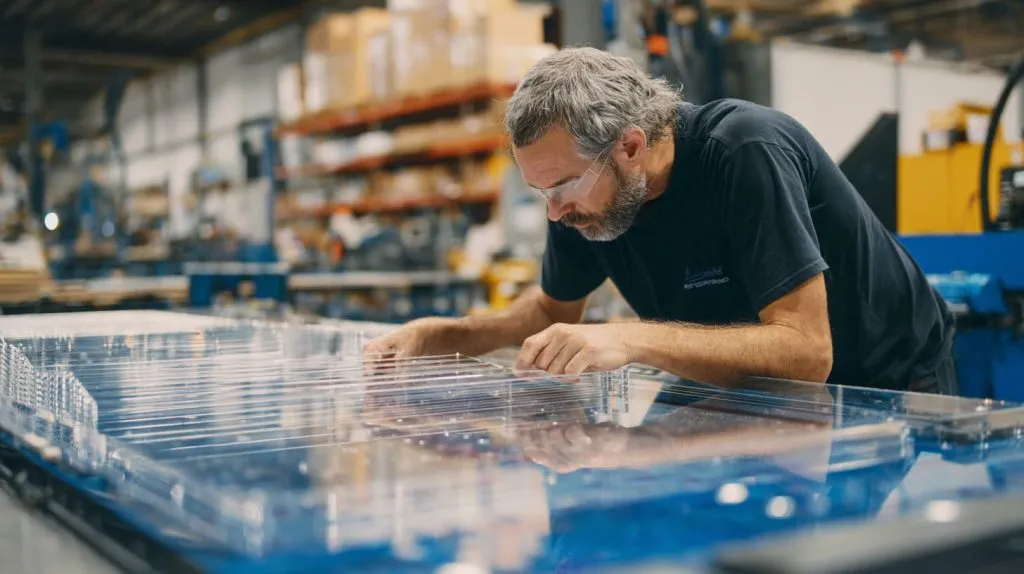
A good manufacturer should do more than cut acrylic to drawing.
I say that because too many problems begin when the factory acts like a machine instead of a thinking partner. In custom work, that approach is risky.
Design Optimization Support
A professional manufacturer should look at the actual application and give practical input.
That input may include:
- suggesting a stronger thickness
- adjusting support structure
- revising corner design
- improving slot width or joint layout
- balancing appearance and durability
Sometimes the best cost solution is not simply adding thickness everywhere. Sometimes it means adding support in the right place and keeping the rest efficient.
| Manufacturer Support Area | Why It Helps |
|---|---|
| Thickness recommendation | Avoids under-design |
| Structure review | Improves rigidity |
| Assembly feedback | Reduces stress failures |
| Packaging advice | Lowers shipping damage |
I put more trust in manufacturers who ask hard questions early, because that usually means they care about the product after shipment, not only before payment.
Material Selection and Testing
Not all acrylic sheets are equal in real production.
Good manufacturers also think about:
- sheet quality
- clarity
- internal stress behavior
- cutting and polishing response
- bonding reliability
High-transparency acrylic may look beautiful, but it still needs the right thickness and proper fabrication method to perform well. Poor sheet quality or poor process control can make a weak thickness choice even worse.
This is why testing matters. A manufacturer should not just say, “We can make it.” They should also help assess whether the chosen specification is sensible.
A supplier who never challenges a risky thickness choice may be easy to work with at the quoting stage, but that ease can become expensive later.
Custom Solutions Instead of One-Size-Fits-All
Custom projects need custom judgment.
One customer may need a lightweight display for short-term promotion. Another may need a durable organizer for long-term retail use. Another may need a premium acrylic box that must survive export and keep a luxury feel.
Those three jobs should not receive the same thickness advice.
That is why I believe tailored recommendations matter so much. Real custom work is not about pushing every buyer toward thicker material. It is about finding the point where cost, durability, appearance, and use condition all make sense together.
The factories I respect most are the ones that treat thickness as part of the product design, not just part of the material bill.
And when all of that is taken seriously, the final conclusion becomes much clearer.
Conclusion

Cheap acrylic thickness can look like a win at the start. I understand the temptation. I also understand why so many buyers fall into it. The quote looks better. The cost line drops. The decision feels efficient.
But I do not believe material decisions should be judged by how comfortable they look on day one.
I believe they should be judged by what they do later.
That is why I think thin acrylic becomes expensive so often. It shifts cost from the visible stage to the painful stage. It moves money away from the quote and into damage, replacement, packaging, complaints, weak presentation, and lost confidence. It does not always fail loudly. Sometimes it fails quietly, which is even worse because people keep paying for it in small, frustrating pieces.
My view comes from watching real products move through real factories and real supply chains. I have seen projects where a small upgrade in thickness prevented much bigger losses later. I have also seen buyers chase the lowest number and then spend months managing the result. That pattern is why I think total lifecycle cost matters more than material price alone.
When I decide on acrylic thickness, I am not trying to win a quotation game. I am trying to protect the final product from predictable trouble.
That is the real point.
If you are reviewing a new acrylic display, box, organizer, stand, or furniture part, do not ask only whether a thinner sheet can be made. Ask whether it can still perform, still look right, and still protect your customer relationship after shipping and use.
That one shift in thinking can save a lot of money.
And if you want a second opinion on thickness for a custom acrylic project, I think it is worth discussing the real use case before the drawing gets locked. That conversation usually costs very little. The wrong thickness decision often costs much more.