Skip to content

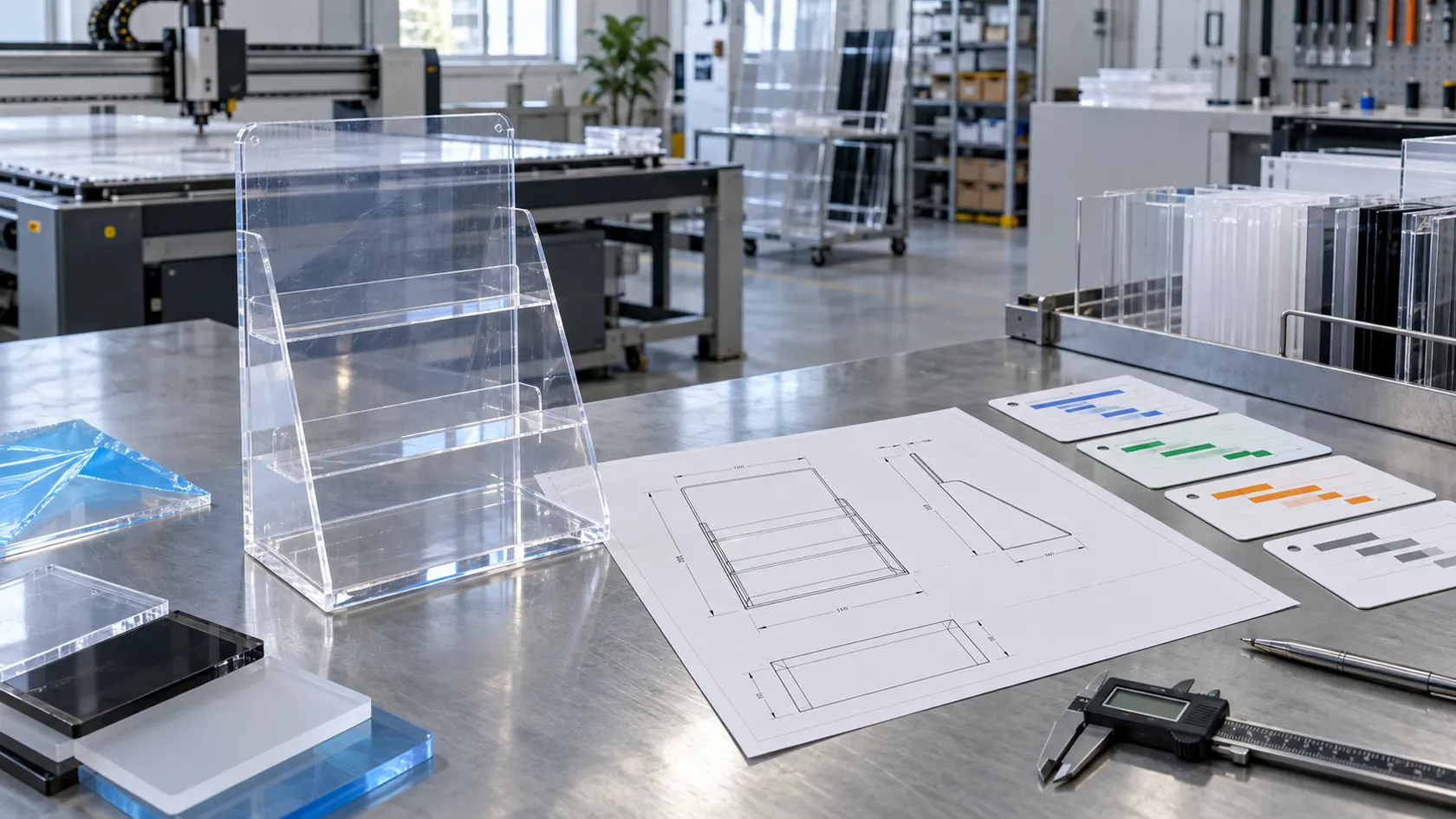
Custom acrylic display production time depends less on the cutting step than on when the specification becomes stable. A display that has an approved drawing, material, artwork, packing plan, and sample can move into a scheduled bulk run. A display that still has open questions about fit, joints, printing, or hardware is still in development, even if a launch date is close.
When I review a programme, I separate the full project calendar from factory production time. Quotation, drawing revision, sample approval, bulk fabrication, final inspection, packing, and freight each need their own owner and decision date. A supplier can schedule production only after the inputs that control the build are released.
For a new display programme, I would plan backward from the required in-market date and reserve time for approvals and logistics rather than treating a quoted production window as the entire project. Feilong can review the build path through our custom acrylic fabrication service before the drawing is released.
Start the clock at a controlled production release
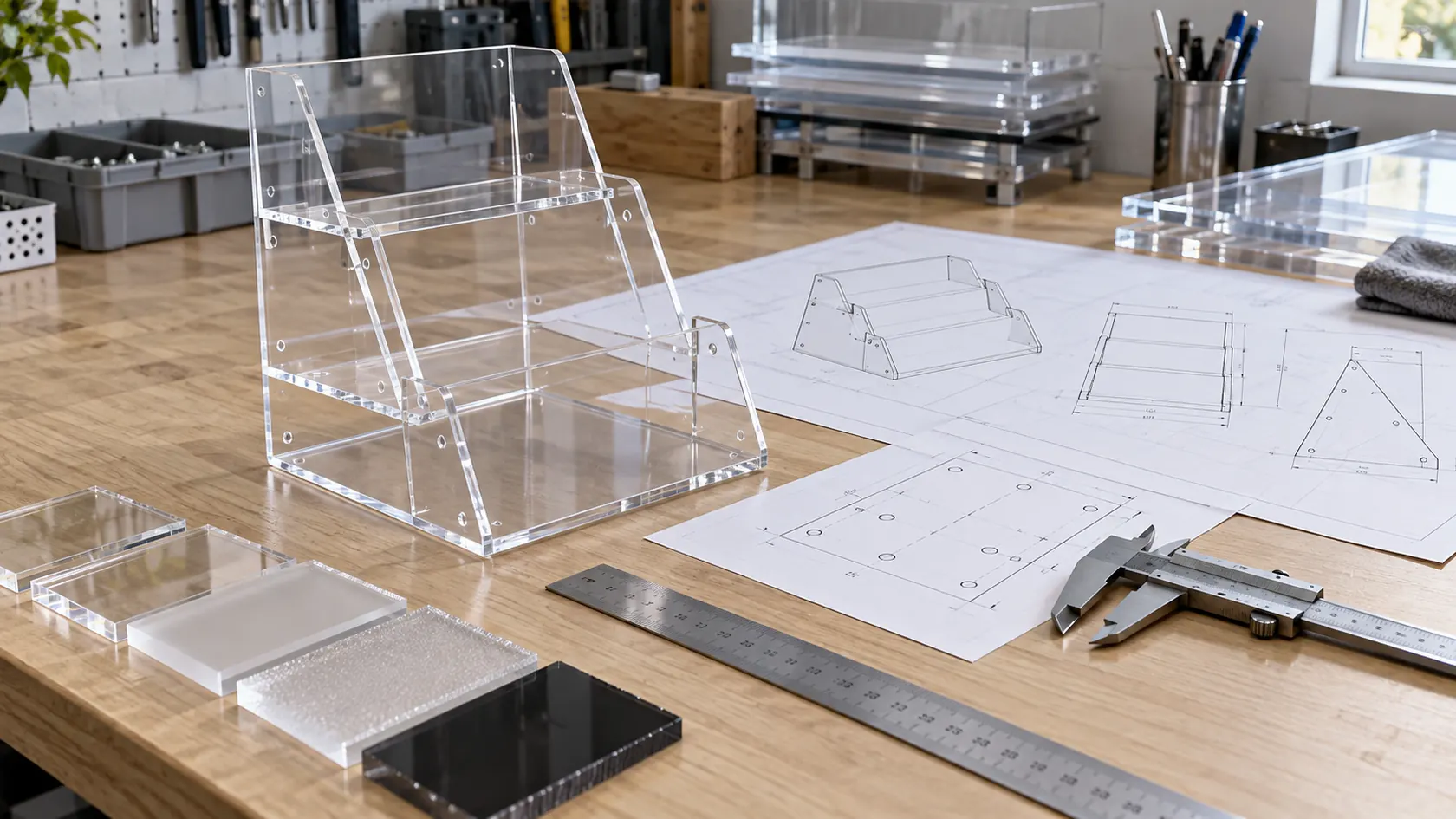
The useful start date is not the first email or even the first quotation. It is the point at which the manufacturer has the information needed to make the agreed display repeatedly: a drawing or dimensioned reference, acrylic type and thickness, visible-finish expectation, artwork, hardware, quantity, packing state, and approval route.
A clear stand may look simple, but a shelf position, finger clearance, bend radius, hole pattern, bonded divider, print location, or protective-film instruction can change the process. I would flag the dimensions that control product fit and the faces that will be seen at close range; that prevents a fast-looking schedule from hiding a late revision.
Drawing review and sample approval are separate gates
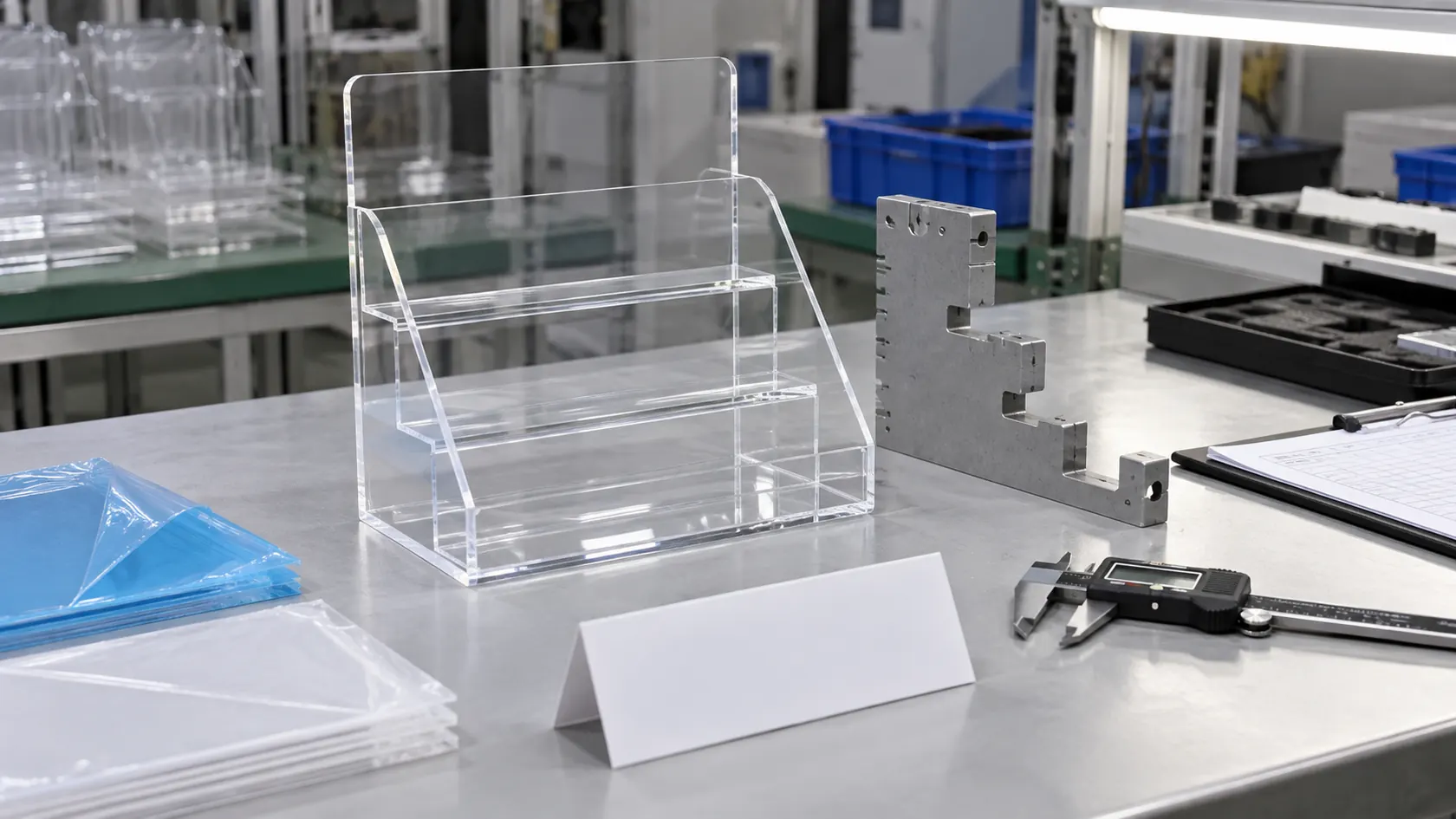
Drawing approval confirms the intended construction. A sample then confirms the physical result: product fit, stability, access, edge appearance, joints, graphics, hardware operation, and packing where relevant. They answer different questions and should not be compressed into one informal approval.
For a first order or a display with several assembled parts, I normally recommend locking the sample acceptance points before it is built. If a sample exposes a necessary change, revise the drawing and record the production revision. Releasing bulk work against an older drawing because the change seems small is one of the easiest ways to create rework.
What happens during bulk fabrication
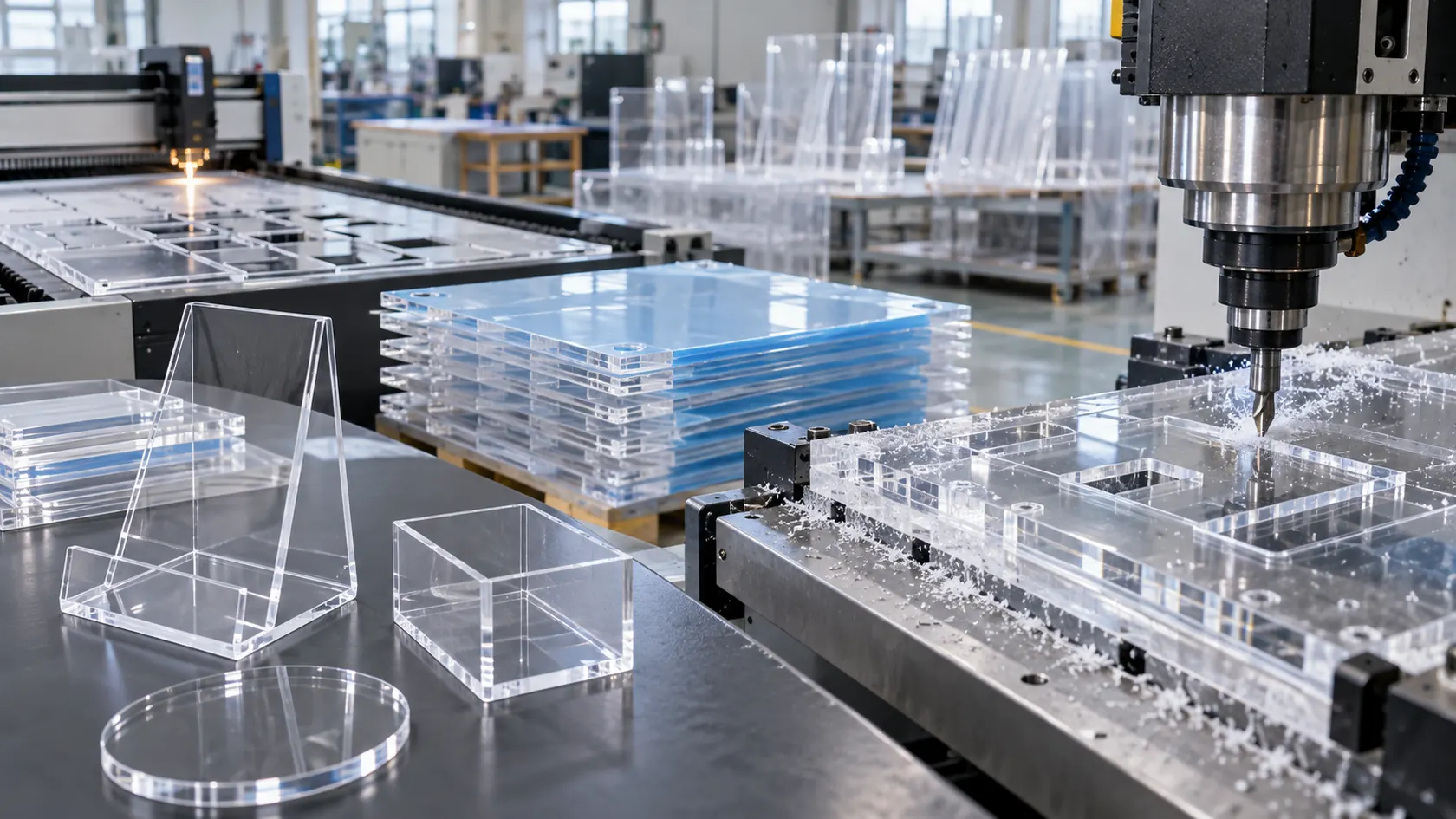
Once the release is controlled, parts may pass through laser cutting, CNC machining, drilling, polishing, heat bending, printing or engraving, bonding, and hardware assembly. Not every display uses every process. A flat sign holder and a multi-level counter display with printed panels and manual assembly have very different scheduling exposure.
I would identify the longest dependency rather than count process names. A special material, a tightly controlled cosmetic edge, an artwork approval, a multi-part bond sequence, or a purchased hardware item can control the date even when cutting itself is quick. The buyer should ask which items must be confirmed before the factory can allocate the production slot.
Finishing and assembly can be the schedule-sensitive work
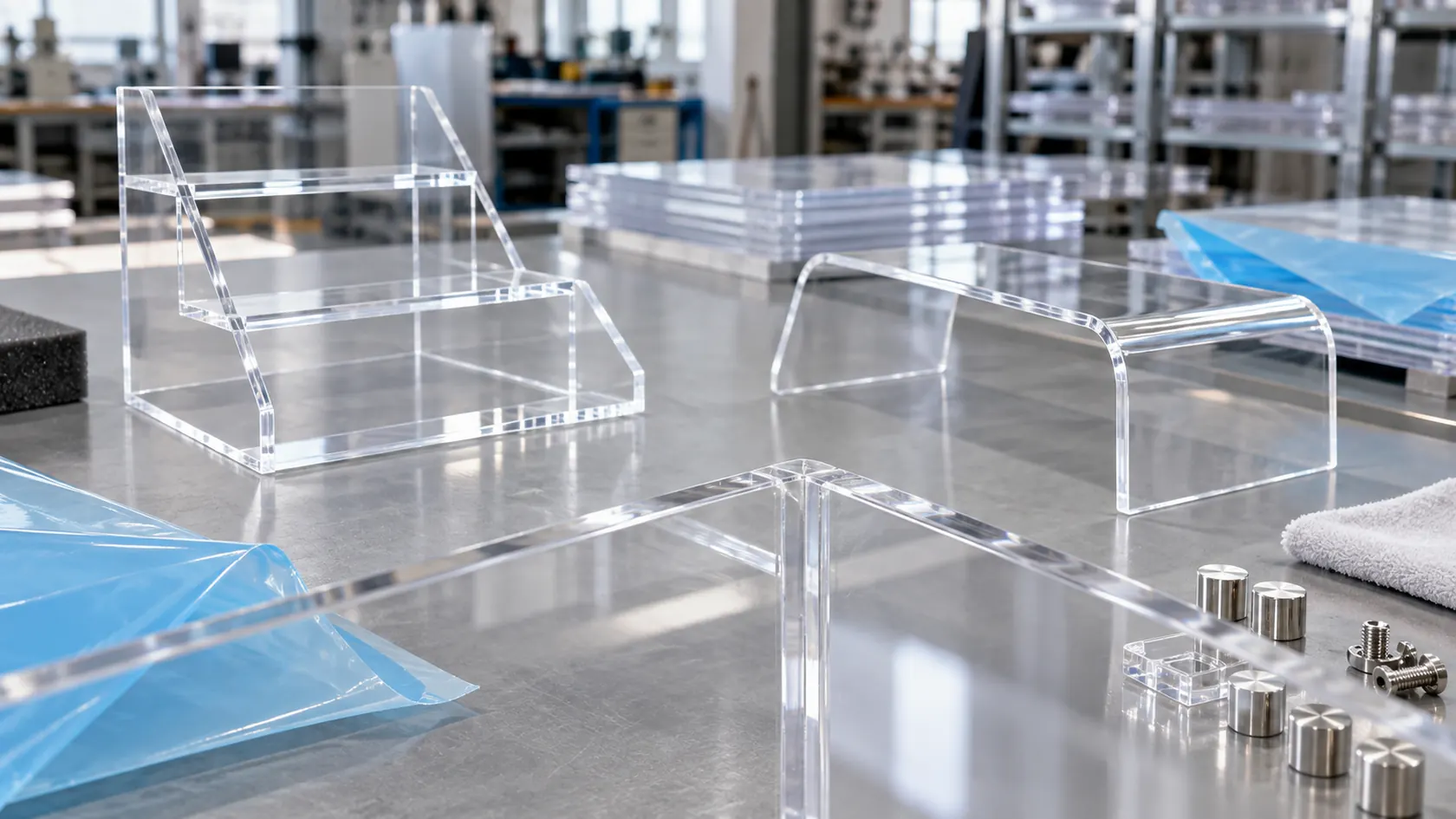
Visible quality is often determined after the profile is cut. Polished edges, clean bonded seams, consistent bends, aligned printing, fitted magnets or hinges, and scratch protection all need handling and inspection appropriate to the design. These steps are especially important for clear displays that shoppers view at close range.
I would not simplify a display specification only to obtain a shorter date without checking the customer-facing effect. Instead, compare practical options: a different joint layout, fewer finish-critical edges, a simpler assembly state, or a design that ships flat. Each option should be reviewed against merchandising, installation, and packaging needs.
Quality control and packing occur before dispatch
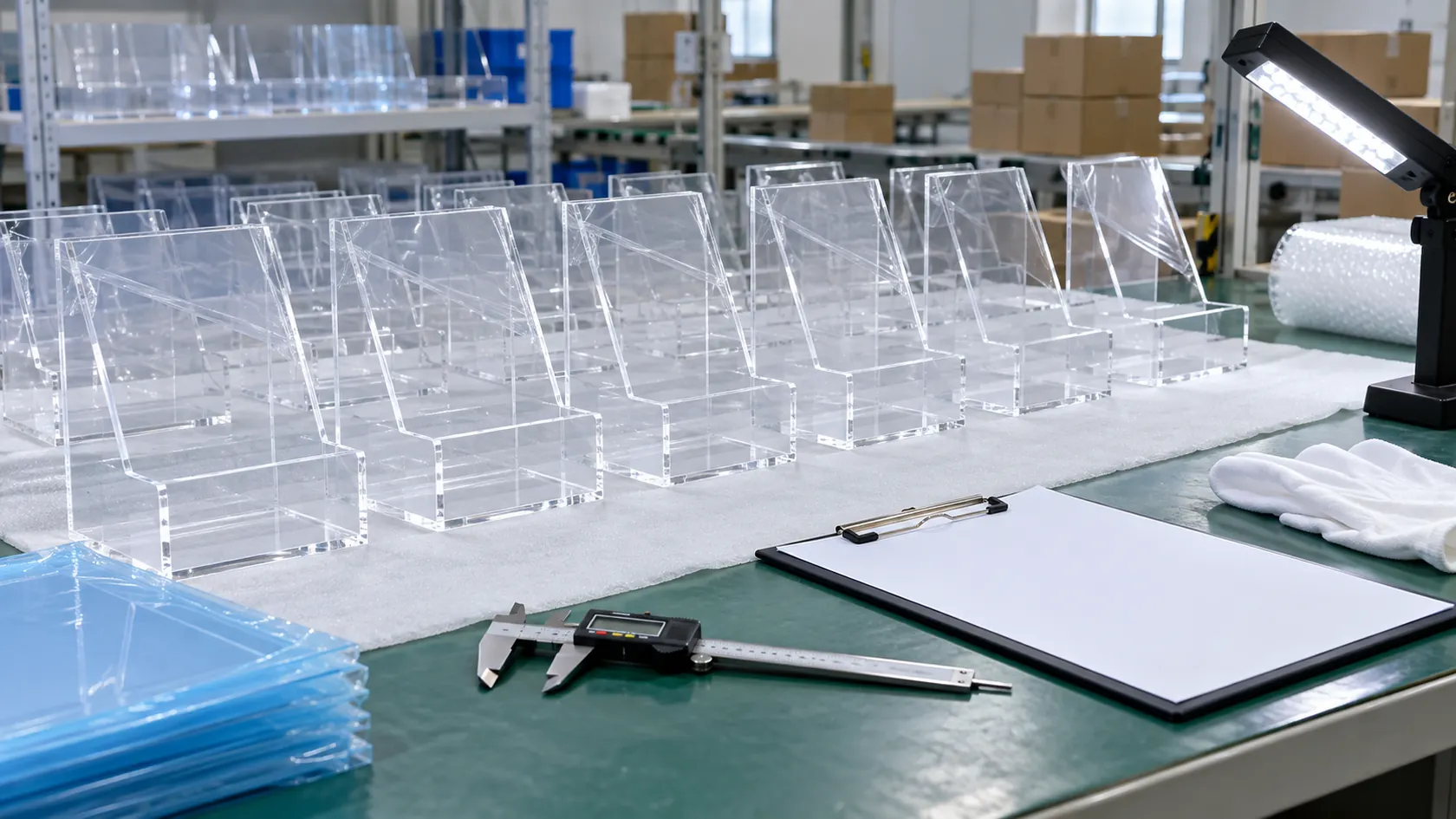
Production is not complete when the last part is fabricated. The agreed checks may include dimensions, product fit, edge and joint appearance, print position, hardware function, count, and final cleanliness. The inspection points should match the approved sample and drawing, not a general description such as “good quality.”
Packing is also part of the production plan. Protective film, sleeves, foam, dividers, hardware bags, carton markings, and whether the display ships assembled or flat-packed affect both the factory sequence and the risk after handoff. I would settle the packing concept before bulk production, particularly for polished clear panels and displays with loose fittings.
Keep production time and freight time separate
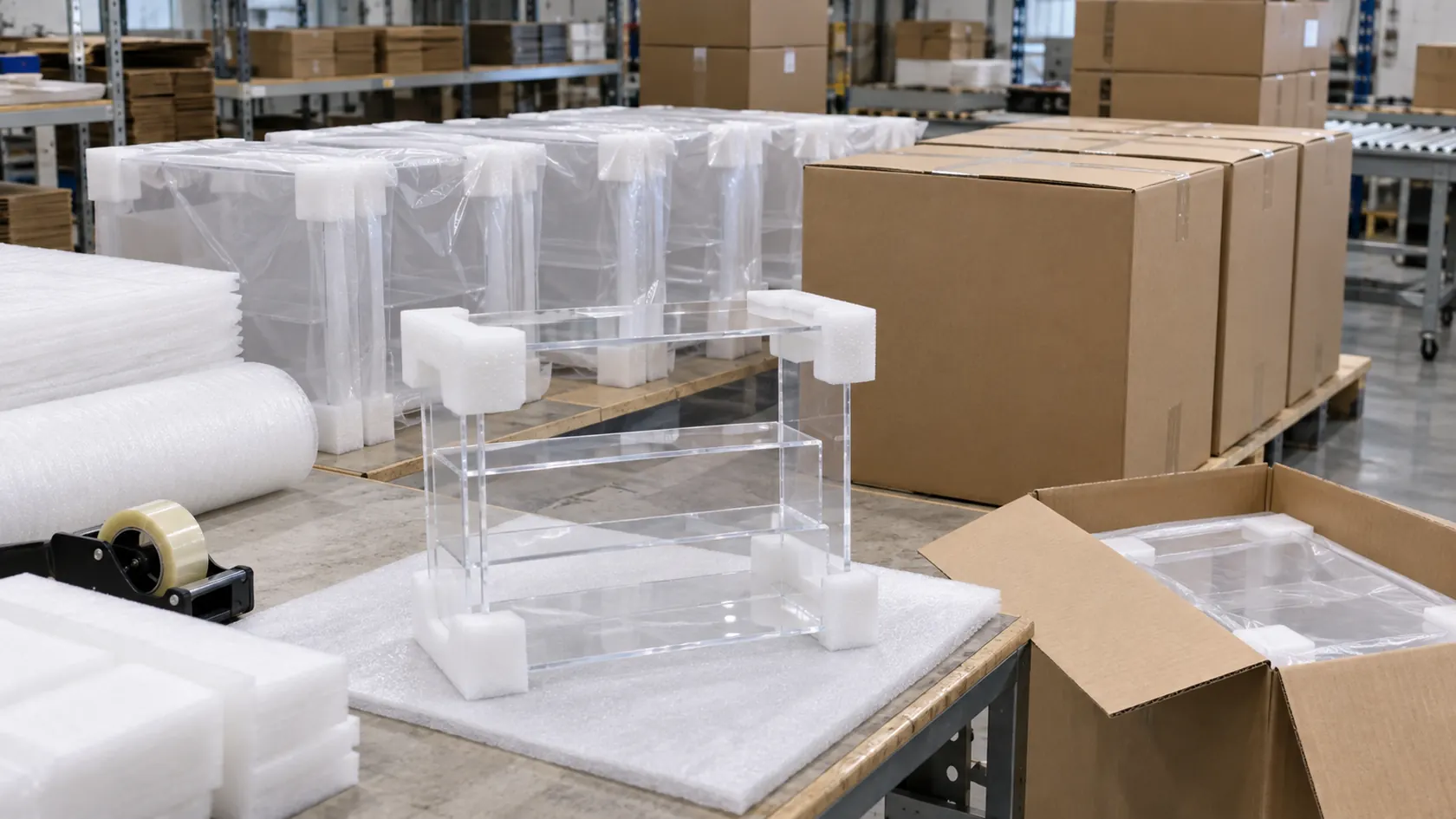
The factory-ready date and the arrival date are not the same commitment. Freight mode, origin handoff, destination, customs route, consolidation, and final delivery all sit outside the fabrication schedule. Build a calendar with separate milestones for sample approval, bulk release, factory inspection, packed-goods readiness, shipment booking, and required delivery.
This separation makes an urgent request easier to evaluate honestly. If the production slot is feasible but freight is the constraint, the right decision may be a different shipping plan or a phased delivery—not a production promise that ignores transport. For display families and application options, see our custom acrylic displays.
A practical lead-time checklist for your RFQ
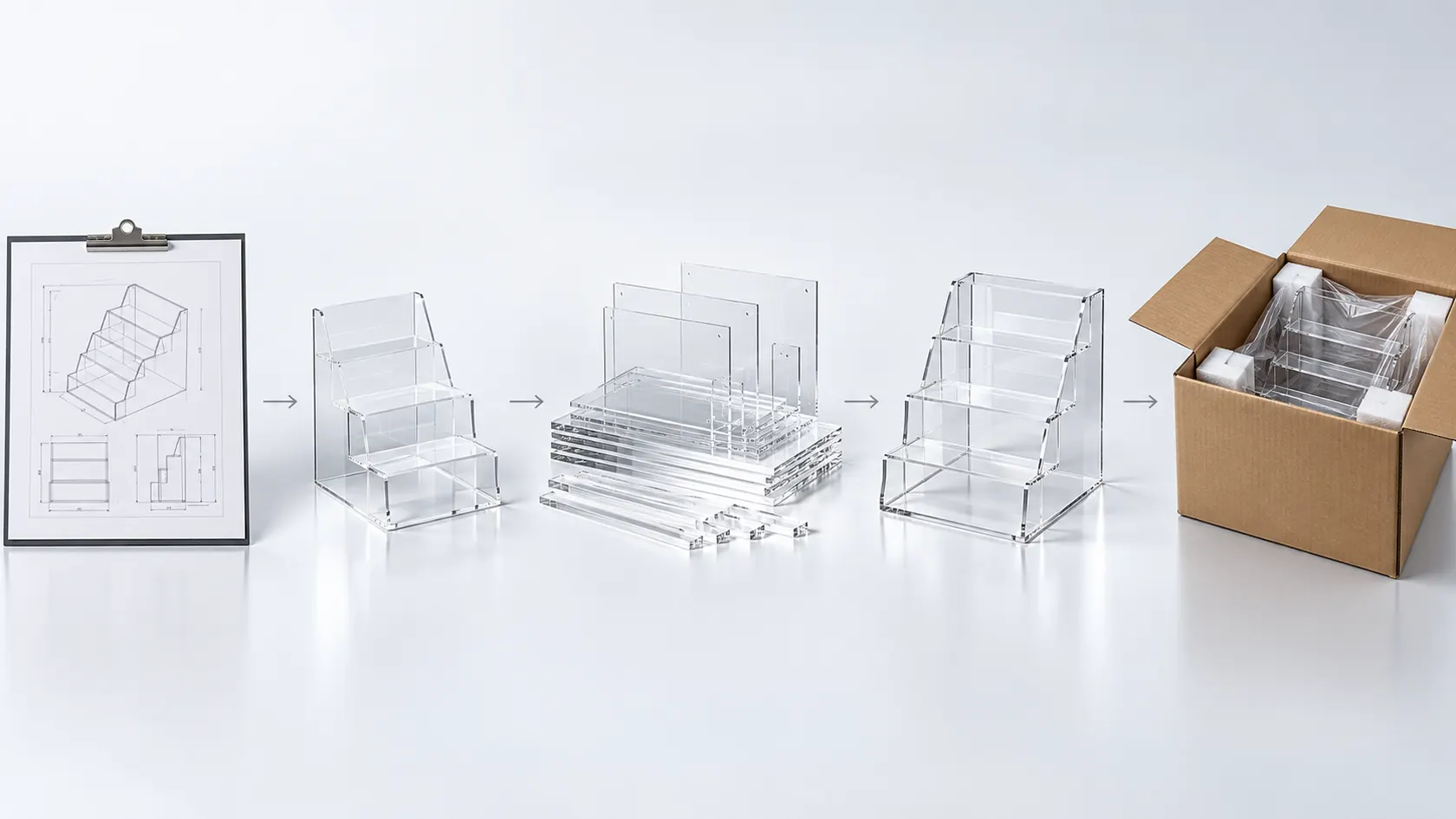
| Release item | Why it affects the production plan |
|---|---|
| Drawing revision and critical dimensions | Defines cut files, fit checks, and construction |
| Material, thickness, color, and finish | Determines material preparation and visible-quality expectations |
| Artwork and branding | Avoids starting print-related work against an unapproved version |
| Sample scope and approval criteria | Closes physical and cosmetic risks before bulk release |
| Quantity and delivery split | Supports capacity planning and packing quantities |
| Hardware and assembly state | Identifies purchased parts and manual assembly dependencies |
| Packing and shipment terms | Makes factory-ready timing distinct from transport timing |
I would ask the manufacturer to identify the open items rather than request a generic rush date. The most reliable way to shorten a programme is usually to give a complete, decision-ready brief early and return approvals on the agreed revision.
Conclusion
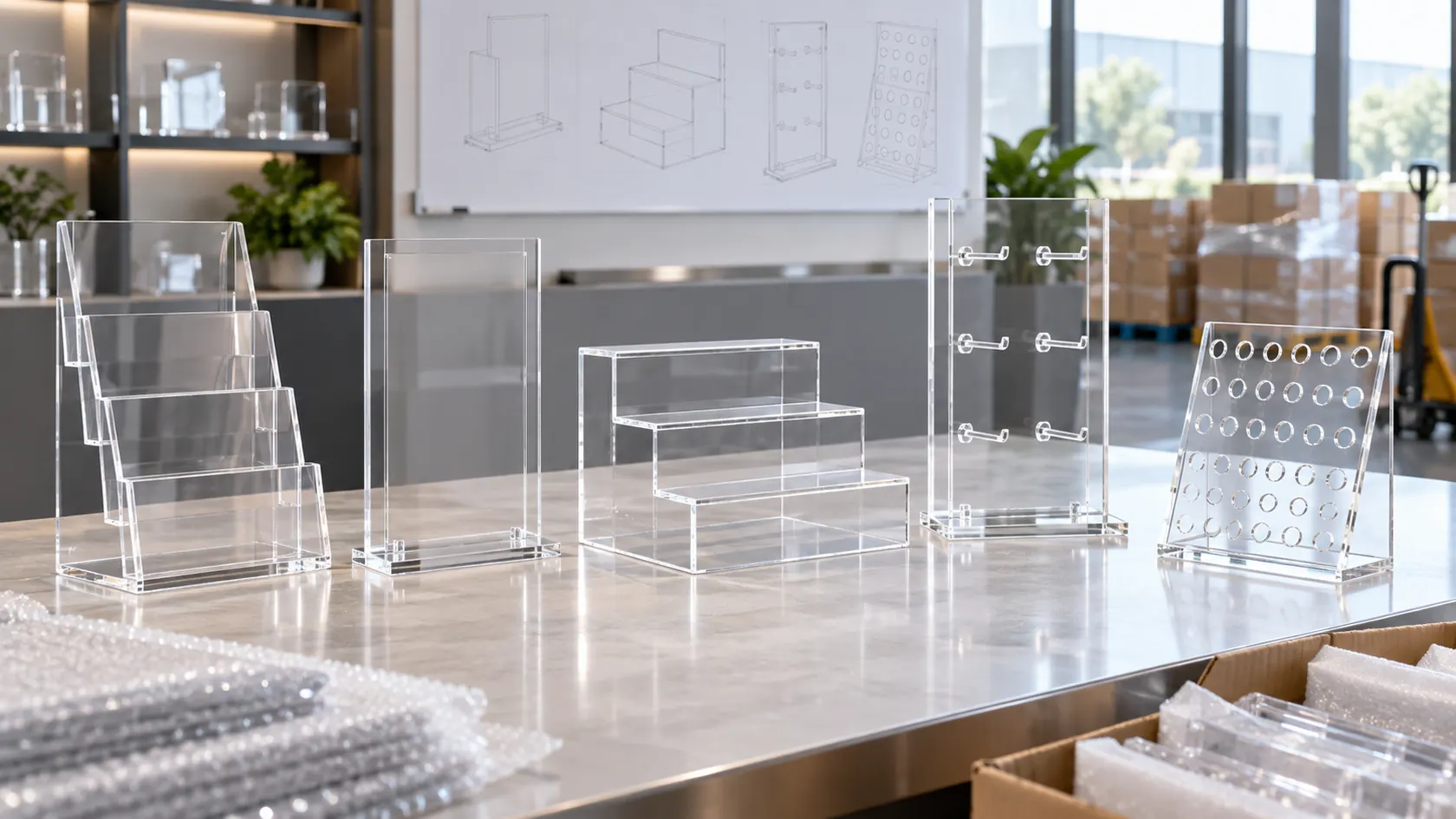
Custom acrylic display production takes as long as the approved design, fabrication route, inspection scope, packing, and shipping plan require. A predictable schedule comes from controlling the release gates—not from treating every display as the same simple acrylic part.
Send Feilong your drawing or reference image, target quantity, required delivery date, display product, material or finish expectations, printing or hardware details, and packaging needs. We can review which decisions need to be closed before sampling and bulk production.