Skip to content


The honest answer is: custom acrylic display cost does not have a reliable catalogue price. A compact countertop riser, a branded multi-tier cosmetics fixture, and a large illuminated floor display can all be called “acrylic displays,” while using very different amounts of material, fabrication, assembly, and packing.
When I review a quotation request, I start with the display’s job rather than a target unit price. What must it hold, where will it sit, what must the customer see, and how many identical units must arrive intact? That is the information that turns a broad cost question into a quote that can be compared fairly.
What a custom display quote actually covers
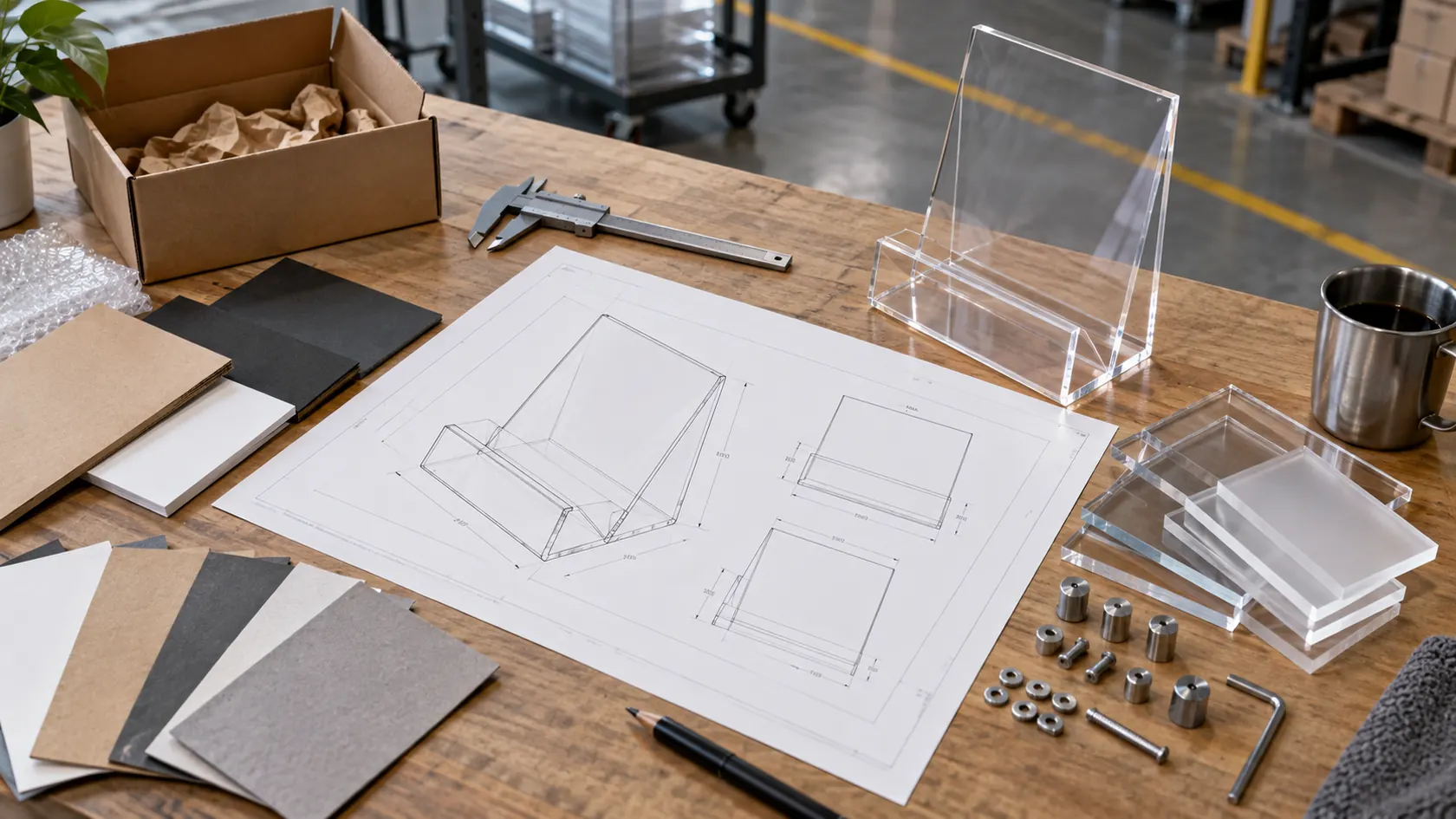
For a B2B display program, the unit price is only one part of the cost decision. The quote normally reflects acrylic sheet, cutting and machining, bending or bonding, finishing, printing or engraving, hardware, assembly, inspection, protective packing, and the quantity over which setup is spread.
For projects built around a countertop or retail fixture, start by defining the display format as clearly as you would for custom acrylic display stands. A supplier can then separate the base structure from optional branding, hardware, and packing instead of hiding assumptions inside one headline figure.
I would be careful with online “typical prices.” They often mix retail one-off cases, domestic fabricated fixtures, and factory-direct production displays. A price can be useful only when the dimensions, thickness, finish, quantity, delivery terms, and included packaging are comparable.
| Quote element | Why it changes cost | What to specify |
|---|---|---|
| Acrylic material | Sheet area, thickness, grade, color, and waste pattern all matter | Visible surfaces, finish, thickness, and color |
| Fabrication | Simple cuts differ from CNC profiles, drilled holes, bends, and bonded assemblies | Drawing, cutouts, radii, joints, and cosmetic requirements |
| Branding and hardware | Print, engraving, lighting, locks, magnets, hinges, and fasteners add parts and work | Artwork, hardware list, and approval standard |
| Quantity and packing | Setup is shared across units; carton volume and protection affect landed cost | Quantity tiers, packed state, ship-to location, and delivery terms |
Material, dimensions, and structure set the baseline
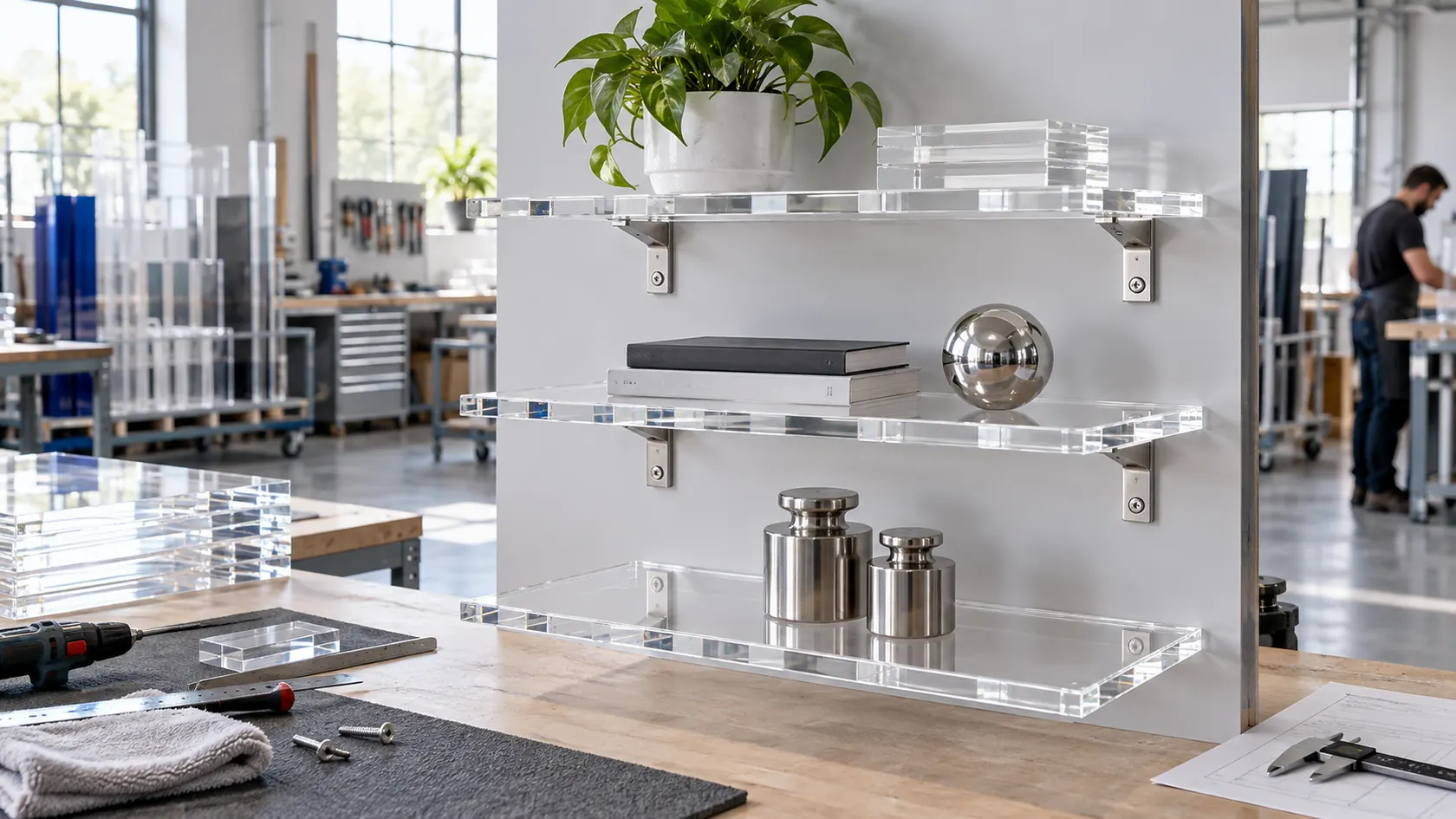
Overall width, height, depth, shelf count, and acrylic thickness establish the starting point. Larger faces consume more sheet and can create more offcut. Thicker panels use more material, take longer to cut cleanly, weigh more, and can change the handling and packing approach.
For a visible retail fixture, I also ask which faces need premium optical appearance. Cast and extruded acrylic can behave differently in machining, polishing, bonding, and appearance; a buyer should state the visual expectation rather than assume every clear sheet is interchangeable. The Acrylic Museum explains the basic acrylic manufacturing distinction, which is useful background when a display calls for close-view edges or bonded panels. Read its cast-versus-extruded overview.
Structure is not merely an engineering detail. A long shelf, a tall narrow tower, or a display with a high center of gravity may need different support, fixing points, or thickness than a small countertop holder. I would rather resolve that in the drawing stage than add material after a sample exposes deflection, instability, or stress around a fastener.
Fabrication and finish can outweigh raw material savings
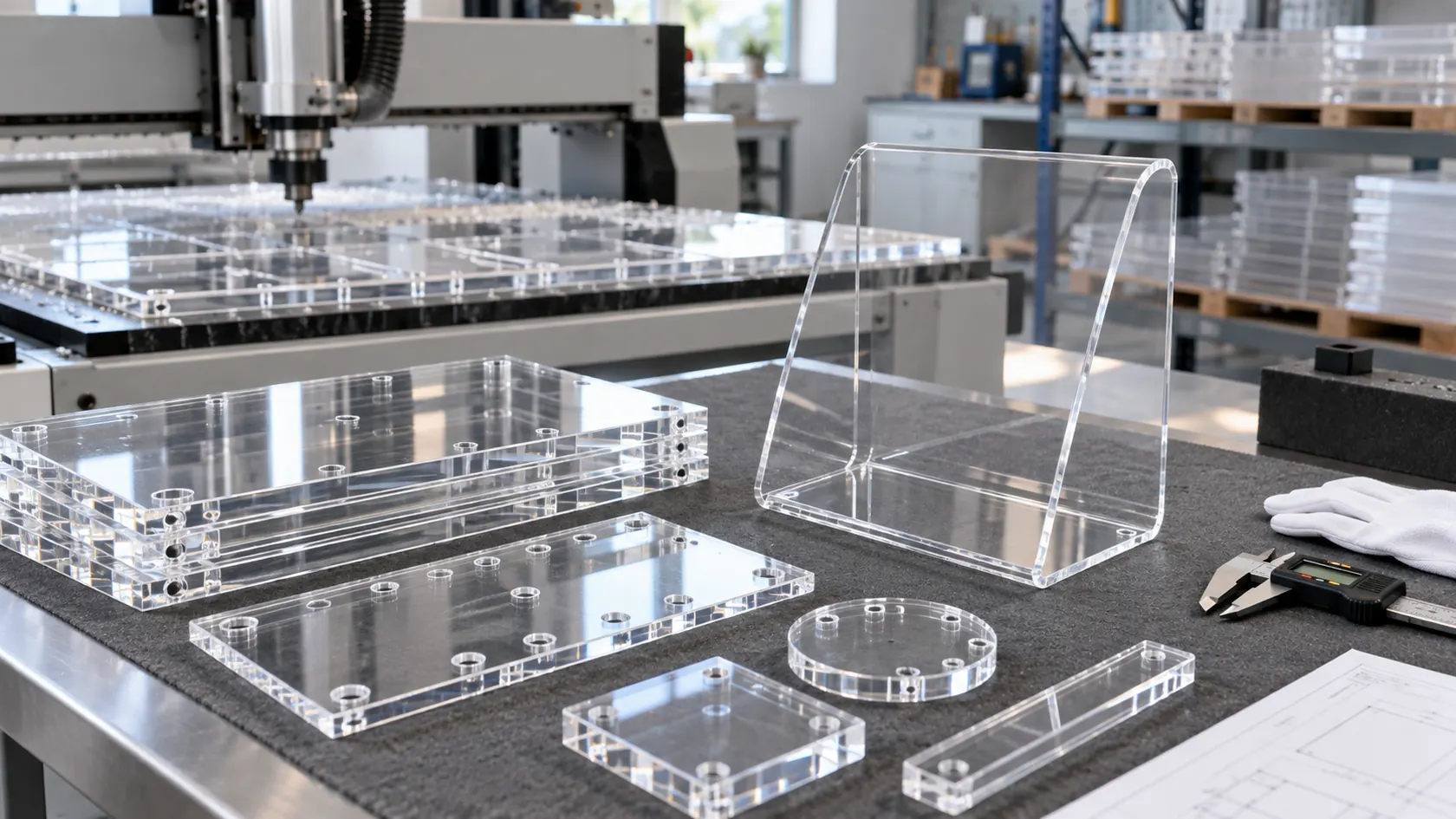
A rectangular single-piece holder is usually simpler to manufacture than a multi-level unit with curved fronts, many pockets, edge-polished panels, hidden bonded joints, and repeated drilled locations. The same is true of a design with several manual alignment steps: it may use little acrylic yet require careful assembly.
The useful question is not “what is the cheapest process?” but “where does the buyer need visible quality and repeatability?” Laser cutting, CNC machining, drilling, polishing, bonding, heat bending, engraving, printing, and hardware assembly are all relevant when the design calls for them. A clear display can be specified with simple functional edges where they are hidden, while reserving higher cosmetic scrutiny for customer-facing edges and joints.
I recommend marking cosmetic faces and acceptable glue-line visibility on the drawing or sample brief. That gives the supplier a basis for pricing the finish standard instead of quietly pricing to an assumption that may not match the brand expectation.
Quantity, samples, and artwork change the unit cost
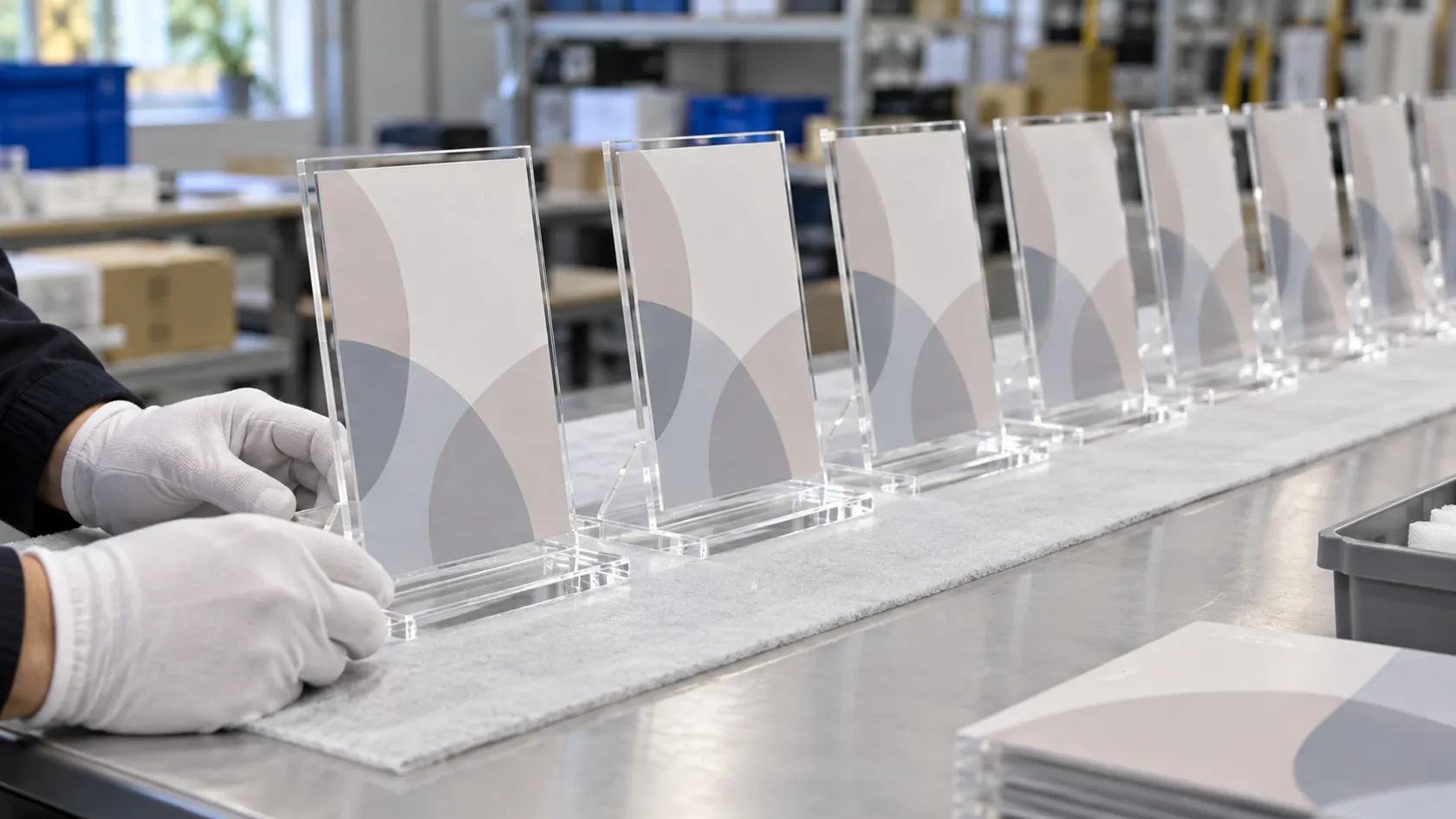
Custom work has fixed effort before the first production unit: drawing review, cutting programs, bend setup, print artwork preparation, fixtures where required, and first-article approval. A prototype or small pilot run therefore should not be expected to match the unit price of a repeatable production order.
Quantity matters because those setup tasks are divided across the run. But it is not the only quantity question. A buyer who needs 1,000 units with three artwork versions, several colors, or multiple hardware packs should make that split explicit; each variant can create its own setup and packing complexity.
For branded displays, submit production-ready artwork, the number of colors, print locations, and required color-approval method. If a printed face is important to the display’s function, I prefer to approve it on a sample or controlled pre-production check rather than treat the artwork as an afterthought.
Do not compare quotes without packing and delivery scope
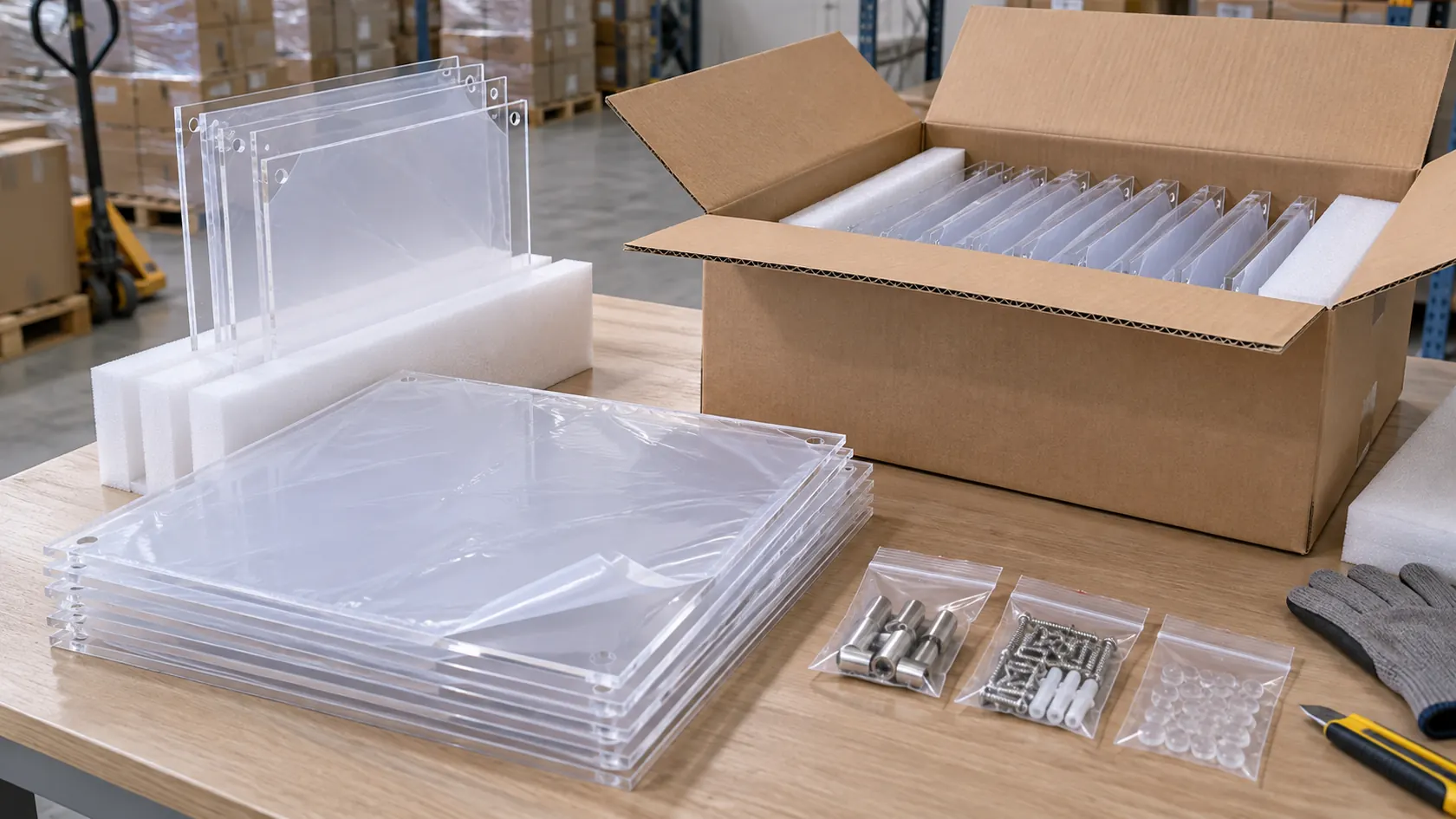
Acrylic is a close-view material, and scratches, edge chips, loose hardware, and rubbing between panels can undermine a display even when the fabrication is correct. Protective film, sleeves, foam, edge guards, dividers, labels, flat-pack hardware bags, master-carton limits, and drop-risk considerations can therefore be material parts of the quotation.
An assembled display may reduce work at the destination but occupy more carton volume. A flat-pack display may reduce freight volume but add installation instructions, fastener control, and on-site assembly risk. Neither route is automatically cheaper once packing, freight, and damage exposure are included.
Ask each supplier to state what the price includes: sample charges, tooling or setup, artwork preparation, assembly, individual packing, export cartons, labels, inspection, freight terms, duties, and delivery location. That prevents a low unit price from becoming an expensive landed-cost surprise.
A practical way to make custom displays more cost-efficient
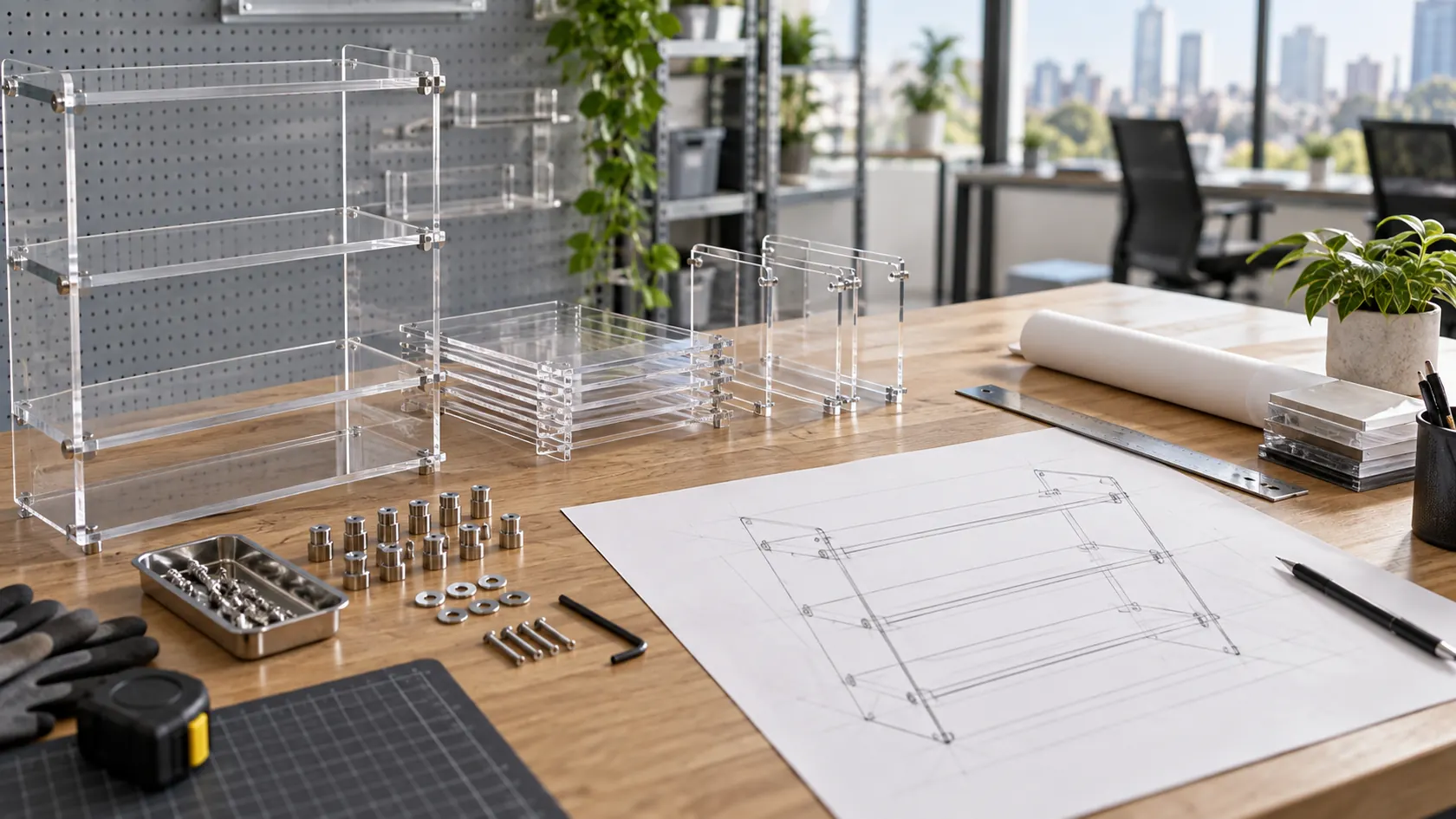
Cost reduction works best when it removes unnecessary complexity without weakening the display’s visual or functional job. I would review these decisions before asking a supplier to simply “lower the price”:
- Keep standard sheet thicknesses and readily available colors where the design permits.
- Use repeated components, pocket sizes, and bend geometry across display variants.
- Avoid hidden machining, polishing, or bonding steps that do not improve the customer-facing result.
- Consolidate artwork versions and define where print quality is critical.
- Design the shipment state early: flat-packed, partly assembled, or fully assembled.
- Request quantity tiers against the same confirmed specification, not against a changing design.
The best savings often come from an earlier design decision: simplifying a joint, removing a nonessential part, or making a fixture easier to pack. I would not reduce acrylic thickness or weaken a fixing method solely to meet a target price without revisiting stability and the expected visual standard.
If the brief still needs development, a custom acrylic fabrication review can identify which structural, finish, or packing choices must be fixed before a production quotation is comparable.
What to send for an accurate quote
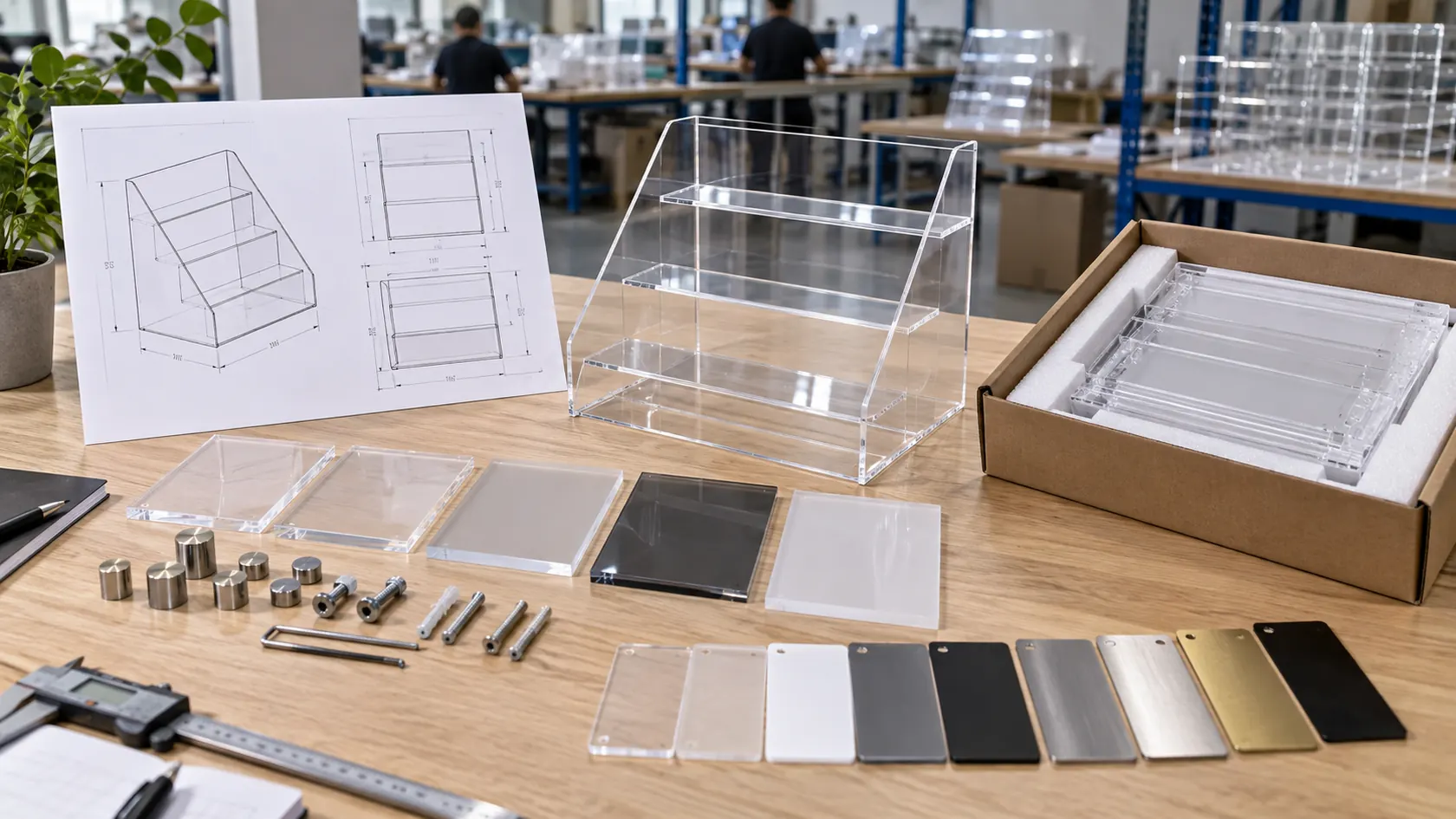
The fastest route to a usable quote is a drawing, CAD file, dimensioned sketch, or reference image that identifies the display size and function. Include the product load or product dimensions, target material and thickness if known, visible finish requirements, color or print artwork, hardware, quantity tiers, required sample, packed state, ship-to location, and target delivery date.
For a design still in development, a short list of non-negotiables is valuable: shelf count, required product fit, branding method, close-view faces, installation method, and budget priority. We can then flag the fabrication and packing choices that need to be resolved before a production quote is treated as final.
Conclusion
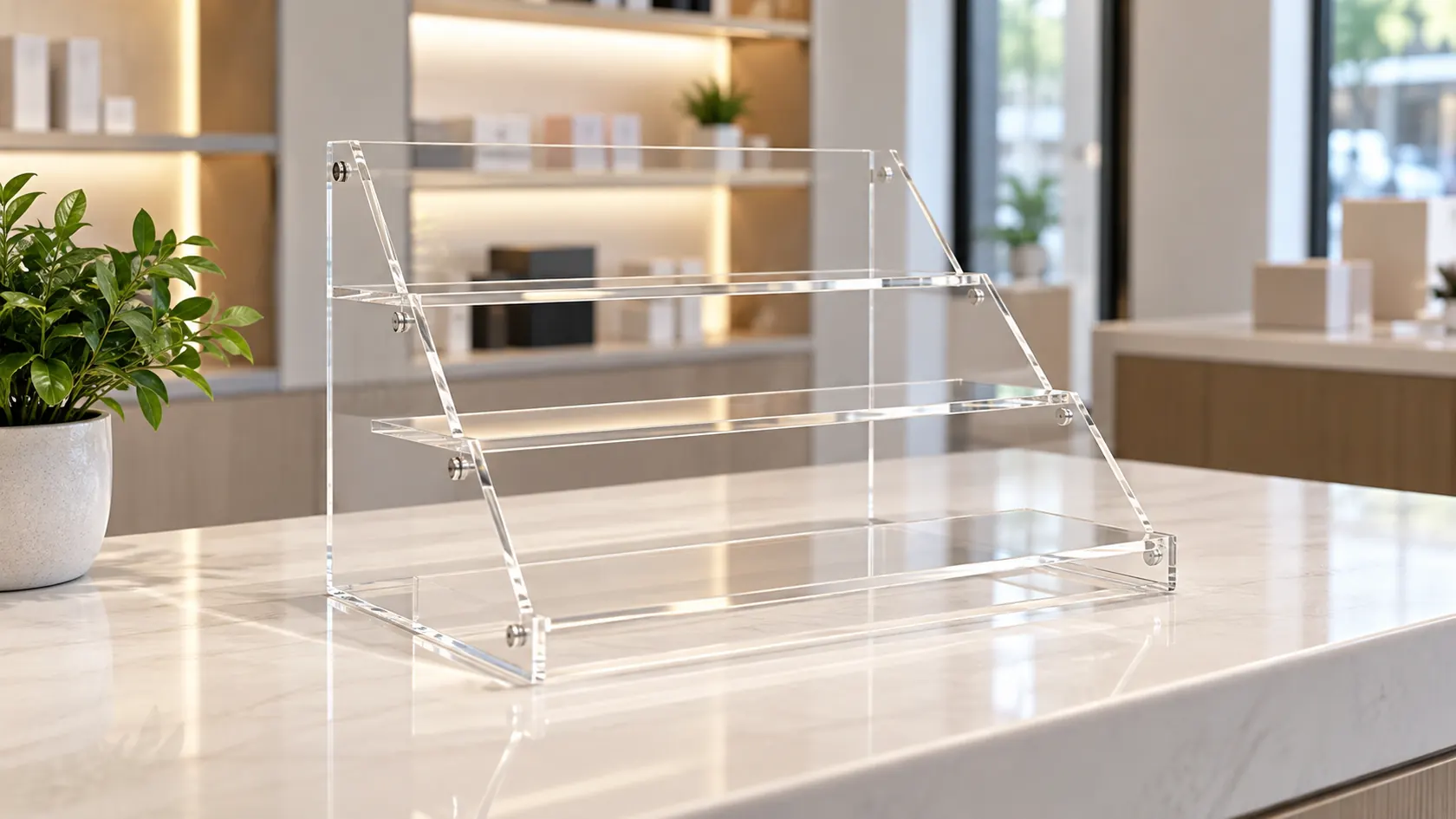
Custom acrylic display cost is a specification question, not a single number. The important drivers are the display’s size and structure, material and visible finish, fabrication and assembly, branding, quantity, and the way it must be packed and delivered.
Send Feilong a drawing or reference image with dimensions, quantity, product load or fit, finish and branding needs, hardware, and packing destination. We can review the build logic and give you a quote that makes clear which decisions are driving the cost before you commit to sampling or production.