Skip to content
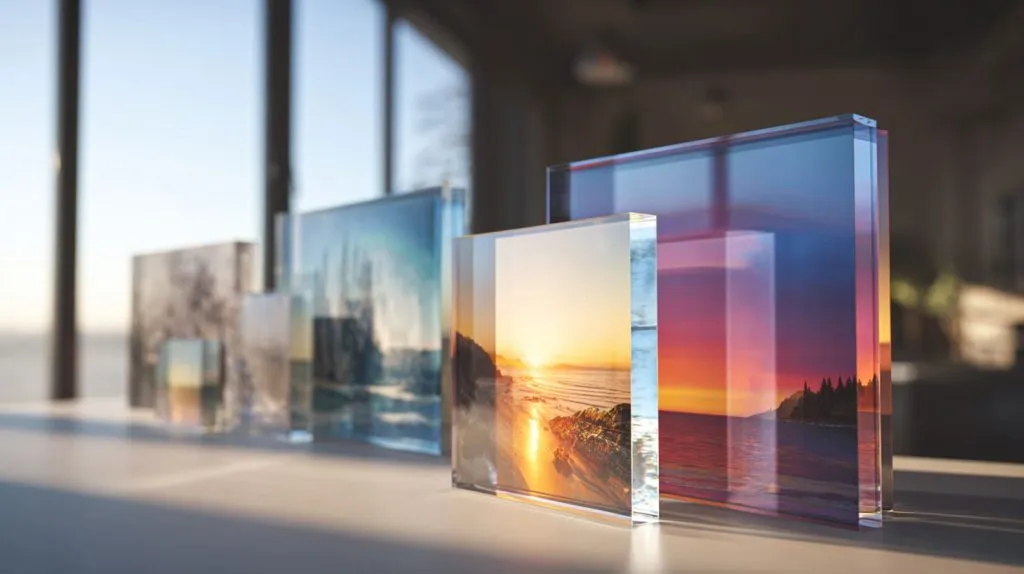
Acrylic picture frames look simple at first glance.
Clear panel. Clean edge. Nice photo inside. Done.
But if you have worked with acrylic products for long enough, you know the small details are where the real trouble hides. A frame is not just a frame. It is a small protection system. It protects the image, supports the display style, matches the space, and quietly deals with light every single day.
That last part is easy to ignore.
Light.
I have seen buyers spend a lot of time checking thickness, polishing, magnet strength, packaging, and price. These are all important. I check them too. But sometimes one question comes too late:
“Does this acrylic block UV?”
For normal short-term display, standard acrylic may be fine. But for valuable photos, art prints, signed posters, certificates, gallery pieces, and collectible items, UV protection is not a small upgrade. It can be the line between a display that still looks fresh after years and one that slowly fades like an old receipt left on a car dashboard.
This is especially important for B2B buyers, designers, and purchasing teams. If you are sourcing acrylic picture frames for retail stores, galleries, hotels, offices, museums, or premium home décor brands, you are not just buying a clear sheet. You are buying confidence.
What I usually care about first is not whether the frame looks beautiful on day one, but whether it can still protect the item after sunlight, cleaning, shipping, and daily use have all taken their turns.
In this article, I want to talk through how I choose acrylic picture frames when UV protection is not optional. I will also explain where buyers often misunderstand acrylic, what to ask suppliers, and how to judge cost in a more practical way.
Not from a textbook.
From the factory floor. From samples. From buyer questions. From small mistakes that become expensive later.
Let’s start with the basic material question, because acrylic and glass are often compared, but they do not behave the same way.
What Makes Acrylic Picture Frames Different From Glass Frames?
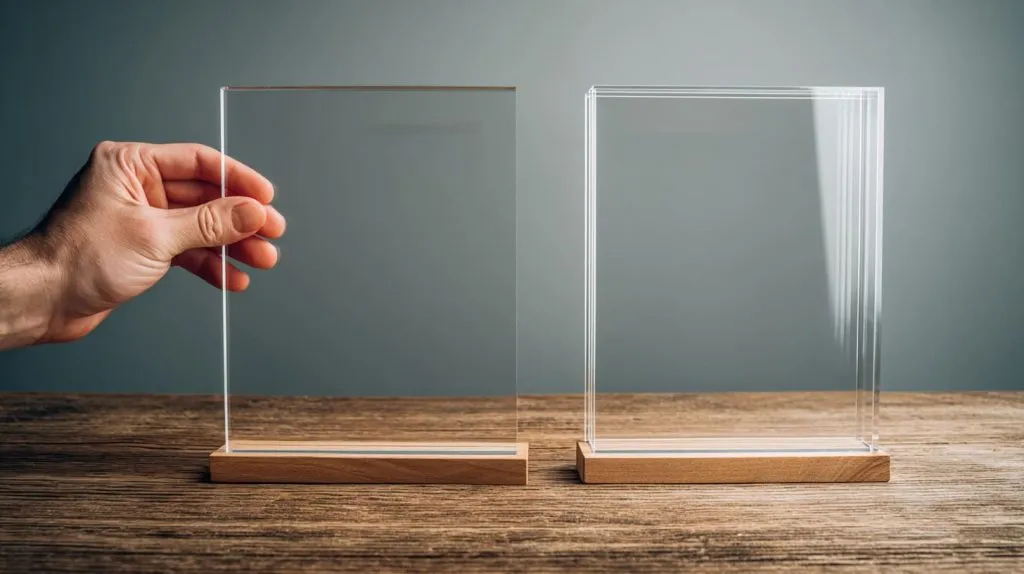
Acrylic and glass can both look clear in a frame. That is why many buyers treat them as direct replacements.
But in real projects, they are not the same animal.
Glass feels traditional. It has a hard surface and a familiar weight. Acrylic feels more modern. It is lighter, safer, easier to fabricate, and much better for custom display work. For many commercial projects, acrylic is not chosen because it is “cheaper glass.” It is chosen because it solves different problems.
This is where I slow down during a project. If a buyer only compares acrylic and glass by surface clarity, they may miss shipping risk, breakage risk, customization limits, and long-term handling problems.
Acrylic vs glass: key material differences
Acrylic is a plastic material, but good acrylic does not feel cheap. High-quality clear acrylic has excellent transparency. In many display uses, it gives a clean and premium look.
The big difference is behavior.
Glass breaks like glass. Everyone knows that sharp, nervous feeling when glass cracks. Acrylic is much more impact-resistant and much lighter. That makes it useful for retail displays, public spaces, children’s areas, hotels, events, and international shipping.
| Factor | Acrylic Picture Frame | Glass Picture Frame |
|---|---|---|
| Weight | Lightweight | Heavier |
| Breakage risk | Much lower | Higher |
| Safety | Safer in public spaces | Can create sharp pieces |
| Custom cutting | Easier | More limited |
| Large sizes | Easier to handle | Heavy and risky |
| Scratch resistance | Needs careful cleaning | Better surface hardness |
| Shipping | Easier and safer | Higher breakage risk |
Acrylic is not perfect. It can scratch more easily than glass if people clean it with rough cloth or the wrong cleaner. But it gives more freedom in design and fabrication.
In custom manufacturing, that freedom matters.
A buyer may ask for magnetic acrylic photo frames, wall-mounted frames, thick block frames, floating frames, logo engraving, special edge polishing, or mixed acrylic and metal hardware. Acrylic allows these ideas to become real products more easily.
Why designers and commercial buyers prefer acrylic
Designers often like acrylic because it disappears visually.
A clean acrylic frame does not fight with the photo or artwork. It lets the content speak. That is why acrylic is popular in galleries, retail counters, offices, hotel lobbies, cosmetic stores, and premium packaging displays.
For commercial buyers, the reason is more practical.
Acrylic is easier to ship. It is easier to make in custom sizes. It is safer for public spaces. It can be produced in bulk with consistent dimensions when the factory controls cutting, polishing, drilling, bonding, and packaging well.
| Buyer Need | Why Acrylic Helps |
|---|---|
| Custom size | CNC and laser processing can make many shapes |
| Bulk order | Consistent production is possible with proper fixtures |
| Safe display | Lower risk of dangerous breakage |
| Brand display | Logo engraving and printing are easier |
| Large frame | Lower weight makes handling easier |
| Export shipping | Less fragile than glass |
For a product designer like Jacky, who has rich experience buying from China factories, this is not just about “nice appearance.” He is thinking about production risk. He is thinking about packaging. He is thinking about customer complaints after delivery.
That is the real purchasing brain.
Common misconceptions about acrylic frames
The most common mistake is thinking all clear acrylic gives strong UV protection.
It does not.
Some standard acrylic sheets can block part of UV light, but that does not mean they are suitable for archival display or long-term protection of valuable items. UV-protective acrylic is made or treated to filter more harmful ultraviolet light.
Another mistake is thinking thicker acrylic means better UV protection.
Thickness can help with structure. It can make a frame feel more solid. But thickness alone does not guarantee proper UV filtering. A thick standard acrylic panel may still be the wrong choice for sensitive artwork.
| Misconception | Reality |
|---|---|
| All acrylic blocks enough UV | UV protection depends on sheet type and test data |
| Thicker means better UV protection | Thickness is not the main proof |
| Clear acrylic and UV acrylic look the same, so they perform the same | They may look similar but filter light differently |
| UV acrylic is only for museums | It is also useful for retail, offices, and collectors |
| Low price means good value | It may cost more later if artwork fades |
The tricky part is that UV-protective acrylic can look almost the same as standard acrylic. You cannot always judge by eye. That makes supplier honesty, test data, and sample approval very important.
Acrylic looks calm and clear. But light is not calm. It works slowly, every day, and it does not ask permission before damaging what sits behind the frame.
Why Is UV Protection So Important for Picture Frames?
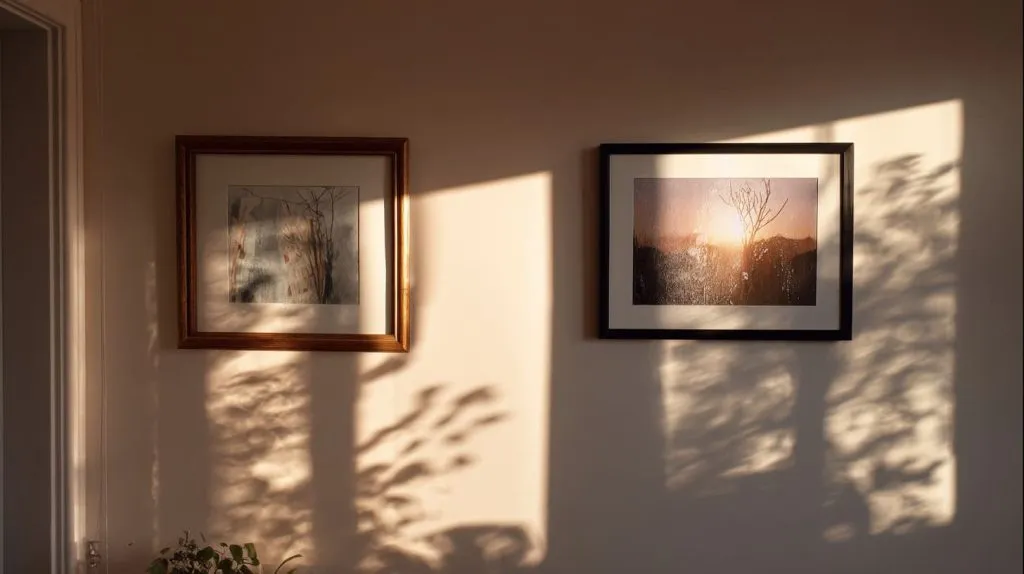
UV damage is boring until it happens.
Nobody feels excited talking about fading ink, yellowing paper, or weakened materials. It does not sound dramatic. But when a customer brings back a faded poster, or a hotel replaces framed prints after one year, or a collector sees a signed photo lose color, suddenly UV protection becomes very interesting.
This is the quiet danger of picture frames.
The frame may look clean. The acrylic may look transparent. The wall may look elegant. But the artwork inside may be slowly losing its original color.
The part I always remind buyers about is simple: damage from light usually does not happen overnight, so people blame the frame too late.
How UV light damages photos and artwork
UV light is part of sunlight. It is invisible to our eyes, but it can affect dyes, inks, paper, plastics, and coatings.
When photos and art prints stay under UV exposure for a long time, several things can happen:
- Colors fade
- White areas turn yellow
- Paper becomes weak or brittle
- Ink loses depth
- Surface coatings change
- The whole image looks older than it should
Think about an old poster in a shop window. At first, the colors look bright. After months, red becomes tired. Blue loses depth. White becomes warm and dull. The poster is still there, but the feeling is gone.
That is UV damage doing its slow work.
| Damage Type | What Buyers May Notice | Why It Matters |
|---|---|---|
| Color fading | Image looks pale | Brand or artwork loses impact |
| Yellowing | Paper looks aged | Premium display feels cheap |
| Brittleness | Paper becomes fragile | Long-term preservation fails |
| Uneven fading | One side changes more | Window-facing displays look poor |
| Loss of contrast | Details look flat | Artwork loses visual value |
For normal decoration, this may be acceptable. For valuable work, it is painful.
Which items are most vulnerable to UV exposure?
Not every framed item needs the same level of protection.
A temporary printed menu does not need the same protection as a limited edition art print. A simple office notice does not need the same protection as a signed sports photo.
The higher the emotional or financial value, the more serious I become about UV protection.
| Framed Item | UV Risk Level | My Practical View |
|---|---|---|
| Family photographs | High | Often irreplaceable |
| Signed posters | High | Value may drop after fading |
| Art prints | Medium to high | Depends on ink and paper |
| Watercolor paintings | Very high | Often light-sensitive |
| Certificates | Medium to high | Long display life expected |
| Retail promotional prints | Medium | Depends on replacement cycle |
| Short-term event graphics | Low | Standard acrylic may be enough |
The most painful items are not always the most expensive ones. Sometimes they are personal.
A family photo. A graduation certificate. A signed picture from a sports player. A small artwork bought during a trip.
Money can replace some things. Memory is harder.
Indoor UV damage is more common than people think
Many buyers think UV damage is only an outdoor problem.
That is not true.
Indoor spaces can still have sunlight through windows. Bright offices, galleries, retail stores, hotels, and homes with large windows can expose frames to UV and visible light for many hours each day.
Acrylic frames placed near these areas need more careful material choice:
- Window-facing walls
- Reception desks near glass doors
- Retail display windows
- Hotel lobby walls
- Gallery corridors
- Bright office meeting rooms
- Homes with large south-facing windows
Indoor lighting can also matter. Some lights give off more UV than others, but even visible light can contribute to fading over time. UV protection does not solve every light damage problem, but it reduces one major risk.
| Display Location | UV Concern | Suggested Frame Choice |
|---|---|---|
| Dark hallway | Low | Standard acrylic may be fine |
| Office wall away from windows | Low to medium | Standard or UV acrylic depends on value |
| Near a window | High | UV-protective acrylic strongly recommended |
| Storefront | Very high | UV-protective acrylic is usually necessary |
| Gallery display | High | UV or museum-grade acrylic |
| Hotel lobby | Medium to high | UV acrylic for long-term décor |
A frame is not only judged in the sample room. It is judged in the real room, under real light, with real cleaning, real customers, and real time.
And now the natural next question is this: if UV-protective acrylic matters so much, what is it actually doing?
How Does UV-Protective Acrylic Work?

UV-protective acrylic sounds technical, but the basic idea is simple.
It reduces the amount of harmful ultraviolet light that passes through the frame and reaches the picture or artwork. It works like a clear shield. A good one protects without making the display look cloudy or strange.
That balance is important.
A frame should protect the artwork, but it should not steal attention from it.
When I review UV acrylic samples, I do not only ask, “How much UV does it block?” I also check whether the sheet changes the look of the artwork, because protection is not useful if the final display looks dull.
What UV-filtering acrylic actually does
UV-filtering acrylic is designed to block or absorb a large part of ultraviolet light. This helps slow down fading, yellowing, and material damage.
It does not make artwork immortal.
That is an important point.
UV protection reduces risk. It does not stop all aging. Heat, humidity, visible light, air quality, and material quality still matter. But UV acrylic is one of the most practical and visible ways to improve long-term display protection.
| Protection Goal | What UV Acrylic Helps With |
|---|---|
| Reduce fading | Blocks part of harmful UV light |
| Keep color longer | Helps protect inks and dyes |
| Protect paper | Reduces yellowing and brittleness |
| Improve display life | Better for long-term projects |
| Support premium positioning | Useful for galleries and luxury displays |
For B2B buyers, this protection can reduce complaints. It also gives the final product a stronger selling point.
But I do not like vague claims. “UV resistant” can mean many things. I prefer clear data.
Difference between coated and built-in UV protection
UV protection can come from different methods.
Some acrylic sheets use a surface coating. Some use UV inhibitors built into the sheet material. Each method has its own strengths and risks.
| Type | How It Works | Main Benefit | Possible Concern |
|---|---|---|---|
| Coated UV acrylic | UV coating is applied to surface | Strong protection possible | Surface damage may affect performance |
| Built-in UV acrylic | UV inhibitors are inside the sheet | More stable through the material | Quality depends on sheet formula |
| Standard acrylic | Basic clear acrylic | Lower cost | May not provide enough UV filtering |
Surface-coated products can be excellent, but handling becomes more sensitive. If the coating is scratched, cleaned with harsh chemicals, or damaged during fabrication, performance and appearance may suffer.
Built-in UV acrylic can feel more reliable for certain fabrication needs, especially when cutting, drilling, polishing, or shaping is required.
That said, the exact choice depends on the application.
For example, a simple flat frame panel for a gallery may use a premium coated sheet. A custom magnetic acrylic block frame with CNC edges may need a sheet that performs well after machining.
Typical UV protection levels explained
Buyers often hear numbers like 90%, 95%, or 99% UV protection.
These numbers sound clear, but they still need context. What wavelength range was tested? What standard was used? Who tested it? Was the report for the exact sheet being used?
A good supplier should not panic when you ask these questions.
| UV Filtering Claim | Practical Meaning | Typical Use |
|---|---|---|
| Basic protection | Some UV reduction | Low-risk indoor frames |
| Around 90% UV filtering | Better protection | General valuable displays |
| Around 95% UV filtering | Strong protection | Retail, office, gallery use |
| Around 99% UV filtering | Very high protection | Museum-style or archival display |
The higher the value of the displayed item, the more careful I become.
But I also believe buyers should not blindly choose the highest number every time. If the frame holds a low-cost short-term print for a two-week event, paying for museum-grade protection may not make sense.
The smarter question is not “What is the best acrylic?”
The smarter question is “What risk am I trying to reduce?”
That question leads us directly to the situations where UV protection stops being optional.
When Is UV Protection Not Optional?
There are times when UV protection is a nice feature.
There are also times when skipping it feels like saving money by removing the roof from a house.
Technically, yes, the house is cheaper.
But rain exists.
For picture frames, UV exposure is that rain. You may not see it today, but it is coming if the frame sits in the wrong place.
I become much stricter when the frame will be placed near sunlight, used for valuable items, or installed in commercial spaces where replacement and complaints cost more than the material upgrade.
Frames used near windows or sunlight
This is the easiest situation to understand.
If the frame is near a window, UV protection should move from “optional” to “serious consideration.” If it is in a storefront or bright lobby, I usually treat UV protection as necessary.
| Location | My Recommendation |
|---|---|
| Far from windows | Standard acrylic may work |
| Near normal indoor window | UV acrylic is recommended |
| Direct sunlight area | UV acrylic is strongly recommended |
| Storefront window | UV acrylic is usually necessary |
| Bright lobby with glass wall | UV acrylic is highly recommended |
A south-facing room can be especially tough in many countries. Sunlight enters for long hours. A print may fade unevenly. One side of the image may look older than the other.
This is the kind of problem that makes the product look cheap even when the acrylic frame itself is well made.
High-value or irreplaceable items
When the item inside the frame has value, the frame should not be chosen like a simple decoration.
A limited edition print, a historical photo, a signed poster, or an important certificate deserves better protection. The buyer is not only buying acrylic. The buyer is protecting trust.
| Item Type | Why UV Protection Matters |
|---|---|
| Limited edition artwork | Value may depend on condition |
| Historical photos | Often impossible to replace |
| Signed collectibles | Fading can reduce resale value |
| Certificates | Long-term display is common |
| Brand presentation pieces | Poor aging hurts brand image |
Here is a simple way I think about it:
If the item inside the frame would be painful to replace, I do not treat UV acrylic as a luxury.
That one sentence can save many arguments later.
Commercial and retail display environments
Commercial spaces create extra pressure.
A home user may replace one faded photo. A retailer may need to replace hundreds of display frames. A hotel may need consistency across many rooms. A gallery may face unhappy clients. A brand may lose visual quality in front of customers.
That is why commercial buyers need a different mindset.
| Commercial Use | UV Risk | Extra Concern |
|---|---|---|
| Cosmetic displays | Medium to high | Bright lighting and brand image |
| Luxury retail frames | High | Premium appearance must last |
| Exhibition displays | Medium | Short-term but high visual demand |
| Gallery projects | High | Artwork preservation |
| Office branding walls | Medium | Long-term exposure |
| Hotel décor | Medium to high | Large replacement cost |
For retail and hospitality projects, fading is not only a material issue. It becomes a maintenance issue, a brand issue, and sometimes a budget issue.
I have learned that the cheapest choice at the beginning can become the most expensive choice after installation.
That sounds a little harsh, but anyone who has handled bulk custom orders knows it is true.
Now we can look at the actual acrylic options buyers usually face.
What Types of Acrylic Are Commonly Used for Picture Frames?
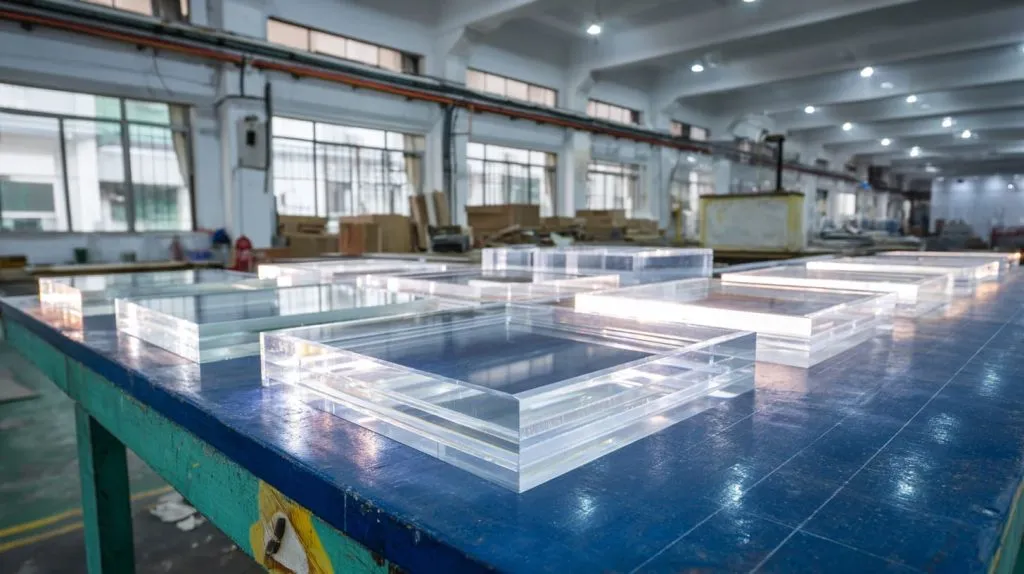
Acrylic picture frames can be made from different acrylic sheet types. The names may sound similar, but the performance can be very different.
This is where many quotation problems begin.
A buyer asks for “clear acrylic frame.” A supplier quotes standard clear acrylic. Later, the buyer says the frame should have UV protection, anti-glare surface, or premium optical clarity.
Now the price changes. The lead time changes. The sample changes. Everyone becomes slightly annoyed.
Not angry.
Just that quiet business annoyance where the email gets longer.
The better way is to define the acrylic type early.
The detail I check before quoting is not only the shape of the frame, but the display environment, because material choice should follow use, not the other way around.
Standard clear acrylic
Standard clear acrylic is widely used. It is affordable, transparent, and easy to fabricate. For many indoor picture frames, it works well.
It is a good option when:
- The item is not highly valuable
- The display period is short
- The frame is away from sunlight
- The buyer needs a budget-friendly solution
- The project is mostly decorative
| Standard Clear Acrylic | Details |
|---|---|
| Cost | Lower |
| Clarity | Good |
| UV protection | Limited or not guaranteed |
| Best use | General indoor frames |
| Risk | Not ideal for valuable artwork |
Standard acrylic is not “bad.” It is just not always enough.
I like standard acrylic for practical projects. But I do not like pretending it can do every job.
UV-protective acrylic
UV-protective acrylic is made for longer-term protection. It is used when the image, print, artwork, or document needs better defense against sunlight and UV exposure.
It is common in:
- Galleries
- Museums
- Premium home décor
- Office certificate frames
- Retail brand displays
- Collector displays
- Hotel lobby art frames
| UV-Protective Acrylic | Details |
|---|---|
| Cost | Higher than standard acrylic |
| Clarity | Usually very good |
| UV protection | Stronger and more controlled |
| Best use | Valuable or long-term display |
| Risk | Need real data and supplier proof |
For B2B buyers, UV acrylic can also be part of product positioning. A frame sold as “UV-protective” feels more premium than a basic clear frame.
But the claim must be real.
A nice product description cannot protect a photo. Only the material can.
Anti-glare and matte acrylic
Anti-glare acrylic reduces reflections. It can make framed images easier to see in bright rooms.
But it comes with a trade-off.
Some anti-glare surfaces may slightly reduce sharpness, especially when the acrylic is not directly touching the print. The more distance between the acrylic and the image, the more the surface texture may affect clarity.
| Acrylic Type | Benefit | Trade-Off |
|---|---|---|
| Clear acrylic | Highest visual sharpness | More reflections |
| Anti-glare acrylic | Less reflection | May reduce image sharpness |
| Matte acrylic | Soft appearance | Lower clarity |
| UV anti-glare acrylic | Protection + reduced glare | Higher cost |
This is important for picture frames because buyers often want both perfect clarity and no reflection.
That sounds nice.
But materials have limits.
If the artwork has fine details, I usually test anti-glare acrylic with the actual print before mass production. A sample can prevent a lot of disappointment.
Cast acrylic vs extruded acrylic for frames
Cast acrylic and extruded acrylic are both used in acrylic products. For picture frames, the choice depends on quality needs, budget, thickness, fabrication method, and final appearance.
Cast acrylic usually has better optical quality and better machining behavior. It is often preferred for premium custom frames, thick acrylic blocks, and products that need polished edges.
Extruded acrylic can be more cost-effective and has consistent thickness. It can work for simple flat panels and budget-sensitive projects.
| Factor | Cast Acrylic | Extruded Acrylic |
|---|---|---|
| Optical quality | Usually better | Good, but may be lower |
| Edge polishing | Better result | Can be more sensitive |
| Machining | Better for CNC and drilling | More stress risk |
| Thickness options | Good for premium products | Good for standard sheets |
| Cost | Higher | Lower |
| Best for | Premium custom frames | Budget or simple frames |
For high-end picture frames, thick block frames, magnetic frames, or polished display products, I often prefer cast acrylic. It gives the frame a richer feel.
But for simple flat protective panels, extruded acrylic may be acceptable if the buyer understands the limits.
The material choice is like choosing shoes for a trip. You do not need hiking boots for a hotel lobby. But you will regret wearing thin dress shoes on a mountain trail.
After material choice, the next problem is proof. How can a buyer know the UV acrylic is real?
How Can Buyers Identify Real UV-Protective Acrylic?
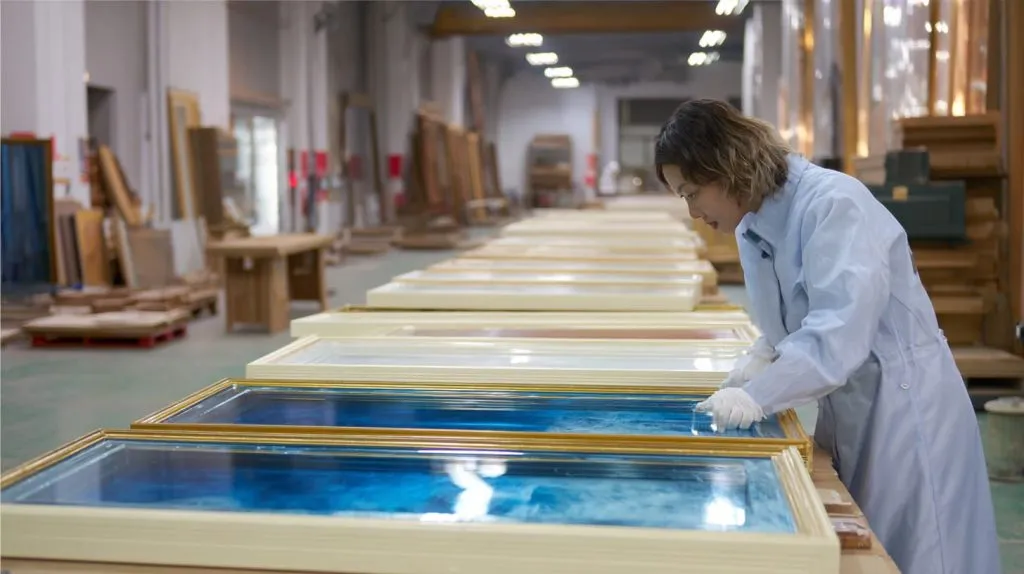
This is where sourcing becomes less romantic.
A supplier can write “UV acrylic” in a quotation. That does not mean the sheet performs as expected. It may be true. It may be half true. It may be marketing language copied from another website.
I do not say this to scare buyers. I say it because good purchasing requires healthy doubt.
Trust is good.
Verification is better.
When a project needs real UV protection, I do not only listen to the words. I ask for material information, test data, and samples.
Questions to ask suppliers
A serious supplier should be able to answer basic questions about the acrylic sheet.
Here are the questions I would ask:
| Question | Why It Matters |
|---|---|
| What UV percentage can the acrylic block? | It shows whether the supplier has real data |
| What wavelength range was tested? | UV claims need testing context |
| Is the protection coated or built into the sheet? | It affects fabrication and durability |
| Can you provide a test report? | It supports the material claim |
| What is the sheet brand or source? | It improves traceability |
| Can we test a sample before bulk order? | It reduces mass production risk |
| Does polishing or cutting affect protection? | Important for custom frames |
For simple decorative frames, these questions may be too much. For valuable projects, they are normal.
A buyer like Jacky will understand this. Experienced buyers do not ask questions to create trouble. They ask questions to prevent trouble.
Common red flags from low-cost suppliers
Low price is attractive. I understand that. Every buyer has budget pressure.
But when UV protection is required, very low prices need extra checking.
| Red Flag | What It May Mean |
|---|---|
| Supplier says “all acrylic has UV protection” | They may not understand the requirement |
| No test data available | The claim may be weak |
| Price is almost same as standard acrylic | Material may not be true UV acrylic |
| Supplier avoids technical questions | Risk of poor communication |
| Product description is too vague | No clear performance standard |
| Sample looks different from bulk goods | Poor material control |
The most dangerous phrase is “same quality.”
Same as what?
Same sheet? Same thickness? Same UV level? Same optical clarity? Same protection film? Same polishing quality?
In manufacturing, “same” needs details. Without details, it is only a comfortable word.
Why samples matter before mass production
Samples are not a formality. They are a small insurance policy.
For UV-protective acrylic frames, samples help buyers check:
- Clarity
- Color tone
- Edge quality
- Reflection
- Thickness
- Magnet strength
- Fit with the picture
- Surface quality
- Packaging protection
- Real display effect under lighting
| Sample Check | What I Look For |
|---|---|
| Clarity | Does the image look sharp? |
| Color tone | Does the acrylic look too blue, green, or yellow? |
| Edge polish | Does the frame feel premium? |
| Reflection | Is glare acceptable? |
| Surface | Are there scratches, dust, or coating marks? |
| Fit | Does the photo stay flat and aligned? |
| Packaging | Can it survive export shipping? |
A sample can look great on a desk and fail near a window. So I like testing under the lighting closest to the real environment.
This is a small step, but it saves big arguments.
Acrylic is transparent, but the sourcing process should not be foggy.
Once the buyer knows how to check material truth, the next step is ordering details. This is where design and production meet.
What Should Designers and B2B Buyers Consider Before Ordering?
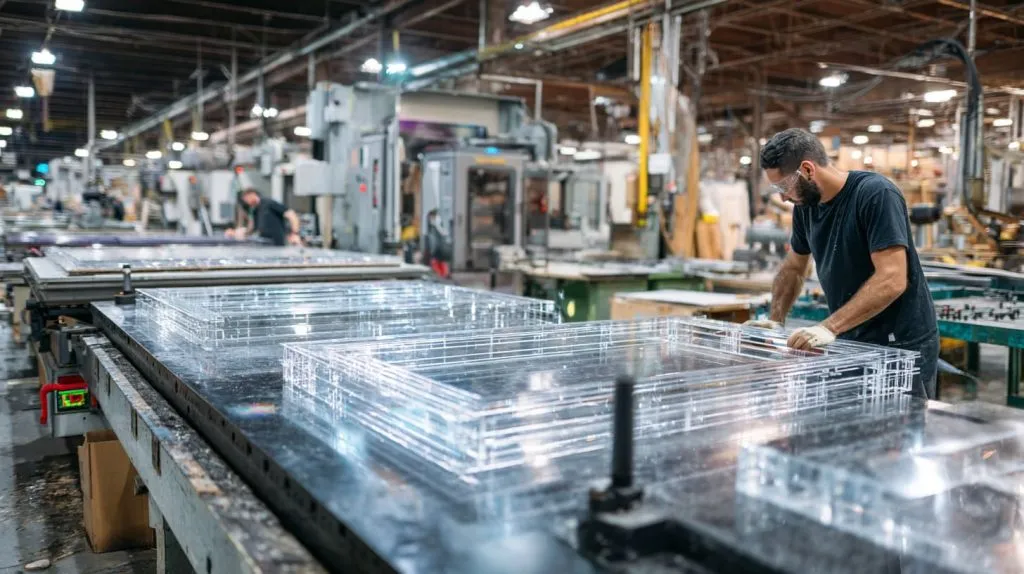
Acrylic picture frames are easy to describe but not always easy to produce well.
A clean frame needs the right material, stable thickness, accurate cutting, smooth polishing, good hardware, careful assembly, and safe packaging. If one step is weak, the whole product can feel cheap.
This is why I like detailed purchase discussions. They may feel slow at the beginning, but they make production smoother later.
The mistake I try to avoid is quoting only from a picture, because a nice reference image does not tell me the thickness, tolerance, edge finish, magnet size, UV level, or shipping risk.
Frame thickness and structural stability
Thickness affects strength, weight, appearance, and price.
Thin acrylic is cheaper and lighter, but it may bend or feel weak in larger sizes. Thick acrylic feels premium, but it costs more and needs better edge finishing.
| Frame Size / Use | Common Thickness Thinking |
|---|---|
| Small photo frame | Thin to medium acrylic may work |
| Tabletop frame | Needs stable thickness and base support |
| Large wall frame | Needs better rigidity |
| Thick block frame | Needs high-quality cast acrylic |
| Magnetic frame | Thickness must match magnet strength |
| Premium display | Thicker acrylic often feels better |
A large acrylic frame with thin material can warp or flex. This may make the image look uneven. It may also create gaps or pressure points.
The buyer should not only ask, “How thick is it?”
The better question is, “Will this thickness stay flat and stable in this size?”
Edge finishing and appearance quality
Edges are where acrylic tells the truth.
Acrylic can look expensive or cheap depending on edge finishing. A rough edge makes even good material look poor. A clear polished edge can make a frame feel like a premium display piece.
Common edge finishing methods include:
- Flame polishing
- Diamond polishing
- CNC finishing
- Sanding and buffing
| Edge Finish | Appearance | Best Use |
|---|---|---|
| Flame polished | Clear and glossy | Many standard display products |
| Diamond polished | Very clean and premium | High-end frames and blocks |
| Sanded edge | Frosted or soft look | Matte design style |
| CNC edge | Accurate but may need polishing | Custom shapes |
Flame polishing can look nice, but it needs skill. Too much heat can create stress or slight distortion. Diamond polishing can give a cleaner premium edge, but it may cost more.
For luxury display frames, I usually pay close attention to edges because customers touch and see them up close.
A frame with a bad edge feels like wearing a nice suit with dirty shoes.
Customization options for commercial projects
B2B buyers rarely need only one standard frame. They often need custom details.
Common customization options include:
- Custom size
- Custom thickness
- UV-protective sheet
- Logo engraving
- Silk screen printing
- Magnetic structure
- Wall-mounted holes
- Tabletop support
- Special packaging
- Mixed material hardware
- Private label box
| Custom Need | Production Consideration |
|---|---|
| Logo engraving | Position, depth, and visibility |
| Magnetic design | Magnet strength and alignment |
| Wall-mounted frame | Hole size and hardware match |
| Tabletop frame | Stability and viewing angle |
| Retail display | Scratch resistance and easy cleaning |
| Gift packaging | Protection and presentation |
For OEM buyers, the small details matter.
If the magnet is too weak, the frame feels unsafe. If the logo is too deep, it looks rough. If the hole position is slightly wrong, installation becomes annoying.
Good design is not only about beauty. It is about fewer problems after delivery.
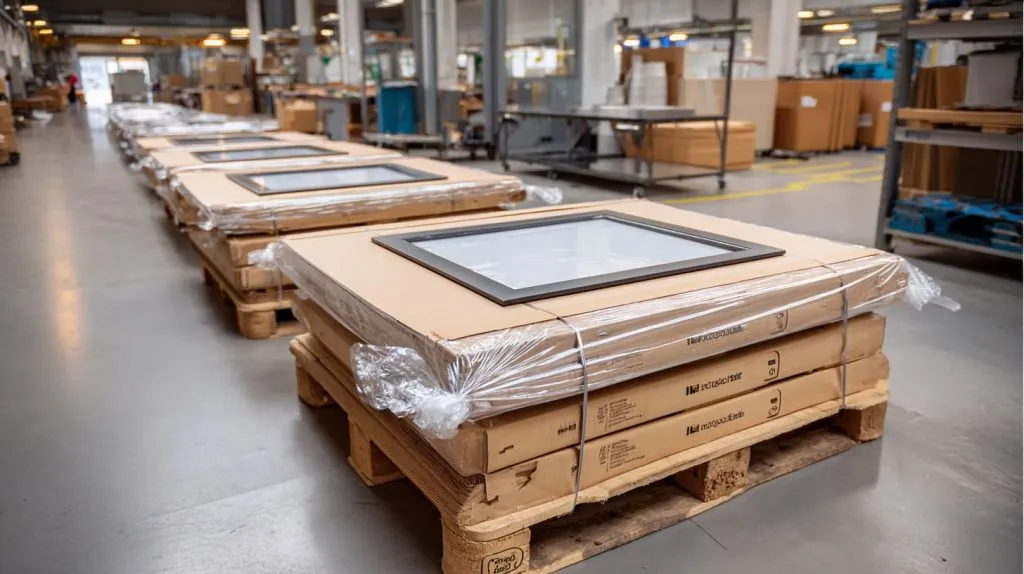
Shipping and packaging considerations
Acrylic is safer than glass, but it is not impossible to damage.
It can scratch. Corners can chip. Protective film can peel. Dust can enter packaging. Heavy cartons can press the surface. Long-distance shipping can test every weak point.
| Packaging Detail | Why It Matters |
|---|---|
| Protective film | Prevents scratches |
| Soft inner bag | Reduces rubbing |
| Corner protection | Prevents chips |
| Strong carton | Protects during stacking |
| Foam or paper divider | Stops frames touching each other |
| Export carton marking | Helps warehouse handling |
| Drop test thinking | Reduces shipping complaints |
For international B2B orders, packaging is not decoration. It is part of the product.
A beautiful acrylic frame that arrives scratched is not beautiful anymore.
That is the kind of simple truth every factory learns sooner or later.
Now we come to the money question, because UV acrylic costs more. So is it worth it?
Are UV-Protective Acrylic Frames Worth the Higher Cost?
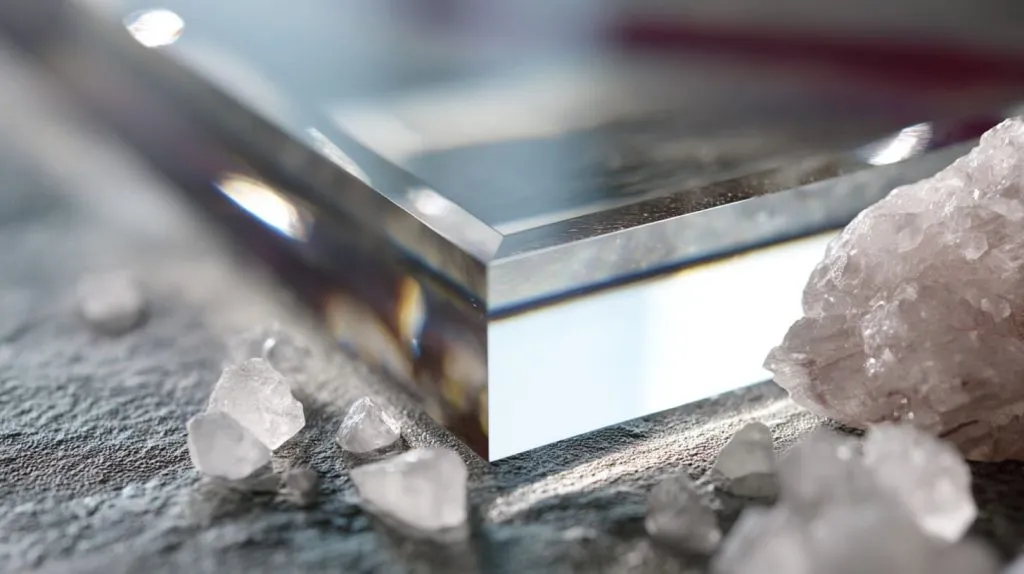
This is the question buyers always ask, even when they do not say it directly.
“Do I really need to pay more?”
I like this question. It is honest.
No buyer wants to waste money. No factory should push premium material when the project does not need it. The right answer depends on use, value, exposure, and replacement cost.
For me, the cost decision is not about whether UV acrylic is “better” in a general way. It is about whether the risk of fading is more expensive than the price difference.
Comparing long-term value vs upfront price
UV-protective acrylic usually costs more than standard clear acrylic. That is normal.
But the frame cost is only one part of the real cost.
If the artwork fades, the buyer may face:
- Replacement printing cost
- Customer complaint cost
- Brand image loss
- Labor cost for replacing frames
- Shipping cost for replacements
- Loss of collector value
- Project delay or embarrassment
| Cost Type | Standard Acrylic Risk | UV Acrylic Benefit |
|---|---|---|
| Material cost | Lower at first | Higher at first |
| Replacement cost | Can be higher later | Lower risk |
| Brand image | Fading may hurt quality feeling | Better long-term appearance |
| Customer complaints | Higher if item fades | Lower risk |
| Long-term value | Weaker protection | Better preservation |
For one small frame, the cost difference may not feel serious.
For 500 frames in a hotel or retail chain, it becomes a real decision.
When standard acrylic is still acceptable
I do not believe every project needs UV-protective acrylic.
Standard acrylic can still be a smart choice in many cases.
It may be acceptable when:
- The display is short-term
- The frame is away from sunlight
- The item is low value
- The image can be replaced easily
- The buyer has a tight budget
- The project is for temporary promotion
| Situation | Standard Acrylic OK? | Why |
|---|---|---|
| Short-term trade show display | Yes | Limited exposure time |
| Low-light indoor frame | Usually yes | Low UV risk |
| Cheap replaceable print | Yes | Low replacement pain |
| Family photo near window | No | Emotional value and sunlight risk |
| Gallery artwork | No | Preservation matters |
| Storefront poster | Usually no | High exposure |
The practical decision is not emotional. It is based on exposure and consequences.
A low-risk project does not need to pretend to be museum-grade.
But a high-risk project should not pretend standard acrylic is enough.
Cost-saving strategies for bulk buyers
There are smart ways to control cost without removing protection where it matters.
For example, a buyer can use UV acrylic only for frames near windows and use standard acrylic in darker areas. A hotel can use UV acrylic for lobby and corridor art, while using standard acrylic for short-term room notices.
| Strategy | How It Helps |
|---|---|
| Use UV acrylic only in high-exposure areas | Saves cost while reducing key risk |
| Mix standard and UV frame types | Matches budget to real use |
| Standardize sizes | Reduces production waste |
| Confirm material early | Avoids re-quoting and delays |
| Use OEM production | Better control over bulk cost |
| Approve samples first | Prevents expensive corrections |
Bulk buyers can also reduce cost by keeping the structure simple. A custom frame with special shape, thick material, logo engraving, magnets, anti-glare UV sheet, and premium gift box will cost much more than a simple UV flat frame.
Each feature should earn its place.
That is how practical sourcing works. Not cheap at all costs. Not premium at all costs. Just clear thinking.
And clear thinking is exactly what prevents the next group of mistakes.
What Are the Most Common Mistakes Buyers Make?
Most acrylic frame mistakes are not dramatic.
They start small.
A missing material note. A vague quotation. A skipped sample. A cleaning instruction nobody reads. A frame placed near sunlight without UV protection.
Then, months later, the problem becomes visible.
The tricky part is that the frame may have been made exactly as ordered. But the order itself was not detailed enough.
The problem I see most often is not bad intention. It is incomplete thinking before production starts.
Choosing based on price alone
Price matters. I know that very well.
But price alone is a poor product engineer.
A very cheap acrylic frame may use lower-grade sheet, weak polishing, poor packaging, or unclear UV claims. It may look acceptable in photos, but feel different in hand.
| Low-Price Risk | Possible Result |
|---|---|
| Cheaper acrylic sheet | Lower clarity or yellow tone |
| Poor edge finishing | Cheap appearance |
| No UV data | Weak protection |
| Thin material | Warping or weak structure |
| Poor packaging | Scratches during shipping |
| Weak magnets | Bad user experience |
A buyer should ask why the price is lower.
Sometimes the supplier is efficient. Good.
Sometimes the material is different. Not so good.
Sometimes important details are missing. Dangerous.
A low price without clear specification is not a bargain. It is a question mark.
Ignoring lighting conditions
Many buyers decide frame material from a desk, not from the final display space.
That is a problem.
A frame used in a dark hallway and a frame used beside a glass storefront do not face the same life. They should not always use the same material.
| Lighting Condition | Material Thinking |
|---|---|
| Low indoor light | Standard acrylic may work |
| Bright office | Consider item value |
| Window nearby | UV acrylic recommended |
| Direct sunlight | UV acrylic strongly recommended |
| Retail spotlight | Check heat, glare, and fading risk |
| Gallery lighting | Use proper protective material |
Lighting affects UV risk, glare, visibility, heat, and customer experience.
A buyer should take photos of the display area or describe the lighting clearly before production. This small detail helps the supplier recommend better material.
Overlooking maintenance and cleaning
Acrylic needs proper cleaning.
If customers use rough cloth, alcohol, ammonia-based cleaner, or paper towels, the surface may scratch or become cloudy. Anti-glare or coated acrylic can be even more sensitive.
| Cleaning Mistake | Possible Damage |
|---|---|
| Dry wiping dust | Fine scratches |
| Rough cloth | Surface marks |
| Alcohol cleaner | Possible surface damage |
| Ammonia cleaner | Clouding risk |
| Harsh pressure | Scratches or coating wear |
| No cleaning guide | End users make mistakes |
Acrylic attracts dust because of static. So cleaning is not a small issue.
For retail and commercial products, I like including simple cleaning instructions. It reduces complaints and protects the buyer’s brand.
A good frame should not only be easy to sell. It should be easy to live with.
And if the project is large, the manufacturer’s role becomes even more important.
How Do Custom Acrylic Frame Manufacturers Support Large Projects?
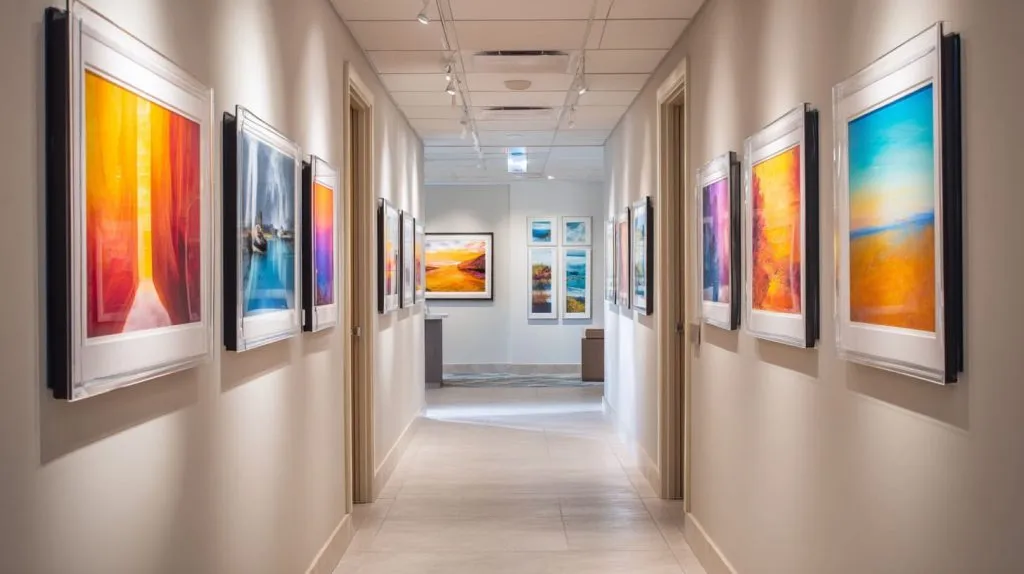
Large acrylic frame projects need more than cutting sheets.
They need communication, sampling, stable production, inspection, packaging, and schedule control. This is where a real custom acrylic manufacturer can support the buyer better than a simple trading source.
A buyer may begin with a drawing or photo. But turning that idea into stable mass production takes process.
The factory detail I pay close attention to is repeatability, because one perfect sample means very little if the next 1,000 pieces cannot match it.
Custom fabrication capabilities
Custom acrylic picture frames may need several production steps:
- Material selection
- CNC cutting
- Laser cutting
- Drilling
- Polishing
- Printing
- Engraving
- Magnet assembly
- Bonding
- Cleaning
- Inspection
- Packaging
| Fabrication Step | Why It Matters |
|---|---|
| CNC cutting | Accurate size and shape |
| Laser cutting | Clean custom profiles |
| Drilling | Hardware and wall mounting |
| Edge polishing | Premium appearance |
| Printing | Branding or decoration |
| Engraving | Logo and custom design |
| Assembly | Stable frame function |
| Inspection | Consistent quality |
For large-format acrylic frames, production control becomes more important. Large panels can bend, scratch, or show edge flaws more easily. Thickness, support, and packaging must be discussed early.
This is one reason custom projects should not be rushed only by photo reference.
A photo shows the dream. Production controls the reality.
OEM and branding services
Many B2B buyers do not want generic acrylic frames. They want frames that fit their brand, packaging style, and target market.
OEM services may include:
- Custom dimensions
- Private label packaging
- Logo engraving
- Custom color box
- Instruction card
- Barcodes
- Product labels
- Special hardware
- Mixed material design
| OEM Need | Practical Detail |
|---|---|
| Logo engraving | Confirm position and size |
| Private packaging | Protect product and support branding |
| Custom dimensions | Need tolerance control |
| Retail-ready box | Needs drop protection and appearance |
| Hardware kit | Must match installation method |
| Cleaning card | Helps reduce end-user damage |
For a brand owner or distributor, packaging can matter almost as much as the product. A scratched frame in a weak box makes the whole brand feel careless.
Good OEM work is not loud. It is quiet and consistent.
Why factory experience matters
Acrylic looks easy from the outside.
Cut clear sheet. Polish edge. Pack product.
But after 13 years in custom acrylic manufacturing, I can say the hard part is not making one nice piece. The hard part is making many pieces with the same quality, the same size, the same edge, the same packaging, and the same delivery promise.
| Factory Factor | Why Buyers Should Care |
|---|---|
| Experience | Fewer basic production mistakes |
| Skilled workers | Better polishing and assembly |
| Advanced machines | Better accuracy |
| Quality control | More stable bulk order |
| Export experience | Better packaging and documents |
| Communication | Fewer misunderstandings |
| Sampling process | Lower mass production risk |
For overseas buyers, communication is also part of quality. If the supplier does not understand UV protection, acrylic grade, thickness tolerance, or packaging risk, the buyer may spend too much time fixing problems later.
A good factory should help buyers think ahead.
Not scare them.
Not push them.
Just help them avoid the small holes in the road before the truck drives over them.
Conclusion

I do not see UV protection as a fancy extra for acrylic picture frames.
I see it as a practical decision.
If the frame holds a short-term print in a low-light room, standard acrylic may be perfectly fine. I would not force UV acrylic into that project just to make the quotation higher. That is not how I like to work.
But if the frame protects valuable photos, artwork, certificates, signed collectibles, gallery pieces, or retail displays near sunlight, UV protection becomes much more serious. In those cases, saving a little on material can create a bigger cost later.
This is why I always come back to a few simple questions:
- Where will the frame be used?
- How much light will it face?
- How valuable is the item inside?
- How long should the display last?
- What happens if the picture fades?
- Can the supplier prove the UV claim?
- Has the sample been tested under real lighting?
These questions may look basic, but they protect the buyer.
My view comes from real manufacturing work. Acrylic is beautiful because it looks clean, light, and simple. But good acrylic products are not simple behind the scenes. Material choice, edge quality, UV data, packaging, and supplier experience all matter.
At Feilong Acrylic, we focus on custom acrylic products for B2B buyers. We do not sell retail catalog products. We work with custom drawings, project ideas, OEM requests, and bulk orders. For acrylic picture frames, especially UV-protective acrylic frames, I believe the best result comes from clear communication before production starts.
If you are planning a custom acrylic picture frame project, I would suggest starting with the real use environment first. Tell the supplier where the frame will be placed, what it will protect, what size you need, and whether UV protection is required.
A good frame should not only look clear on day one.
It should still make the picture feel worth looking at after time has done its quiet work.