Skip to content
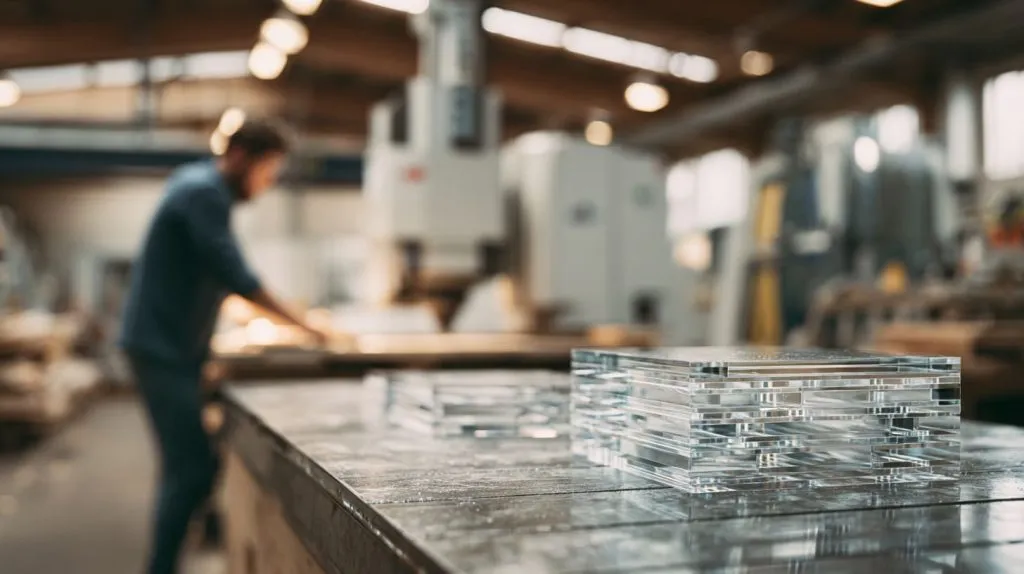
The air in our workshop had that clean “fresh-cut acrylic” smell, and the CNC was still humming in the background. I was checking edge quality on a batch of clear panels when a message popped up on my phone.
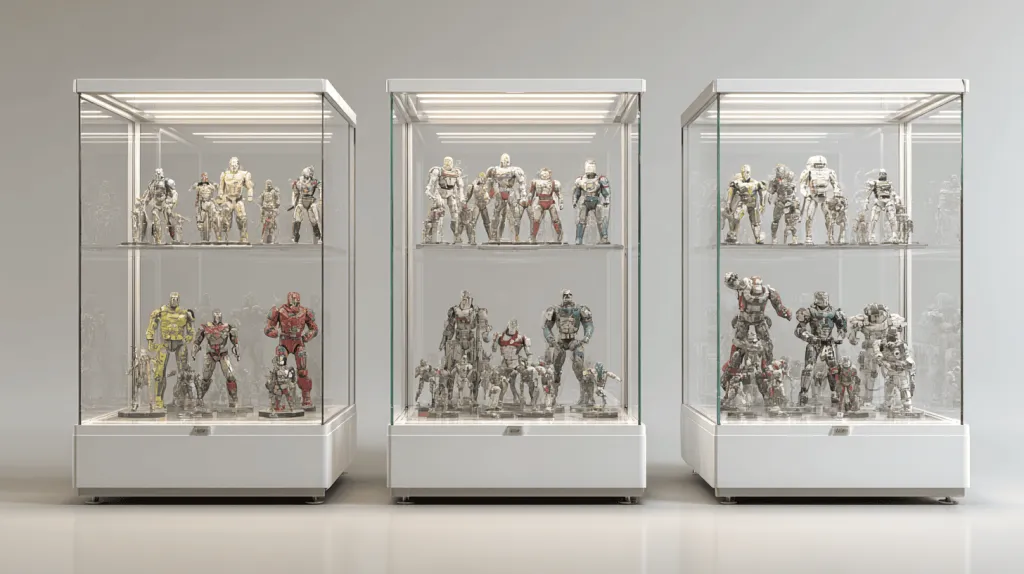
A buyer I know—he collects figures the way some people collect watches—sent two photos with almost no words. Same character. Same pose. Same figure. He just typed: “Which one looks right to you?”
In the first photo, the figure looked… okay. Like “nice, you own it.”
In the second photo, the figure looked important. The shadows had shape. The colors felt deeper. Even the tiny paint lines on the face looked sharper. It had that quiet “museum glass” feeling where you stop scrolling and stare for a second longer.
Nothing about the figure changed. The base didn’t change. The camera didn’t change much either.
The only difference was the display case.
That’s why I take display cases seriously. A good figure already has story, craft, and money inside it. A bad case can make it look cheap. A good case can make it look legendary—without shouting, without tricks, just smart design.
Why the Right Display Case Changes Everything
First impressions: from “just collectibles” to centerpiece
Most people decide in three seconds. Not about the character. About the overall scene. A clean case turns your shelf into a mini gallery. A messy case turns it into storage.
The psychology of presentation and perceived value
Humans use signals. We read lighting, framing, spacing, and reflections as “premium” or “random.” It sounds unfair, but it is real. A figure in a crisp case feels like it belongs to a higher tier.
Common mistakes collectors make when choosing display cases
I see the same mistakes again and again:
- Choosing a case that is too small, so the figure looks cramped.
- Picking “clear” material that hazes or scratches easily, then blaming the figure.
- Using strong LEDs with the wrong color tone, so skin tones look strange.
- Forgetting dust control, then cleaning too often and creating micro-scratches.
Here is a quick table I use when I talk with buyers who want a clean result without endless trial and error:
| Mistake | What It Causes | What To Do Instead |
|---|---|---|
| Case too tight | Figure looks “cheap” and crowded | Leave breathing space around the pose |
| Wrong lighting | Flat, harsh, or yellowed look | Choose a stable color temperature |
| No dust sealing | Frequent cleaning, more scratches | Use a sealed door or gasket |
| Poor material | Haze, distortion, reflections | Use high-clarity acrylic or low-iron glass |
And if you are thinking, “Okay, but what should I buy first?”—start with the case type. That decision shapes everything else.
What Type of Display Case Fits Your Figures Best?
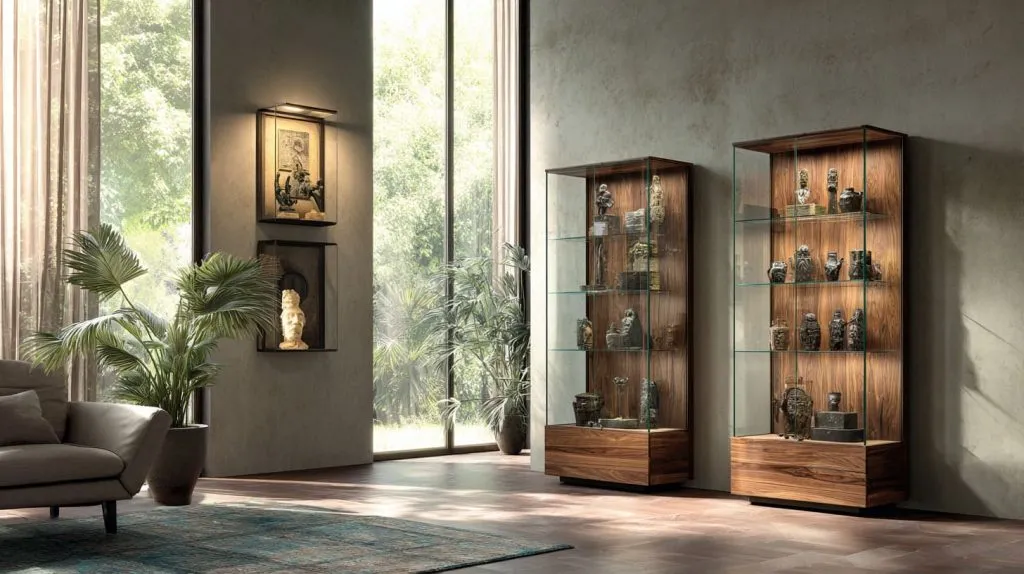
I always tell Jacky-style buyers something simple: a display case is not one product. It is a family of solutions.
Your room, your collection size, and your habits decide what “best” means.
Wall-Mounted vs. Freestanding Cases
Wall-mounted cases feel like art frames. Freestanding cases feel like furniture. Both can be perfect. Both can also be wrong.
Space-saving vs. statement pieces
- Wall-mounted: great when you want clean lines and you hate clutter.
- Freestanding: great when you want scale, presence, and larger capacity.
Best use scenarios for small rooms or large collections
Here is a practical comparison:
| Case Type | Best For | Watch Outs |
|---|---|---|
| Wall-mounted | Small spaces, feature pieces | Weight limits, wall strength, safe mounting |
| Freestanding cabinet | Large collections, full series | Footprint, moving/transport, door clearance |
Critical thinking moment: wall-mounted looks “lighter,” but it can create risk. If you live in a place with kids, pets, or shaky walls, “clean” can turn into “danger.”
Single-Figure Showcase vs. Multi-Tier Cabinets
This one is emotional. It is not just practical. It is about how you want to feel when you look at the figure.
Highlighting a hero piece
A single-figure showcase works when:
- the figure is your favorite
- the paint details are worth staring at
- you want one “hero” in a quiet scene
It is like putting a ring in a jewelry box. It signals importance.
Organizing full series collections
Multi-tier cabinets are for story-building:
- full sets
- evolving lines
- different versions of the same character
But there is a trap: if you pack too many figures into one cabinet, the viewer does not know where to look. Your “collection” becomes “noise.”
A simple rule I use:
- Hero case = 1 figure looks like a masterpiece
- Series cabinet = 6–20 figures look like a curated exhibit
- Overloaded cabinet = 30+ figures look like inventory
Open Shelving vs. Fully Enclosed Cases
This is where reality hits.
Accessibility vs. protection
- Open shelves feel easy. You can grab a figure fast. You can rearrange. You can dust later.
- Enclosed cases feel calm. Less dust. Less cleaning. Less risk.
When airflow matters
Some collectors worry about airflow. Usually it is not the “airflow” that hurts figures. It is dust + cleaning + sunlight.
That said, if you use strong lights in a sealed case, heat can build. The fix is not “open shelf.” The fix is:
- lower heat LEDs
- better spacing
- vent design (if needed)
- smart lighting schedule
| Setup | Pros | Cons |
|---|---|---|
| Open shelves | Easy access, low cost | Dust, accidental knocks, cleaning wear |
| Fully enclosed | Protection, premium look | Higher cost, needs good material choice |
If you choose the wrong case type, you will keep “fixing” problems later.
Next, let’s talk about material—because material is where the case either stays beautiful… or slowly looks tired.
How Important Is Material Quality?
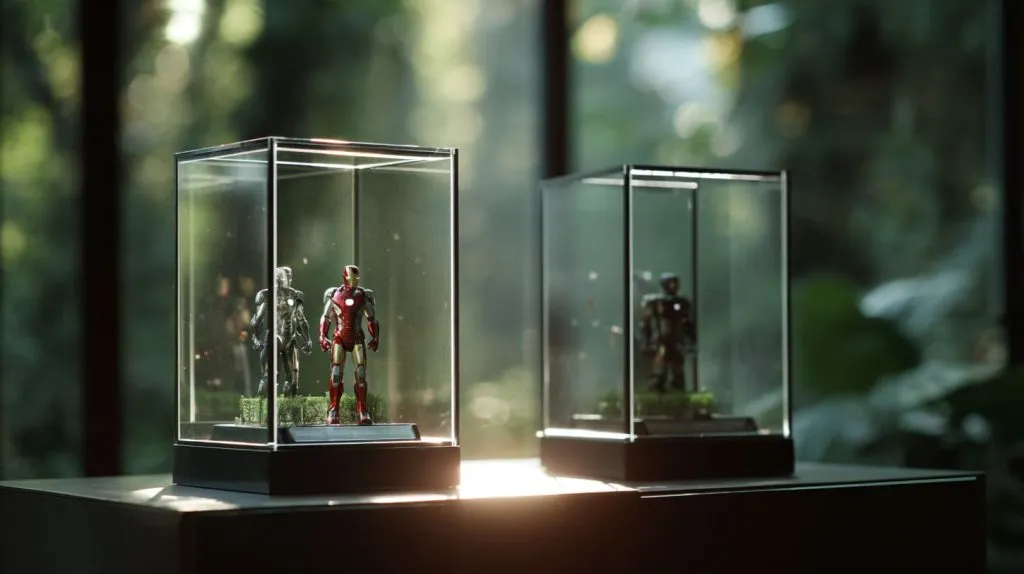
When buyers ask me, “Does material really matter?” I usually answer with a small confession: I can spot a low-quality panel from three steps away. Not because I’m special. Because bad clarity has a feel. It bends light in a cheap way.
Acrylic vs. Glass: Which One Wins?
There is no single winner. There is only the right match for your priorities.
Clarity and transparency comparison
High-clarity acrylic can look insanely clean. Glass can look “hard” and crisp. But glass quality varies too.
Here is the collector-friendly comparison:
| Factor | Acrylic (PMMA) | Glass |
|---|---|---|
| Optical clarity | Very high (if good grade) | High (best is low-iron) |
| Weight | Light | Heavy |
| Break risk | Low (won’t shatter like glass) | Higher (chips/shatters risk) |
| Scratch risk | Higher than glass | Lower than acrylic |
| Safety | Better for kids/pets | Needs careful handling |
Critical thinking moment: people say “glass is premium.” Sometimes it is. But if you ship it, move it, or live with kids, premium can become stress.
Weight, durability, and safety
If you want a large case, acrylic’s lighter weight is a huge practical advantage.
For a wall-mounted case, weight is not a detail. Weight is the whole decision.
Scratch resistance and long-term appearance
Acrylic scratches easier than glass. That is true.
But I also see a hidden problem: glass shows fingerprints like crazy, and poor lighting makes glare worse.
So the question becomes:
Do you prefer a case that resists scratches, or a case that is easier to handle and safer?
Frame Materials: Aluminum, Wood, or Frameless?
Frames are not just “style.” Frames are structure.
Structural stability
- Aluminum frame: stable, clean, modern, good for repeated opening.
- Wood frame: warm, home-friendly, but can warp with humidity.
- Frameless: looks minimal and floating, but needs good engineering and thickness.
| Frame Type | Strength | Visual Style | Common Risk |
|---|---|---|---|
| Aluminum | ⭐⭐⭐⭐ | Modern, sharp | Cheap alloy can feel flimsy |
| Wood | ⭐⭐⭐ | Warm, classic | Humidity movement, corner gaps |
| Frameless | ⭐⭐⭐ | Minimal, “floating” | Needs thicker panels & precise joints |
Aesthetic alignment with modern vs. classic interiors
If your room is modern, aluminum + clear panels often looks right.
If your room is cozy and warm, wood can make the display feel like furniture, not a lab box.
Critical thinking: “matching interior style” is not vanity. It decides whether your display feels intentional or awkward.
UV Protection and Anti-Yellowing Features
This is the slow killer. You do not see it in week one. You see it in month twelve.
Preventing fading over time
UV light fades paint, fabric, and printed parts. Even strong indoor light can do damage over time.
Why lighting conditions matter
- Near a window? UV protection matters.
- Under strong LEDs? Material quality matters.
- In a dim room? Reflection control matters.
A simple checklist I use:
- If the case sits near sunlight: ask about UV filtering
- If you want long-term clarity: ask about anti-yellowing grade
- If you clean often: ask about surface hardness and care method
Once material is right, the next step is lighting. Because lighting can turn “nice figure” into “wow, what is that?” in one second.
How Does Lighting Make Figures Look Legendary?
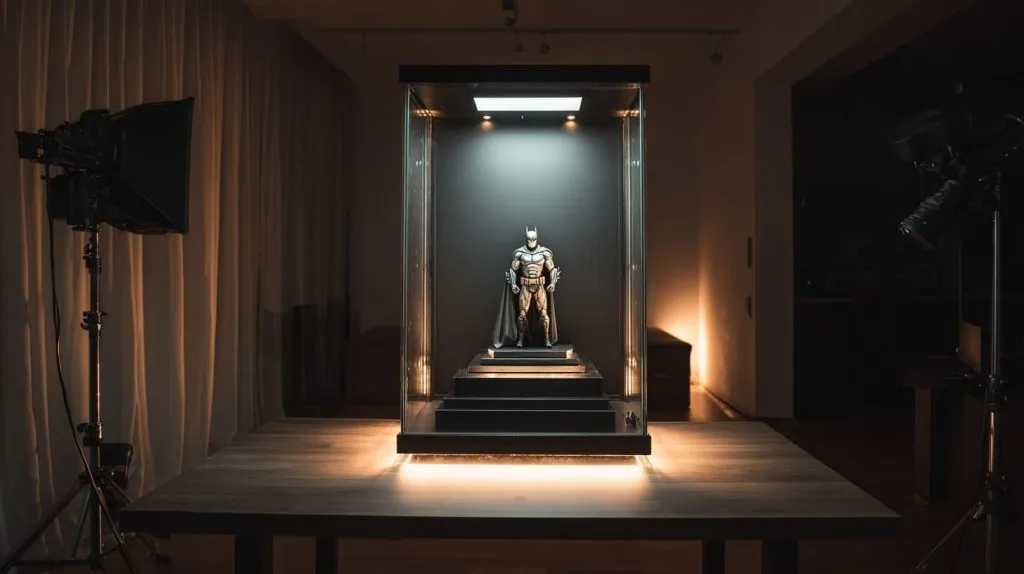
I learned lighting the hard way. I once tested a display for a client’s sample figure and thought, “This looks fine.” Then I moved the light two centimeters, and suddenly the face sculpt popped. The shadows got deeper. The details felt sharper. It was the same figure. It felt like a different product.
Built-in LED Lighting vs. External Lighting
Integrated lighting advantages
Built-in LEDs are clean. No messy wires. No DIY tape strips. They look “finished.”
They also reduce decision fatigue. You get one system that is meant for the case.
Flexible lighting upgrades
External lighting is flexible. You can change it later. You can experiment.
But it can also look messy if you don’t plan cable routing.
| Lighting Option | Best For | Watch Outs |
|---|---|---|
| Built-in LED | Clean, premium look | Must choose right color & brightness |
| External lighting | Tinkerers, upgrades | Cable mess, uneven lighting |
Critical thinking: built-in lighting is not always better. If the built-in LED is low quality, you are stuck with it.
Color Temperature and Mood
Color temperature sounds technical. It is actually emotional.
Warm light for vintage tones
Warm light makes figures feel nostalgic and soft. It fits retro themes and warm interiors.
Cool white for sharp, modern figures
Cool white makes edges crisp. It suits sci-fi, robots, and “high detail” sculpt work.
Here is a basic guide:
| Color Temp | Look | Best For |
|---|---|---|
| Warm (2700–3000K) | Cozy, soft | Vintage, warm rooms |
| Neutral (3500–4500K) | Balanced | Mixed collections |
| Cool (5000–6500K) | Crisp, sharp | Modern, sci-fi, clean lines |
Spotlighting Techniques
Backlighting for silhouette drama
Backlighting makes the outline strong. It can look cinematic.
But it can also flatten the front if you don’t add a small front fill.
Top-down lighting for depth and realism
Top-down lighting creates natural shadows. It helps sculpt detail look real.
A simple lighting recipe I like:
- soft top light for depth
- light front fill to protect facial details
- optional back light for drama
And remember: too bright often looks cheap. A figure is not a supermarket shelf. It is a story object.
Now, even perfect lighting can fail if the case proportions are wrong. Let’s talk size—because size is where “legendary” becomes “crowded.”
How Do Size and Proportions Affect Visual Impact?
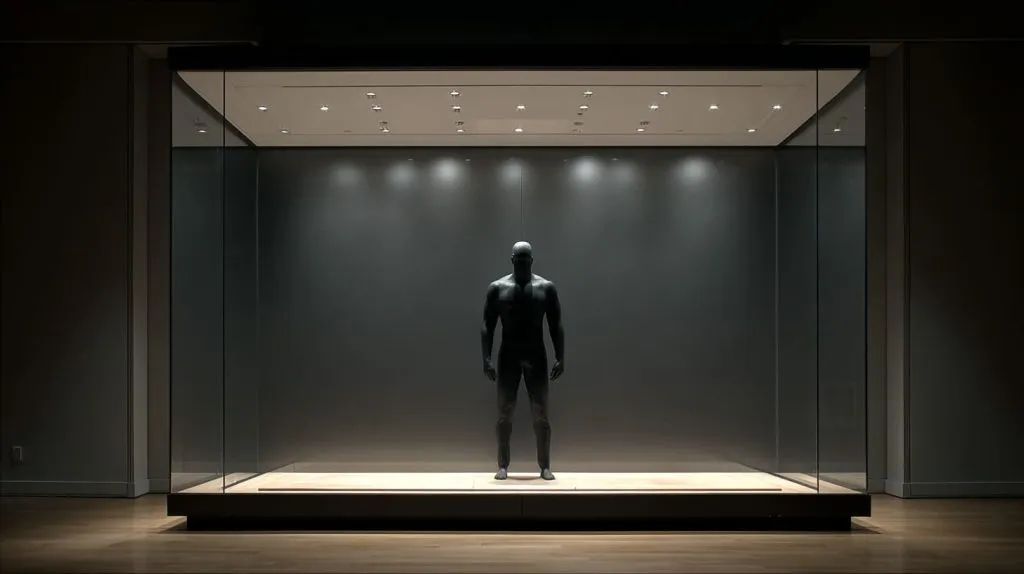
I’ve seen collectors spend serious money on a rare figure, then put it in a case that is only 10 mm larger than the base. That feels like buying a suit and refusing to tailor it. The figure can’t breathe.
Choosing the Right Height and Depth
Avoiding cramped displays
A cramped case makes the figure look like it is trapped.
It also makes photography harder. Reflections get worse.
Allowing breathing space around figures
A simple spacing rule that works for many figures:
- leave space above the head
- leave space around accessories
- leave depth for the pose
Here is a practical guide:
| Figure Type | Suggested Clearance (Top/Sides) | Suggested Depth |
|---|---|---|
| Small (Nendoroid size) | 30–50 mm | 120–180 mm |
| 1/8–1/7 scale | 50–80 mm | 200–300 mm |
| 1/6 scale | 80–120 mm | 300–400 mm |
Critical thinking: if you want the figure to feel “important,” give it space like a museum does. Museums don’t pack statues like boxes.
Spacing Between Shelves
Accommodating dynamic poses and tall accessories
Poses are not rectangles. Swords, wings, and hair spikes break “standard shelf heights.”
Adjustable shelf systems
Adjustable shelves solve this problem. They also help as your collection changes.
| Shelf System | Pros | Cons |
|---|---|---|
| Fixed shelves | Stable, cheaper | Limits pose options |
| Adjustable shelves | Flexible, future-proof | Needs good support design |
Background Panels and Visual Contrast
Mirror back panels
Mirrors add depth. They also double the visual noise if your cabinet is messy behind.
Solid color backdrops for pop effect
Solid colors help the figure stand out.
Black makes bright figures pop. White makes dark figures look clean. Neutral gray often works for mixed collections.
A quick backdrop table:
| Back Panel | Best When | Risk |
|---|---|---|
| Mirror | You want depth | Doubles clutter & reflections |
| Matte black | Bright figures, premium look | Dust shows more |
| Matte white | Clean, minimal style | Can feel “flat” with pale figures |
| Neutral gray | Mixed collections | Less dramatic |
If you get size right, your display starts to feel intentional.
Next, let’s deal with the boring stuff that quietly ruins displays: dust, handling, and long-term maintenance.
How Do You Balance Protection and Accessibility?
This is where collectors split into two types:
Type A wants to rearrange every week. Type B wants “set it and forget it.”
Neither is wrong. But your case choice should match your personality, not fight it.
Dustproof and Sealed Designs
Gasket systems and magnetic doors
Sealing matters because cleaning causes wear.
- Magnetic doors are simple and smooth.
- Gaskets reduce dust entry more, but need good fitting.
Long-term maintenance reduction
Less dust means:
- less wiping
- fewer scratches
- less frustration
| Dust Control Level | Typical Design | Best For |
|---|---|---|
| Basic | Simple door, no gasket | Low-dust rooms |
| Medium | Tight door fit, magnets | Most homes |
| High | Gasket + tight structure | High dust, near roads, shops |
Critical thinking: a “perfect seal” can trap heat if lighting is strong. Protection is not one-direction. You need balance.
Locking Systems and Security
Child safety
If kids can open it, they will. That is not a theory. That is physics.
Retail or exhibition environments
If you display in public spaces, locking systems reduce risk.
But locks can also ruin the clean look if they are bulky. So pick the lock style early in the design.
Easy Assembly and Maintenance
Tool-free assembly
Tool-free is great… if it is engineered well.
Bad tool-free designs loosen over time.
Cleaning and scratch prevention
I always suggest:
- microfiber cloth
- mild cleaner
- no paper towels
- no harsh solvents
Here is a simple cleaning table:
| Material | Safe Cleaning | Avoid |
|---|---|---|
| Acrylic | Microfiber + mild soap | Alcohol-heavy cleaners, rough wipes |
| Glass | Glass cleaner + microfiber | Abrasive pads |
Once protection is handled, the case stops being a “project.” It becomes part of your room.
So let’s talk style. Because a legendary display also needs to fit your life, not just your shelf.
How Should You Match the Display Case with Your Interior Style?
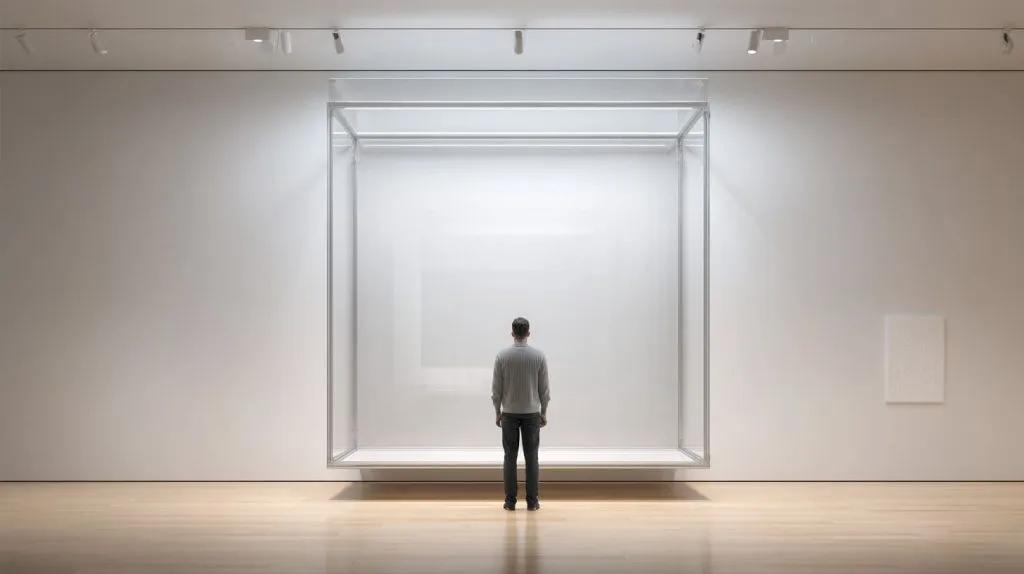
I’ve seen stunning figures in great cases that still feel “off.” Not because the case is bad. Because it fights the room. The display looks like it came from another apartment.
Minimalist Modern Setups
Clear acrylic and frameless designs
Clear acrylic with clean edges can feel invisible in a good way. It lets the figure be the hero.
Floating visual effects
Wall-mounted clear cases can create a “floating museum label” vibe.
But they must be installed safely. Minimalism should not mean fragile.
Industrial or Premium Collector Rooms
Metal frames and darker tones
Dark frames feel serious. They make the display feel like a gallery cabinet.
Integrated lighting accents
Soft lighting in a dark frame can look premium without being loud.
A quick style match guide:
| Room Style | Good Case Style | Lighting Style |
|---|---|---|
| Minimal modern | Frameless / clear acrylic | Neutral, soft |
| Cozy home | Wood frame | Warm light |
| Industrial / collector room | Metal frame, dark panels | Controlled spotlighting |
Critical thinking: sometimes “matching the room” makes the figure less dramatic. In that case, you can break the rule—just do it on purpose.
Retail or Commercial Display Considerations
Brand consistency
In retail, the case is part of branding. Clear, clean, consistent.
Durability for high-traffic environments
Retail needs stronger structure:
- thicker panels
- stronger hinges
- better scratch planning
- safer edges
Now, after all this, we still have the practical question that every buyer asks sooner or later: money.
Let’s talk budget in a way that doesn’t feel like a spreadsheet headache.
What Budget Factors Should You Consider?
Budget is not just “how much.” It is “how many times you buy twice.”
The cheapest case is often the one you don’t replace.
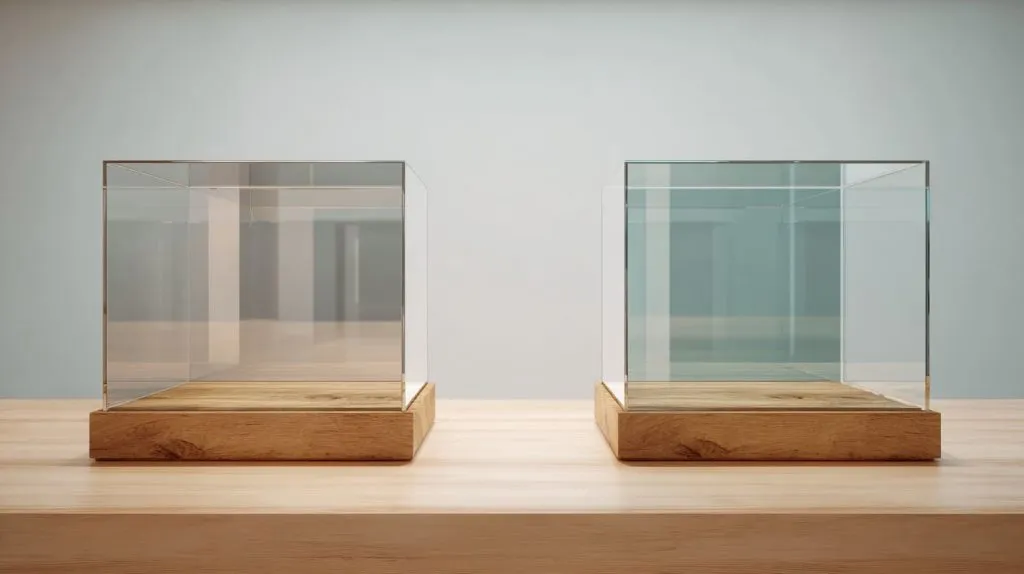
Cost Differences Between Acrylic and Glass
Material pricing factors
Costs move based on:
- thickness
- clarity grade
- UV features
- edge finishing
- hardware quality
Shipping and breakage considerations
Glass shipping risk is real. Acrylic shipping is easier, but you must protect against scratches.
| Cost Driver | Acrylic | Glass |
|---|---|---|
| Material cost | Medium (varies by grade) | Medium to high |
| Shipping cost | Lower | Higher |
| Damage risk | Lower break risk | Higher break risk |
| Long-term care | Needs scratch-aware cleaning | Needs fingerprint control |
Critical thinking: if you ship internationally, “cheap glass” can become expensive the moment it breaks.
Custom vs. Standard Sizes
When custom manufacturing makes sense
Custom makes sense when:
- your figure size is unusual
- you want a specific lighting layout
- you need a brand-style look
- you want uniformity across a series
MOQ and lead time implications
In B2B manufacturing, custom often has MOQ and lead time.
If you are a buyer like Jacky, you already know this trade-off:
- custom gives control
- standard gives speed
A decision table I like:
| Need | Choose Standard | Choose Custom |
|---|---|---|
| Fast setup | ✅ | ❌ |
| Perfect fit | ❌ | ✅ |
| Brand consistency | ❌ | ✅ |
| Lowest risk | ✅ | ✅ (if specs are clear) |
Long-Term Investment Value
Cheap cases often have:
- weak hinges
- thin panels
- poor clarity
- poor dust control
Premium cases often reduce:
- maintenance
- replacement
- “why does it look cloudy?” stress
Replacement frequency and lifecycle cost
If you replace a cheap case every year, it’s not cheap. It is just slow pain.
Here is a simple lifecycle view:
| Case Quality | Upfront Cost | Replacement Risk | Best For |
|---|---|---|---|
| Low | Low | High | Temporary setups |
| Mid | Medium | Medium | Most collectors |
| High | Higher | Low | Long-term “museum” look |
And honestly, the best strategy is not always “buy the most expensive.”
It is “buy the right design once.”
Now let me bring everything together, because choosing a case is a lot of small decisions that add up to one big feeling.
Conclusion
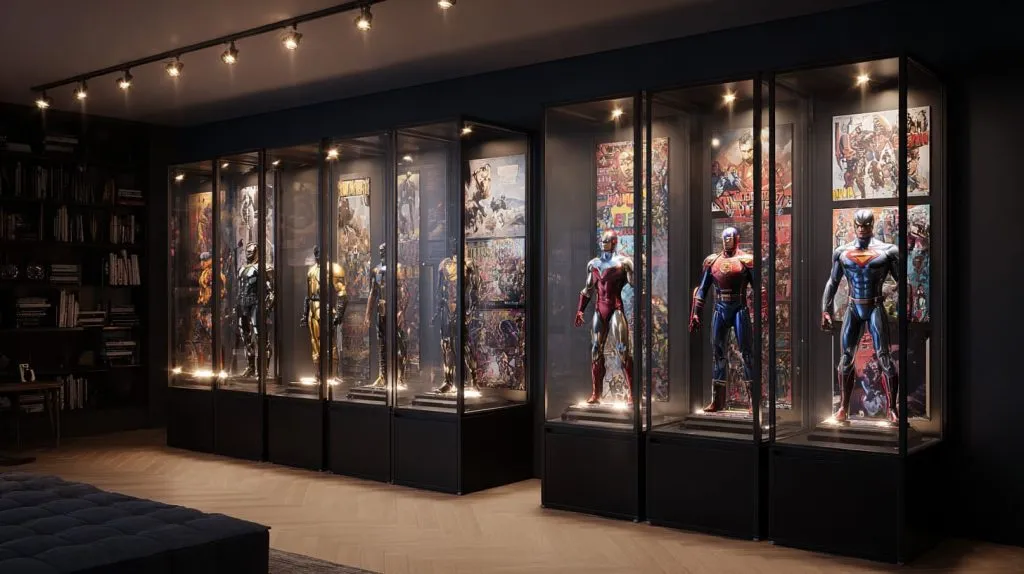
A display case that makes your figures look legendary is not magic. It is a clear set of choices:
- Pick the right case type for your space and your habits.
- Choose material quality that stays clear and safe over time.
- Use lighting that adds depth, not glare.
- Give your figures space so they look important.
- Balance protection and access, so you don’t hate maintenance.
- Match the case to your room style, so it feels intentional.
- Treat budget like lifecycle cost, not just the first invoice.
If you want a simple decision framework, I use this order:
Type → Size → Material → Lighting → Dust control → Style → Budget
And if you are sourcing for a brand, a store, or a big collection rollout, I’m happy to help you turn your idea into a clean spec. You can share your figure dimensions, shelf layout, and target look. I can suggest a case structure that fits your goals and is realistic to produce.
If you want, send me:
- figure size (height, width, depth)
- how many pieces per case
- your preferred style (clear, dark, wood, metal)
- lighting preference (warm, neutral, cool)
Then I’ll help you map it into a display case design that looks right in photos and feels right in real life.