Skip to content
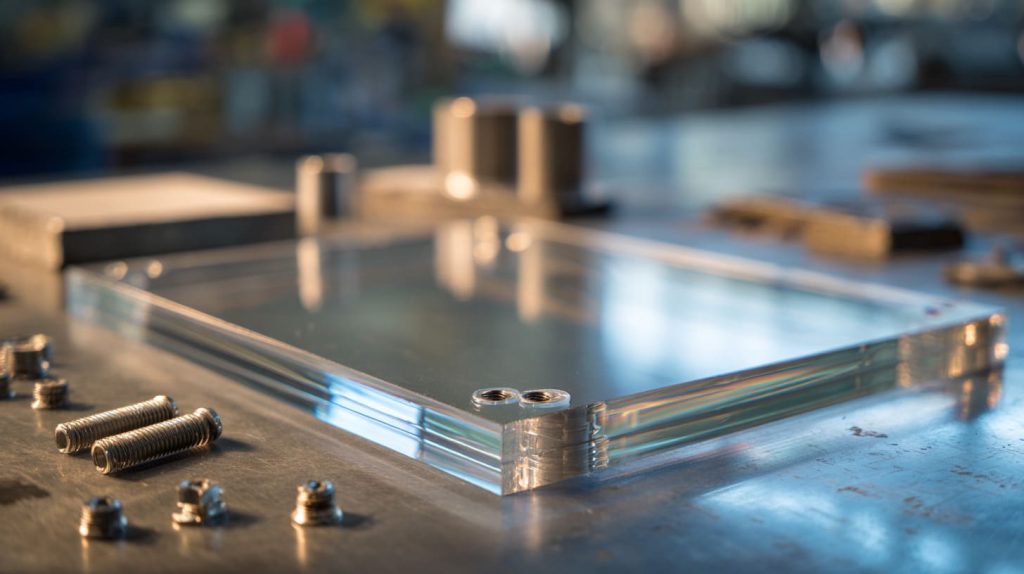
A clear plastic sheet can fool people at first glance. I have seen that happen more than once. Someone picks up a polycarbonate sample, taps it lightly, looks through it, and says, “So this is just like acrylic, right?” I usually smile at that moment, because the answer is both simple and not simple at all.
Polycarbonate plastic is a strong, clear engineering plastic. I see it used when a project needs more than a pretty surface. It gives me transparency close to glass, much better impact strength than acrylic, and solid heat resistance for many working conditions. That mix is why buyers, designers, and engineers keep coming back to it.
I have talked with buyers like Jacky many times. They are not beginners. They already know plastic materials on paper. They know acrylic looks clean, machines well, and fits many display jobs beautifully. But when the project moves into rougher use, tighter safety needs, or higher heat, the conversation changes. That is where polycarbonate starts to matter.
One detail I never ignore is this: when a part may get hit, flexed, or exposed to heat, I stop looking at appearance first and start asking how the material will behave on its worst day, not its best day.
That is also where expectations need to stay honest. Polycarbonate is not the perfect answer for every job. I do not treat it like a magic material. I see it as a material with a very specific kind of value. It shines when toughness, safety, and durability matter more than getting the hardest surface or the lowest cost. Acrylic still wins many jobs. Polycarbonate just wins different ones.
Before I compare the two directly, I think it helps to look at why polycarbonate became so widely used in the first place. That story explains a lot.
What Makes Polycarbonate Plastic So Popular?
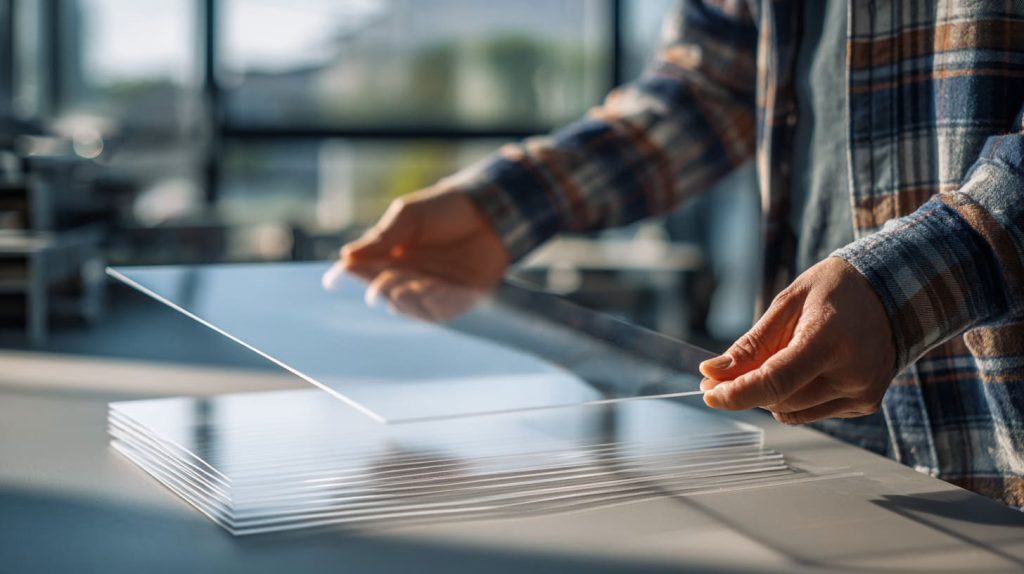
I have noticed something very practical in factory work and buyer discussions: materials become popular for a reason, but they stay popular only when they solve repeated problems. Polycarbonate did not become common because it sounds advanced. It became common because it helps people avoid breakage, reduce risk, and open up design options.
I think its popularity comes from one thing above all else: balance. Many materials are strong but not clear. Some are clear but fragile. Some are cheap but limited. Polycarbonate sits in the middle of many demands, and that makes it useful in real projects.
A small detail often changes my material choice very fast: if I know the customer will care more about survival in use than perfect surface hardness, polycarbonate moves up my list almost immediately.
Key Mechanical Properties
The first reason people trust polycarbonate is its impact strength. I do not say that lightly. When people describe it as “virtually unbreakable” compared to acrylic, I understand why. In daily project language, that usually means it can take rough handling, accidental hits, and stress far better than many other clear plastics.
I have seen this matter in real-life ways. A transparent cover can look fine in a clean office sample room. Then it gets installed in a public area, or on a machine, or in a school, or near a loading zone. That is when the risk changes. A material that was “good enough” on the desk becomes too fragile in the field.
Polycarbonate also has good dimensional stability. That matters more than people think. A sheet or molded part that changes too much under load or heat can create alignment problems, poor fit, or long-term stress points. I pay attention to this because many buyers focus on the front view only. The real trouble often starts at edges, mounting holes, bends, and fastener points.
It is also lighter than glass and many metal options. That does not sound dramatic. But weight changes shipping, installation, support structure, and even user comfort.
| Property | Polycarbonate | Why It Matters in Real Work |
|---|---|---|
| Impact strength | Very high | Helps prevent cracks and sudden failure |
| Weight | Low | Easier shipping and handling |
| Dimensional stability | Good | Supports fit and assembly accuracy |
| Toughness | High | Better for demanding environments |
Optical and Thermal Performance
Polycarbonate is popular because it gives people clarity without going fully into the risk zone of glass. It has a glass-like look in many applications, which is why it works well for protective windows, machine guards, and transparent covers.
But clarity alone is not the full story. Heat performance matters too. Polycarbonate handles heat better than many standard plastics. It also has flame-retardant possibilities in some grades. That makes it useful in electrical, industrial, and technical settings where simple decorative plastics may fall short.
I always slow down when a buyer says, “It only needs to be clear,” because clear is rarely the whole requirement once heat, light, handling, and safety enter the conversation.
UV resistance needs careful wording. Standard polycarbonate can degrade outdoors if it has no protection. That is why coated or UV-stabilized grades matter. I think this is one of the places where confusion starts. Some people hear that polycarbonate is strong and assume it is automatically good for all outdoor use. That is too simple.
Processing and Customization Flexibility
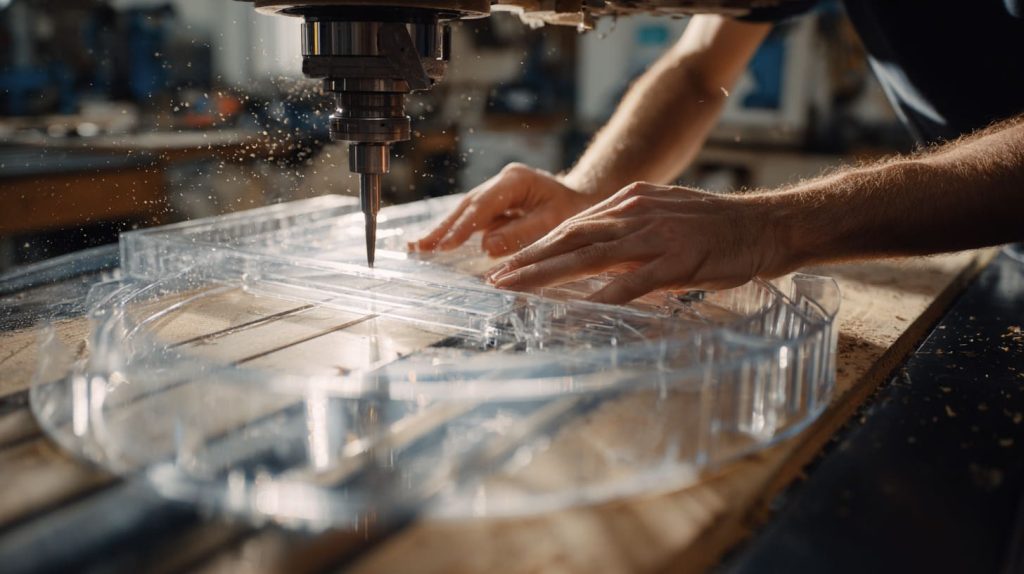
Another reason polycarbonate stays popular is that it can be processed in many ways. I can machine it, bend it, thermoform it, and mold it. That flexibility gives engineers and product designers room to work with shape, detail, and function.
This matters a lot in custom manufacturing. A buyer may need a cover with drilled holes, a bent guard, a molded enclosure part, or a shaped transparent panel. Polycarbonate can fit those needs better than materials that are either too brittle or too narrow in their process range.
I have learned to check the fabrication path before I get excited about the material itself, because a good material that fights the process will still create a bad project.
Common processing routes include:
- CNC machining
- Thermoforming
- Injection molding
- Cold bending in some cases
- Surface coating and treatment
| Processing Method | Works Well with Polycarbonate? | Typical Use |
|---|---|---|
| CNC machining | Yes | Custom covers, panels, housings |
| Thermoforming | Yes | Curved shields, formed panels |
| Injection molding | Yes | High-volume components |
| Surface coating | Yes | Scratch resistance, UV improvement |
This wide process range explains why polycarbonate shows up in so many industries. And once you see the industries, the material starts to make even more sense.
Where Is Polycarbonate Most Commonly Used?
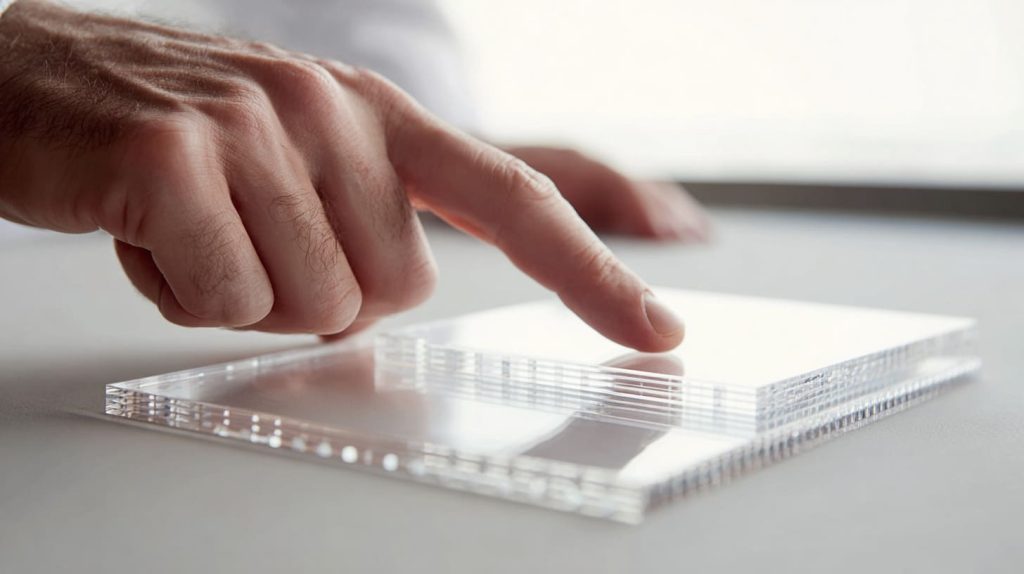
I do not think a material becomes trustworthy until I see where people are willing to use it at scale. Polycarbonate passes that test very clearly. It appears in buildings, machines, cars, safety products, electronics, and daily consumer goods. That spread tells me the market is not using it for fashion. The market is using it because it solves real problems in very different environments.
One thing I often notice in buyer discussions is that the same material can serve totally different goals. In one project, polycarbonate is there for visibility. In another, it is there for impact resistance. In another, it is there because weight must stay low.
When I review an application, I pay close attention to what the material is really doing there, because “used in many industries” sounds nice but means nothing unless I know the exact job it performs.
Construction and Architectural Applications
Construction is one of the clearest examples. Polycarbonate is used in skylights, roofing panels, partitions, sound barriers, and protective glazing. It works because it brings light transmission and toughness together.
I understand why architects and builders like that combination. Glass looks elegant, but it adds weight and break risk. Acrylic can look good too, but it may not handle impact the same way. Polycarbonate gives designers a practical middle path in many cases.
For partitions and barriers, it also gives a clean look while helping with durability. In public spaces, schools, transport areas, and industrial buildings, that matters a lot. People bump into things. Equipment moves around. Cleaning is frequent. Surfaces get abused more than design drawings admit.
Electronics and Electrical Enclosures
This area feels very familiar to me because enclosure projects always reveal what a material can and cannot do. Polycarbonate is common in control panels, housings, insulation parts, and transparent covers for displays or indicators.
I like it in these uses because it supports both visibility and protection. A technician may need to see a light, meter, label, or moving part while the cover still protects the system. That sounds simple. It is not always simple.
I tend to become cautious when transparent parts are placed near heat sources or fasteners, because that is where weak materials start showing stress, warping, or cracking over time.
Polycarbonate also works well in environments where durability matters more than showroom polish. That is why it appears so often in industrial and electrical products.
Automotive Industry Applications
The automotive world uses polycarbonate in headlamp lenses, interior parts, and lightweight components. That tells me the material earns trust under demanding conditions. Cars bring heat, vibration, weather, and repeated use. A weak material does not last long there.
Headlamp lenses are a strong example. They need transparency, shape precision, and reasonable durability. Polycarbonate fits that need well. Interior parts also benefit from lower weight and molding flexibility.
| Industry | Common Polycarbonate Use | Main Reason |
|---|---|---|
| Construction | Skylights, partitions, panels | Light + toughness |
| Electrical | Housings, control covers | Protection + visibility |
| Automotive | Lenses, trim parts | Light weight + durability |
The more I look at these industries, the more one question keeps showing up underneath them all: why choose polycarbonate instead of acrylic when both can look clear and useful? That is where the real debate usually begins.
Why Do Engineers Choose Polycarbonate Over Acrylic?
This is one of the most common comparison questions I hear, and I understand why. Acrylic and polycarbonate often sit near each other in the same project conversation. Both can be clear. Both can be cut and shaped. Both can work in custom parts. But they do not behave the same way when pressure rises.
I work with acrylic all the time, so I say this with respect for both materials: choosing between them is not about which one is “better” in a general sense. It is about which one fails in a way you can accept.
A choice like this usually becomes clear for me when I imagine the part after six months of real use, not when I look at the fresh sample under clean workshop light.
Impact Resistance Comparison
This is where polycarbonate pulls away. Acrylic is strong enough for many display and decorative jobs, but polycarbonate is much tougher under impact. If a part may get dropped, struck, leaned on, or stressed during use, polycarbonate gives more safety room.
I have seen acrylic parts crack from handling errors that polycarbonate would likely survive. Not every project lives in a careful environment. Stores, schools, public spaces, workshops, transport areas, and field use all increase the chance of accidental damage.
That is why engineers choose polycarbonate for guards, shields, and technical covers more often when impact risk is real.
Cost vs Performance Trade-offs
Polycarbonate usually costs more than acrylic. So the question is not whether it is tougher. The real question is whether that extra toughness is worth paying for.
Sometimes the answer is yes very quickly. A replacement part may cost far more than the material difference. A cracked protective cover can stop equipment use. A failed public-facing panel can create safety or image issues. In those cases, a cheaper sheet is not really cheaper.
At the same time, I do not push polycarbonate where acrylic is already enough. That would be lazy advice. A cosmetic display box in a low-risk indoor setting may not need the extra cost at all.
| Question | Acrylic | Polycarbonate |
|---|---|---|
| Lower cost? | Yes | No |
| Better impact resistance? | No | Yes |
| Better for premium display clarity? | Often yes | Sometimes |
| Better for rough handling? | No | Yes |
Visual and Surface Differences
This part is easy to overlook. Acrylic often has a harder surface and a very clean visual finish. In many display applications, it looks beautiful. Polycarbonate can also be clear, but it is more scratch-sensitive unless coatings are used.
That means the choice is not only about survival under impact. It is also about what kind of wear the customer will notice first. Some buyers worry most about breakage. Others worry most about visible scratches.
I often ask myself which kind of complaint the end user is more likely to make first, because a material that survives impact but looks tired too early can still disappoint the customer.
So yes, engineers choose polycarbonate over acrylic for good reasons. But they do not do it blindly. They do it when strength matters more than pristine display-level surface beauty.
That same thinking becomes even more obvious when safety enters the picture. Safety products do not leave much room for material guesswork.
How Is Polycarbonate Used in Safety and Protection Products?
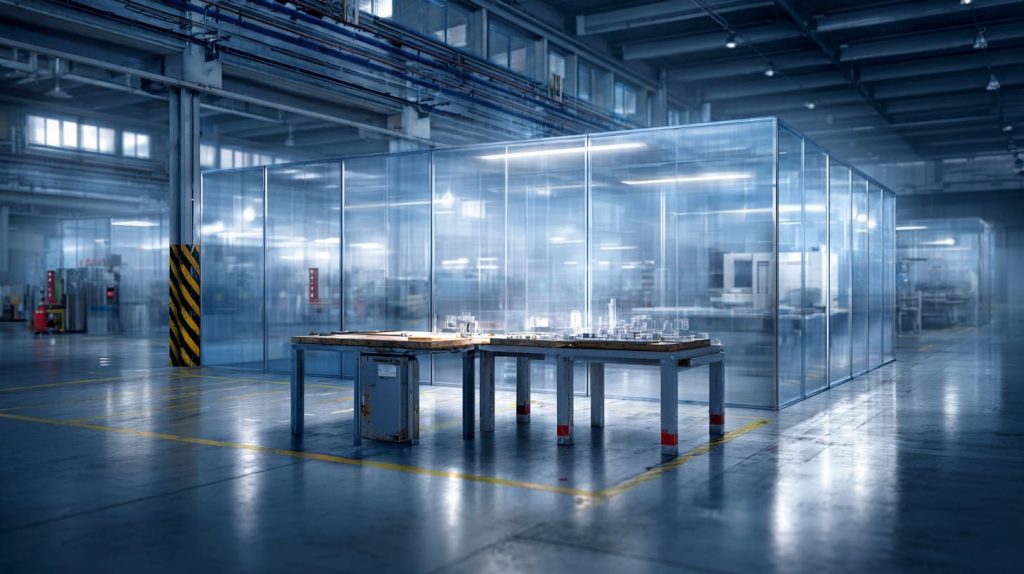
If someone asks me where polycarbonate proves itself most clearly, I would probably point here first. Safety and protection products show the material at its most convincing. In these applications, appearance helps, but performance carries the real weight.
I think this is where people stop seeing polycarbonate as “just a clear plastic” and start seeing it as a working safety material. That shift matters.
When a part is meant to stand between people and risk, I do not care much about how elegant the sample looks until I understand how it responds to force, repeated handling, and failure pressure.
Protective Shields and Barriers
Polycarbonate is widely used for machine guards, industrial safety screens, security panels, and other protective barriers. That makes sense because these parts need transparency and impact resistance at the same time.
A machine guard is a good example. The user often needs to see inside. So metal is not always practical. Glass may be too risky. Acrylic may not offer enough toughness for some use cases. Polycarbonate becomes the practical answer.
I have seen similar logic in public barriers and protective partitions. The best material is often the one that keeps people safe without making the system harder to inspect or use.
Personal Protective Equipment (PPE)
Face shields, safety goggles, and visors are another strong use case. These products need light weight, visibility, and impact resistance. They also need user comfort. A heavy or fragile material does not belong here.
That is why polycarbonate appears so often in PPE. It balances protection with wearability. I think that balance is what keeps it relevant even when many other plastics are available.
Bullet-Resistant and High-Security Applications
In higher-security applications, polycarbonate is often used in laminated structures rather than alone. Banks, protected counters, and other security environments may use layered panels that combine polycarbonate with other materials.
This is important because it shows a more mature way to think about materials. Real high-security design is rarely about one sheet doing everything by itself. It is about systems, layering, and controlled performance.
| Safety Use | Why Polycarbonate Fits |
|---|---|
| Machine guards | Clear and impact-resistant |
| Face shields | Light, clear, tough |
| Security panels | Good part of laminated protection systems |
| Industrial screens | Durable under repeated use |
Once a material starts protecting people, trust grows quickly. And that trust often spreads into the products people touch every day, even when safety is not the first selling point.
What Role Does Polycarbonate Play in Consumer Products?
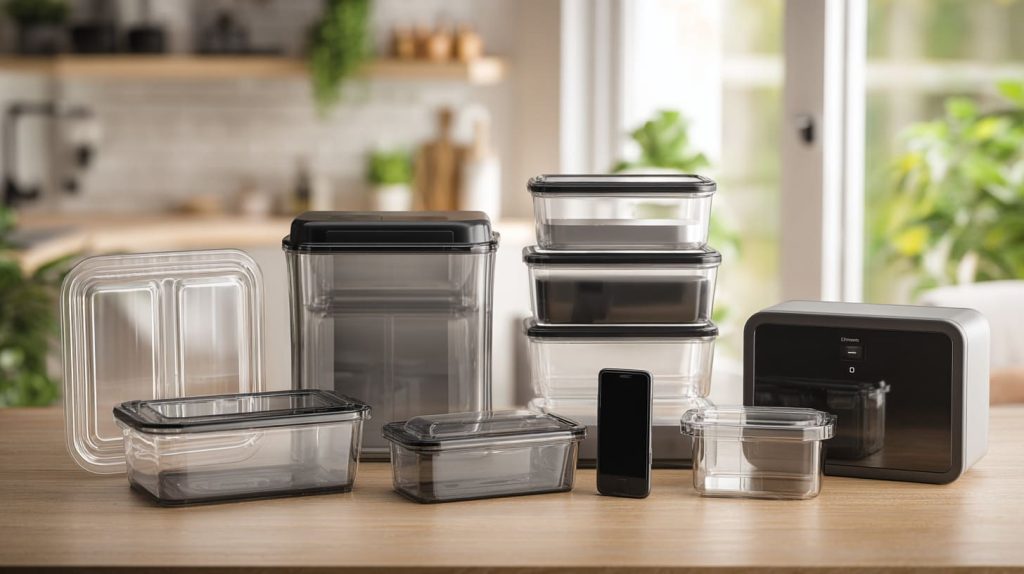
I like looking at consumer products because they reveal something industrial products sometimes hide: how materials behave in ordinary human hands. Not lab hands. Not engineer hands. Regular hands. The kind that drop, scrub, stack, knock, and forget.
Polycarbonate plays a big role here because daily products need durability without feeling heavy or fragile. Consumers may never say the word “polycarbonate.” They still benefit from it every day.
What usually tells me a material is right for consumer use is not the spec sheet alone but whether it can survive careless habits, repeated cleaning, and the rough honesty of daily life.
Household and Lifestyle Products
Polycarbonate has been used in water bottles, storage containers, appliance parts, and many durable household items. These products need toughness, shape stability, and low weight.
Some consumer categories have changed over time because of regulation, health concerns, and brand choices, especially around food-contact products. That is why I think buyers must always separate “material family” from “specific compliant grade.” One label is not enough.
I try not to make lazy assumptions in this area, because household use brings both performance needs and user trust issues.
Electronics and Device Housings
Polycarbonate also plays a strong role in electronics. It can appear in laptop parts, small device housings, LED covers, and transparent casings. Its strength and moldability make it useful for these products.
This is especially true where thin walls, precise shapes, or light transmission matter. LED light covers are a good example. The material needs to look good, diffuse or transmit light properly, and stay stable in use.
| Consumer Product Type | Common Polycarbonate Role | Main Benefit |
|---|---|---|
| Household storage | Durable container parts | Tough and light |
| Appliances | Covers and housings | Stability and protection |
| Electronics | Device shells, LED covers | Shape freedom + durability |
Consumer use teaches a good lesson: a material does not need to look industrial to have industrial-grade value. And that lesson becomes even more serious in healthcare.
How Is Polycarbonate Used in Medical and Healthcare Fields?
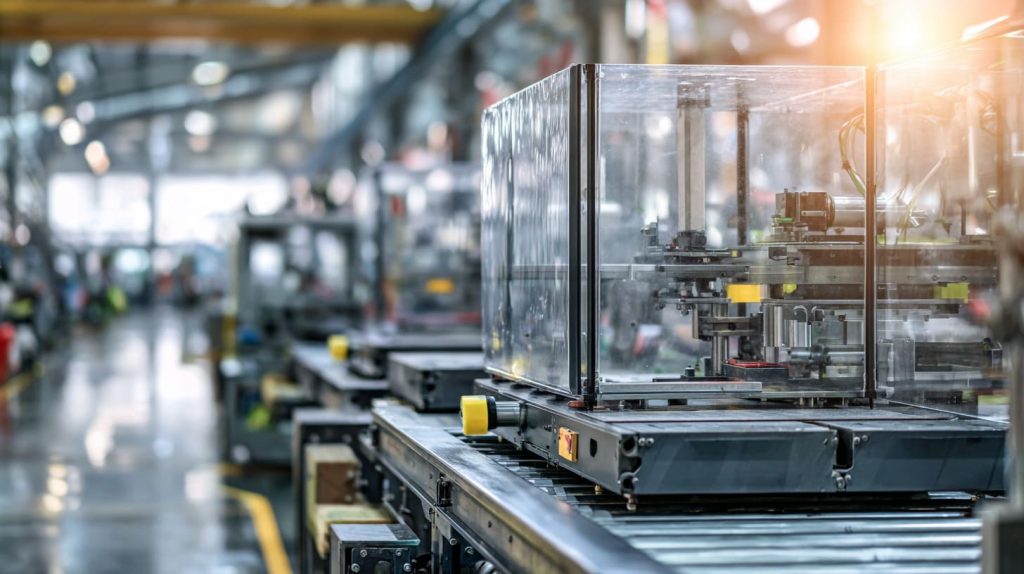
Medical use changes the conversation. It should. In this field, materials are judged by more than cost and appearance. Cleanability, durability, visibility, and compliance all start to matter in a sharper way.
I have always felt that medical applications force people to think more honestly. There is less room for vague claims. A material either supports the use environment or it does not.
I become much more careful when a project moves into healthcare because the wrong material choice there is not just a design mistake; it can affect cleaning routines, product reliability, and user confidence.
Medical Devices and Equipment
Polycarbonate is used in transparent housings, diagnostic equipment covers, and device components where visibility and durability matter. In some equipment, the user needs to monitor what is happening inside while the component stays protected.
That is a natural fit for polycarbonate. It offers clarity with better toughness than more brittle transparent options. In healthcare environments, accidental bumps and repeated use are not rare events. They are normal.
Sterilization and Hygiene Advantages
Some grades of polycarbonate can handle repeated cleaning and certain sterilization-related demands. This does not mean every polycarbonate part is suitable for every medical process. That would be far too broad. Grade selection matters a lot.
This is one of those areas where I stop trusting general material descriptions and start asking for exact grade, test data, and end-use conditions.
Still, the reason polycarbonate appears in healthcare is clear. It can support hygiene, transparency, and durability in a useful package. That is valuable.
A lot of buyers see healthcare use and assume the material has no weaknesses. I think the smarter response is the opposite: the more capable the material seems, the more carefully I check its limits.
What Are the Limitations of Polycarbonate?
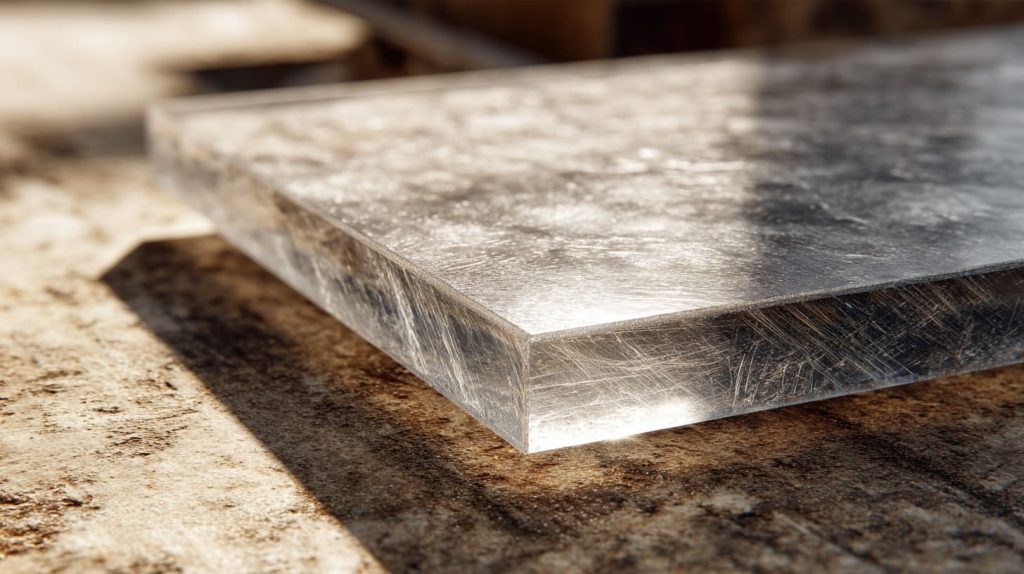
I do not trust material articles that only praise. Real buyers do not need cheerleading. They need judgment. Polycarbonate is useful, strong, and flexible, but it has limits. I think saying that openly makes the material easier to use well.
The biggest mistake I see is overconfidence. Someone hears “stronger than acrylic” and begins treating polycarbonate like it has no weaknesses. That is when bad decisions start.
The point where I slow down most is when a customer wants one material to handle impact, sunlight, surface wear, and budget pressure all at once, because that is usually where trade-offs show up fast.
Scratch Sensitivity
Polycarbonate is tougher than acrylic under impact, but it is usually more prone to scratching. That matters in products where the surface stays visible and gets touched, wiped, or cleaned often.
Acrylic often keeps a cleaner-looking surface in display settings. So if appearance over time matters more than impact resistance, acrylic may still win. This is why I keep saying the comparison must stay tied to use conditions.
Scratch-resistant coatings can help, but coatings add cost and process complexity.
UV Degradation Without Treatment
Standard polycarbonate may yellow or degrade over time under UV exposure if it has no proper treatment. Outdoor use needs more care than many people expect.
I have seen projects go wrong because the buyer only focused on the base material name and ignored the grade or coating requirement. That is not a small detail. It changes the whole result.
Cost Considerations
Polycarbonate costs more than many standard plastics. Sometimes that is absolutely justified. Sometimes it is not. A low-risk indoor project may not need it. In that case, using it just because it sounds stronger is not smart buying.
| Limitation | What It Means in Practice | Possible Fix |
|---|---|---|
| Scratch sensitivity | Surface may mark more easily | Hard coating |
| UV weakness in standard grades | Outdoor yellowing risk | UV-stabilized grade |
| Higher cost | Budget pressure | Use only where value is real |
Materials become much easier to choose once the limits are clear. And once those limits are on the table, the next step becomes practical: how do I choose the right application without wasting money or taking the wrong risk?
How to Choose the Right Polycarbonate Application for Your Project?

This is where material talk stops being abstract. I like this part because it brings the discussion back to real decision-making. Buyers like Jacky do not need random praise for a material. They need a way to judge whether it fits the job.
I usually break the choice into three parts: what the part must do, what environment it will face, and whether the manufacturer can process it correctly. That sounds simple. It is simple. But it works.
I make my decision here by asking which failure would hurt the project most—cracking, scratching, yellowing, poor fit, or overspending—because the answer usually points to the right material path.
Define Your Core Requirement First
Every project has a main pressure point. Some need impact resistance. Some need clean appearance. Some need low cost. Some need outdoor life. Problems start when buyers pretend all four priorities are equal.
I always try to rank the needs. Not list them. Rank them.
A simple way to think about it is this:
- What must the part survive?
- What must the user see or touch?
- What kind of lifespan is expected?
- How tight is the budget?
Evaluate Environment Conditions
Environment changes everything. Indoor and outdoor use are not the same. Public and private use are not the same. Technical equipment and decorative display are not the same.
A transparent indoor machine guard may be a strong case for polycarbonate. A luxury retail display box may be a stronger case for acrylic. An outdoor sign cover may need extra UV thinking before either choice feels safe.
| Project Condition | Why It Matters |
|---|---|
| Indoor vs outdoor | UV exposure changes material risk |
| Heat level | May affect stability and performance |
| Cleaning frequency | Surface wear becomes more important |
| Impact risk | Toughness may become the top priority |
Work with a Reliable Manufacturer
This part matters more than people like to admit. A good material can still fail through poor fabrication, bad edge work, wrong bending conditions, or careless hole design.
That is why I pay attention to the factory’s real experience, not just the quote sheet. Can they machine the part cleanly? Can they form it without stress issues? Can they advise on coatings or grade choice? Can they handle custom dimensions and real tolerances?
I have seen buyers save a little on price and lose much more on remakes, delays, and poor finish. That is never a smart trade.
A good material decision is only half the job. The other half is putting that material in the hands of someone who knows what to do with it.
And once all those choices are made, the big picture becomes very clear.
Conclusion

Polycarbonate is popular for good reason. I see it used across construction, electronics, automotive, safety products, consumer goods, and healthcare because it offers a very useful mix of strength, clarity, heat resistance, and processing flexibility. It earns its place when a project needs more than a nice appearance.
At the same time, I do not think it should be chosen by habit. I think it should be chosen by purpose. It is not always better than acrylic. It is better in the jobs where impact resistance, safety, and durability carry more weight than surface hardness or lower cost.
The final call I make is never based on one property alone; I look at use, environment, likely damage, visible wear, and the cost of failure before I let any material into production.
That is the way I would advise any buyer or product designer to approach it. Start with the real need. Stay honest about the trade-offs. Choose the material for the way the part will live, not just for the way the sample looks.
If you are working on a custom clear plastic project and you are not fully sure whether polycarbonate or acrylic makes more sense, I think that is exactly the right time to talk with an experienced manufacturer. A good discussion early on can save cost, avoid redesign, and help you build something that actually performs the way you expect.