Skip to content
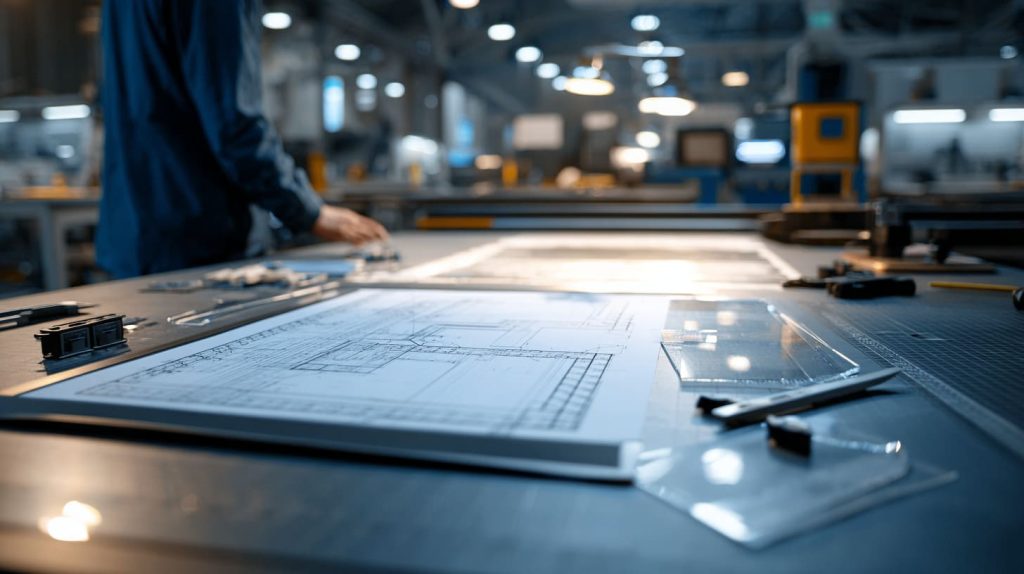
The drawing file opened on my screen, and one short note sat in the corner of the page: “Outdoor. Backlit.”
Under that, the buyer had added a quiet question: “Cast or extruded?”
That tiny line usually means the real discussion has not started yet.
Acrylic is one of the most common materials used in outdoor signage. It is clear, lightweight, and easy to fabricate. Designers like it because it can be cut, polished, engraved, and printed in many ways. But the moment a sign moves outdoors, the decision becomes more serious.
Buyers like Jacky rarely think only about the sheet itself. After ten years of purchasing acrylic displays and boxes, he usually thinks about the full life of the product:
- Will the panel stay clear under sun and heat?
- Will the edges still look clean after fabrication?
- Will the sign keep its color and brightness after years outside?
- Will the price still make sense if the sign must be replaced early?
Those questions are why the cast vs extruded acrylic decision appears so often when designing outdoor signs.
At first glance, the two materials look almost identical. Both are acrylic sheets. Both are transparent. Both can be cut and polished. But once fabrication begins, and once the sign sits under real sunlight and weather, the differences start to show.
In this guide, I will walk through the key differences between cast acrylic and extruded acrylic for outdoor signage. I will explain how they are made, how they behave in fabrication, how they age outdoors, and when each one actually makes sense for a real project.
What Are Polycarbonate Sheets?
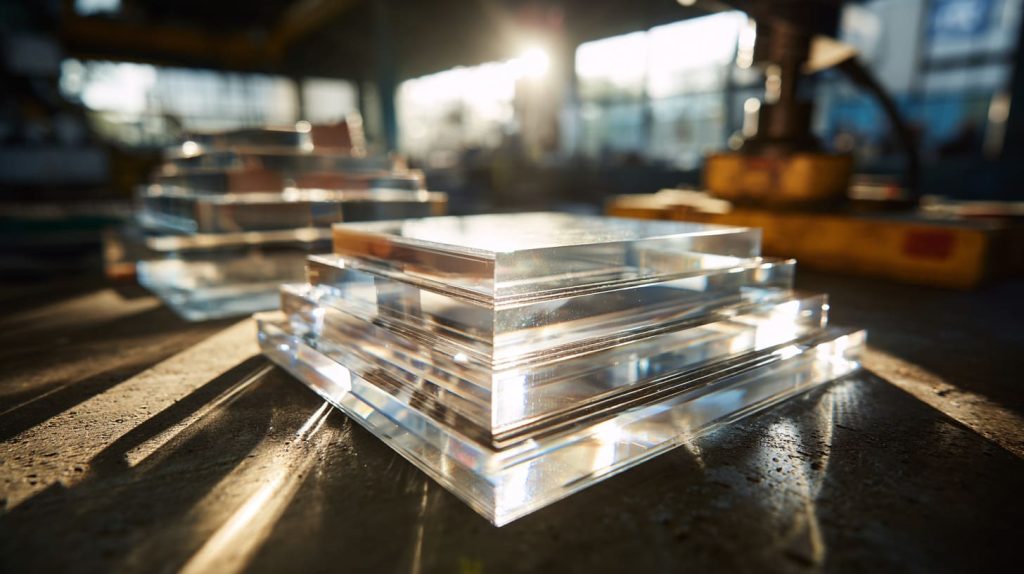
When people say “polycarbonate sheet,” they usually mean a flat plastic panel that stays clear like glass, but behaves very differently when it is hit.
In simple words, polycarbonate is a high-performance thermoplastic. It is known for two big things:
- very high impact resistance
- good optical clarity
That is why it is often used as a glass alternative in security and safety designs. Glass is stiff and clear. But under impact, glass can fail in ways nobody wants to clean up.
I like to describe it like this:
glass stands proud until it suddenly gives up.
polycarbonate bends, fights back, and keeps its shape.
Not always perfectly. But often long enough to protect people and equipment.
Chemical and Material Structure
I will not turn this into a chemistry lesson. I do not enjoy that either.
But the structure matters because it explains the behavior. Polycarbonate has a polymer structure that gives it toughness. Under impact, it can deform and spread energy instead of cracking like a brittle material.
Now, when Jacky asks me, “How is it different from acrylic or PETG?” I answer with a simple comparison.
| Material | How it fails under impact | Typical feeling | Best use case |
|---|---|---|---|
| Glass | Shatters | Hard, rigid | High scratch resistance, indoor clarity |
| Acrylic (PMMA) | Can crack or chip | Stiff, clean | Displays, signage, good clarity |
| PETG | Dents, can deform | Softer | Forming, guards, moderate impact |
| Polycarbonate | Bends, resists cracking | Tough, springy | Security panels, machine guards |
This table is not “one material wins.” It is more like: what kind of failure can you live with?
Common Types of Polycarbonate Sheets
Not all polycarbonate sheets are the same. People use the same word for different structures, and that can confuse a project fast.
Solid polycarbonate sheets
The common “clear shield” type. Strong, clear, used for barriers and windows.Multiwall polycarbonate sheets
Has internal channels. Light and insulating. Often used for roofing and greenhouse panels.Corrugated polycarbonate sheets
Wavy profile. Used for roofs and covers where stiffness matters in one direction.
Here is a quick way I frame it for buyers:
| Type | Main strength | Main weakness | Typical security fit |
|---|---|---|---|
| Solid | Best impact resistance + clarity | Can scratch | Strong fit |
| Multiwall | Light + insulation | Less clear, not flat look | Limited fit |
| Corrugated | Good for roofing structure | Not “premium clear” | Rare fit |
Key Material Properties
When I evaluate polycarbonate for security, I care about these core properties:
- High impact resistance: the main reason it is chosen
- Transparency: you can protect without hiding
- Lightweight: easier to handle than glass panels
- Temperature resistance: better stability across hot/cold swings
Still, “properties” on paper are not the full story. A sheet can be strong and still fail if we choose the wrong thickness or mount it the wrong way.
And that leads to the next question I always ask: what does “security” really mean in this design?
Why Polycarbonate Sheets Are Considered Security Materials
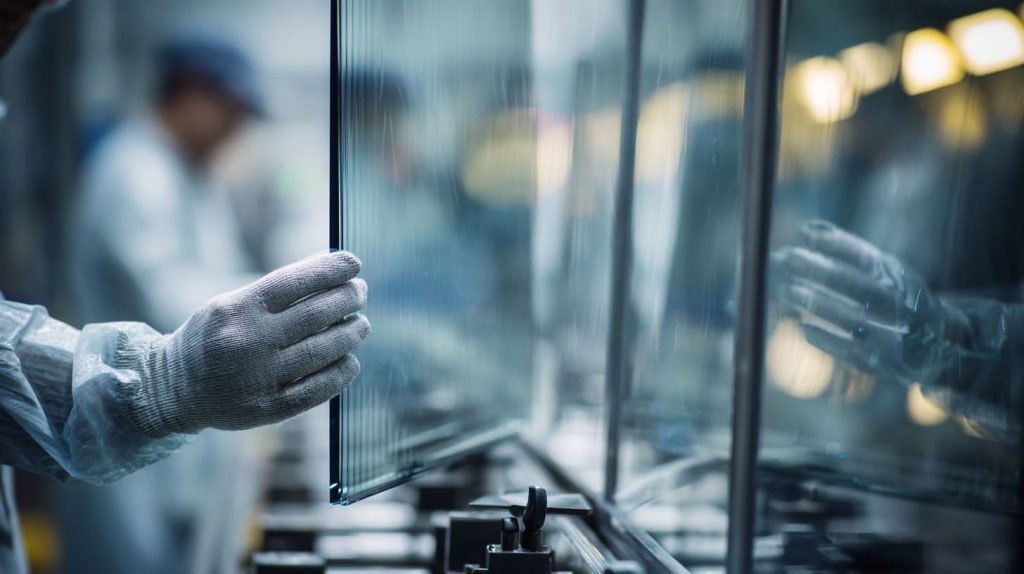
In many industries, polycarbonate falls under what people call security glazing materials. That sounds official, but the idea is simple:
It is a transparent material used when you need:
- protection from impact
- resistance to forced entry
- and safer failure behavior than glass
But I like to challenge one assumption here.
Impact Resistance Compared With Other Materials
People love to quote numbers like “polycarbonate is X times stronger than glass.” That line gets repeated everywhere.
Yes, polycarbonate is extremely impact resistant. But the real point is not the number. The real point is what happens when something hits it.
- Glass: may crack and shatter. That can create danger and downtime.
- Acrylic: can crack or chip under hard impact. It looks great, but it is more brittle.
- Polycarbonate: tends to bend and absorb energy, often staying intact.
A lot of buyers only think about a single impact, like a thrown object. But in real projects, the impact can be repeated:
- carts bumping into a door panel
- tools slipping in a workshop
- people leaning, pushing, hitting, again and again
That repeat scenario is where polycarbonate shines.
Resistance to Breakage and Shattering
Here is a small story I use when I explain this.
A client once tested two clear panels by accident. A worker dropped a steel tool. It bounced once, then hit the panel edge-first.
The acrylic panel showed a sharp crack line.
The polycarbonate panel showed a dent-like mark, but it stayed in one piece.
Neither result was “pretty.” But one result was still safe and usable.
That is the key: polycarbonate reduces the risk of sharp fragments because it is less likely to shatter in the first place.
Ability to Withstand Harsh Environments
Security is not only about impact. It is also about time.
In outdoor or semi-outdoor jobs, heat and cold can slowly change a material. So I pay attention to:
- temperature stability
- weather resistance
- and whether the sheet has UV protection
A plain polycarbonate sheet without UV protection can yellow and degrade over time in harsh sun. That is not a “polycarbonate problem.” That is a spec problem.
Here is a quick “checklist style” reminder I use:
| Environment | Risk | What I specify |
|---|---|---|
| Strong sun | Yellowing, surface aging | UV-protected polycarbonate |
| Cold + impact | Brittle behavior in some plastics | Polycarbonate with proper thickness |
| Chemical cleaning | Haze, micro-cracks | Coating selection + cleaning guidance |
| Dust + wiping | Scratches | Hard-coat option |
Once we agree that polycarbonate can take hits and survive time, the next question becomes more serious: can it slow down a person who wants to break in?
How Polycarbonate Sheets Prevent Forced Entry
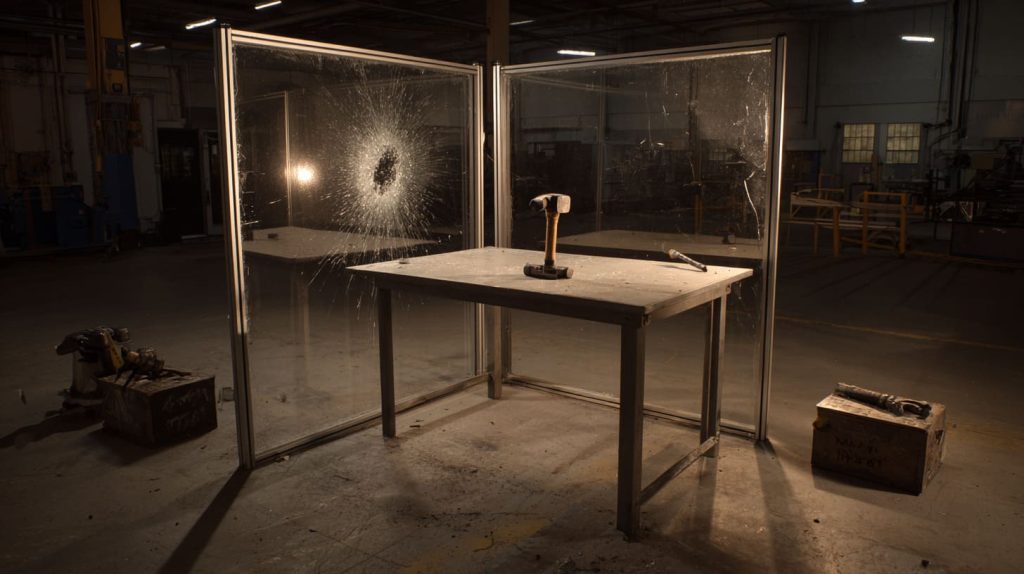
I want to be careful with wording here.
Polycarbonate is not a magic shield. It does not make a window “unbreakable.” What it often does is more practical:
It makes forced entry harder, slower, louder, and more frustrating.
That matters. Because many break-in attempts depend on speed and surprise.
Anti-Break-In Window Panels
In storefront or building designs, polycarbonate can be used as:
- a stand-alone protective layer
- or part of a multi-layer glazing system
When a buyer asks me, “Will it stop a break-in?” I ask back:
What is the threat?
A rock? A hammer? A shoulder push? A repeated tool strike?
Then we talk thickness and installation.
A thin sheet can still crack or pop out if the frame is weak. A thick sheet can still fail if the fasteners are wrong. Security is not only the sheet. It is the system.
Here is a simple system view:
| Part of system | Weak point if ignored | What I watch |
|---|---|---|
| Sheet | Too thin for impact | Thickness selection |
| Frame | Bends, opens gaps | Metal frame strength |
| Fasteners | Pull-out failure | Bolt pattern + backing |
| Edge support | Sheet pops out | Proper edge engagement |
| Sealing | Water + dirt issues | Clean, flexible seal |
Security Shields and Barriers
Polycarbonate is also used in protective shields:
- bank counters
- public service desks
- retail counters
- machine safety guards
Machine guards are a special case. Many factories want visibility, but they also want a barrier that can survive:
- flying chips
- accidental tool drops
- and sudden contact
In these cases, I often compare acrylic vs polycarbonate like this:
- Acrylic is great for clear display and clean look.
- Polycarbonate is better when impact is not a “maybe,” but a “when.”
Bullet-Resistant and Riot-Resistant Panels
This area is usually multi-layer laminates, not just a single sheet. People may use polycarbonate layers with other materials to achieve higher resistance levels.
I want to keep this honest: if someone needs true ballistic protection, they should follow certified systems and standards. The sheet alone is not enough, and the wrong setup can create false confidence.
Still, the reason polycarbonate appears in these designs is the same:
it absorbs energy and stays together better than brittle materials.
At this point, many designers ask the question that sits right on the table: if polycarbonate is so tough, why do people still use acrylic for many clear projects? Let’s compare them like grown-ups.
Key Security Advantages Over Acrylic Sheets
I run an acrylic factory. So you might expect me to push acrylic in every sentence.
But that would be lazy thinking.
Acrylic is excellent for many products. I love it for displays, signage, and clean-looking parts. But in security-driven designs, polycarbonate often has clear advantages.
Impact Strength Differences
You may have heard this line: polycarbonate is 200–250 times stronger than glass in impact tests. The exact number depends on test method and thickness, but the direction is true: polycarbonate is extremely impact resistant.
Acrylic is also strong compared to glass in some ways, but it is more brittle under sudden impact.
Here is how I explain it to Jacky in plain language:
- Acrylic: strong, stiff, looks premium, but it can crack when hit hard.
- Polycarbonate: less brittle, takes hits better, but it can scratch more.
Resistance to Cracking and Fracture
This is not only about “break or not break.”
It is also about what happens after the first hit.
Acrylic can show cracks that spread. And once a crack line appears, the piece can lose trust fast.
Polycarbonate can deform, and it may show stress marks, but it often stays intact longer under repeated abuse.
Tamper Resistance
If someone wants to damage a clear cover, they may:
- try to crack it
- try to pry it out
- or try to cut through it
In many cases, polycarbonate is harder to “finish quickly” than acrylic. But again, it depends on thickness and mounting.
A strong sheet inside a weak frame is still a weak door.
Cost vs Security Value
Now the uncomfortable part: cost.
- Acrylic is often cheaper.
- Polycarbonate costs more.
So I ask buyers to think in total cost, not sheet cost:
| Question | If you choose acrylic | If you choose polycarbonate |
|---|---|---|
| What if it cracks? | Replacement + downtime | Less likely to crack |
| What if it gets scratched? | Better scratch feel | May need hard coat |
| What is the risk cost? | Higher in impact zones | Lower in impact zones |
| What is the visual goal? | Often better clarity look | Still clear, but coating matters |
I have seen projects save a little on material and then pay big on rework. That is not “cheap.” That is “late.”
Okay, so where do we actually see polycarbonate used for security in daily life? The list is longer than most people think.
Common Security Applications of Polycarbonate Sheets
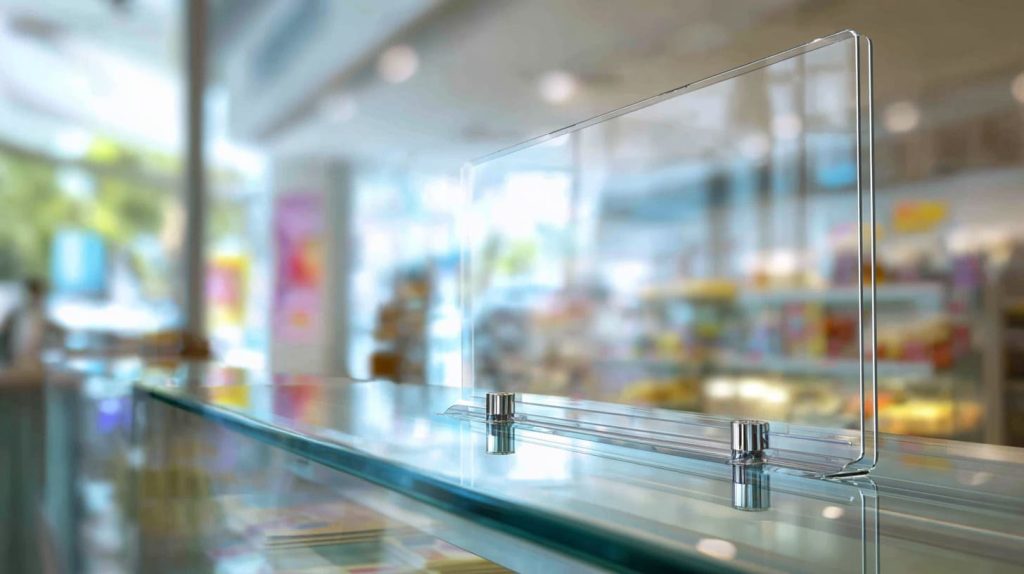
Polycarbonate shows up in places where people need visibility and protection at the same time. It is not only for “high security” buildings. It is often used for very normal reasons: safety, durability, and lower risk.
Commercial and Retail Security
In retail, the threats are not always dramatic. Sometimes it is just daily abuse:
- carts
- bumping
- careless cleaning
- curious hands
Common uses include:
- storefront glazing layers
- anti-theft display covers
- ATM machine enclosures
I like retail projects because they are honest. If something looks tired, customers notice. If something breaks, business stops. That pressure makes material choice very real.
Industrial Safety and Machine Protection
In factories, the reason is simple: things fly.
- CNC machine guards
- factory protective barriers
- equipment enclosures
Here, I always ask: what is the impact source?
- chips
- broken tool
- operator contact
- moving part failure
Then I choose thickness and coating based on that risk.
Public Infrastructure Protection
Public spaces have a different kind of stress: unpredictable behavior.
- bus shelters
- train station barriers
- stadium protective panels
The goal is often to reduce:
- breakage
- sharp fragments
- and maintenance cycles
Residential Security Improvements
For homes, polycarbonate can be used for:
- security windows
- patio protection panels
- storm protection shields
Still, I remind buyers: it is not only “what material.” It is also “how it is installed.” A bad mount can turn a strong sheet into a weak panel.
Now here’s the fun part: security is not only about strength. A few “quiet features” can make the difference between a panel that lasts and one that slowly disappoints you.
Additional Performance Features That Enhance Security

Sometimes the best security improvement is not dramatic. It is the boring stuff that keeps a panel stable and usable.
Fire Resistance
Many polycarbonate sheets have self-extinguishing behavior, depending on grade. I do not treat this as a reason to ignore fire safety design. But it can be a helpful part of the risk picture.
If a buyer works in public facilities, they often ask about safety. That is where material grades and compliance documents matter.
Lightweight Yet Strong Structure
This one is simple, but important.
Polycarbonate is lighter than glass. That can mean:
- easier installation
- lower shipping risk
- less load on frames
If a project needs large panels, weight becomes a hidden cost. I have seen installers struggle with oversized glass in tight spaces. Polycarbonate can reduce that headache.
UV and Weather Protection
UV coatings matter a lot outdoors.
Without UV protection, polycarbonate can yellow over time. With UV protection, it holds up much better in sun.
This is where I push critical thinking again:
If a supplier quotes “polycarbonate,” ask:
- Is it UV-protected?
- Which side has UV layer?
- What is the expected outdoor life?
Noise and Insulation Benefits
In some building designs, polycarbonate can add:
- acoustic reduction
- and thermal benefits
It is not a miracle. But if a buyer is thinking about public counters, indoor barriers, or noise control areas, it can be a bonus.
Here is a quick view:
| Feature | Why it helps security projects |
|---|---|
| Fire behavior (grade-based) | Better overall safety design |
| Lightweight | Easier install, less frame stress |
| UV protection | Better long-term clarity outdoors |
| Insulation | Comfort and performance benefits |
So far, polycarbonate sounds like the strong hero. But choosing it is still a design job. Let’s talk about what I actually check before I approve a sheet for production.
Design Considerations When Choosing Polycarbonate Sheets
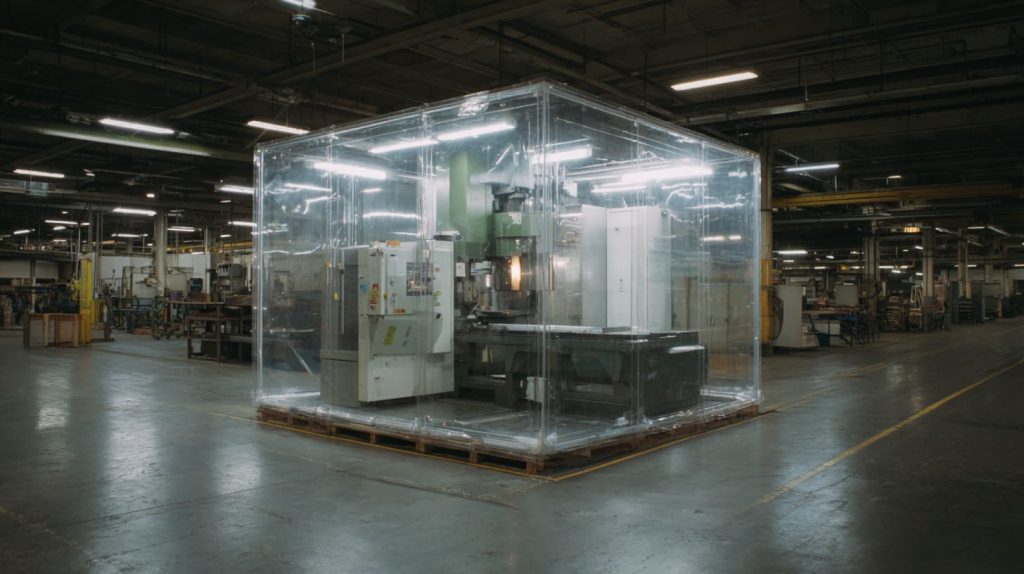
When Jacky asks me, “What should we choose?” I never answer with a single thickness number. I ask questions first.
Because security design depends on:
- threat
- environment
- maintenance habits
- and the mounting method
Sheet Thickness Selection
Thickness is not only about strength. It is also about stiffness and how the sheet behaves in a frame.
A simple guide I use:
- Thin sheets: covers, guards, small panels
- Thick sheets: larger panels, windows, high impact zones
But I do not like giving fixed rules without context. So I often use a “risk table” instead:
| Risk level | Typical situation | Thickness mindset |
|---|---|---|
| Low | Indoor covers, light contact | thinner range can work |
| Medium | Public touch, occasional impact | go thicker + better frame |
| High | Repeated impact or forced entry | thick + strong frame + pattern |
Surface Coatings and Treatments
This is where polycarbonate can surprise people.
Polycarbonate can scratch easier than glass. So coatings matter:
- Scratch-resistant (hard coat): helps in public touch zones
- UV protection: helps outdoors
- Anti-fog: helps in temperature swings or humid areas
If a buyer cleans the panel daily, I strongly consider hard coat. A “strong” panel that looks hazy from scratches is a sad ending.
Installation and Framing Requirements
I say this a lot because it is true:
the frame is part of the security.
Key points I watch:
- proper edge support
- correct fastener spacing
- allowance for thermal expansion
- sealing to avoid dirt and water problems
Polycarbonate expands with temperature changes. If you clamp it too tight, you can create stress and distortion.
Compliance and Safety Standards
If the project is in regulated spaces, standards matter:
- building codes
- impact certifications
- safety glazing requirements
I always tell buyers: do not guess. Ask the local requirements early. It saves redesign later.
Now for the part many marketing pages skip: polycarbonate is strong, yes, but it has weaknesses too. If we ignore them, the “security upgrade” can turn into a “maintenance headache.”
Limitations of Polycarbonate Sheets in Security Applications
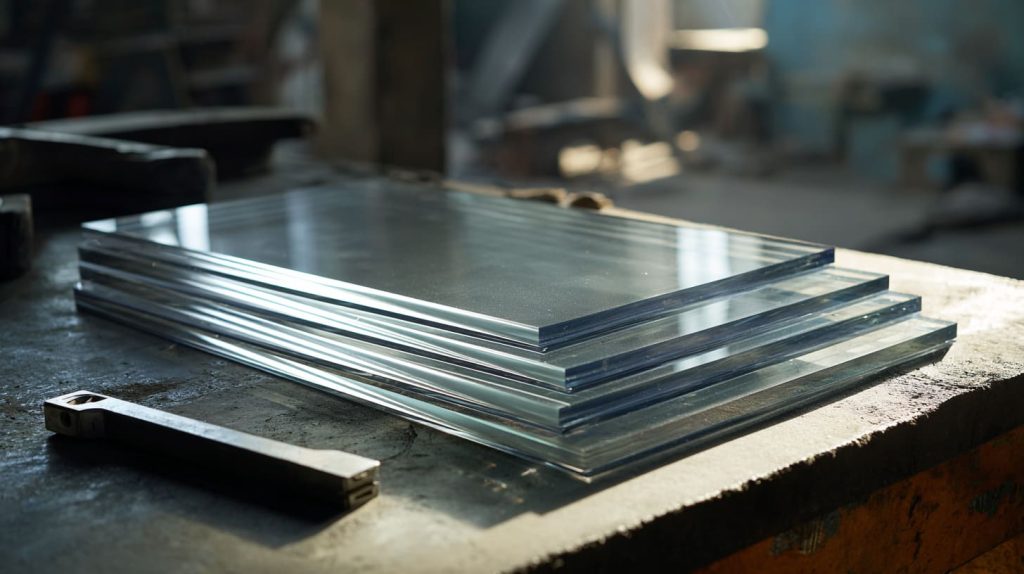
I respect polycarbonate a lot, but I do not treat it like a perfect answer.
Scratch Sensitivity
This is the first limitation most people feel.
In high-touch areas, polycarbonate can show scratches faster than glass. That is why hard-coat options exist.
Here is a simple reality check:
| Surface behavior | What it means for the buyer |
|---|---|
| Scratches easily | More haze over time if cleaned often |
| Hard-coat helps | Better long-term appearance |
| Wrong cleaning cloth | Damage happens fast |
If a client uses rough towels or aggressive cleaners, even a great sheet can look “old” too soon.
Higher Material Cost
Polycarbonate usually costs more than acrylic and many standard plastics.
But cost is not only purchase price. It is also:
- replacement frequency
- downtime
- labor
- and brand image
A cheaper sheet that fails early is not cheap.
Optical Distortion in Some Applications
Thicker sheets can show optical distortion. In some designs, that matters a lot.
If the panel is used for viewing and inspection, clarity is not only “transparent.” It is also “no weird bending of light.”
That is why I sometimes recommend:
- testing a sample thickness
- viewing it under the real lighting
- and checking angles
Long-Term UV Degradation Without Coating
This one is simple: if it is outdoors, UV protection matters.
Plain polycarbonate without UV protection can yellow and weaken over time. This is avoidable. But only if the spec is clear.
I like to end this section with a question I ask buyers:
Do you want a strong panel for day one, or a strong panel for year five?
The answer decides coatings and grade.
Alright. If you stayed with me this far, you probably want the clean takeaway. Let me wrap it up in a practical way, without pretending one material solves every problem.
Conclusion
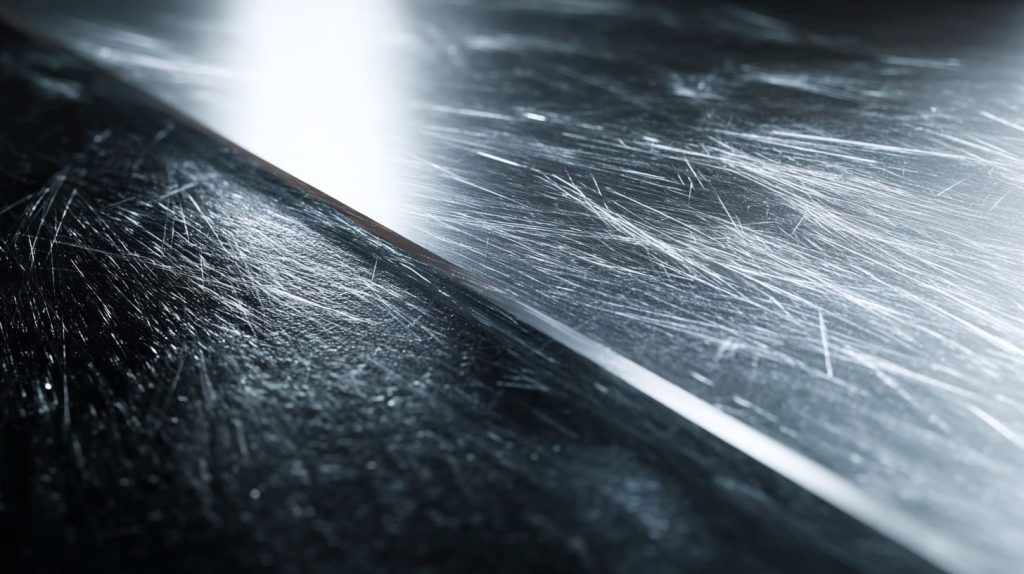
Polycarbonate sheets earn their “security material” reputation for a simple reason: they combine transparency, extreme impact resistance, and tough failure behavior in a way that many clear materials cannot match. They can help protect against forced entry and impact damage, and they often stay intact when brittle materials crack or shatter.
Still, the best result comes from the full system, not the sheet alone. In my experience, the right choice depends on:
- thickness that matches real impact risk
- coatings like UV protection and scratch-resistant hard coat
- and installation details like frame strength, edge support, and expansion allowance
For many product designers and buyers like Jacky, polycarbonate offers a practical balance: you can keep visibility while raising safety and security.
If you want, send me your application details—where the sheet will be used, the size, the environment, and what kind of impact risk you expect. I can help you choose a sheet type, thickness range, and surface treatment that makes sense before you lock the design.