Skip to content

I still remember the first time I pressed my nose against a department‑store window on a snowy Toronto evening. The mannequins looked as if they might breathe, the lights painted the sidewalk gold, and for a moment I forgot the sting in my fingers. That childhood spark never left me. Now, after years of sourcing custom fixtures for brands around the world, I see window display design as both art and strategy. In this article I’ll unpack what I’ve learned, why it matters to buyers like me, and how you can turn a pane of glass into a silent salesperson.
What Is Window Display Design?

Before we dive into costs and CAD files, let’s pin down the basics.
Definition and Scope
Window display design is the craft of turning a storefront into a stage. It starts with a blank sheet—often literally a sheet of glass—and ends with an experience that pulls passers‑by inside. The players range from retail marketers and freelance creatives to fabricators like my partners at Feilong Acrylic. Installers show up at dawn with suction cups and nerves of steel, making sure the dream survives the forklift.
Evolution from Traditional to Experiential
A quick timeline helps us keep perspective:
| Era | Key Shift | Example |
|---|---|---|
| 19th‑century plate glass | Bigger panes, bigger dreams | Paris arcades |
| Mid‑20th‑century theatrics | Moving props, bold color | Macy’s holiday trains |
| Digital & “phygital” present | Screens, sensors, AR | Nike House of Innovation |
Today the question is not “What products should we stack?” but “What story should we tell?”
A brief cliff‑hanger: that story can start with a single acrylic block—more on that in a minute.
Why Window Displays Matter

I once tracked two shoe stores on the same street. One dressed its window weekly; the other let dust settle. Foot traffic data told the tale: a 27 % lift for the active window. Numbers aside, here’s the logic.
Attracting Foot Traffic
Humans decide in five seconds whether to stop. A bright focal point, clean sight line, and a touch of surprise make those seconds count.
Communicating Brand Story & Positioning
Your window is your elevator pitch. Luxury brands whisper with space and shadow; fast fashion shouts with color and speed.
Driving Sales & ROI
Studies in visual merchandising statistics link strong windows to higher basket size. I see it every quarter in my own purchase orders.
Supporting Omnichannel Experience
A simple QR code can bridge glass and phone. Shoppers scan, save, and maybe buy online later. The window keeps working after the mall closes.
Stay with me—next we break down the design rules that make these wins repeatable.
Core Principles of Effective Window Display Design

The 6 Ps: Purpose, People, Product, Place, Presentation, Promotion
Whenever I brief a fabricator, I answer six questions in plain English. Purpose: launch? clearance? People: who walks by? And so on. If any P is fuzzy, the project stalls.
Visual Hierarchy & Focal Points
I like the triangle layout: hero item high, support items lower left and right. It guides the eye like an arrow.
Color Theory & Contrast
Use brand hues but break monotony with a complementary accent. Red shoes on a teal riser pop without screaming.
Lighting Techniques
Front light shows texture, back light carves silhouette, accent light directs focus. Avoid glare; acrylic hates fingerprints and hot spots.
Composition & Balance
Symmetry feels calm; asymmetry feels dynamic. Choose one, not both.
Storytelling & Thematic Consistency
A beach scene needs sand‑toned props, not chrome pedestals. Consistency is the difference between narrative and noise.
Ready for a style tour? Let’s open the doors—literally.
Types & Styles of Window Displays

Open vs. Closed vs. Semi‑Closed
- Open: see straight into the store; great for lifestyle brands.
- Closed: boxed stage; perfect for luxury secrecy.
- Semi‑Closed: hybrid that teases but doesn’t reveal all.
Elevated, Corner & Island Windows
I once fought a corner window’s odd angles until a suspended acrylic cube solved sight‑line chaos.
Seasonal & Thematic Displays
Holidays sell, but so do local festivals. A maple‑leaf motif moves the needle in Canada every October.
Interactive & Digital/Hybrid Displays
Motion sensors trigger light bursts; AR mirrors let shoppers “try” lipstick. These tricks cost more but create shareable moments.
Design is fun, but process pays the bills—let’s map it step by step.
Step‑by‑Step Design Process

| Phase | Tool | My Tip |
|---|---|---|
| Research | Foot‑traffic heat maps | Watch patterns at different hours |
| Concept | Sketch + 3D mock‑up | Cheap VR apps help clients visualize |
| Material Selection | Glass, metal, acrylic | Acrylic wins when weight and clarity both matter |
| Prototyping | CNC samples | Ship mini‑models to cut debate time |
| Fabrication & Installation | Vendor coordination | Share packing lists early |
| Maintenance | Rotation calendar | Mark cleaning dates on the POS system |
The right materials can make or break each phase—let’s zoom in on trends.
Materials, Technologies & Sustainability Trends

Acrylic Solutions
Feilong’s edge‑lit blocks turn ordinary perfume bottles into floating jewels. They arrive polished, ready to drop in.
Eco‑friendly Materials & Reusability
Recycled PMMA now rivals virgin clarity. Swap single‑use foam for reusable crates.
Lighting Tech: LED, Projection, Dynamic Lightboxes
Programmable LEDs cut power bills by 40 % in one of my recent rollouts.
Digital Signage & Augmented Reality
Real‑time pricing on a screen lets staff tweak markdowns without reprinting cards.
Modular & 3D‑Printed Components
Snap‑fit joints shorten overnight installs. Need ten more brackets? Print locally and skip customs.
Great—now, how do we prove the window works?
Measurement & Optimization

KPIs: Footfall, Conversion Rate, Dwell Time
A simple IR beam counts entries; pairing it with POS data closes the loop.
A/B Testing & Iteration
Rotate a red backdrop versus a blue one. Track lifts. Repeat.
Integrating POS & Online Data
When a window QR links to a landing page, UTM tags reveal true ROI.
Using Heat Mapping & Computer Vision
Hot‑spot maps showed me shoppers ignored a top shelf. Lowering it by 15 cm fixed the problem.
Mistakes happen—let’s dodge the big ones.
Common Mistakes to Avoid

Overcrowding the Window
If everything shouts, nothing speaks.
Poor Lighting Choices
Cool LEDs over warm props look sterile. Match temperatures.
Ignoring Brand Cohesion
A luxury label with cartoon props confuses the customer.
Lack of Clear Focal Point or CTA
Place one hero front and center. Add a discreet price card or QR.
Neglecting Maintenance
Nothing kills desire faster than dust on acrylic risers.
Enough warnings—time for inspiration.
Inspiring Case Studies

Luxury Flagship: Bergdorf Goodman Art Windows
They commission artists, not merchandisers. The result feels like a gallery.
Fast Fashion: Zara Seasonal Narratives
Zara flips windows every two weeks. Speed beats perfection.
Beauty Retail: Sephora Interactive Displays
Sensors light up products when shoppers reach in. Engagement doubles dwell time.
Digital Integration: Nike House of Innovation
Screens sync with live sports scores. Energy is contagious.
Boutique Example: Sustainable Concept Stores
Local designers use reclaimed wood and recycled acrylic. Shoppers notice the authenticity.
Inspired? Let’s talk about turning sketches into shipments.
Collaborating with Manufacturers & Suppliers
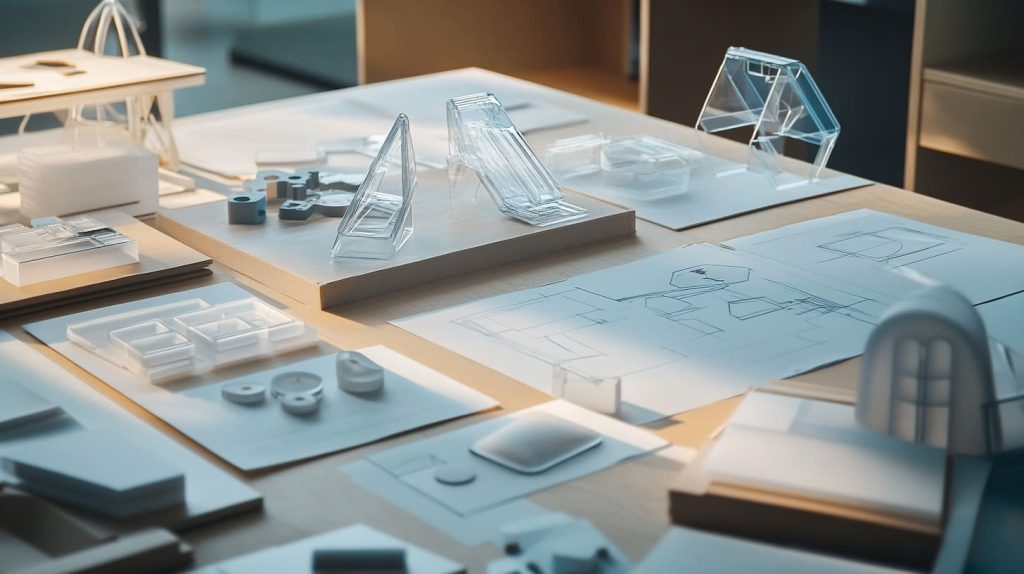
Translating Design Concepts into Custom Fixtures
Send CAD files with tolerance notes. I learned the hard way that ±0.5 mm beats “tight fit” in an email.
Working with Feilong Acrylic for Bespoke Acrylic Elements
Their laser beds handle 2 × 3 m sheets, so oversized panels ship in one piece—fewer seams, cleaner look.
Prototyping & Sampling Best Practices
Approve polish level on a small block before green‑lighting 500 risers.
Quality Control & Certifications
ISO9001 paperwork may feel dull, but it saves headaches at customs.
Logistics, Lead Times & Installation Support
Feilong’s two‑week standard beats the six‑week industry norm. For rush jobs, they run night shifts.
We’ve covered the journey from concept to crate—let’s wrap up.
Conclusion

Window display design blends storytelling, psychology, and plain old carpentry. Done right, it stops strangers, starts conversations, and sells product before a word is spoken. For purchasing pros like Jacky—and for me—it’s also a measurable lever we can pull to boost ROI. If you need crystal‑clear acrylic blocks, edge‑lit pedestals, or custom cabinets that arrive on time, my friends at Feilong Acrylic are only a sketch away. Let’s turn that sheet of glass into something worth talking about.