Skip to content

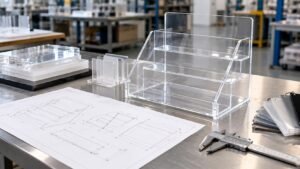
Deadlines don’t wait, especially when you're juggling sketches, quotes, and client revisions all in the same afternoon. I was reviewing some design specs from a Canadian buyer—Jacky, a product and mold designer with a sharp eye—when his message popped up again: “Can they do precise cuts? I’m not just prototyping—I’m prepping for rollout.”
That one question captures something I hear a lot in this industry. Whether you’re outfitting a retail chain or building museum displays, there’s zero room for guesswork. The cuts have to be clean. The timing, tighter. The material? Clear, sturdy, on-spec.
That’s where services like TAP Plastics come into play. Known across the West Coast for fast, cut-to-size plastic solutions, they’re a go-to for many North American designers. But how do they compare to overseas manufacturers like us at Feilong Acrylic, who specialize in B2B custom orders and bulk production?
Let’s walk through both sides—because what works for a local DIY shelf might fall short when you're shipping 1,000 units to three continents.
(Got your tape measure ready? Let’s look at how TAP Plastics was born.)
What is TAP Plastics?

Origins & footprint
TAP opened its first shop more than six decades ago in California. Today their bright-orange signs dot the coast from Seattle to San Jose, and an online store ships small orders across the States. I once popped into the San Leandro branch; the manager knew sheet grades like a coffee roaster knows beans.
Core promise to customers
Walk in with a sketch, walk out with a panel. Their staff trim sheets on table saws while you watch. They’ll polish an edge, drill a hole, glue a hinge—no appointment needed. That face-to-face model wins hobbyists and architects who hate waiting.
Who uses them
- DIY builders: window replacements, terrariums, sneeze guards
- Architects & model shops: quick mock-ups for client pitches
- Educators & students: science fair domes, robotics frames
- Small B2B buyers: retail risers, safety screens in low volumes
Next up, I’ll break down every product on their shelves so you can spot gaps—and opportunities.
Core Product Portfolio
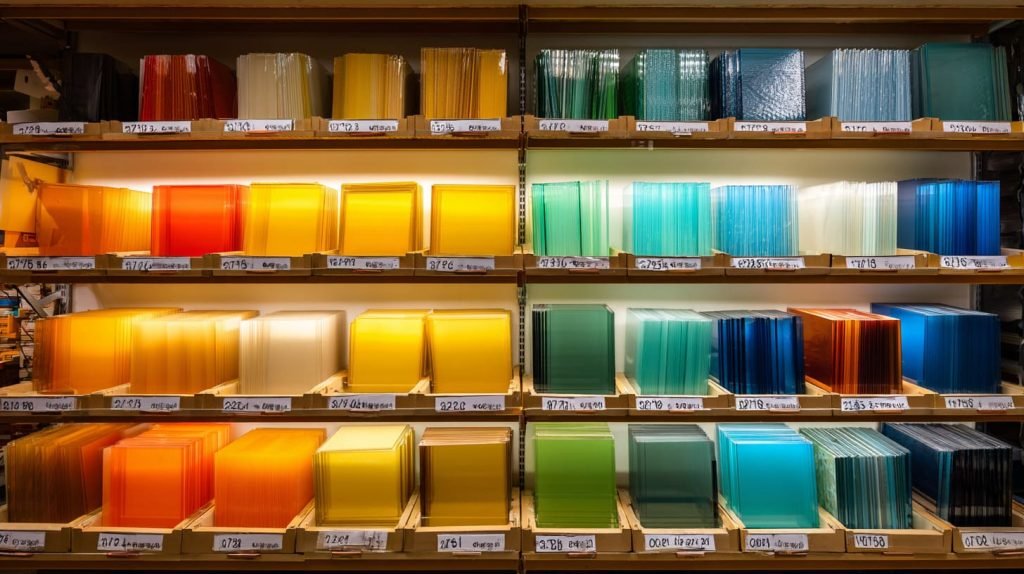
Sheet goods
- Acrylic (cast for clarity, extruded for price)
- Polycarbonate for impact resistance
- HDPE, PET-G, ABS for tough or food-safe jobs
Rods-Tubes-Bars
Clear rods for light guides, colored tubes for lab rigs, square bars for signage—sold by the foot.
Accessories & consumables
Adhesives, polishing compounds, taps, screws, even miniature hinges. Handy for a one-stop pick-up.
Small stuff is nice, but cut-to-size is the real draw. Let’s peek behind their saw fence.
Cut-to-Size Services Explained
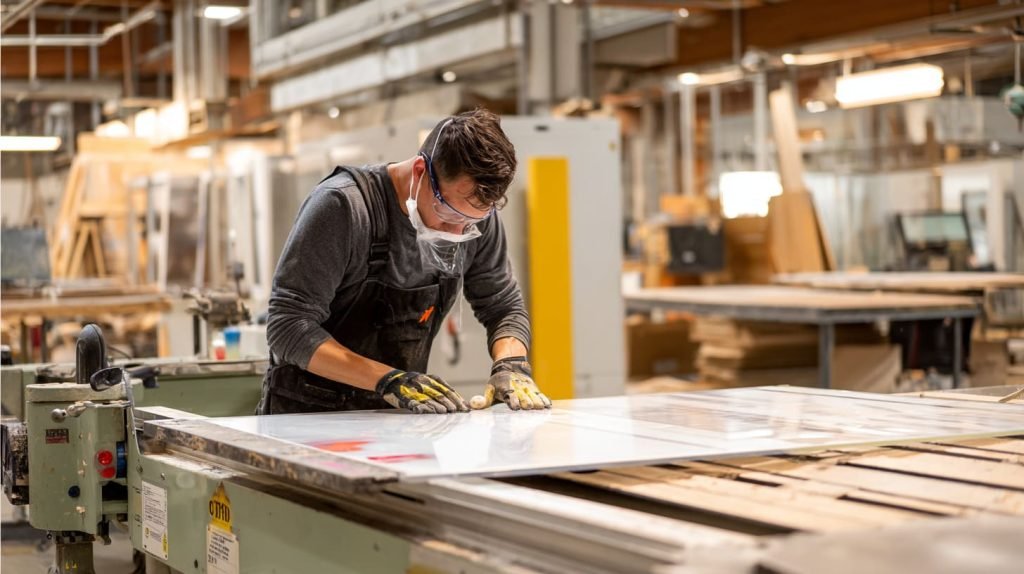
Ordering channels
- In-store counter: paper sketch, chat, pay, pick-up.
- Online configurator: choose material, punch dimensions, add edge finish, check out.
- File upload: DXF or PDF for CNC routing.
Tolerance & edge-finish options
| Method | Typical Tolerance | Finish Look | Cost Impact |
|---|---|---|---|
| Saw-cut | ±0.8 mm | Matte edge | Low |
| Laser-cut | ±0.2 mm | Flame-polished | Medium |
| CNC micro-bevel | ±0.1 mm | Glass-clear bevel | High |
Packing & shipping safeguards
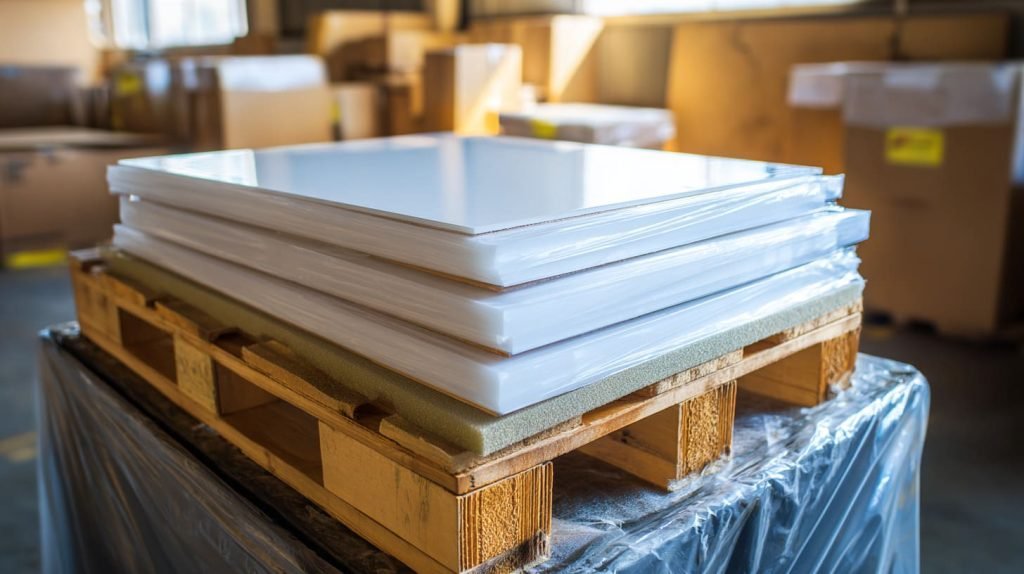
TAP masks both sides with film, pads corners with foam, and boxes small panels flat. Larger jobs ride in plywood crates.
Sounds neat, yet polycarbonate vs acrylic still trips many buyers. Let’s zoom in on those sheets.
Material Spotlight: Polycarbonate

Key mechanical & optical properties
Polycarbonate absorbs hits like a helmet visor—claims of “250 × stronger than glass” are common. Light transmission reaches ~88 %, slightly below crystal-clear acrylic.
Common grades & finishes
- UV-stable sheets for outdoor signs
- Abrasion-resistant coatings for machine guards
- Mirrored PC for rugged displays
- Tinted colors for privacy panels
Machining & thermoforming tips
Keep the chips moving; PC softens above 150 °C. I bend thin gauges on a wire strip-heater set to 160 °C and use low-flute end mills to avoid melt smears.
But strength isn’t everything. Many clients chase the sparkle of acrylic, so let me share its virtues.
Material Spotlight: Acrylic / Plexiglass
Optical clarity & surface gloss
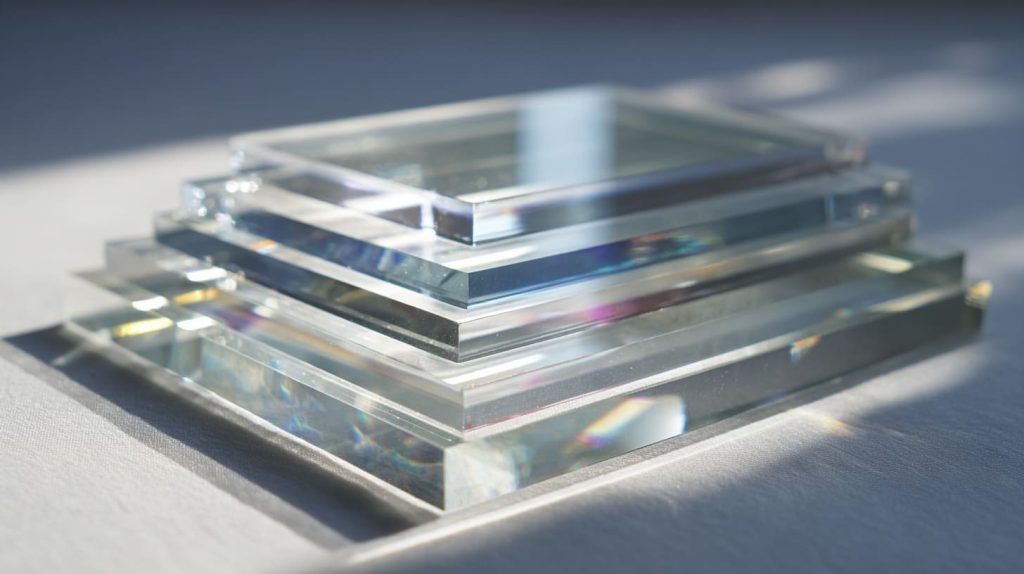
Acrylic is the king of clarity—92 % light transmission and a deep glass-like shine when polished.
Cast vs extruded sheet differences
| Feature | Cast Acrylic | Extruded Acrylic |
|---|---|---|
| Cost | Higher | Lower |
| Thickness tolerance | ±5 % | ±10 % |
| Machining | Chips cleanly | Can gum on tools |
| Optical quality | Best | Good |
Solvent-bonding & polishing techniques
I use methylene chloride cement for invisible seams and finish edges with a flame pass or 600-grit wet-sand followed by buffing compound.
Choosing between PC and PMMA can feel like splitting hairs. Let’s weigh them side by side.
Polycarbonate vs Acrylic: Choosing the Right Sheet

Impact strength & safety
Polycarbonate wins for heavy impacts—think hockey rinks. Acrylic cracks easier but holds a sharper edge.
Weight, rigidity & thermal expansion
Both weigh half of glass. Acrylic stays stiffer; polycarbonate flexes more but shrugs off cold.
Budget considerations & MOQ brackets
Acrylic is cheaper per sheet. Polycarbonate edges ahead only when breakage risk costs more than the sheet itself.
Typical application matrix
| Application | Best Choice | Why |
|---|---|---|
| Retail display cover | Acrylic | Hero clarity, lower cost |
| Machine guard | Polycarbonate | Impact + heat resistance |
| Light box face | Acrylic | Easy laser-cut logos |
| Safety visor | Polycarbonate | Tough against flying chips |
When off-the-rack sizes fail, fabrication steps in. Time to see what tricks the shop floor holds.
Custom Fabrication & Value-Added Services

Laser cutting & CNC routing capabilities
Thin lines, tight curves, and nested parts save material. I often stack 3 mm acrylic and kiss-cut logos in minutes.
Bending, bonding, and flame-polish finishing
Heat strips, soft jaws, and patience turn flat sheets into L-shaped shelves or freestanding boxes with jewel-like edges.
Screen & UV flatbed printing for branding
Logos, part IDs, and safety symbols cure fast under UV lamps—no stickers to peel later.
Real projects ground these skills. Let’s peek at industries that lean on plastic every day.
Typical Applications & Industry Use-Cases

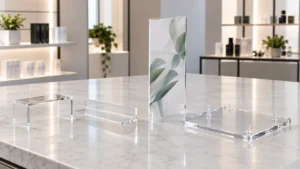
Retail & museum displays
Glossy risers make products hover; museum mounts fade into the background, spotlighting artifacts.
Machine guards & safety glazing
Clear shields let operators watch moving parts without risking fingers or flying chips.
DIY, maker, and educational projects
Robotics clubs engrave gears; hobbyists build edge-lit signs for game rooms.
Architectural & building interiors
Light diffusers, desk partitions, and art installations all benefit from custom-cut plexi.
Now, getting plastic is one thing. Getting it on time is another. Here’s TAP’s playbook.
Ordering Workflow & Lead Times

Quotation steps & drawing requirements
Upload a DXF, pick a material, and verify overall size. TAP replies with price in a day.
Payment, returns & 30-day exchange policy
They accept major cards. Mis-cut or scratched items can be swapped within a month, but custom sizes can’t be refunded—measure twice!
Standard versus expedited turnarounds
Small cuts leave the store same day. Online orders ship in three to five business days; CNC work can stretch to two weeks.
Cost still rules budgets. Let’s break down what drives that final invoice.
Pricing Drivers & Cost-Saving Tips

Material grade / thickness jumps
Going from 3 mm to 6 mm nearly doubles material cost.
Complexity of cut paths & nest efficiency
Tangled curves take longer to program and cut. Simple rectangles slice faster and cheaper.
Quantity breaks and batch consolidation
I’ve saved clients 18 % by slotting multiple part numbers into a single nested sheet.
Shipping distance & packaging choices
Crated freight beats parcel when length tops 48 inches. Consider regional pick-up if you’re near a TAP store.
Quality is priceless, though. Let’s confirm how suppliers prove their plastics are safe and steady.
Quality Standards, Certifications & Sustainability
Material traceability, ISO processes
TAP sources from brand-name mills; lot numbers track each sheet. Feilong Acrylic mirrors that with ISO 9001 audits every season.
Fire-ratings (UL94) & food-safe options
Polycarbonate often carries UL94 V-0 ratings. FDA-grade PET-G keeps food packaging clear and compliant.
Recycling programs & scrap reuse
Both TAP and my factory collect off-cuts. We shred scrap for resale; they drop bins at local recyclers.
Local convenience sounds good, but offshore scale has its perks. Time for a head-to-head.
TAP Plastics vs Other Suppliers (Feilong Acrylic Perspective)
Domestic walk-in convenience vs offshore scale
TAP lets you see, touch, and leave with parts in hours. Feilong ships pallets worldwide—no coffee counter, but container-level economies.
MOQ & customization depth
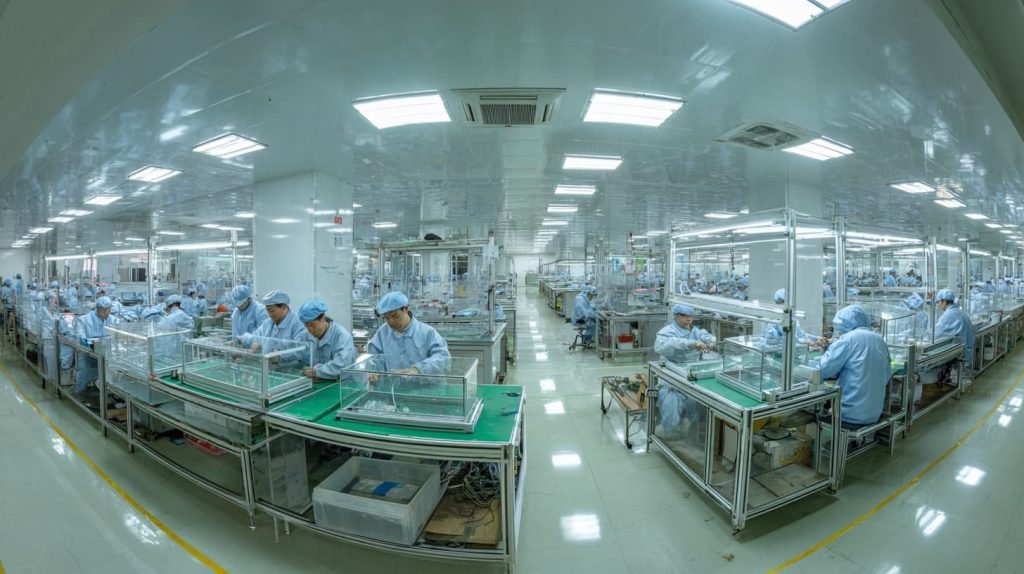
TAP’s saw stops at single sheets; my team builds whole store fixtures, adding LEDs, metal brackets, even RFID tags. Our MOQ starts around 100-200 pcs, or 50 pcs for big items.
Lead-time trade-offs
TAP = same day to two weeks. Feilong = 15-25 days including sea transit, yet we tackle thousands of identical parts with tight tolerances.
Case example: large cosmetic display roll-out
A beauty brand needed 2,500 lighted acrylic podiums. TAP quoted eight weeks and a truckload of individual crates. We tooled jigs, cut, bent, glued, packed, and filled a single 40-ft container in 24 days door-to-door.
Even with two solid suppliers, errors sneak in. Let me flag the common traps.
Common Pitfalls When Ordering Custom Plastic Sheets
Inaccurate measurements & drawing omissions
A 0.5 mm gap looks tiny on screen but leaves daylight in an assembled case. Mark every notch.
Overlooking thermal expansion clearances
Acrylic grows about 0.1 mm per meter per °C. Leave breathing space on outdoor panels.
Removing protective masking too early
Peel film only after final install. Dust and scratches accumulate fast on bare surfaces.
Selecting the wrong material finish
Glossy sheets glare under retail lights; try matte or frosted for soft illumination.
Questions keep designers awake. Let’s clear up the most frequent ones.
FAQ — Quick Answers for Designers & Buyers
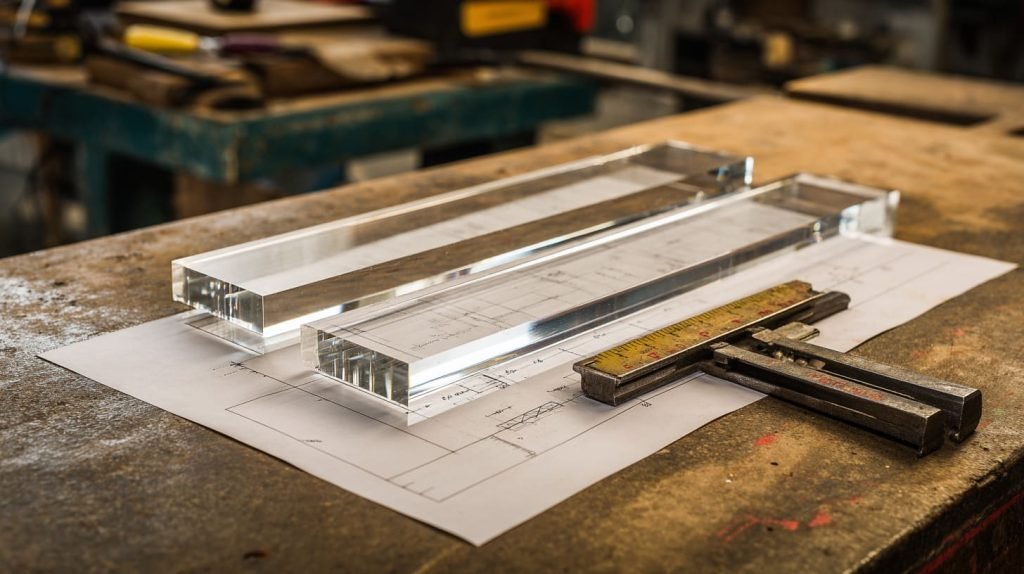
What tolerance can TAP achieve on small parts?
Laser jobs hit ±0.2 mm on pieces under 300 mm.
Can polycarbonate be laser-cut safely?
Yes, but fumes linger. TAP prefers CNC routing; I do the same and polish afterward.
How scratch-resistant is acrylic compared to coated PC?
Uncoated acrylic scratches easiest. Abrasion-resistant PC lasts 5-6 × longer under the same wipe-down routine.
Does TAP offer international shipping?
They ship to Canada on request, yet duties and freight climb quickly past 24 × 48 in. For bigger loads, a direct factory buy often wins.
One last sip of coffee, then I’ll wrap this up.
conclusion

When you need one panel by Friday or a last-minute display mock-up, TAP Plastics is hard to beat—fast cuts, friendly counters, no import paperwork. But if your calendar stretches a few weeks and your order stretches to pallets, Feilong Acrylic can shave dollars per piece, add deep customization, and keep quality tight under ISO eyes.
Take five minutes to map your scope, volume, and branding goals. Then choose the shop—local or overseas—that fits those lines best. Your project, and your peace of mind, deserve nothing less.