Skip to content
The morning light hits the countertop, bouncing off rows of crystal‑clear boxes stacked neatly by the sink. Cereals, pasta, and snacks line up like soldiers, each visible through glossy acrylic walls. There’s something deeply satisfying about seeing everything so ordered and clean.
That’s the quiet power of acrylic boxes—they turn ordinary clutter into something calm and intentional. More people are bringing them into their homes not because they’re trendy, but because they work.
Here’s why they’ve become a household favorite:
- Transparency — You can instantly see what’s inside.
- Durability — They resist cracks better than glass.
- Aesthetics & Easy care — They blend with any interior and wipe clean in seconds.
In this article, I’ll take you on a room‑by‑room look at how these boxes fit into daily life—from kitchens and bathrooms to home offices and playrooms. My goal isn’t to sell storage; it’s to spark ideas about how design and practicality can coexist beautifully in every corner of a home.
Applications of Acrylic Boxes in Home Usage
1. Kitchen & Pantry Organization
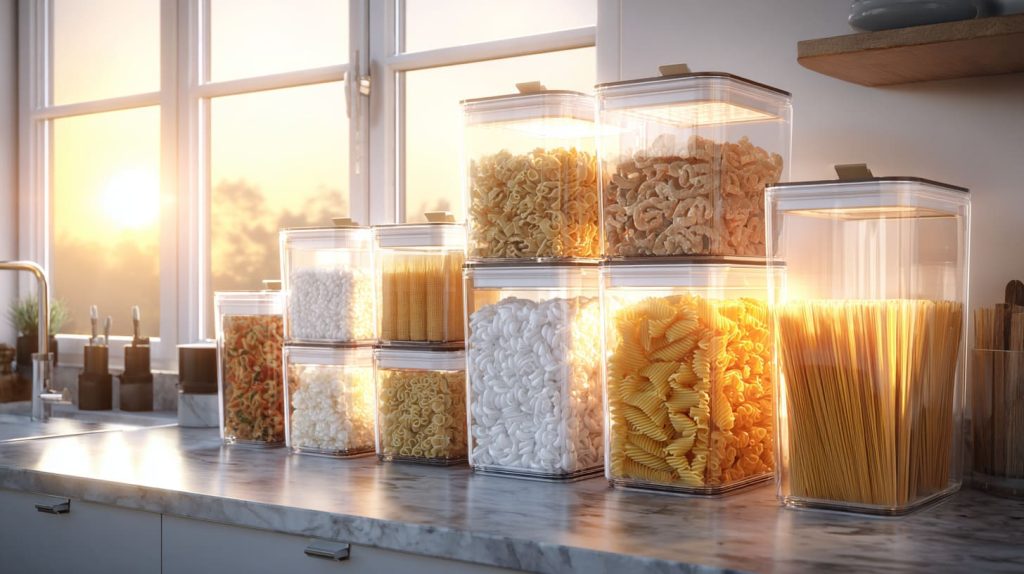
When I first moved into my condo, I had pasta boxes, cereal bags, rice sacks everywhere. Then I tried decanting them into clear boxes. Instantly, it felt neater.
1.1 Food storage and dry goods
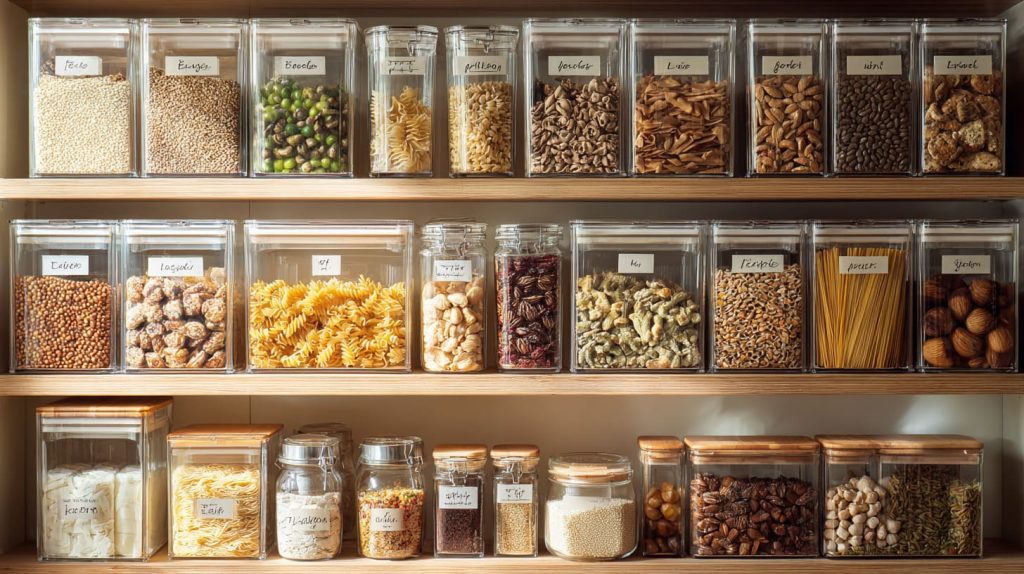
Putting grains, pasta, beans, nuts into clear boxes means no more guessing what’s inside. I like stackable and modular boxes: they let me use vertical space in my pantry.
| Item Type | Box Style | Benefit |
|---|---|---|
| Rice, beans | Tall acrylic box | See level drop, airtight option |
| Pasta, cereal | Wide, shallow box | Easy scoop access |
| Nuts, grains | Medium cube | Stack cleanly |
1.2 Spice & condiment display
I once built a slide-out box system in a narrow pantry. Each acrylic bin holds spice jars. You slide it, pick what you want—no fumbling in the back. Or you place small acrylic trays near stove to keep your oils and sauces orderly.
1.3 Refrigerator & freezer organization
In the fridge, clear acrylic drawer inserts help me group items—yogurts, dressings, small fruits. In the freezer, divider boxes let me separate bags of peas, ice cream bars, frozen herbs. This method cuts down on lost items.
Think critically: does acrylic handle cold? Yes—food-grade PMMA tolerates cold, but avoid extreme temperature shifts that might cause micro-cracks.
1.4 Utensils and countertop organization
On the counter, I use acrylic jars for spatulas, ladles, brushes—so I can see exactly what I have. Smaller trays hold salt, pepper, oil, napkins all in one zone.
Transition: The kitchen’s done, but the bathroom calls. Let me show you what I did next.
2. Bathroom & Vanity Areas
I used to hunt for my favorite cream behind dozens of jars. Then I installed a tower of acrylic drawers on my bathroom counter—now I see everything.
2.1 Cosmetics, skincare & toiletries
Acrylic boxes with compartments for makeup, brushes, and creams give each item a “home.” I stack drawers so I can pull out a full drawer in one reach. Versus one big container, this is more modular and less messy.
2.2 Hair accessories and grooming tools
I keep hair ties, clips, combs in clear boxes. For tools like brushes or a mini straightener, a longer box fits elegantly. The critical question: will moisture damage it? In bathrooms, I pick resin grades that resist humidity and seal lids well.
2.3 Towels, bath bombs & spa items
I roll hand towels and place them in larger acrylic bins. It gives a spa‑like feel. Bath bombs, soaps—you can display them in shallow boxes so guests see the charm.
2.4 Shelving & shower caddies
Instead of metal racks that rust, I install acrylic box shelves. Also, I design box inserts in existing shelving for soap, shampoo, and razors.
Transition: We’ve cleaned up personal care. Next is where we live, relax, show off our style.
3. Living Room, Display & Decor

One evening I hosted friends; they asked, “Where did you get those floating display blocks?” They were clear acrylic cubes I used to show small sculptures. Let me tell you how I used them.
3.1 Showcasing collectibles & memorabilia
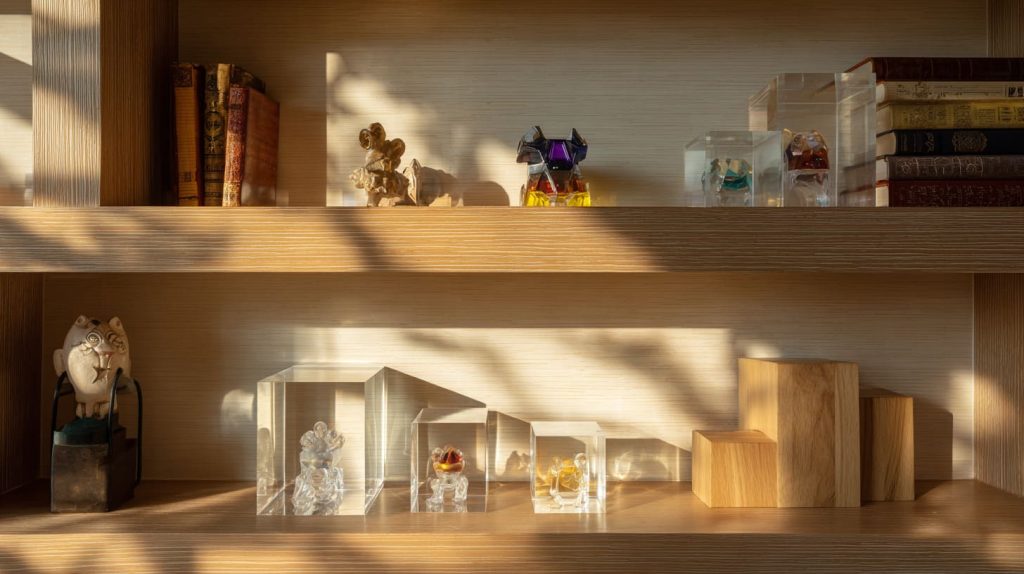
Use acrylic display boxes or cubes to protect figurines, awards, heirlooms. I even nested smaller cubes inside bigger ones to create levels. But a critic might ask: does it make things feel cold? The trick is to mix acrylic with warmer materials—wood base, soft lighting.
3.2 Coffee table styling & organization
I place an acrylic tray box to corral remotes, candles, coasters. Sometimes, I hide small snacks or cards under transparent lids. It stays sleek but functional.
3.3 Books, magazines & media storage
Acrylic bookends work wonders. Magazines go in clear holders. And for DVDs, games—clear boxes work so we avoid visual clutter.
3.4 Plants, terrariums & decorative setups
I turned a shallow acrylic box into a mini succulent garden. Inside, small pebbles and plants, sealed under a clear box. It’s a contained little world you can preview from all sides.
Transition: Enough rest and display—time to get work done.
4. Home Office, Study & Craft Areas
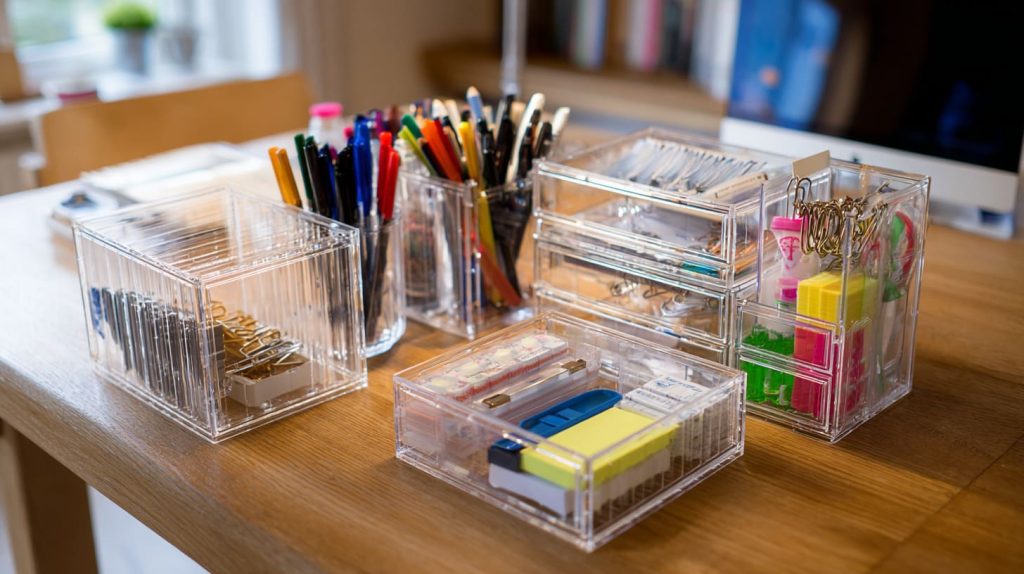
In my home studio, cords, sticky notes, pens, and bits scattered everywhere. Then I assigned each type of item its own acrylic box. Magic.
4.1 Desk organization & stationery
Pen holders, small containers for clips, tape, sticky notes—clear so you always know what’s missing. I group items by function in adjacent boxes.
4.2 Cable, electronics & accessory storage
Chargers, USB sticks, power banks go into boxes with small dividers. No more unsnarling. Critical view: watch over‑packing—if you jam it too full, it defeats the clarity purpose.
4.3 Document & paper management
Letters, receipts, projects—all in clear boxes or stackable trays. I label fronts with removable stickers. That way, when task changes, I relabel.
4.4 Craft & hobby supplies
Beads, threads, paints, tools—I use box sets with divider compartments. I also sometimes zap a custom shape to fit odd spaces. Variety matters: one big box might become a black hole.
Transition: The next room? Let’s talk where the little ones live.
5. Children’s Rooms & Toys
A few years ago I watched my niece dump all her LEGO onto the floor in one box. The next day, we switched to multiple clear boxes—color-coded even. She now puts pieces away.
5.1 Toy sorting & storage
LEGO, action figures, toy cars—each in its own clear box. I stack them. The floor stays clean. Kids help, because they see where to put things.
5.2 Art & school supplies
Crayons, markers, paper—they go in boxes on her desk. I made a portable acrylic caddy so she can carry projects to dining table.
5.3 Displaying children’s work & keepsakes
I framed her art, medals, certificates in acrylic shadow boxes. She sees her own achievements every day.
Transition: Now, what about that holiday stuff we dread storing?
6. Seasonal, Holiday & Miscellaneous Storage

One winter I realized half my Christmas ornaments were in unlabeled bins. Next year I prepped clear boxes so I saw exactly what’s inside. No rummaging.
6.1 Decoration storage
Transparent boxes for ornaments, lights, ribbons. I stack boxes labeled by holiday—Easter, Halloween, Xmas.
6.2 Memorabilia & keepsakes
Photos, letters, souvenirs—keep in clear boxes so you can revisit anytime. The transparency invites memory, not concealment.
6.3 Emergency & first aid kits
First aid box must be easy to find in panic. A clear box helps anyone see content and act fast.
6.4 Pet supplies & accessories
Toys, grooming tools, treats—each in its own box. Pets’ stuff always look messy; acrylic boxes help keep it organized.
Transition: We’ve covered every room. Next: what choices matter when designing or ordering these boxes.
7. Design Considerations & Best Practices

When I first designed boxes, I made walls too thin. They bowed. I learned. Let me walk you through better choices.
7.1 Choosing the right size, thickness & dimensions
A rule I use: wall thickness (mm) = longest side (cm) ÷ 10. In short: bigger box = thicker walls. Think about weight and rigidity.
7.2 Lid, hinge or open‑top options
Some use lift-off lids (clean look), some use flip tops (quick access), drawers (invisible), or open tops. Each has pros and cons: protection vs ease vs aesthetics. Ask: how often will it be opened?
7.3 Modular & stackable systems
Uniform dimensions let boxes stack. Recessed lids or interlocking designs help alignment. I test them with small loads before committing to large runs.
7.4 Aesthetic & finishing touches
You can choose frosted, tinted, or colored acrylic. Edges can be polished crystal-clear or matte. You can engrave logos. But don’t overdo it. Simplicity often wins.
7.5 Maintenance & cleaning tips
I clean with a microfiber cloth and mild soap. No ammonia, no alcohol. For scratches: use polishing kits for small marks. Avoid UV exposure which causes yellowing over time.
7.6 Customization & tailored solutions
Add divider inserts, adjustable partitions, magnetic closures, hidden handles, custom shapes to fit odd spaces. That’s how you turn generic into personal.
Conclusion
Acrylic boxes do more than store items—they show, protect, and organize in a way that feels light and clear. In kitchen, bathroom, living room, office, children’s rooms, and even holiday storage, they bring calm and visibility.
When you combine good design (size, thickness, lids) with smart usage (modular stacking, customization), you get functional beauty. If you have a concept or layout in mind, I can help transform it into a custom, production‑ready piece. Feilong Acrylic is here for that.
Let’s build something clear and meaningful—together.