Skip to content
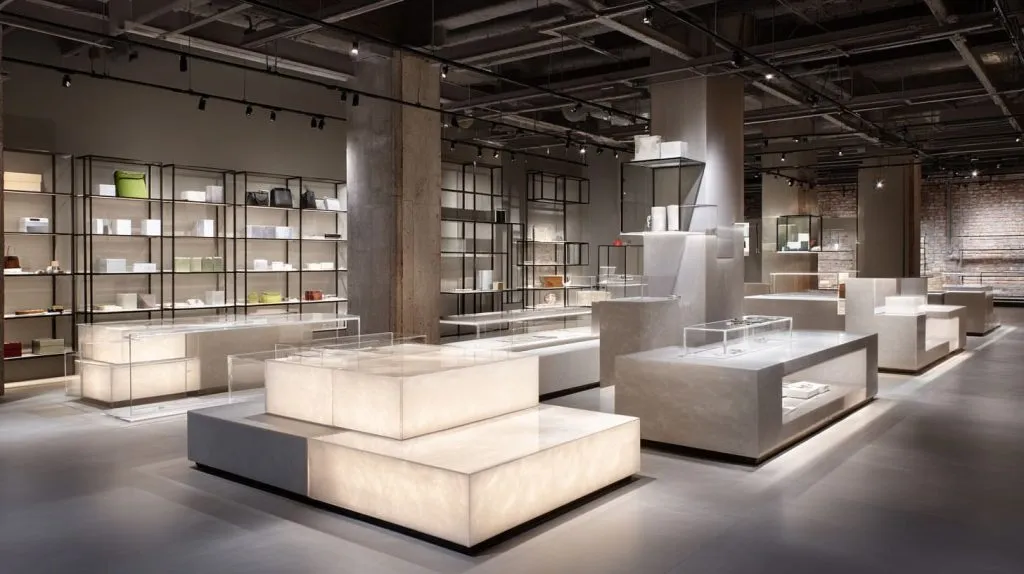
On many video calls with retail buyers, I see the same scene on my screen. There is a beautiful 3D store layout, clean shelves, nice lighting… and then someone says very quietly, “We just need simple acrylic parts here.” As if those “simple” parts do not decide how the whole display actually feels in real life.
When I help a client choose materials for retail, the one that most often wins is acrylic, because it keeps a good balance between clarity, weight, safety, and cost. Glass looks classy, but it is heavy and risky. Metal is strong, but it can feel cold and industrial. Acrylic sits in the middle. It is light, clear, strong enough for most store use, and very friendly for custom work.
Acrylic sheets give three very direct benefits in retail:
- Transparency and clarity – Products stay the hero, not the display.
- Durability with low weight – Staff can move, clean, and re-set parts without fear.
- Endless customization – We can cut, bend, polish, print, engrave, and light it in many ways.
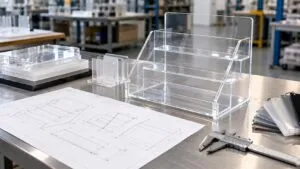
In my factory at Feilong Acrylic, I see another side that many designers never see. The same sheet of acrylic can become a shelf, a riser, a divider, a light box, or a pedestal, only because we shape it differently. That is why I see acrylic not as “a clear sheet,” but as a toolbox for visual merchandising.
One thing I keep in mind when I review a retail concept is very simple: if the display must change often, or travel between stores, acrylic usually gives the least pain for both the buyer and the store team.
In this article, I want to walk through ten practical ways I see acrylic sheets used in real retail projects: from risers and boxes, to lighting and signage, to high-end pedestals.
A simple riser can already change how a product feels on a shelf. Once we lift the product a little, we open the door to many more creative tricks with acrylic.
1. Product Risers
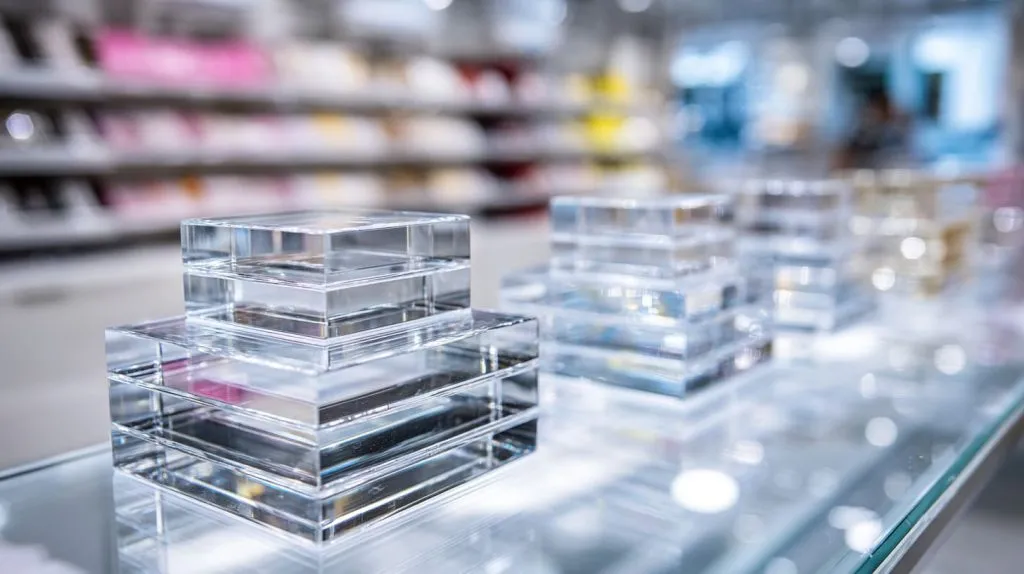
Why product risers enhance attention toward featured items
In almost every store layout, there is always one problem corner. The shelf is full, the products all sit at the same height, and nothing stands out. Acrylic risers are one of the easiest tools I use to break this “flat” feeling without changing the whole fixture.
On real projects, I decide the riser height by asking one question: from two or three meters away, which product should the shopper notice first?
1.1 Tiered acrylic risers for maximizing product visibility
Tiered risers work like small stages. We take the same SKU, or a small group of SKUs, and step them up one by one. This helps in three ways:
- The front product is easy to touch.
- The back products stay fully visible.
- The whole group looks “organized” instead of random.
I use tiered risers a lot for:
- Cosmetics and skincare
- Perfume and travel-size sets
- Small electronics, like earphones or power banks
A simple way to think about it is this: flat shelf = information; tiered riser = highlight.
| Use Case | Riser Type | Typical Height Range | Notes |
|---|---|---|---|
| Lipsticks / Mascara | 3–4 step tier | 20–80 mm per step | Clear or light-tinted works best |
| Perfume bottles | 2–3 step tier | 40–120 mm per step | Check bottle height and stability |
| Small electronics | Wide 2-step tier | 40–80 mm per step | Add anti-slip pads if heavy cables |
1.2 Using varying heights to create depth and dimension
We do not always need a “formal” tier. Sometimes I mix a few single blocks with different heights. One low block for a tester, one medium block for standard products, and one high block for a premium version. The eye reads those heights as a story: entry, main, hero.
A few simple rules help:
- Do not use too many heights on one small shelf.
- Keep the height steps clear (for example: 30 mm, 60 mm, 90 mm).
- Leave space for hands to reach in without hitting other products.
1.3 Material & finish options (clear, colored, frosted)
Most buyers ask for clear acrylic first. It is safe and flexible, and it fits almost any brand. But we can change how the same riser feels by changing the finish:
| Finish | Visual Effect | When I Use It |
|---|---|---|
| Clear | Invisible, pure product focus | Mixed brands, multi-category shelves |
| Frosted | Soft, diffused look | Premium skincare, spa or wellness themes |
| Colored | Strong brand vibe | Mono-brand walls, seasonal campaigns |
| Mirror | Reflective, “fuller” display | Small items that need a sense of volume |
When a brand has a strong color, a tinted riser that echoes that color can tie the shelf together without changing the whole fixture.
1.4 Best practices for different retail categories
Different categories push risers in different ways:
- Beauty – Focus on clean edges, easy cleaning, and space for testers.
- Electronics – Add cable routing and anti-slip pads.
- Food & beverage – Ensure easy wipe-down and enough space for labels.
I pay close attention to cleaning habits. If I know staff will wipe surfaces many times a day with strong cleaners, I choose thicker material and smoother edges, and I avoid delicate printed areas on the top surface.
When a shelf finally feels “alive” instead of flat, most teams suddenly want to raise and stack even more items, which is usually the moment I remind them to think about stable bases and safe reach before we move on to more complex structures.
2. Custom Display Boxes & Cases
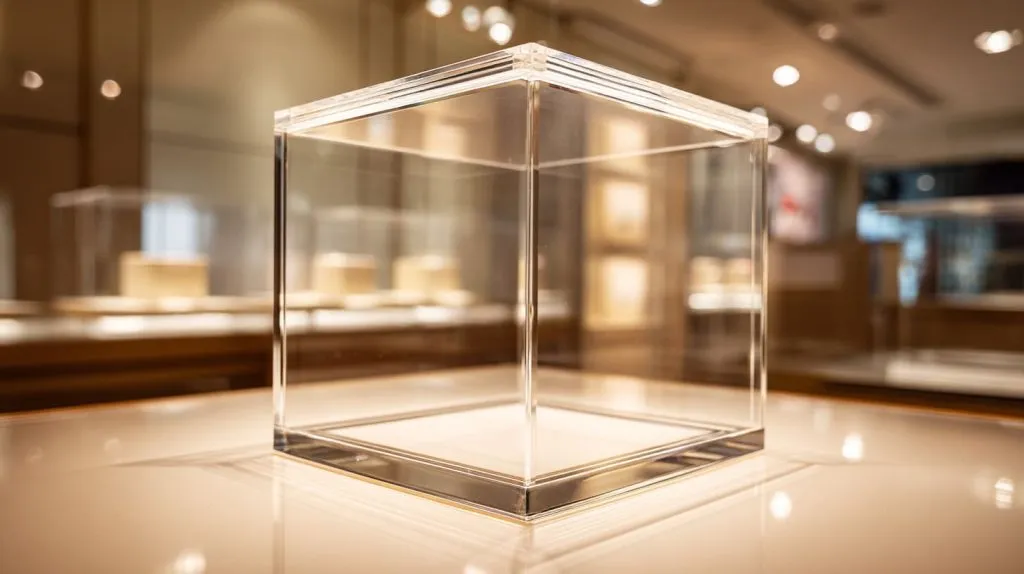
How custom cases protect while showcasing premium products
In many projects, the same question appears from the brand team: “We want the product to feel precious, but we do not want to hide it.” Custom acrylic boxes and cases sit exactly in this gap. They protect, but they still show every angle.
For secure displays, my first concern is not size, but control: who can open the case, and how often will they do it in one day?
2.1 Transparent protective display boxes
A simple clear box over a base can already signal “premium.” We often use this for:
- Limited edition sneakers
- Luxury cosmetics sets
- Signed items or collectibles
Key points I check:
- Edge quality (flame polishing or diamond polishing)
- Joint strength (glue type, bonding method)
- Base material (same acrylic, wood, or metal)
2.2 Wall-mounted vs. free-standing cases
Different locations need different case styles.
| Type | Where I Use It | Main Advantage | Main Risk to Watch |
|---|---|---|---|
| Wall-mounted | Narrow aisles, galleries, corridors | Frees floor space | Check wall strength and anchors |
| Free-standing | Entrance zones, middle of the store | Flexible placement and traffic flow | Risk of tipping if too tall |
| Counter-top | Near cash desk or service counters | Easy eye contact with staff | Easy to clutter if too small |
If a client is unsure, we often start with a free-standing or counter-top unit for the first test, then move to wall-mounted units later when they are confident about the layout.
2.3 Lockable and secure options for high-value items
For high-value items, the lock and hinge details matter more than the sheet itself. I look at:
- Lock type (cam lock, invisible lock, or magnetic latch).
- Hinge type (continuous piano hinge vs. small metal hinges).
- Access direction (open from back, top, or side).
A simple trick that reduces risk is to let staff access from the back or a hidden side, not from the customer side. This feels more controlled and also looks cleaner.
2.4 Engraved/printed branding elements
Boxes do not need to stay plain. We often add:
- Back-panel printing – Logos, textures, or gradient colors.
- Laser engraving – Subtle, premium look for luxury items.
- Metal or acrylic logo plates – Attached to the base or front.
If the product design is already very busy, I prefer very light branding on the case. The box should frame the item, not fight it.
Once a product sits inside a clear box and feels “protected,” the next complaint I hear is that the shelf behind it now looks too empty, which is the perfect moment to talk about proper acrylic shelving.
3. Acrylic Shelving Solutions
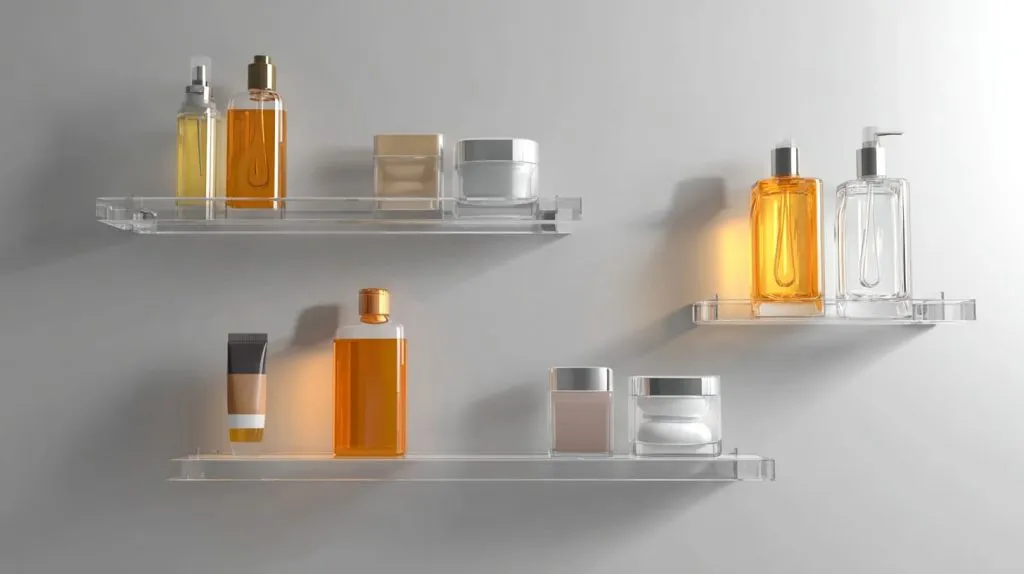
Tips for showcasing heavier products without sacrificing aesthetics
Acrylic shelves are often the quiet heroes in a store. Customers look at the products, not the shelf, but if the shelf looks cheap or bends too much, everyone feels it.
When we design acrylic shelves, I always check span, load, and fixing method before I think about visual style, because one sagging shelf can ruin the whole wall.
3.1 Floating acrylic shelves
Floating shelves give a very light, modern look. The support is often hidden behind the panel, so the acrylic feels like it is “floating” on the wall. This works very well for:
- Small decor items
- Cosmetics and perfumes
- Lightweight accessories
Key details:
- Enough thickness to avoid bending.
- Strong hidden brackets or metal channels.
- Clean, precise wall drilling in the store.
3.2 Wall-mounted shelving for space optimization
In tight stores, wall-mounted acrylic shelves help use vertical space without making the store feel heavy. I combine different lengths and depths to guide the eye and match product sizes.
| Product Type | Shelf Depth | Suggested Thickness | Notes |
|---|---|---|---|
| Travel cosmetics | 100–150 mm | 4–5 mm | Small loads, high visibility |
| Full-size bottles | 150–200 mm | 5–6 mm | Check front lip height if needed |
| Small boxes / sets | 200–250 mm | 6–8 mm | Use metal supports for longer spans |
If the shelf length is long, I often add small metal brackets under the acrylic, even if the design team first wants a “pure acrylic” look. It is a small compromise that saves many complaints later.
3.3 Thickness and structural considerations
Acrylic is strong, but it is still plastic. Too thin, and it bends over time. Too thick, and it looks heavy and costs more than needed.
I look at three numbers together:
- Shelf span (distance between supports).
- Expected product weight per meter.
- Safety factor for cleaning and re-stocking.
3.4 Combining acrylic shelves with lighting
Light from below or behind the shelf can push products to a new level. We often build:
- Acrylic shelves with built-in LED strips under the front lip.
- Edge-lit shelves, where the light enters from the side and glows softly.
- Backlit shelf panels with frosted acrylic.
I keep wiring and maintenance in mind. If staff cannot easily replace a strip or driver, the beautiful shelf will become a dark spot after one failure.
Once the shelves hold the weight and shine the right way, many buyers start to think about how to break up the space between shelves, which is when acrylic dividers become very useful.
4. Creative Divider Panels
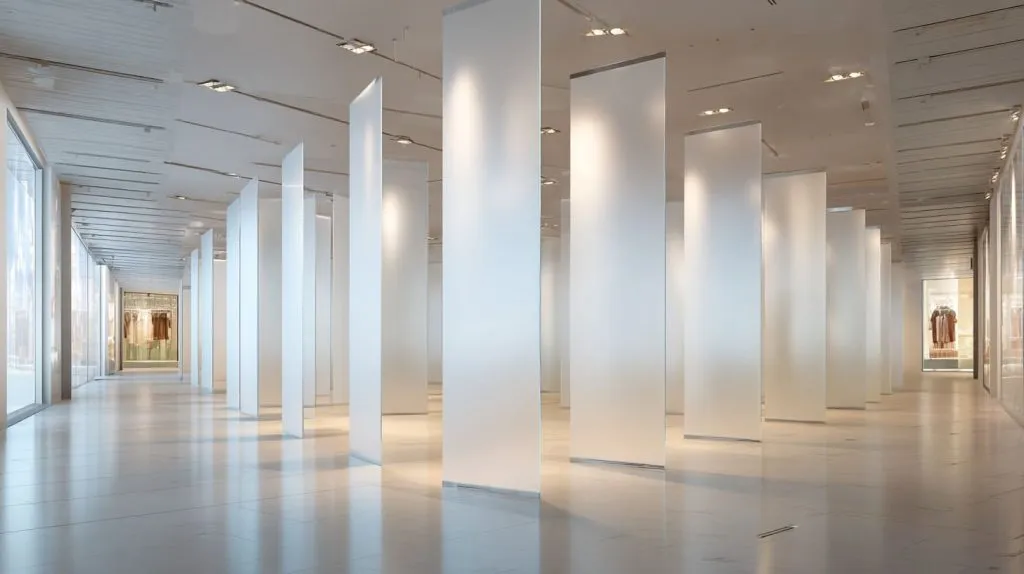
Using acrylic dividers to enhance store layout and flow
Dividers sound boring on paper, but they can quietly change how customers move, where they pause, and how they feel in a section. Acrylic makes dividers lighter, thinner, and more flexible than wood or solid panels.
For layout decisions, I pay more attention to how people walk and talk in the store than to the perfect 3D render, because dividers that look nice but block real movement do not last long.
4.1 Opaque or frosted panels for store zoning
Frosted or opaque acrylic can split a space without closing it completely. We can:
- Separate men’s and women’s sections.
- Create a calm zone for premium products.
- Hide stock or back-of-house areas.
Compared to full walls, these panels are easier to move and update. They also let light pass through, so the store does not feel like a maze.
4.2 Branded divider walls to direct customer flow
We often print graphics or logos on divider panels. This does two jobs at once:
- Guides customers deeper into the store.
- Adds brand presence without using extra fixtures.
A simple trick is to align arrows, patterns, or product images along the route you want people to follow, not only at the entrance.
4.3 Colored acrylic for thematic sections
Colored acrylic panels can create “zones” for:
- Seasonal collections
- Youth or streetwear areas
- Eco or natural product ranges
| Panel Type | Mood / Effect | Typical Location |
|---|---|---|
| Light pastel | Calm, soft, friendly | Beauty, lifestyle, kids |
| Deep color | Bold, strong, focused | Streetwear, tech, sports |
| Neutral frost | Quiet, premium, minimal | High-end accessories, watches |
I pay attention to how the color works with lighting. A very dense color plus warm light can make products look dull if we are not careful.
4.4 Privacy with visual appeal
Sometimes we need visual privacy but still want an open feeling. Vertical slats, patterned cut-outs, or layered panels can hide part of the view while still letting light and some movement pass.
The small details, like edge quality and spacing between slats, decide whether the divider feels cheap or intentional.
When dividers finally “steer” people in the right way, the next big question I usually hear is how to draw more attention to key brand zones, and that is where backlit acrylic elements shine.
5. Backlit and Illuminated Displays
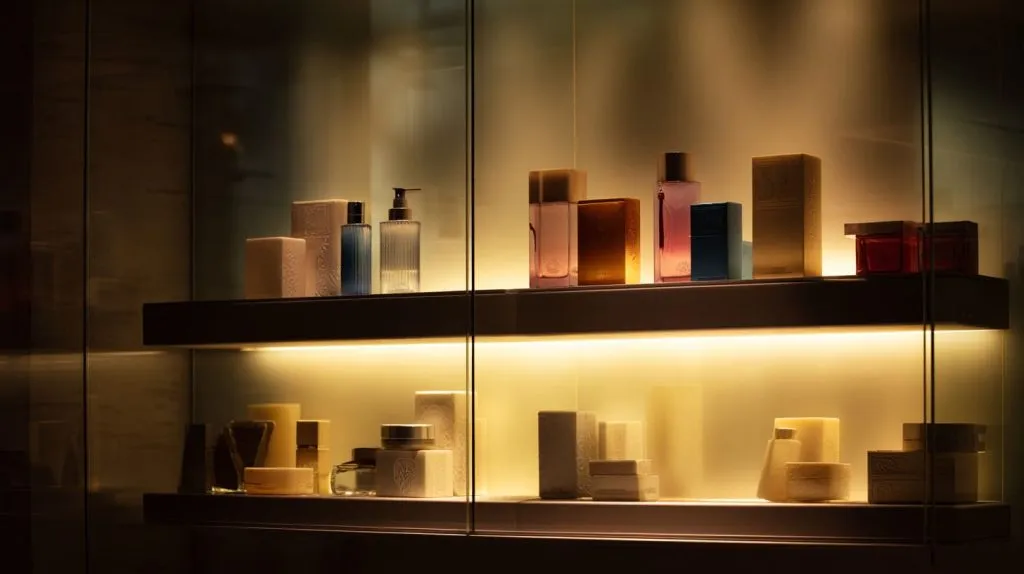
Creating eye-catching focal points using light and acrylic
Light plus acrylic is a powerful pair. A simple panel becomes a glowing sign. A shelf becomes a halo for products. But it also adds cost and maintenance, so we must choose carefully where to use it.
On lighting projects, I weigh every glowing idea against one thing: will this light still look clean and easy to maintain after a year of dust, cleaning, and staff changes?
5.1 LED integration behind translucent acrylic
We often place LED modules behind a sheet of frosted or opal acrylic. This diffuses the light and hides hot spots. Common uses include:
- Brand logos at the back wall.
- Entrance feature panels.
- Hero product “light boxes.”
5.2 Display boards and brand logos
Acrylic is great for layered logo signs:
- Back panel: frosted or colored sheet with backlighting.
- Middle: clear acrylic cut to logo shape.
- Front: printed or applied logo graphics.
This layered effect feels richer than a flat print on a wall, but still stays slim.
5.3 Backlit shelving and platforms
We can also light:
- The back edge of a shelf.
- The bottom of a platform.
- The base of a pedestal.
| Lighting Style | Effect on Product | Maintenance Note |
|---|---|---|
| Edge lighting | Soft glow around product outline | Needs clean edges and proper wiring |
| Under-shelf strip | Strong highlight on front items | Check heat and accessibility for repair |
| Back panel glow | Atmosphere, brand mood | Keep panel removable when possible |
5.4 Lighting design considerations
I look at:
- Color temperature (warm vs. cool).
- Brightness balance with the rest of the store.
- Glare for customers and staff.
Even the best acrylic panel will feel cheap if the LED color does not match nearby lighting or if we see raw modules behind it.
Once a store has one strong light feature, the next challenge is often to support many different product shapes under that same brand mood, which is where custom acrylic stands come into the picture.
6. Product-Specific Display Stands
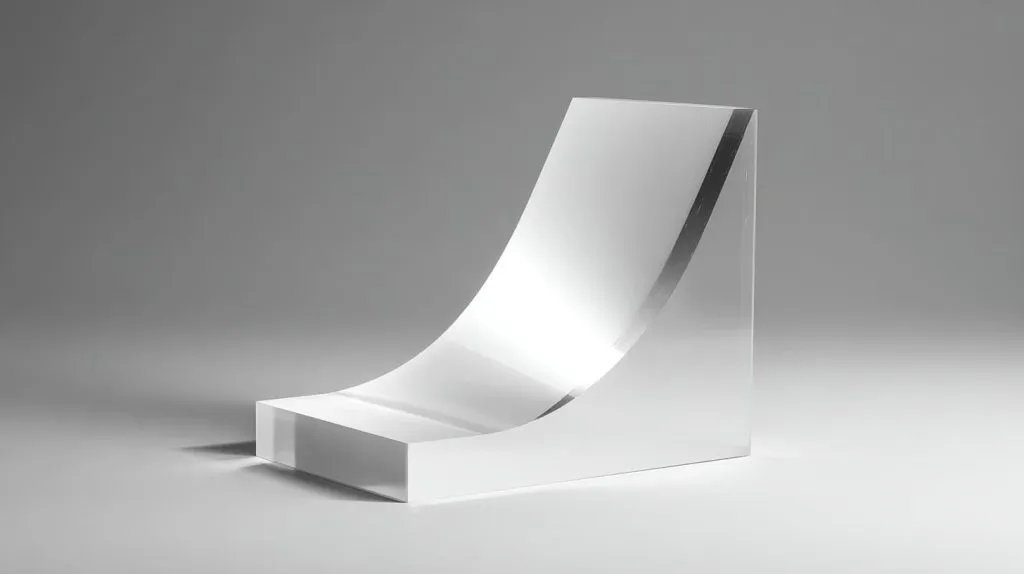
Designing stands that highlight and secure products
Universal stands are flexible, but product-specific stands can tell a story in one second. A stand shaped around a bottle, a device, or a tool helps customers understand how to hold, test, or compare it.
When I design product-specific stands, I care less about “style words” and more about small user actions, like where fingers land, how cables fall, and which angle feels natural for reading a label.
6.1 Tailored cutouts and form-fitting rests
We often use CNC cutting and laser cutting to match a product’s shape. For example:
- A circular cutout for a jar.
- A shaped rest for a phone or tablet.
- A slot for a card or leaflet.
Benefits:
- Product always returns to the same position.
- Staff can re-set the display quickly.
- Lines on the shelf look neat and controlled.
6.2 Seasonal and promotional themed stands
For short-term campaigns, we may not want heavy metal or wood fixtures. Acrylic stands can be:
- Laser-cut into playful shapes.
- Printed with seasonal colors or graphics.
- Combined with cardboard or fabric for cheaper extensions.
| Campaign Type | Acrylic Role | Lifetime Target |
|---|---|---|
| Holiday promotion | Bright stands and risers | 1–3 months |
| Product launch | Branded hero plinths | 3–12 months |
| Limited drop | Small pedestals or trays | Until stock runs out |
For short campaigns, I often keep the structure simple and reuse the base design with new printing in the next season.
6.3 Branded elements and color use
We can bring branding into stands by:
- Using brand color acrylic for back panels or side walls.
- Printing logos on vertical faces.
- Adding small, raised logo plates.
The risk is overdoing it. Too many logos and color blocks can make the display feel noisy. I like to keep one strong branded zone and leave the rest calm.
6.4 Stand ergonomics for customer interaction
Stands that feel good to touch get used more. I look at:
- Viewing angle (30–45° is common for many devices).
- Reach distance for different customer heights.
- Edge comfort when someone rests their hand.
I also imagine staff wiping the stand many times per day. Sharp inner corners collect dust and are hard to clean, so I try to avoid them.
Once we solve how each hero product stands, the next challenge is usually how to straighten all the small pieces around the counter, which is where countertop trays and bins become very helpful.
7. Countertop Display Trays & Bins
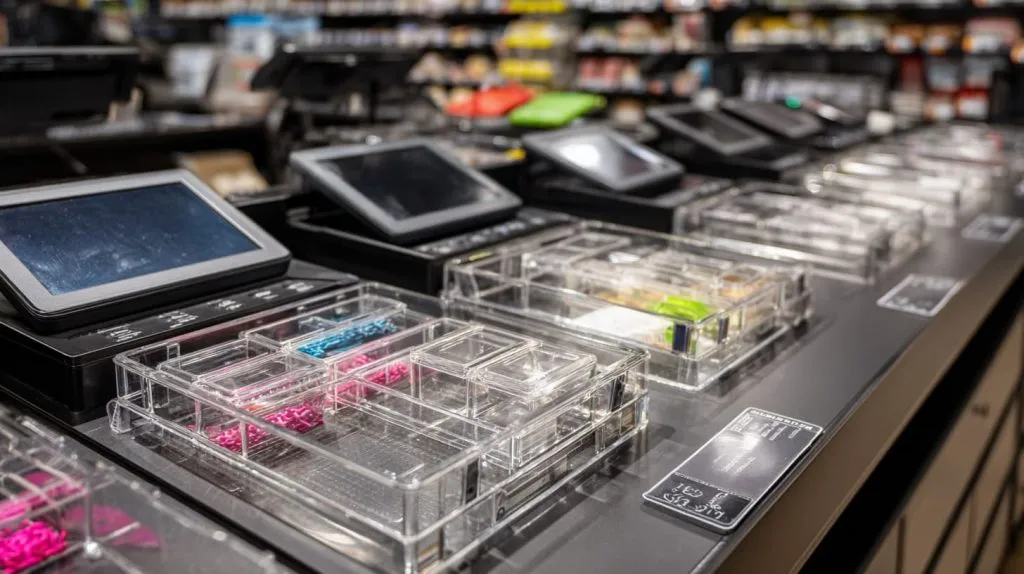
How acrylic trays organize products while improving visibility
The checkout counter is where many small decisions happen fast. If the area is messy, people ignore it. If it is clean and clear, small add-on items can sell very well. Acrylic trays and bins are one of my favorite tools for this space.
For counters, I try to imagine the busiest hour in the store, not the perfect photo shoot, because trays that only look good in a mockup often fail when real customers and staff crowd the area.
7.1 Tray designs for small items (jewelry, cosmetics, accessories)
Trays can have:
- Fixed compartments (for rings, lipsticks, mini bottles).
- Removable dividers (for flexible SKUs).
- Sloped bases (to show more of the product front).
| Item Type | Tray Style | Divider Needed? | Notes |
|---|---|---|---|
| Lip balm / lipstick | Narrow channels | Yes | Prevent rolling and mixing |
| Rings / earrings | Small square cells | Yes | Line with soft insert if needed |
| Mini bottles | Circular recesses | Optional | Check stability and weight |
7.2 Open-top acrylic bins for impulse purchases
Open bins work well for:
- Travel-size toiletries
- Snacks and sweets near food counters
- Cables and small tech accessories
I keep the bin height low enough so people can see the items even from a distance. Too deep, and it becomes a black box.
7.3 Mirror and colored acrylic trays
Mirror acrylic at the base can make small items look more “full.” Colored rims or side walls can reflect the brand or a specific campaign.
We just need to be careful with fingerprints. If the surface shows marks very easily, I keep it smaller and place it where staff can wipe it often.
7.4 Placement strategies for checkout areas
Where we place trays and bins matters as much as their design:
- Near the payment terminal for quick grabs.
- On the side where the queue forms.
- Away from very sensitive electronics or screens.
I also consider left-handed and right-handed flow; sometimes a small move from one side of the counter to the other changes sales.
When a counter finally feels tidy yet busy, buyers often start dreaming about more flexible walls and communication tools in the rest of the store, which leads nicely into interactive acrylic boards.
8. Interactive & Functional Acrylic Boards
Using acrylic for dynamic retail communication
Not every message in a store should be printed once and forgotten. Many brands need boards that change weekly or even daily. Acrylic boards give a strong, clean surface for this kind of live communication.
On communication tools, I judge success by how easy it is for a junior staff member to update the board without any training, because if updating feels hard, the board will soon be empty or outdated.
8.1 Dry-erase acrylic signage
Clear or frosted acrylic can act like a whiteboard. We hang it on walls or place it on small easels for:
- Daily promotions.
- Menu changes.
- Staff messages in service zones.
We use markers that wipe clean without scratching the surface. Sometimes we print faint grid lines or headings on the back to guide neat writing.
8.2 Magnetic acrylic boards for interchangeable content
By adding a metal sheet behind the acrylic, or slim metal strips, we can use magnets to hold:
- Price cards.
- Product info cards.
- Small printed posters.
| Board Type | Main Use | Update Frequency | Key Detail |
|---|---|---|---|
| Pure dry-erase | Handwritten notes and sketches | Daily | Good marker choice |
| Magnetic + print | Swapping cards and mini posters | Weekly / monthly | Avoid glare on printed zones |
| Hybrid | Mix of both | Flexible | Plan clear zones for each use |
8.3 Customer engagement through interactive elements
We can also make:
- Question boards where customers leave short notes.
- “Pick a card” boards for random discounts.
- Simple survey boards with magnets or tokens.
These elements are simple to build but can give the brand a friendly voice.
8.4 Utility in promotions and store events
For events or pop-ups, acrylic boards can move with the campaign:
- Floor stands near event areas.
- Hanging boards for schedule and rules.
- Tabletop boards for workshop instructions.
I look at how the board will travel between stores or events. Removable feet, stackable designs, and strong edge protection matter a lot here.
Once the messaging becomes more flexible, the next question usually becomes how to keep the main identity stable across all these moving parts, and that is where acrylic signage plays a big role.
9. Signage and Brand Messaging
How acrylic signage reinforces brand identity and visibility
Strong signage helps customers relax. They know where they are, what the brand stands for, and where to go next. Acrylic gives a clean, modern base for both big signs and small tags.
When we work on signage, I try to imagine a new customer entering the store alone, without asking staff anything, and test whether the signs quietly guide them to the right zone and mood.
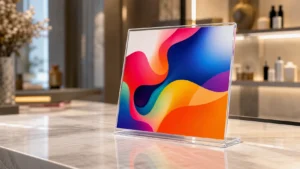
9.1 Laser-engraved & UV-printed acrylic signs
Two main methods we use:
- Laser engraving – Subtle, often filled with paint or backlit.
- UV printing – Full-color, sharp logos and text.
Engraving feels more premium and long-lasting. UV print is flexible and fast to update when branding changes.
9.2 Matte, frosted, and colored signage options
Surface finish changes how signs read:
| Finish | Effect | Good For |
|---|---|---|
| Glossy | Sharp, bright, reflective | Tech, beauty, fashion |
| Matte | Calm, low-glare | Long text, menu boards, info signs |
| Frosted | Soft, premium | Logo panels, glass door signs |
| Solid color | Strong brand blocks | Directional signs, zone markers |
I often choose matte or frosted finishes for signs that sit near bright lights or windows to avoid reflections that make text hard to read.
9.3 Dimensional logos and 3D effects
We can layer acrylic to create depth:
- Raised letters mounted on a backing panel.
- Inset panels in a wall or fixture.
- Mixed materials (acrylic plus metal).
Even a small 3D effect can make a sign feel more important than a flat sticker.
9.4 Indoor vs. outdoor acrylic signage considerations
For outdoor or semi-outdoor use, I check:
- UV stability of the acrylic and inks.
- Mounting points for wind and vibration.
- Cleaning methods (pressure washing, strong chemicals).
In some cases, we combine acrylic with metal frames to protect edges and improve strength.
When brand signs finally feel clear and confident, many clients start looking for ways to lift specific hero products even higher within that strong identity, which naturally leads to acrylic blocks and pedestals.
10. Acrylic Blocks & Pedestal Displays
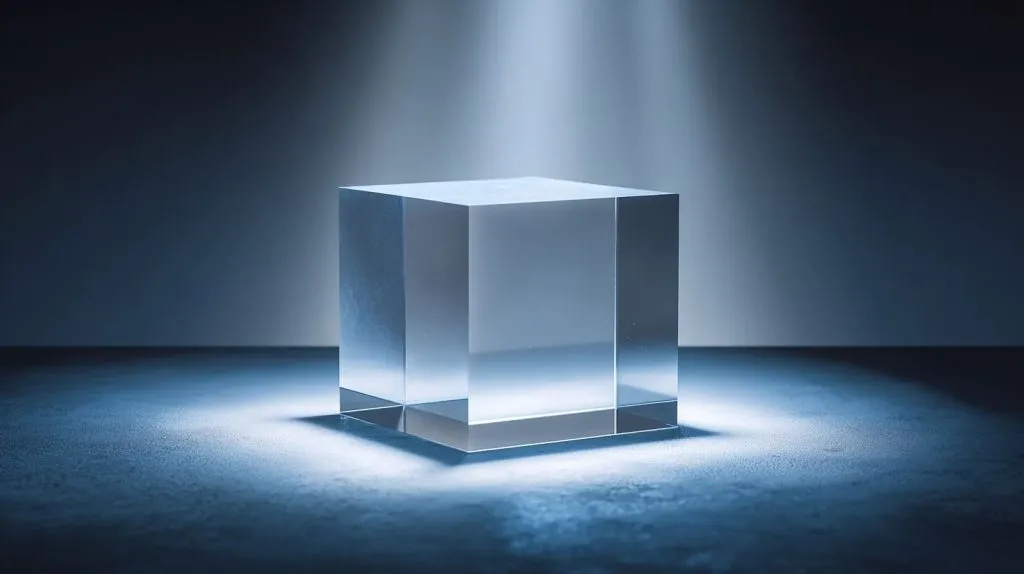
Elevating premium merchandise with minimalist, high-end displays
Solid acrylic blocks and pedestals have a special magic. They are simple shapes, but they can make a product feel much more valuable with almost no decoration.
For premium pedestals, I judge success by a very basic test: if we remove all other props, does the product still look “special” sitting on that one block?
10.1 Acrylic blocks as luxury product pedestals
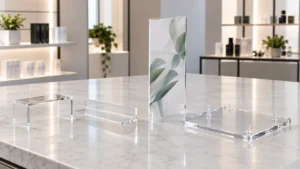
Clear, flame-polished blocks can feel like glass bricks. We often use them for:
- Watches and jewelry.
- Fragrance bottles.
- Small tech gadgets.
We can also frost one side, add a subtle logo, or tint the block very lightly to echo a brand color.
10.2 Varying sizes for layered visual hierarchy
Using different block heights creates a clear “ranking” on the display:
- Tall block for the main hero.
- Medium block for related items.
- Low block for accessories or testers.
| Block Height | Role on Display | Typical Product |
|---|---|---|
| 120–200 mm | Main hero pedestal | Key watch, main bottle |
| 60–120 mm | Supporting products | Other sizes / flavors |
| 20–60 mm | Accessories / testers | Straps, caps, samples |
A small detail I watch is base stability. A very tall, narrow block with a heavy item on top can become a small risk if customers bump the table.
10.3 Displaying jewelry, watches, and small luxury goods
For jewelry and watches, we mix blocks with:
- Small stands or hooks.
- Soft pads or inserts on top.
- Angle-cut blocks for better viewing.
The goal is to keep the display calm, but still clear about price levels and product families.
10.4 Complementing blocks with lighting and props
Blocks work even better with:
- Focused spotlights from above.
- Soft glow from behind.
- Simple props like stones, wood pieces, or metal rods.
I avoid over-decorating. If the block, light, and product already look strong together, adding many extra props often makes it feel like a cluttered window instead of a luxury stage.
When a single product on a simple block can hold a customer’s attention for a few seconds, I know the rest of the display only needs small adjustments, not a full redesign.
Conclusion
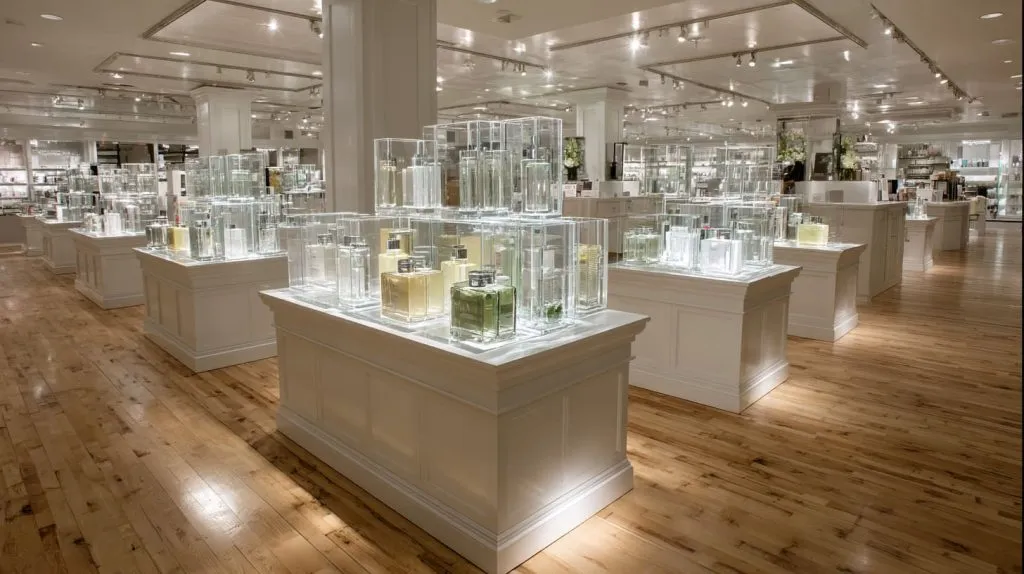
When I look across all these projects—risers, boxes, shelves, dividers, lights, stands, trays, boards, signs, and pedestals—I see one repeating pattern. Acrylic is never just “a clear sheet” for us in the factory. It is a flexible language we use to shape how products speak to customers.
I choose acrylic again and again in retail work for three simple reasons:
- It keeps the focus on the product instead of the hardware.
- It lets us change shapes, finishes, and functions without rebuilding the whole fixture.
- It behaves well in real life: during shipping, during installation, and during years of cleaning and re-stocking.
My opinion on each new project stays very practical. I ask: who will touch this part, how often will they touch it, and what will go wrong first if we make the part too thin, too complex, or too “clever”? This way of thinking pulls me back from nice renderings into real stores, where busy staff and impatient customers use the display in ways we never fully plan.
If you are a product or mold designer, or a buyer like Jacky in Canada who works with factories in China, I hope this walk-through gives you more concrete options the next time you write “material: acrylic sheet” on a drawing. You can now ask for risers with clear height logic, shelves with tested spans, dividers that guide traffic, backlit elements with easy maintenance, and pedestals that truly match the value of the products on top.
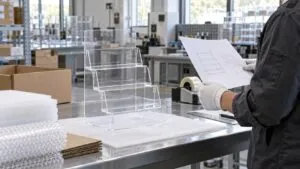
At Feilong Acrylic, my team and I spend our days turning these ideas into real parts: cutting, bending, gluing, polishing, and packing them for export. If you have a retail display concept that feels good in your 3D model but needs a more grounded acrylic solution, you can always share the drawing with me. We can look at it together, check the risks, and turn that “simple acrylic piece” into something that quietly works hard for your brand in the store.