Skip to content
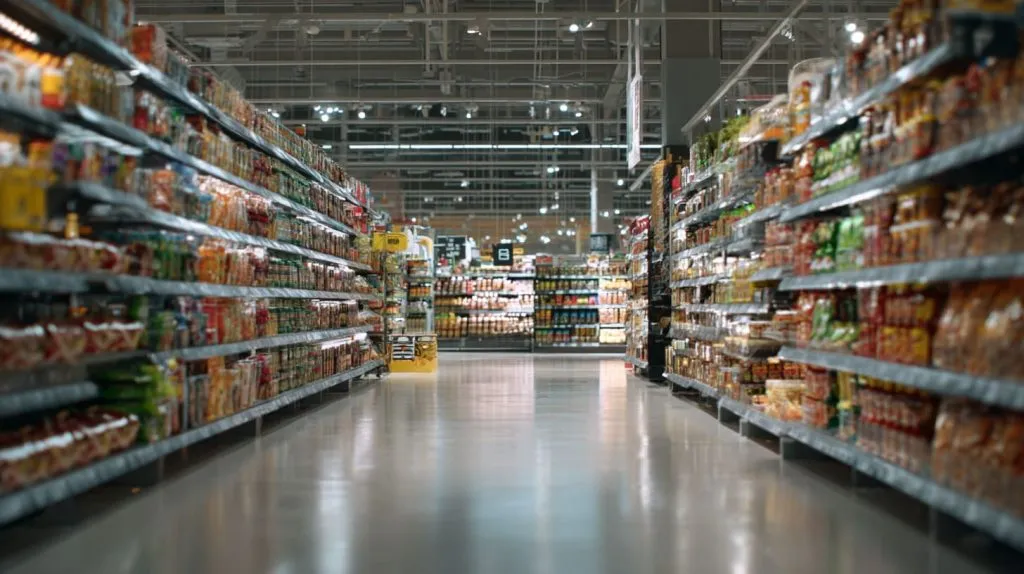
Grocery displays look simple, until a corner chips, a sign warps, or a “clear” panel turns cloudy. Then the store blames the fixture. The buyer blames the material. And everyone loses time.
The top plastics I see used most in grocery store displays are acrylic (PMMA), PETG, PVC (rigid foam or sheet), and polycarbonate (PC). I pick based on clarity, impact risk, chemical cleaning, heat near lights, and whether the part touches food or only “sits next to it.”
I learned this the hard way when a “perfectly clear” display came back after two weeks looking tired and scratched. Same design. Same store. Different plastic. That’s when I stopped asking, “Which plastic is popular?” and started asking, “Which plastic survives this store?”
What type of plastic is used in the food industry?
Some buyers hear “food industry” and think there is one safe plastic. There isn’t. I always separate food-contact parts from display-only parts, because the rules and risks are not the same.
In the food industry, I often see PET (and PETG), polypropylene (PP), polyethylene (HDPE/LDPE), polycarbonate (PC) for specific uses, and sometimes acrylic for non-contact covers and guards. The right choice depends on temperature, cleaning chemicals, impact, and whether the plastic touches food or only sits nearby.
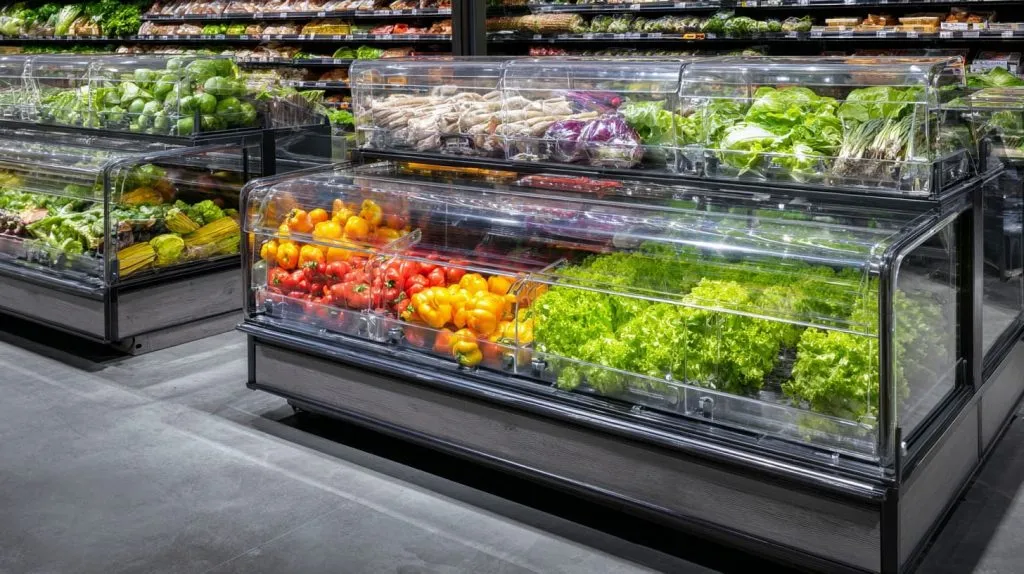
Food-contact vs “near food” is the real split
If a part touches food, I treat it like a different product.
- Food-contact: bins, scoops, liners, trays, guards that might touch produce
- Near food: sign holders, shelf talkers, price rails, display frames
That one line changes everything.
Quick material map I use in my head
| Material | Typical food industry use | Why it shows up | Common weakness |
|---|---|---|---|
| PETG | guards, covers, some bins | clear, easy to form | scratches easier than PC |
| PP | containers, hinges, bins | tough, chemical resistant | not “glass-clear” like acrylic |
| HDPE | cutting boards, bins | tough, low cost | not premium-clear |
| PC | guards, impact zones | very tough | can haze with harsh cleaners |
| Acrylic | sneeze guards, covers | best clarity | chips/cracks if abused |
My “buyer mistake” note
A lot of people mix up “food-safe material” with “food-contact approved design.” Even a good plastic can fail if the design traps water, cracks at screws, or can’t be cleaned.
Why do grocery stores use so much plastic?
Grocery is a rough environment. People bump carts. Staff wipes fast. Cleaners are strong. Displays get moved, not babysat. Plastic survives that reality better than many materials at the same cost.
Grocery stores use so much plastic because it is lightweight, easy to clean, quick to replace, and cheap to ship. Plastic can be clear, colored, or printed, and it can be cut or formed fast for promotions that change every week.
The “weekly change” problem
A supermarket is not a museum. Promotions change. Layout changes. Price strips change. Plastic is basically the material of “we need it by Friday.”
Plastic solves three boring problems that matter a lot
| Problem | What stores need | Why plastic fits |
|---|---|---|
| Speed | fast signs and fixtures | quick cutting, printing, forming |
| Cleaning | wipe-down surfaces | smooth, sealed surfaces |
| Handling | staff move things daily | light weight, low injury risk |
My practical view
If the store is high-traffic, the plastic choice is less about looking perfect on day one, and more about looking “still okay” on day thirty.
Is acrylic good for grocery store display fixtures?
Acrylic is the “pretty one.” When it is right, it looks like glass but cleaner. When it is wrong, it chips at the corner and makes the whole fixture feel cheap.
Yes, acrylic is good for grocery displays when you want high clarity and a premium look, like bakery covers, product risers, and sign frames. But I avoid acrylic in heavy impact zones, because it can crack or chip if carts, baskets, or constant handling hit it.
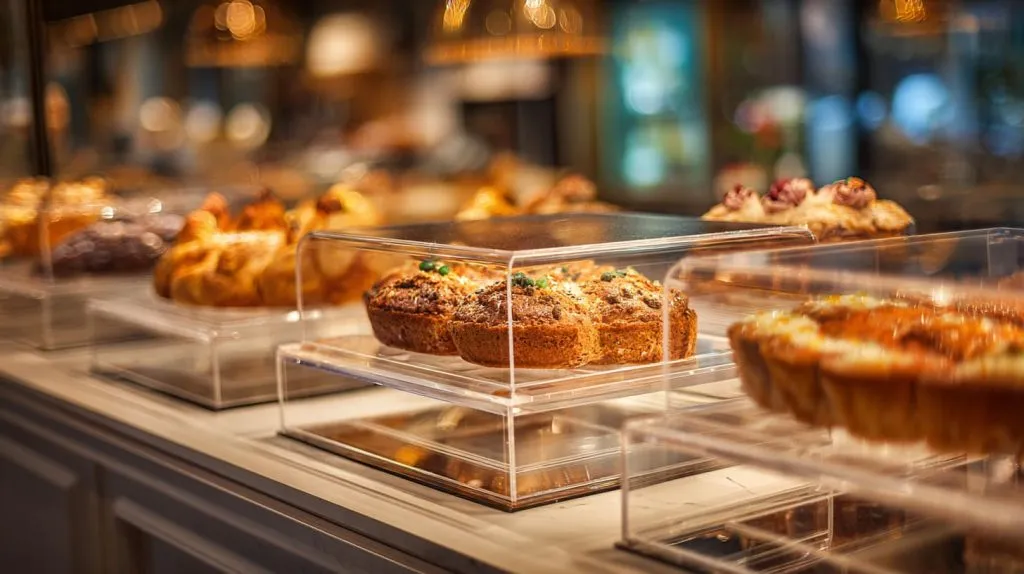
Where acrylic feels like a win
- clear risers that make product look brighter
- cosmetic-style premium stands for packaged goods
- sign frames where clarity sells the message
Where acrylic makes me nervous
- end caps with cart impact
- low fixtures near feet and wheels
- parts with thin edges and sharp corners
Acrylic design rules I repeat too often
| Detail | What I do | Why |
|---|---|---|
| Edges | polish or flame-polish | reduces chipping, looks premium |
| Corners | add radius | corners chip first |
| Fasteners | avoid over-tight screws | stress cracks love tight screws |
| Thickness | don’t go “thin to save” | thin acrylic fails loudly |
What is the difference between acrylic and PETG for retail displays?
This question comes up when a buyer wants “clear plastic,” but also wants fewer breakages. Acrylic and PETG can look similar in photos, but they behave differently when the store gets rough.
Acrylic is clearer and looks more “glass-like,” while PETG is usually more impact-tolerant and easier to thermoform. Acrylic can chip or crack under impact, but PETG tends to bend or scuff instead. For fast-formed guards and curved parts, I often prefer PETG.
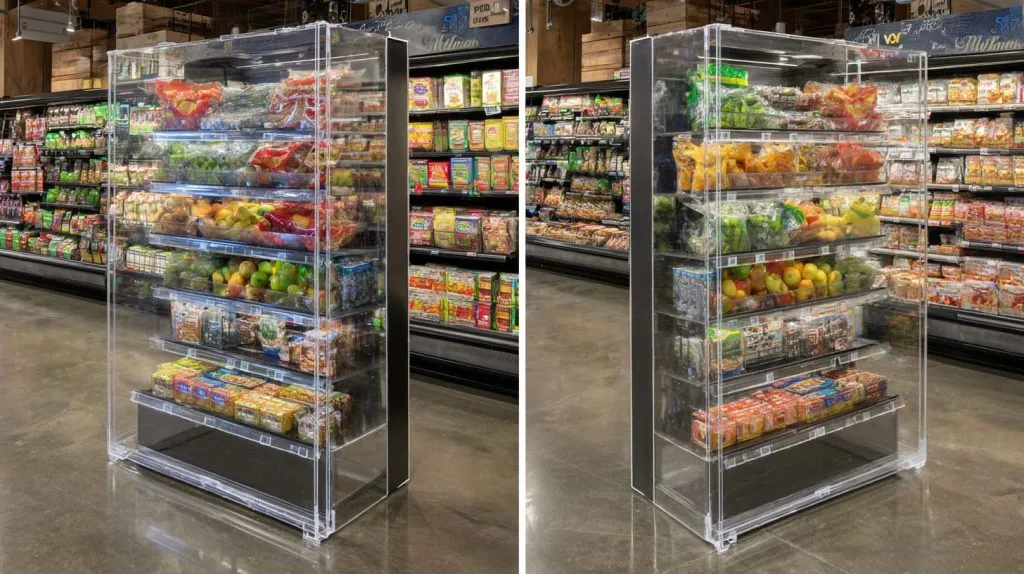
How I explain it in one sentence
Acrylic is for beauty, PETG is for survival.
Side-by-side comparison
| Feature | Acrylic (PMMA) | PETG |
|---|---|---|
| Clarity | excellent | very good |
| “Premium look” | high | medium-high |
| Impact behavior | can crack/chip | more forgiving |
| Forming | limited (can be formed, but tricky) | easy thermoforming |
| Scratch resistance | decent, but scratches show | scratches more easily |
| Typical grocery use | risers, frames, covers | guards, curved covers, formed trays |
My honest buyer advice
If your fixture has curves, quick forming, and lots of handling, PETG saves headaches. If your goal is “make the product look expensive,” acrylic wins, but only if you protect it from impact.
Why is PVC used in supermarket signage and shelf displays?
PVC is not the “beautiful clear” plastic. It’s the “cheap and consistent” plastic, especially for signage systems that need to be printed and replaced often.
PVC is used in supermarket signage and shelf displays because it is low cost, easy to print on, dimensionally stable for flat signs, and available in rigid foam boards and sheets. It works well for short-to-mid-term promotional signage and large-format panels.
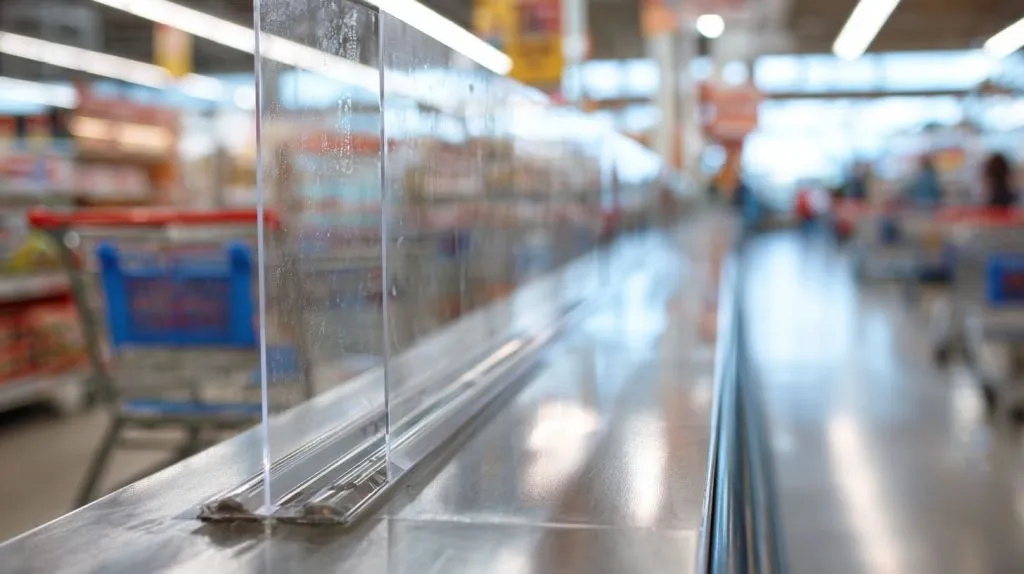
Where PVC shines in real stores
- hanging signs and aisle markers
- shelf strips and price messaging
- temporary campaign boards
What I watch out for with PVC
| Risk | What happens | How I reduce it |
|---|---|---|
| Warping | heat or poor mounting bends it | thicker sheet, better support |
| Brittleness | thin PVC can crack | avoid thin in stress areas |
| “Cheap feel” | looks less premium than acrylic | use PVC where it won’t be touched |
A small truth
PVC is often chosen because the sign will be replaced before the material fails. That’s not glamorous, but it’s realistic.
Is polycarbonate used in grocery store displays?
Yes, but usually for the places where acrylic gets hurt. Polycarbonate is the “tough one,” and it earns that reputation in high-traffic retail.
Yes, polycarbonate is used in grocery displays for impact-prone parts like guards, barriers, and protective panels. It is much tougher than acrylic, so it resists cracking. The tradeoff is that it can scratch and haze, especially under aggressive cleaning, so surface care matters.
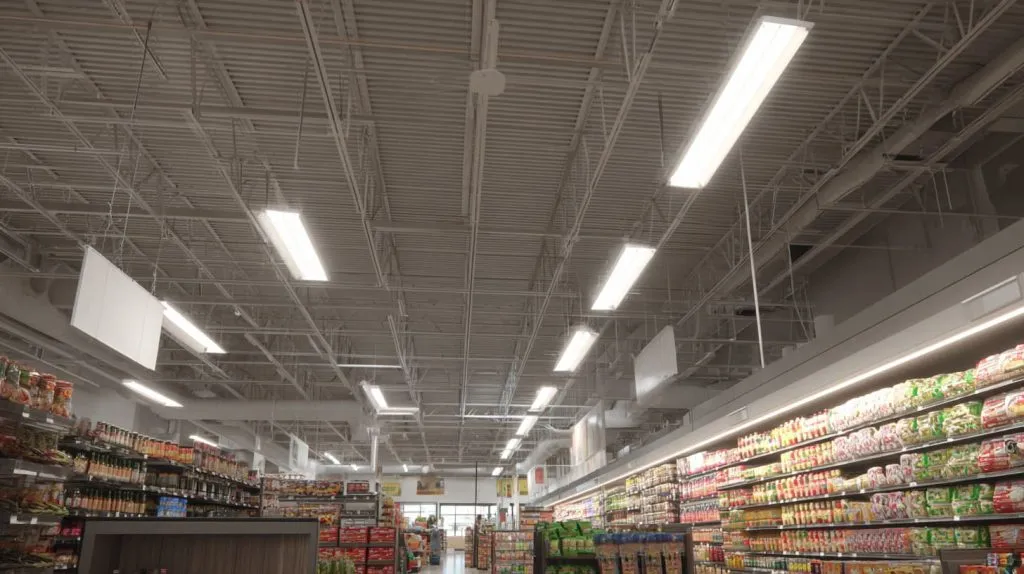
Where I recommend PC without hesitation
- cart impact zones
- sneeze guards in busy lanes
- protective shields near checkout
Polycarbonate tradeoffs I tell buyers upfront
| Topic | What’s good | What can bite you |
|---|---|---|
| Impact | very high | you pay for it |
| Clarity | good | can haze over time |
| Cleaning | handles many cleaners | harsh chemicals can dull it |
| Scratches | not great | scratches show under lights |
My “store reality” note
If the store has strong daily cleaning and rough traffic, PC often looks better at month three than acrylic does, even if acrylic looked better on day one.
Which plastic is best for food-safe display applications?
This is where I slow down. Because “food-safe” can mean a lot of things, and buyers sometimes use it like a magic word. I don’t.
The best plastic for food-safe display applications depends on contact level: for non-contact guards, PETG or acrylic can work well; for tougher contact or impact zones, polycarbonate or certain PP/HDPE designs may be better. I always match material to cleaning, temperature, and whether the part touches food.
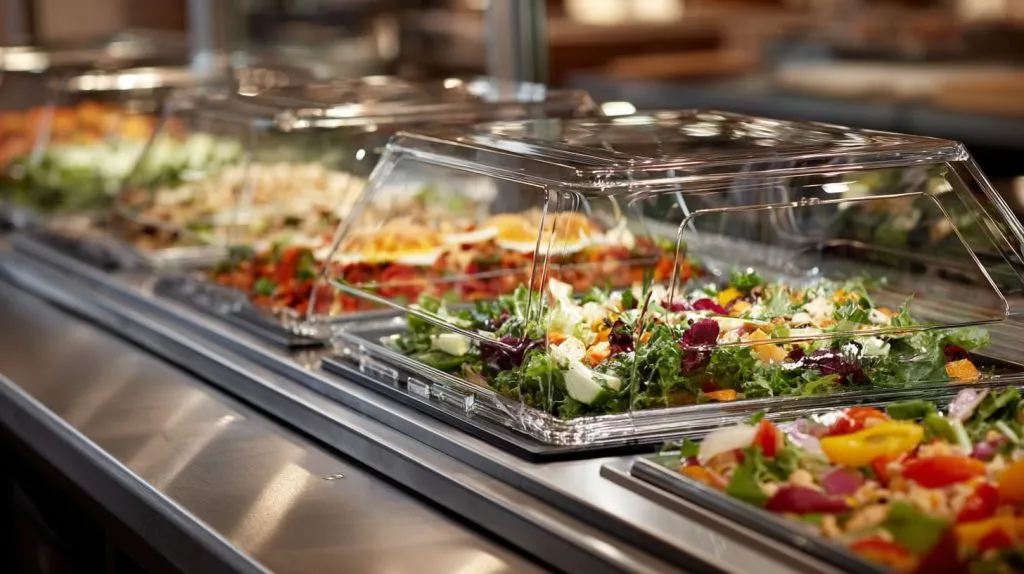
My decision checklist for “food-safe”
- Does it touch food or only cover food?
- Is it cleaned with mild soap or harsh sanitizer?
- Is there heat (warm lights, hot food nearby)?
- Are there sharp impacts (scoops, bins, carts)?
Simple selection guide I use for buyers
| Use case | Best-fit plastics | Why |
|---|---|---|
| Bakery cover / guard (no contact) | Acrylic, PETG, PC | clarity + easy cleaning |
| Produce bin liner / direct contact | PP, HDPE, PET/PETG (case-specific) | safer for contact + toughness |
| High-impact guard | PC | impact wins |
| Short-term promo near food | PVC (sign only) | cost + printability |
One design warning
Food-safe plastic with a bad design still fails. Tight corners, trapped water, and stress cracks are where complaints start.
What plastic material is best for heavy-duty retail displays?
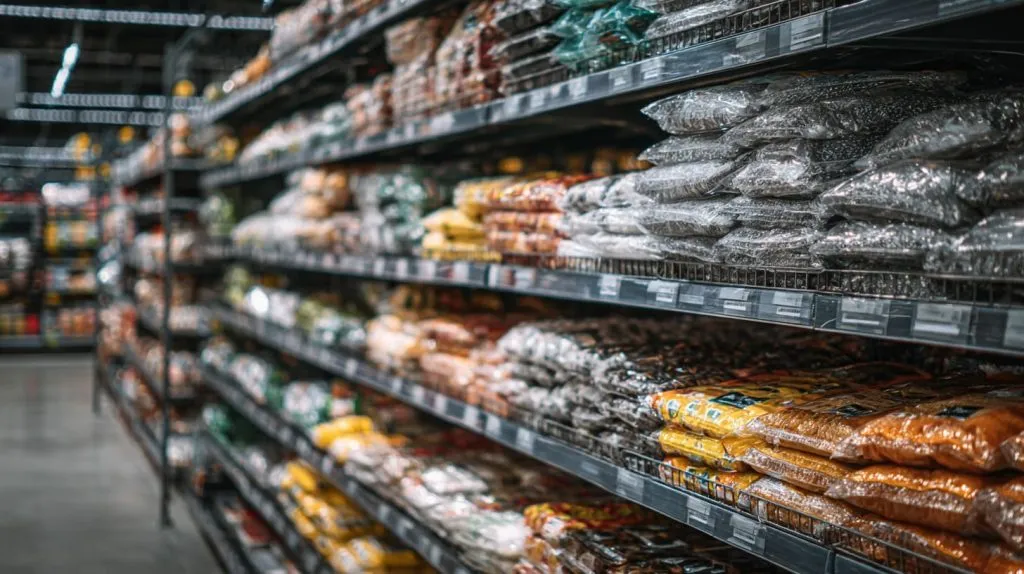
“Heavy-duty” in grocery usually means: impact, load, and constant handling. In those cases, I care less about perfect clarity and more about not failing in public.
For heavy-duty grocery displays, polycarbonate is often the best for impact-prone panels, while thicker acrylic can work for rigid risers if protected from hits. For structural parts, I also consider combining plastics with metal frames, because plastic alone can creep under load over time.
Heavy-duty is not one thing
I break it into three kinds of stress:
- Impact stress (carts, people, drops)
- Load stress (stacked product weight)
- Cleaning stress (chemicals + abrasion)
Quick matrix for heavy-duty decisions
| Stress type | Best choice | Why |
|---|---|---|
| Impact | PC | doesn’t crack easily |
| Load (flat support) | thicker acrylic + good supports | stiffness helps |
| Cleaning abrasion | depends on cleaner | choose material + cleaning plan |
My “quiet tip”
If a display must look premium and survive abuse, I often design the clear part as a replaceable panel. That saves the whole fixture when the front face gets scratched.
How do I choose the right plastic for supermarket POP displays?
POP displays are emotional. They need to look good fast. But they also need to survive real hands. I pick plastic the same way I pick shoes: based on where I’m walking, not how it looks in a photo.
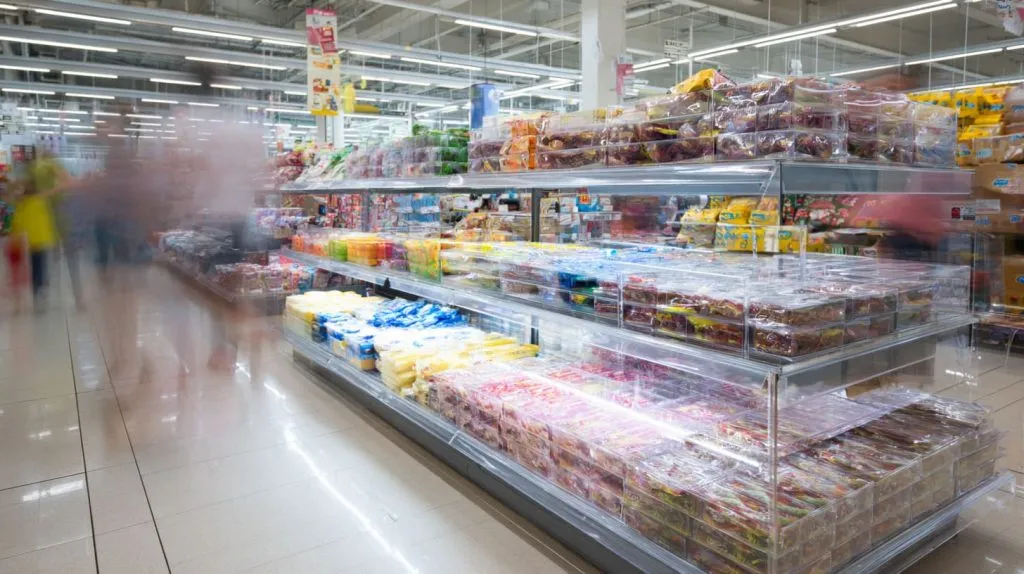
To choose the right plastic for supermarket POP displays, I start with three questions: will customers touch it, will carts hit it, and how often will it be replaced? Then I match clarity (acrylic), forming speed (PETG), cost/printing (PVC), or toughness (polycarbonate) to the display’s real job.
The 6 questions I ask buyers (and I don’t skip them)
- What is the display’s life: 2 weeks or 2 years?
- Is it in a cart lane or a quiet corner?
- Does staff clean it with alcohol, sanitizer, or mild soap?
- Does it need curves or only flat panels?
- Is the goal premium look or low cost?
- Can the “front face” be replaced if scratched?
Practical selection table for POP
| POP display goal | Plastic I start with | Why |
|---|---|---|
| Premium clear look | Acrylic | clarity sells |
| Curved cover fast | PETG | forms easily |
| Cheap promo sign | PVC | prints well, low cost |
| Tough safety guard | PC | impact resistance |
My human judgment
If you are unsure, choose the plastic that fails “quietly.” A scuff is annoying. A crack in public is embarrassing.
What are the cost differences between acrylic, PETG, and PVC displays?
Cost is never just material price. It’s also waste, forming time, printing, packing damage, and replacement rate. I’ve seen “cheap” become expensive after one mistake.
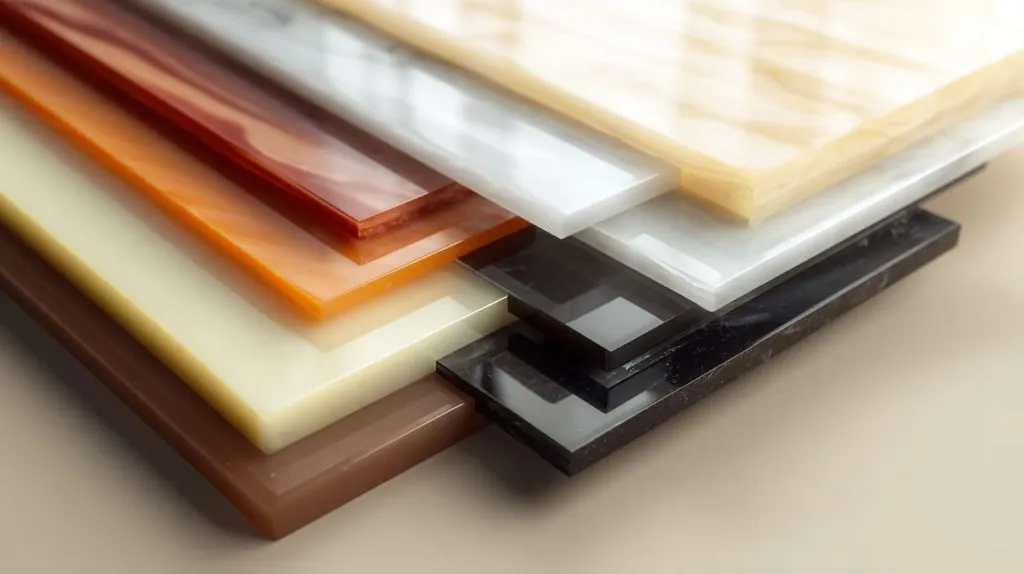
In most grocery display projects, PVC is usually the lowest-cost option for printed signs, PETG often sits in the middle for formed clear parts, and acrylic can cost more for premium clarity and finishing. Total cost changes a lot based on thickness, cutting vs forming, edge polishing, printing method, and breakage rate.
What really builds the final number
| Cost driver | Acrylic | PETG | PVC |
|---|---|---|---|
| Raw sheet cost | medium-high | medium | low |
| Finishing (edges) | higher (polish matters) | medium | low |
| Forming cost | can be higher | often lower | varies |
| Printing cost | common, good | common | very common |
| Scrap risk | medium | medium | low-medium |
Replacement rate. If a material breaks or looks bad fast, the store replaces it, and your real cost becomes the second shipment.
Which plastic material lasts longest in high-traffic grocery environments?
High-traffic stores don’t reward “pretty.” They reward “still standing.” Longevity usually comes from toughness, smart design, and realistic cleaning.
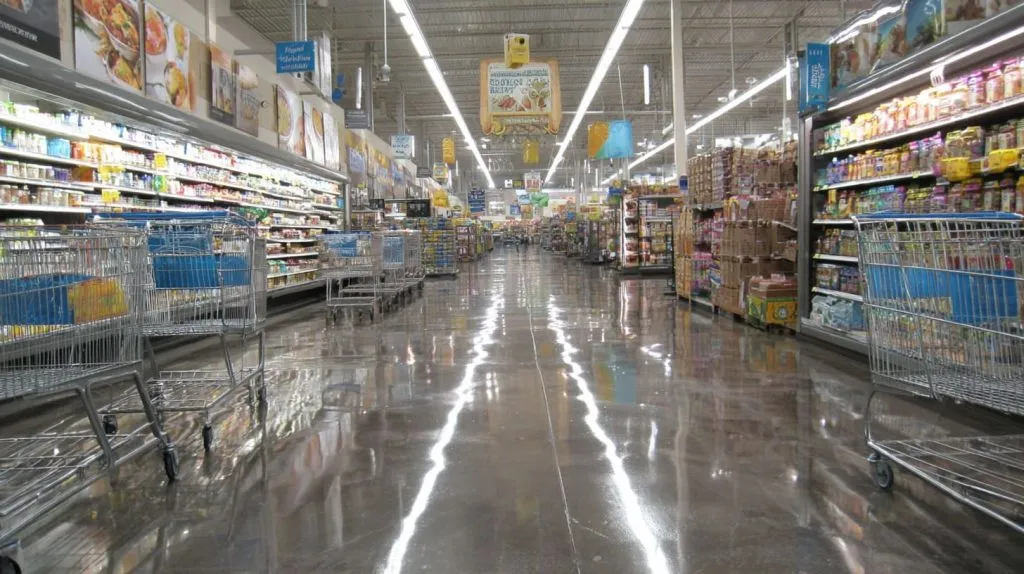
In high-traffic grocery environments, polycarbonate often lasts longest in impact zones, while well-designed acrylic can last a long time in protected premium areas. PETG holds up well for formed guards but may show scratches sooner. PVC lasts well for signage if it’s supported and treated as replaceable.
Longevity is a mix of material + environment
| Environment | Best long-life choice | Why |
|---|---|---|
| Checkout lane, cart hits | PC | impact resistance |
| Premium shelf risers (protected) | Acrylic | clarity + stiffness |
| Curved guards with handling | PETG or PC | forming + toughness |
| Promo signage (replaceable) | PVC | low cost + print |
What I do to extend life without changing plastic
- add corner radiuses
- avoid thin edges
- use better mounting support
- make “scratch-prone” panels replaceable
Conclusion
Acrylic, PETG, PVC, and polycarbonate all belong in grocery displays—just in different places. I choose based on impact, cleaning, forming, and how long the display must look good. If you share your use case, I can help map the right plastic and thickness for your fixture at Feilong Acrylic (flacrylic.com, info@xflacrylic.com).