Skip to content
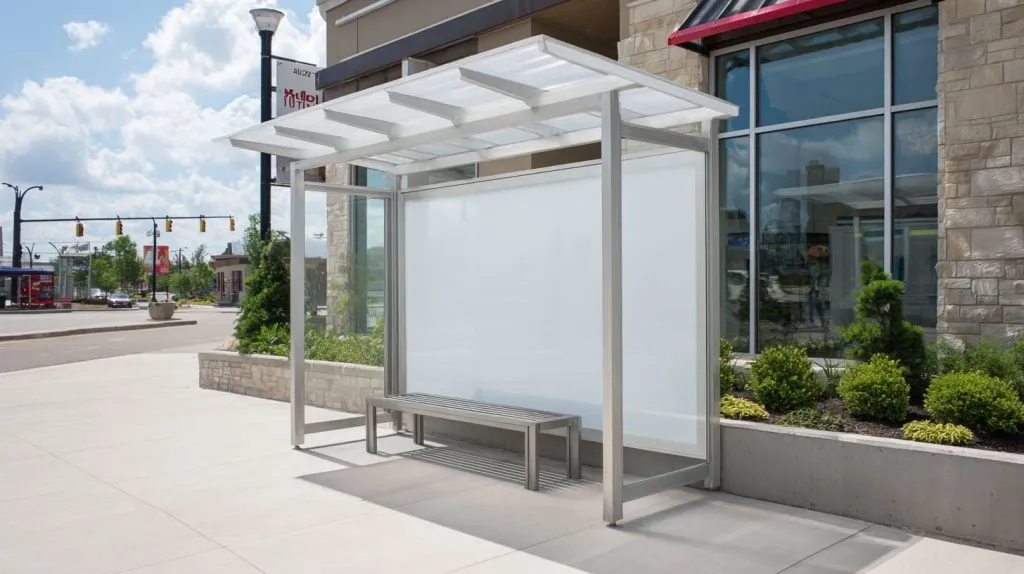
Outdoor plastic looks simple from a distance.
A sign board outside a shop.
A clear cover over a machine.
A playground panel under the sun.
A waterproof box fixed on a wall.
But once I started working with custom acrylic products, I learned one hard truth: outdoor use is not gentle. Sunlight does not care about beauty. Rain does not care about polish. Heat, cold, dust, wind, and cleaning chemicals all test the material every day.
A plastic part may look perfect in the factory. The edge may be polished. The surface may be clean. The color may look rich. But after six months outside, the real story begins.
Some plastics become yellow.
Some turn brittle.
Some warp.
Some crack near screws.
Some lose their shine.
Some survive for years with only basic cleaning.
That is why choosing the best plastic for outdoor use is not just a material question. It is a judgment question.
A buyer may ask, “Which plastic is best for outdoor use?”
I usually ask back in my mind, “Outdoor where? Under direct sunlight? Near the sea? In snow? On a machine? For display? For safety? For appearance?”
The answer changes.
For outdoor signs, I may think about clarity and UV resistance first.
For industrial enclosures, I may care more about impact strength and heat stability.
For playground parts, I may focus on toughness and safety.
For display panels, I may balance beauty, cost, and weather resistance.
This is where many projects go wrong: people choose plastic by name, but outdoor performance depends more on the grade, design, thickness, additives, and real working environment.
In this article, I will walk through the best plastics for outdoor use from a practical point of view. I will talk about acrylic, polycarbonate, HDPE, PP, PVC, ASA, PETG, and how I would compare them in real projects.
Not as a textbook.
More like a factory conversation.
The kind of conversation I would have with a serious buyer like Jacky, who already knows manufacturing, has visited factories, and does not want a sweet answer. He wants the right answer.
And sometimes, the right answer is not the most expensive material. It is the material that fits the outdoor job without creating trouble later.
Before we talk about each plastic, we need to look at the properties that truly matter outside. Because outdoor failure rarely comes from one big mistake. It usually comes from several small details ignored at the beginning.
Key Properties Required for Outdoor Plastics
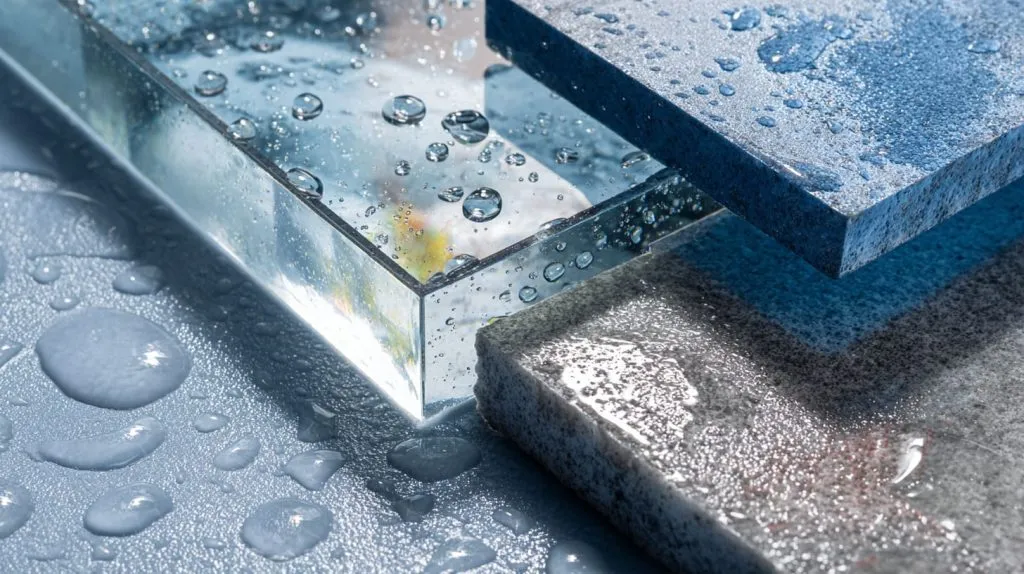
Outdoor plastics must deal with many enemies at the same time. Sunlight attacks the surface. Rain tests the material. Heat expands it. Cold makes it shrink. Screws create stress. Cleaning chemicals leave marks. Even dust can slowly dull a beautiful surface.
I do not judge outdoor plastics only by how they look on day one; I pay more attention to what could happen after one hot summer, one cold winter, and several rounds of cleaning.
That is the difference between choosing a material for a sample and choosing a material for a real product.
UV Resistance
UV resistance is one of the first things I think about for outdoor use.
Sunlight contains ultraviolet light. UV can slowly break down many plastics. The part may lose color. The surface may become chalky. The plastic may turn yellow. It may also become brittle.
For clear plastic, this problem is very easy to see. A clear panel that turns yellow makes the whole product look old. For colored plastic, fading can also hurt the brand image.
A simple example:
If a clear outdoor sign panel is made from the wrong material, the first sample may look beautiful. But after months under strong sunlight, the color may shift. The surface may lose gloss. The customer may think the product was poorly made, even if the factory made it exactly as requested.
That is painful. Because the problem was not only production. It was material selection.
| UV Performance Factor | Why It Matters | Practical Risk |
|---|---|---|
| Natural UV resistance | Some plastics resist sunlight better by nature | Lower risk of yellowing and cracking |
| UV stabilizers | Additives help slow down UV damage | Performance depends on grade |
| Color choice | Dark or bright colors may fade differently | Brand color may change outdoors |
| Surface coating | Coating can add protection | Extra cost and process control needed |
| Exposure level | Full sun is very different from shaded outdoor use | Wrong judgment leads to early failure |
Acrylic usually performs well outdoors, especially for signs and display panels. Polycarbonate often needs UV protection because standard grades may yellow faster. ASA is known for better UV resistance than ABS. HDPE can work outdoors, but outdoor grades usually need UV stabilizers.
The small trap here is the word “outdoor.”
A product under a roof and a product under direct desert sun are both “outdoor,” but they are not the same project.
Weather and Moisture Resistance
Outdoor plastics also need to handle rain, humidity, snow, and sometimes salt air.
Some materials absorb more moisture than others. Some stay stable. Some swell slightly. Some become weak around edges or fasteners. In most acrylic display projects, water itself is not the biggest enemy. The bigger problem is water plus poor design.
For example, if water stays inside a joint, it can create marks. If a display box has no drainage plan, moisture may stay trapped. If a panel edge is not protected, dirt and water may slowly collect there.
| Outdoor Condition | Possible Effect on Plastic | Design Detail I Watch |
|---|---|---|
| Heavy rain | Water enters gaps or joints | Sealing, overlap, drainage |
| High humidity | Condensation inside clear covers | Ventilation and material choice |
| Snow and ice | Expansion pressure and cracking risk | Wall thickness and flexibility |
| Coastal air | Salt and corrosion around metal parts | Fastener choice and plastic grade |
| Standing water | Staining, dirt buildup, mold risk | Avoid flat water-trap surfaces |
A plastic may be moisture-resistant, but the finished product may still fail if the design traps water. This is why I always separate material performance from product performance.
They are related, but they are not the same.
Mechanical Strength and Impact Resistance
Outdoor products can be hit, dropped, pushed, or bent.
Wind can shake signage. Workers may bump into machine covers. Children may climb on playground panels. Delivery workers may stack or move outdoor parts roughly. Real life is not gentle.
Polycarbonate is strong in impact resistance. This is why it is often used for protective panels, machine guards, and tough covers. Acrylic is rigid and clear, but it is not as impact-resistant as polycarbonate. HDPE is tough and flexible. PP is lightweight and can be useful, but it may need UV support outdoors.
Here is a simple comparison:
| Material | Strength Style | Outdoor Risk |
|---|---|---|
| Acrylic | Rigid, clear, good surface appearance | Can crack under strong impact |
| Polycarbonate | Very high impact resistance | May need UV protection |
| HDPE | Tough, flexible, moisture-resistant | Surface may look less premium |
| PP | Light, chemical-resistant | UV aging if not stabilized |
| PVC | Durable, weather-resistant | Can become brittle in some conditions |
| ASA | Good weathering and toughness | Higher cost than standard ABS |
I often think of acrylic like a clean glass office door. It looks sharp and professional. But I would not use it where people keep hitting it.
Polycarbonate feels more like a safety shield. It may not always look as premium as acrylic, but it can take more abuse.
Chemical Resistance
Outdoor plastics may touch more chemicals than people expect.
Cleaning sprays.
Air pollution.
Oil mist.
Fertilizer.
Pool chemicals.
Salt.
Industrial dust.
A buyer may only think about rain and sunlight. But I also ask what kind of cleaning method will be used. A clear plastic panel can be ruined by the wrong cleaner. Acrylic, for example, should not be cleaned with harsh solvents. Some chemicals can cause crazing, which looks like tiny cracks inside the surface.
| Chemical Source | Common Location | Possible Problem |
|---|---|---|
| Alcohol cleaners | Retail and public spaces | Surface dulling or cracking on some plastics |
| Solvent cleaners | Industrial areas | Crazing, whitening, surface damage |
| Salt spray | Coastal projects | Fastener corrosion and surface residue |
| Oils and grease | Machine covers | Staining or softening risk |
| Chlorine | Pools and cleaning areas | Color and surface damage |
A plastic may pass outdoor weather tests, but a wrong cleaning habit can still destroy the appearance. This is a small detail that many buyers miss because cleaning happens after delivery, not during quotation.
Thermal Stability
Outdoor temperature can change a lot.
A plastic panel can sit under direct sun and become much hotter than the air around it. At night, the temperature drops. The material expands and shrinks again and again.
This matters for large panels, signs, and covers.
If the design does not allow movement, stress can build up around screw holes. Then cracks appear. The buyer may blame the material, but the real cause may be poor mounting design.
| Thermal Issue | What Can Happen | Practical Solution |
|---|---|---|
| Heat expansion | Panel bends or pushes against frame | Leave proper gap |
| Cold shrinkage | Screw holes become stressed | Use suitable hole size |
| Direct sunlight | Surface gets hotter than expected | Choose proper thickness and color |
| Fast temperature change | Warping or cracking risk | Avoid sharp corners and tight fixing |
| Dark colors | Absorb more heat | Check shape and mounting method |
I once saw a clear outdoor panel mounted too tightly with screws. The material itself was not bad. The problem was that the panel had no room to move. After sun exposure and temperature changes, cracks started from the holes.
It was not dramatic. It was just physics doing its quiet work.
And this is why material choice alone is never enough. Now let’s look at the common plastics used outdoors and where each one makes sense.
Common Plastics Suitable for Outdoor Use
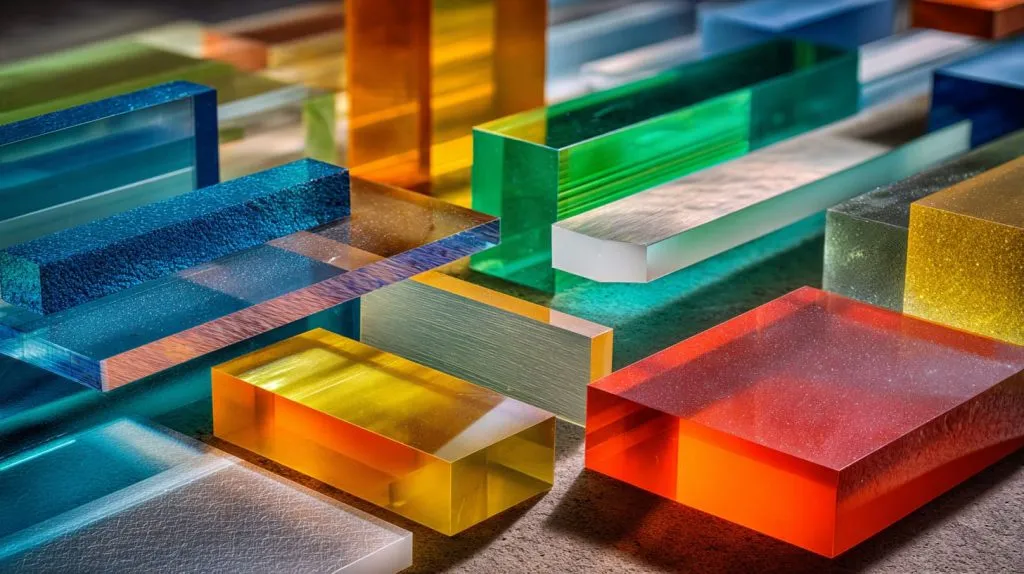
There is no single “best” plastic for every outdoor job. Each plastic has its own personality. Some are clear and beautiful. Some are tough. Some are cheap and practical. Some are better for industrial use. Some are better for signs and displays.
When I choose between outdoor plastics, I do not ask which material is famous; I ask which weakness I can accept and which weakness I cannot accept.
That question keeps many projects away from expensive mistakes.
Polycarbonate (PC)
Polycarbonate is often chosen when impact resistance matters.
It is tough. It can handle strong hits better than acrylic. It is also available in clear sheets, so it can be used where visibility is needed. For outdoor protective covers, machine guards, security glazing, and strong panels, PC is often a serious option.
But PC is not perfect.
Standard polycarbonate can yellow under UV exposure if it does not have proper UV protection. For outdoor use, UV-stabilized or coated PC is usually the safer choice. This adds cost, but it also protects the product life.
| Polycarbonate Strength | Why Buyers Like It |
|---|---|
| High impact resistance | Good for safety and protection |
| Good clarity | Useful for clear covers and panels |
| Flexible compared with acrylic | Less likely to crack under impact |
| Can be formed | Useful for covers and shaped parts |
| Available in UV grades | Better outdoor life when specified correctly |
| Polycarbonate Weakness | What I Watch |
|---|---|
| Can yellow without UV protection | Need outdoor-grade material |
| Easier to scratch than some expect | May need hard coating |
| Higher cost than acrylic in many cases | Must match budget and risk |
| Thermal expansion | Mounting design matters |
For a clear outdoor safety cover, I may choose polycarbonate over acrylic if impact is the main risk. But if the main need is beautiful clarity for a premium sign face, acrylic may still be better.
That is the trade-off.
Acrylic (PMMA)
Acrylic is close to my daily work, so I have a soft spot for it. But I also know where it should and should not be used.
Acrylic offers excellent optical clarity. It looks clean, bright, and premium. It also has good natural weather resistance. This is why acrylic is widely used in outdoor signs, display panels, light covers, decorative panels, and brand fixtures.
For B2B custom products, acrylic is attractive because it can be laser cut, CNC machined, polished, bent, bonded, printed, and assembled into many shapes.
| Acrylic Strength | Practical Value |
|---|---|
| Excellent clarity | Good for display and signage |
| Good UV resistance | Better appearance outdoors |
| Rigid surface | Clean and premium look |
| Easy to fabricate | Good for custom designs |
| Good color options | Useful for branding |
| Acrylic Weakness | What I Watch |
|---|---|
| Lower impact resistance than PC | Avoid high-impact areas |
| Can crack near stress points | Design screw holes carefully |
| Sensitive to some cleaners | Need cleaning instructions |
| Can scratch | Surface care matters |
Acrylic is a strong choice when appearance matters. It is not the best material for every outdoor shock or abuse condition, but it is often a very balanced choice for signs and visual products.
For example, if a retail brand needs an outdoor display panel with clear edges and a premium look, acrylic may be a good fit. If the same panel will be hit by carts every day, I would think twice.
High-Density Polyethylene (HDPE)
HDPE is a practical outdoor material.
It is not fancy. It does not have acrylic’s glass-like look. But it is tough, moisture-resistant, and widely used in outdoor products. You can find HDPE in playground equipment, outdoor containers, cutting boards, marine parts, and some outdoor furniture.
HDPE resists many chemicals and does not absorb much water. It also handles impact well because it has a more flexible nature.
| HDPE Strength | Why It Works Outdoors |
|---|---|
| Excellent moisture resistance | Good for wet environments |
| Good chemical resistance | Useful in industrial and outdoor areas |
| Tough and flexible | Less brittle under impact |
| Lightweight | Easy handling and installation |
| Good for thick parts | Common in rugged outdoor items |
| HDPE Weakness | Practical Concern |
|---|---|
| Lower surface gloss | Not ideal for premium clear display |
| Harder to bond | Mechanical fixing often needed |
| Can expand with heat | Design must allow movement |
| UV grades needed outdoors | Standard grade may age faster |
HDPE is a good example of a material that may not impress in a showroom but performs well in rough outdoor life. It is not always beautiful, but it can be dependable.
Polypropylene (PP)
Polypropylene is lightweight and chemical-resistant. It is used in many products because it is cost-effective and flexible in processing.
For outdoor use, PP needs careful grade selection. Standard PP may become brittle under UV exposure. UV-stabilized PP can work better outdoors, but the buyer must specify it clearly.
| PP Strength | Practical Use |
|---|---|
| Lightweight | Easy to move and install |
| Chemical-resistant | Good for certain containers and parts |
| Good fatigue resistance | Useful for living hinges and flexible parts |
| Cost-friendly | Good for large volume projects |
| Moldable | Useful for injection molded parts |
| PP Weakness | Outdoor Risk |
|---|---|
| Poor UV resistance without additives | Can crack or fade |
| Lower stiffness than some plastics | May need ribs or thicker design |
| Surface may look basic | Not ideal for premium display |
| Heat movement | Must consider part shape |
PP can be a good outdoor choice when cost, weight, and chemical resistance matter. But I would not blindly use normal PP for long-term sun exposure.
That small detail matters a lot.
PVC (Rigid and Flexible)
PVC is common in outdoor applications. Rigid PVC is used in pipes, profiles, panels, and some signage materials. Flexible PVC appears in covers, sheets, and protective parts.
PVC offers good weather resistance and is relatively cost-effective. It is also easy to process in many industrial uses.
| PVC Strength | Outdoor Value |
|---|---|
| Good weather resistance | Common in construction and outdoor parts |
| Chemical resistance | Useful in many industrial settings |
| Cost-effective | Good for budget-sensitive projects |
| Available in rigid and flexible forms | Wide application range |
| Easy to fabricate | Suitable for panels and profiles |
| PVC Weakness | What Needs Attention |
|---|---|
| Can become brittle in cold or aging | Grade matters |
| Appearance may not be premium | Not always right for display products |
| Environmental concerns | Buyer may ask about compliance |
| Heat sensitivity | Not ideal for high heat areas |
PVC can be a good workhorse material. It is not always the best for luxury appearance, but it is often practical.
For outdoor signs, PVC foam board may be used for printed signs. For clear premium signs, acrylic may be better. For pipes and structural profiles, PVC often makes more sense.
Specialty Polymers: ASA and PETG
Some projects need more specific choices.
ASA is often seen as a better outdoor alternative to ABS. ABS is popular, but it does not perform well under UV unless modified. ASA offers better weather resistance and is used in automotive trim, outdoor housings, and exterior plastic parts.
PETG is clear, tough, and easier to process than some materials. It has good impact resistance, but its outdoor UV performance is not usually as strong as acrylic unless protected or selected carefully.
| Material | Main Outdoor Advantage | Main Concern |
|---|---|---|
| ASA | Strong weather and UV resistance | Higher cost than ABS |
| PETG | Clear, tough, easy to form | UV stability needs attention |
| UV-stabilized ABS | Better than normal ABS outdoors | Still not always best long-term |
| Coated plastics | Improved surface life | Cost and coating quality |
ASA can be a smart choice for molded outdoor housings where color and weather resistance matter. PETG can be useful where forming and impact resistance are needed, but I would check UV exposure carefully before choosing it for long-term outdoor display.
A material name gives us the first clue. But comparison gives us the real answer. So now I want to put these materials side by side and look at the trade-offs buyers usually face.
Comparing Plastics for Outdoor Applications
Comparing outdoor plastics is not about finding the winner. It is about finding the best fit.
A buyer may say, “I want the strongest material.”
But strongest in what way?
Strong against impact?
Strong against sunlight?
Strong against chemicals?
Strong against bending?
Strong against customer complaints?
The answer changes quickly.
The mistake I try to avoid is paying for a strength that the project does not need while ignoring the weakness that can actually cause failure.
Durability vs. Cost
Cost is always part of the decision. Even serious buyers with good budgets still care about value. The problem is that cheaper material can become expensive if it fails early.
A low-cost plastic may save money at purchase. But if it yellows, cracks, or needs replacement, the total cost becomes higher.
| Material | Typical Cost Feeling | Durability Feeling | Best Fit |
|---|---|---|---|
| Acrylic | Medium | Good outdoors, great appearance | Signs, display panels |
| Polycarbonate | Medium to high | Very strong impact, needs UV grade | Protective covers, safety panels |
| HDPE | Low to medium | Tough and moisture-resistant | Outdoor furniture, containers |
| PP | Low to medium | Good if UV-stabilized | Molded outdoor parts |
| PVC | Low to medium | Good general weather resistance | Panels, pipes, profiles |
| ASA | Medium to high | Strong UV/weather performance | Outdoor housings |
Acrylic may cost more than some basic plastics, but it may reduce appearance complaints. Polycarbonate may cost more, but it may prevent breakage. HDPE may not look premium, but it may survive rough use.
So the real question is not “Which one is cheapest?”
The real question is “Which failure can I not afford?”
Transparency and Aesthetics
For some outdoor products, appearance is the product.
A sign must stay clear.
A display panel must look clean.
A protective cover must allow people to see inside.
A branded fixture must not look cheap after a few months.
For this kind of use, acrylic and polycarbonate are often compared.
| Feature | Acrylic | Polycarbonate |
|---|---|---|
| Clarity | Excellent | Good |
| Surface look | Premium, glass-like | Practical, slightly less premium |
| Impact resistance | Medium | Very high |
| UV performance | Good in many outdoor grades | Needs UV protection |
| Scratch resistance | Better than PC in some cases, but still can scratch | Often scratches more easily |
| Best use | Signs, displays, decorative panels | Safety covers, protective panels |
Acrylic often wins when visual quality matters most. Polycarbonate often wins when breakage risk matters most.
A buyer may want both. I understand that. But outdoor design often forces a choice. Beauty and toughness can overlap, but they are not always equal.
Ease of Fabrication
A good outdoor plastic must not only survive outside. It must also be made into the right shape.
This is where factory work becomes important.
Some materials are easy to cut and polish. Some are easier to thermoform. Some are hard to bond. Some need mechanical fixing. Some need molds. Some need special tools.
| Material | Cutting | Bending/Forming | Bonding | Notes |
|---|---|---|---|---|
| Acrylic | Excellent | Good | Good | Great for custom display and signage |
| Polycarbonate | Good | Good | More careful | Tough but scratches easier |
| HDPE | Good | Limited for fine display | Difficult | Often needs screws or welding |
| PP | Good in molded parts | Good in injection molding | Difficult | Better for molded products |
| PVC | Good | Good | Good | Practical for panels and profiles |
| ASA | Good for molded/extruded parts | Depends on process | Depends on grade | Common in outdoor housings |
For Feilong Acrylic, custom acrylic work benefits from acrylic’s processing flexibility. Laser cutting, CNC shaping, polishing, bonding, printing, and assembly all matter. A beautiful design on paper still needs a material that can be processed cleanly.
This is why I sometimes prefer a material that is slightly less “powerful” on paper but more stable in real production.
Environmental and Safety Considerations
Outdoor plastic selection is also affected by compliance, recycling, safety, and buyer expectations.
Some buyers ask about eco-friendly materials. Some ask about RoHS or other compliance. Some care about recyclability. Some need food contact approval. Some need fire resistance. Some only care about outdoor life and cost.
None of these questions should be ignored.
| Concern | Why It Matters | Buyer Question |
|---|---|---|
| Recyclability | End-of-life planning | Can this material be recycled? |
| Chemical safety | Public contact or sensitive use | Is it safe for this environment? |
| Fire behavior | Electrical or public use | Does it need flame-retardant grade? |
| Weather aging | Long-term waste reduction | Will it need frequent replacement? |
| Cleaning safety | Daily maintenance | Can staff clean it safely? |
A product that lasts longer can sometimes be the more responsible choice, even if the material costs more at the beginning. But this depends on the project.
For example, a cheap sign panel replaced every year may create more waste and more labor than a better panel used for several years.
The comparison is useful, but buyers still need action steps. So next I want to talk about how to extend outdoor plastic life after the material is chosen.
Tips for Extending Outdoor Plastic Life
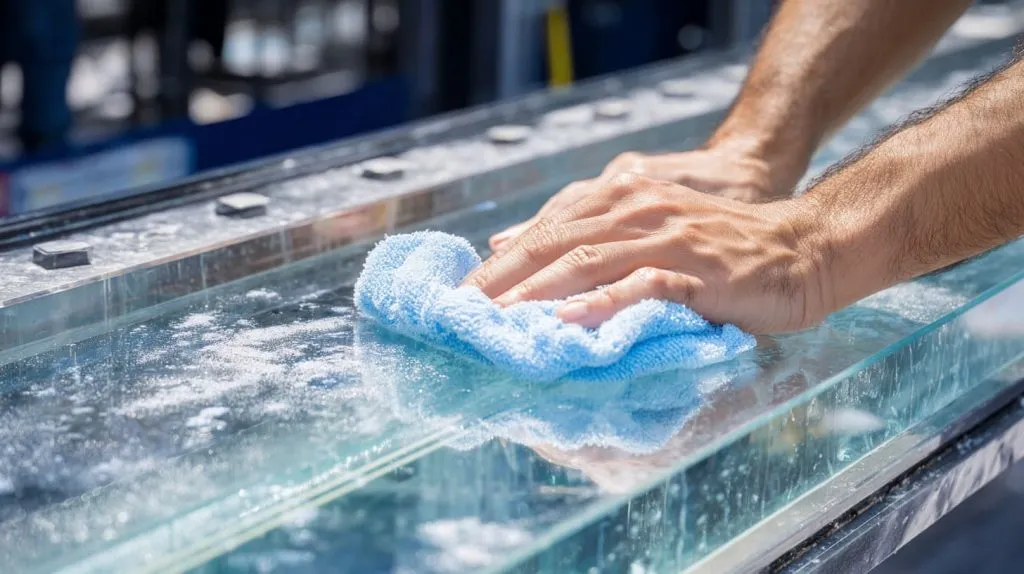
Outdoor plastic life depends on more than the plastic itself.
A good material with bad design can still fail.
A good design with wrong cleaning can still look old.
A good surface with poor installation can still crack.
This part is less exciting than choosing materials, but it saves real money.
A detail I always respect is stress; even a strong plastic can fail early if the design keeps pulling, squeezing, or locking it in the wrong position.
Proper Material Selection
The first step is matching the plastic to the environment.
I do not like choosing material from a general list. I like choosing it from the use case.
Here are the questions I would ask before making a decision:
| Question | Why I Ask |
|---|---|
| Will it face direct sunlight every day? | UV resistance becomes critical |
| Is it near the sea? | Salt, humidity, and metal parts matter |
| Will people touch or hit it? | Impact resistance becomes important |
| Does it need to stay clear? | Acrylic or PC may be needed |
| Will it be cleaned often? | Chemical resistance matters |
| Is the product large? | Thermal expansion matters |
| Is appearance more important than toughness? | Acrylic may be preferred |
| Is safety more important than clarity? | Polycarbonate may be preferred |
For a small outdoor acrylic sign in a shaded area, acrylic may be enough. For a large clear guard near people or machines, polycarbonate may be safer. For a rough outdoor storage part, HDPE may make more sense.
The best material is not always the strongest. It is the most suitable.
Additives and Coatings
Many outdoor plastics use additives to improve performance.
UV absorbers help slow sunlight damage. Anti-oxidants help reduce aging. Pigments can improve or reduce weather performance depending on the grade. Hard coatings can improve scratch resistance. Protective films can help during transport and installation.
| Protection Method | Main Benefit | Possible Concern |
|---|---|---|
| UV stabilizer | Slows sunlight aging | Must be specified clearly |
| UV coating | Protects surface | Coating quality matters |
| Hard coating | Better scratch resistance | Adds cost |
| Anti-oxidant | Helps reduce aging | Grade-dependent |
| Protective film | Prevents scratches before use | Must be removed properly |
| Paint or surface finish | Adds weather protection | Adhesion must be tested |
A coating is not magic. A poor coating can peel, crack, or look uneven. So I treat coatings as another process that needs control, not just a selling point.
For acrylic signs, material selection and surface protection both matter. For polycarbonate, UV coating can be very important. For PP and HDPE, UV-stabilized grades are often needed for outdoor life.
Design Considerations
Design can make or break outdoor plastic parts.
The material may be correct, but the shape may create stress. Sharp inside corners can become crack points. Tight screw holes can create pressure. Large flat panels can warp. Thin walls can bend. Poor drainage can trap water.
| Design Detail | Risk If Ignored | Better Practice |
|---|---|---|
| Screw holes too tight | Cracks around holes | Use larger holes or washers |
| Sharp corners | Stress cracks | Add radius |
| Large flat panel | Warping | Add ribs or thickness |
| No drainage | Water stains or damage | Add slope or holes |
| Thin wall | Weak structure | Increase thickness |
| Tight frame | Expansion stress | Leave movement gap |
| Mixed materials | Different expansion rates | Check assembly design |
For outdoor acrylic products, I pay close attention to holes, edges, and bonding areas. A polished edge looks beautiful, but the structure still needs enough support.
For polycarbonate covers, I watch expansion and scratch protection. For HDPE, I watch heat movement and fastening because it can expand more than people expect.
A small design change can extend product life more than a big material upgrade.
Maintenance Practices
Maintenance sounds boring, but it matters a lot.
Acrylic can look beautiful for years if cleaned correctly. It can also be damaged quickly by rough cloth and harsh cleaners. Polycarbonate can scratch if cleaned carelessly. Outdoor plastics collect dust, rain spots, bird droppings, and pollution.
| Maintenance Action | Good Practice | Avoid |
|---|---|---|
| Cleaning acrylic | Soft cloth, mild soap, water | Alcohol, ammonia, rough cloth |
| Cleaning PC | Gentle cleaner, microfiber cloth | Abrasive pads |
| Inspecting signs | Check cracks and loose screws | Waiting until failure |
| Removing stains | Clean early | Letting dirt bake under sun |
| Handling panels | Lift with support | Dragging on rough surfaces |
| Storage before install | Keep film on, avoid heat | Stacking under direct sun |
I like to give simple cleaning guidance when products are shipped. It is not fancy. But it helps the buyer avoid avoidable problems.
A good outdoor product should not need complicated care. But it still needs reasonable care.
Now that we have the material and life-extension ideas clear, let’s look at where these plastics are used in real outdoor applications.
Applications and Case Examples
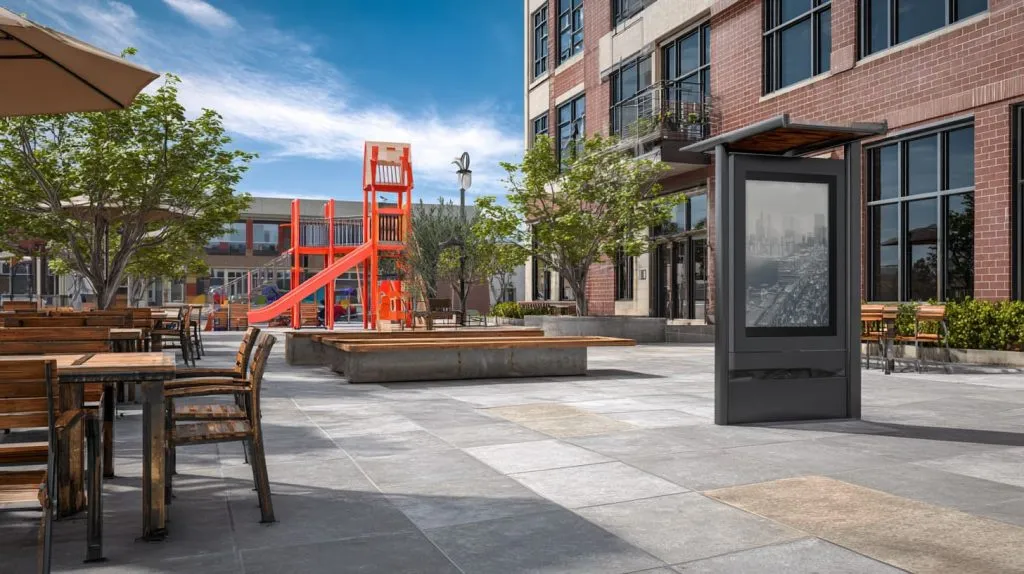
Outdoor applications show the real personality of each plastic.
A material that works well for a sign may not work for a playground. A material that works for a machine cover may not look good enough for a retail brand panel. The final use always gives the material its meaning.
When I review an outdoor project, I picture the person who will touch, clean, install, or complain about the product, because that person often reveals the risk better than the drawing does.
Outdoor Signage
Outdoor signage is one of the most common uses for acrylic and other plastics.
Acrylic is popular because it looks clear and premium. It can be cut into letters, printed, polished, and used in illuminated signs. It handles outdoor exposure well when the correct grade and design are used.
Polycarbonate is also used when impact resistance is needed. For example, a sign cover in a public area may need to resist vandalism or accidental hits.
| Signage Need | Better Material Choice | Reason |
|---|---|---|
| Premium clear sign face | Acrylic | Better clarity and appearance |
| Impact-prone sign cover | Polycarbonate | Stronger impact resistance |
| Low-cost printed board | PVC foam board | Cost-effective and easy to print |
| Outdoor molded letters | ASA or acrylic | Weather resistance and appearance |
| Illuminated panel | Acrylic or PC | Depends on clarity and toughness |
For retail signs, acrylic often creates a sharper look. For public safety covers, PC may be safer. For temporary outdoor signage, PVC may be enough.
The right choice depends on how long the sign must last and what kind of image the brand wants.
Outdoor Furniture and Decking
Outdoor furniture needs a different way of thinking.
People sit on it. Rain hits it. Sun heats it. Cleaning staff may wash it. It may stay outside all year. Appearance matters, but toughness and moisture resistance matter more.
HDPE is often used for outdoor furniture because it resists water and handles rough conditions. PP may be used in molded chairs or outdoor parts, especially when UV-stabilized.
| Furniture Requirement | Suitable Plastic | Why |
|---|---|---|
| Moisture resistance | HDPE | Low water absorption |
| Flexible molded parts | PP | Lightweight and cost-effective |
| Premium clear parts | Acrylic | Good visual effect, but use carefully |
| Tough panels | HDPE or PC | Better impact performance |
| Color stability | UV-stabilized HDPE/PP/ASA | Better outdoor aging |
Acrylic can be used in outdoor furniture parts, especially decorative panels or modern clear pieces. But I would be careful with load-bearing parts or places with strong impact.
A beautiful acrylic table can look amazing on a patio. But if it will be moved roughly every day in a commercial space, the design and thickness must be carefully checked.
Industrial Enclosures and Covers
Industrial outdoor enclosures must protect what is inside.
This can include electrical parts, sensors, controls, machines, or monitoring devices. In this case, the material must resist weather, impact, heat, and sometimes chemicals.
Polycarbonate is widely used for electrical enclosures because it offers impact resistance and can be made in weather-resistant grades. PVC can also be used for panels, covers, and industrial parts. ASA is useful for outdoor housings where UV resistance and molded appearance matter.
| Industrial Need | Common Material | Key Reason |
|---|---|---|
| Clear inspection cover | Polycarbonate | Impact-resistant and visible |
| Weather-resistant housing | ASA or PC | Good outdoor durability |
| Chemical-resistant part | HDPE or PP | Good chemical resistance |
| Cost-effective panel | PVC | Practical and easy to process |
| Premium visible cover | Acrylic | Clear appearance, lower impact use |
For enclosures, I care a lot about sealing, wall thickness, screw bosses, and thermal movement. The plastic sheet or resin may be good, but the enclosure can still leak or crack if the structure is weak.
A waterproof claim means little if the gasket groove, screw force, and panel stiffness are not controlled.
Playground and Recreational Equipment
Playground products are rough-use products.
Children climb, kick, scratch, and hit them. Sunlight attacks them all day. Rain and dirt stay on the surface. Safety is more important than a perfect glossy look.
HDPE is widely used in playground panels because it is tough, moisture-resistant, and safer for high-contact use. It does not have the same clear look as acrylic, but it performs well in heavy-use areas.
| Playground Need | Suitable Plastic | Why |
|---|---|---|
| Impact resistance | HDPE | Tough and flexible |
| Moisture resistance | HDPE | Good outdoor stability |
| Molded parts | PP | Lightweight and cost-effective |
| Clear protective cover | Polycarbonate | Strong impact resistance |
| Decorative colored panel | UV-stabilized HDPE/ASA | Better weather performance |
I would rarely choose acrylic for a rough playground part. Acrylic is beautiful, but beauty is not the first requirement there. The material must forgive abuse.
That is the honest difference between display thinking and public-use thinking.
Outdoor applications make the decision clearer. The “best plastic” is not one material. It is a match between use, risk, appearance, budget, and production process.
Conclusion
The best plastics for outdoor use are not chosen by a simple ranking.
Acrylic is excellent when clarity, UV resistance, and premium appearance matter.
Polycarbonate is better when impact resistance and safety are more important.
HDPE works well when moisture resistance, toughness, and rough use matter.
PP can be useful when the right UV-stabilized grade is selected.
PVC is practical for panels, profiles, pipes, and cost-sensitive outdoor parts.
ASA is a strong option for outdoor molded housings and weather-resistant parts.
PETG can work in some clear applications, but UV exposure should be checked carefully.
My own view comes from seeing how products age after they leave the factory. A sample can make people happy in a meeting room. But outdoor use is not a meeting room. It is sunlight, dust, rain, screws, cleaning cloths, careless handling, and time.
That is why I never judge outdoor plastic only by the material name. I look at the use environment. I check the exposure. I think about impact. I consider the cleaning method. I look at the mounting design. I ask whether the buyer cares more about beauty, toughness, cost, or long life.
For Feilong Acrylic, this thinking is especially important because we make custom acrylic products for B2B buyers. Many projects are not standard catalog items. They may be outdoor signs, display panels, protective covers, acrylic boxes, custom stands, or brand fixtures. Each one has its own pressure points.
I believe acrylic is one of the best outdoor plastics when the product needs a clean, clear, and professional look. But I also believe good manufacturing means knowing when acrylic is not the best answer. That honesty protects the buyer. It also protects the project.
If you are choosing plastic for an outdoor product, do not start with “Which material is best?”
Start with better questions:
- Where will the product be used?
- How much sunlight will it face?
- Will people touch, hit, or move it?
- Does it need to stay clear?
- What cleaning method will be used?
- How long should it last?
- What kind of failure would be most expensive?
Once those answers are clear, the material choice becomes much easier.
If you need custom acrylic outdoor display parts, signage panels, clear covers, acrylic boxes, or other tailored acrylic products, Feilong Acrylic can help review the structure, material thickness, surface process, and production method before mass production.
A good outdoor product does not happen by accident.
It starts with the right questions.