Skip to content
Acrylic display projects have one funny problem.
They often look beautiful at the cutting stage.
The edges are clean.
The panels are transparent.
The holes look correct.
The surface shines under the workshop light.
Then the real trouble starts.
The team begins assembly, and suddenly the project becomes quiet. Not the good kind of quiet. The kind where one worker looks at another worker and says nothing, because both of them already know something is wrong.
One hole is half a millimeter off.
One slot is too tight.
One metal screw does not sit flat.
One shelf leans forward like it has lost confidence in life.
I have seen this many times in acrylic display projects. A buyer checks the cutting quality and feels safe. A designer checks the drawing and feels safe. A factory checks the first sample and feels safe. But when the order moves into mass production, the product can still fail.
Not because the cutting machine is bad.
It fails because assembly is not just a final step. Assembly is the real test of the whole project.
For buyers like Jacky, who has years of experience purchasing acrylic displays and acrylic boxes from China, this problem is not strange. He may approve a beautiful sample, visit the factory, check the edge polishing, check the material, and still find issues later during packing or installation.
That is the painful part.
The project does not fail loudly at the beginning. It fails quietly near the end, when time is short and the shipment date is close.
The way I judge an acrylic display project is simple: I do not only ask, “Can we cut it?” I ask, “Can we assemble it repeatedly, cleanly, and quickly in bulk without forcing the parts?”
That small question changes everything.
Cutting precision matters. Of course it matters. But for custom acrylic displays, assembly tolerance, hardware coordination, and production sequence often matter more. A product that is easy to cut but hard to assemble is still a risky product.
And once the product is already cut in bulk, every assembly mistake becomes expensive.
Why Is Acrylic Cutting Usually Not the Real Problem?
Many people start by blaming the cutting process.
I understand why.
Cutting is easy to see. A wrong shape looks wrong. A rough edge looks rough. A burnt mark looks ugly. So buyers naturally look at the panels and ask, “Is the cutting accurate?”
That is a fair question.
But it is not the only question.
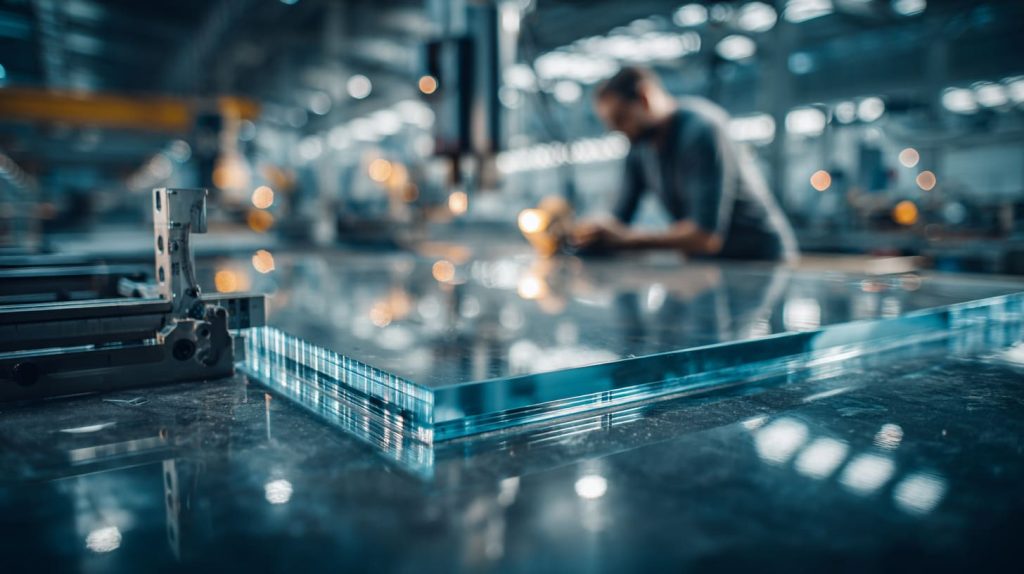
In most professional acrylic factories today, cutting is not usually the weakest part. CNC routers and laser machines are already quite accurate when the drawing is clear, the material is stable, and the operator knows the job.
The more dangerous problems often hide after cutting.
They hide in the joint.
They hide in the screw hole.
They hide in the slot.
They hide in the order of assembly.
For me, the warning sign is not a panel that looks slightly imperfect on the table; the bigger warning sign is a beautiful panel that only fits when a worker pushes it hard by hand.
Modern CNC and Laser Cutting Are Already Highly Accurate
Modern acrylic cutting is much better than many buyers imagine.
A good CNC machine can cut panels with stable dimensions. A good laser machine can create clean edges and smooth shapes. When the drawing is simple, the cutting result can look almost perfect.
But here is the trap.
A cutting machine works on one part at a time. Assembly works with all parts together.
That is a very different game.
A single panel can be within tolerance.
A second panel can also be within tolerance.
A third panel can also be acceptable.
But when all three panels meet in one corner, the small differences can fight each other.
| Stage | What It Checks | Why It Can Still Miss Problems |
|---|---|---|
| Cutting | Single part size and shape | It does not prove the whole display can fit well |
| Edge polishing | Surface and edge beauty | It does not test hole alignment |
| Sample approval | One finished piece | It may hide mass production variation |
| Assembly test | Real fitting of all parts | It shows whether the product can be built repeatedly |
This is why I never treat cutting accuracy as the full answer.
Cutting tells me if the part is right.
Assembly tells me if the project is right.
Most Factories Focus Too Much on Visual Perfection
Acrylic is a very visual material.
It shines.
It reflects light.
It shows scratches easily.
It can look premium when the edges are polished well.
So many factories naturally focus on what buyers can see first.
They show clean edges.
They show bright surfaces.
They show a perfect sample under nice lighting.
I do not think this is wrong. Visual quality matters a lot in acrylic displays, especially for cosmetics, retail, jewelry, and household displays.
But visual beauty can become a mask.
A sample can look excellent in photos but still be difficult to assemble in real production. The surface may be flawless, but the screw hole may not match the metal bracket. The edge may be polished, but the slot may be too tight. The transparent panel may look clean, but it may crack after being forced into position.
This is where buyers need to slow down.
Acrylic display quality has two sides.
| Quality Type | Buyer Can See Easily? | Risk Level |
|---|---|---|
| Surface scratches | Yes | Medium |
| Edge polishing | Yes | Medium |
| Color and transparency | Yes | Medium |
| Hole alignment | Not always | High |
| Assembly pressure | No | High |
| Stress after bending | No | High |
| Packing impact after assembly | No | High |
A beautiful product photo does not prove the product is safe for mass production.
It only proves it can look beautiful once.
Cutting Problems Are Easy to Detect Early
Cutting problems are usually honest problems.
If the size is wrong, people can measure it.
If the edge is burnt, people can see it.
If the shape is incorrect, the drawing can prove it.
Assembly problems are not so honest.
They appear later.
They depend on many parts.
They may only happen when workers assemble 200 pieces, not 2 pieces.
A buyer may not notice the issue during sample approval because the factory may spend more time adjusting one sample. But mass production does not have that luxury. A worker cannot spend 20 minutes adjusting every display if the order has 1,000 pieces.
This is why I always like to separate two questions:
| Question | Meaning |
|---|---|
| Can this product be made? | The sample can be finished |
| Can this product be repeated? | Mass production can stay stable |
| Can this product be assembled fast? | Workers do not need special tricks |
| Can this product survive shipping? | The final structure stays safe after packing |
The first question is easy.
The last three questions decide whether the project will hurt later.
A clean cut can win the buyer’s first trust, but smooth assembly wins the buyer’s repeat order. That is the difference I care about.
The next problem is more painful because it looks small at first. A tiny tolerance issue can act like a small stone inside a shoe. You may ignore it for five steps. After five kilometers, you hate it.
Why Do Acrylic Display Projects Fail During Assembly?
Assembly failure usually does not come from one big mistake.
It comes from many small mistakes shaking hands.
A slot is a little tight.
A screw is a little short.
A panel is a little warped.
A worker uses a little more force.
A package presses the corner a little too hard.
Then the product fails.
This is why assembly problems are hard to explain to buyers. Everyone wants to find one clear reason. But acrylic display failure is often a chain problem.
The project does not break because of one weak link.
It breaks because several “acceptable” details become unacceptable together.
When I review an assembly issue, I first look for the place where workers need to force, twist, press, or “make it fit,” because that is usually where the real design problem is hiding.
Tolerance Stack-Up Becomes a Hidden Disaster
Tolerance stack-up sounds like a technical term, but the idea is very simple.
Each part has a small difference from the drawing.
One small difference is okay.
Many small differences together can become a big problem.
For example, a cosmetic display may have several shelves, side panels, back panels, logo panels, and support pieces. Each part may only be off by 0.2 mm or 0.3 mm. That sounds tiny.
But after five or six pieces are assembled together, the final structure may be off by 1 mm or more.
For acrylic, 1 mm can be a lot.
It can make a slot too tight.
It can make a shelf uneven.
It can make a screw hole miss the insert.
It can make the whole display lean slightly.
| Small Issue | Looks Serious Alone? | What Happens After Assembly |
|---|---|---|
| Slot is 0.3 mm tight | No | Panel needs force |
| Hole is 0.5 mm off | Maybe | Screw cannot enter smoothly |
| Shelf width varies 0.5 mm | No | Side panels bend outward |
| Back panel is slightly warped | No | Whole display twists |
| Glue position shifts | No | Final structure becomes uneven |
This is why large displays are more risky than simple flat products.
A small acrylic sign holder may be easy. A large multi-layer cosmetic display is different. It has more joints. More joints mean more chances for tolerance problems.
And tolerance problems love complicated designs.
Hardware and Acrylic Often Do Not Match Perfectly
Acrylic parts are one side of the story.
Hardware is the other side.
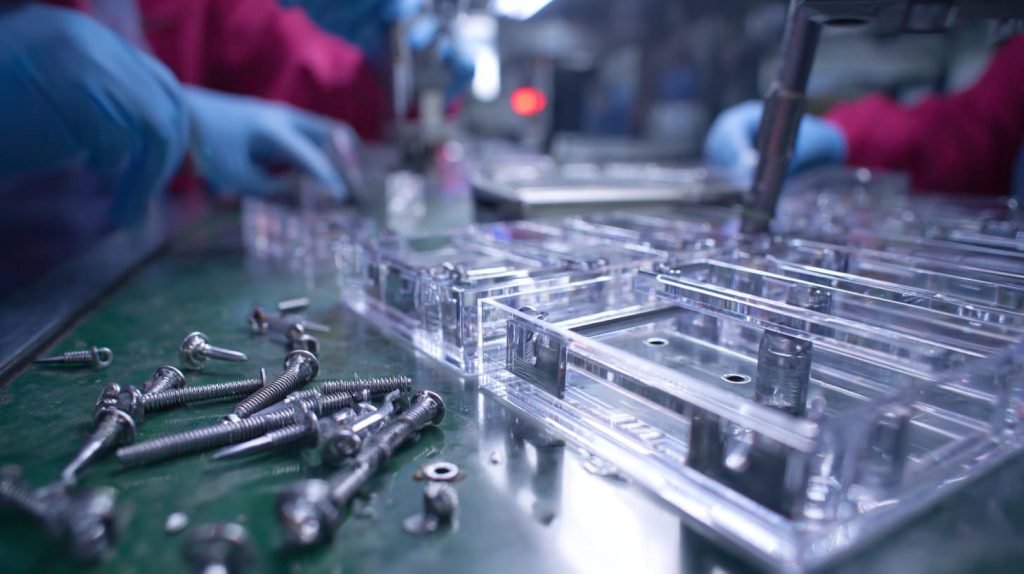
Many acrylic displays use screws, metal rods, magnets, hinges, standoffs, LED parts, or aluminum brackets. Each hardware part has its own tolerance. If the acrylic part and the hardware part do not match well, the assembly becomes messy.
This is very common with imported hardware or customer-specified hardware.
A buyer may send a drawing with a screw size. The factory may cut holes based on that size. But the actual screw head, washer, or threaded insert may behave differently during assembly.
This is where “same size” does not always mean “same fit.”
| Hardware Part | Common Assembly Risk |
|---|---|
| Screw | Hole too tight or screw angle not stable |
| Metal bracket | Hole position does not match acrylic panel |
| Magnet | Magnet cavity too loose or too tight |
| Hinge | Door gap becomes uneven |
| LED strip | Space is too narrow for wires |
| Standoff | Acrylic cracks if pressure is too high |
Acrylic is not metal.
It does not forgive pressure in the same way. If a screw is forced into metal, metal may survive. If a screw is forced into acrylic, the acrylic may crack now or later.
That “later” part is nasty.
The product may pass factory inspection. Then it travels by sea. Temperature changes. The package vibrates. The stress grows slowly. When the customer opens the box, a crack appears around the screw hole.
Nobody likes that conversation.
Acrylic Material Behavior Changes During Production
Acrylic looks stable, but it is not a stone.
It reacts to heat.
It reacts to stress.
It reacts to bending.
It reacts to solvents and glue.
Laser cutting creates heat. Bending also uses heat. Polishing can add heat. If the product has tight fitting areas, these small changes can affect final assembly.
Cast acrylic and extruded acrylic can also behave differently. Cast acrylic is usually better for many custom display projects because it often has better optical quality and better machining behavior. Extruded acrylic can be more consistent in thickness in some cases, but it may also react differently when cut, polished, or glued.
The material choice should not be treated as a small purchasing detail.
It affects the whole assembly experience.
| Material Factor | Assembly Impact |
|---|---|
| Thickness variation | Slots may become too tight or too loose |
| Internal stress | Cracks may appear near holes |
| Heat from laser cutting | Edges may slightly deform |
| Bending process | Angles may shift after cooling |
| Glue reaction | White marks or stress cracks may appear |
| Sheet batch difference | Mass production may not match sample exactly |
This is why I do not like designs that rely on “perfect material behavior.”
Acrylic is beautiful, but it is still a real material in a real workshop. It needs breathing room.
Workers Assemble Products Differently
This part is uncomfortable, but it is true.
People assemble products differently.
One worker presses gently.
Another worker presses harder.
One worker aligns the bottom first.
Another worker starts from the side.
One worker knows the small trick from the sample stage.
Another worker does not.
If the product design is strong, these differences do not matter much.
If the design is weak, human variation becomes a problem.
That is why assembly SOP matters. A factory should not rely only on “experienced workers.” Experience is good, but process is safer.
A simple assembly guide can make a big difference.
| Assembly Control | Why It Matters |
|---|---|
| Step-by-step assembly order | Prevents workers from forcing parts |
| Torque control for screws | Reduces cracking around holes |
| Sample standard on the line | Helps workers compare quickly |
| First-piece inspection | Finds issues before full production |
| Line supervisor review | Keeps quality stable across shifts |
| Packing test after assembly | Checks whether the product survives handling |
If one production line can assemble the display smoothly but another line cannot, the issue is not only the worker.
The product may be too sensitive.
A good design should not need a “magic hand” to assemble it.
The strange thing about assembly risk is that the first sample may not warn you. In fact, the sample may lie to you a little. Not because anyone wants to cheat. Because samples live in a different world from mass production.
How Do Prototype Samples Hide Future Assembly Risks?

A prototype sample is useful.
But it is not always honest.
A sample is often made slowly, carefully, and sometimes lovingly. The best worker may handle it. The engineer may stand next to the machine. The supervisor may check every detail. If one slot is too tight, someone may polish it by hand. If one hole is slightly off, someone may adjust it.
The buyer receives the sample and says, “Great. Approved.”
Then mass production starts.
Now the product must be made faster. Workers cannot spend too much time on each piece. The material batch may be different. The line may use different operators. The product must move from cutting to polishing to bending to assembly to packing.
That is a totally different situation.
I trust samples, but I do not worship samples; before I approve a structure, I want to know whether the same result can be repeated without slow hand repair.
Sample Production Is Usually Slower and More Careful
Sample rooms are often different from production lines.
This is true in many factories, not only acrylic factories.
A sample worker may have more time. The worker may test the fit several times. The worker may adjust small problems before the buyer sees the product.
That is not always bad. Sample making needs flexibility. Many custom projects need small adjustments before the final drawing is fixed.
But buyers should understand what they are seeing.
They are not only seeing the design.
They are also seeing extra care.
| Sample Stage | Mass Production Stage |
|---|---|
| More time per piece | Less time per piece |
| Experienced sample worker | Mixed skill levels |
| Hand adjustment is common | Hand adjustment becomes costly |
| Engineer may monitor closely | Line supervisor handles many tasks |
| One or two pieces only | Hundreds or thousands of pieces |
A sample can prove that the product is possible.
It does not always prove that the product is stable.
That difference matters a lot.
Mass Production Uses Different Conditions
Mass production has pressure.
There is a shipment date.
There is a packing schedule.
There are workers waiting for parts.
There are machines booked for other orders.
This pressure changes everything.
A design that needs slow adjustment becomes dangerous in mass production. The worker may still finish it, but the cost grows. The defect rate grows. The schedule becomes tight.
And tight schedules create bad decisions.
Someone may decide to push parts harder.
Someone may decide to accept a slightly uneven fit.
Someone may decide to repair only the visible problems.
Someone may delay telling the buyer because the team hopes it can be fixed quietly.
I do not like this situation.
Acrylic display projects should not depend on hope.
They should depend on process.
Low Quantity Samples Do Not Reveal Structural Weakness
Some assembly problems only appear after time, pressure, or repeated handling.
One sample may look fine. Ten samples may still look fine. But after 500 pieces, the issue becomes clear.
Why?
Because mass production reveals patterns.
If 2% of parts have a small crack, one sample may not show it.
If 5% of holes are tight, one sample may not show it.
If packing pressure damages a corner, one sample may not show it unless it goes through real shipping tests.
| Hidden Risk | Why Sample May Not Show It |
|---|---|
| Stress cracking | It may appear days or weeks later |
| Loose slot fitting | It may happen only with certain sheet batches |
| Warped panels | It may appear after bending and cooling |
| Screw hole cracking | It may happen after vibration |
| Packing pressure damage | It may appear after stacking cartons |
This is why I like to test the full chain.
Cut.
Polish.
Bend.
Assemble.
Pack.
Shake or transport test if needed.
Then check again.
That sounds simple. But many failures happen because one step is skipped.
I always tell buyers that a sample is a conversation starter, not the whole truth. The real truth appears when the product meets quantity, speed, workers, cartons, and shipping.
The risky part is that not all acrylic displays carry the same assembly danger. Some designs are naturally easier. Some designs are like a polite-looking tiger. They look clean on the drawing, but they bite later.
Which Acrylic Display Designs Are Most Vulnerable to Assembly Failure?
Not every acrylic display has the same risk.
A simple flat sign holder is usually not a nightmare. A small acrylic block is also quite stable. But once the design becomes large, layered, mixed-material, or knock-down, assembly risk rises fast.
This is where product designers and buyers need to be honest with themselves.
A display can look simple in a 3D drawing. But the factory may see a very different thing. The factory sees panel thickness. Hole position. Glue sequence. Worker access. Packing direction. Stress points.
A CAD drawing does not feel pressure.
A real acrylic panel does.
When I see a design with many parts, tight covers, or mixed hardware, I mentally add “assembly risk cost” before I even talk about unit price.
Large Cosmetic Displays
Large cosmetic displays often look gorgeous.
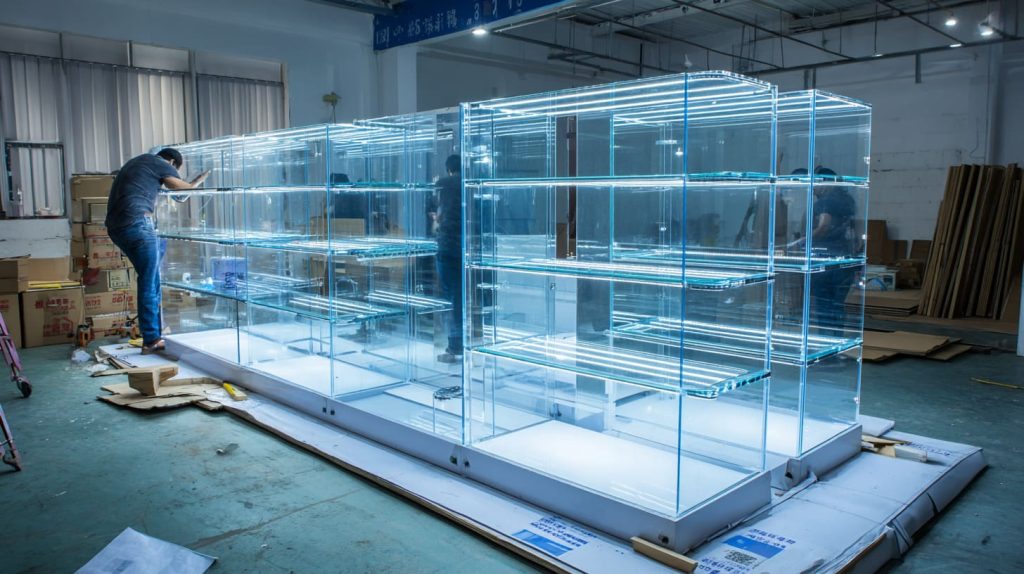
They may have multiple layers, product steps, brand panels, drawers, LED areas, and side supports. Retail buyers love this type of design because it creates a premium shelf look.
But from a production view, large cosmetic displays can be tricky.
The structure has many connection points. Each shelf must align. Each side panel must stay straight. The front brand panel must look clean. If there is LED lighting, the space for wires and strips must be planned early.
A small mistake in one layer can affect the whole display.
| Design Feature | Assembly Risk |
|---|---|
| Multiple shelves | Height differences become visible |
| LED integration | Wire space may be too tight |
| Large side panels | Warping becomes more obvious |
| Thick acrylic | Heavy parts need stronger support |
| Logo panels | Misalignment affects brand image |
| Glued structures | Hard to repair after assembly |
For cosmetic displays, appearance matters a lot. But structure matters first.
A beautiful display that tilts forward will not sell more lipstick. It will only create complaints.
Knock-Down Retail Displays
Knock-down displays are popular because they save shipping space.
The idea is good.
Flat packing can reduce freight cost. It can also help overseas customers assemble displays after delivery.
But knock-down acrylic displays need careful design. The parts must fit well, but not too tight. They must be strong enough after assembly, but not too hard for the customer to build.
That balance is not easy.
If the slot is too tight, the customer may crack the panel during assembly.
If the slot is too loose, the display may shake.
If the instruction is unclear, the customer may assemble it in the wrong order.
| Knock-Down Design Need | Bad Result If Ignored |
|---|---|
| Clear assembly direction | Customer installs parts backward |
| Proper slot clearance | Panel cracks or becomes loose |
| Strong locking structure | Display shakes after setup |
| Simple part count | Customer gets confused |
| Protected packing | Edges chip during shipment |
For this type of display, I always think about the final user’s hands.
Not the engineer’s hands.
Not the factory worker’s hands.
The customer’s hands.
Can they assemble it without tools? Can they understand it without calling someone? Can they do it without damaging the acrylic?
That is the real test.
Acrylic Boxes with Tight Fitting Covers
Acrylic boxes look simple, but tight covers can create many problems.
A box with a lid may need a clean fit. Buyers often want the lid to feel smooth, stable, and premium. But acrylic sheet thickness can vary. Temperature can change the fit. Polishing can remove a little material. Glue can slightly change the shape.
So a “perfect” lid fit can become risky.
If the lid is too tight, customers struggle to open it.
If the lid is too loose, the product feels cheap.
If the box is large, slight warping can make the lid uneven.
| Lid Fit Type | Advantage | Risk |
|---|---|---|
| Very tight | Feels secure at first | Hard to open, cracking risk |
| Medium clearance | Easier to use | Needs careful control |
| Loose fit | Easy to assemble | Feels low quality |
| Magnetic closure | Premium feel | Magnet alignment risk |
| Sliding lid | Clean look | Track tolerance risk |
This is where the buyer’s feeling matters.
A box is not only measured with calipers. It is also judged by the hand.
Does it open smoothly?
Does it feel cheap?
Does it make a sharp sound?
Does the lid scratch the side wall?
These small feelings decide whether the product feels well made.
Mixed-Material Displays
Mixed-material displays can look very attractive.
Acrylic with metal.
Acrylic with wood.
Acrylic with LED.
Acrylic with printed panels.
Acrylic with aluminum profiles.
These combinations can create a strong retail look. But they also bring assembly risk because each material behaves differently.
Metal is rigid.
Wood can move with humidity.
Acrylic can crack under stress.
LED parts need wire space and heat control.
If the design does not allow for these differences, the display may fail.
| Material Combination | Common Problem |
|---|---|
| Acrylic + metal | Screw pressure cracks acrylic |
| Acrylic + wood | Wood movement affects alignment |
| Acrylic + LED | Heat and wire space cause issues |
| Acrylic + printed PVC | Adhesive or edge mismatch |
| Acrylic + aluminum profile | Profile tolerance affects fitting |
The mistake is thinking all materials will behave politely together.
They will not.
They need space. They need order. They need the right fixing method. A rigid metal bracket can make an acrylic panel look stronger, but it can also create a stress point if the hole design is wrong.
That is why mixed-material projects need more engineering discussion before production.
A risky design does not always need to be rejected. It needs to be understood. And the best time to understand it is before mass production, not when 800 pieces are already on the assembly table.
How Can Buyers Detect Assembly Risks Before Mass Production?
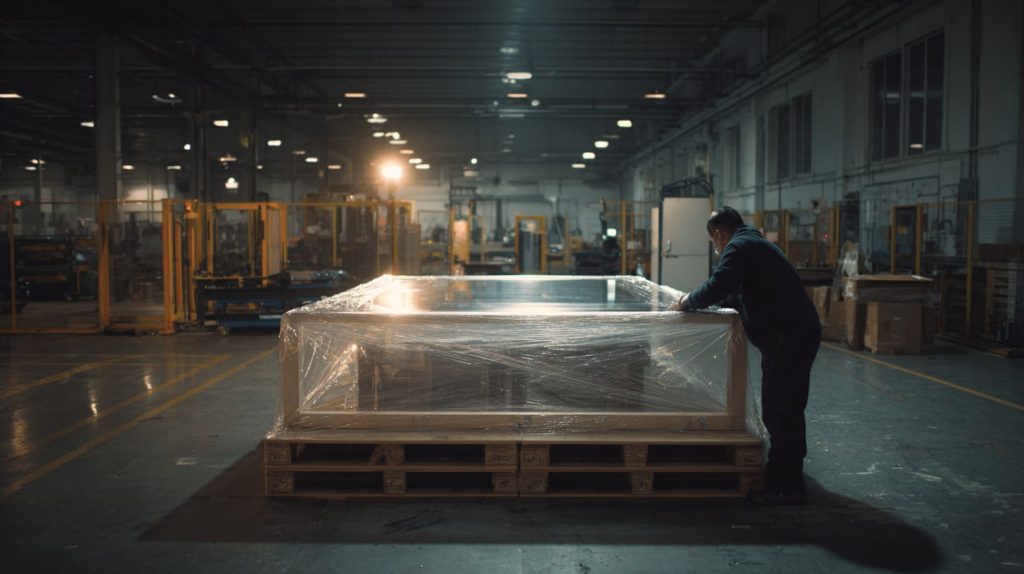
Buyers do not need to become acrylic engineers.
But buyers do need to ask better questions.
Many buyers ask:
“Can you make this?”
“What is the price?”
“How long is the lead time?”
“Can you send photos?”
These questions are normal.
But for custom acrylic display projects, they are not enough.
A better question is:
“How will you prove this can be assembled smoothly in bulk?”
That question forces everyone to think deeper.
I pay close attention when a buyer asks about assembly testing, because it tells me the buyer understands that a good product is not only a beautiful sample but a repeatable process.
Request Functional Assembly Testing
Visual approval is not enough.
A display can look correct in photos but still have hidden fit problems. That is why functional assembly testing matters.
The factory should assemble the product in the real order. If the product is knock-down, the factory should also test how the customer will assemble it. If tools are needed, the tools should be clear. If screws are needed, the screw length and pressure should be checked.
A good test should answer simple questions.
| Test Question | Why It Matters |
|---|---|
| Can one worker assemble it smoothly? | Shows if the design is practical |
| Does any part need force? | Finds stress risk |
| Are holes aligned after bending? | Checks process sequence |
| Does the display stand stable? | Prevents customer complaints |
| Can it be packed safely after assembly? | Connects assembly with shipping |
| Can it be disassembled if needed? | Important for retail setups |
Photos are useful, but videos are better for assembly checks.
A short assembly video can show whether parts fit naturally. It can show if the worker pauses, pushes, adjusts, or struggles. Those small movements tell a lot.
A smooth product does not need drama.
It just goes together.
Ask for Tolerance Analysis
Tolerance analysis sounds serious, but buyers can keep it simple.
They do not need a full engineering report for every small project. But for large or complex displays, key dimensions should be reviewed.
The most important areas are usually:
- Hole-to-hole distance
- Slot width and panel thickness
- Lid and box clearance
- Shelf height alignment
- Hardware fixing points
- Bending angle tolerance
- Glue position control
I like to mark these as “critical dimensions.”
Not all dimensions are equally important. A small cosmetic mark may not affect use. But a wrong hole position can stop the whole product from being assembled.
| Dimension Type | Risk Level | Why |
|---|---|---|
| Overall display height | Medium | Affects appearance and packing |
| Hole-to-hole distance | High | Affects hardware assembly |
| Slot width | High | Affects fit and stress |
| Panel thickness | High | Affects all slot designs |
| Edge radius | Low to medium | Affects look and safety |
| Bending angle | High | Affects final alignment |
| Glue position | High | Hard to repair after curing |
A buyer can ask the supplier:
“Which dimensions are most important for assembly?”
This question is powerful.
A good factory should be able to answer. If the factory only says, “No problem,” I become more careful.
“No problem” is not a process.
Test the Packaging Together with Assembly
Many acrylic displays work in the factory and fail overseas.
Why?
Because the factory checks the product before shipping, but the customer receives the product after shipping.
That is not the same condition.
Acrylic can be scratched, pressed, cracked, or loosened during transport. If the structure has stress already, shipping can make it worse.
So packing should not be treated as a separate topic.
Packing is part of assembly success.
| Packing Risk | Assembly Result |
|---|---|
| Carton pressure | Corners may crack |
| Poor inner support | Display may shake |
| Heavy stacking | Panels may bend |
| Vibration | Screws may loosen |
| Tight foam pressure | Acrylic may deform |
| No protection film control | Surface may scratch |
For large assembled displays, the packing design should support the weak areas. For knock-down displays, the packing should protect each panel and hardware set.
I also like clear hardware bags.
Acrylic displays often fail at customer assembly because one small screw or washer is missing. This sounds silly, but it happens.
A missing screw can stop a whole display installation.
Small thing. Big anger.
Review the Factory’s Assembly Workflow
A factory’s assembly workflow says a lot about its real management level.
Does the factory have an assembly SOP?
Does it check the first finished piece before full production?
Does it separate defective parts early?
Does it train workers on special projects?
Does it have QC checkpoints during assembly?
These questions matter.
Acrylic display production is not only machine work. It is also people work.
| Workflow Point | What I Want to See |
|---|---|
| First-piece inspection | Problems found before bulk assembly |
| Assembly SOP | Workers follow the same steps |
| QC during assembly | Defects caught early |
| Hardware check | Missing parts avoided |
| Supervisor review | Stable quality across workers |
| Final packing inspection | Product protected before shipment |
An experienced line supervisor can save a project.
I have seen supervisors stop a line because one hole felt too tight during assembly. That decision may look slow at first. But it prevents hundreds of bad units.
That is real factory value.
It is not loud. It is not fancy. It is just one person noticing the small thing before it becomes a big problem.
After buyers know how to detect the risk, designers can do something even better. They can reduce the risk from the beginning. A good design does not try to fight the factory. It works with the factory.
What Should Designers Change to Reduce Assembly Failure?

Designers have more power than they think.
A factory can improve process control. Workers can be trained. QC can be strict. But if the design itself is too tight, too complex, or too sensitive, production will still be painful.
A good acrylic display design should not only look clean on a screen.
It should be friendly to cutting, polishing, bending, assembly, packing, and real customer use.
That is a lot to ask from one drawing. But this is the difference between a pretty concept and a successful product.
When I review a new drawing, I always ask myself where the worker will struggle first, because the first struggle point usually becomes the first complaint point later.
Avoid Overly Tight Tolerance Designs
Tight tolerance can feel professional.
Many designers like tight fits because the product looks clean. The gaps are small. The lines are sharp. The structure feels controlled.
But acrylic is not always happy with tight tolerance.
If the slot is too tight, the panel may crack.
If the lid is too tight, the customer may struggle.
If the screw hole has no clearance, stress can build around the hole.
The design should include controlled clearance.
Not sloppy clearance.
Not careless clearance.
Smart clearance.
| Design Area | Risky Choice | Safer Choice |
|---|---|---|
| Slot fitting | Same width as sheet thickness | Add small clearance |
| Screw hole | Exact screw size | Add proper hole allowance |
| Lid fit | Very tight contact | Smooth functional gap |
| Bend connection | No angle tolerance | Allow small angle variation |
| Hardware fixing | Hard contact pressure | Use washer or spacer |
This is not lowering quality.
This is designing for reality.
A product with proper clearance can still look premium. In fact, it often feels better because users do not need to fight it.
Simplify the Number of Parts
More parts often mean more risk.
Each extra panel adds another tolerance.
Each extra screw adds another possible missing part.
Each extra layer adds another alignment issue.
Sometimes a complex display is needed. A cosmetic counter display may need multiple shelves. A retail display may need a strong brand area. A box may need several inner dividers.
But designers should not add parts just because the drawing looks more impressive.
Complexity should earn its place.
| Design Choice | Benefit | Hidden Cost |
|---|---|---|
| More layers | Better display space | More alignment risk |
| More screws | Stronger fixing | More assembly time |
| More decorative panels | Better appearance | More defects and scratches |
| More slots | Tool-free assembly | Higher tolerance demand |
| More mixed materials | Premium look | More coordination risk |
A simple design is not a cheap design.
A simple design can be more mature.
It often means the designer understands what matters and removes what does not.
Choose the Right Acrylic Material Early
Material choice should happen early.
Not after the price is fixed.
Not after the drawing is locked.
Not after the sample cracks.
Different acrylic sheets behave differently during cutting, bending, polishing, gluing, and assembly. If the design needs tight slots or clean optical appearance, the material decision becomes even more important.
Cast acrylic is often preferred for many custom displays because it has good clarity and good machining performance. Extruded acrylic can work for some projects, but the design and process should match the material.
Thickness also matters.
A “5 mm acrylic sheet” may not always be exactly 5.00 mm. If the design uses slots, this variation can affect assembly directly.
| Material Decision | Why It Matters |
|---|---|
| Cast or extruded acrylic | Affects cutting, polishing, and stress |
| Sheet thickness | Affects slot and lid fit |
| Color or clear material | Affects visual defect visibility |
| UV-resistant sheet | Important for display environment |
| Eco-friendly certified material | Important for brand and compliance needs |
| Batch consistency | Important for repeat orders |
For custom projects, I prefer to confirm the material and thickness before finalizing the assembly structure.
Otherwise, the drawing may be correct, but the real sheet may disagree.
And the sheet always wins.
Design with Real Production in Mind
Perfect CAD thinking can be dangerous.
On the screen, all parts are clean.
All lines are straight.
All angles are exact.
All holes match beautifully.
In the factory, acrylic sheets have tolerance. Workers have speed differences. Machines have settings. Bending has rebound. Glue has curing time. Packing has pressure.
The design should respect that.
A production-friendly acrylic display usually has these features:
- It uses fewer critical joints.
- It avoids unnecessary tight fits.
- It allows reasonable assembly clearance.
- It uses hardware that can be sourced consistently.
- It does not depend on one worker’s special skill.
- It can be inspected easily during production.
- It can be packed without creating stress.
| CAD-Only Thinking | Production Thinking |
|---|---|
| “The parts fit in the model.” | “Can workers fit them fast?” |
| “The gap looks clean.” | “Will the gap survive tolerance?” |
| “The screw is centered.” | “Can the screw enter without stress?” |
| “The structure looks strong.” | “Can it survive shipping?” |
| “The sample looks perfect.” | “Can 500 pieces stay consistent?” |
This is where experience matters.
A good designer does not only create shape. A good designer creates a product that can live in the real world.
And the real world includes tired workers, busy production lines, cartons, trucks, sea freight, and customers who do not read instructions carefully.
That may sound harsh, but it is true.
Design for that world, and the product becomes stronger.
Now we arrive at the reason experienced buyers care so much about assembly. They know cutting is only one chapter. Assembly tells the whole story.
Why Do Experienced Buyers Care More About Assembly Than Cutting?
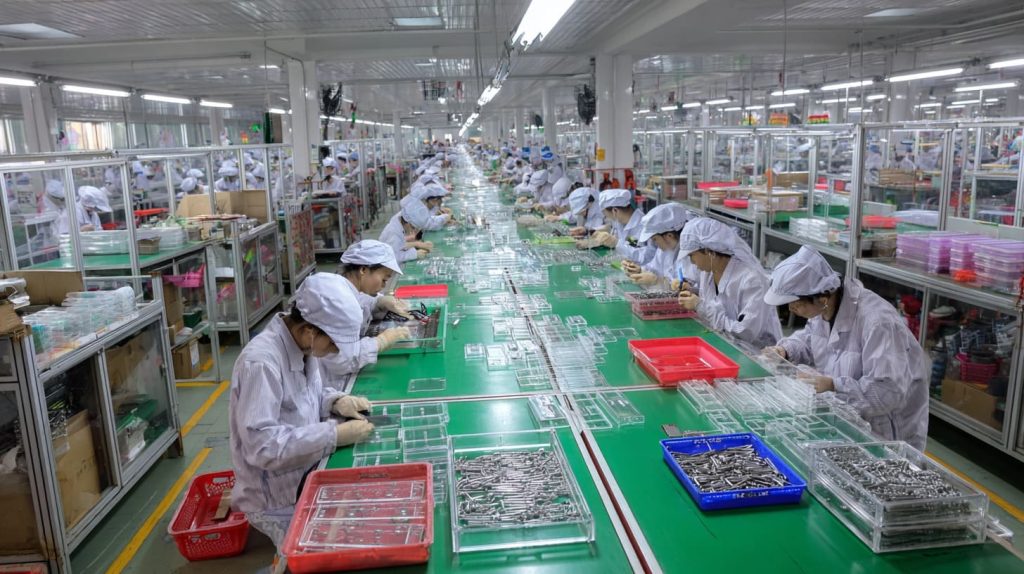
Experienced buyers do not ignore cutting quality.
They still check it.
They check size.
They check edge finish.
They check transparency.
They check scratches.
They check material.
But they do not stop there.
They know cutting is only the start of the project. A factory can own good machines and still have weak assembly control. A factory can make a beautiful sample and still struggle with bulk production.
Assembly shows the factory’s real ability.
It shows engineering.
It shows worker training.
It shows process control.
It shows communication.
It shows whether the factory thinks ahead or only reacts after problems appear.
A buyer with real experience often watches the assembly table more closely than the cutting machine, because the assembly table reveals problems that the machine showroom can hide.
Cutting Is Easy to Replace
Cutting machines are more common now.
Many factories have CNC machines. Many factories have laser machines. Many factories can show nice cutting videos.
This does not mean all factories are equal. Machine quality and operator skill still matter. But cutting ability is easier to compare and easier to replace than full project control.
If one supplier cannot cut a panel well, another supplier may be able to do it.
But if the project has poor assembly logic, changing the cutting supplier will not solve everything.
The design still needs to fit.
The hardware still needs to match.
The tolerance still needs to be controlled.
The assembly sequence still needs to be clear.
| Ability | Easy to See? | Easy to Replace? |
|---|---|---|
| Cutting machine | Yes | Often yes |
| Edge polishing | Yes | Sometimes |
| Material sourcing | Medium | Sometimes |
| Assembly process | Not always | Harder |
| Engineering judgment | Hard to see | Hard |
| Production management | Hard to see | Hard |
This is why buyers should not be impressed only by machine photos.
Machines are important. But machines do not manage tolerance by themselves.
People do.
Assembly Reflects the Factory’s Real Management Level
Assembly is where factory management becomes visible.
If the drawing is unclear, assembly suffers.
If the material thickness varies, assembly suffers.
If hardware is not checked, assembly suffers.
If workers are not trained, assembly suffers.
If QC only checks the final surface, assembly suffers.
Assembly is not one department’s job.
It is the result of many departments working together.
| Department | How It Affects Assembly |
|---|---|
| Engineering | Decides tolerance and structure |
| Purchasing | Controls hardware and material |
| Cutting | Controls part accuracy |
| Polishing | Avoids removing too much material |
| Bending | Controls angle and stress |
| Assembly | Builds the final product |
| QC | Finds problems early |
| Packing | Protects the assembled structure |
When assembly is smooth, it usually means the project was controlled well from the beginning.
When assembly is chaotic, it usually means the factory is solving yesterday’s problem today.
That is expensive.
Assembly Problems Destroy Delivery Schedules
Assembly problems are dangerous because they appear late.
If cutting has a problem, the factory may find it early. There may still be time to correct the program or cut new panels.
If assembly fails, many parts may already be finished.
The material has been cut.
The edges have been polished.
The holes have been drilled.
The panels have been bent.
The hardware has been prepared.
The shipping date is close.
Now every fix costs more.
| Problem Found During | Cost Impact | Schedule Impact |
|---|---|---|
| Drawing review | Low | Low |
| Prototype testing | Low to medium | Low |
| Cutting | Medium | Medium |
| Assembly | High | High |
| Packing | Very high | Very high |
| Customer installation | Worst | Worst |
This is why assembly issues can destroy delivery schedules.
Rework takes time.
Extra polishing takes time.
Replacing cracked panels takes time.
Repacking takes time.
Explaining delays takes emotional energy too.
And for overseas buyers, delay is not only a factory problem. It affects product launch, store setup, retail campaigns, and customer trust.
That is why experienced buyers care so much.
They are not being difficult.
They are protecting the project.
The best buyers and the best factories often think the same way: find the assembly risk before it becomes a shipment problem.
Conclusion
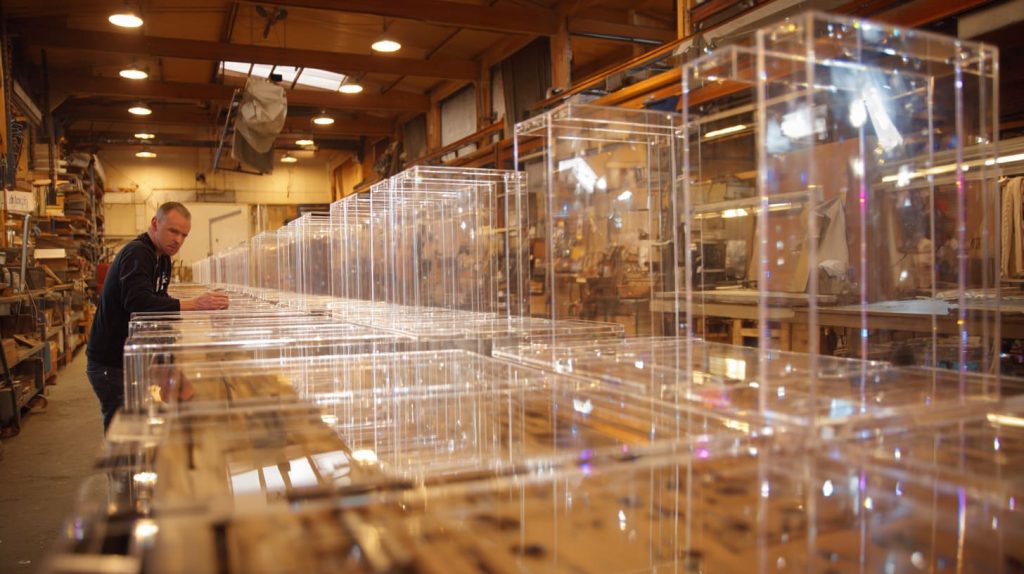
Acrylic display projects rarely fail because of cutting alone.
Cutting is important, yes. I never ignore it. Clean edges, accurate holes, good polishing, and clear material all matter. But after working with many custom acrylic products, I have learned that cutting is usually not the final boss.
Assembly is.
Assembly is where all small decisions meet each other.
The drawing meets the material.
The material meets the hardware.
The hardware meets the worker.
The worker meets the production speed.
The finished display meets the carton.
The carton meets shipping.
Then the buyer finally meets the result.
That is why I judge acrylic display projects through assembly, not only through cutting.
I think this way because I have seen how small problems become expensive near the end of production. A slot that is too tight may look like a tiny detail. But if it slows down 500 displays, it becomes a schedule problem. A screw hole that is slightly off may look easy to repair. But if it creates stress cracks after shipping, it becomes a trust problem.
This is also why I believe a good acrylic supplier should not only show beautiful samples.
A good supplier should think about tolerance, hardware, production sequence, assembly speed, packing pressure, and final customer use. These things are not always exciting. They do not look as pretty as a glossy product photo. But they decide whether the project succeeds.
At Feilong Acrylic, this is the kind of thinking I care about in custom acrylic work. We are not a catalog business. We work on custom projects, and custom projects always need more judgment. A buyer may bring an idea, a drawing, or only a rough concept. My job is not only to say, “Yes, we can make it.” My job is to think one step further and ask, “Can this be assembled well, repeated well, packed well, and used well?”
That is the difference between making a product and protecting a project.
If you are planning a custom acrylic display, acrylic box, retail stand, cosmetic display, or mixed-material acrylic structure, do not only check the cutting. Ask about assembly. Ask about tolerance. Ask about hardware. Ask about packing. Ask where the product may fail before it fails.
And if you want to turn an acrylic display idea into a real product with fewer surprises, you can contact Feilong Acrylic through flacrylic.com. I will be happy to review your design from a production point of view, not just from a pretty-picture point of view.