Skip to content
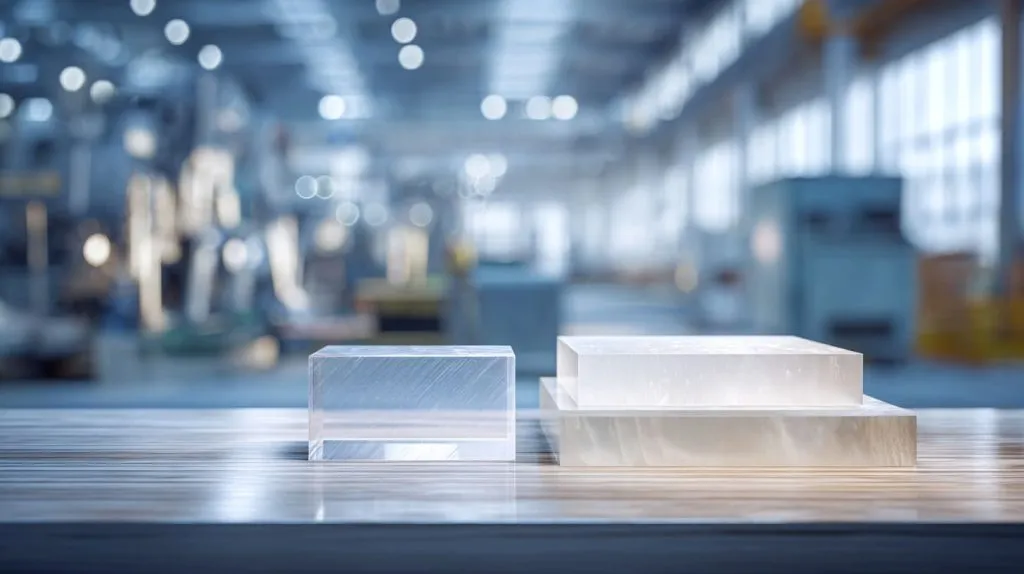
A buyer sends a clean drawing, then adds one risky line: “Use food-grade plastic.”
If we guess wrong, the part may fail testing, smell weird, crack early, or trigger a painful rework loop.
Food-grade and food-safe plastics are not the same in real projects. Food-grade is a regulatory and material claim under specific conditions, while food-safe is a use-result claim for your exact food, temperature, time, and cleaning method.
I learned this the hard way: the plastic was “fine” on paper, but the use conditions were not. One small detail—hot oil, sanitizer, or long storage—can change everything.
What is the difference between food grade and food safe plastic?
“Food grade” sounds official. “Food safe” sounds practical. In real life, buyers mix them up and problems hide inside that gap.
Food grade usually means the material or resin is authorized for food-contact uses under rules like FDA’s indirect additive regulations or Food Contact Notifications, with limits. Food safe means the finished product is safe in your real use—food type, heat, time, and cleaning.

The simple way I explain it to Jacky
- Food-grade: “Is this plastic allowed for food contact under defined conditions?”
- Food-safe: “Will this product stay safe and stable in my application?”
Why the same plastic can be “okay” in one project and “wrong” in another
| Use condition | What changes | What risk shows up |
|---|---|---|
| Higher temperature | Migration increases | Taste/odor, compliance risk |
| Longer contact time | More exposure | Gradual leaching, discoloration |
| Fatty foods (oil, dairy) | Some chemicals dissolve easier | Higher migration potential |
| Strong cleaning chemicals | Surface can degrade | Cracks, haze, stress failure |
My rule of thumb
If you only say “food-grade” without stating food + temperature + time + cleaning, you are not done yet.
What food grade plastics are approved by the FDA?
This is where people want a neat list. But the FDA system is not one simple “approved plastics list.” It is approvals tied to conditions of use and sometimes tied to a specific notifier/manufacturer.
In the U.S., food-contact plastics are typically cleared through FDA regulations (like 21 CFR parts for indirect additives) and/or the Food Contact Notification (FCN) program, where an effective FCN applies to the specific substance and listed manufacturer under stated limits.

Two “approval paths” buyers should know
| Path | What it looks like | What it means for you |
|---|---|---|
| 21 CFR indirect additive regs | A regulation section for polymers and additives | Allowed if you meet the listed specs and conditions |
| FCN database | A notification with intended use + limits | Effective for that specific FCS and the notifier/manufacturer listed |
Where I check when a customer asks for “FDA food-grade”
- Start with the FDA food-contact overview pages and definitions.
- If the claim is “FDA compliant,” I look for the relevant 21 CFR section.
- If it’s a specific additive or special resin, I check the FCN inventory and the stated limitations.
A practical note
“Approved by FDA” is often said too casually. What really matters is: authorized for your use conditions, and you can document it.
What is the number 1 food grade plastic?
People ask this hoping for one safe default. I get it. When timelines are tight, you want the “standard answer.”
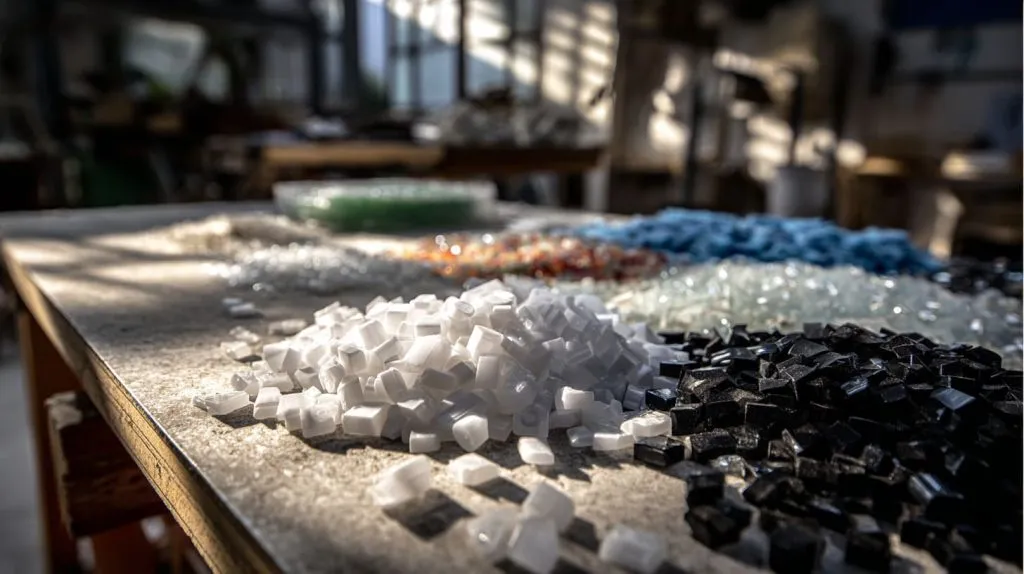
There is no single “number 1” food-grade plastic for all cases. For many everyday food-contact uses, common choices like PP and HDPE are widely used because they’re stable and cost-effective, but the best choice still depends on heat, food type, contact time, and cleaning.
If I must give a “buyer-friendly ranking,” I do it by scenario
| Scenario | My usual shortlist | Why |
|---|---|---|
| Cold/room temp containers | PP, HDPE, PET | Stable, common, easy sourcing |
| Hot fill / warm contact | PP, some high-temp resins | Better heat tolerance than many |
| Clear rigid displays | Acrylic (PMMA), PETG (case-by-case) | Clarity + workable fabrication |
| Repeated cleaning / harsh environment | Depends on chemical + stress | Cleaning destroys “defaults” fast |
The “best” plastic on day one can become the “worst” after 300 wash cycles.
How do I know if my plastic is food grade?
A label is not proof. A supplier promise is also not proof. What I trust is paperwork tied to rules and limits.
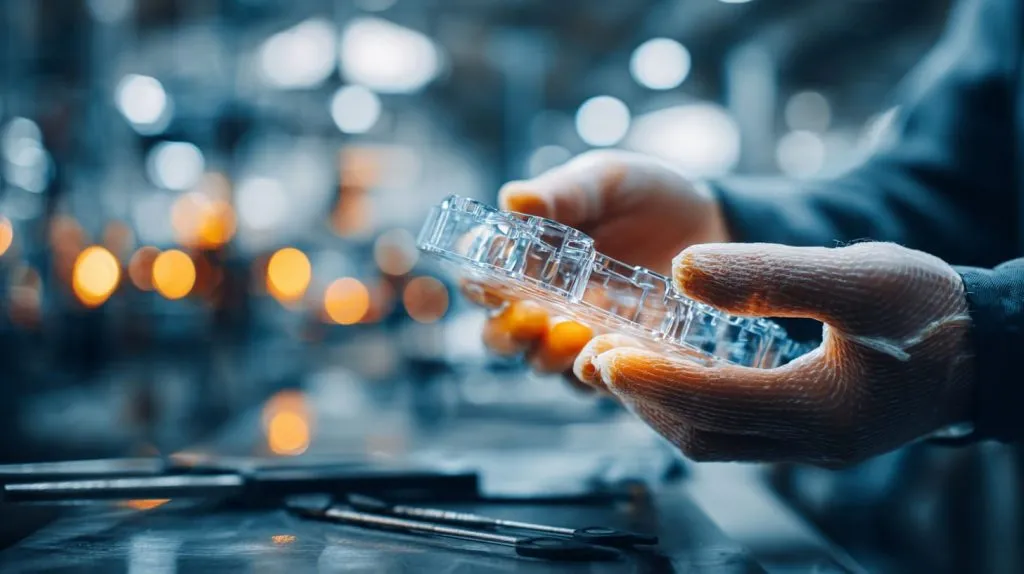
To verify food-grade status, I ask for the exact resin grade, compliance statement referencing relevant FDA rules (like 21 CFR for polymers) or an FCN reference, and test or migration documentation that matches the intended food-contact conditions.
My “no-drama” verification checklist
- Resin identity: material name is not enough; I want the resin grade.
- Regulatory basis: which 21 CFR section or which FCN record supports it?
- Conditions of use: temperature, time, food type, repeated use vs single use.
- Colorants/additives: these can break compliance even if base resin is fine.
- Product process: printing, adhesive, coating, glue—these are food-contact too.
Quick table I use in customer emails
| What the supplier says | What I ask next | Why |
|---|---|---|
| “FDA approved” | “Which CFR section or FCN?” | “Approved” is not a document |
| “Food safe material” | “For what temperature and food?” | Use conditions decide risk |
| “BPA-free” | “What substitute is used?” | Substitutes can also matter |
Which is better, food safe or food grade?
This question sounds like a contest. But it’s more like a map and a destination.
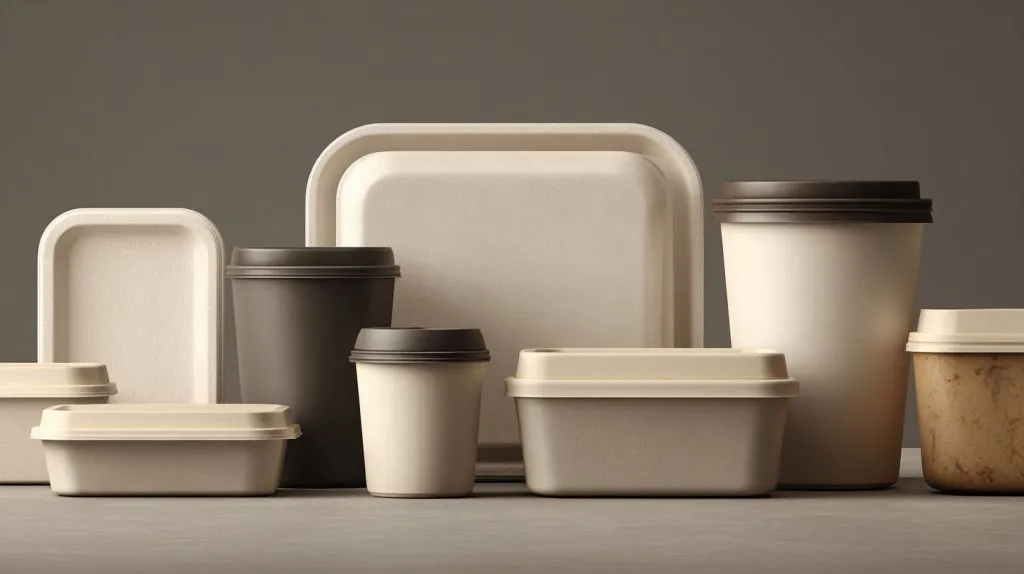
Food-grade is the compliance foundation, but food-safe is the real-world outcome. In custom products, I treat food-grade as the minimum entry ticket, and food-safe as the final pass after checking design, process, additives, and use conditions.
The way I decide “better”
- If you are selling into regulated markets: food-grade documentation is critical.
- If the product fails in real use (odor, cracking, haze): food-safe reality wins.
A small mental model that helps
| Concept | What it protects | What it does not protect |
|---|---|---|
| Food-grade | Regulatory compliance scope | Bad design, wrong use conditions |
| Food-safe | End user health + product behavior | Missing paperwork, weak traceability |
What does food-grade plastic really mean?
Many people think “food-grade” means “cannot leach anything.” That is not how regulations work. It means “safe for intended use” with limits.
Food-grade plastic means the material is authorized for food-contact applications under defined conditions, and it must meet limits on composition and use—like temperature and contact type—set by regulations or an FCN.

The part that surprises new buyers
“Food-grade” does not automatically cover:
- Your adhesive
- Your ink
- Your laser marking residue
- Your cleaning chemicals
- Your high-heat process
Why I always ask one extra question
“What happens to this part on its worst day?”
That worst day is where “food-grade” claims get tested.
Is food-grade plastic the same as food-safe plastic?
This is the core confusion. And it’s why projects get delayed at the last minute.
No. Food-grade is a compliance label tied to authorized uses and limits. Food-safe is a practical claim that the finished product stays safe in your real environment, including heat, time, cleaning, and additives.
A fast example
- A resin can be food-grade.
- Then you add a colorant or adhesive that is not cleared for food contact.
- Now the product may not be food-safe or compliant for your use.
My “one-line” guidance
Food-grade is about authorization. Food-safe is about behavior.
Which plastics are considered food-safe for direct food contact?
Direct food contact is the strict zone. It needs clearer documentation and tighter control of additives.
Plastics commonly used for direct food contact include PP, HDPE, PET, and sometimes specific grades of acrylic (PMMA) and polycarbonate, but “considered food-safe” depends on the exact resin, additives, and the allowed conditions of use under FDA rules or FCNs.

I group “food-contact plastics” by what buyers care about
| Buyer need | Typical plastic families | Watch-outs |
|---|---|---|
| Low cost + easy sourcing | PP, HDPE | Colorants, recycled content claims |
| Clear packaging | PET | Heat limits, cracking stress |
| Clear display parts | Acrylic (PMMA) | Cleaning chemistry, scratch/haze |
| High impact clear parts | Polycarbonate | BPA topic, regulatory region differences |
The sentence I repeat in meetings
“Plastic name is only step one. Resin grade and limits are step two.”
Is acrylic (PMMA) safe for food contact applications?
I get this question a lot because acrylic is everywhere in displays, guards, trays, and clear parts—especially in retail and food service.
Acrylic (PMMA) can be used for food-contact applications when it complies with the applicable rules and conditions of use; for example, FDA regulations include a section covering acrylic and modified acrylic plastics for food contact under prescribed conditions.
Where acrylic often shines
- Clear food display guards
- Countertop barriers and covers
- Dry food contact surfaces (case-by-case)
Where acrylic can disappoint buyers
| Issue | What it looks like | What I do about it |
|---|---|---|
| Scratching | Hazy surface fast | Choose thickness + surface protection |
| Chemical stress | Fine cracks | Confirm cleaning chemicals early |
| Heat | Warping risk | Check temperature and distance to heat |
My practical take
Acrylic can be “safe,” but only when we respect the cleaning and stress environment.
Is polycarbonate plastic food-safe or risky?
This is the spicy one. Polycarbonate performs well, but people worry about BPA. The real answer depends on your market and your risk tolerance.
In the U.S., FDA’s current perspective is that BPA is safe at the current levels occurring in foods for the currently approved uses in food containers and packaging, but other regions may restrict BPA more tightly, so “risky” can be a regulatory and perception issue, not only a material issue.

Why buyers still hesitate
- Consumer perception around “BPA”
- Different rules across regions (U.S. vs EU)
- “BPA-free” replacements may raise new questions in the market
| If your priority is… | Polycarbonate fit | My note |
|---|---|---|
| High impact strength | Strong | Great mechanically |
| Market perception | Mixed | Depends on your customers |
| Cross-region simplicity | Sometimes hard | Check destination rules |
My honest suggestion
If your product sells in multiple regions, decide early which rule set you are designing for.
Is PET or PETG plastic safe for food containers?
PET is common in packaging. PETG is popular for clarity and fabrication. Buyers sometimes assume they are interchangeable. They are not.
PET is widely used in food packaging, and FDA guidance discusses polymers like PET in food-contact contexts, but “safe” still depends on temperature, time, and migration behavior; PETG can be suitable in some cases, but you still need resin-grade compliance documentation and use-condition checks.
PET vs PETG in plain words
| Item | PET | PETG |
|---|---|---|
| Typical use | Bottles, trays | Clear parts, formed covers |
| Strength | Good | Often good |
| Heat tolerance | Limited | Often limited too |
| Buyer mistake | Using for hot use | Assuming “clear = safe” |
My quick warning
If it touches hot food or sees hot wash, slow down and verify.
Is ABS plastic food-safe for kitchen or food equipment?
ABS is great for housings and toughness, so buyers love it. But food contact is tricky, especially with additives and surface wear.
ABS can be useful for kitchen equipment housings or non-contact parts, but for direct food contact you must verify the exact resin grade and compliance basis, because “ABS” alone does not guarantee food-contact authorization or safe performance under cleaning and heat.
Where I see ABS used well
- Outer housings of appliances
- Handles (case-by-case)
- Structural parts away from food
Where ABS becomes a headache
| Risk | Why it happens | What to do |
|---|---|---|
| Odor | Additives + processing | Request material disclosure + testing |
| Surface wear | Scratches trap residue | Change design or choose different polymer |
| Chemical cleaning | Stress + cracking | Validate cleaning method early |
My rule
If it is direct contact, I ask for stronger documentation than “ABS is common in kitchens.”
What certifications are required for food-grade plastics?
People ask for “the certificate” like it’s one paper. In reality, it’s a documentation set tied to your market.
In the U.S., compliance is typically shown by referencing applicable FDA regulations (like 21 CFR parts for food-contact polymers) and/or effective FCNs for specific substances, plus supporting documentation such as compliance statements and relevant testing aligned to intended use conditions.
What I usually prepare in a B2B custom order file
- Material specification (resin grade, supplier)
- Compliance statement referencing CFR/FCN basis
- Traceability notes (batch, lot, supplier)
- Testing summary when needed (migration/odor/use simulation)
“Certificate” vs “proof”
| Document | What it proves | What it cannot prove alone |
|---|---|---|
| Supplier compliance letter | Intent and reference | Real use performance |
| Lab test report | Measured results | Future batches if material changes |
| FCN/CFR reference | Regulatory basis | That your whole product is compliant |
Can a plastic be food-safe but not food-grade?
Yes, and this creates weird arguments in meetings. A plastic may behave fine in real life, but you still may not have the right compliance basis for your market.
A plastic can appear food-safe in practice (no smell, no taste, stable use), but still not qualify as “food-grade” for a regulated sale if you lack the correct authorization path, documentation, or use-condition compliance under FDA rules or FCNs.
Why this happens
- The resin is okay, but the paperwork is missing
- The use conditions are outside the allowed limits
- Additives/coatings change the compliance story
My “buyer-safe” approach
If you sell B2B into the U.S., I treat documentation as part of the product, not an afterthought.
How do you choose the right food-safe plastic for custom products?
This is the part I care about most. Not because it sounds smart, but because it saves weeks of rework and quiet risk.
To choose the right food-safe plastic, I match the plastic to the real use conditions (food type, temperature, time, cleaning), then confirm the regulatory basis (CFR/FCN where relevant), and finally control additives, processing, and traceability so the finished custom product stays safe and consistent.

Step-by-step method I use on custom acrylic and plastic projects
1) Define the “food reality”
- What food touches it? (dry, wet, oily)
- What temperature? (cold, warm, hot)
- How long is contact? (seconds, hours, days)
- How is it cleaned? (soap, sanitizer, hot wash)
2) Pick candidates, then eliminate by risk
| Filter | What I remove first | Why |
|---|---|---|
| Heat | Low-heat plastics for hot use | Warping + migration risk |
| Cleaning | Stress-crack-prone options | Cracks become hygiene risk |
| Food type | Weak options for oily foods | Oils can raise migration |
3) Lock the documentation early
- CFR/FCN basis where applicable
- Resin grade and supplier
- Additives, pigments, adhesives, inks
4) Design for safety, not only compliance
- Avoid tiny crevices that trap residue
- Avoid sharp corners that crack under wash stress
- Choose finishes that are cleanable
The most useful sentence for a kickoff call
“If we write down the worst use case now, we avoid the worst surprise later.”
Conclusion
Food-grade is about authorization and limits. Food-safe is about real-life behavior. If you tell me your food, temperature, contact time, and cleaning method, I can help you choose a plastic that passes paperwork and stays stable in use. Reach me at info@xflacrylic.com or flacrylic.com.