Skip to content

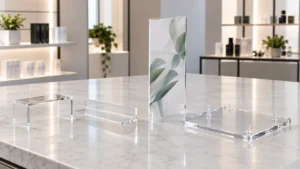
Two frame samples lay side by side on the table—one glass, one acrylic. A client leaned in, holding a printed image against each one to see how the light hit the surface. I didn’t need to say much; his expression said it all. The glass felt heavier, more traditional. The acrylic looked just as clear but lighter in the hand.
Moments like this happen more than you’d think. People compare, hold, test—and still end up asking, “Which is better?” And it’s not just about clarity or price. It’s about handling, safety, durability, even how the product is going to be shipped or displayed.
What this article covers
I walk through how plexiglass and glass differ, where each material shines, and how you can choose the right one for your framing or display project. I also share insights from real projects, so you can look at this choice from more than one angle.
Why this choice matters for custom framing and displays
The glazing you choose decides how your artwork looks, how long it lasts, and even how safe it is to ship or hang. I have seen perfect prints ruined because the wrong material was used. I have also seen massive frames fall because the glass was just too heavy. So this decision shapes everything—from cost to safety to the life of the piece.
And once you understand those details, the next section starts to make even more sense.
Material Basics: Plexiglass (Acrylic) vs Glass

What is plexiglass / acrylic – composition, manufacturing
Acrylic—often called plexiglass—is a clear plastic made through polymerization. Manufacturers cast or extrude sheets, and each method affects clarity, strength, and cost. I’ve spent half my career comparing cast and extruded sheets for clients. Cast acrylic feels more premium; extruded acrylic is easier to machine. Both are lighter than glass and safer to handle.
What is glass – types used in framing (float, tempered, museum)
Glass comes in several forms.
- Float glass is the standard clear type.
- Tempered glass is stronger and safer because it breaks into small pieces.
- Museum glass has coatings for UV protection and anti‑reflection.
Each one behaves differently. When I worked with a gallery in Osaka, they insisted on museum glass because their collectors would stand inches away from the artwork.
How industry terms differ (acrylic vs plexiglass vs “glass glazing”)
People use “plexiglass,” “acrylic,” and “Perspex” almost interchangeably. In factories, we say “acrylic sheet.” In stores, customers say “plexi.” When framers say “glazing,” they mean the protective front layer—whether it’s acrylic or glass.
Sometimes this confusion slows down a project. I don’t blame buyers like Jacky when he double‑checks terminology; a small misunderstanding can lead to a wrong shipment.
Before moving on, let’s look at how both materials behave in real framing situations—because that’s where the real differences show up.
Key Performance Metrics for Framing Applications

Weight and handling – hanging, shipping, and large frames
Glass is heavy. Acrylic is light. This sounds simple, but when you deal with a 1‑meter frame, the difference feels enormous. I once lifted a large glass frame from a crate, and the weight surprised even me. For shipping and big displays, weight changes the entire plan.
Impact resistance, shatter risk and safety in transit/hangings
Acrylic does not shatter. Glass does.
This matters when:
- You ship long distances
- You install displays in public areas
- Kids or customers may bump into them
I remember a client in a shopping mall project who switched to acrylic after one glass frame cracked during installation. That decision saved them from future accidents.
Optical clarity and color fidelity – how the material affects artwork presentation
Glass has a natural crispness. Acrylic has a warmer tone but modern acrylic is extremely clear. Some artists prefer glass for fine details; others love acrylic because it doesn’t distort edges on thicker sheets.
A quick comparison:
| Feature | Acrylic | Glass |
|---|---|---|
| Clarity | Very high | High |
| Weight | Light | Heavy |
| Shatter Risk | Low | High |
| UV Options | Strong | Depends on coating |
UV protection, glare/anti‑reflective coatings, dust/static issues
Acrylic can include built‑in UV blocking. Glass usually needs coatings. Acrylic can build static, which attracts dust—something you notice in dry climates like Alberta. Anti‑reflective options now exist for both, but museum‑grade coatings add cost.
Scratch resistance and durability over time
Glass resists scratches naturally. Acrylic scratches but can be polished. I’ve restored many scratched acrylic pieces for clients, and after polishing they look almost new.
Cost, shipping, and logistics implications
Acrylic is cheaper to ship. Glass is cheaper as a raw material.
But logistics often decide everything. Large projects with multiple frames usually lean toward acrylic simply because freight companies handle it more safely.
With these performance points in mind, I want to explore the bigger picture—what each material really gives you and what it takes away.
Pros & Cons of Each Material in a Custom Framing Context

Advantages of plexiglass for custom framing
- Light and easy to install
- Safe for shipping
- High clarity
- Flexible thickness options
- Strong UV protection options
Acrylic shines when you need durability and flexibility. When I help clients build portable booths or retail displays, acrylic always wins.
Disadvantages / trade‑offs of plexiglass
- Scratches more easily
- Can attract dust due to static
- Can feel “less premium” to some eyes
This “premium feel” issue is interesting. Sometimes people associate the weight of glass with luxury. I’ve watched clients tap both samples and say, “Glass just feels more serious.”
Advantages of glass for custom framing
- Naturally scratch‑resistant
- Crisp visual presentation
- Familiar and traditional
- Works well in controlled environments
For controlled gallery spaces, glass still holds strong demand.
Disadvantages / trade‑offs of glass
- Heavy and fragile
- Dangerous when broken
- Harder and more expensive to ship
- Limited sheet sizes compared to acrylic
I once worked with a buyer who ordered oversized glass panels. The cost of shipping was higher than the entire order value. That experience convinced him to switch to acrylic forever.
Now let’s look at how these choices play out in real use cases.
Use‑Case Scenarios for Custom Acrylic / Glass Display Products

When plexiglass is the preferred choice (large format, high traffic, portable)
Acrylic is perfect when frames need to be:
- Large
- Moved often
- Displayed in public spaces
- Used in retail stores where people may touch them
Think of cosmetic stores, electronics showcases, and exhibits that travel between cities.
Glass works best when the frame will stay in one place. Many fine‑art collectors choose museum glass because they care about clean visuals and scratch resistance.
How to evaluate specific project requirements (display case, retail stand, store fixture)
Here’s a simple decision table:
| Project Type | Better Material | Reason |
|---|---|---|
| Large wall frame | Acrylic | Lightweight, safe |
| High‑end art frame | Glass | Scratch resistance |
| Retail display box | Acrylic | Easy to fabricate |
| Long‑distance shipments | Acrylic | No shattering |
Role of coatings and finishes (UV, anti‑glare, non‑reflective) and how that affects choice
Coatings change everything. UV coatings protect artwork. Anti‑glare layers reduce reflections. Non‑reflective surfaces help in stores with strong lighting.
In some cases, coated acrylic can outperform regular glass by a large margin.
Let’s move into something many buyers overlook: what happens behind the scenes in manufacturing.
Manufacturing & Supply Chain Considerations for Your Custom Orders

Thickness, sheet size, cutting and fabrication differences (plexiglass vs glass)
Acrylic comes in many thicknesses and larger sheet sizes. It is easier to CNC, laser‑cut, and bend. Glass has more limitations. When Jacky and I work together on custom display boxes, acrylic usually gives us more freedom.
Shipping, handling, installation challenges (weight, fragility, packaging)
Glass requires careful packaging. Acrylic needs protective films but holds up better on long routes. If your frames ship across borders, acrylic reduces risk.
Quality control, clarity specs, certification (e.g., museum grade, conservation)
At Feilong Acrylic, we test for clarity, thickness tolerance, and surface quality. Museum‑grade glazing has stricter standards. Glass with coatings must avoid scratches during packing.
Cost structure: raw material, processing, coatings, shipping
This table simplifies the cost picture:
| Stage | Acrylic | Glass |
|---|---|---|
| Raw Sheet | Higher | Lower |
| Processing | Lower | Higher |
| Coating Options | Flexible | Premium |
| Shipping | Lower | Higher |
Lead time and flexibility for custom designs (important for your brand’s model)
Acrylic offers faster turnaround. We produce custom acrylic orders in 15–25 days. Glass projects often take longer due to cutting, tempering, and coating.
The next question is simple but important: how do these materials hold up over years?
Maintenance, Longevity & Sustainability

Cleaning and scratch management (what framers & OEMs need to know)
Acrylic needs soft cloths and mild cleaners. Glass can take more abrasive cleaning. For retail spaces with constant touch, glass may be easier to maintain.
Longevity: yellowing, warping, breakage, fading – which material holds up?
Modern acrylic does not yellow easily. It resists UV damage. Glass lasts long but breaks when hit. Acrylic may warp if exposed to very high heat.
Environmental and sustainability aspects (recyclability, sourcing, disposal)
Acrylic is recyclable. Glass is too. But acrylic reduces shipping emissions because it weighs less. For buyers who care about carbon footprint, this is worth noting.
Supporting the after‑sale discussion with clients (how to advise end‑users)
I often leave clients with simple care tips. Buyers like Jacky appreciate these because they reduce customer complaints later.
Now that we’ve covered everything in detail, it's time for a practical decision framework.
Decision Framework – Which Should You Choose?

A checklist of questions to ask when selecting glazing material
- How large is the frame?
- Will it travel?
- Is the environment controlled?
- Does scratch resistance matter?
- What is the budget?
Matching your client’s priorities (budget vs durability vs presentation)
Every project has different priorities. Some clients want perfect clarity. Others care about safety. Some want the cheapest shipping. I help buyers sort these priorities.
Example matrix or table comparing plexiglass vs glass for typical custom‑display product types
| Feature | Acrylic | Glass |
|---|---|---|
| Best For | Large frames, retail fixtures | Galleries, collectors |
| Risk | Scratches | Breakage |
| Look | Warm, clear | Crisp, traditional |
| Shipping | Easy | Complex |
| Price Range | Stable | Varies with coating |
How your brand Feilong Acrylic can help guide selection and deliver tailored solutions
At Feilong Acrylic, we customize every order. We suggest thickness, edge style, coating, and sheet type. We also run sample tests so buyers know exactly what they will receive. Our team has handled projects across North America, Japan, Europe, and more.
Conclusion
Recap of major take‑aways
Plexiglass is light, safe, and flexible. Glass is crisp, traditional, and scratch‑resistant. The best material depends on your project size, shipping route, environment, and visual goals.
Final guidance for procurement / mold & product designers (like Jacky)
If you work on large or high‑traffic displays, acrylic is usually your friend. If you design fixed installations or high‑end gallery work, glass may fit better.
How to proceed: working with your manufacturing partner to specify the right material
The best choice comes from clear communication. Share your priorities with your supplier. Ask for samples. Ask about coatings. And if you work with us at Feilong Acrylic, we help you match the right material to the right project—so your designs stay beautiful, safe, and long‑lasting.