Skip to content

Last month I watched a vintage guitar crack in half because its glass case failed. The owner, a touring bluesman, had parked the cabinet under a harsh spotlight. Ordinary annealed glass couldn’t handle the heat swing. One pop. One heartbreak. That scene still rings in my ears each time I spec a display.
I wrote this guide for people like us—designers, buyers, and factory partners who live with the consequences of every material call. Here you’ll find a roadmap based on field notes, lab data, and the sharp lessons buried in top-ranked articles.
Quick tip: skim the big H2 sections first, then dive into any H3 that solves today’s headache. At the end you’ll meet a simple flowchart that lets you match the right glass—or acrylic—without second-guessing yourself.
Glass Types Overview
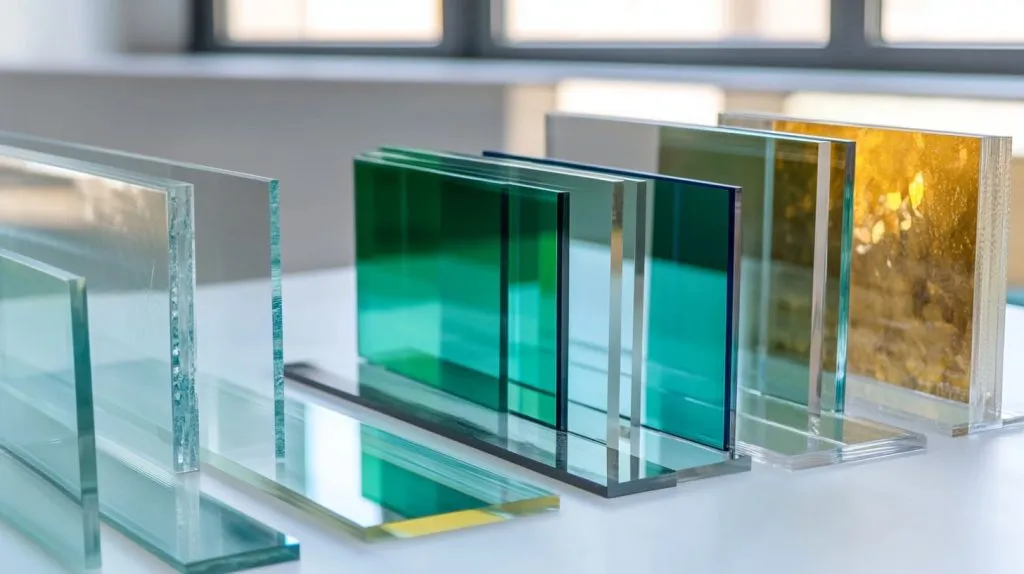
Standard Float (Annealed) Glass
I start with float because it’s the baseline: cheap, clear enough, and everywhere. Yet the moment it breaks, it leaves long, jagged shards. Fine for a picture frame on my office wall, terrible for a display kids can touch.
Tempered (Toughened) Glass
Tempered gets a heat-shock workout that makes it four to five times stronger than float. When it fails, it drops into sugar-cube chunks—no lethal spears. That’s why most jewelry counters trust it. The trade-off? You can’t cut or drill it later.
Laminated Safety Glass
Think glass-PVB-glass. The plastic interlayer glues shards together, so even a baseball hit won’t send splinters flying. That same sandwich blocks a fair slice of UV and deadens sound—handy in museums and open-plan stores.
Low-Iron / Extra-Clear Glass
Regular glass has a green tint from iron. Strip the iron and color fidelity jumps. I use low-iron for luxury watches, rare books, and anything where hue accuracy sells the piece. Price runs higher, but clients notice.
Museum / UV-Filtering & Anti-Reflective Glass
Add multi-layer coatings and you slash glare to almost zero while blocking 99 % of UV. It’s the gold standard for conservation work. The coating scratches if mishandled, so crews need white gloves and patience.
Specialty Security Glass
Laminates can stack up to stop bullets or smash-and-grab attempts. Banks love them. Mix in anti-reflective skins and visitors won’t see the heft—they just see the art.
Next up, let’s stress-test these options so numbers back the stories.
Performance Comparison Criteria
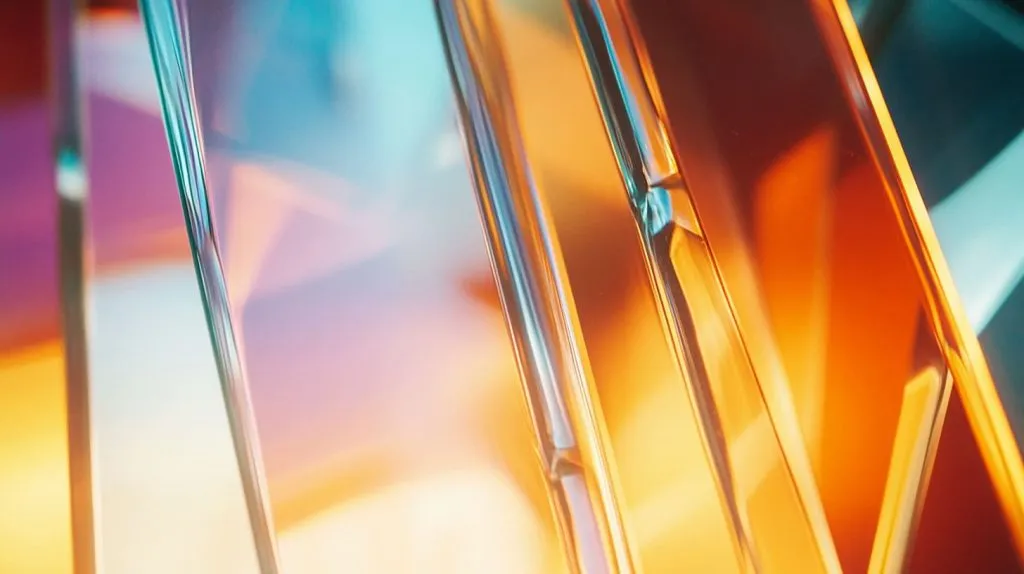
Optical Clarity & Color Rendition
I measure visible light transmission (VLT) and color shift. Low-iron scores > 91 % VLT with near-zero green. Float hovers around 88 % and skews warm objects cool.
| Glass Type | VLT (%) | Visible Tint | Best Use Case |
|---|---|---|---|
| Float | 86–88 | Green-blue | Budget display, low stakes |
| Tempered | 86–88 | Green-blue | Retail shelf, public traffic |
| Low-Iron | 90–92 | None | Premium art, luxury retail |
| Museum AR | 97–99 | None | Museums, light-sensitive items |
Strength & Impact Resistance
Tempered wins everyday knocks. Laminated holds glass together even after cracking—great when falling shards are unacceptable.
UV Protection & Preservation
ISO 21127 warns that 50 lux can fade textiles in months. Laminated with UV interlayers or coated museum glass keeps levels safe without dark rooms.
Weight & Handling
A 6 mm panel weighs about 15 kg/m². I watch floor load limits and rigging gear. Acrylic halves that mass but scratches easier.
Scratch & Chemical Resistance
Glass rides higher on the Mohs scale (5.5) than acrylic (3). Coatings drop that number slightly but still outclass plastics against mop handles and rings.
A quick breath—cost realities often break a tie, so let’s crunch numbers.
Cost and Availability

Raw Material & Processing Costs
Tempered costs roughly 1.5× float. Low-iron bumps to 2–2.5×. Museum AR? Up to 6×. I remind clients that damage or glare can cost more than glass.
| Glass Type | Relative Cost | Typical Lead Time | Notes |
|---|---|---|---|
| Float | 1× | 2–3 days | Widely stocked |
| Tempered | 1.5× | 5–7 days | Needs custom heat cycle |
| Low-Iron | 2–2.5× | 7–10 days | Limited sheet sizes |
| Museum AR Laminated | 5–6× | 3–4 weeks | Coating line queue |
Supply Chain & Lead Times
Standard sizes ship quick. Odd dimensions ride the same trucks but wait in line at tempering ovens. COVID proved that a second source is not a luxury—it’s insurance.
Long-Term Maintenance Expense
AR coatings need pH-neutral cleaners and microfiber cloths. Skip those and the haze never wipes clean.
Sticker shock stings, yet design choices widen or narrow the bill—let’s engineer smart.
Design & Fabrication Considerations
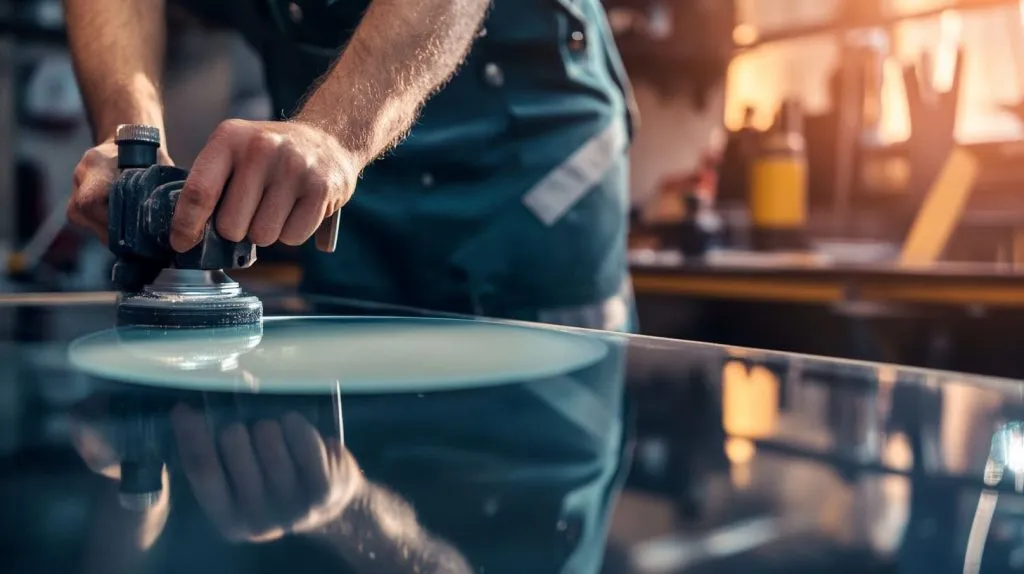
Thickness Selection & Structural Limits
I start with span tables. For a 900 mm shelf length, 6 mm tempered survives a 5 kg load with < L/200 deflection. Float would bow and crack.
| Span (mm) | Float Thickness | Tempered Thickness |
|---|---|---|
| 600 | 5 mm | 4 mm |
| 900 | 8 mm | 6 mm |
| 1200 | 10 mm | 8 mm |
Edge Finishing Options
Flat-polish gives a crisp line. Bevel softens it. Mitre joints hide glue lines—my go-to for seamless cubes.
Joining & Bonding Techniques
UV-cure adhesives set fast and stay invisible, but they need glass that transmits UV. Laminated layers can block that; then I switch to clear structural silicone.
Hardware & Mounting Integration
Hinges, locks, and dampers must match glass thickness. I mock the hardware in CAD, then hand it to the CNC crew to slot holes before tempering.
Fabrication solved. But context decides—who stands in front of the case matters more.
Application-Based Recommendations
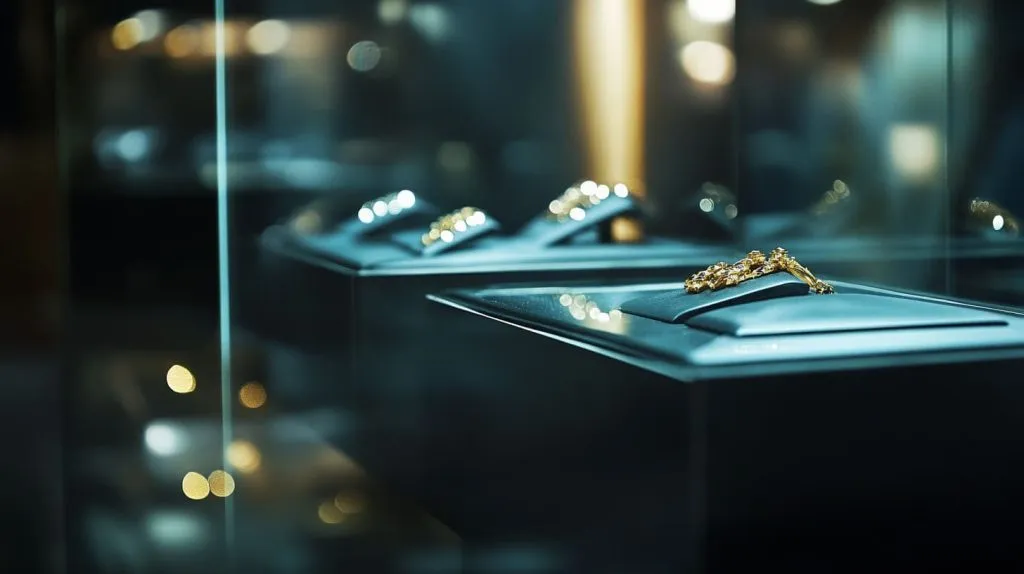
Retail & Jewelry Displays
I default to 6 mm tempered low-iron. Shoppers see sparkle; staff feel safe. If budget is tight, tempered float still beats scratched acrylic shelves.
Museum & Gallery Cases
6.4 mm laminated low-iron with AR coating protects against UV, thieves, and smartphone glare. Each panel costs like a small car, yet the artifacts earn the spend.
Home Collector Cabinets
Many collectors pick tempered float, then add a peel-and-stick UV film later. It’s a compromise that keeps marriage budgets happy.
High-Security Installations
Multi-laminate security glass layers polycarbonate inside glass. It stops a hammer and slows a .44 Magnum. Sensors slip between layers, so the alarm screams before glass falls.
Portable or Traveling Exhibits
Weight rules here. I pair acrylic vitrine walls with tempered glass shelves. Visitors lean on the shelves; roadies love lighter lids.
Environment also shapes the spec—codes and climate wait around the corner.
Environmental & Regulatory Factors
Fire Safety & Building Codes
In North America, tempered or laminated glass satisfies ANSI Z97.1 for human impact. Europe leans on EN 12150. I keep both charts taped above my desk.
Conservation & VOC Requirements
Fresh silicone off-gasses. Museums demand 4–6 weeks cure time before install. I add silica-gel trays inside sealed bases to buffer humidity.
Sustainability & End-of-Life
Float glass recycles into new cullet. Laminates head for specialized crushers. Acrylic can be re-cast, though few facilities do it. When carbon counts, shipping weight often beats material chemistry.
Speaking of acrylic, let’s pit it head-to-head with glass.
Glass vs Acrylic: Choosing the Right Material
Comparative Advantages of Acrylic
Acrylic shrugs off impacts 17 times better than glass and weighs half as much. I can carry a 1 m² sheet solo. It machines like butter, accepts solvent joints, and ships without shattered dreams.
Hybrid Solutions
My favorite blend: an acrylic lid to cut weight, a tempered low-iron base for scratch resistance. Hinges bolt into metal inserts cast inside acrylic—no stress cracks.
Case Studies: When Clients Switched to Acrylic
Jacky once flew 12 acrylic cases to Berlin. Freight dropped one crate. Only the tempered glass shelves inside broke. The acrylic walls bounced. We swapped those shelves for polycarbonate and cut damage costs by 80 %.
Decisions get messy fast, so I boiled the logic into one page.
Decision Flowchart
Step-by-Step Selection Process
- Define the venue. Retail, museum, private?
- Rank priorities. Clarity, safety, cost—what’s non-negotiable?
- Match to material. Use the matrix below.
- Check code. Local rules can veto the cheapest path.
| Priority Mix | Recommended Material |
|---|---|
| High clarity + low cost | Low-iron tempered |
| Max UV block + clarity | AR laminated |
| High impact + low weight | Acrylic |
| Security + clarity | Multi-laminate glass |
Common Pitfalls & How to Avoid Them
- Over-spec thickness. More weight, no gain. Run span tables first.
- Ignore UV. Pigments fade silently. Spend on protection early.
A final bow and we’re done.
Conclusion

I’ve learned the hard way that there is no universal “best” glass. The sweet spot shifts with every venue, budget, and artifact. For everyday retail, tempered glass delivers strength without drama. In museums, laminated low-iron guards both color and safety.
Next steps? Grab material samples and view them under your actual lighting. When acrylic might tip the scales—weight, cost, or safety—drop me a line.
At Feilong Acrylic we prototype fast, build hybrids, and ship worldwide in 15–25 days. Thirteen years of custom work taught us this: the perfect display starts with one clear pane and the courage to choose wisely.
Coffee’s on me when you’re ready to dive deeper.