Skip to content

A few days ago, I was helping a client narrow down options for a high-clarity plastic box with a magnetic lid. We were deep into the discussion—materials, finish, packaging—when he paused and said, “Honestly, I’ve wasted weeks talking to suppliers who overpromise and underdeliver. I just want someone I can count on.”
That line hit home.
Because behind every sourcing decision is a real person trying to make something work—on a deadline, with a budget, and often under pressure from someone higher up. Whether it’s a clean acrylic organizer or a bulk run of storage boxes, reliability isn’t just nice to have. It’s the difference between a product that ships on time and one that sits in customs for a month.
That’s exactly why I’ve written this. Not as a checklist of platforms or some fluff-filled advice piece—but as a clear, honest map for how to find plastic box suppliers who actually show up when it matters most.
(Stay with me — because what looks like a simple supplier search often hides the real game underneath.)
Why Reliability Matters When Sourcing Plastic Box Suppliers

Few things test a buyer’s nerves like a late container or a hazy lid. Reliability isn’t fluff; it’s oxygen. Let’s break down why.
Quality assurance & brand reputation
When a display box shines crystal-clear, customers assume the product inside is first-class. Scratch it, and their faith cracks too. I once watched shoppers at a mall stall pick perfect units from the middle of each stack, fearing the outer pieces were scuffed. A clean supply chain protects us from that silent judgment.
Cost & lead-time stability
Rush fees and air freight chew margins faster than any tooling invoice. I learned that the hard way during a holiday crunch: one factory skipped a final polish, we caught it in QC, and boom — expedited remake, overnight DHL, midnight calls. Reliable partners cut that chaos.
Regulatory compliance & certifications (ISO 9001, SQF, FSC)
Auditors don’t care about excuses. They want paperwork, traceability, and repeatable processes. An ISO 9001 badge signals systems, not slogans. For food-grade or cosmetic packaging, SQF and FSC lines on a certificate keep your products on the shelf, not stuck in customs.
Just before we dive into where to find these partners, let’s shift gears and map the hunting ground itself.
Mapping the Supplier Landscape

My inbox looks like a world atlas, and each dot represents a different way to meet a supplier. But not every path suits every project.
Online B2B directories & marketplaces (Alibaba, Made-in-China, Thomasnet, IQS Directory, Global Sources)
These platforms work like gigantic trade shows in your browser.
Strengths:
- Huge vendor pool
- Quick RFQ tools
Watch-outs: - Copy-paste replies
- Varying QC depth
Global trade shows & exhibitions (Canton Fair, PACK EXPO, K Show)
Walking a booth row tells you more in five minutes than ten emails. I often flip a sample in my hand while quizzing the sales engineer: “What’s your polishing method?” Their eyes reveal if the brochure matches reality.
Industry associations & networks (SPI, AMI events)
Membership fees filter casual vendors out. If a factory invests in an association seat, they likely invest in better tooling and training too.
Social & referral channels (LinkedIn, Reddit r/business)
A single DM from a fellow buyer sometimes trumps a glossy catalog. When someone posts, “We used them twice with no issues,” I pay attention — and ask for photos.
Up next, let’s talk about how to judge these prospects before you wire a cent.
Evaluating Supplier Reliability

A flashy website means nothing if the factory floor is dusty and disorganized. I carry a pocket checklist; here’s what’s on it.
| Checkpoint | Why It Matters | Quick Test |
|---|---|---|
| ISO 9001 certificate | Confirms process consistency | Verify certificate number online |
| In-house QC lab | Catches haze, stress lines early | Ask for a test report sample |
| Client references | Shows real-world track record | Request two contacts, not just one |
| Financial filings | Stability = fewer mid-order surprises | Look up local credit reports |
Certifications & compliance audits (ISO, SQF, HACCP)
Compliance costs money. If a plant pays for third-party audits yearly, they’re betting on long-term business, not quick wins.
Years in business & client references
A factory that survived multiple recessions didn’t do it by shipping junk. Call their oldest client and ask, “What went wrong, and how did they fix it?”
Quality-control infrastructure & sample testing
I still keep a photo of a light booth with color chips pinned around it. That booth saved a launch by catching a slight tint shift no one’s naked eye saw under warehouse lights.
Financial stability & capacity assessment
Order volume means nothing if the supplier can’t front raw-material cash. Bank letters or credit reports help you sleep at night.
Ready to match these vetted partners with your exact project needs? Let’s narrow the lens.
Matching Supplier Capabilities to Project Requirements

No two plastic boxes are the same. Wall thickness, hinge style, even the snap sound — every detail changes who belongs on your shortlist.
Customization & design support
A supplier fluent in CAD tweaks saves weeks. I once sent a STEP file at 10 p.m.; by sunrise, their engineer had cleaned undercuts and suggested a rib to stop warping.
Minimum order quantity & scalability
Starting with 500 units? Great. Planning for 50,000 next year? Make sure the factory owns enough molds or can scale crew shifts.
Material expertise (PVC, PET, PP, acrylic)
Different resins behave like different personalities. PET loves clarity; PP bends without cracking. Choose a shop that respects those quirks.
| Material | Best For | Common Pitfall |
|---|---|---|
| PVC | Electronics sleeves | Can yellow under UV |
| PET | Food display | Heat-sensitive in transport |
| PP | Hinged lids | Scuffs easier |
| Acrylic | Premium showcases | Brittle if wall too thin |
Sustainability & eco-friendly options
Clients ask about recycled PET more than ever. Factories with pellet-tracking systems give you real percentages, not marketing fog.
Logistics & communication efficiency
A 12-hour time gap feels shorter when a project manager answers at 8 a.m. your time. Test response speed with a small query first.
Next, let’s zoom out and weigh where your boxes should be born.
Domestic vs Overseas Sourcing Considerations

The factory’s postcode can boost or break your timeline. I’ve balanced these scales from Vancouver to Dongguan.
North American manufacturers: benefits & limitations
Pros:
- Shorter transit time
- Familiar regulations
Cons: - Higher labor costs
- Limited color-matching on niche resins
Chinese & Southeast Asian suppliers: cost vs risk
Pros:
- Competitive pricing on volume
- Wide mold library
Cons: - Longer shipping, holiday shutdowns
- Greater IP vigilance needed
Hybrid supply chains & dual-sourcing strategies
Many buyers split: high-margin SKUs at home, bulk packs offshore. That hedge kept me calm during a port strike last year.
Now, even the best plan needs safeguards. Let’s set those up.
Due Diligence & Risk Mitigation Steps
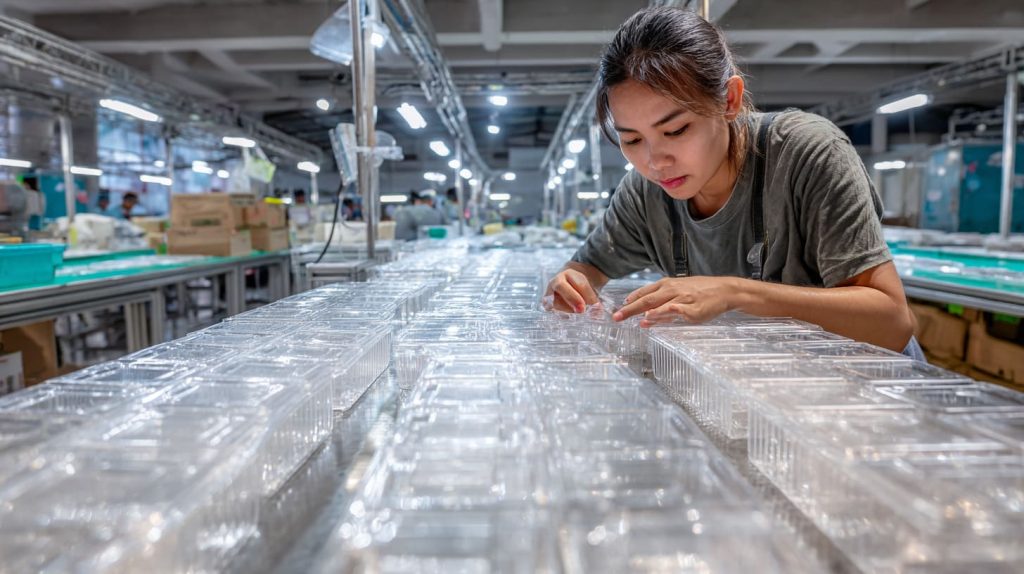
I like to think of risk like dust. You never get rid of it, but good habits keep it from piling up.
Factory audit checklists & site visits
Walk the line. Smell the resin. Count the gauges on a CNC panel. Those senses beat PDFs every time.
Pilot runs & performance metrics
A 1,000-unit pilot tells you cycle time, defect rate, and packaging strength. Track scrap percentage; it forecasts cost creep.
Contracts, IP protection & payment terms
Lock molds under your name, set staged payments, and register key designs in the supplier’s country. One hour with a lawyer now saves months in court later.
(We’re almost at the finish line. Let’s wrap this up with a clear takeaway.)
Conclusion

Finding a reliable plastic box supplier isn’t a treasure hunt; it’s a process of steady filtering. Start wide, vet hard, then match strengths to your exact brief. When every sample clicks shut with that satisfying snap, you’ll know the legwork paid off. And if you ever spot a cloudy lid under showroom lights, you’ll also know why you never cut corners on reliability.