Skip to content

There’s a quiet satisfaction in sliding open a storage bin and finding exactly what you need—no digging, no guessing, no mess spilling out around you. That moment, when everything has its place and every lid fits just right, isn’t just about staying organized. It’s about peace of mind. I’ve seen that same look of relief in our clients’ faces during showroom visits or after product installs. Whether they’re managing hundreds of display parts or just sorting out seasonal tools, one thing is clear: plastic storage boxes are still one of the most underrated essentials in any workspace or home.
What makes them so useful? It's not just the price. Plastic bins give you visibility without having to open a thing. They’re tough enough to handle warehouse shelves or kids' rooms. And when you’re dealing with bulk, their stackability saves space like nothing else. Lightweight, low-maintenance, and surprisingly versatile—they’ve stuck around for good reason.
But not all plastic storage is made equal, and how you use them can make or break your setup. Let’s unpack this from the ground up.
Before we dive deeper, let’s test what “plastic box” really means.
Understanding Plastic Storage Box Types
Clear vs. Opaque Containers
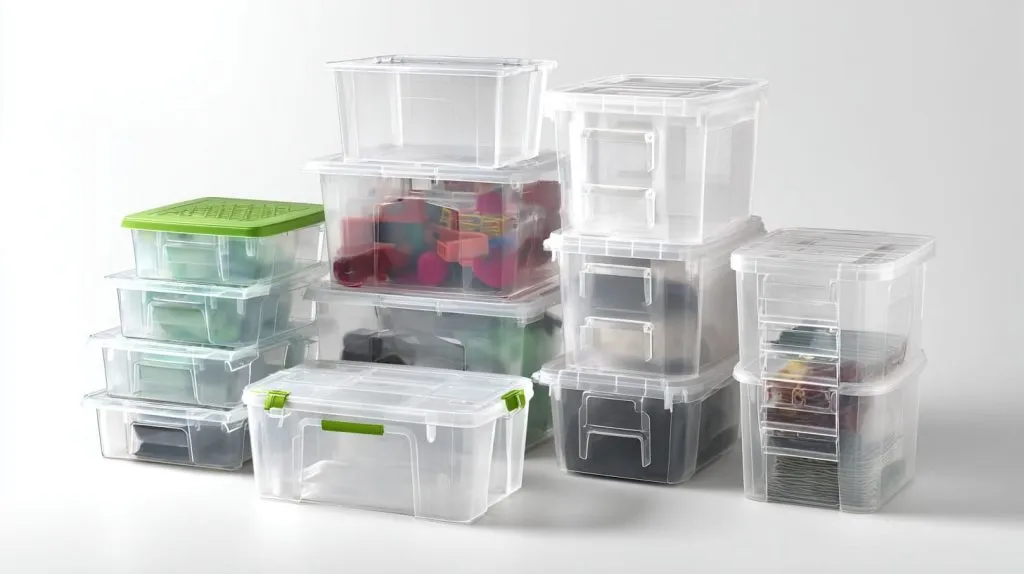
I keep clear bins for screws, paint bottles, and customer swatches. One glance tells me if I’m low. Opaque bins hide clutter when I give factory tours. They protect photos and fabrics from light. The trade-off is obvious: see-through ease versus UV shielding.
Latch-top vs. Snap-lid vs. Flip-top Designs
Latch lids clamp tight. Great for powder spills and toddler raids. Snap lids cost less but can pop open if you overload. Flip tops stay attached, handy when you lose small parts faster than you’d admit.
Stackable Totes vs. Drawer Units vs. Modular Cubes
Stackable totes climb toward the ceiling on slow inventory days. Drawer towers live under my cutting table for fast tool grabs. Modular cubes click together when a client changes layout mid-project.
Specialty-grade Plastics: Food-safe, Archival, UV-resistant
Food-safe PP stores coffee beans for late shifts. Archival PET boxes keep an artist’s limited prints flat and acid-free. UV-resistant HDPE protects fishing lures I swear I’ll use someday.
| Type | Best For | Caveat |
|---|---|---|
| Clear PP | Quick visual checks | Fades with harsh sun |
| Opaque HDPE | Light-sensitive items | Harder to label contents |
| Latch-top | Liquids, powders | Extra cost |
| Drawer unit | Daily access | Lower weight limit |
I notice many buyers jump straight to price. Yet choosing by feature first saves both money and headaches.
If picking a box feels like staring at a shelf of identical noodles, the next step—figuring out what you actually own—will clear the fog.
Assessing Storage Needs Before You Buy
Taking Inventory & Decluttering First
Last spring, I emptied a storeroom the size of a studio apartment. A third of the contents belonged in recycling. Counting before purchasing boxes cut my order list by half.
Measuring Space: Shelves, Closets, Under-bed, Vertical Cavities
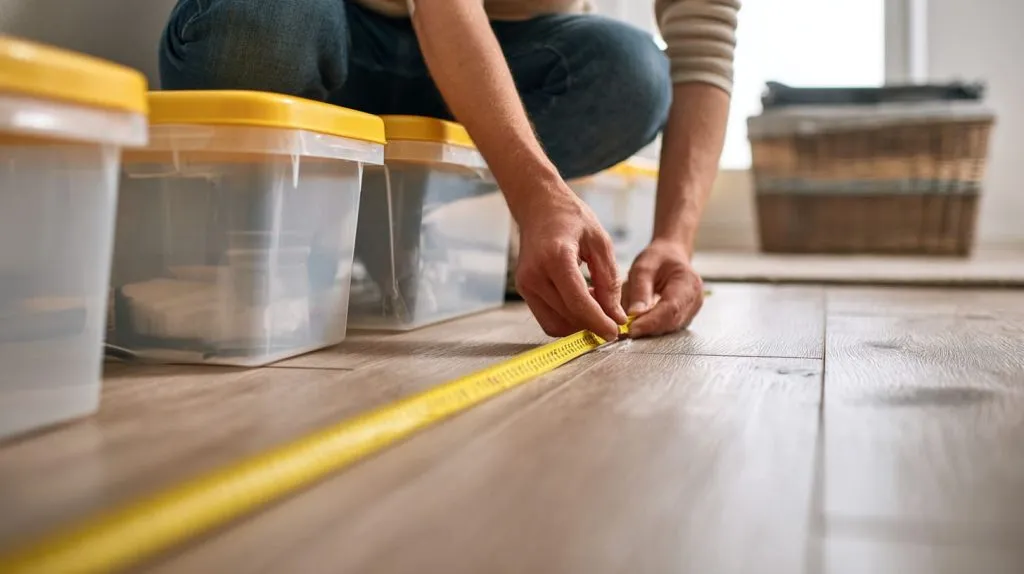
Grab a tape, not a guess. Measure height, width, depth. Remember lid clearance. Nothing feels worse than a bin that fits—until you try to open it.
Weight & Load Considerations (contents vs. box capacity)
Bolts weigh more than plush toys. Check the manufacturer’s weight rating. A cracked tote corners faster than you can shout “catch!”
Matching Box Size to Item Category (micro, small, medium, oversize)
| Box Size | Common Contents | Note |
|---|---|---|
| Micro (≤2 L) | USB drives, beads | Fits desk drawers |
| Small (3-10 L) | Cables, spices | Good for shelf gaps |
| Medium (11-40 L) | Sweaters, power tools | Most versatile |
| Oversize (≥41 L) | Camping gear, quilts | Watch lifting safety |
Declutter, measure, weigh, match—four steps that keep you from buying the wrong mountain of plastic.
Now that we know the plan, let’s walk room by room and see real examples.
Room-by-Room Applications
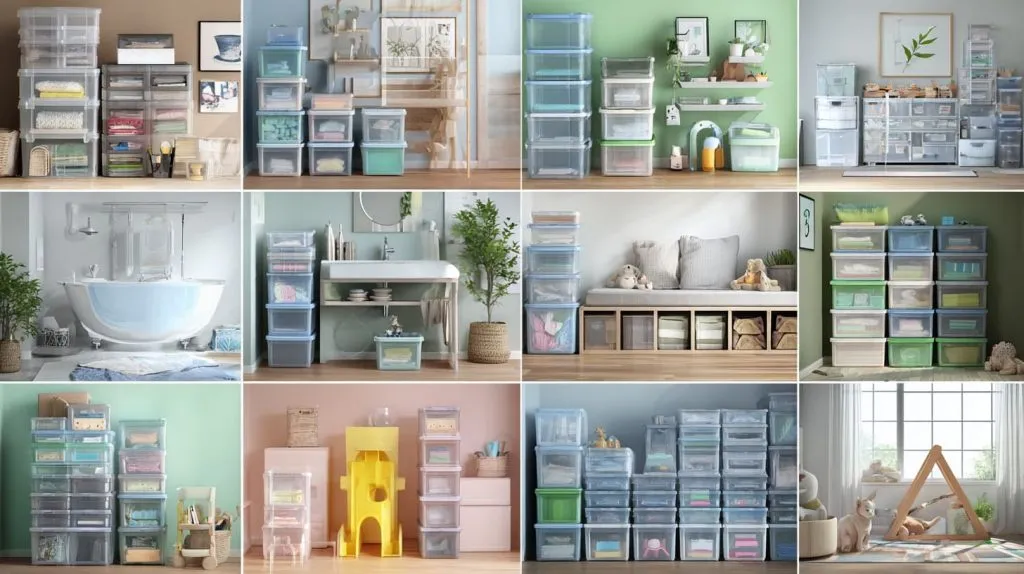
Kitchen & Pantry
- Dry-goods decanting: I transfer rice and pasta into clear 5 L bins. Freshness dates face forward.
- Lid wrangling: A narrow tote stands upright under the sink, taming rogue container tops.
Bedroom & Closet
- Off-season rotation: Thick coats rest in vacuum-sealed bins on the top shelf every April.
- Accessory cubbies: A set of shoe-sized drawers lines my wardrobe floor, each labeled belts, ties, scarves.
Bathroom & Laundry
- Supply split: One opaque box for bleach, another for towels. No more accidental splash stains.
- Travel kits: Clear pencil cases hold airplane-size bottles; they snap into a shallow drawer unit.
Living Room & Home Office
- Cable corral: Medium bins with dividers group HDMI, USB-C, and power bricks.
- Craft zoning: Roll-out drawer carts keep vinyl sheets flat and dust-free.
Kids’ Playroom & Classroom
- Photo labels: A picture of blocks taped on the front beats words for quick cleanup.
- Art safety split: Scissors with blunt tips go in blue bins; sharper tools wait on a high shelf.
Garage, Basement & Workshop
- Hardware sorting: I use tackle-box inserts inside larger totes—screws by length, nuts by thread.
- Seasonal gear: Skis rest in long bins; helmets ride on top, clipped to handles.
Even one organized corner can motivate the next tidy upgrade.
But home is only half the story. Plastic boxes travel further than many suitcases.
Specialty Uses Beyond the Home
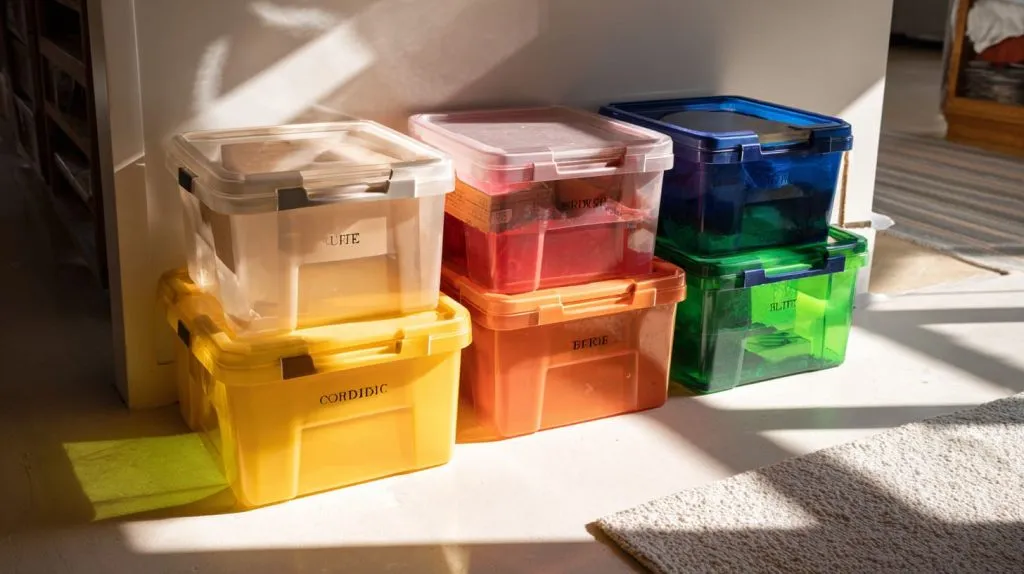
Moving & Relocation Kits (color-coded totes by room)
I assign red to kitchen, green to office, blue to bedroom. Labels stay on. Stress stays low.
Seasonal & Holiday Décor Safekeeping
String lights coil inside translucent wheels; ornaments nest in divided trays. No more mystery boxes in July.
Archival & Collectibles Protection (photo-safe PET boxes)
Comic books sit upright with acid-free boards, stored in dark opaque bins. Value stays intact.
Outdoor & Garden Storage (weather-resistant bins for tools & soil)
I drilled tiny drainage holes in a HDPE box for muddy trowels—airflow beats rust.
When plastic faces rough travel, grade and seal become critical.
Feeling creative? Those same bins can moonlight in surprising roles.
Creative Repurposing & DIY Projects
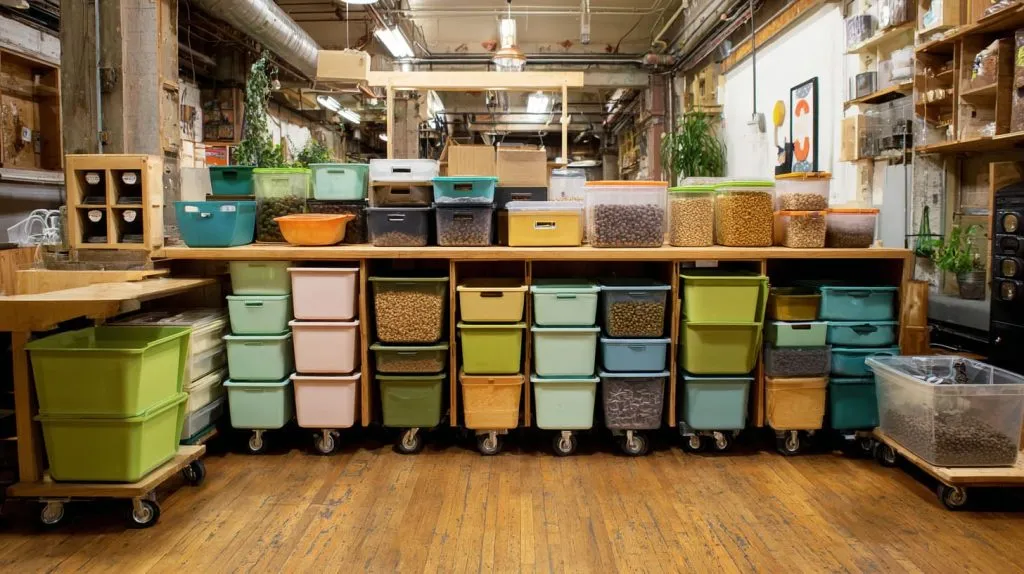
Turning Totes into Stackable Drawer Towers
Cut the front panel, sand edges, and slide boxes onto plywood rails. Instant budget dresser.
Converting Bins to Planters or Composters
A few side holes for air, one bottom drain, and you have a balcony herb garden.
DIY Pet-food Dispensers & Litter Stations
Flip-top totes pour kibble with one hand. For litter, attach a scoop hook to the side.
Crafting Rolling Under-bed Storage with Casters
Screw furniture wheels onto a low bin. Store wrapping paper without bending.
| Project | Needed Tools | Time |
|---|---|---|
| Drawer tower | Utility knife, sandpaper | 30 min |
| Planter | Drill, marker | 15 min |
| Pet dispenser | Scoop hook, screws | 10 min |
| Rolling bin | Casters, screwdriver | 20 min |
Repurposing delays landfill trips and sparks new ideas.
Function matters, but features seal the deal when you’re at the checkout.
Choosing the Right Box: Material, Size & Features
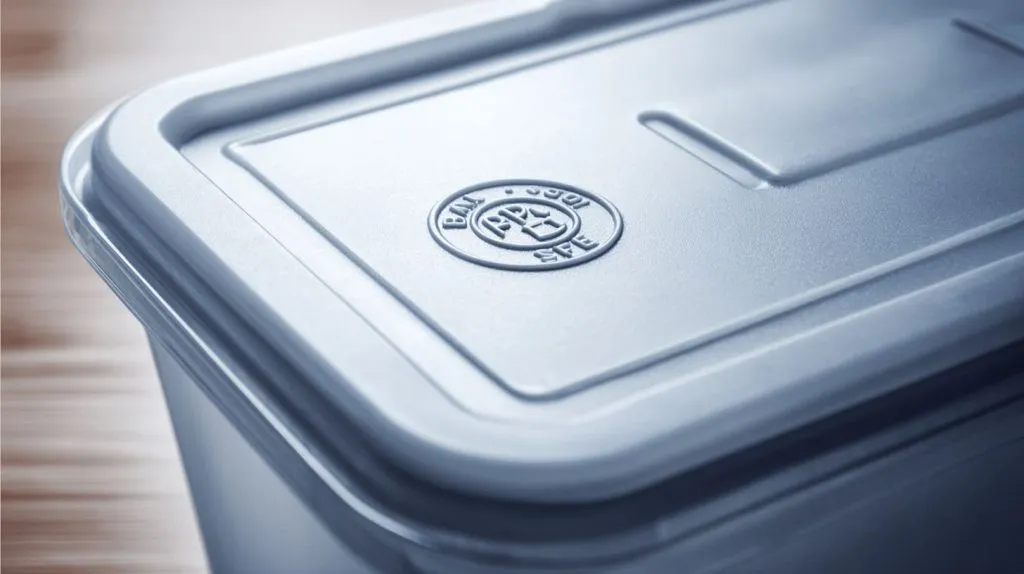
BPA-free & Food-grade Certifications
Look for the fork-and-glass symbol. It means the bin won’t leach chemicals into coffee beans.
Reinforced Handles & Locking Lids for Heavy Loads
If you lift weights on weekends, treat your tote the same. No flimsy tabs, please.
Integrated Wheels, Label Slots, Color-coded Tops
Wheels save backs. Label slots save time. Color tops save marriages when someone else unpacks.
Cost-to-Durability Trade-offs
| Feature | Budget Bin | Mid-range | Pro-grade |
|---|---|---|---|
| Handle strength | 5 kg | 12 kg | 20 kg |
| Lid seal | Loose | Snap | Gasket |
| Price (20 L) | $4 | $9 | $18 |
Paying twice for replacements costs more than buying right once.
Owning the perfect box means nothing if you mistreat it. Let’s keep them alive longer.
Safe Handling, Labeling & Maintenance Tips
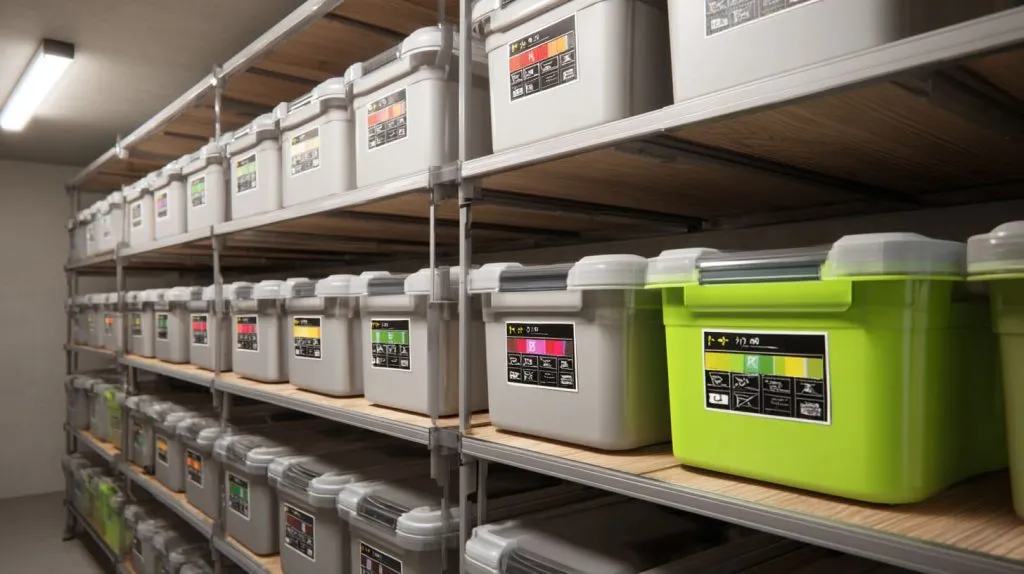
Effective Labeling Systems (icons, QR codes, erase boards)
I tried QR codes that open packing lists on my phone—geeky but fast.
Proper Stacking & Weight Distribution
Heavy bins on the floor, lighter ones above shoulder height. Think safety first, tower later.
Cleaning Protocols: Dish-soap, Vinegar, and UV Sun-dry
Hand-wash, rinse, tilt to drain, then let sunlight finish the bacteria.
Preventing Warping, Cracking, and Pest Intrusion
Avoid dropping cold bins on hot pavement. Mice respect tight lids but chew soft seals.
Small habits extend a bin’s life by years.
Extending life also means thinking beyond that life.
Sustainability: Extending Lifespan & Responsible Disposal

Repairing Minor Cracks & Reusing for Lighter Duties
Melt a crack’s edges with a soldering iron, then retire the bin to pillow storage.
Upcycling Ideas vs. Creating Additional Waste
Turn a split tote into a paint tray, not landfill filler.
Local Recycling Codes & Take-back Programs
| Plastic Code | Common Bin Material | Recycle Curbside? |
|---|---|---|
| #2 HDPE | Heavy-duty totes | Often |
| #5 PP | Clear kitchen bins | Sometimes |
| #7 Other | Mixed polymers | Rare |
Choosing Recycled-content or Bio-based Plastics
Ask suppliers for post-consumer content certificates. It pushes the market toward greener stock.
Care equals reuse; reuse equals less waste.
And that loops us back to why we started this tour.
Conclusion
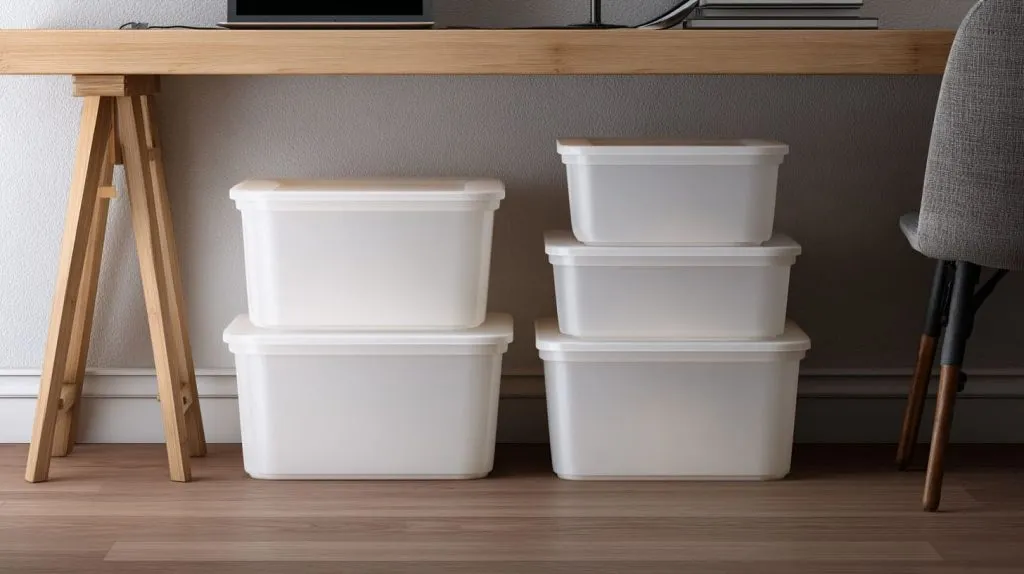
From my factory floor to your hallway closet, plastic storage boxes earn their keep through clarity, strength, and sheer versatility. Pick the right type, size, and feature set, treat every bin with a bit of respect, and you’ll spend less time hunting for stuff and more time using it. Practical tweaks—like color codes, wheels, or a quick upcycle—turn ordinary tubs into smart tools. Organize first, buy wisely, store safely, reuse creatively. Your future self (and the planet) will thank you.