 Skip to content
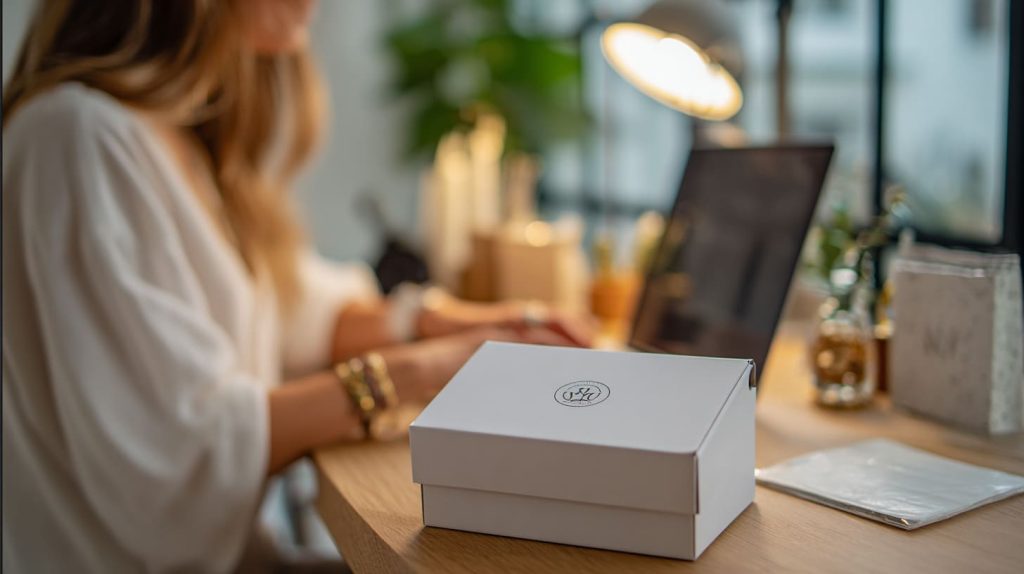
A customer once paused mid-scroll while browsing an online store I worked with. Two similar products, same specs, almost the same price—but one had a crisp, branded box with a bold logo and clean typography. That’s the one they clicked. That’s the one that sold.
It wasn’t the specs that won them over. It was the box.
That moment stuck with me. Packaging isn’t just a container anymore—it’s a decision-maker. Custom retail boxes with your logo have become a powerful tool in how products are discovered, judged, and remembered. They shape perception before the product even touches a hand.
So in this article, I want to walk you through the process I’ve seen work—step by step—from designing the perfect box, to choosing the right materials, to placing a smooth custom order. If you're in product development like Jacky, and you’ve spent hours tweaking packaging specs and chasing sample approvals, this guide will feel like a shortcut you’ve been waiting for.
Understanding the Value of Custom Logo Boxes
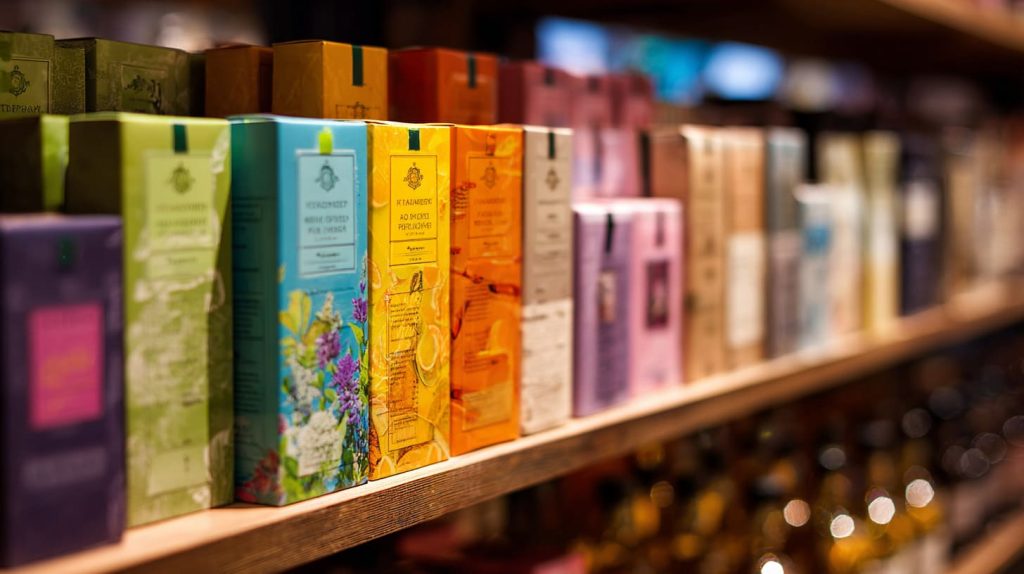
Why visual branding on packaging matters
Two seconds. That’s the average time a shopper gives your product when scanning a shelf. A crisp logo and color scheme stop the scroll and the stroll. I’ve seen conversion rates jump 20 % after a simple packaging refresh. Strong visuals also help online: thumbnail shots with clear branding boost click-throughs, driving traffic back to your listing.
Key benefits for B2B buyers
| Benefit | How It Helps the Bottom Line | Real-World Example |
|---|---|---|
| Protection | Fewer returns, less breakage | Fragile acrylic frames reached Europe with <1 % damage |
| Shelf Presence | Better placement, premium pricing | Store upgraded brand to eye-level after re-pack |
| Differentiation | Shields you from look-alike rivals | Jacky’s limited-run boxes featured teal foil |
| Unboxing Impact | Encourages social sharing & reviews | 15 % rise in tagged Instagram posts |
A quick coffee-break thought before we dive into box styles: if design tells the story, the box type is the stage. Let’s pick the right stage next.
Box Types & Materials

Common retail box styles
- Mailer – self-locking, ideal for e-commerce.
- Folding carton – lightweight; perfect for cosmetics.
- Rigid / neck-and-shoulder – luxury feel, higher cost.
- Corrugated shipper – rugged for bulk deliveries.
- Pillow & gable – gift-ready shapes that stand out.
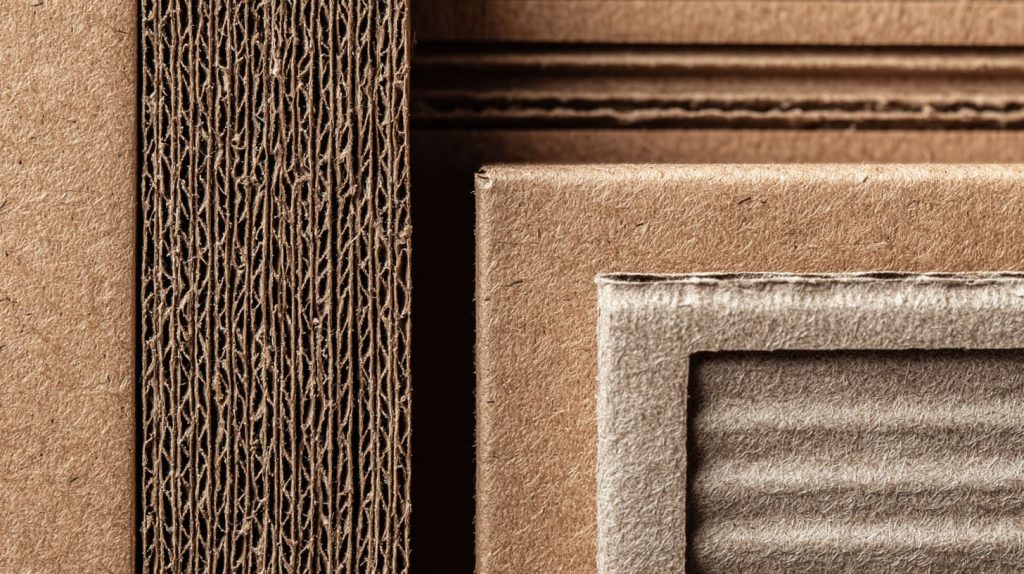
Material choices: cardboard vs corrugated vs rigid
| Property | Cardboard (Folding) | Corrugated | Rigid Board |
|---|---|---|---|
| Cost | Low | Medium | High |
| Strength | Moderate | High | Very high |
| Sharp graphics | Good | Excellent | |
| Recycle | Easy | Easy | Moderate |
Simple rule: small shelf item? Go folding. Heavy or pricey? Lean rigid. Shipping long haul? Corrugated wins.
Eco-friendly substrate options
These days I’m asked, “Can we go green without going broke?” Yes. Recycled kraft liners shave down carbon footprints. FSC-certified boards reassure big-box buyers. Even algae-based inks are viable for short runs.
To keep you reading, here’s a teaser: dielines are where most projects stall—but they don’t have to. Let me show you how I tame that chaos.
Structural & Graphic Design Fundamentals
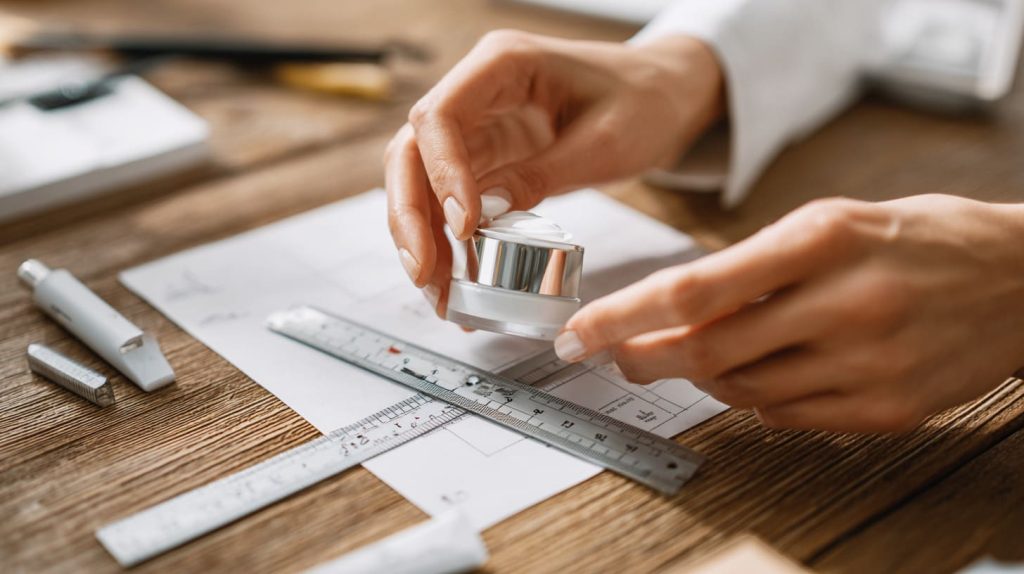
Defining interior dimensions and product fit
I measure the product, add room for a manual, then bump tolerance by 1 mm. That tiny cushion saves returns from crushed inserts.
Drafting dielines & prototypes
I always ask the supplier for a blank dieline PDF, drop my design in Illustrator, and print a quick paper mock-up. A $0.10 paper test can save a $3,000 reprint.
Logo placement, color management & brand fonts
- Place big logos on at least two faces.
- Stick to CMYK 300 dpi files; no RGB surprises.
- Keep fonts in curves; printers hate missing glyphs.
Finishing & embellishment options
A matte lamination whispers “premium.” Spot UV shouts “look here!” I combine both sparingly—too many effects fight each other.
Prototype approved? Great. Next up, which press should run your job?
Printing Technologies & When to Use Them

Digital vs. offset vs. flexo
| Tech | MOQ | Setup Cost | Color | Lead Time | Best For |
|---|---|---|---|---|---|
| Digital | 1–100 | Very low | Good | Fast | Samples, micro runs |
| Offset | 250+ | Medium | Excellent | Moderate | Retail cartons |
| Flexo | 1,000+ | High | Good | Fast for high volume | Corrugated shipper |
Inside-and-outside print strategies
Printing both sides adds 10–15 % cost but doubles the brand experience. I go full coverage for gift boxes, half-coverage for budget SKUs.
Offset ink still wet? Let’s crunch numbers while it dries.
Order Quantities, Budget & Cost Drivers
Understanding MOQs
A single prototype is fine digitally, but rigid boxes usually start at 250 pieces. Planning an Amazon launch? Forecast sales for three months and match the print tier to avoid mid-season price spikes.
Unit price influencers
- Size (surface equals ink equals money).
- Material grade (coated white board costs more).
- Finishes (each foil pass adds a plate charge).
- Freight (dim-weight often beats actual weight).
Cost-saving tactics
- Use one universal size across SKUs.
- Stick to one or two pantone colors.
- Group multiple SKUs into one print run.
- Source regionally during peak freight seasons.
Feeling budget confident? Good. Let’s find the right partner.
Finding & Vetting Suppliers
Domestic vs. overseas: pros & cons
Domestic means shorter lead times and easier phone calls; overseas offers lower unit costs and wider finish options. I split projects: prototypes at home, bulk in Asia.
Evaluation checklist
- ISO or BSCI audits?
- Sample quality matches quote?
- Replies within 24 h?
- Clear artwork guidance?
- Past references in your industry?
RFQ essentials
Always include: box style, inner and outer dimensions, quantity per SKU, print spec, finish, incoterm, target ship date, and artwork files. Skip any item and expect a volley of clarification emails.
Supplier selected, RFQ done—what happens next? A clear timeline keeps you sane.
The Ordering Workflow
Step-by-step timeline
- RFQ & quote comparison
- Artwork & dieline confirmation
- Prototype approval
- Production & QC
- Final payment & shipping logistics
Typical lead times
| Stage | Days |
|---|---|
| Artwork tweaks | 1–3 |
| White sample | 5–7 |
| Mass production | 10–20 |
| Sea freight (NA) | 15–35 |
Prototype sailing smoothly? QC is your last gatekeeper—let’s open it.
Quality Control & Compliance

Pre-production checklist
- Color proofs signed.
- Drop-test standard set (usually ISTA 1A).
- Barcodes scanned for accuracy.
In-line and final inspections
I request an in-line check at 20 % output to catch print shifts early. Final inspection reviews 100 cartons for glue, print, and moisture.
Documentation
QC photos, packing lists, and compliance certificates live in one shared folder—no more hunting when customs calls.
Next challenge: doing all this without trashing the planet.
Sustainability Considerations

Choosing recyclable or biodegradable options
Switching from PET windows to cellulose film cut my client’s plastic usage by 80 %. Soy-based inks degrade easier and rarely affect color vibrancy.
Communicating eco-credentials on the box
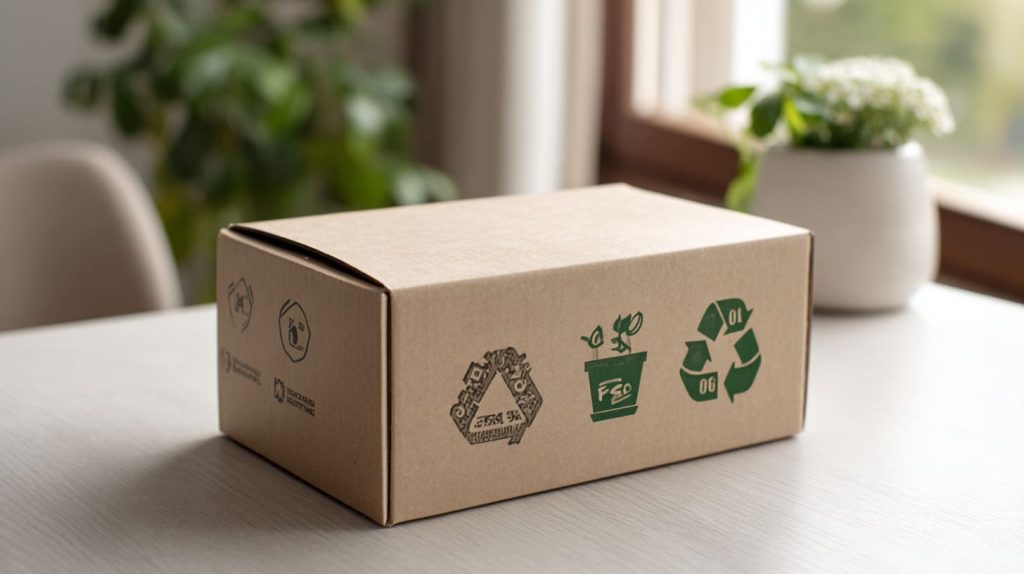
A tiny FSC logo speaks volumes to big-box buyers. Keep recycling icons simple and place them bottom-center—visible but not braggy.
Even green goals fail if basics slip. Let’s dodge the usual traps.
Common Pitfalls & How to Avoid Them
Artwork errors
Low-res JPEG logos print blurry. Export vector art at 300 dpi, CMYK, with 3 mm bleed.
Under-estimating freight volume
Rigid boxes ship “air inside cardboard.” Collapse folding cartons or pay to ship oxygen.
I once saved 12 % by nudging an order from 2,400 to 2,500 units—offset press likes round numbers.
One last sip of coffee, and we’re ready to wrap up.
Conclusion
Custom logo boxes aren’t vanity—they’re silent sales reps. Choose the right style and board, nail your artwork, align quantity with print economics, vet reliable partners, and guard quality from dieline to doorstep. Do that, and your products will arrive on time, on brand, and fully aligned with Feilong Acrylic’s promise of fast, high-quality custom solutions.


