Skip to content
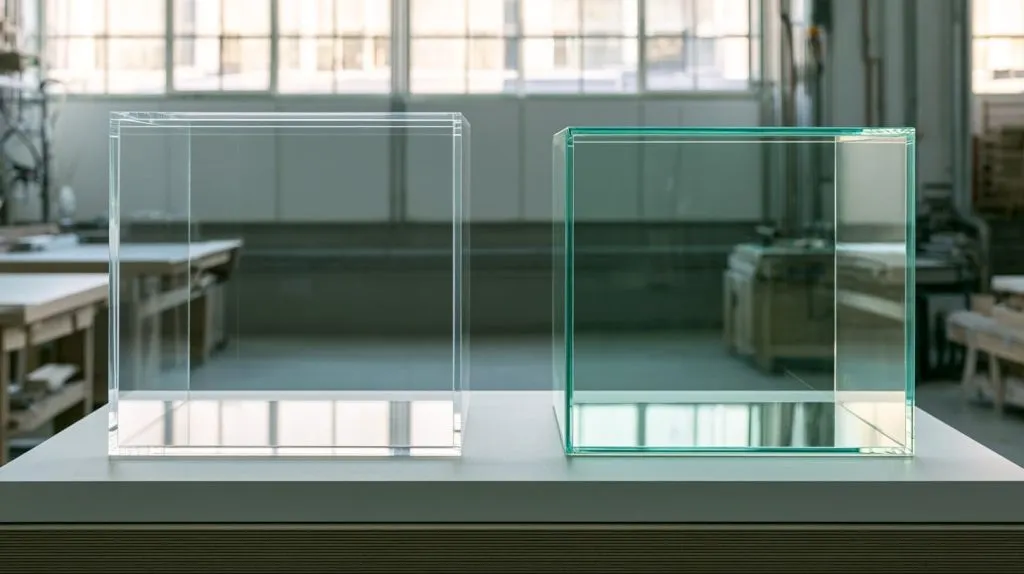
A buyer can look at two aquarium quotations and feel the answer is already clear.
Glass is cheaper.
So glass wins.
I understand this thinking. I have seen it many times in custom acrylic work. When a purchasing team needs to control budget, the first number on the quotation can become very powerful. It feels simple. It feels safe. It feels easy to explain to the boss.
But aquarium projects are not always that simple.
A small standard fish tank for home use is one thing. A large custom aquarium for a retail store, hotel, showroom, restaurant, or public display is another thing. The material cost is only one part of the story. The full cost also includes shipping, breakage risk, installation, support structure, cleaning, repair, visual effect, and the pain of fixing problems after delivery.
That is why I do not like asking only one question:
“Which one is cheaper?”
I prefer to ask a better question:
“Which one will cost less over the full life of the project?”
For simple, small, standard aquariums, glass can be the right choice. I will not pretend acrylic is always better. That would not be honest. But when the aquarium becomes larger, more customized, more visual, or harder to ship, acrylic can become the smarter material, even if the first price is higher.
The detail I always keep in mind is this: a cheaper material is not always a cheaper project, because the real cost usually appears when something is heavy, broken, hard to install, or difficult to repair.
This article is written for buyers, product designers, display designers, and purchasing teams who need to make a practical decision. Not a textbook decision. A real project decision.
Why Glass Looks Cheaper at the Beginning
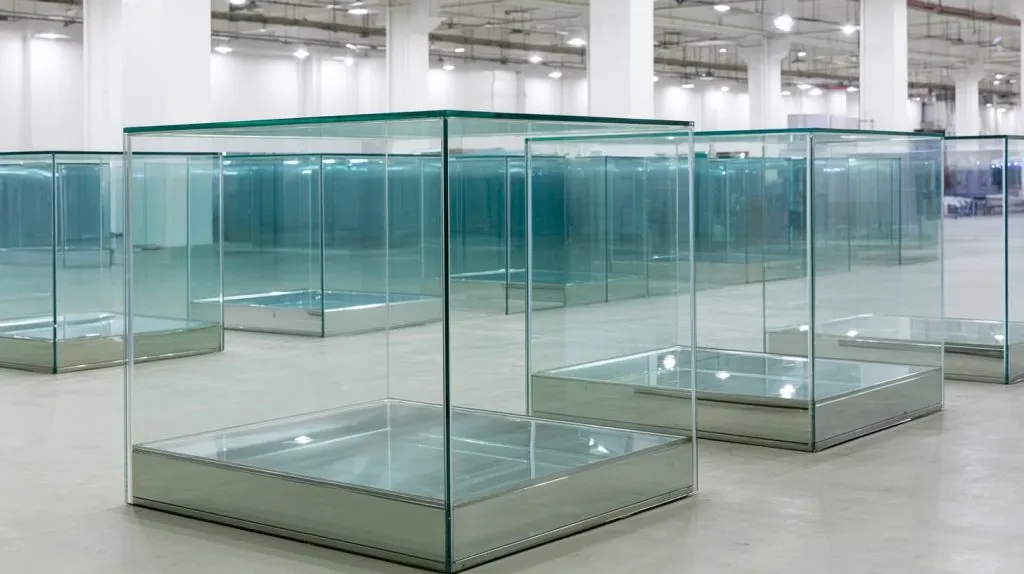
Glass has one big advantage. It looks friendly to the budget at the beginning.
When a customer compares a standard glass aquarium with an acrylic aquarium, the glass price is often lower. For many buyers, that first number creates a strong impression. I get it. In business, nobody wants to explain why they chose the more expensive option.
But the first price only tells the beginning of the story.
The part I usually slow down on is not the quotation itself, but what that quotation does not show: the handling risk, the delivery risk, and the cost of changing the design later.
Lower Raw Material and Standard Tank Cost
Glass is widely available. Many factories can cut and assemble standard glass aquariums. If the aquarium is a simple rectangle, the production process is direct.
For small and medium tanks, glass often has a clear cost advantage.
| Factor | Glass Aquarium | Acrylic Aquarium |
|---|---|---|
| Raw material cost | Usually lower | Usually higher |
| Standard size availability | Very strong | Depends on supplier |
| Simple rectangular design | Cost-effective | Higher fabrication cost |
| Small tank price | Often cheaper | Often more expensive |
| Custom shape flexibility | Limited | Stronger |
If the customer only needs a basic aquarium, glass can make a lot of sense.
For example, if the design is:
- Standard rectangle
- Small or medium size
- Local delivery
- Low public safety risk
- No special branding shape
- No curved panel
- No special display effect
Then glass may be the practical choice.
I do not fight against glass in this type of project. A good purchasing decision is not about loving one material. It is about matching the material to the job.
Mature Manufacturing Process
Glass aquarium production is already very mature. Cutting, edge polishing, silicone bonding, and assembly are common processes. Many suppliers can make basic glass aquariums at a stable cost.
That is one reason glass quotations can look very attractive.
A mature process usually means:
- More supplier options
- Lower production cost
- Faster price comparison
- Easier standard replacement
- Familiar quality inspection points
For a buyer, this is comfortable. When many suppliers can produce the same item, the price competition becomes stronger.
But there is a quiet problem here.
A mature process is good for standard products. It does not always solve custom problems.
Once the design needs a special shape, large size, complex support, curved surface, or strong visual display, the advantage can shrink.
Better Scratch Resistance
Glass is harder than acrylic. It is not easy to scratch during normal cleaning. This is one reason many home aquarium users prefer glass.
If people clean the tank with normal tools, glass can tolerate more rough handling.
| Daily Use Point | Glass | Acrylic |
|---|---|---|
| Scratch resistance | Better | Weaker |
| Cleaning tolerance | More forgiving | Needs more care |
| Surface repair after scratch | Difficult | Often possible |
| User discipline needed | Lower | Higher |
This part is important.
Acrylic can be polished when it gets light scratches, but it also needs better cleaning habits. Glass is more forgiving. That matters if the end user does not care much about proper cleaning tools.
Glass wins in a very simple way here. It can take more careless cleaning.
But a material that resists scratches better is not the same as a material that is better for every project. The tank still has to be shipped, installed, supported, and used in the real world.
That is where the story starts to change.
Where Glass Can Become Expensive Later
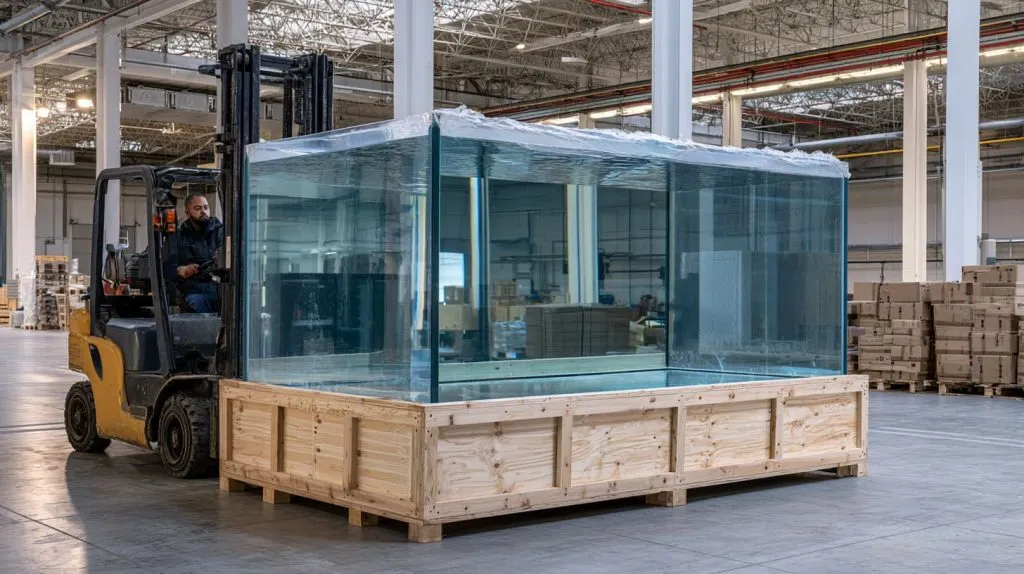
Glass can save money at the start, then quietly ask for that money back later.
Sometimes it asks through freight.
Sometimes through breakage.
Sometimes through a stronger stand.
Sometimes through a delayed project because one panel cracked during delivery.
This is where things often go wrong for buyers: they compare material price like the project ends at the factory door, but the real project starts when the tank needs to move, arrive, and survive installation.
Heavy Weight Increases Handling Cost
Glass is heavy. This is not a small detail.
For a small aquarium, the weight may not matter much. For a large aquarium, weight becomes a serious cost factor. It affects packaging, shipping, labor, installation, floor support, and even the stand design.
Acrylic is much lighter than glass. This difference becomes more important as the tank becomes larger.
| Cost Area | Glass Risk | Why It Matters |
|---|---|---|
| Shipping | Higher weight | Freight cost can rise |
| Packaging | Needs stronger protection | More wood, foam, and structure |
| Installation | More workers may be needed | Labor cost increases |
| Stand design | May need stronger support | Extra metal or wood cost |
| Handling | Harder to move safely | More damage risk |
A buyer may save money on the tank itself, then pay more in shipping and installation.
That is not a clean saving. That is only moving the cost from one line to another line.
Higher Breakage Risk During Transport
Glass is rigid and brittle. It can crack or break under impact.
For local delivery, this risk may be controlled. For overseas orders, the risk becomes more serious. The product may pass through trucks, warehouses, forklifts, containers, ports, and final delivery teams. Every extra movement is another chance for damage.
I have seen buyers focus on product cost but ignore the simple fear that every exporter understands: the product is not finished until it arrives safely.
When glass breaks in transport, the cost is not only the broken tank.
The real cost can include:
- Replacement production
- New packaging
- New shipping cost
- Customer complaint
- Project delay
- Installation team rescheduling
- Brand damage
- Insurance claim time
- Internal communication cost
A broken aquarium is not just a broken product. It is a broken schedule.
Limited Shape Flexibility
Glass works well for flat panels and standard shapes. If the design is simple, glass is strong enough as a material choice.
But custom aquarium projects often ask for more.
A designer may want:
- Curved front panel
- Seamless visual effect
- Special display shape
- Rounded corner design
- Integrated branding area
- Luxury showroom presentation
- Custom size for a specific space
This is where acrylic has more room to work.
Acrylic can be cut, CNC machined, bonded, polished, and formed into more flexible shapes. For custom display work, this matters a lot.
| Design Requirement | Glass | Acrylic |
|---|---|---|
| Standard rectangle | Strong | Strong |
| Curved panel | More difficult | Easier |
| Seamless display look | Limited | Better |
| Special shape | Higher difficulty | More suitable |
| Branding display use | Possible | More flexible |
If the aquarium is only a water container, glass may be fine.
If the aquarium is part of a visual display, acrylic often becomes more interesting.
Repair Is Difficult After Damage
Glass scratches are not easy to repair. Cracks are worse. In many cases, replacement is more realistic than repair.
This point is easy to ignore at the buying stage.
A buyer may think, “Glass does not scratch easily, so repair is not a big concern.”
That is partly true. But once glass is damaged, the repair path is not always friendly.
Acrylic has the opposite problem. It scratches more easily, but light scratches can often be polished out. This makes acrylic more flexible in long-term service, especially in display environments where appearance matters.
| Damage Type | Glass | Acrylic |
|---|---|---|
| Light scratch | Hard to remove | Often polishable |
| Deep scratch | Very difficult | Possible but depends on depth |
| Crack | Serious problem | Also serious, but impact risk is lower |
| Surface refresh | Limited | More possible |
| Replacement need | Often higher after damage | Depends on damage level |
This is a trade-off.
Glass resists scratches better. Acrylic gives more repair options.
That difference becomes important when the aquarium is expensive, custom-made, or installed in a place where replacement is not easy.
And now we need to talk about the reason acrylic often looks expensive at the beginning.
Why Acrylic Costs More Up Front
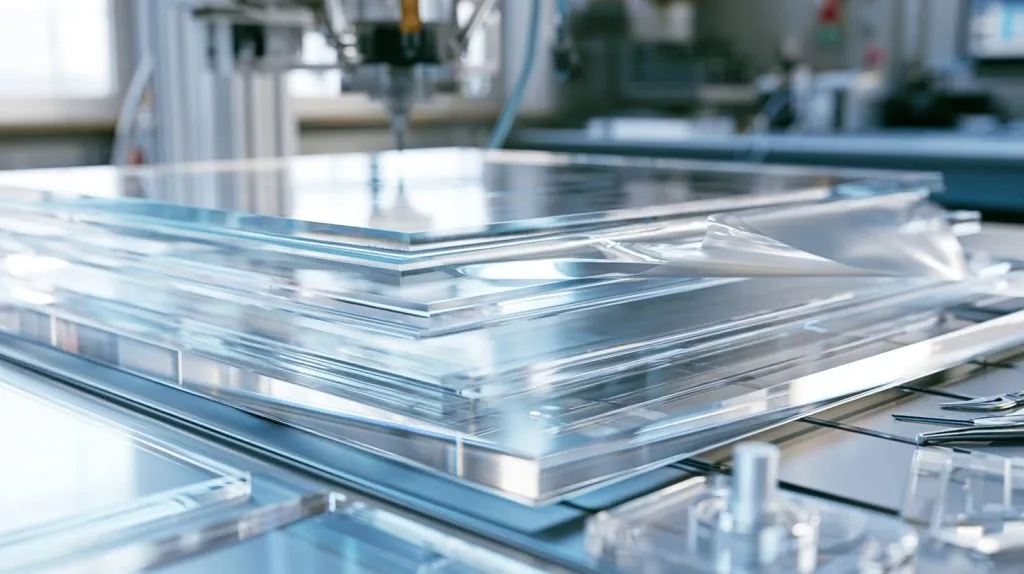
Acrylic is not magic. It has its own problems. I would never tell a buyer that acrylic is always easier or always cheaper. That would be lazy advice.
Acrylic usually costs more at the beginning because the material, forming, bonding, polishing, and quality control all need more attention.
The mistake I try to avoid is selling acrylic as a “premium material” without explaining the work behind it, because a buyer deserves to know what they are paying for.
Material and Fabrication Cost
Acrylic aquariums often have a higher material cost. The sheet quality also matters. For aquarium and display use, clarity, thickness, bonding quality, and surface finish are all important.
At Feilong Acrylic, we often work with custom acrylic displays, boxes, stands, organizers, and other formed products. Aquarium projects are different from simple display stands because they need to hold water pressure. That means the production thinking has to be more careful.
Acrylic fabrication may include:
- Sheet cutting
- CNC machining
- Edge polishing
- Bonding
- Forming or bending
- Surface protection
- Leak-related checks
- Packaging design
Each process adds cost.
| Process | Why It Matters |
|---|---|
| CNC cutting | Keeps size and edge accuracy controlled |
| Polishing | Improves visual clarity and finish |
| Bonding | Affects strength and appearance |
| Forming | Allows curved or custom designs |
| Protection film | Reduces surface damage before delivery |
| Packing | Protects surface and shape during shipping |
Acrylic is not just “plastic glass.” That simple idea causes many wrong expectations.
Good acrylic work needs skill. Bad acrylic work can look cheap very quickly.
Surface Protection Requires More Care
Acrylic scratches more easily than glass. This is true, and buyers should not ignore it.
If someone uses rough cloth, hard brushes, or wrong cleaning tools, acrylic can show scratches. In a showroom or hotel project, those scratches may be very visible under light.
So acrylic needs a different maintenance habit.
| Cleaning Item | Good for Acrylic? | Comment |
|---|---|---|
| Soft microfiber cloth | Yes | Safer choice |
| Rough towel | No | Can create marks |
| Abrasive pad | No | Too aggressive |
| Mild cleaner | Usually yes | Must be checked first |
| Strong solvent | No | Can damage surface |
| Careless dry wiping | Risky | Dust can scratch surface |
This is why I always want to know who will maintain the product.
If the tank will be cleaned by trained staff, acrylic can perform well. If it will be cleaned by random people with random tools, glass may be safer.
The material choice is not only a material decision. It is also a user behavior decision.
Support Design Must Be Correct
Acrylic is lighter than glass, but it is also more flexible. This means the support design matters.
The bottom must be supported properly. The thickness must match the size and water pressure. The structure cannot be guessed.
Some buyers hear “lighter” and think “easier.”
That is not always true.
Lighter means easier to move. It does not mean the design can be careless.
For acrylic aquariums, I would pay attention to:
- Tank size
- Water height
- Sheet thickness
- Bottom support
- Edge bonding area
- Stand flatness
- Long-term pressure
- Temperature and use environment
| Design Point | Why I Check It |
|---|---|
| Water height | More height means more pressure |
| Thickness | Thin material may flex too much |
| Bottom support | Poor support can cause stress |
| Bonding area | Weak bonding can become a future risk |
| Stand flatness | Uneven support creates pressure points |
Acrylic can be a strong choice, but it needs correct design thinking.
A higher upfront price can be painful. But sometimes that price is buying lower risk, better shape, easier handling, and a cleaner display result.
So the next question is simple: when does acrylic start to pay back?
When Acrylic Saves Money Over Time
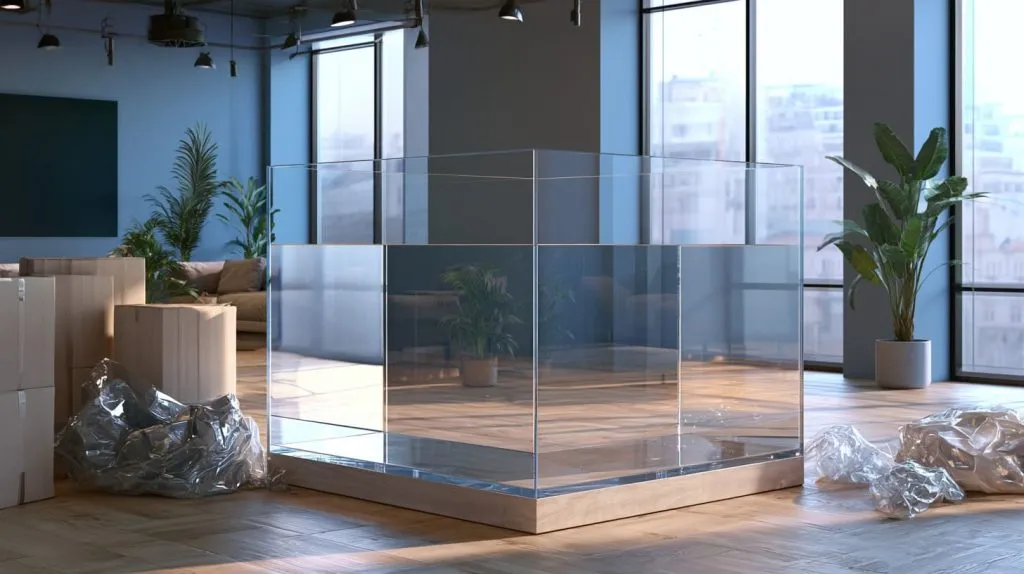
Acrylic starts to make more sense when the project becomes bigger, more custom, more visual, or more difficult to ship.
This is where the material stops being just a material. It becomes part of the project strategy.
My own rule is simple: when size, shape, shipping, and public use become more important than basic scratch resistance, I start to take acrylic more seriously.
Large Aquarium Projects
For large aquariums, weight becomes a real issue. Acrylic’s lighter weight can reduce the pressure on shipping, installation, and support design.
This does not mean acrylic is automatically cheap. It means acrylic may reduce other costs around the tank.
| Project Area | How Acrylic May Help |
|---|---|
| Freight | Lower weight can reduce handling pressure |
| Installation | Easier to move than glass |
| Stand design | May reduce load compared with glass |
| Site handling | Less difficult for workers |
| Breakage risk | Better impact resistance helps |
A large tank is not only a product. It is a logistics job.
People need to move it. People need to lift it. People need to install it without damage. If one step fails, the whole project can become expensive.
That is where acrylic can save money in a quiet way.
Custom Shape and Brand Display Projects
Acrylic is much more flexible for custom shapes.
This is a big reason many commercial display projects use acrylic. It can be shaped, polished, and made into forms that are difficult with glass.
For aquarium display projects, the shape may be part of the customer experience.
A hotel does not always want “a box with water.”
A retail store may want the aquarium to fit a brand corner.
A showroom may want a clean curved front.
A restaurant may want the tank to become part of the interior design.
| Project Type | Why Acrylic May Fit Better |
|---|---|
| Retail display | Easier to create custom visual forms |
| Hotel lobby | Better for large, clean visual presentation |
| Showroom | Stronger design flexibility |
| Public space | Better impact resistance |
| Brand installation | Easier to match special design ideas |
As a custom acrylic factory, I care a lot about this point. Many buyers do not only buy a product. They buy the way a product fits into a space.
Glass can hold water. Acrylic can also help shape the experience around the water.
Better Impact Resistance
Acrylic has better impact resistance than glass. It is less likely to shatter from impact.
This is important for public areas and export projects.
In a private home, the risk may be lower. In a shopping mall, hotel, school, restaurant, or public display, people move around the tank all the time. Children may touch it. Workers may clean near it. Carts may pass by. Accidents happen.
Acrylic gives more safety margin in these situations.
| Use Environment | Impact Risk | Acrylic Advantage |
|---|---|---|
| Home | Low to medium | Useful but not always necessary |
| Retail store | Medium | Better public-use safety |
| Hotel | Medium | Better for busy spaces |
| Restaurant | Medium | Better against accidental contact |
| Exhibition | High | Better for transport and setup |
I do not choose acrylic because accidents will happen every day. I choose it because one accident can be enough to create a large problem.
Easier Surface Restoration
Acrylic can scratch. I will not hide that.
But light scratches can often be polished or repaired. This is a major difference from glass.
For premium display projects, this matters because surface appearance is part of the value.
A custom aquarium may be expensive. If light surface marks appear after months of use, polishing may help restore the look. With glass, repair options are more limited.
| Long-Term Issue | Glass | Acrylic |
|---|---|---|
| Light surface marks | Hard to remove | Often repairable |
| Display refresh | Limited | More possible |
| Long-term appearance control | Lower repair flexibility | Better repair flexibility |
| Maintenance skill needed | Lower | Higher |
This is the honest trade-off.
Acrylic needs more careful cleaning, but it gives more repair flexibility.
For buyers who can control maintenance, this can be a real long-term advantage.
Now let’s look at something buyers care about even before cost: how the aquarium looks.
Clarity and Viewing Experience
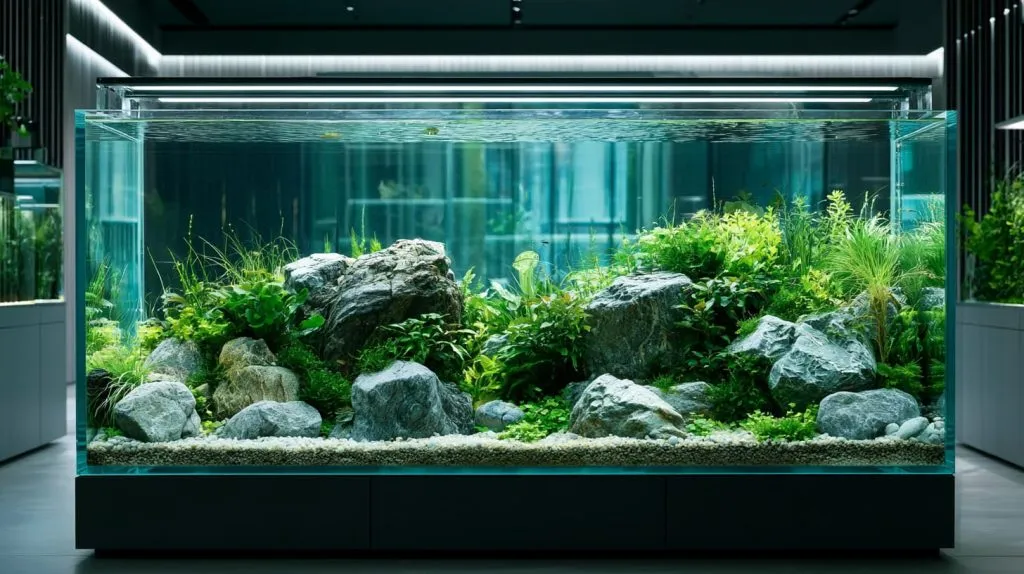
An aquarium is not only a container. It is something people look at.
That sounds too simple, but it changes the whole material decision.
If the project is for a hotel, shop, exhibition, luxury home, or showroom, the viewing experience becomes part of the product value.
The point I care about here is not only “which material is clearer,” but whether the material helps the final space feel clean, premium, and easy to enjoy.
Acrylic Optical Advantage
Acrylic can offer excellent clarity. It can give a clean and bright viewing effect, especially in custom display projects.
For large display aquariums, acrylic can also reduce some visual distortion problems compared with thick glass. This can help when people view the tank from different angles.
Acrylic also works well for curved designs. A curved acrylic panel can create a softer and more modern look.
| Viewing Requirement | Acrylic Performance |
|---|---|
| High clarity | Strong |
| Large display view | Strong |
| Curved surface | Strong |
| Premium visual effect | Strong |
| Custom design freedom | Strong |
This is why acrylic is often considered in commercial display applications.
When the aquarium is part of a visual space, the material must do more than survive. It must help the display feel right.
Glass Clarity Depends on Type
Glass clarity depends on the type of glass.
Standard glass can have a slight green tint, especially when the panel becomes thick. Some people do not care. Some people notice it immediately.
Low-iron glass can improve clarity, but it also increases cost. At that point, the price gap between glass and acrylic may become smaller than the buyer first expected.
| Glass Type | Visual Result | Cost Direction |
|---|---|---|
| Standard glass | May show green tint | Lower |
| Low-iron glass | Better clarity | Higher |
| Thick standard glass | Tint can be more visible | Depends on size |
| Custom glass | Better design options, but cost rises | Higher |
This is where buyers should be careful.
If someone compares standard glass with high-quality acrylic, the comparison may not be fair. If someone compares low-iron glass with acrylic, the cost discussion changes again.
Judgment for Buyers
For ordinary home aquariums, standard glass may be acceptable. The cost is lower, and the scratch resistance is useful.
For premium display or luxury visual projects, acrylic often gives a better presentation. It also gives more shape freedom.
Here is how I would judge it:
| Buyer Priority | Better Fit |
|---|---|
| Lowest initial price | Glass |
| Simple home use | Glass |
| Scratch resistance | Glass |
| Large clear display | Acrylic |
| Curved or custom shape | Acrylic |
| Premium visual space | Acrylic |
| Export custom project | Often acrylic |
The best material depends on what the aquarium must do.
If it only needs to be a tank, glass may be enough.
If it needs to become part of a space, acrylic deserves serious attention.
But even a beautiful material can become a problem if people clean it the wrong way.
Maintenance: The Real Long-Term Cost Difference
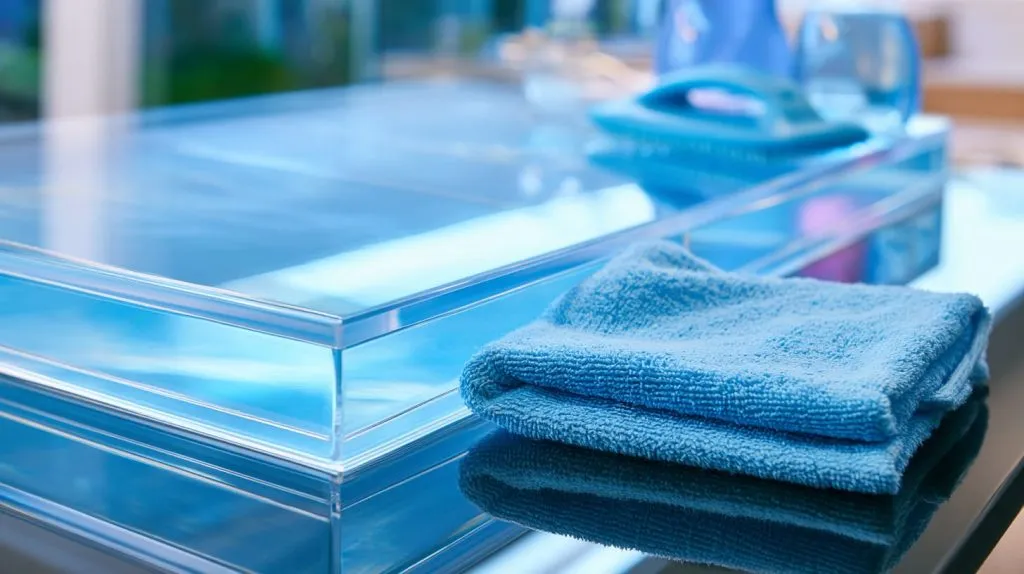
Maintenance is not exciting. Nobody talks about it first.
But maintenance is where many material decisions prove right or wrong.
A buyer may choose a material in the meeting room, but the cleaning staff, store staff, or end user will decide how that material looks after six months.
The small question I like to ask is this: who will touch the aquarium every week, and do they know what they are doing?
Glass Maintenance Is Simpler
Glass is easier for normal users to maintain. It is harder to scratch, and it can handle more common cleaning habits.
This is one reason glass remains popular for home aquariums and standard tanks.
Glass is a good fit when the buyer wants:
- Lower maintenance control
- Strong scratch resistance
- Simple cleaning
- Standard use
- Fewer cleaning rules
| Maintenance Point | Glass Advantage |
|---|---|
| Cleaning tolerance | Better |
| Scratch resistance | Better |
| User training needed | Lower |
| Daily cleaning risk | Lower |
| Rough handling tolerance | Better |
If the tank will be cleaned by many different people, glass can be safer.
Not because it is perfect.
Because it forgives mistakes better.
Acrylic Maintenance Needs Discipline
Acrylic needs more careful handling. It should be cleaned with soft cloth and proper cleaner. Dust and hard particles should not be dragged across the surface.
This sounds simple, but in real use, simple rules are often ignored.
Someone may use the wrong towel.
Someone may wipe it dry with dust on the surface.
Someone may use a cleaner that is too strong.
Then scratches appear, and the buyer starts blaming the material.
But the real problem may be the maintenance process.
| Acrylic Care Rule | Why It Matters |
|---|---|
| Use soft cloth | Reduces scratch risk |
| Rinse dust first | Prevents particles from dragging |
| Avoid rough pads | Protects surface |
| Avoid strong solvents | Prevents surface damage |
| Train cleaning staff | Keeps appearance stable |
Acrylic is not difficult to maintain, but it does not like careless maintenance.
That is the truth.
The Buyer’s Real Question
The real question is not only “Which material is better?”
The better question is:
“Can the end user maintain this material properly?”
If yes, acrylic can perform very well.
If no, glass may be the safer choice.
| End User Situation | Material Direction |
|---|---|
| Trained staff | Acrylic can work well |
| Public space with controlled cleaning | Acrylic is practical |
| Home user who wants easy care | Glass may be better |
| Many untrained cleaners | Glass may reduce risk |
| Premium display with maintenance plan | Acrylic is strong |
I always think about maintenance before final material selection because the factory can make a good product, but the user can still damage it with bad habits.
This is also why B2B buyers should not only send size drawings. They should also explain the real use environment.
And if the product needs to cross the ocean before it reaches the user, there is another cost waiting in the background.
Shipping and Export Risk
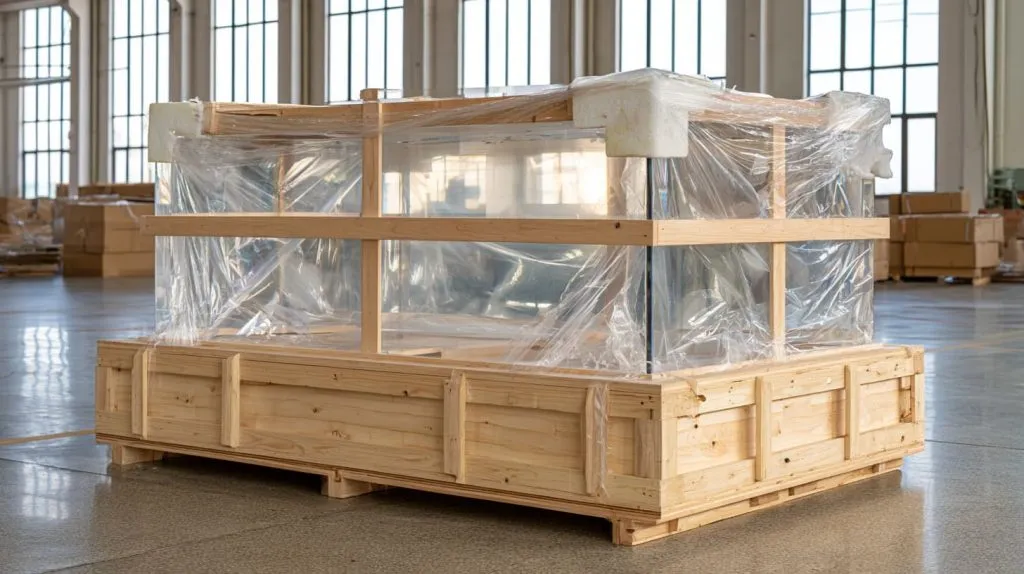
Shipping is where a cheap product can become expensive very fast.
A quotation may look beautiful on a screen. Then the product enters the real world: wood crate, forklift, truck, container, port, customs, warehouse, and final delivery.
For export orders, I do not only ask whether the product can be made; I ask whether it can arrive safely without turning the buyer’s saving into a claim.
Glass Has Higher Damage Risk
Glass is heavy and brittle. This makes shipping more sensitive.
A glass aquarium needs strong packaging. The larger it is, the more careful the packaging must be. If the packaging is weak, the risk rises. If the packaging is strong, the cost rises.
Either way, the buyer pays.
| Export Risk | Glass Situation |
|---|---|
| Heavy weight | Higher handling pressure |
| Brittle structure | Higher breakage risk |
| Packaging need | Stronger protection required |
| Replacement risk | Serious if damaged |
| Delivery delay | Can become costly |
A broken glass tank after international shipping is a painful problem.
The buyer may have saved money in production, but now needs to deal with replacement, schedule delay, and customer pressure.
Acrylic Is Easier to Ship for Custom Orders
Acrylic is lighter and has better impact resistance. This does not mean it can be packed casually. Acrylic still needs good protection, especially for surfaces and corners.
But compared with glass, acrylic is often easier to manage in shipping for large custom pieces.
| Shipping Point | Acrylic Advantage |
|---|---|
| Weight | Lighter than glass |
| Impact resistance | Better |
| Handling | Easier for workers |
| Breakage risk | Lower serious breakage risk |
| Custom shape | More practical to protect in some designs |
Acrylic still needs:
- Protective film
- Soft surface protection
- Corner protection
- Strong carton or wooden crate
- Clear handling marks
- Proper fixing inside the package
Good packaging is never optional. It is part of the product.
Judgment for B2B Buyers
For B2B buyers, especially overseas buyers, the cheapest quotation is not always the cheapest delivered solution.
I would include these costs before deciding:
| Cost Item | Should Buyer Include It? |
|---|---|
| Unit price | Yes |
| Packaging cost | Yes |
| Freight cost | Yes |
| Insurance risk | Yes |
| Breakage replacement | Yes |
| Installation labor | Yes |
| Project delay risk | Yes |
| After-sales communication | Yes |
This is where experienced buyers are different from new buyers.
New buyers ask, “How much is the tank?”
Experienced buyers ask, “What will it cost me if something goes wrong?”
That second question is much more useful.
Now we can turn the whole discussion into a practical decision.
Which Material Should You Choose?
I do not believe in one-size-fits-all material advice.
Glass is not bad. Acrylic is not perfect. The correct choice depends on size, shape, budget, use environment, shipping distance, maintenance control, and visual requirements.
The way I make the decision is by looking for the biggest risk first, not the most attractive feature.
Choose Glass When
Glass is a smart choice when the aquarium is simple and low risk.
I would consider glass when:
- The aquarium is small or medium-sized.
- The design is standard and rectangular.
- The buyer wants the lowest initial cost.
- Scratch resistance matters more than weight.
- The product is delivered locally.
- The installation is simple.
- The end user does not want special maintenance rules.
| Project Condition | Why Glass Fits |
|---|---|
| Small tank | Weight is manageable |
| Standard rectangle | Glass production is mature |
| Low budget | Initial cost is lower |
| Home use | Cleaning is easier |
| Local delivery | Breakage risk is easier to control |
Glass works well when the product is simple.
There is no need to over-design a basic tank.
If the buyer only needs a standard aquarium, acrylic may not be necessary.
Choose Acrylic When
Acrylic becomes more attractive when the project is larger, more customized, or more sensitive to shipping and impact risk.
I would consider acrylic when:
- The aquarium is large.
- The project needs a curved or special shape.
- The tank must be shipped overseas.
- The product is used in a public area.
- Impact resistance matters.
- Visual clarity is important.
- Long-term surface restoration matters.
- The design is part of a brand or commercial display.
| Project Condition | Why Acrylic Fits |
|---|---|
| Large size | Lighter weight helps |
| Custom shape | Easier to form and fabricate |
| Public use | Better impact resistance |
| Export order | Lower serious breakage risk |
| Premium display | Strong visual effect |
| Repair planning | Light scratches can often be polished |
Acrylic makes sense when the product must do more than hold water.
It needs to support a design goal.
It needs to survive shipping.
It needs to look good in a space.
It needs to reduce hidden project risk.
A Simple Decision Table
For quick comparison, I would use this table:
| Buyer Priority | Better Choice |
|---|---|
| Lowest upfront cost | Glass |
| Standard small aquarium | Glass |
| Scratch resistance | Glass |
| Easy daily cleaning | Glass |
| Large custom aquarium | Acrylic |
| Curved or special design | Acrylic |
| Lower shipping weight | Acrylic |
| Better impact resistance | Acrylic |
| Premium display effect | Acrylic |
| Surface repair flexibility | Acrylic |
This table is not a rule carved in stone.
It is a starting point.
A good supplier should still check the drawing, size, thickness, use environment, and shipping plan before giving final advice.
And before a buyer makes the final choice, there are a few common mistakes worth avoiding.
Common Mistakes Buyers Should Avoid
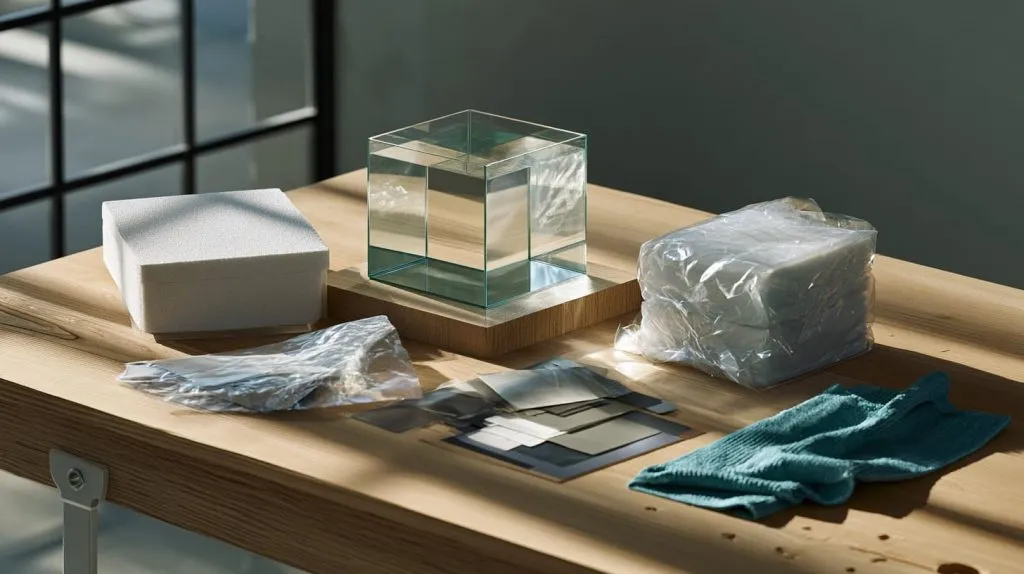
Most bad material decisions do not happen because buyers are careless.
They happen because one part of the project gets too much attention, and the other parts are ignored.
Price gets attention.
Risk does not.
Appearance gets attention.
Maintenance does not.
The warning sign for me is when a buyer wants a final material choice before the design, use environment, shipping method, and cleaning process are clear.
Comparing Only Unit Price
The first mistake is comparing only the unit price.
This is common. It is also dangerous.
A buyer may see:
- Glass tank: lower price
- Acrylic tank: higher price
Then the buyer chooses glass.
But the real project cost may include more items.
| Cost Type | Often Forgotten? |
|---|---|
| Packaging | Yes |
| Shipping | Yes |
| Installation | Yes |
| Breakage risk | Yes |
| Replacement cost | Yes |
| Maintenance | Yes |
| Repair | Yes |
| Delay | Yes |
Unit price is easy to compare.
Total cost is harder.
But total cost is the number that matters.
Ignoring End-Use Environment
A private home aquarium and a public commercial aquarium are not the same project.
A home tank may face careful use.
A public display may face children, staff, cleaning teams, delivery carts, and daily traffic.
The environment changes the material decision.
| Use Environment | Main Concern |
|---|---|
| Home | Scratch resistance and easy cleaning |
| Retail store | Impact risk and visual display |
| Hotel | Premium look and safety |
| Restaurant | Cleaning and public contact |
| Exhibition | Transport and setup risk |
| Showroom | Shape and clarity |
If the environment is simple, glass may be enough.
If the environment is more demanding, acrylic may be safer.
Forgetting Cleaning Behavior
Many buyers choose acrylic for its clarity and custom shape, then forget to train the cleaning team.
That is a mistake.
Acrylic needs proper care. If the cleaning behavior is rough, scratches can appear. Then the material gets blamed, even though the real issue is maintenance.
Before choosing acrylic, I would ask:
- Who will clean it?
- How often will they clean it?
- What cloth will they use?
- What cleaner will they use?
- Will they receive care instructions?
- Is the tank in a dusty place?
- Will many people touch the surface?
These questions may sound small, but they protect the product.
Small habits create long-term appearance.
Choosing Material Before Final Design
Some buyers choose material too early.
They say, “We want glass,” or “We want acrylic,” before checking size, support, thickness, shape, installation, and shipping.
That can lead to wrong design decisions.
A better process is:
- Confirm the aquarium size.
- Confirm the water height.
- Confirm the shape.
- Confirm the use environment.
- Confirm the installation method.
- Confirm the shipping route.
- Confirm maintenance expectations.
- Then choose the material.
| Wrong Process | Better Process |
|---|---|
| Choose material first | Confirm design first |
| Compare unit price only | Compare full cost |
| Ignore shipping | Include export risk |
| Ignore cleaning | Plan maintenance |
| Guess thickness | Check structure needs |
Material choice should follow the project.
Not the other way around.
This is the difference between buying a product and controlling a project.
Conclusion
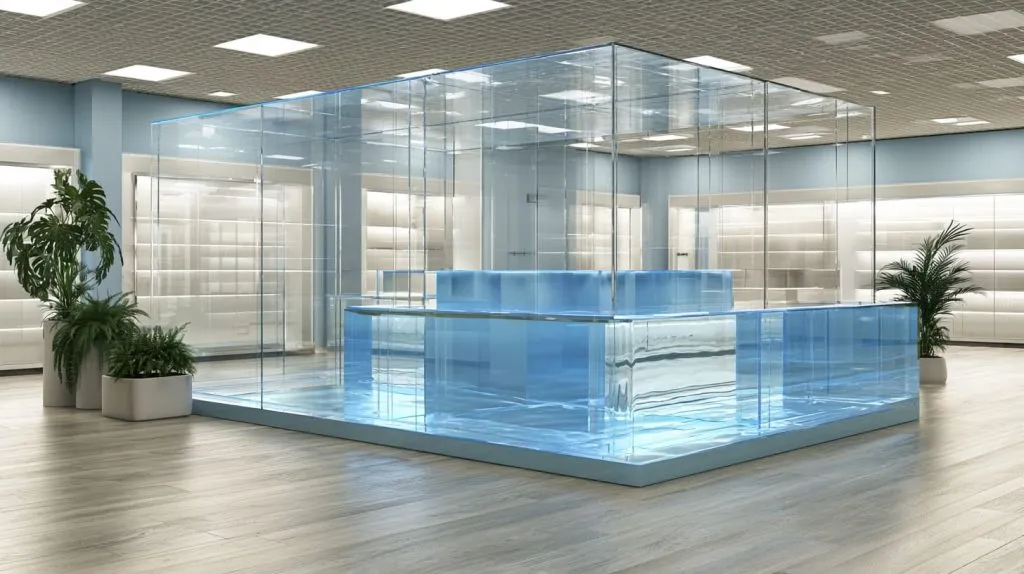
Glass is often cheaper at the beginning. For standard small and medium aquariums, it can be the right choice. It has good scratch resistance, a mature production process, and a clear price advantage.
I do not have a problem with glass when the project is simple.
But I do have a problem with choosing glass only because the first quotation looks lower.
Acrylic often costs more at the start. The material and fabrication process need more skill. The surface also needs better care. But acrylic can save money later when the aquarium is large, custom-shaped, shipped overseas, used in public, or built for a premium display space.
This is why I look at the full project, not only the material.
I care about the weight.
I care about how people will move it.
I care about whether it may break in shipping.
I care about whether the cleaning team will damage the surface.
I care about whether the design needs to be more than a simple box.
That is how I reach my view:
Glass is a good choice for simple and low-risk aquarium projects. Acrylic becomes the better choice when design flexibility, lighter weight, impact resistance, repair options, and long-term project control matter more.
At Feilong Acrylic, we focus on custom acrylic products. We do not sell retail items from a catalog. We help B2B buyers turn custom ideas into real products, from displays and boxes to stands, organizers, and special acrylic structures.
If you are comparing acrylic and glass for a custom aquarium or display-related project, I suggest you do not start with price alone.
Start with the real use.
Start with the size.
Start with the shipping risk.
Start with the people who will install and maintain it.
Then the material choice becomes much clearer.
If your project needs custom acrylic fabrication, OEM support, or a practical review before production, you can contact Feilong Acrylic through flacrylic.com. I will be happy to look at the design from a factory point of view and help you avoid the kind of “cheap at first, expensive later” decision that nobody enjoys fixing.