A few years ago, I was asked to review a failed aquarium installation for a commercial shopping mall project. The tank looked fine on paper. The design looked clean. The material choice also looked “standard.” But after a few months, micro-cracks started to appear, and the maintenance team had to shut it down during peak hours. That moment stayed with me more than most technical discussions.
I started to notice something simple. Most people do not choose aquarium materials based on risk. They choose based on price or appearance. That is where the problem starts.
Commercial aquariums are not decoration pieces. They are long-term water systems in public spaces. A failure is not just a repair job. It becomes a liability issue, a safety issue, and a reputation issue.
What I usually check first is how the aquarium will behave under real human interaction pressure, not just static water load assumptions.
This is why acrylic vs glass is not a material debate for me. It is a risk decision that affects everything later.
And in real projects, most misunderstandings start right here.
Understanding the Real Use Case of Commercial Aquariums
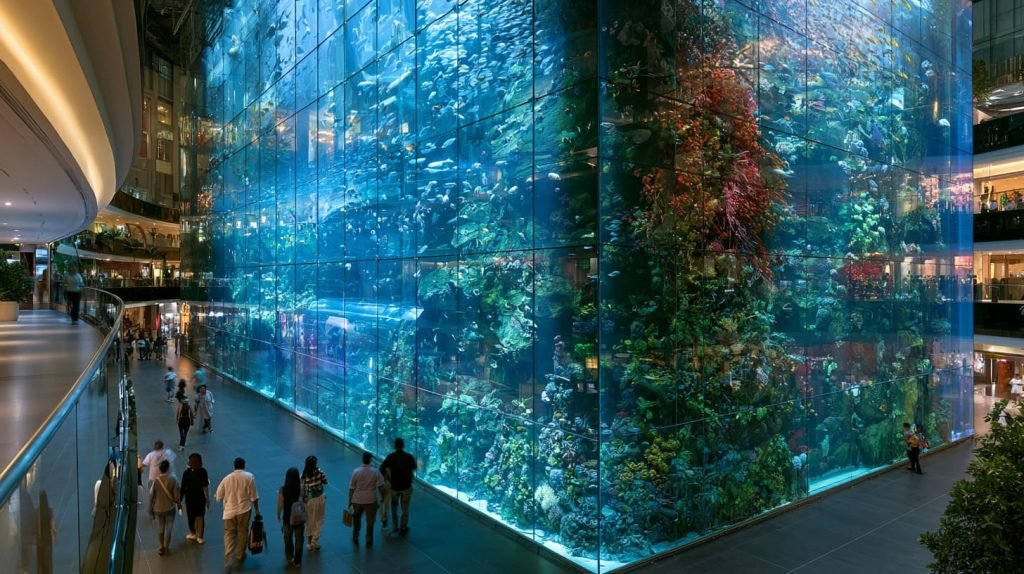
Commercial aquariums behave very differently depending on where and how they are installed. I always separate them into real use cases before I even talk about material selection.
In practice, I notice many buyers skip this step and jump directly into material comparison. This is where long-term failures usually begin.
Public display vs private tanks: different risk levels
Public installations in malls or hotels carry constant human interaction. Private tanks usually do not.
- Public spaces = impact risk + vandalism risk + cleaning chemical exposure
- Private spaces = stable environment + controlled usage
I once saw a retail aquarium panel damaged simply because children leaned on it repeatedly. That type of load is never calculated in design sheets.
Size scaling: why material behavior changes dramatically above certain volumes
Small tanks behave predictably. Large tanks do not.
As volume increases:
- Pressure grows non-linearly
- Panel flex becomes visible
- Joint stress increases
A 500L tank and a 5000L tank do not behave like scaled versions of each other.
Structural load: water pressure and panel stress basics
Water pressure increases with depth, not volume alone.
| Depth | Pressure Behavior | Design Impact |
|---|---|---|
| <0.5m | Low | Standard panels |
| 0.5–1.5m | Medium | Reinforcement needed |
| >1.5m | High | Engineering required |
What I usually check first is whether the design assumes linear scaling, because that assumption quietly breaks many projects.
Now that the real use case is clear, I move into material behavior itself.
Acrylic Aquariums: What You Are Actually Buying
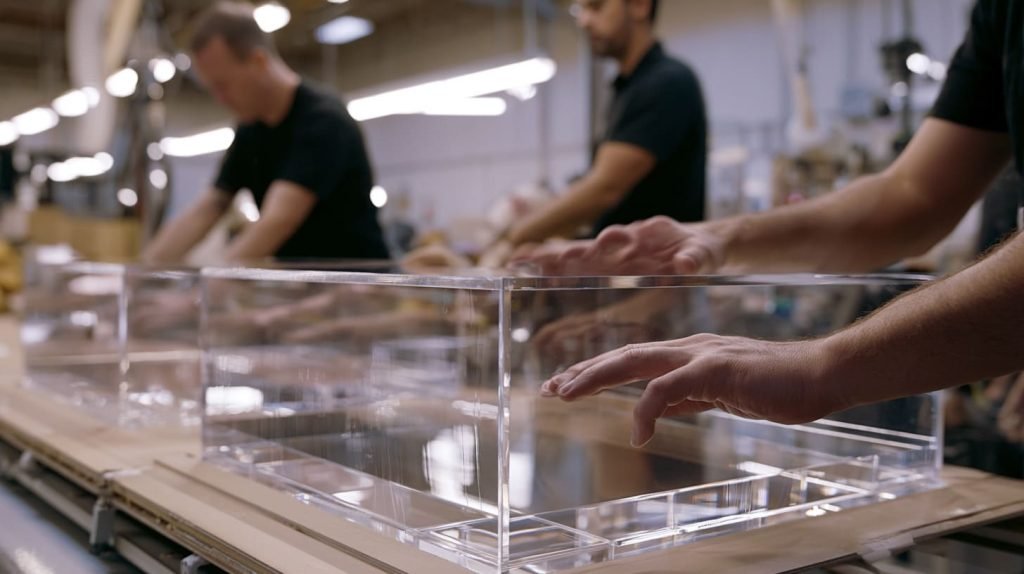
When clients ask for acrylic, they often think they are just buying a “clear plastic tank.” In reality, acrylic behaves more like a structural material than a simple transparent sheet.
In my factory experience at Feilong Acrylic, I see acrylic projects fail less from material weakness and more from fabrication control issues.
Impact resistance advantage (but not scratch resistance)
Acrylic absorbs impact energy instead of cracking.
But it scratches easily. This is the trade-off.
I have seen acrylic panels survive heavy accidental hits that would have shattered glass instantly.
Seamless large-panel design capability
Acrylic allows large seamless structures.
This is critical for public display tanks where visibility matters.
Weight reduction and installation flexibility
| Material | Weight | Installation Impact |
|---|---|---|
| Acrylic | Light | Easier structural support |
| Glass | Heavy | Requires reinforcement |
Lower weight often reduces frame cost significantly.
Optical clarity over time (yellowing risk factors)
Acrylic clarity depends on:
- UV exposure
- Material grade
- Cleaning chemicals
Yellowing is slow but real.
Fabrication method risks: bonding quality, seam failure, machining precision
This is the hidden risk area.
What I usually check first is whether bonding is done under controlled humidity and temperature, because most seam failures come from environmental instability during assembly.
Now acrylic looks strong, but glass tells a different story.
Glass Aquariums: What You Are Actually Buying
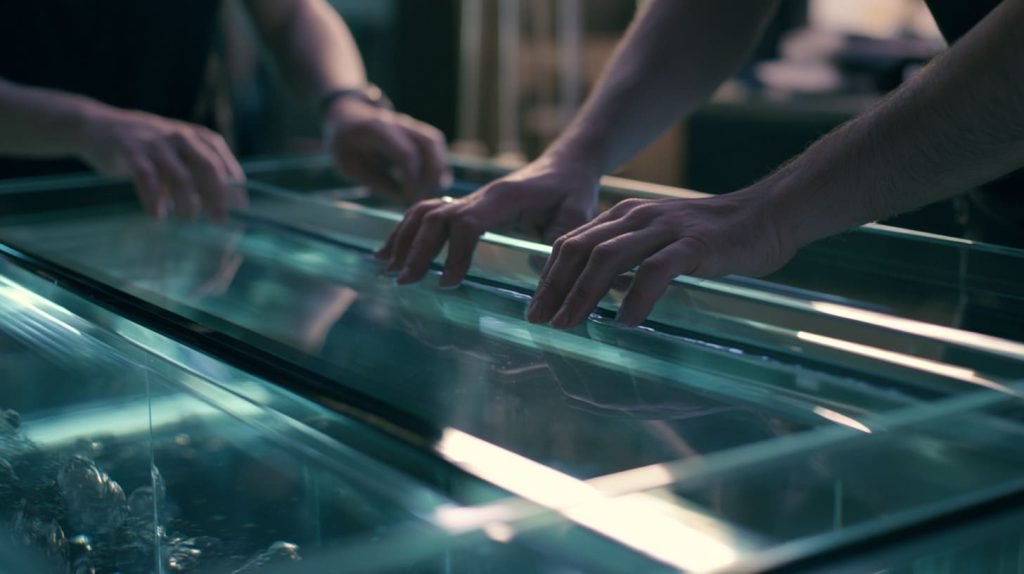
Glass feels more “premium” to many buyers, but in engineering terms, it behaves very differently from acrylic.
In many commercial projects, I notice glass is chosen for perception, not for structural logic.
Scratch resistance and surface durability advantage
Glass keeps its surface clear for years.
Cleaning is simpler and more predictable.
Structural rigidity and shape stability
Glass does not flex easily.
This gives stable visual geometry.
Failure mode: sudden brittle fracture
This is the critical risk.
Glass does not warn before failure. It breaks suddenly.
I once saw a tank fail during cleaning because of a small edge stress point that was ignored during installation.
Weight and installation constraints in large commercial systems
| Factor | Glass Impact |
|---|---|
| Transport | High risk |
| Installation | Complex |
| Support frame | Heavy-duty required |
Edge sealing and silicone joint reliability risks
Silicone joints degrade over time.
What I usually check first is whether edge preparation is perfectly clean, because even tiny contamination leads to long-term leakage.
Glass looks stable, but risk behavior changes in hidden ways.
Key Risk Comparison: Acrylic vs Glass
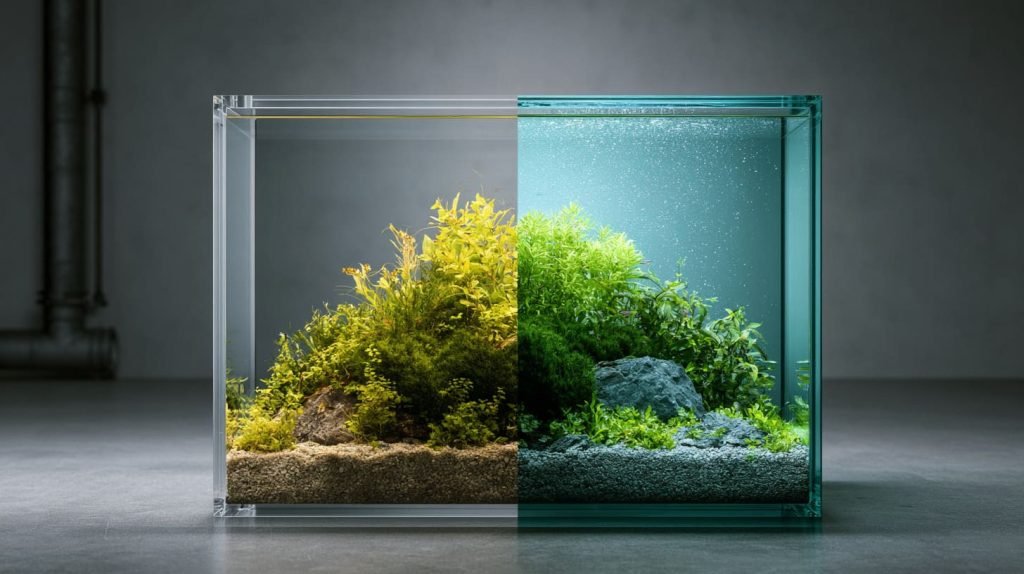
At this point, most buyers expect a simple winner. But I never see it that way. I focus on failure type, not material strength.
Impact failure vs crack propagation behavior
| Type | Acrylic | Glass |
|---|---|---|
| Impact | Absorbs energy | Cracks instantly |
| Crack spread | Slow | Fast |
Long-term maintenance cost
- Acrylic: polishing required
- Glass: replacement often needed after damage
Leakage risk comparison in commercial environments
Acrylic leaks usually come from bonding issues.
Glass leaks usually come from seal failure.
Environmental sensitivity
Both materials react differently:
- Acrylic: UV and solvents
- Glass: thermal stress at edges
Safety implications in public spaces
Glass failure creates sharp fragments.
Acrylic deformation creates blunt damage.
What I usually check first is which failure mode the client can tolerate, because zero-risk does not exist in real installations.
Now we move into design decisions that change everything.
Design & Engineering Considerations That Change the Decision
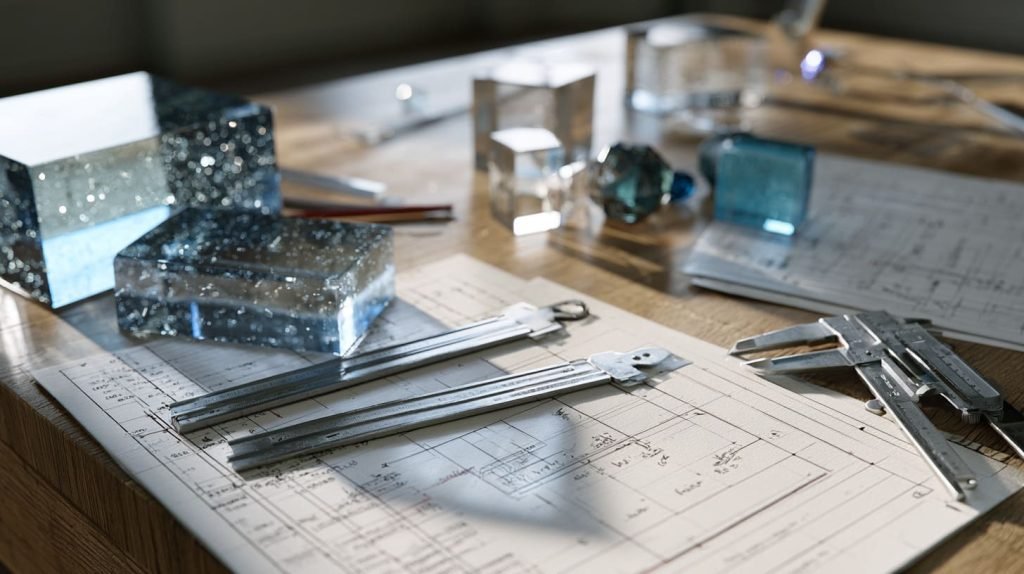
Material selection alone is not enough. Design determines real performance.
In many projects, I see good materials fail because of weak engineering assumptions.
Thickness calculation differences
| Material | Scaling Behavior |
|---|---|
| Acrylic | More flexible scaling |
| Glass | Rapid thickness increase needed |
Support frame design requirements
Glass needs rigid support frames.
Acrylic can tolerate flexible support systems.
Thermal expansion behavior and structural stress
Acrylic expands more than glass.
What I usually check first is whether expansion gaps are included, because missing this detail leads to long-term stress cracks.
Curved vs flat panel feasibility
Acrylic supports curves easily.
Glass is mostly flat.
Anti-scratch coatings and surface treatment options
Coatings improve acrylic durability but add cost and process risk.
Cost Reality: Initial Price vs Lifecycle Cost

Cost is often misunderstood as material price only. I always separate cost into lifecycle components.
Material cost vs fabrication cost vs installation cost
| Cost Type | Acrylic | Glass |
|---|---|---|
| Material | Medium | Low–Medium |
| Fabrication | Higher | Medium |
| Installation | Lower | Higher |
Maintenance cycles
- Acrylic: periodic polishing
- Glass: occasional replacement
Downtime cost in commercial aquarium operations
Downtime is often more expensive than material itself.
Transportation and handling risk cost
Glass requires more insurance and handling protection.
What I usually check first is whether the client considers downtime cost, because ignoring it often leads to wrong material decisions.
Common Buyer Mistakes in Aquarium Material Selection
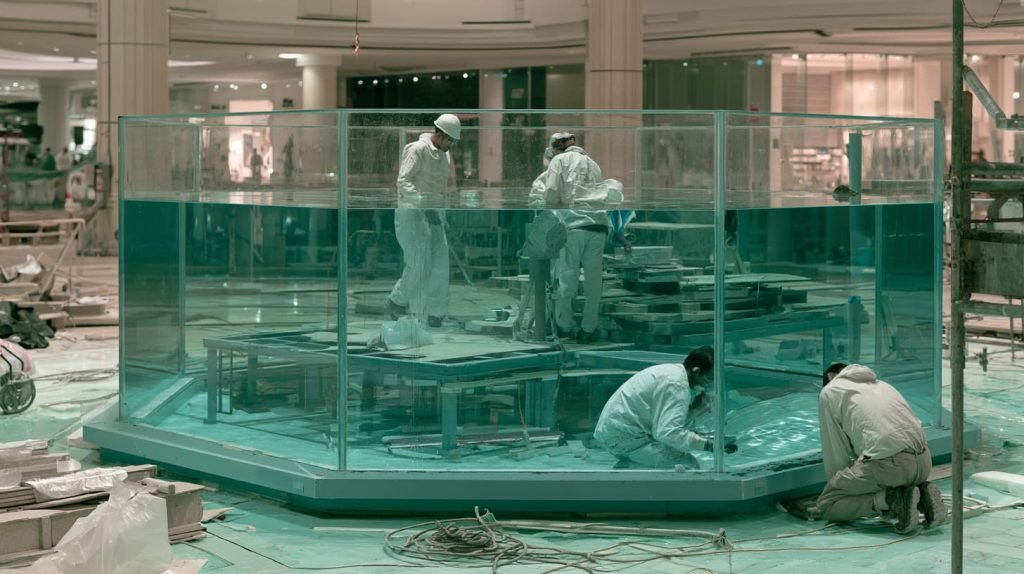
I see the same mistakes repeated across many projects.
This is emotional decision-making, not engineering.
Ignoring installation environment
Mall, outdoor, or coastal environments change everything.
Underestimating long-term surface degradation
Scratches and UV damage accumulate slowly.
Overlooking repairability and downtime risk
Some materials are easy to repair. Some are not.
Mismatch between design size and material limits
This is one of the most expensive mistakes.
What I usually check first is whether the client has real reference projects of similar scale, because theory alone is not enough.
Decision Framework: How to Choose Correctly
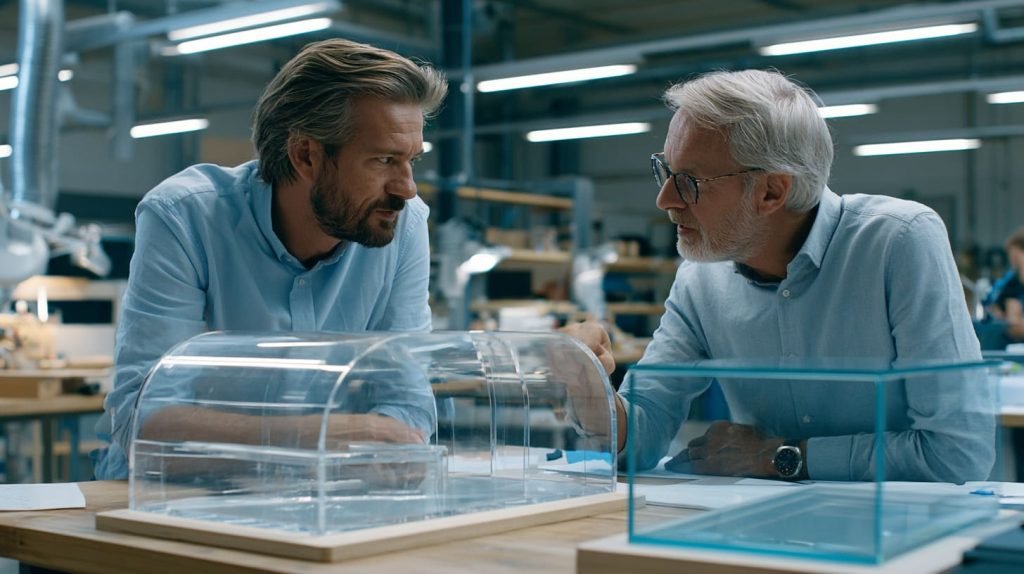
I never start with material. I start with risk profile.
When acrylic is the safer choice
- Large installations
- High impact risk
- Custom shapes
When glass is the safer choice
- Small to medium tanks
- Scratch-sensitive displays
- Low interaction environments
Hybrid design options
Some projects use:
- Glass front panels
- Acrylic structural body
Checklist for engineers and procurement teams
- Installation location
- Expected human interaction
- Maintenance capability
- Budget for downtime
What I usually check first is whether the decision is reversible later, because irreversible choices increase long-term risk.
Conclusion
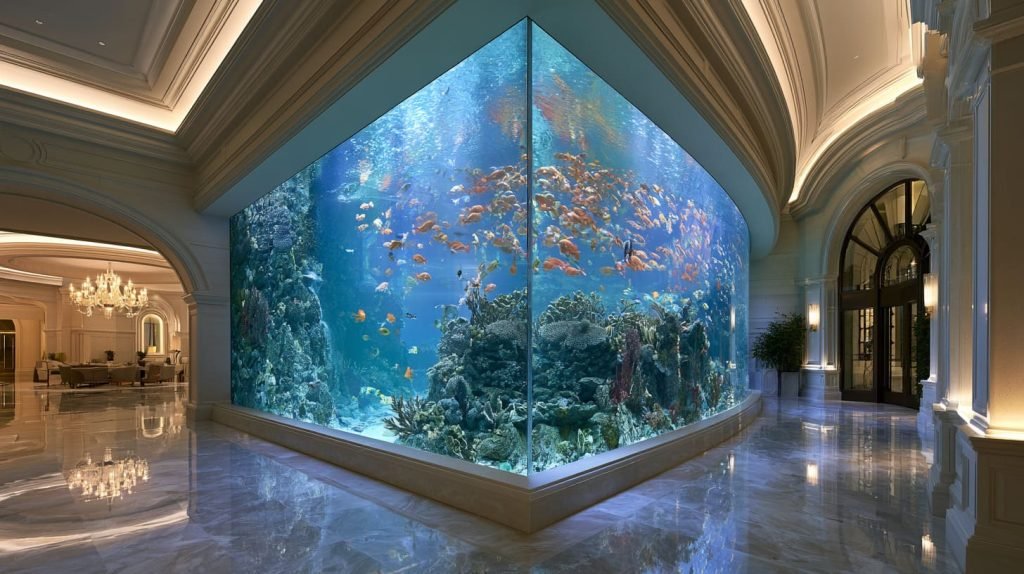
I do not treat acrylic or glass as a “better or worse” choice.
I look at how each material behaves when things go wrong.
Acrylic reduces sudden failure risk, but it asks for more surface care.
Glass keeps surface quality stable, but it carries brittle failure risk that cannot be ignored.
This is why I focus on real project conditions first, not material preference. At Feilong Acrylic, I see too many decisions made from appearance thinking, and too few made from failure thinking.
What I usually believe is simple: a good aquarium material is not the one that looks best on day one, but the one that fails in a way you can manage.
If you are planning a commercial aquarium project, I am open to reviewing your design from a manufacturing and risk perspective. Sometimes a small adjustment at the beginning saves a full system rebuild later.