Skip to content
Every week, my inbox fills with messages from product designers and purchasing managers asking the same thing: “Why do custom acrylic box quotes vary so much?” Some prices look surprisingly low, others almost double for what seems like the same product. On paper, it feels confusing. But when you’ve spent years on the factory floor—like I have—you start to see the hidden logic behind every quote.
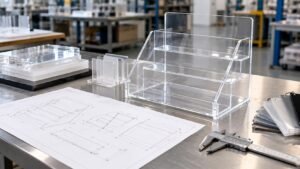
At Feilong Acrylic, we manufacture everything from clear display boxes for cosmetics to complex retail organizers. Each project looks simple until you trace the process: the grade of acrylic, the cut precision, the polish, the assembly, the packaging. Every one of these decisions shapes cost.
If you’re a B2B buyer or a product designer like Jacky in Canada, understanding these cost layers isn’t just useful—it’s essential. It helps you negotiate better, plan smarter, and avoid those last-minute quote surprises. In this guide, I’ll walk you through the real cost drivers behind custom acrylic box manufacturing, and show you where savings can quietly hide without sacrificing quality.
1. Material & Raw‑Material Costs
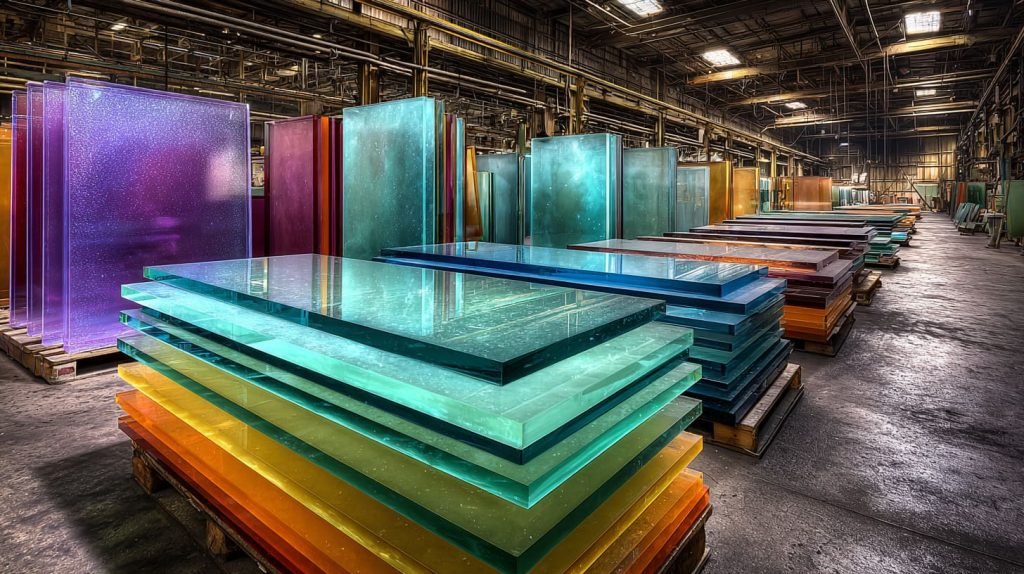
When I first walked into the material storage area at our factory, I saw sheets of acrylic stacked—some crystal clear, others tinted, some thick, some thin. Each difference whispered a cost story.
1.1 Acrylic grade: cast vs extruded
Choosing cast acrylic or extruded acrylic is one of the first branch‑points. Cast usually offers better clarity, better durability. It costs more. Extruded is cheaper but may have more distortion or lower light transmission. For a high‑end cosmetic display you might opt for cast; for a simple organiser you might pick extruded. The grade sets the baseline.
1.2 Does size, thickness, or clarity really change the price?
Yes—more than most people think. When someone asks for a 10 mm thick, 800×600 mm box made from ultra-clear acrylic, I already know: this isn’t going to be a low-cost build. Why? Because every extra millimeter and inch adds to material use—and that means money. Thicker walls? More expensive. Bigger dimensions? Higher waste and more handling. And if you want that glass-like clarity? We use high-transparency GSG-certified acrylic, which is premium grade for a reason—it’s cleaner, clearer, and tougher.
Let me break it down:
| Specification | Impact on Cost |
|---|---|
| Larger sheet size | Increases material usage |
| Thicker wall thickness | Adds to material + handling |
| Ultra-clear material | Raises raw material cost |
Even small design changes—like going from 4 mm to 6 mm—can quietly shift your entire budget. If you're watching cost, always start with: What’s the minimum size and clarity I really need for this function?
1.3 Colored, tinted, or specialty finishes and surface treatments
Color adds flavour, but also cost. A tinted acrylic sheet needs pigment; a specialty finish (mirror, frosted) adds processing. If you’re designing a display box for cosmetics and want a pastel tint with printed logo and frosted surface—be ready for higher cost. One article says: “shapes, colors, brand logos, patterns … keep increasing costs as customization increases.”
1.4 Resin price fluctuations and market conditions
Even if you freeze specs, the cost of the raw resin or acrylic sheet can shift. Energy prices, resin supply, import costs—all factor in. One buyer might quote based on current resin cost, but by the time production starts, the resin price might have gone up. That means cost uptick. This volatility is built into the “material” bucket, yet many buyers overlook it.
That covers materials. But design and process also sneak big costs in. Let’s move on.
2. Design Complexity & Manufacturing Process
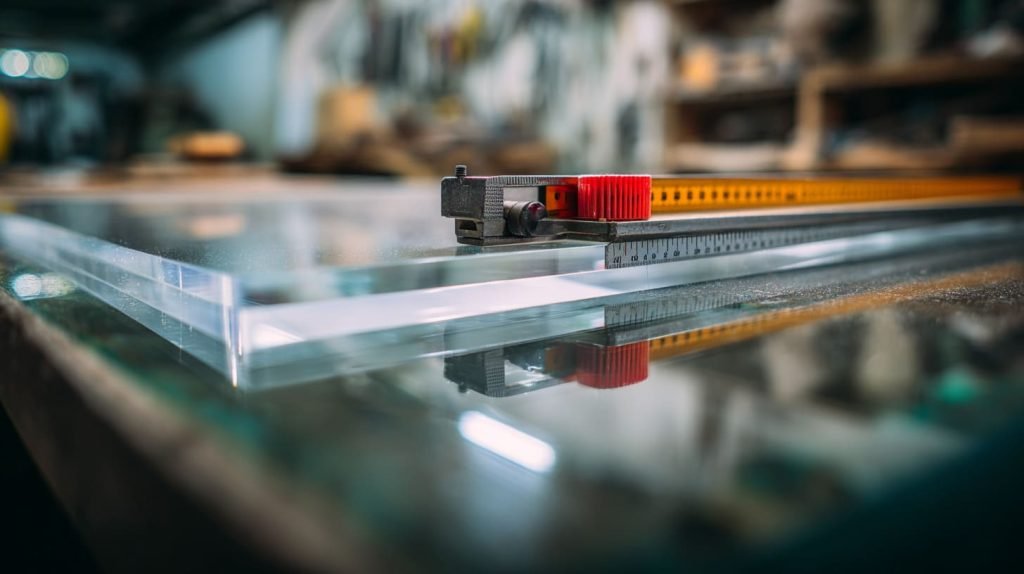
Let me tell you a story: I once reviewed a quote for a box with hidden hinges, engraved branding, two compartments, sliding lid—all in one piece of acrylic. The factory asked for a high premium. I asked: why? They walked me through each step: extra cuts, extra glue lines, extra finishing. The price made sense—after seeing the work.
2.1 Dimensional size and overall box geometry
A simple cube box is one thing; a multi‑compartment display unit with curves, custom opening, and non‑standard geometry is another. When you ask for unusual shapes, larger internal dimensions or ultra‑thin walls, you add process complexity. That flows to cost.
2.2 Complexity of cuts, bends, joinery, custom features (hinges, locks, compartments)
Hinges and locks are small details—but they matter. Each extra feature means an extra process. Bending acrylic requires heat bending or cold bending. Joining parts may require special glue or solvent bonding. Laser cutting for compartments adds time. In one source: “cutting, engraving, drilling … and bending/joining” all add cost.
2.3 How Visual Finishes Add Cost and Perception
Finishes don’t just change how a box looks—they change how much it costs. A flame-polished edge might look sleek, but it takes time. Frosted or mirrored panels feel premium, but require extra steps. Printed logos add setup and alignment costs. If your project is retail-facing or brand-sensitive, this becomes essential—but not cheap.
| Finish Type | Cost Impact |
|---|---|
| Raw cut (unfinished) | Low |
| Flame-polished or laser-smoothed | Moderate |
| Frosted, mirrored, with logo | High |
2.4 Labour, tooling and set‑up costs (especially for one‑off vs repeat run)
If you’re producing 1 unit as a custom prototype, labour cost per piece is high. Setup time cuts into efficiency. For repeat runs of 1000 units, the tooling and setup cost gets spread. At Feilong Acrylic, we have 5 production lines and 150+ skilled workers—so we can amortise set‑up better than smaller workshops. But complexity still eats labour hours and tooling cost.
One article states: “There is no standard cost … dependent on size, design, manufacturer, … type of actual acrylic material … level of customization.”
Design and process are big. But quantity matters too. Let’s go deeper.
3. Order Quantity, Batch Size & Production Efficiency
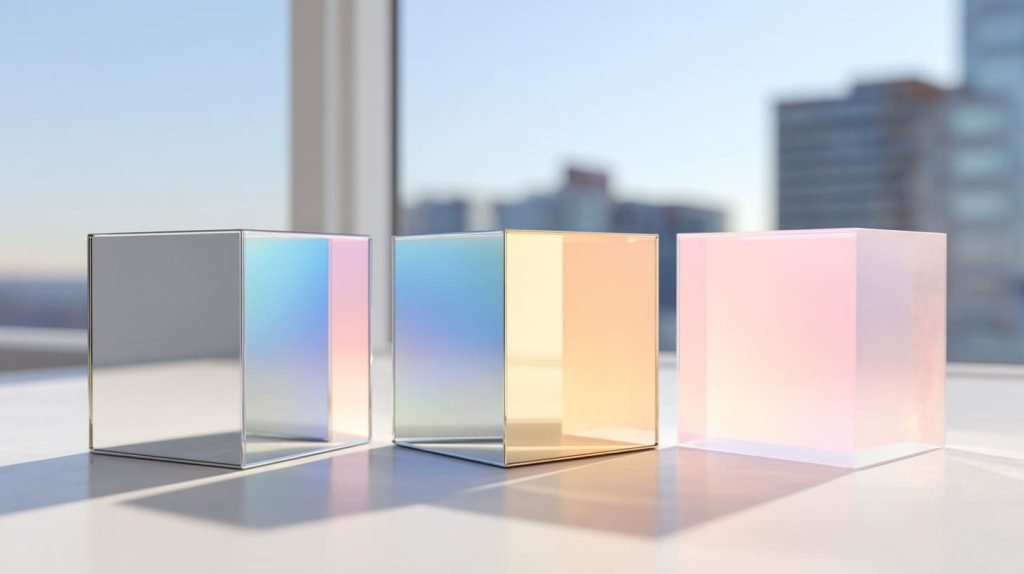
I remember the first time a buyer asked for 50 units vs someone else asked for 5000. The per‑unit cost difference surprised them. Let me walk you through why.
3.1 Minimum Order Quantity (MOQ) and how it affects unit cost
Many custom acrylic factories require an MOQ to make the job viable. If you only order 50 units, setup cost divided by 50 = higher per‑unit cost. If you order 5000, setup cost divided by 5000 = lower per‑unit. If you’re Jacky and forecasting demand, knowing this helps you plan.
3.2 Economies of scale: larger runs reduce per‑unit overhead
The more units you run, the more you spread fixed costs (tooling, design, set‑up). Also, machine time becomes more efficient—less changeover. Many guides say larger runs reduce per‑unit cost.
3.3 Setup and tooling amortisation across units
For a new custom box, you might pay for a mould, fixture, sample run, or jig. That’s a sunk cost in setup. The more units you run, the less that setup cost weighs per unit.
3.4 Repeat orders vs first‑time runs: how cost drops in subsequent runs
If you’ve done an entire run once, the next run might require less setup. The factory already knows the process, tooling exists, they can optimise scrap, reduce wastage. That often means the second run can be cheaper. If you ask your supplier: “What will a re‑order cost compared to initial run?” you’ll get insight.
Quantity is a strong lever. The next dimension is supplier side — location, overhead, and hidden costs.
4. Supplier, Location & Manufacturing Overhead
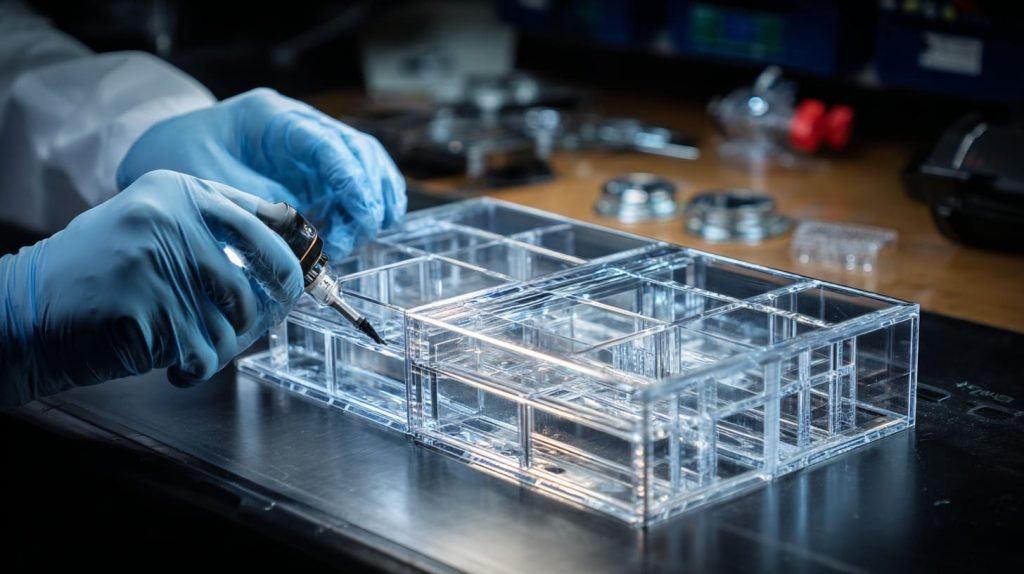
Here’s a truth: the same design ordered in different countries may cost differently—not because the acrylic sheet is different, but because labour, regulations, energy, scrap rate, shipping… all differ.
4.1 Regional labour, energy, regulatory costs – China vs domestic vs other regions
Labour cost in China (for this niche) is lower than in North America or Europe; energy and overhead cost might also differ. Some buyers assume “China = cheap” but ignore other overheads (quality, rework, logistics). In our Dongguan factory we invest heavily in efficiency and skilled workforce—but even then overheads exist.
When a factory holds ISO9001, GSG‑certified materials, quality traceability—you pay a premium, but you reduce risk. At Feilong Acrylic, we use high‑transparency GSG‑certified eco‑friendly acrylic and have ISO9001 certification. That adds cost but also value (and less risk).
4.3 Lead‑time, rush charges and scheduling bottlenecks
If you need a quick turnaround, rush charges apply. Some factories may deprioritise your job or charge extra. Lead time affects cost. If your project competes with other bigger orders, scheduling becomes a bottleneck.
4.4 Hidden costs: inspection, scrap/waste, reworks
Often quotes list material + labour + packaging—but they may not include scrap rate, or reject rate, or extra fragmentation due to complexity. One article mentions: “Different production processes will have an impact on the cost… the number and size of boreholes … cutting, engraving … all increase cost.”
Now, even after manufacturing, your cost isn’t done. Shipping, packaging and logistics add weight (literally and figuratively).
5. Packaging, Shipping & Logistics
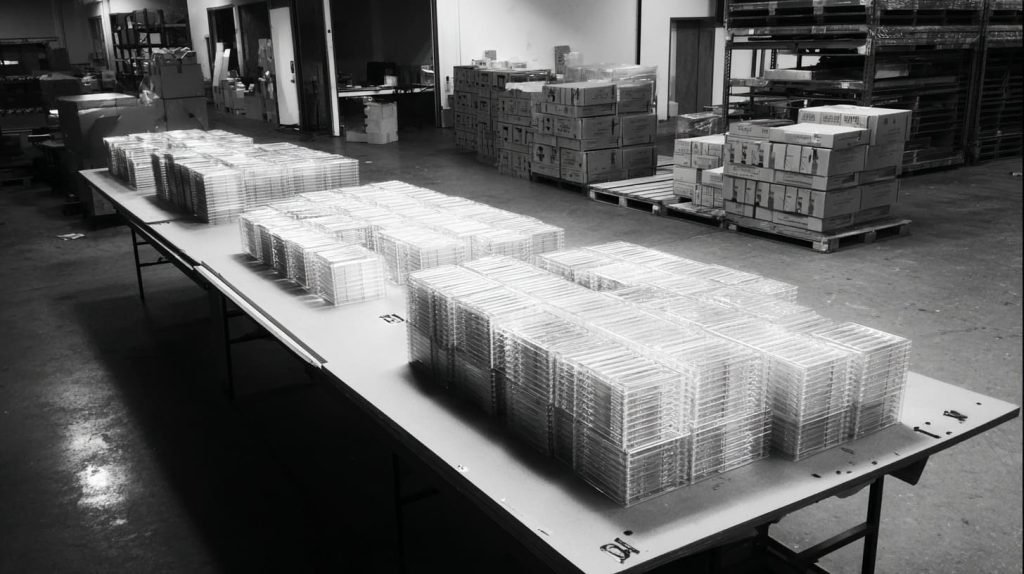
Let’s switch scenes: imagine that perfect acrylic box arrives—only to have corner cracks because packaging was inadequate. Or your container hits customs delays. These issues cost money and time.
5.1 Size/weight of boxes impacting freight cost
Larger or heavier boxes cost more to ship. If the box design is oversized, shipping per unit may jump. Sometimes the freight cost per box exceeds the manufacturing cost. Don’t ignore that.
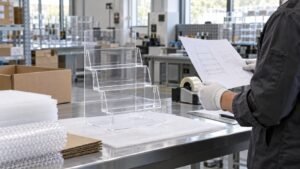
5.2 Special packaging/protection for acrylic (to avoid scratches/cracks)
Acrylic is vulnerable to scratches, impacts, temperature changes. The factory might need to add foam, protective film, corner guards, special cartons. Those extras add cost—and if the buyer wants low cost packaging, risk increases.
5.3 Shipping method: sea freight vs air vs ground
Need it fast? Air freight is faster but 5‑10x sea freight. One guide on packaging costs for boxes mentioned heavy cost on shipping/duties. Sea freight is slower but cheaper—plan accordingly.
5.4 Hidden Costs After Production: Duties, Taxes, and Delivery Delays
You may quote manufacturing cost “ex‑works China” but then duties/import tax, customs brokerage, delays—all add cost. Ensure you and your supplier clarify who bears these.
| Element | Buyer‑Important Cost |
|---|---|
| Freight mode | Higher for air |
| Packaging protection | Higher for fragile acrylic |
| Duties/import | Varies by destination & HS code |
And the final major driver: market forces and supply chain surprises.
6. Market Forces & Supply Chain Variables
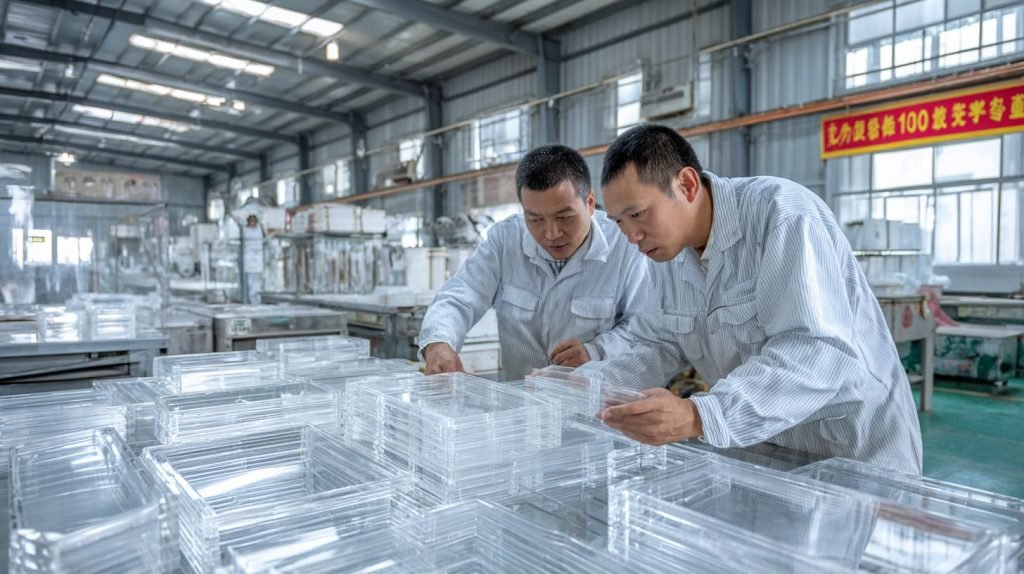
I’ve seen resin prices jump overnight, shipping containers become scarce, tariffs appear new. These external forces carry real cost.
6.1 Raw material (resin/acrylic) price volatility and energy cost dependencies
If resin price spikes, acrylic sheet price follows. Energy cost increases (for manufacturing) also follow. It’s not always visible in the quote. One article noted: “There is no standard cost … it is dependent on a wide range of factors …”
6.2 Seasonal demand, capacity constraints and peak surcharges
During certain seasons (holiday displays, cosmetic launches) demand for custom acrylic boxes jumps. Factories may charge premiums or may face capacity constraints and push up lead time and cost.
6.3 Currency exchange, tariffs, import/export regulation
If you buy from China and your home currency weakens, your cost in local currency rises. Tariffs or import duties can also suddenly increase cost, eroding savings.
If you require eco‑friendly, recycled or certified materials (e.g., GSG‑certified), expect higher cost. Buyers focused on sustainability often pay that premium—but it’s a cost driver.
At this point you know many of the cost‑drivers. But what can you actually do as the buyer (like Jacky) to save? Let’s explore.
7. Cost Saving Strategies (for buyers)
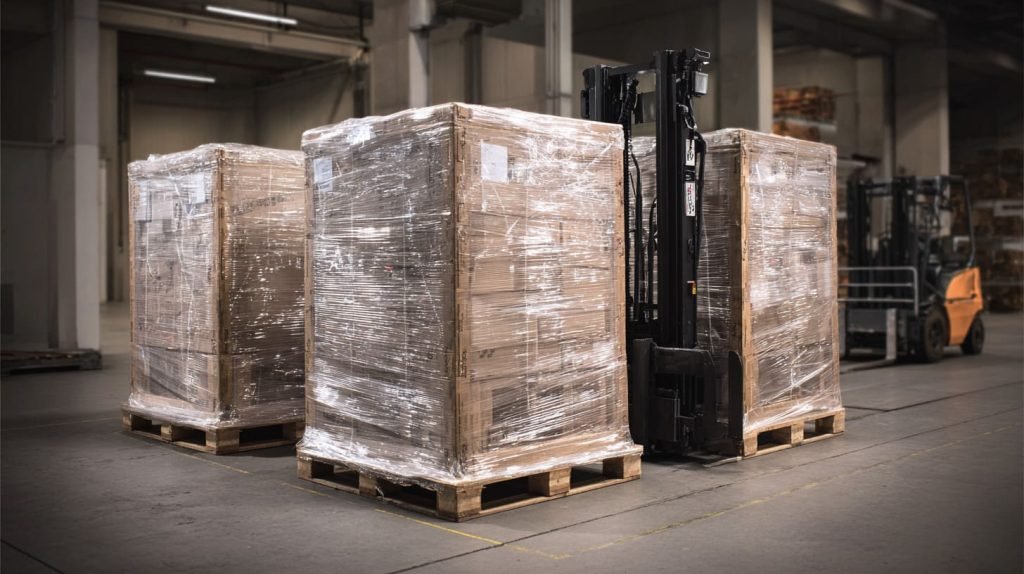
After years at Feilong Acrylic, working with procurement professionals, I realised savings don’t come from just one place. It’s about small moves in many places. Here are strategies you can apply.
7.1 Simplify design: standard sizes, fewer components, reduce features
If you can accept standard dimensions, avoid custom shapes, or reduce number of compartments or features—cost drops. Simpler = less labour, less material waste, fewer set‑ups.
7.2 Bulk ordering and forecast planning to leverage economies of scale
Plan ahead. If you can forecast and commit to a larger batch, you’ll hit lower unit cost. If you order smaller non‑repeat lots, you’ll pay more per piece.
7.3 Material optimisation: choose appropriate thickness/grade for use‑case
Ask: do you need ultra‑clear 10 mm thick cast sheet for that storage box, or would a slightly thinner extruded sheet serve? Match spec to function and save.
If you commit to several runs with your supplier, you may negotiate better tooling amortisation, lower set‑up. Factories like predictable work. Ask for tiered pricing with volume.
7.5 Packaging & shipping optimisation: standardise, protect smartly, consolidate shipments
If you can standardise packaging, optimise carton size, consolidate shipments (less frequent, larger) you reduce shipping cost per unit.
7.6 Transparency in quotes: ask for cost breakdown (material, labour, overhead)
Don’t accept a single lump‑sum figure—ask your supplier: “How much is material? How much is labour? How much overhead?” This transparency gives you context for negotiation.
When you’ve been to the factory (or seen a live video), you understand their process, capacity, and risk—so you’re less likely to face hidden charges or surprises later. At Feilong Acrylic we’ve found buyers who visit (or take virtual tours) are more aligned and better planned.
Conclusion
Now you have a full map: material and raw‑material costs, design complexity and manufacturing process, order quantity and production efficiency, supplier location and overhead, packaging/shipping/logistics, market & supply‑chain variables—and practical cost‑saving strategies. For B2B buyers like Jacky, the goal isn’t simply hunting for the lowest quote. It’s understanding why pricing differs, spotting where you can influence cost, and working with your manufacturer as a partner—not just a vendor.
If you’re seeking a custom acrylic box solution and want a manufacturer who understands all these levers—right from a factory with 13+ years’ experience, ISO9001 certified, using high‑transparency GSG‑certified eco‑friendly acrylic—feel free to reach out to us at Feilong Acrylic. We deliver high‑quality, custom solutions with fast lead times for personalised or bulk orders.
Let’s turn your idea into a well‑priced, well‑executed reality.