Skip to content

It started with one action figure. Then five. Then a hundred. Suddenly, my shelves couldn’t breathe.
Toy collectors store and display toys using shelves, display cases, and customized furniture—balancing protection, aesthetics, and accessibility.
I didn’t expect toy collecting to change the layout of my house. But here I am—moving furniture to make room for a box of vintage Stormtroopers. Let’s walk through how I (and many others) make sense of the chaos.
How to display collectibles without looking cluttered?
I used to pile everything on the same shelf. It looked like a toy avalanche.
Group by theme, use negative space, and balance open vs enclosed displays to avoid visual clutter.
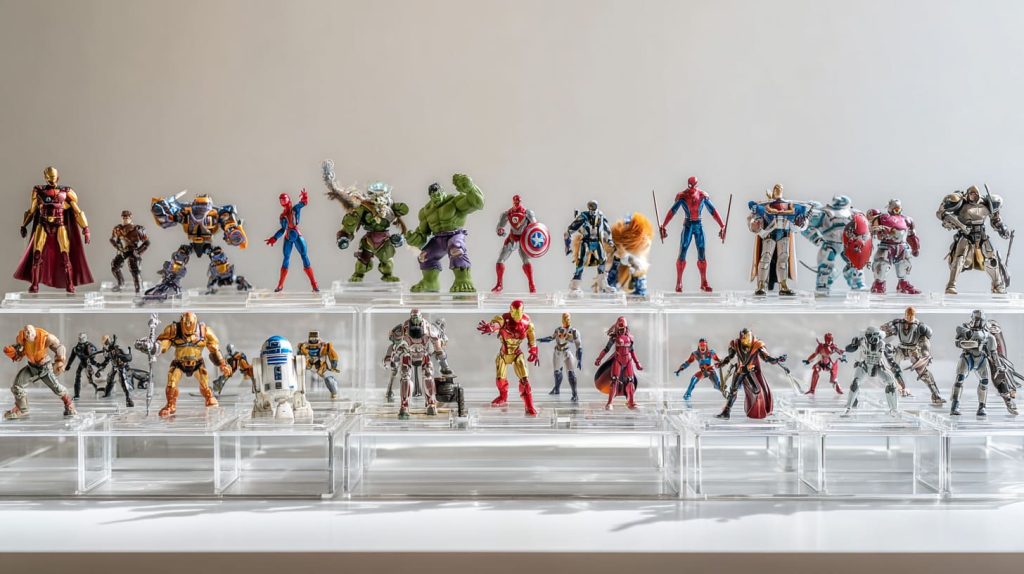
My personal rule: If I can’t see it clearly, it’s not being respected.
I started using layered platforms, risers, and minimalist backdrops. Here's a quick breakdown:
| Tip | Purpose |
|---|---|
| Use risers | Adds vertical interest |
| Leave breathing space | Avoids visual overload |
| Stick to a color theme | Creates visual harmony |
I learned to rotate my displays seasonally. Not only does it keep things fresh, but it also gives each piece its moment to shine.
What is the 3-5-7 rule in decorating?
At first, I thought it was some kind of toy-counting game.
The 3-5-7 rule means arranging objects in odd numbers for a more visually appealing composition.
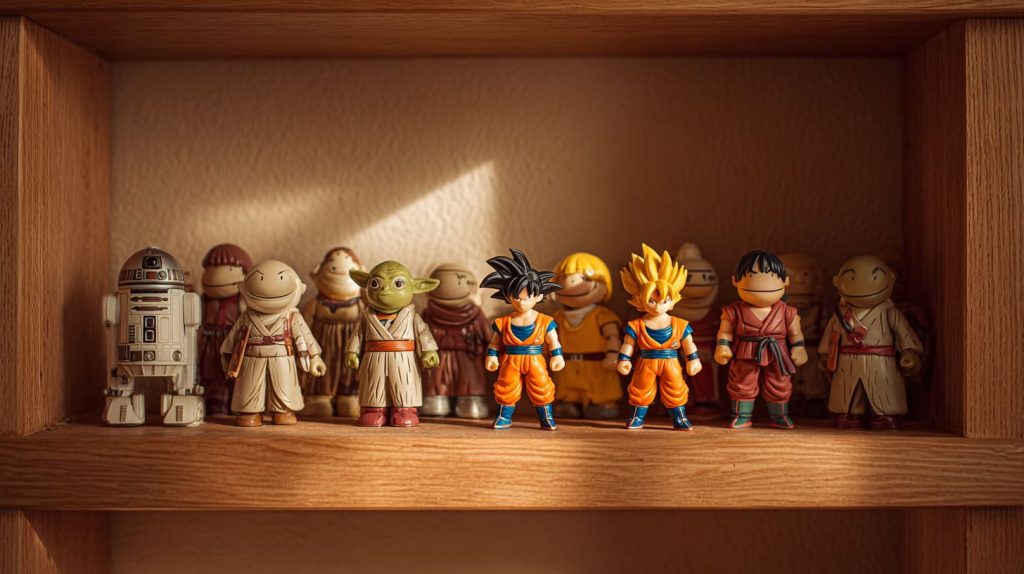
This rule changed how I grouped my toys. For example, I’d place three Star Wars figures together on a base, then five Dragon Ball Z characters nearby. Odd-number groupings feel more natural—less like a showroom, more like a story unfolding.
What is the Montessori approach to toy storage?
Funny enough, I borrowed this from my nephew’s playroom.
Montessori storage uses open, low shelves and limits visible toys to encourage independent and focused play.
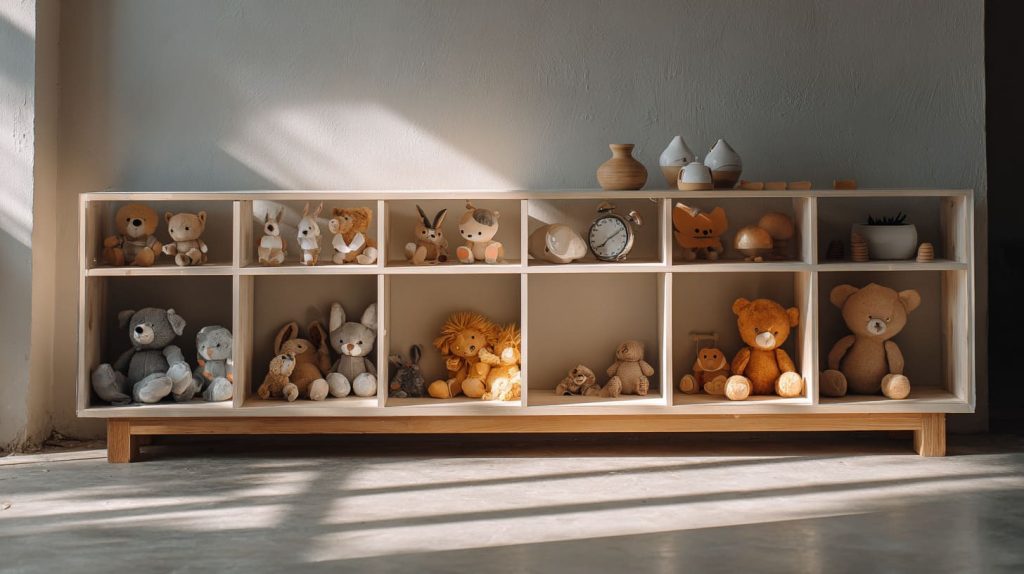
I use this method when I want a “less is more” vibe. Here’s what I took from it:
- Rotate toys monthly
- Keep storage at eye level
- Use natural materials like wood or acrylic
It’s soothing. Less overwhelming for guests, too.
How to organize toys with lots of pieces?
Lego taught me patience—and the importance of labels.
Segment by theme and use containers with clear dividers to prevent chaos.
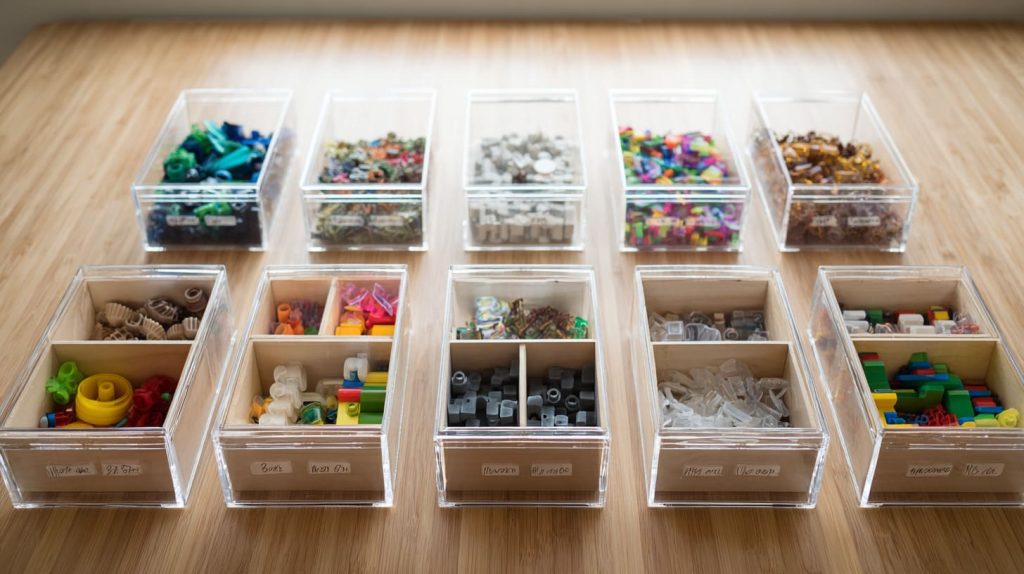
I use stackable drawers, tackle boxes, and zip-lock bags. Here’s what works best for me:
- Clear acrylic sectioned boxes for visibility
- Labels on every container
- A sorting ritual every Sunday (yes, I enjoy it)
It’s oddly satisfying to open a drawer and find every tiny accessory in its place.
What is the best way to display collectible action figures?
They deserve better than a dusty corner.
Use tiered acrylic risers, LED lighting, and character-based grouping for a dynamic, respectful setup.
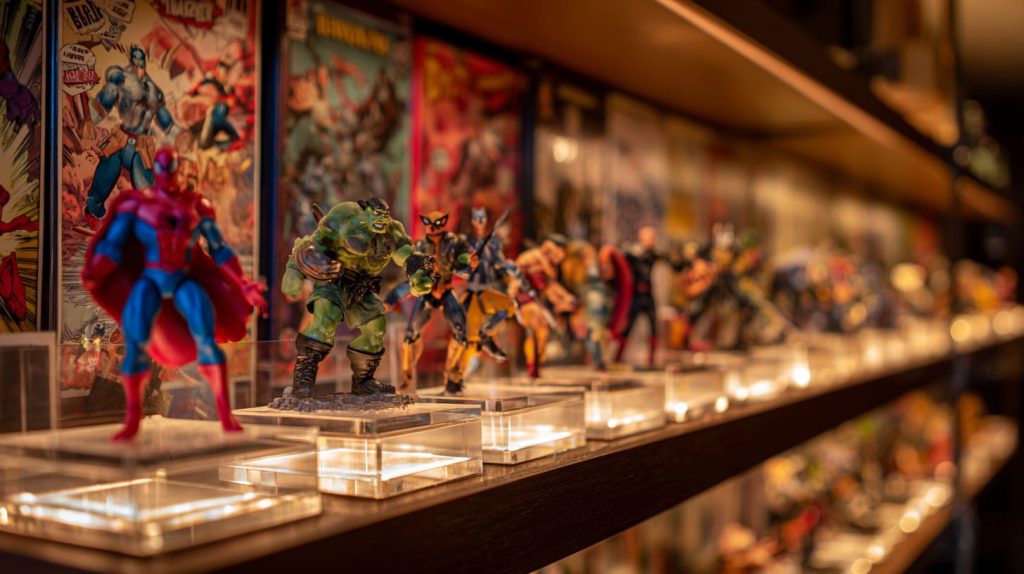
Think of it like curating an exhibit. I give each character space. Add a little context—a comic book cover behind them, a miniature prop. Suddenly, it’s more than a shelf. It’s a scene.
How do collectors keep their toys dust-free and protected?
Dust is the enemy. Sunlight is the traitor.
Enclosed acrylic display cases and occasional gentle cleaning are key to preservation.
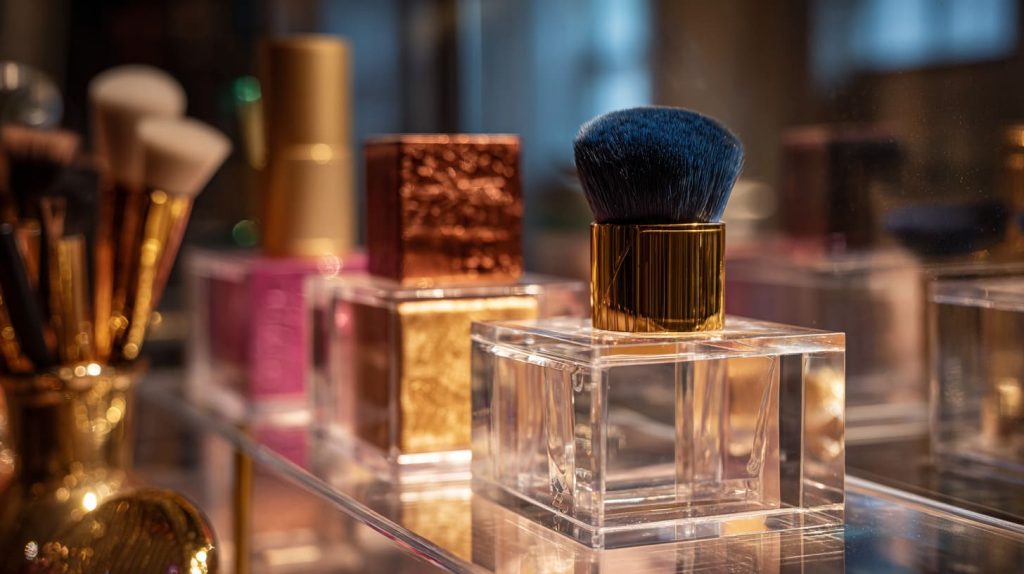
I wipe down my figures monthly with a makeup brush. Use UV-filtered panels when possible. And never underestimate the power of silica gel packs.
What types of acrylic display cases are ideal for toy collections?
Not all acrylic is equal.
UV-resistant, scratch-proof, stackable acrylic cases work best for long-term display and storage.
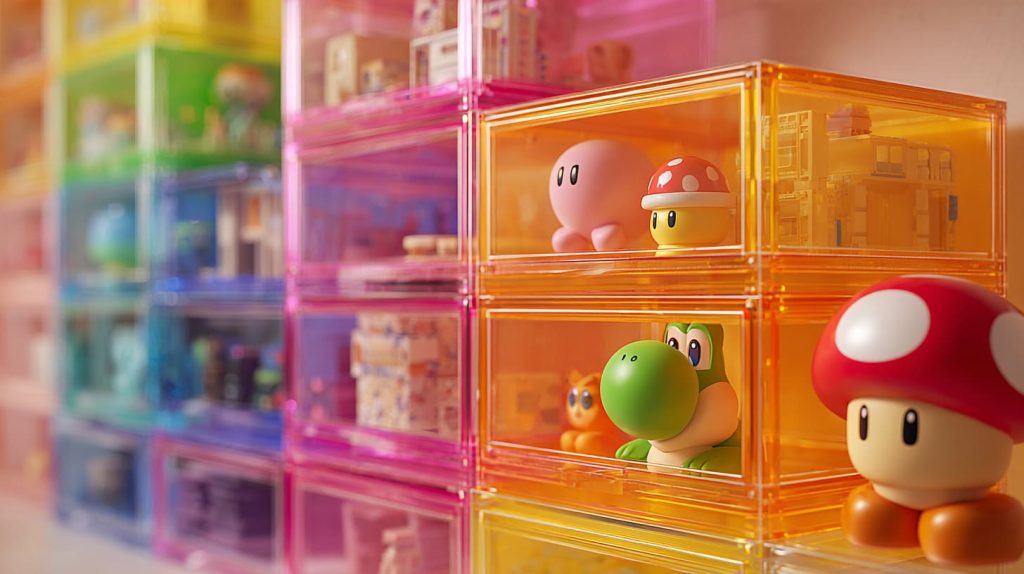
| Case Type | Best For |
|---|---|
| Magnetic-front | Easy access |
| Stackable boxes | Saving space |
| Wall-mounted | Maximize vertical storage |
I order mine in bulk with logo engraving—adds a personal touch and keeps things uniform.
How do you organize a large toy collection without clutter?
One word: zones.
Divide your collection into categories, display zones, and storage zones to manage volume.

I have zones by theme (anime, movie, childhood) and another set by value (vintage vs modern). This makes cleaning, showing off, or moving easier—and it feels intentional, not chaotic.
Should toy collectors use open shelves or enclosed display boxes?
It depends on lifestyle and climate.
Open shelves offer easy access and visibility; enclosed boxes offer protection from dust and UV.
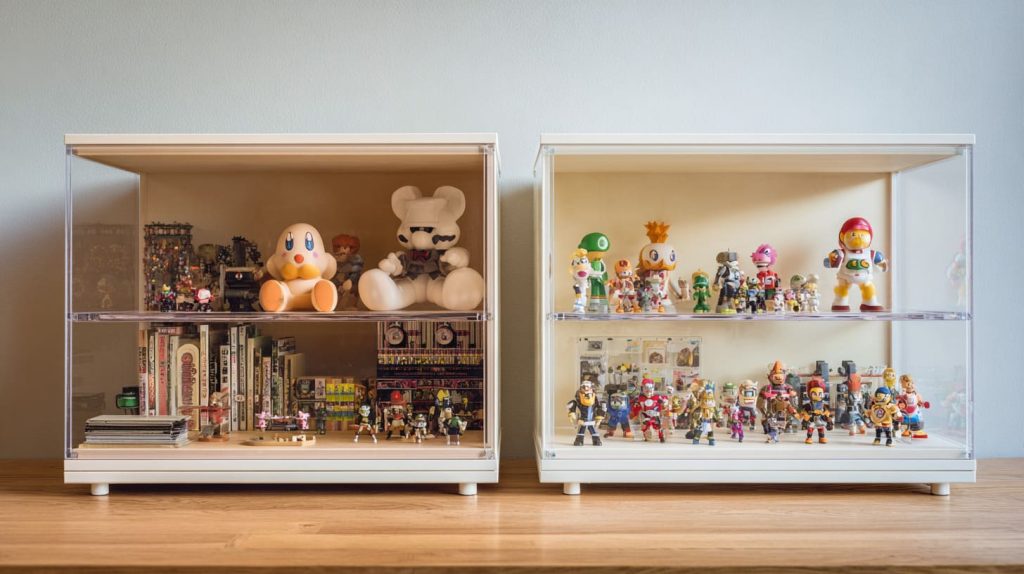
I mix both. My daily joys—like desk toys—stay on open shelves. My limited editions? Sealed tight, like museum pieces.
How can lighting enhance the presentation of displayed toys?
Good lighting changes everything.
LED spotlights, strip lights, and ambient backlighting make colors pop and details shine.
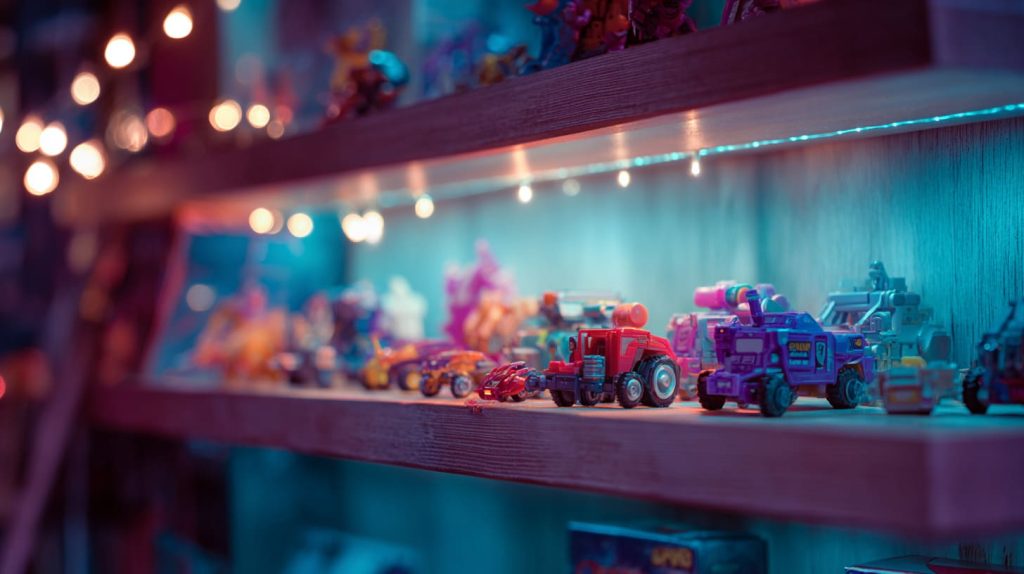
I added motion-sensor LEDs to my shelves. It feels like a theater entrance every time I walk by.
- Use 3000K–4000K light temp for warmth
- Avoid direct sunlight
- Diffused strip lights for no shadows
Lighting sets the mood. It turns a shelf into a story.
What are the most space-saving solutions for storing boxed toys?
I couldn’t toss the boxes. So I got creative.
Use under-bed bins, vertical racks, and labeled plastic tubs to keep boxed toys safe and out of the way.
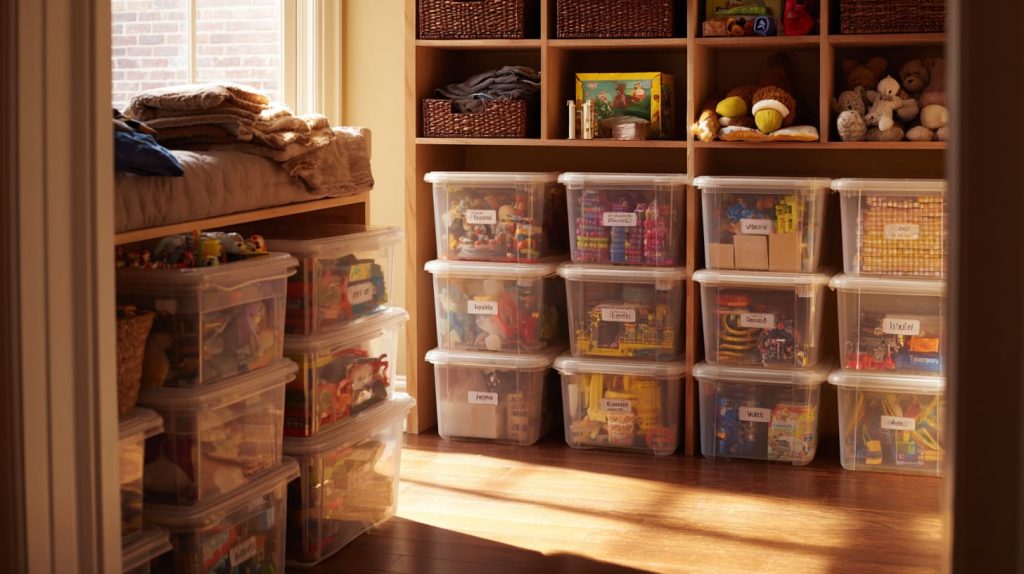
Here’s my routine:
- Heaviest boxes on bottom shelves
- Seasonal toys under the bed
- Rare boxed items sealed in plastic sleeves
I never thought I’d become a storage strategist. But here we are.
How do professionals display limited edition or vintage toys?
Like they’re art. Because to us—they are.
Professional collectors use custom cases, climate control, and certificates of authenticity for high-value pieces.
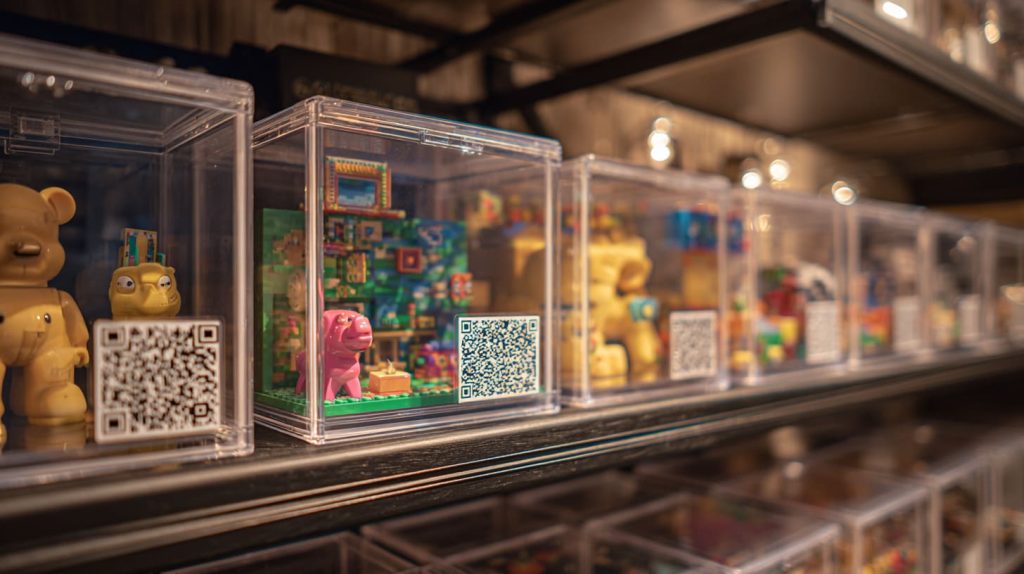
I’ve seen some collectors go as far as insuring each piece. For me, I use laser-cut foam inserts, low-humidity rooms, and add QR codes for digital tracking.
Is custom display furniture worth it for serious toy collectors?
I said no—until I tried it.
Yes, custom furniture allows perfect fit, theme cohesion, and optimized protection for serious collectors.
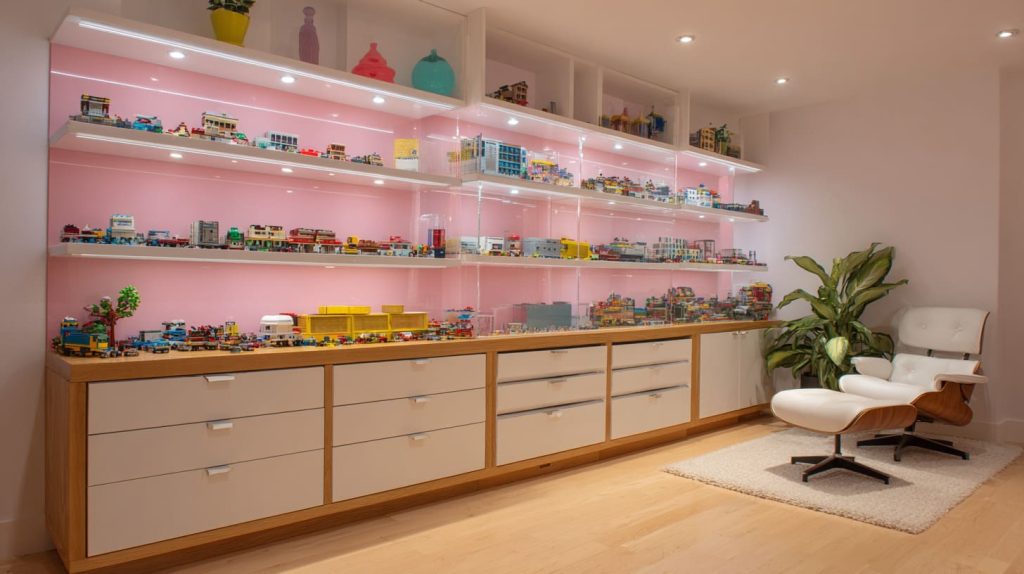
I designed a display wall with integrated drawers, lighting, and risers. Now every shelf tells a story—and I never feel like I’m out of space.
Conclusion
A toy collection isn’t just about owning things—it’s about honoring stories. The right storage makes space for both.