Skip to content

You’ve seen it before—on perfume displays, phone cases, even signage. It shifts color like oil on water, soft yet electric. It makes you stop and look.
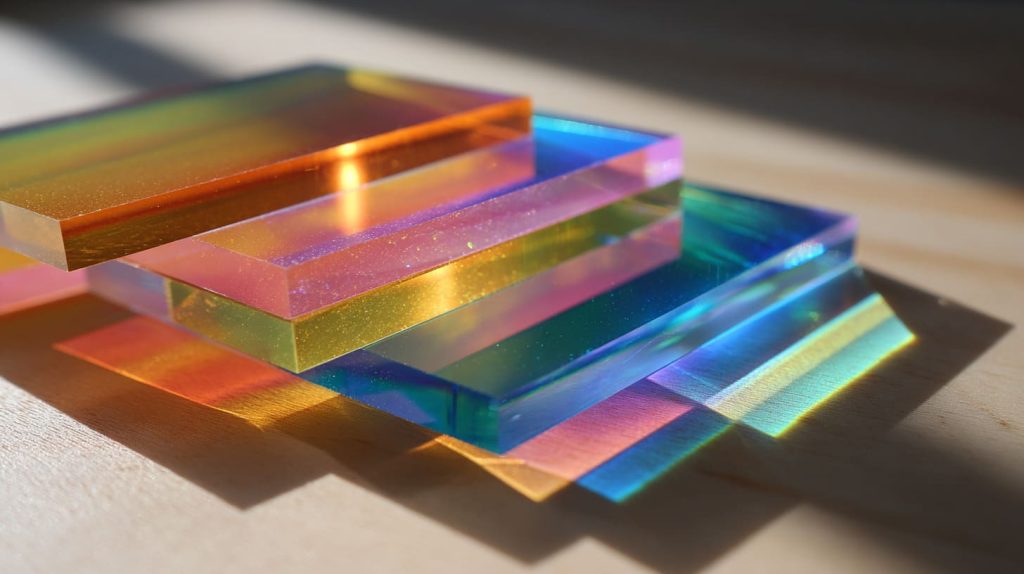
Iridescent acrylic is a light-reactive plastic that changes color depending on the viewing angle and lighting, offering a shifting, pearlescent finish.
I remember holding a sheet of it near a window in our workshop. The light hit, and suddenly the material looked alive—blues melting into pinks, purples dancing with gold. That was the moment I realized: this wasn’t just acrylic. This was mood, motion, and magic—all frozen into a panel.
What is the difference between metallic and iridescent acrylic paint?
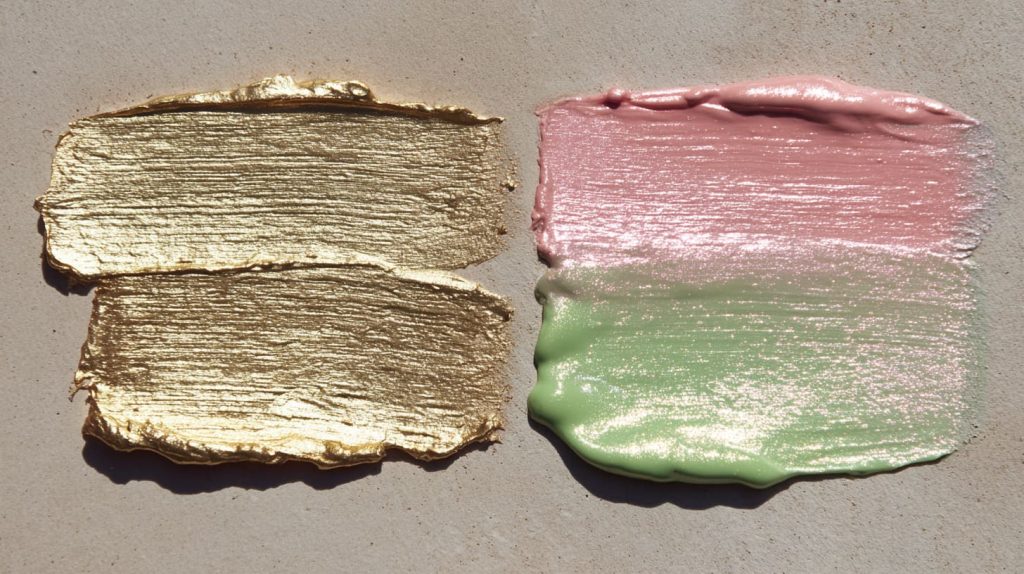
Metallic paint shines; iridescent paint shifts.
Metallic paint reflects light in one direction. Iridescent paint reflects multiple colors depending on angle and light.

Think of it like this:
| Feature | Metallic Paint | Iridescent Paint |
|---|---|---|
| Finish | Solid shimmer | Color-shifting |
| Light Interaction | Direct reflection | Multi-angle refraction |
| Common Look | Gold, Silver, Bronze | Purple-to-green, Pink-to-blue |
| Mood | Strong and bold | Ethereal and dreamy |
Metallics are dependable and direct. Iridescents are mysterious. That’s why artists use both to play with emotion.
How is iridescent plastic made?
It’s not just a paint job. It’s built into the sheet.
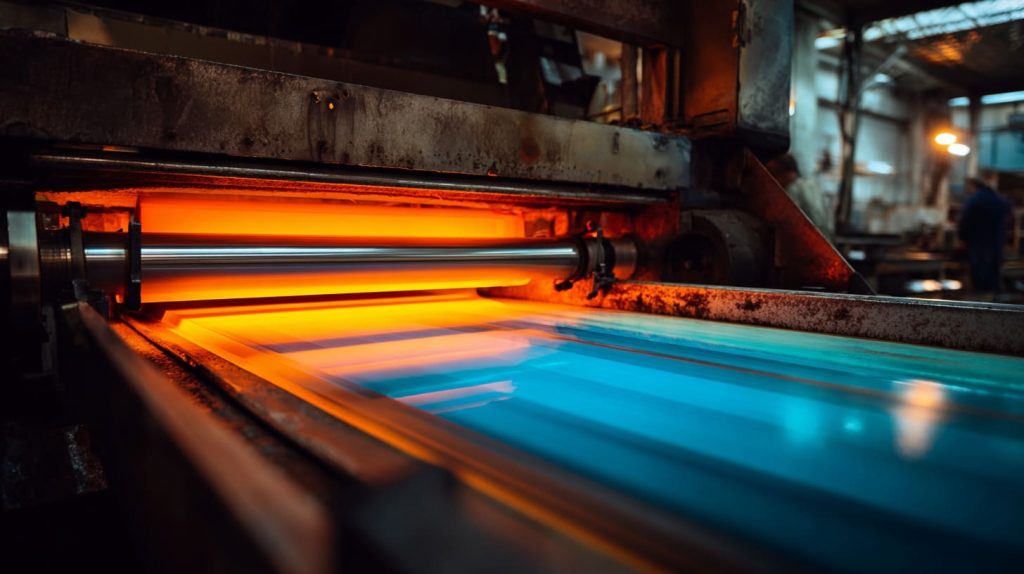
Iridescent plastic is made by embedding optical films or micro-layers that refract light within the acrylic during extrusion.
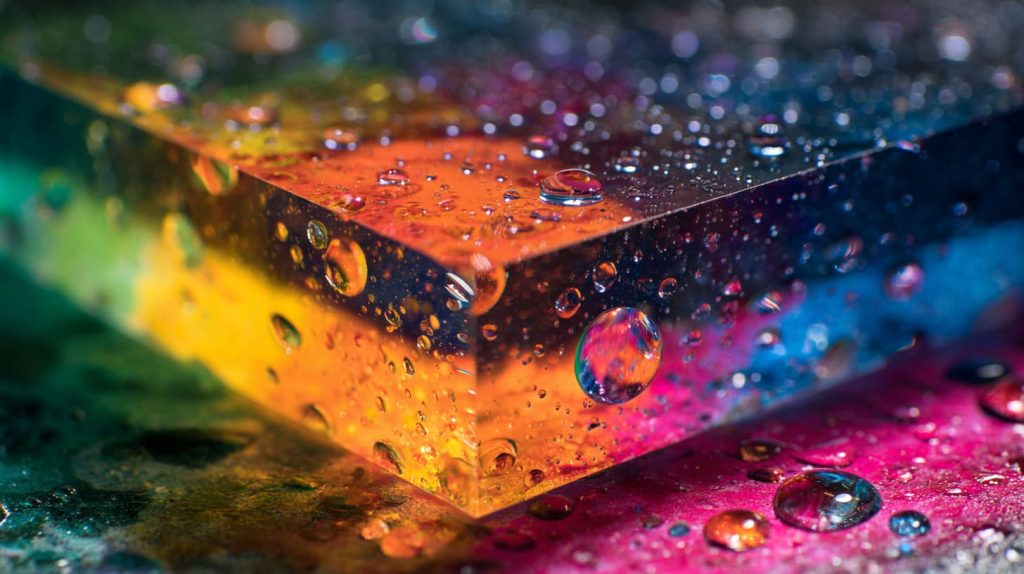
Manufacturers carefully control the layering process, often using a multi-layered film inside or atop the acrylic. These layers bend light, similar to how a soap bubble or butterfly wing plays with color. The result? The color isn’t just on the surface. It’s in the material itself.
Why do some artists avoid acrylic paint?
Acrylic dries fast—too fast for some hands.
Some artists skip acrylic paint because it lacks the blending time and depth of oil or watercolor.
Others find it too flat or synthetic. But many love it for exactly those reasons—fast drying, bold color, and flexibility. Personally? I think it’s a tool. Just depends on what you're painting, and who you’re painting for.
Is iridescent paint waterproof?
Short answer: sometimes. But it depends.
Most iridescent acrylic paints are water-resistant once dry, but not fully waterproof unless sealed.
If you're using it outdoors or near moisture, apply a clear sealer or varnish. Without protection, the shimmer may fade or peel with time and exposure.
What is an example of iridescent color?
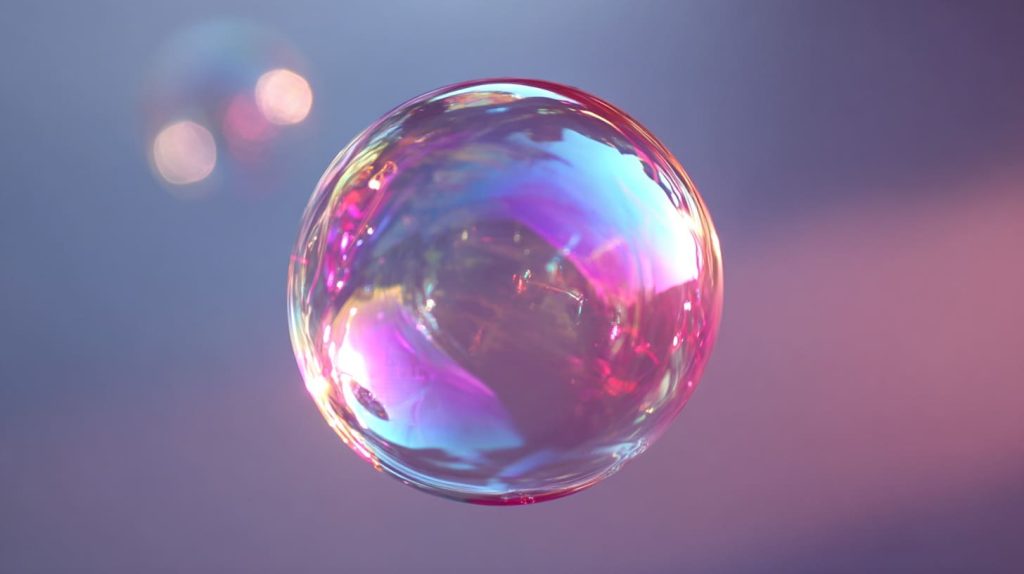
Ever seen a bubble shimmer with pink and blue?
Classic examples include colors like pearl, opal, peacock feather hues, and chameleon-like pink-to-teal shifts.
Iridescent colors are never just one thing. They're like mood rings—soft, strange, constantly moving.
What makes iridescent acrylic different from standard acrylic?
Both are strong and clear—but only one plays with light.
Iridescent acrylic bends and refracts light, while standard acrylic remains optically consistent and color-stable.
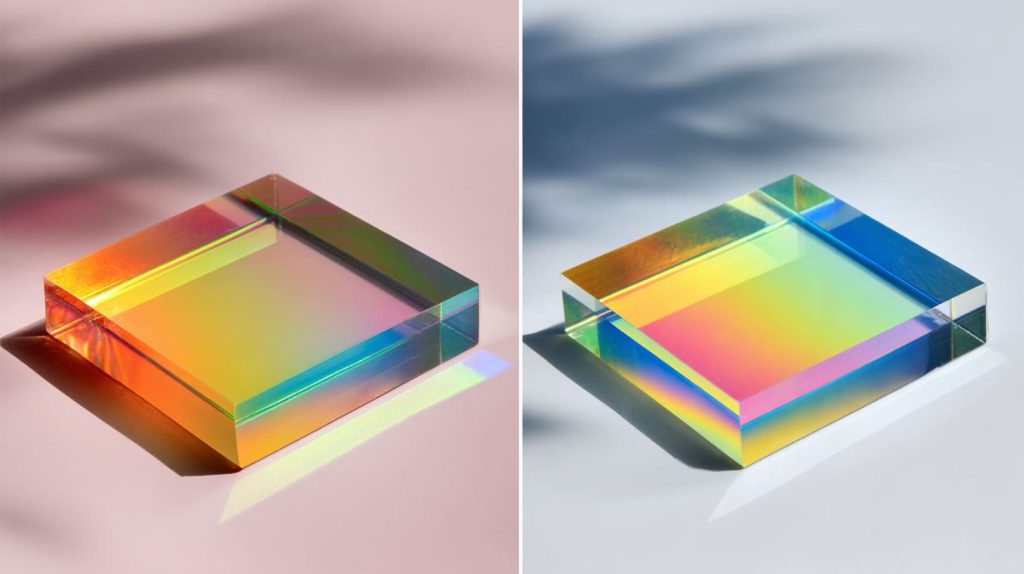
In other words, standard acrylic is predictable. Iridescent acrylic? It's a show-off. A beautiful one.
How is iridescent acrylic made?
It’s more than pouring plastic into a mold.
Manufacturers layer refractive films inside or onto the acrylic sheet during extrusion, controlling color play.
This process requires precision machinery. Even a tiny mistake in the angle of the film or material thickness can ruin the iridescent effect. That’s why it’s a little pricier—and a lot more dazzling.
Is iridescent acrylic durable for commercial displays?
Yes—and that’s why brands love it.
Iridescent acrylic is as durable as standard cast acrylic, suitable for heavy retail use when properly mounted.

It resists cracking, handles light impacts, and holds up under spotlight heat. Just don’t treat it like metal—it scratches easier. But for a showpiece display? It shines.
Can iridescent acrylic be laser cut or CNC machined?
Absolutely—if you do it right.
Iridescent acrylic cuts cleanly with lasers or CNC, but needs slower speed and lower heat to avoid discoloration.
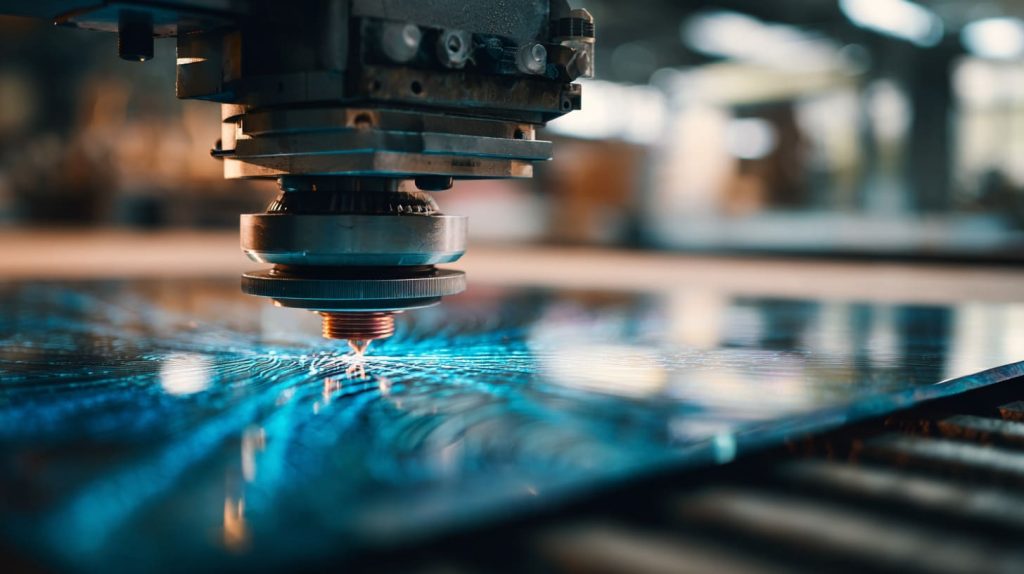
We’ve run hundreds of sheets through our CNC and laser machines. The key is adjusting the parameters—treat it gently, and you’ll get gorgeous, clean edges.
Where is iridescent acrylic commonly used in retail and interior design?
It’s made for moments. And moods.
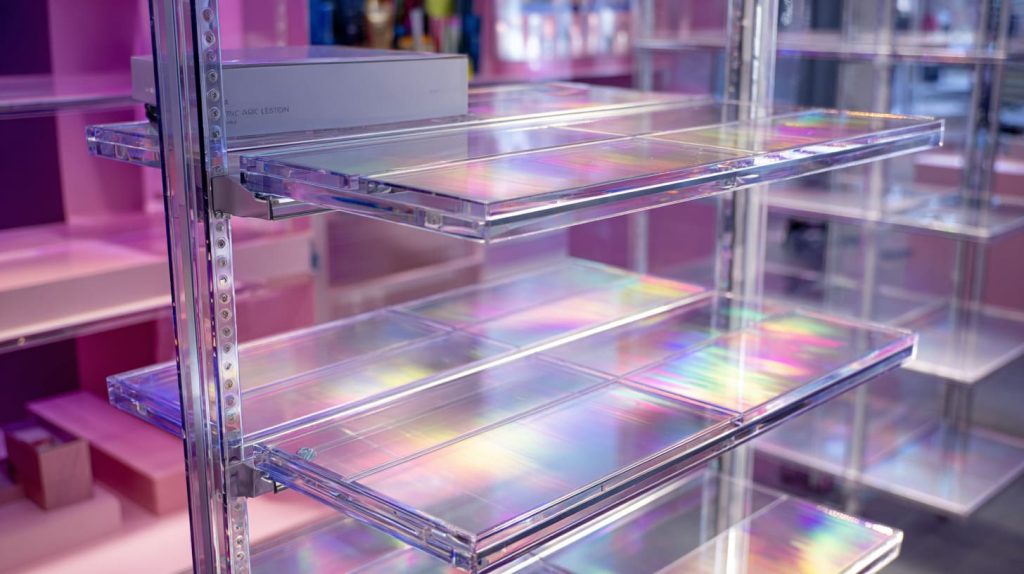
Common uses include cosmetic displays, signage, feature walls, bar fronts, and luxury packaging accents.
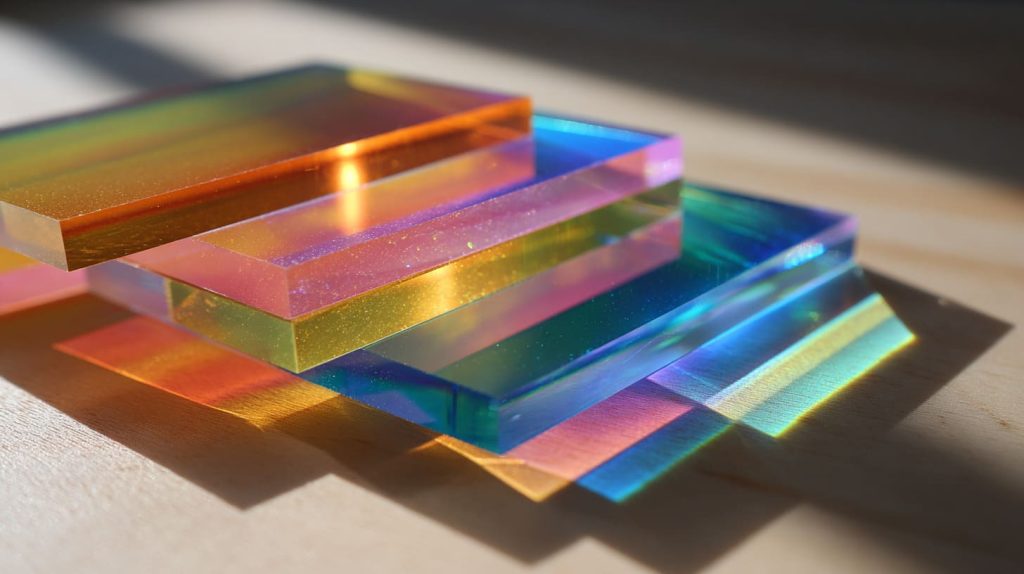
Top Applications:
- Cosmetic display risers
- Retail shelf accents
- Lightbox inserts
- Boutique store signage
- Event and wedding décor panels
In stores, it draws eyes. In homes, it adds playfulness. In both, it makes people linger.
What thickness options are available for iridescent acrylic sheets?
More than you'd expect.
Standard sizes range from 1.5mm to 6mm, with custom thickness up to 10mm or more available on request.
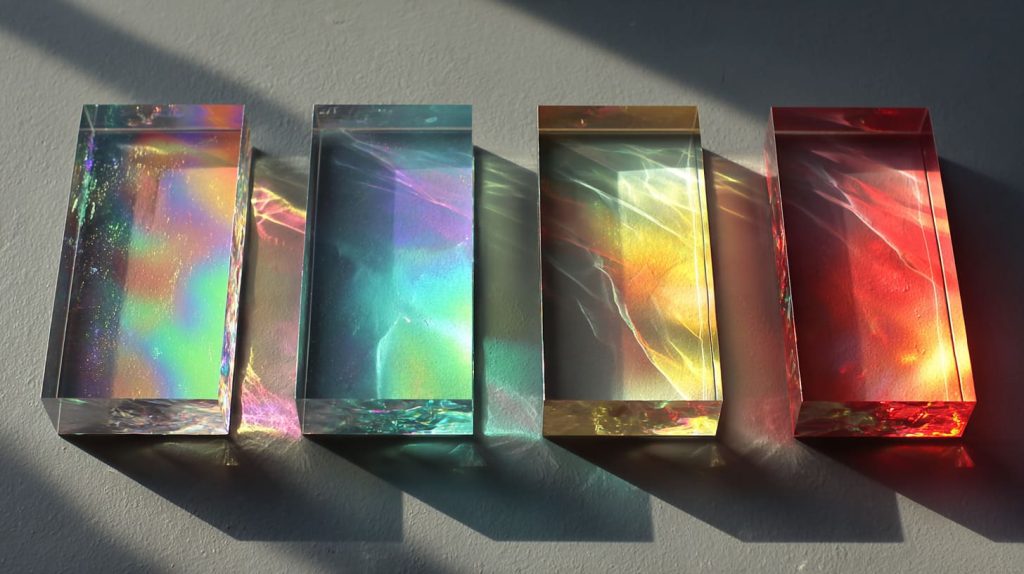
Most design clients go with 3mm—it balances cost and presence. For structural parts, we recommend 5mm+ for rigidity.
| Thickness (mm) | Best Use Case |
|---|---|
| 1.5 mm | Small labels, layered cut-outs |
| 3 mm | Display panels, light signage |
| 5 mm | Stands, risers, window inserts |
| 8–10 mm | Structural shelves, load-bearing parts |
How does lighting affect the look of iridescent acrylic?
Lighting changes everything.
Natural and artificial light hit iridescent acrylic differently, shifting color tones and depth.
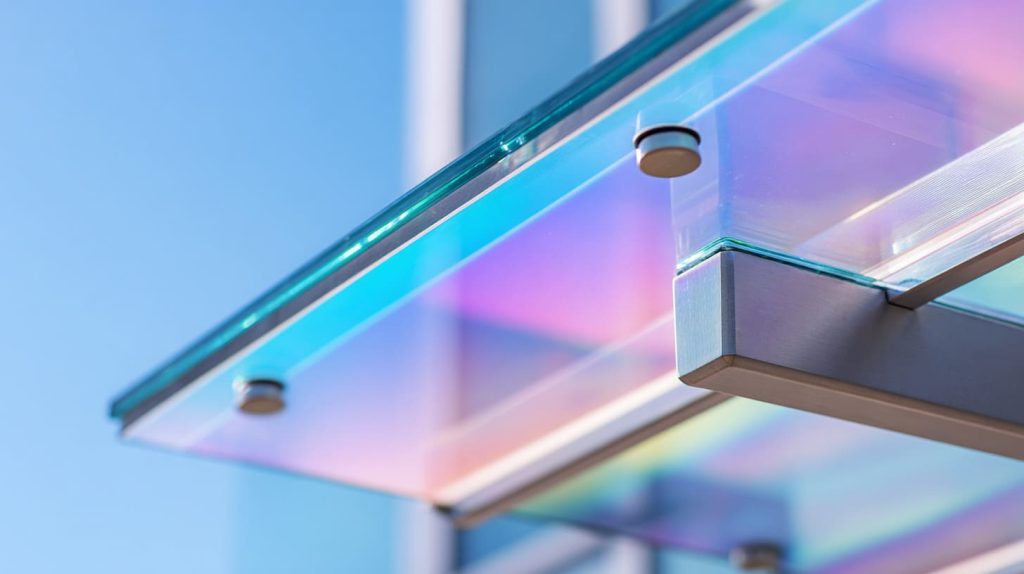
Position matters. Even a few degrees change in angle transforms the color. That’s why in our showroom, we always test it under warm, cool, and spotlight beams.
Lighting Effects Table:
| Light Source | Effect on Acrylic |
|---|---|
| Warm light (2700K) | Rich gold, pink hues |
| Cool light (6000K) | Blue and teal tones |
| LED Spotlights | High contrast shimmer |
| Natural sunlight | Full dynamic color play |
Is iridescent acrylic suitable for outdoor use?
Yes, but handle with care.
Iridescent acrylic is UV-resistant but may fade slightly over years of direct sunlight unless UV-stabilized.
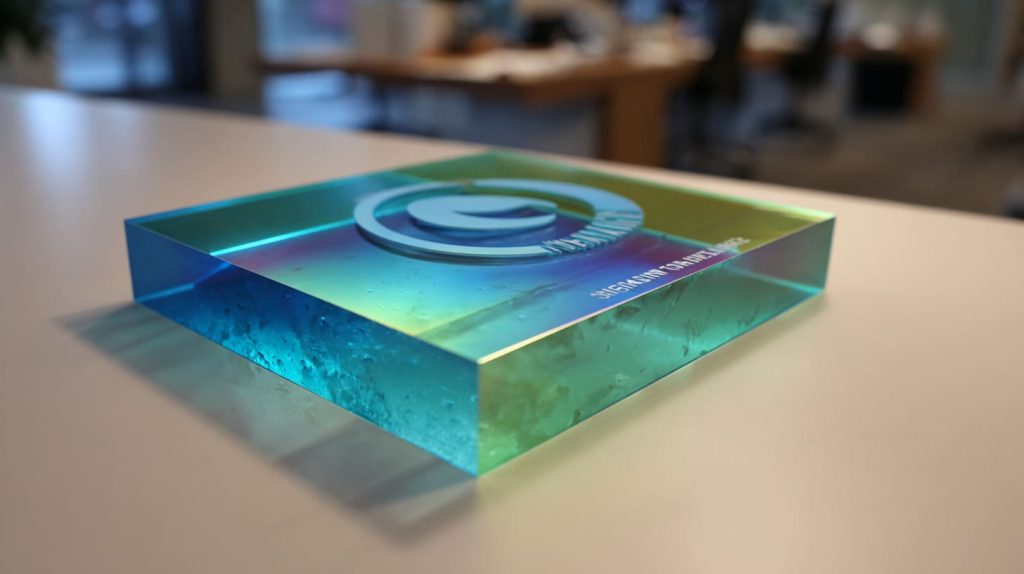
We always recommend adding a UV coating or choosing sheets rated for outdoor use if it's going into a sunny spot. Indoors? No problem at all.
What are the customization options for iridescent acrylic products?
Pretty much endless.
You can laser-cut, engrave, UV-print, glue, polish, or bend iridescent acrylic like standard sheets—with a little more finesse.
Want a logo etched into a shimmer panel? Done. Need shaped signage with hidden mounts? No problem. We’ve made custom trays, pop-up booth walls, even backlit letters.
Custom Options Checklist:
- ✅ CNC cutting
- ✅ Laser etching
- ✅ Heat bending
- ✅ Gluing & solvent bonding
- ✅ UV printing
- ✅ Flame polishing
How Does Iridescent Acrylic Compare to Colored or Mirrored Acrylic?
All have their place—but they create very different effects.
Colored acrylic offers bold, uniform hues. Mirrored acrylic reflects like a glass mirror. Iridescent acrylic? It shimmers and shifts with light and angle.
| Feature | Colored Acrylic | Mirrored Acrylic | Iridescent Acrylic |
|---|---|---|---|
| Visual Depth | Flat color | Reflective | Dynamic shimmer |
| Custom Appeal | Moderate | High | Very high |
| Light Interaction | Absorbs | Reflects | Refracts |
If you're designing for impact—for a product that turns heads and holds attention—iridescent acrylic steals the show every time.
Conclusion
Iridescent acrylic is more than just a pretty face. It plays with light, mood, and space. And once you’ve used it—you never forget the effect.