Skip to content
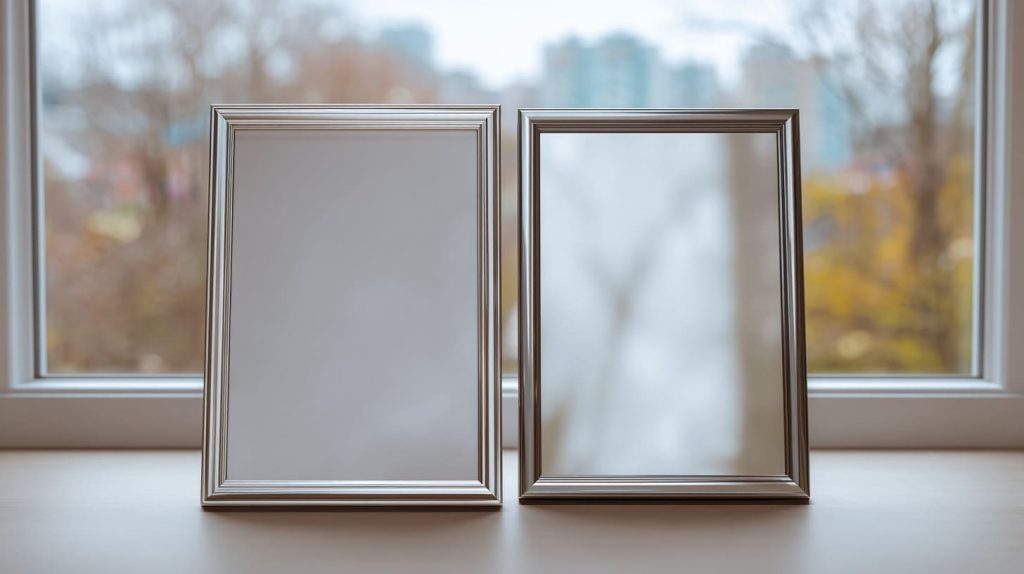
The subject line was short, almost careless: “Which looks better on camera—acrylic or glass?” No long explanation. No mood board. Just that one question sitting on top of a real deadline.
I opened the attachments and smiled, because I’ve seen this exact moment many times. A photographer or a brand team has the image ready, the frame ready, the space ready… and then the “front layer” becomes the final boss. The layer that nobody notices when it’s right, but everybody blames when it’s wrong.
The tricky part is that acrylic and glass can both look perfect for five minutes. Under soft light, on a clean table, they behave like twins. The difference starts when real life touches the project: a strong spotlight, a window with hard sunlight, a quick wipe from store staff, a courier who stacks cartons like bricks.
So when Jacky asks this question, I don’t answer like a material textbook. I answer like someone who has to ship the finished piece, handle complaints, and protect the print’s “first impression” for months, not minutes.
This article is for practical decision-makers. If you want one clean rule, I won’t fake it. But if you want the right call for your environment, your lighting, and your risk level, let’s break it down properly.
And the best place to start is simple: what job are acrylic and glass actually doing in photography?
What Role Do Acrylic and Glass Play in Photography?
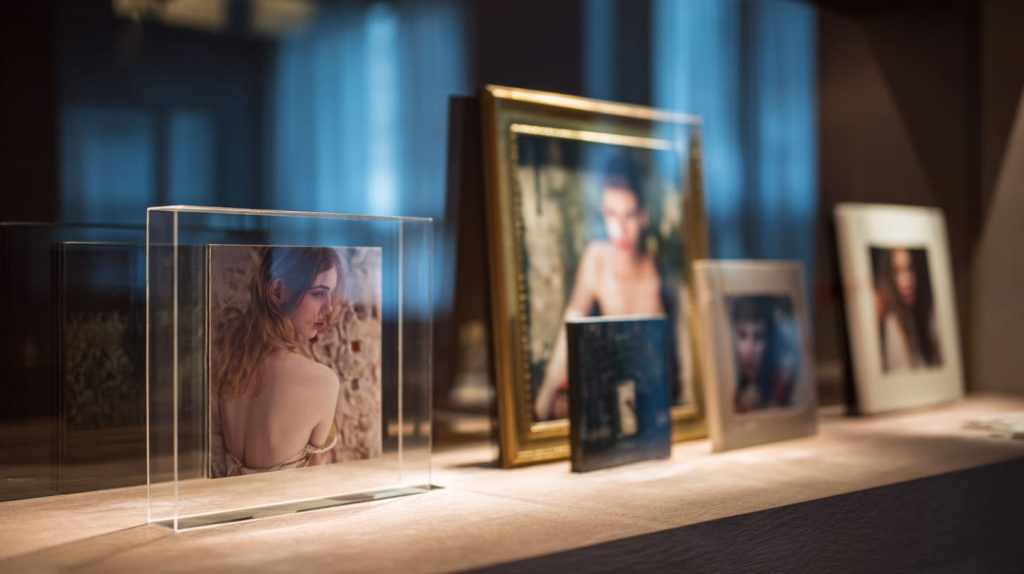
One thing I’ve learned from working with buyers is this: people often compare acrylic and glass like they are “two clear sheets,” but in photography they act more like two different filters on top of the story.
My decision usually starts with a simple question: What is the material supposed to protect—an image, a brand feeling, or a customer experience? Because those are not the same.
Typical photography applications
Here is where acrylic and glass show up the most:
- Photo frames and wall displays
- Tabletop displays and exhibitions
- Protective covers for prints and artworks
- Shooting surfaces and reflective props
And each use case has a different “pain point.”
| Use case | What can go wrong | What people complain about |
|---|---|---|
| Framing | reflections, scratches, breakage | “I can’t see the photo clearly” |
| Tabletop display | fingerprints, dust, handling damage | “It looks messy after one day” |
| Protective cover | UV fading, warping, static dust | “The print aged too fast” |
| Shooting surface | reflections, hotspots, light control | “My product photos look harsh” |
Why material choice affects visual outcome
Material choice changes results because it changes how light behaves:
- Reflection: what you see on the surface, not the photo itself
- Transmission: how much light passes through
- Surface micro-texture: what highlights appear under strong lights
- Color neutrality: how “true” whites and blacks feel
- Distance effects: thick covers can create an edge “frame” feeling
If you only look at a sample under soft indoor light, both look similar. The difference becomes obvious under:
- direct window sunlight
- strong retail lighting
- flash photography
- repeated cleaning and touching
A short story from my side: a client used acrylic for a boutique wall display. It looked perfect on install day. Two weeks later, the store staff wiped it daily with a rough cloth. The acrylic did not “break,” but it started to look tired. The photo did not change. The surface did.
That’s why the next section matters. If the light is wrong, everything else becomes secondary.
Optical Clarity and Light Performance

People say “both are clear.” That is true in a simple way. But photography is not a simple world. It is a world of reflections, angles, and tiny distortions.
The first thing I judge is not “which is clearer,” but which one stays visually quiet under the light the photo will actually face.
Acrylic optical characteristics
Acrylic often gives a bright, clean look because it can have high light transmission. But it also has behaviors that show up under strong lights.
What acrylic does well
- It can look very “open” and bright.
- It can reduce the feeling of “heavy glass barrier.”
- It is easier to use in large formats without thick weight.
Where acrylic can surprise you
- Under strong spotlights, acrylic can show surface reflection patterns more clearly.
- Thicker acrylic edges can visually “frame” the print because the edge catches light.
- Acrylic can attract dust by static, which can add a soft “haze” in the wrong environment.
| Acrylic detail | What it looks like | Why it happens |
|---|---|---|
| Edge glow | bright border line | light travels inside thickness |
| Static dust | tiny speckle layer | surface holds dust easily |
| Hot reflections | sharp glare points | surface reflection + angle |
Glass optical characteristics
Glass has a classic feel. Many people call it “true clarity,” but the real advantage is often consistency.
What glass does well
- It tends to stay optically stable over time.
- It is less static-prone than acrylic.
- It is naturally harder, so it keeps the surface “clean looking” longer.
Where glass can win hard
- With anti-reflective coatings, glass can become almost invisible in certain angles.
- Museum glass can offer strong UV protection and reflection control.
Where glass can frustrate you
- Standard glass can reflect like a mirror.
- If it breaks in shipping, the project becomes a nightmare.
Practical comparison for photographers
This is a simple way I explain it to buyers:
| Environment | Acrylic is often chosen when… | Glass is often chosen when… |
|---|---|---|
| Studio | you need lightweight props and easy handling | you need stable optics and can control safety |
| Retail display | you need safety and large format | you want premium feel + coated options |
| Exhibition | you need safer transport and install | you want museum-level optics and longevity |
Acrylic can look amazing in a controlled scene. Glass can look amazing in a controlled scene too. The real question is: what happens when control is lost?
And control is often lost during transport and installation, which brings us to the next topic—weight and safety.
Weight, Safety, and Handling
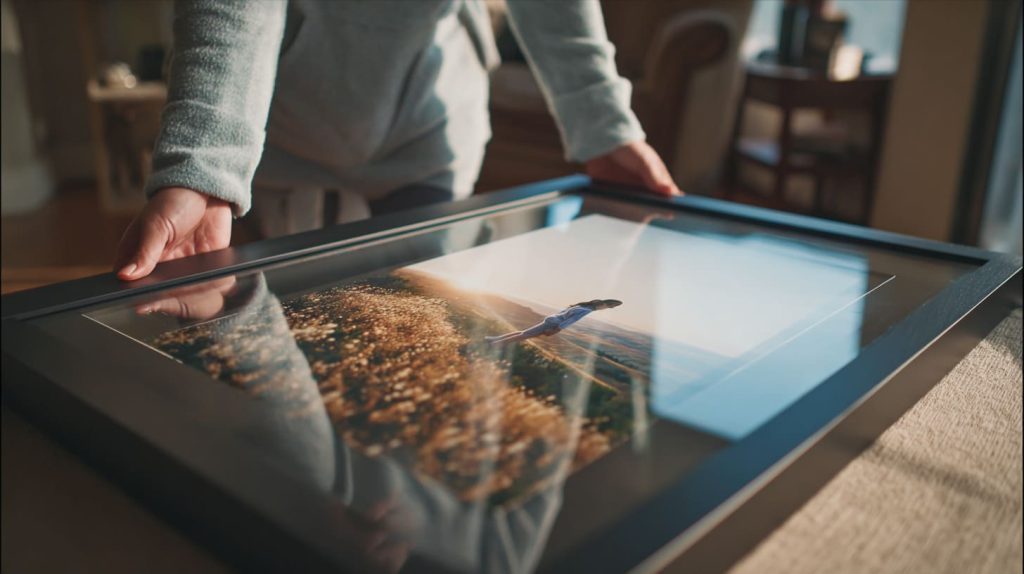
Most material debates ignore the moment when someone actually carries the framed piece up the stairs. That moment is where “the best optical choice” can become “the worst logistics choice.”
A detail I never skip: I always imagine the least careful person in the chain handling the product—because they usually decide the outcome, not the most careful person.
Acrylic advantages in daily handling
Acrylic is lighter than glass. That sounds boring until you see a large format print.
- Large frames are easier to carry.
- Hanging hardware can be simpler.
- Risk of injury from breakage is lower.
For public spaces, this is a big deal. A retail store, a gallery lobby, a busy hallway—people bump things.
Glass considerations
Glass feels solid and premium. But weight and breakage are real.
- Heavy frames need stronger backing and hardware.
- Shipping needs better packaging.
- Installation needs more care.
- Public safety becomes a concern.
Here is a quick reality table:
| Handling factor | Acrylic | Glass |
|---|---|---|
| Weight | lighter | heavier |
| Break risk | low (shatter-resistant) | higher |
| Shipping cost | often lower | often higher |
| Public safety | better | riskier |
I have seen projects where the material decision was changed after one broken shipment. Not because glass was “bad,” but because the risk cost became too high.
And if your work is displayed where people get close, touch, and clean it often, weight is not the only issue. Surface durability becomes the next problem.
Scratch Resistance and Surface Durability
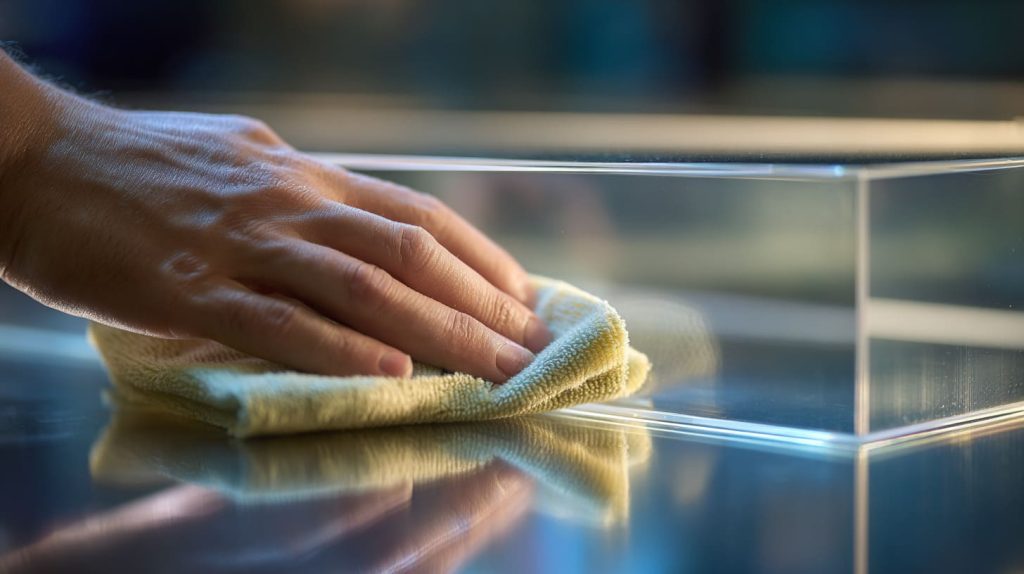
This is where people get emotional. Because scratches feel personal. They make the display look old, even if the print is new.
Here is my honest judgment: if the display will be cleaned often by staff who do not treat it gently, acrylic is where complaints start—unless the cleaning plan is clear.
Acrylic surface behavior
Acrylic scratches more easily than glass. That is not a secret. The surprise is how fast it can happen in high-touch environments.
What causes most scratches
- dry wiping dust off the surface
- rough cloth or paper towel
- cleaning sprays with particles
- repeated “quick wipe” habits
The good part
- light scratches can sometimes be polished out
- the piece is less likely to become dangerous if damaged
| Acrylic condition | What it means in real life |
|---|---|
| Light hairline scratches | looks “foggy” under side light |
| Deep scratches | visible even from distance |
| Polished surface | can recover, but costs time |
Glass surface behavior
Glass resists scratches better in normal use.
- easier to keep looking “new”
- cleaning is simpler
- less worry about wiping routine
But if glass chips or breaks, there is no simple repair.
Which matters more in real use
This is where context wins.
| Environment | What matters more | My typical lean |
|---|---|---|
| High-touch retail | scratch + cleaning routine | depends, often acrylic with strict cleaning guidance |
| Low-touch home | long-term clarity | either works |
| Museum / archival | stability + coatings | often glass |
I once saw a store use acrylic covers on prints near the cashier line. People touched them all day. After one month, the surface looked tired. The store manager blamed the supplier. The real cause was a cleaning habit: dry wipe, fast, daily. That habit is poison for acrylic.
So if longevity matters, we also need to talk about sunlight and UV. Because fading is quiet, and it never forgives.
UV Protection and Print Longevity
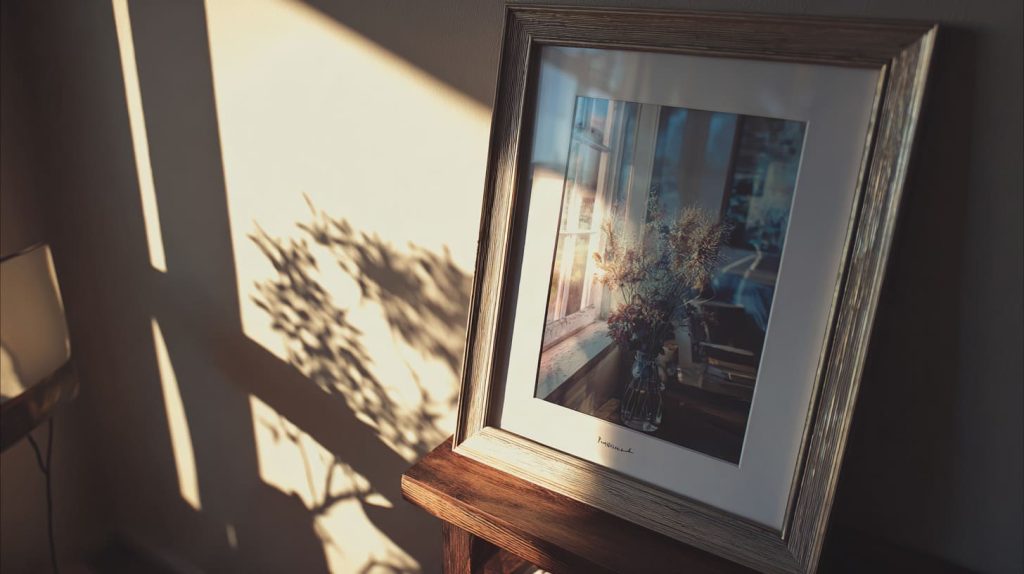
UV damage is slow. That is why it is dangerous. A print can look perfect for months, then one day you notice the blacks look weaker, the reds look tired, and the photo feels older than it should.
My rule is simple: if the print is valuable and sits near daylight, I treat UV protection as part of the print, not an optional upgrade.
Acrylic UV filtering options
Not all acrylic is the same. Some acrylic is basic. Some is UV-protected.
- Standard acrylic: decent clarity, but UV protection varies.
- UV-protected acrylic: designed to reduce fading.
If the display is in a store window, UV acrylic often pays for itself.
Glass UV performance
Glass also varies.
- Regular glass: basic protection, not enough for long-term sun exposure.
- UV museum glass: stronger UV filtering and often anti-reflective coatings.
The problem is cost. Museum glass can be expensive, and lead time can be longer.
Choosing based on display duration
| Display goal | Best focus | Practical choice |
|---|---|---|
| Short-term campaign | cost + speed | acrylic is common |
| Long-term home display | stable look | either, depends on cleaning style |
| Archival / collector | UV + reflection | museum glass or UV acrylic |
And then we arrive at the part people often care about most, even if they don’t say it out loud: how “premium” it feels.
Aesthetic and Presentation Differences
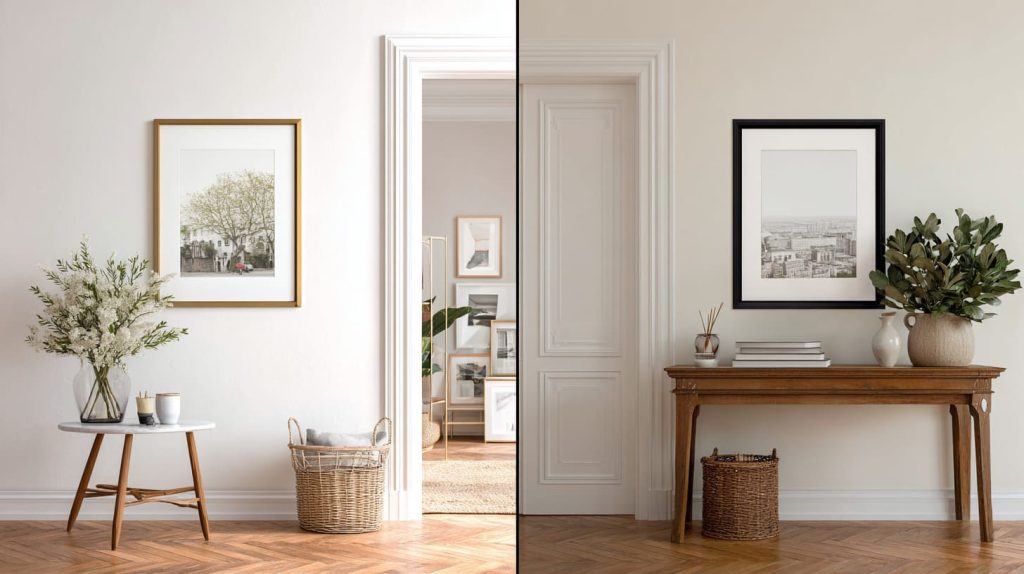
People do not only buy a photo. They buy the feeling of it. They buy how it sits in a space.
A line I use in my head: if the cover draws attention to itself, it is already failing its job.
Visual feel of acrylic
Acrylic can feel modern and light.
- It can create a floating look.
- It can look clean in frameless designs.
- It works well with minimal, modern interiors.
But acrylic can also feel “plastic” if:
- edges are not finished well
- thickness looks bulky
- surface shows scratches under light
Visual feel of glass
Glass has a traditional premium association.
- It feels like galleries and museums.
- It can make a frame feel “serious.”
- With coatings, it can look almost invisible.
But standard glass reflections can ruin the viewing experience. Sometimes it feels like you are looking at the room, not the photo.
Matching material to brand and space
| Space | Acrylic tends to fit | Glass tends to fit |
|---|---|---|
| Modern retail | clean, safe, large format | premium, if reflection control is used |
| Classic gallery | okay in some cases | strong match |
| Office display | durable, safer | premium but heavier |
| Home | lightweight and flexible | classic look |
A buyer like Jacky often cares about more than looks. He cares about how easy it is to customize the final design, especially for special projects.
So let’s talk fabrication and customization. That is where acrylic often becomes the practical winner.
Customization and Fabrication Flexibility
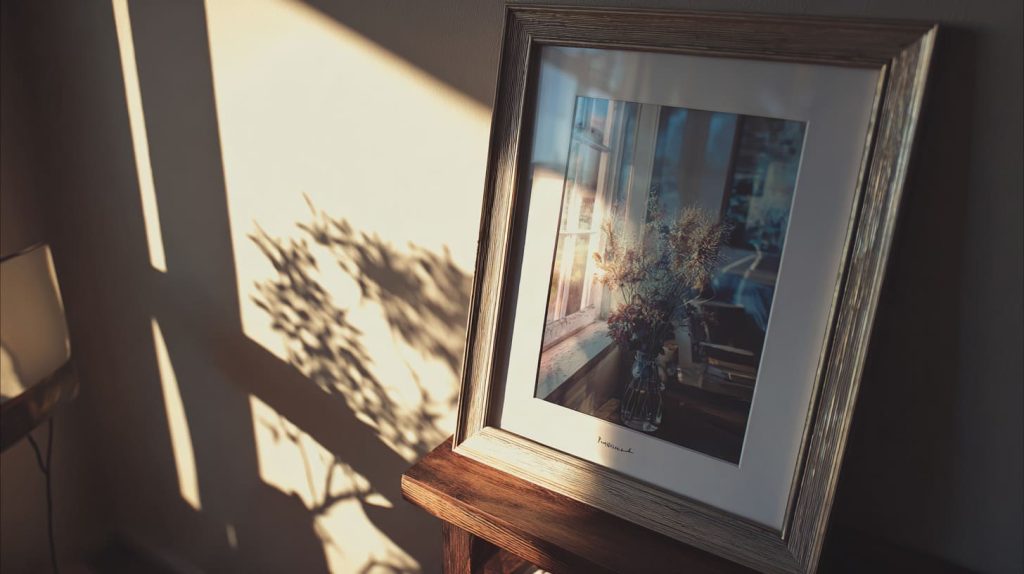
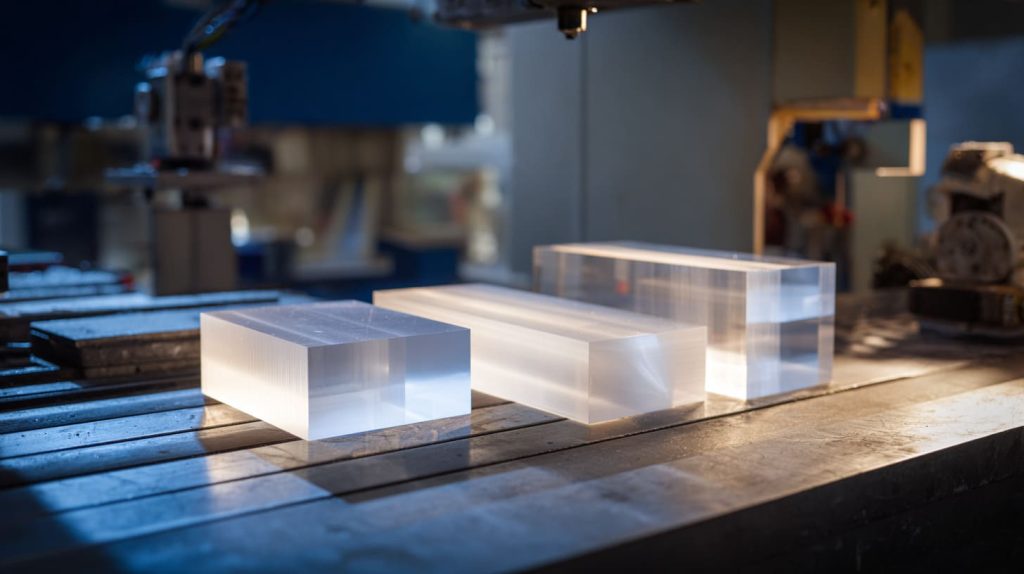
This is where I feel acrylic shines because I live in the world of custom orders. Clients rarely want “one standard rectangle.” They want a detail: a curve, a cutout, a logo, a special thickness.
A hard truth I’ve learned: when a project needs custom shapes and fast iteration, glass turns from material to obstacle very quickly.
Acrylic customization strengths
Acrylic is friendly to fabrication:
- CNC cutting for clean edges
- laser cutting for fine shapes
- bending for angles and stands
- bonding for multi-part structures
- thickness options for design feel
This is why acrylic is common in:
- tabletop display frames
- photo blocks
- retail display covers
- branded photo stands
Glass customization limits
Glass can be cut and finished, but it is less forgiving.
- complex shapes cost more
- edge finishing is slower and riskier
- drilling and cutouts increase break risk
- changes late in the project are painful
Why designers often favor acrylic for custom projects
Here is how I explain it:
| Project need | Acrylic response | Glass response |
|---|---|---|
| Complex cutouts | easy | hard and risky |
| Iteration speed | fast | slower |
| Integration with stands | natural | limited |
| Branding | easy engraving / printing | limited options |
I have seen designers start with glass because it sounds premium. Then they add one “small” custom detail. Then two. Then they switch to acrylic because the project needs to move.
But even if acrylic wins on customization, buyers still ask the same question: “What will it cost, and what hidden costs will appear?”
Let’s talk money in the real way.
Cost Considerations and Budget Control
Cost is not only material price. Cost is also breakage, packaging, time, and customer complaints.
One thing I always do before I quote a project: I count how many times the item will be touched, moved, cleaned, and shipped—because that’s where “cheap” becomes expensive.
Material and processing costs
Acrylic pricing changes with:
- thickness
- UV protection level
- surface finish
- fabrication complexity
Glass pricing changes with:
- thickness
- tempering
- coatings (anti-reflective, UV museum)
- edge finishing
Shipping and breakage cost risks
Glass often demands:
- heavier packaging
- stronger cartons
- more protective materials
- higher breakage risk
Acrylic usually reduces breakage risk, but can increase:
- scratch protection needs
- surface film handling requirements
| Cost type | Acrylic risk | Glass risk |
|---|---|---|
| Packaging | scratch prevention | break prevention |
| Shipping | lighter | heavier |
| Damage rate | scratches | breaks |
| After-sales | cleaning/scratch complaints | replacement due to breakage |
Making a cost-effective decision without sacrificing quality
A good way to decide is to ask:
- Is the project cost-sensitive or reputation-sensitive?
- Is the display temporary or long-term?
- Is the environment controlled or chaotic?
Then choose the material that reduces your biggest risk.
And now we arrive at a topic that many buyers care about more each year: sustainability. This part is tricky, because the “obvious answer” is not always correct.
Environmental and Sustainability Factors
People often assume glass is automatically the greener choice because it feels natural. Acrylic feels like “plastic,” so it gets judged fast.
My honest view: the greener option is often the one that lasts longer and gets replaced less, even if the material story feels less romantic.
Acrylic sustainability realities
Acrylic has challenges:
- it is a plastic
- recycling depends on local systems
- production uses resources
But acrylic also has real positives:
- long service life in many applications
- high impact resistance reduces replacement
- reuse is common in retail fixtures
Glass sustainability profile
Glass has strong points:
- it is widely recyclable in many places
- it feels “natural” to consumers
But glass also has real downsides:
- heavy shipping footprint
- breakage leads to waste
- replacements happen more often in harsh handling environments
How buyers usually balance sustainability with performance
| Sustainability lens | Acrylic can win when… | Glass can win when… |
|---|---|---|
| Replacement rate | break risk is high | environment is controlled |
| Shipping footprint | long-distance shipping | local production and delivery |
| End-of-life | reuse is realistic | recycling access is strong |
If sustainability matters to your brand, the best move is to look at the full life cycle. Not just the material name.
Now let’s get very practical. When is acrylic clearly the better choice?
When Acrylic Is the Better Choice
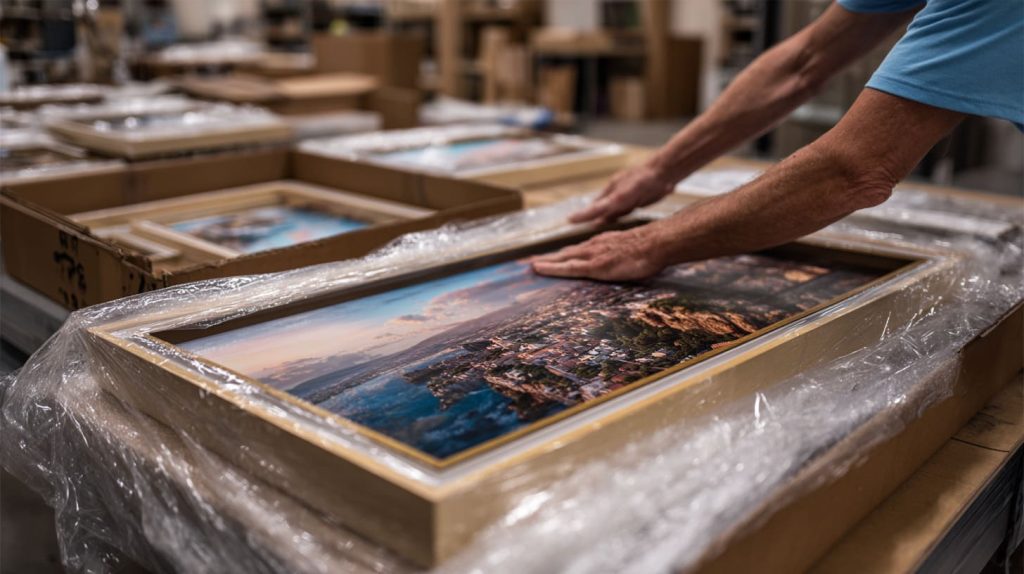
Acrylic is not “better” in every case. But in some cases it is the calm choice. It reduces risk and keeps projects moving.
The way I decide quickly: if safety, size, and shipping stress are the main threats, acrylic is usually the safer bet.
Ideal scenarios for acrylic in photography
Acrylic often fits best when you have:
- Large-format prints that need to stay lightweight
- High-traffic retail displays where safety matters
- Frequent installation changes where handling happens often
- Custom shapes that need quick iteration
- Shipping across borders where breakage risk is high
Common buyer mistakes to avoid
Here are mistakes I see again and again:
- Ignoring cleaning behavior
- Acrylic needs a better cleaning routine.
- Choosing the wrong thickness
- Too thin feels cheap. Too thick looks bulky.
- Skipping protective film handling
- Acrylic gets damaged in production if film rules are sloppy.
- Underestimating static dust
- In dusty stores, acrylic needs maintenance planning.
Acrylic is a strong choice when the world around it is messy.
But what if the goal is not safety, but maximum visual stability and archival value? That’s where glass can earn its place.
When Glass Is the Better Choice

Glass is still the gold standard for many archival and gallery uses. Not because it is perfect, but because it behaves predictably when treated correctly.
The personal rule I lean on: if the project is prestige-driven and the environment is controlled, I start my thinking from glass first.
Ideal scenarios for glass in photography
Glass often fits best when you have:
- Archival and museum-grade displays
- Controlled environments with low handling
- Coated glass options to reduce reflections
- Collectors or galleries who value tradition
Situations where glass still outperforms acrylic
Glass can beat acrylic when:
- you need stronger scratch resistance
- you want stable optics for decades
- you can invest in anti-reflective and UV coatings
- you can manage shipping and handling carefully
Here is a clean comparison that helps buyers decide:
| Priority | Better match |
|---|---|
| Large size + safety | Acrylic |
| Scratch resistance | Glass |
| Reflection control (with coating) | Glass |
| Custom shapes + fast iteration | Acrylic |
| Archival prestige | Glass |
If you read this far, you already know the truth: there is no universal winner. There is only a smarter decision for a specific situation.
So let me wrap this up the way I would explain it to Jacky over coffee.
Conclusion
Acrylic vs. glass is not a material war. It is a risk choice.
I make my call by looking at what will hurt the project most:
- will it scratch from daily cleaning?
- will it break in shipping?
- will it reflect too much under store lighting?
- will UV slowly fade the print?
- will the design need custom shapes and quick iteration?
I think this way because I live in the space between drawings and real life. A perfect sample on a desk means nothing if the final delivered piece looks tired after one month. I’ve learned to respect the “boring” parts—shipping, cleaning, staff behavior, sunlight, customer touch—because those boring parts decide whether a display feels premium or feels cheap.
If you are Jacky, and you are deciding for a project right now, here is my practical call to action:
- Send me your use case (frame, tabletop, cover, or prop)
- Tell me the size, environment, and how often it will be cleaned
- Then I can help you choose thickness, finish, and the right protection level
That is how I like to work at Feilong Acrylic: not selling a sheet, but helping you avoid the quiet problems that show up after installation.